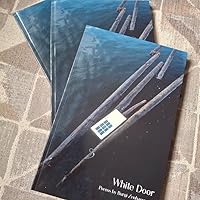
Kitchen hymns are the songs sung at home, not in the chapel; in vernacular speech, not Latin. The poems in Padraig O Tuama's new collection are a form of hymnody that arise neither from belief nor devotion. A man asks himself if he believes in God and turns to language rather than the maker of language; an agnostic Jesus meets a curious Persephone at hell's exit; a mass for the end of the world is offered by some- one more interested in birds than in salvation. In registers of rage, eros and melody, towards nature, elegy and praise, Kitchen Hymns is a study in form and lyric address: the sights and sounds of a poem; the lungs of the world; skin touching skin; experience. Here are poems of originality and feeling - a provocation to thought, and an invocation of the forces that direct the strange, branching paths of our lives.
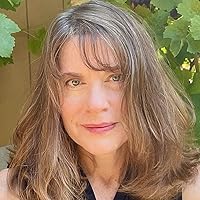
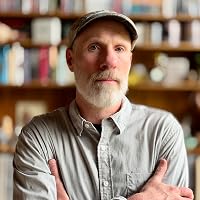
Pádraig Ó Tuama’s poetry and prose centre around themes of language, power, conflict and religion. His work has won acclaim in circles of poetry, politics, psychotherapy and conflict analysis. His formal qualifications (PhD, MTh and BA) cover creative writing, literary criticism and theology. Alongside this, he pursued vocational training in conflict analysis, specialising in groupwork.
His published work is in the fields of poetry, anthology, essay, memoir, theology and conflict. A new volume of poetry — Kitchen Hymns — is forthcoming from CHEERIO in mid 2024.
Profiled in The New Yorker, Pádraig’s poems have been featured in Poetry Ireland Review, Academy of American Poets, Harvard Review, New England Review, Raidió Teilifís Éireann’s Poem of the Week, and the Kenyon Review.
Pádraig has told stories at The Moth, has been featured on NPR’s All Things Considered, has presented programmes on poetry and language for BBC Radio 4; and has extended interviews with On Being, with Kim Hill on Radio NZ, and Soul Search on Radio National (Australia). In addition, he has interviewed poets and public figures including former President of Ireland Mary McAleese, Hanif Abdurraqib, The Edge, Sarah Perry, Joy Harjo, Billy Collins and Martin Hayes.
What beautiful writings, as always. This collection plays with structure and language and myths in such intriguing ways. I was constantly surprised and delighted- so glad I own this so I can read it again and again.
I don’t read a ton of poetry but when I do, I often feel like a phony, like I don’t really understand it, and it’s not for me. Reading Kitchen Hymns, I had the opposite of that reaction in every regard. The music, the warmth, the raw vulnerability, the unflinching darkness—it all underpins a depth of thought and erudition that makes this collection feel novelistic, narratively complete.
This collection covers familiar ground, though it edges away from the rage that fueled some of the brighter and more caustic moments in 2022's Feed the Beast (I am a fan of that razor's edge). If that collection was a kind of lament, a more violent voice crying out in the wilderness, Kitchen Hymns is, well, more hymnal. That being said, it is a welcome return to form, in a way, to the very contemplative and even playful way Pádraig constructs language. In fact, I'd go so far as to venture that he invents a new language, so to speak, for each new collection. Go back to Readings from the Book of Exile, and you'll see what I mean.
On a more personal note, I find it difficult to objectively assess anything Pádraig does because his writing is so close to me, and I'm a little miffed about that. I did mean for it to happen; it just did. His work came to me as my world collapsed, and he seems to put out a new collection around the same time as more floors fall out from under me. What comfort to cling to as you're falling.
Kitchen Hymns considers a life grounded in faith that evolves into the absence of belief. It carries on conversations with God and imagines a dialogue between Jesus and Persephone at the threshold of Hades. It's playful—the prose poem “PB2G” (Praise Be to God) as a letter written by a fan is an ironical delight. It's mournful—the elegiac "Kitchen Hymn" is full of tender grief.
I wasn't surprised to learn that Kitchen Hymns was written as part of Ó Tuama's PhD, for it feels carefully and precisely crafted, with a variety of poetic styles and steeped in theme. It's so deeply personal that although beautiful, elegant, and expressive, there's a vernacular I felt excluded from. Or perhaps I'm projecting, being on a very different trajectory in exploring and reconnecting to my faith instead of pulling away from it.
In any event, this is a gorgeous collection that poignantly depicts a man in this postmodern world questioning faith, sexuality, and country while longing to be more closely integrated to each to close his circles of doubt.
It’s always so daunting, writing a review for a poetry collection. No matter how I do it, it feels like a poor copy of the original and also an unfairly objective reflection on a very personal medium.
This collection was piercing, at points. It was also filled with ethereal light, at others.
A really fantastic work. Take the moment and try it, if you are into poetry at all.
Picked this out of the very slim poetry section of the Barns and Noble in College Station TX because I liked the title and the first poem. Absolutely loved it. A rich delight
This book is a revelation. Sometimes a sorrow, sometimes a wonder, sometimes a delight. Often, books of poetry are best (for me, at least) dipped into, one or two poems at a time, over a long period. Kitchen Hymns benefits from a much quicker reading, as one poem feeds into the next like a series of connected pools. Beautifully done.
love the concept, loved the poems, really well formatted, the black pages that were poems he would only write in his head (no paper) after losing eight years of writing were really interesting; I’ve listened to poetry unbound for awhile and was curious about what his own poetry might look like as someone who studies it and pieces it apart with as much fullness and joy and thought as he does, and there was a casual but deliberate air to a lot of the book that I wasn’t expecting (what even was I expecting?) but it’s cool to see someone very clearly in their element just making the art they wanna make, and the title alone says so much (context of kitchen hymn v important) and maybe this wouldn’t hit if you didn’t grow up religious but I had a great time with it. one of those things I think I would get something different out of every time I read it. noticing also that a lot of writers are lowkey obsessed with hares - what’s going on there?
Pádraig Ó Tuama is the host of Poetry Unbound, part of the On Being Project, which also includes the interview podcast On Being with Krista Tippett, which is how I came to learn about Pádraig. Poetry Unbound—and the return of poetry generally—came along at a pivotal time, and though it might be an exaggeration, it’s safe to say that, at the time, it very much felt like poetry saved my life. Along with long hikes in the prairie and my own writing, Poetry Unbound and the poets it introduced me to were vital in shepherding me through. So when Pádraig announced via Substack that he had a new book of poetry coming out, I promptly added it to my list. When it was released, I made an interlibrary loan request, but it was denied: The book was too new to be requested. However, much to my surprise, the library decided to purchase and add it to their collection.
Like well-constructed albums, I understand that a poetry collection is not simply a gathering up of the last batch of poems a poet has written. No, it is more than that. But like a well-constructed album whose songs don’t only work in the broader context, it is typically comprised of poems that also stand alone on their own—many of which were previously published in various literary journals. Kitchen Hymns is not that kind of collection. This is a wholly conceptual work, and one, I’ll admit, despite two readings, I don’t think I truly get. Though I’ve never read it, I recently acquired a hardcover copy of James Joyce’s Ulysses for cheap at the library’s annual book sale. I have, since college, both desired and feared to read it due to its reputation as impenetrable and requiring a level of literary knowledge I, no doubt, lack. Kitchen Hymns feels very much like that. It came as no surprise, then, to learn that this book began as the creative component for a Ph.D. Pádraig was working on at the University of Glasgow. That is, it oozes with experimentation and challenge and difficulty for their own sakes. Not, as they say on Seinfeld, there’s anything wrong with that. It’s only that your mileage might vary.
Within, Pádraig explores, most notably, religion or faith or god or God, and myth, and belief, and the many things embodied by such vast themes, perhaps especially for a gay man raised Catholic in very Catholic Ireland. Given that I read the book twice in an attempt to better understand it, which I think served its purpose, it came at the expense of enjoying the book less. There are, to be certain, moments of delight and illumination and devastation, and, on the first reading at least, Kitchen Hymns grew on me as it progressed. But like a concept album whose reach exceeds its grasp (and I’m thinking of the many Kinks albums that suffered this fate), I found the moving moments too few and too diffuse and too muted, suffocated, perhaps, under the weight of the very concept meant to give them wings.
Reminded me of falling in love with my best friend in an all girls catholic school. A bittersweet feeling of longing wrapped in a blanket of confusion. Confusion for life, for love, for god. She always grounded me. I felt our smile across the church pews again for the first time while reading this. Was it one sided? Maybe. Nothing ever came of it, but she remains a piece of my heart. It’s unexplainable, the feeling I received from this book. It’s perfect.
There's a lot to uncover in this collection and I probably should have sat with some of the poems longer... There's a lot of intrigue just in the way the collection is structured with poems of desire embedded in these epistemological life stories. Will be returning to these and relistening to the OnBeing episode interviewing Ó Tuama.
I really liked this! Very meditative and the poem "Jesus and Persephone Meet after Many Years" was really interesting. I love his tone even in its deceiving simplicity, especially in the dialogue that's super pared back but holds volumes.
remarkable. this whole collection had a heft and sweep to it, a directional continuity that allowed each poem to become a kind of scaffolding off of which every other poem could build itself. there is such a bluntness and rawness here, and a beauty in that.
The Persephone/Jesus section was the draw for me, and it was fantastic, but I was surprised by how much I enjoyed some of the more experimental forms throughout the book. The theme of the dead surviving the living was a fascinating throughline, and one I'd love to see more discussion about.
The first and second Kitchen Hymns set really stuck out to me, particularly In the Name of the Bee, Eat This Bread, and Charade. most of the In A Garden By A Gate went over my head i think, but as a creative concept very cool. o’tuama’s intentionality and labor comes through beautifully. great execution of a great poetic project.
This is heart aching in the best way. I’ve read all of Padraig’s work over the years and this is a tender exploration of his themes. Feed the Beast might actually be my recent favourite, but now I just wish I could conjure Padraig to California and drink a cup of tea or a pint of Guinness. Miss you friend.
I love the voices of these poems, some are laugh-out-loud-dead-earnest, all are engagingly human. The poems flirt with preaching, avoid it by a hair. It's this almost that makes for a delicious, even sizzling (as in the dialogue between Persephone and Jesus) tension and the down-to-earth speakers themselves, who are never dead serious. If a church, this is the one I'd want to go to.
What a beautiful collection from a superb poet and thinker.
A few of my favorites:
————————————-
Jesus and Persephone Meet after Many Years
You look so much better, she said. Older. Changed The scars are different too. Thanks, he said. Nothing would drag me back. I just came up from Hades yesterday, she said. I figured you were coming, he said, • I waited for you all winter. Then I saw buds on that old tree. You look like you. What do you do? she asked. This and that, he said. But mostly I walk the mountains, following the tracks that animals make when they escape the hunt. Hey, I always meant to ask you-is there more than just one way?
———————-
The Second Coming
there will be no fanfare no trumpet no end of days just the light on the leaves of that tree you love to look at no songs to sing no one to beg no resolutions no explanations no solutions no insight into time no recrimination and no punishment no guilt no reprimand no judgment seat no mercy just nothing darlings nothing
————————
(untitled/missæ]
I bless myself in the name of the deer and ox, the heron and the hare, evangelists of land and wood and air. The fox as well, that red predator of chickens, prey of cars. And the salmon and the trout sleeping in the reeds. When the wren wakes, I'll ask her blessing, and if she comes out she'll bring it. The squirrel buries when she thinks no one else can see. I bless myself in her secrecy. There's a fieldmouse I've seen scampering at dusk, picking up the seeds dropped by the finches and the tits throughout the day. Some nest of frenzy waits her kindness and her pluck I go in the name of all of them, their chaos and their industry, their replacements, their population, their forgettable ways, their untame natures, their ignorance of why, or how, or who.
————————
Mother Brendan's Opening Words at Ash Wednesday Mass
Darlings, look around. Next to you's the nurse, the cleaner, the doctor, the child-minder, the waiting, the hoping, the barely surviving, the can't-get-out-of-bed-can't-sleep-can't-cope. There's the teacher out of work, the disaffected priest, the taxi driver, the shopkeeper, broke shareholder, tourists, retirees, waitresses, bankers, administrators, the tired and committed, the excited and the stressed I know you expect me to bless you in the mysteries of God, but I prefer the strangeness of each other, darlings. Look around. In the name of whatever reason brings you here. In the name of anything that works. In the name of nothing.
Are you burning yet? You will be. Take this cup and drown your sorrows. Take this bread and butter it. Lick it. Taste the salt. Nothing made you come here. Nothing stops you going.
————————-
Do You Believe in God?
I don't believe in God, I said, and she said, Oh? Somehow I thought you'd managed to keep that going even though I haven't. She asked if I'd told others. Yes, I said, I have. I mean, it's not like I'm saying I Know About What Is. It's just that the burden of belief isn't on me anymore. God, it feels much freer. I believe I'm in the room next to belief. I hear the sounds of prayers coming through the walls. I like the smell of incense. And the sound of fabric rustling fabric as the people stand or kneel. Sometimes I can tell the text by the intonation of the reader. I mutter the responses underneath my breath. Lift up your hearts. And do you? she asked, Lift up your heart? Yes, I said, I do, but I don't know to who. Whom, she said. Let's get started on the soup.
Where is the tenderness of my feeling toward those on a path of deconstruction? Do I still have it? Do I need to rekindle it?
Is it hypocrisy ever to lose it if I walked it myself?
If I use the word “path,” does it change my compassion to those on it when they stagnate along it, set up ambivalent camp, make no plans to head down it one way or the other? I almost used the word “season”—what about tenderness when the seasonal becomes perennial? What about wounds which malinger, which whimper for interminable nursing, which grow more and more vague, more and more vicarious (more and more societal) with each year’s added space?
I’ve felt a resistance quietly mount in me against the indulgence of deconstructionism that never culminates, never builds toward decisive destruction or reconstruction.
There’s something of that sentiment that Dufresne expresses in “Shawshank Redemption”: “Get busy livin’ or get busy dyin’.”
And I’ve felt a similar resistance to artistic license which assumes that in order to humanize Christ, we must imagine him petty or pettily sexual, pettily impulsive, pettily shallow. We must imagine him in Nikes. We must imagine him compulsively shopping or road-raging or flirting at the gym. Locating his humanity in suffering, in rapturous joy, in total grief, in despair, anger, intimacy, stillness—locating him here isn’t enough. It’s not enough that he be human, he must be us. It’s not enough that the incorporeal become corporeal, the incarnate must be primary; not enough that the sacred and profane intermingle, wrestle, stalemate—we must say that the profane IS sacred.
In one poem, God is accused of a lack of creativity, but it strikes me now as an awful poverty of imagination to demand that Jesus look just like us before we draw him near. How else can we relate? And isn’t one-to-one relatability essential for relationship?
When we write him like this, it ultimately says more about us than it does about him—what we think we need in order to be heard, to be known, to conceive of and admire. We must wrangle his aesthetic treatment into—as The National’s haunting “Hornets” goes—“something everybody understands.” And our imaginations attenuate until they cannot conjure a messiah without first characterizing him as indistinguishably fucked up.
But then, hasn’t that been done (if in the opposite direction) for centuries? Didn’t we need to imagine his skin white, his frame slender, his hair brown, his face serene and never agonied?
And doesn’t my inner resistance say at least as much about me as it does about the poet?
For millennia we have broken this man’s body and ripped it apart into trillions of bite-sized chunks not for his needs but for ours. If anything is both true of him and dear to us, it’s that he and his beautiful, badly beaten body are FOR US, right? That much is unequivocal. And far be it from me to block the way to the table.
He wasn’t delicate with himself. His blood is poured prodigally, is gulped and dribbles down chins and churns in roiling digestive tracts with the rest of the waste until it gets pissed out. He knows this says more about us and our bodies than it does about him. What of it? Isn’t that also part of the boundless grace—that depictions of him have always been crayon caricatures scribbled in some degree of selfish myopia?
Surely. Maybe it’s just that in a poetry collection, I feel the need for both to be acknowledged: how badly we need him to be one of us; how badly we need him to be Other.
I love Ó Tuama and this collection of poems should be considered his reflection on prayer and religion (Irish Catholic background), and an imagined meeting between Jesus and Persephone. Ó Tuama goes deep here, because he equates religion with a "nothing" and that "nothing" is a pretty sacred experience that he equates, in many ways, with prayer and God. See below.
Again, I'm not an expert poet reader so I'm not sure if I was interpreting the poems the way they meant to go out into the world, but I enjoyed reading through them and experiencing Ó Tuama's language.
"Mother Brendan's Opening Words at Ash Wednesday Mass" (6), excerpts Darlings, look around. Next to you's the nurse, the cleaner, the doctor, the child- minder, the waiting, the hoping, the barely surviving . . .
I know you expect me to bless you in the mysteries of God, but I prefer the strangeness of each other, darlings. Look around.
In the name of whatever reason brings you here. In the name of anything that works. In the name of nothing.
Are you burning yet? You will be. Take this cup and drown your sorrows. Take this bread and butter it. Lick it. Taste the salt. Nothing made you come here. Nothing stops you going.
"Do You Believe in God?" (24), the whole poem I turn to you, not because I trust you, or believe in you, but because I need a direction for my need. You-- the space between me and death; you-- the hum at the heart of an atom; you-- nothing; you--my favorite emptiness; you-- what I turned away from and will turn to; you-- my ache made manifest in address; you, silent you, what my friends saw as they died; you contain what's not containable; you-- shape of my desire--