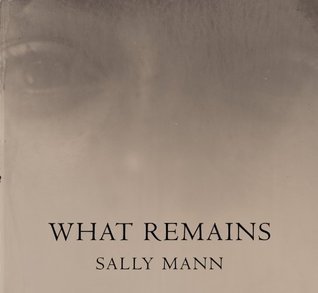
Sally Mann (b. Lexington, VA, 1951) is one of America's most renowned photographers. She has received numerous awards, including NEA, NEH, and Guggenheim Foundation grants, and her work is held by major institutions internationally. Her many books include At Twelve (1988), Immediate Family (1992), Still Time (1994), What Remains (2003), Deep South (2005), Proud Flesh (2009), The Flesh and the Spirit (2010) and Remembered Light (2016).
In 2001 Mann was named “America’s Best Photographer” by Time magazine. A 1994 documentary about her work, Blood Ties, was nominated for an Academy Award and the 2006 feature film What Remains was nominated for an Emmy Award in 2008. Her bestselling memoir, Hold Still (Little, Brown, 2015), received universal critical acclaim, and was named a finalist for the National Book Award. In 2016 Hold Still won the Andrew Carnegie Medal for Excellence in Nonfiction. Premiering in March 2018, Sally Mann: A Thousand Crossings, opened at the National Gallery of Art in Washington, DC. This comprehensive exploration of Mann’s relationship with the South traveled internationally until 2020. In 2021 Mann received the Prix Pictet, the global award in photography and sustainability for her series Blackwater (2008-2012). In 2022 she was inducted into the American Academy of Arts and Sciences. Mann is represented by Gagosian Gallery, New York. She lives in Virginia.
Mann's meditation on death, dedicated to her father, who was her aesthetic's greatest influence and whose death knocked her for a loop as most of our fathers' passings will do. Ethereal, much like her photographs of in The South, and spooky, foggy, dark, unsentimental, real, powerful. I liked her lovely opening essay and an excerpt from a Galway Kinnell poem in it. Not for everyone, as other reviewers agree, but the work and courage of it are pretty stunning to me.
It's hard to judge the art books of Sally Mann because, in this town, the libraries and bookstores are too chickenshit to stock them, since most of them contain nekkid chidrens.
So this is the only one I can get from the public library, where it's OK to stock photo books depicting death and decay, but not ones depicting the reality of the living human form from one particular defined age realm, which happens to be a pretty wide one, from 1 to 18.
This book is dedicated to Mann's deceased father, a physician and poet, whose aesthetic informed that of his photographer daughter. Mann writes a lovely short essay at the beginning of this book, part of which says this:
"Where did all of that him-ness go? All that knowledge, the accretion of experiences...It was, as the song says, as if a library burned to the ground."
So, this book is partly a result of Mann's coping with her father's death and her own obsessions with the subject. Death, she says, is "the sculptor of the ravishing landscape," and these images of decay are her attempts to understand that process of creation through natural demise. These images remind me of stills from silent Euro horror films such as Benjamin Christensen's Haxan (Witchcraft Through the Ages) (1922) and Carl Dreyer's Vampyr (1932); my limited knowledge of the history of photo art as compared to my vast knowledge of cinematic art leads me to this comparison.
The book's stark images are darkly lit and diffuse. I'm not sure how she pulled some of them off; if some of them depict real dead bodies or are cleverly simulated ones. Accompanying some of the images are a few poems about death by famous poets and some sporadic thoughts from Mann. The final series of images in the book are of living people's faces simulating death. I assume these are members of Mann's family.
I'm not sure how to rate a book like this, a lot of the images seem overprocessed to me; I think the idea of some of them is that the images themselves are ephemeral; fated to fade to black.
A little gruesome, some decomposing bodies and the like, but it's quite a beautiful meditation on death as well. I think the book is a lot more interesting after viewing the documentary of the same name that was made while Sally Mann was making these photographs.
There were a few photographs that I enjoyed here, but as a whole, there wasn't a lot to look at. It's atmospheric, yes, but also very vague with some of its references to death. Perhaps it was more shocking back in the day. NOT for people who do not wish to look upon a decomposing body of either human or animal. Or maybe it's actually a stepping stone for those who ARE uncomfortable, since it's all in sepia / black and white.
I am a big fan of Sally Mann, but not of this book. I love reading and looking at death. One of my favorite pastimes are dark novels, that and walking in beautiful cemeteries. I prefer a good Catholic cemetery to any of them really. The more limestone monoliths the better. But Sally failed me here, or perhaps I am just not sophisticated enough in order to "get it". There wasn't one photograph or poem that got to me. Not one. The text was lacking too. Very disappointed in this piece of work.
This photography book is a meditation on death. Sally Mann dedicates it to her father, a physician who had a pecularily unsentimental yet poetic view on the end of life. What Remains is atmospheric and thought-provoking, although I wish the imagery was less abstract. The dust jacket mentions that the images were created “with the collodion process, using glass plates.” They evoked for me photography from the United States Civil War (1861-1865), appropriate given the author’s use of Antietam. Be forewarned, this is not a book for the faint of heart!
The Contents: What Remains is broken into five sections.
Introduction Mann writes about her personal experiences with death, starting with her father. He was a physician who engended an irreverent attitude about death in his family. She wites that “he was an uncommonly direct man. Not for him the euphemisms of death—it was a dead body, not ‘remains,’ nobody ‘passed,’ there was not ‘eternal rest.’ People died and that was it” (p. 5). After reading On Death and Dyinghttps://www.goodreads.com/review/show... (“The fact that we don’t use denial, that we are willing to use the words death and dying, is perhaps the most welcomed communication for many of our patients.” (Chapter 11, p. 263)), I appreciate his perspective.
The author sadly watched her father die herself. This section features a photograph of Mann’s family holding her father’s ashes. There is a strange bright light in the image near her brother’s foot that she identifies as a “spirit crow” (p. 6), suggesting a possible supernatural influence. I most enjoyed her father’s poem in this section. He attributed it to Oscar Wilde, but Mann suspects he wrote it himself:
“O great Pelican of Eternity that piercest thy breast for our food we are thy fledglings who cannot know thy woe. Bless this shadowy food of substance who last eater shall be worm and feed us rather on the visionary food of dreams and grace.” (p. 5)
Matter Lent This section features photographs of the remains of Mann’s beloved dog Eva, accompanied by the poem “On Death, a Sermon” by Jacques-Benigne Boussuet (1627-1704). This transitions into images from a forensics study sight, giving an unflinching look at human decomposition in various stages. Mann accompanies these images with the poem “The Quick and the Dead” by Galway Kinnell.
December 8, 2000 This section features images related to an untimely death that took place on Mann’s property in rural Virginia. An armed fugitive was chased by police onto her farm and he killed himself. Mann photographed the aftermath’s effects on her landscape.
Antietam This section includes photographs of the infamous Civil War battlefield, the bloodiest day in American history on September 17, 1862. The dark, difficult-to-see images are accompanied by passages from Walt Whitman’s great book Leaves of Grass.
What Remains Mann concludes the books with photographs of her children, all taken from tight close-ups. The poem “Canto 81” by Ezra Pound is used. The effect is quite eerie.
I´ve always held photography as an art form in high regard. Though I hadn´t really deeply bonded and immersed myself in this intriguing art form until this past year. As my skills and knowledge on the topic have prospered I´ve also gained some key role models who have dedicated most of their life to this art leaving a legacy to be remembered by future generations. One of those photographers is Sally Mann. I will admit in some of her photographs her subjects or more so the state their in have caused controversies and I personally find a couple of images a bit wild and out there but overall her ability to utilize film techniques to gain such masterpieces is so admirable. Some of her masterful photographic skills were most definitely utilized in her series called ¨What Remains¨. In this photo series, Sally Mann has documented decaying bodies at a body farm in Tennesse. She utilizes these subjects by gaining angles and frames that show the viewer a possible perspective that has yet to be acknowledged so strongly. A perspective on how life can come from death or an odd partnership in a sense can be created with the two mediums of existence. Sally Mann has captured this partnership in a way that allows tools such as contrast, lighting, definition, composition, and utilization of space to be acknowledged, while still supporting the subject and almost highlighting them. Sally Mann over all is a master of her craft and has created some magic in this portfolio of work. Overall I would give Sally Mann a nine out of ten, but truly her work is inspiring and will continue to be a part of history’s great contributions to the art world.
This entire review has been hidden because of spoilers.
I read this / looked at it after watching the documentary by the same name. The documentary tells about Mann's past and leading up to creating the body of work that was a part of her show "What Remains". In the documentary there is important backstory about the idea to explore death and once one series began how the next evolved. To read the book after was great as I got to see the images that were in this show up close since not every one was shown in the documentary. However if you look at this book without knowing anything about the show and the meanings behind it, it may not make much sense. I advise to first watch the documentary then savor the book afterwards. Rating 5 stars = Love It.
This is a collection of photos by the well know Sally Mann, whose skill as a photographer is beyond question. However many of these images are of dead and decomposing human bodies, or parts of bodies. Some are more abstract than others, but most are not pictures you would necessarily want to use to decorate your house. If you are interested in photography or Mann's work you will want to see this unusual collection.
This is a collection of photographs on the subject of death, decomposition, and mortality. Some of the images are old or on damaged and aged paper, some are overexposed, but all the while there is a sense of beauty in the landscapes. The inescapable nature of death and our ultimate returning to the earth is fascinating and well illustrated here in this album. Definitely recommend if you're morbidly curious, but not for the faint of heart.
One of the most stunning and haunting photography collections ever published. The dark images from the scarred battlefields of Antietam, the decaying bodies at the University of Tennessee Anthropological Research Facility and Mann's children are iconic. The book also contains poetry from Whitman and Galway Kinnell to introduce each section.
In What Remains, Mann creates images of death and decay which is quite a departure from her earlier works which centered on the exuberance of youth. She uses a glass-plate process here which lends a harmoniously gritty feel to the images.
I like this work, don't love it. Little too much bone art for my taste. The portraits are pretty good. I've also never been head over heels enamored with Sally Mann like so many photographers seem to be, but maybe I'm just a hater.
The photography in this book did not please me, although I respect Mann's endeavor at a stark observation and examination of death. It seems as though she attempts to find some answer in the raw exposition, the intimate (embarrassing) examination of dead matter: bits of animal bone, teeth, and human corpses. "What is this? Where is it? Where is death? Where did the life go? Was it here?--or here?" she seems to say. I found what little text there was far more compelling than the photographs. (I wasn't inspired by the photos of her deceased dog's hide and claws and teeth.) The story of her father--his view on death, and his death--was the most engrossing part of the book. I didn't personally like the photography, but I have a great respect for Mann for having the courage to attempt to examine death in its natural state.