

What do you think?
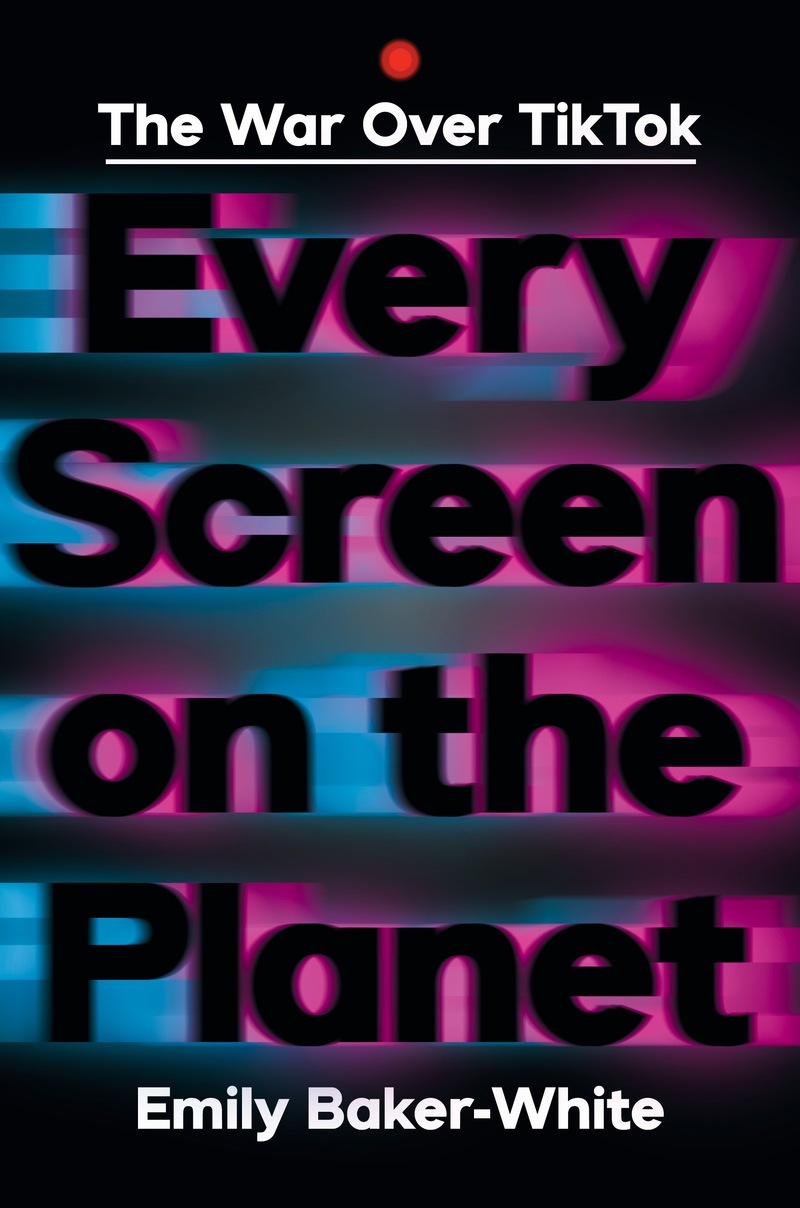
Every Screen on the Planet: The War Over Tiktok
The rise of the most effective attention-algorithm ever invented, and the superpower struggle to control it.
TikTok boasts 1.6 billion active users worldwide and wields unprecedented power over culture, politics, and commerce—making its addictive algorithm the greatest prize in America’s technological cold war with China.
In Every Screen on the Planet, Harvard-trained lawyer and investigative journalist Emily Baker-White charts TikTok’s rise from the Chinese founders’ ambitions to its emergence as the world’s most valuable startup—and a potential surveillance and propaganda tool for strongmen. Based on explosive reporting that caused TikTok to track the author and led to an ongoing criminal investigation, Baker-White’s engrossing narrative takes us inside the struggle as hawks in Congress push the company to the brink while the US government seeks backdoor access to observe and influence TikTok’s data stream. Touching on politics, finance, business, and technology, she explains how the war for TikTok will either create a blueprint for autocrats to warp our information landscape or close the open internet as we know it.
TikTok boasts 1.6 billion active users worldwide and wields unprecedented power over culture, politics, and commerce—making its addictive algorithm the greatest prize in America’s technological cold war with China.
In Every Screen on the Planet, Harvard-trained lawyer and investigative journalist Emily Baker-White charts TikTok’s rise from the Chinese founders’ ambitions to its emergence as the world’s most valuable startup—and a potential surveillance and propaganda tool for strongmen. Based on explosive reporting that caused TikTok to track the author and led to an ongoing criminal investigation, Baker-White’s engrossing narrative takes us inside the struggle as hawks in Congress push the company to the brink while the US government seeks backdoor access to observe and influence TikTok’s data stream. Touching on politics, finance, business, and technology, she explains how the war for TikTok will either create a blueprint for autocrats to warp our information landscape or close the open internet as we know it.
368 pages, Hardcover
First published September 30, 2025
About the author
Emily Baker-White
1 book7 followersEmily Baker-White is a San Francisco–based reporter at Forbes, where her TikTok coverage has won awards and shaped narratives. A Harvard Law School graduate and former criminal defender, she previously led the Plain View Project, an investigation into police misconduct on Facebook.
Ratings & Reviews
Friends & Following
Create a free account to discover what your friends think of this book!
Community Reviews
Displaying 1 - 30 of 42 reviews

July 30, 2026
An incredibly boring account of how Tiktok came to be, and its struggles to remain legal in the United States. I do not care about the app, I have never installed it because I do not need one more thing to distract me from actual life. As for the book, we already know that the tech giants are only interested in their own profits and do not give a shit about the rest of us. Of course Tiktok is no different just because it's Chinese. Or worse. It's all the same: a bane on humanity. Can't live with it, can't live without it. Just because technology can be developed does not mean it should be. Seriously!
October 3, 2025
This book operates on a troubling double standard. It treats the pro-China algorithm on TikTok as a form of manipulative propaganda that threatens the privacy and security of its 5.4 million American users, going as far as promoting government intervention to curtail its presence in American life. But it refuses to even mention the extensively documented "pro-American" algorithm on American-led social media platforms, despite the fact that the existence of any kind of "pro-country" content – no matter Chinese or American – is a form of bias, and should be avoided if the author values neutrality. Such pro-American social media policies can been illustrated by their differing treatment of the state media between Western countries and China, with Chinese state media being forced to bore labels of “state media” on its account pages, but forms of Western government-funded media such as ABC or the BBC, not being required to this feature. The pro-Western slant within the Western social media can be further illustrated by the case of Nathan Rich’s account being censored in 2019 on the basis of vaguely worded community guidelines, which the YouTuber accuses the platform of arbitrarily interpreting.
What is important to remember, is that this double standard, even if dressed in concern, is still a form of manipulation. The only thing is, is that this double standard has managed to so thoroughly infiltrate the Western psyche, that most people don’t consider it to be logically flawed. They instead regurgitate the positions with anti-China bias as a universal law, the same way they believe that the apple fell from Newton’s tree because of gravity. The view that we're the good guys, and the countries that don't share our political systems, are bad. The view that our war in Iraq with 100,000 casualties is a “disaster,” but China’s war on Uyghurs with zero documented deaths is a systemic genocide akin to the Holocaust. And anyone that dares to disagree? They will be subjected to the punishment of character assasination. They’ll accuse you of being brainwashed. They’ll accuse you of being “pro-China,” an accusation which assumes solidifies my argument that there is inherent negativity to China. And if you make this argument while having a Chinese last name like I do, they'll say you’re a "spy."
What is important to remember, is that this double standard, even if dressed in concern, is still a form of manipulation. The only thing is, is that this double standard has managed to so thoroughly infiltrate the Western psyche, that most people don’t consider it to be logically flawed. They instead regurgitate the positions with anti-China bias as a universal law, the same way they believe that the apple fell from Newton’s tree because of gravity. The view that we're the good guys, and the countries that don't share our political systems, are bad. The view that our war in Iraq with 100,000 casualties is a “disaster,” but China’s war on Uyghurs with zero documented deaths is a systemic genocide akin to the Holocaust. And anyone that dares to disagree? They will be subjected to the punishment of character assasination. They’ll accuse you of being brainwashed. They’ll accuse you of being “pro-China,” an accusation which assumes solidifies my argument that there is inherent negativity to China. And if you make this argument while having a Chinese last name like I do, they'll say you’re a "spy."

September 23, 2026
生活在沒有抖音的香港,但我仍很好奇 TikTok 是個怎麼樣的公司,它不僅是中國企業成功走向海外市場的少數成功案例,更是一個全球現象。《抖音帝國》一書介紹了抖音(字節跳動)由張一鳴在2012年創辦,並於2017年收購 Musical.ly 後走向海外市場。本書主要聚焦在 TikTok 如何在中美兩國之間快速成長,讓它從一個短影音分享平台,到今日深刻影響美國政治與人民生活的平台。書中有很大一部分提及 2024 年美國政府一度關閉平台的事件,我只記得當時有大量抖音難民流入小紅書,但在看完這本書後,我才發現原來故事比想像中複雜很多,因為 TikTok 某個程度上代表的是美國與中國兩國冷戰的延伸,不管是使用者隱私與數據安全、輿論戰與網軍、還是關於言論自由的討論,這本書絕對不只是抖音如何建立起它的商業帝國這類非常流水的紀錄。後面也有稍微提到 AI 的發展與張一鳴的野心,如果是對抖音和張一鳴的故事有興趣的話,這會是本非常合適的書籍。

October 1, 2025
Every Screen on the Planet: The War Over Tiktok
I found this book really compelling.
Emily goes over the start of TikTok, the rise, and how it began.
She then highlights the importance of the algorithm, and how it is not just a business tool, but a geopolitical tool.
I found that the book really well frames tensions over US/China tech and the impending current "purchase" and what it all could entail.
I found that Emily also well explained the issues with TikTok, and how it doesn't offer much in the way of digital privacy. In fact, it is more of a surveillance tool. It also is used as a political weapon, polarizing citizens and creating distrust internally, while showing positive messages about authoritarian dictatorships abroad.
Emily does a great job at describing the issues with TikTok, and describing some opportunities as well. I found I learned a lot, and I would give it a recommendation.
Check it out!
Recommended Reading
If you wish to learn more on TikTok and social media, I would also recommend:
Attention Factory: The Story of TikTok & China’s ByteDance
The Age of Surveillance Capitalism: The Fight for a Human Future at the New Frontier of Power
The Shallows: What the Internet Is Doing to Our Brains
3.8/5
I found this book really compelling.
Emily goes over the start of TikTok, the rise, and how it began.
She then highlights the importance of the algorithm, and how it is not just a business tool, but a geopolitical tool.
I found that the book really well frames tensions over US/China tech and the impending current "purchase" and what it all could entail.
I found that Emily also well explained the issues with TikTok, and how it doesn't offer much in the way of digital privacy. In fact, it is more of a surveillance tool. It also is used as a political weapon, polarizing citizens and creating distrust internally, while showing positive messages about authoritarian dictatorships abroad.
Emily does a great job at describing the issues with TikTok, and describing some opportunities as well. I found I learned a lot, and I would give it a recommendation.
Check it out!
Recommended Reading
If you wish to learn more on TikTok and social media, I would also recommend:
Attention Factory: The Story of TikTok & China’s ByteDance
The Age of Surveillance Capitalism: The Fight for a Human Future at the New Frontier of Power
The Shallows: What the Internet Is Doing to Our Brains
3.8/5

Read
November 7, 2025DNF after chapter 1 cause it’s not telling me anything new.

December 22, 2025
Mir hat „TikTok Time Bomb“ außerordentlich gut gefallen, mit zwei kleinen Haken:
Zunächst einmal finde ich, sofern ich das beurteilen kann, unglaublich gut recherchiert, geordnet und zusammengefasst. Mit der Beharrlichkeit als Investigativjournalistin und gleichzeitig mit beneidenswerter Ruhe erläutert Baker-White, wo TikTok herkommt, wie es aufsteigen konnte und gibt Prognosen, wie es weitergehen könnte. Dabei ordnet sie die Entwicklung der Plattform auch immer wieder in politische Entwicklungen ein (muss sie) und daraus ergibt sich ein schlüssiges Gesamtbild.
Aber.
Erstens finde ich ihre Erklärungen (obwohl schlüssig) oft zu verschachtelt, um sie wirklich zu verstehen. Das Buch ist ganz offensichtlich für eine bestimmte Zielgruppe verfasst: Amerikaner. Das kann man ihr zugutehalten, immerhin ist sie ja selbst Amerikanerin, andererseits hätte ich mich über ein Glossar für die ganzen Instanzen und Abkürzungen des US-amerikanischen Justizsystems wirklich SEHR gefreut.
SEHR.
Zweitens muss ich in diesem Zusammenhang auch anmerken, dass sie einerseits die Politisierung der Plattform durch China und die KPCh scharf kritisiert, eine ähnlich deutliche Kritik an ihrer eigenen Nation und den Umgang der Trump-Administration jedoch umschifft. Sie stellt zwar infrage, wie frei die Meinungsäußerung seit Januar 2025 auf TikTok wirklich noch ist, aber mehr passiert nicht, und das finde ich wirklich schade - wenn nicht sogar kritisch.
Insgesamt jedoch ein wirklich sehr gelungenes Sachbuch zur beliebtesten App unserer Zeit, zu ihren Hintergründen, Erfolgen und Problematiken.
Zunächst einmal finde ich, sofern ich das beurteilen kann, unglaublich gut recherchiert, geordnet und zusammengefasst. Mit der Beharrlichkeit als Investigativjournalistin und gleichzeitig mit beneidenswerter Ruhe erläutert Baker-White, wo TikTok herkommt, wie es aufsteigen konnte und gibt Prognosen, wie es weitergehen könnte. Dabei ordnet sie die Entwicklung der Plattform auch immer wieder in politische Entwicklungen ein (muss sie) und daraus ergibt sich ein schlüssiges Gesamtbild.
Aber.
Erstens finde ich ihre Erklärungen (obwohl schlüssig) oft zu verschachtelt, um sie wirklich zu verstehen. Das Buch ist ganz offensichtlich für eine bestimmte Zielgruppe verfasst: Amerikaner. Das kann man ihr zugutehalten, immerhin ist sie ja selbst Amerikanerin, andererseits hätte ich mich über ein Glossar für die ganzen Instanzen und Abkürzungen des US-amerikanischen Justizsystems wirklich SEHR gefreut.
SEHR.
Zweitens muss ich in diesem Zusammenhang auch anmerken, dass sie einerseits die Politisierung der Plattform durch China und die KPCh scharf kritisiert, eine ähnlich deutliche Kritik an ihrer eigenen Nation und den Umgang der Trump-Administration jedoch umschifft. Sie stellt zwar infrage, wie frei die Meinungsäußerung seit Januar 2025 auf TikTok wirklich noch ist, aber mehr passiert nicht, und das finde ich wirklich schade - wenn nicht sogar kritisch.
Insgesamt jedoch ein wirklich sehr gelungenes Sachbuch zur beliebtesten App unserer Zeit, zu ihren Hintergründen, Erfolgen und Problematiken.

December 19, 2025
I thought this would be great.It starts out ok. Zhangyiming,yet another weird communications company,who doesnt even enjoy watching movies decides to jump into the attention economy by first buying Musically and then using his For You algorithm he gradually pulled people away from FB,Instagram and Twitter,because Tik Tok was fun and not political. Then the jerks in Washington tried to say Tik Tok was a security risk. The risk is that this Chinese app might not push American values and Democracy.People that sing and dance dont care about such boring nonsense. Leave to the US to try and block the app and then have Donald Trump there claiming to be it's savior. Now your data is in Singapore for some reason. After nine hours of listening nothing makes any sense in this book about the decline of a once great app now ruined by politics.They should label all of them anti-social media. Maybe Tik Tok should ban all politics and let creators sing and dance. The fossils in the US and BJ have no idea how it's possible for anyone poor to actually have any fun. They only want money for doing next to nothing. There are many better books on current technology.
June 17, 2026
This is an interesting story, but the writing makes it incredibly dull. I found this book a real slog to get through, not because it was particularly complicated (though it definitely could have been simpler), but because there was just no real depth or feeling to it. I also completely agree with the previous reviewer on the double standard - the lazy demonisation of China when the US and its tech giants are just as bad.

December 31, 2025
3.75 ⭐️
I wasn’t the biggest fan at the start but later became very invested and even ended up touching on some of the points raised here in one of my university essays
I wasn’t the biggest fan at the start but later became very invested and even ended up touching on some of the points raised here in one of my university essays
October 3, 2025
This book operates on a troubling double standard. It treats the pro-China algorithm on TikTok as a form of manipulative propaganda that threatens the privacy and security of its 5.4 million American users, going as far as promoting government intervention to curtail its presence in American life. But it refuses to even mention the extensively documented "pro-American" algorithm on American-led social media platforms, despite the fact that the existence of any kind of "pro-country" content – no matter Chinese or American – is a form of bias, and should be avoided if the author values neutrality. Such pro-American social media policies can been illustrated by their differing treatment of the state media between Western countries and China, with Chinese state media being forced to bore labels of “state media” on its account pages, but forms of Western government-funded media such as ABC or the BBC, not being required to this feature. The pro-Western slant within the Western social media can be further illustrated by the case of Nathan Rich’s account being censored in 2019 on the basis of vaguely worded community guidelines, which the YouTuber accuses the platform of arbitrarily interpreting.
What is important to remember, is that this double standard, even if dressed in concern, is still a form of manipulation. The only thing is, is that this double standard has managed to so thoroughly infiltrate the Western psyche, that most people don’t consider it to be logically flawed. They instead regurgitate the positions with anti-China bias as a universal law, the same way they believe that the apple fell from Newton’s tree because of gravity. The view that we're the good guys, and the countries that don't share our political systems, are bad. The view that our war in Iraq with 100,000 casualties is a “disaster,” but China’s war on Uyghurs with zero documented deaths is a systemic genocide akin to the Holocaust. And anyone that dares to disagree? They will be subjected to the punishment of character assasination. They’ll accuse you of being brainwashed. They’ll accuse you of being “pro-China,” an accusation which assumes solidifies my argument that there is inherent negativity to China. And if you make this argument while having a Chinese last name like I do, they'll say you’re a "spy."
Absolute disgusting trash. I'd take TikTok over this anti-China racist garbage any day. That basically sums up my opinion of this book.
What is important to remember, is that this double standard, even if dressed in concern, is still a form of manipulation. The only thing is, is that this double standard has managed to so thoroughly infiltrate the Western psyche, that most people don’t consider it to be logically flawed. They instead regurgitate the positions with anti-China bias as a universal law, the same way they believe that the apple fell from Newton’s tree because of gravity. The view that we're the good guys, and the countries that don't share our political systems, are bad. The view that our war in Iraq with 100,000 casualties is a “disaster,” but China’s war on Uyghurs with zero documented deaths is a systemic genocide akin to the Holocaust. And anyone that dares to disagree? They will be subjected to the punishment of character assasination. They’ll accuse you of being brainwashed. They’ll accuse you of being “pro-China,” an accusation which assumes solidifies my argument that there is inherent negativity to China. And if you make this argument while having a Chinese last name like I do, they'll say you’re a "spy."
Absolute disgusting trash. I'd take TikTok over this anti-China racist garbage any day. That basically sums up my opinion of this book.
March 24, 2026
I'm sorry, but ex-BuzzFeed staff should be explicitly banned from writing whole books.
I make it a personal policy to not rate essay-style or history nonfiction books until I can verify the information contained therein, as a rating is also an inherent endorsement or indictment of its veracity - unless it's either just that good or otherwise necessary (Jason Reynolds' adaptation of/collaboration with X. Ibrahim's Stamped, which fulfills both of those) or is just that bad (John Green's Everything is Tuburculosis which despite being exhaustingly well-researched on an extremely important issue...is just bad.
You can tell from the rating which one this falls into.
A wishy-washy miss-mash of what can charitably be described as events and headlines smooshed together to meet a word count last-minute high school essay-style (I mean that's basically how BuzzFeed writers operate right there), it's at once PRC apologetic, yet also discomfortably racist and anti-Chinese and Asian, wanting to at once blame the PRC directly for COVID while also excusing the pandemic as something White (or "White") America deserved for sins out of a Putin or Xaiping talking points handbook and also something about spy balloons and "daddy Trump" (and remember this book is actually about freaking social media and TikTok), Baker-White wants to cover every extreme from page to page as if wanting to reach as broad an appeal as possible, while saying not much, in a way only an exceptionally priviledged White woman writing for BuzzFeed can.
I make it a personal policy to not rate essay-style or history nonfiction books until I can verify the information contained therein, as a rating is also an inherent endorsement or indictment of its veracity - unless it's either just that good or otherwise necessary (Jason Reynolds' adaptation of/collaboration with X. Ibrahim's Stamped, which fulfills both of those) or is just that bad (John Green's Everything is Tuburculosis which despite being exhaustingly well-researched on an extremely important issue...is just bad.
You can tell from the rating which one this falls into.
A wishy-washy miss-mash of what can charitably be described as events and headlines smooshed together to meet a word count last-minute high school essay-style (I mean that's basically how BuzzFeed writers operate right there), it's at once PRC apologetic, yet also discomfortably racist and anti-Chinese and Asian, wanting to at once blame the PRC directly for COVID while also excusing the pandemic as something White (or "White") America deserved for sins out of a Putin or Xaiping talking points handbook and also something about spy balloons and "daddy Trump" (and remember this book is actually about freaking social media and TikTok), Baker-White wants to cover every extreme from page to page as if wanting to reach as broad an appeal as possible, while saying not much, in a way only an exceptionally priviledged White woman writing for BuzzFeed can.
September 29, 2026
Ile z tego, co widzisz w internecie, jest naprawdę Twoim wyborem?
„Smok w telefonie” Emily Baker-White to rewelacyjny reportaż, po którym zaczęłam zupełnie inaczej patrzeć na TikToka i to, co pojawia się na ekranie mojego telefonu. Autorka zabiera nas za kulisy powstania ByteDance i pokazuje, jak pozornie niewinna aplikacja rozrywkowa stała się częścią globalnej walki o technologię, dane i wpływ.
Najbardziej zainteresował mnie temat algorytmu, niewidzialnego mechanizmu, który uczy się naszych zainteresowań, przewiduje, co chcemy zobaczyć, i potrafi zatrzymać nas przy ekranie na dłużej, niż planowaliśmy. I niestety, to mu się udaje. W trakcie lektury pojawia się w głowie pytanie, czy naprawdę sami wybieramy treści, które oglądamy, czy może ktoś wybiera je za nas?
Pomimo znaczniej objętości, czyta się ją szybko i sprawnie, bo treść jest wciągająca, momentami niepokojąca. Autorka daje nam w niej połączenie technologii, polityki, pieniędzy i ludzkich historii. Po jej lekturze nasze spojrzenie na telefon może ulec zmianie, bo znając już mechanizmy nim rządzące widzimy, że nie jest to tylko niewinne narzędzie rozrywki. Jednak ta publikacja nie ma na celu, by straszyć technologią. Raczej sprawia, że zaczynamy uważniej przyglądać się temu, jak technologia wpływa na nas.
Zdecydowanie polecam ją każdemu !
„Smok w telefonie” Emily Baker-White to rewelacyjny reportaż, po którym zaczęłam zupełnie inaczej patrzeć na TikToka i to, co pojawia się na ekranie mojego telefonu. Autorka zabiera nas za kulisy powstania ByteDance i pokazuje, jak pozornie niewinna aplikacja rozrywkowa stała się częścią globalnej walki o technologię, dane i wpływ.
Najbardziej zainteresował mnie temat algorytmu, niewidzialnego mechanizmu, który uczy się naszych zainteresowań, przewiduje, co chcemy zobaczyć, i potrafi zatrzymać nas przy ekranie na dłużej, niż planowaliśmy. I niestety, to mu się udaje. W trakcie lektury pojawia się w głowie pytanie, czy naprawdę sami wybieramy treści, które oglądamy, czy może ktoś wybiera je za nas?
Pomimo znaczniej objętości, czyta się ją szybko i sprawnie, bo treść jest wciągająca, momentami niepokojąca. Autorka daje nam w niej połączenie technologii, polityki, pieniędzy i ludzkich historii. Po jej lekturze nasze spojrzenie na telefon może ulec zmianie, bo znając już mechanizmy nim rządzące widzimy, że nie jest to tylko niewinne narzędzie rozrywki. Jednak ta publikacja nie ma na celu, by straszyć technologią. Raczej sprawia, że zaczynamy uważniej przyglądać się temu, jak technologia wpływa na nas.
Zdecydowanie polecam ją każdemu !

January 17, 2026
TikTok And The Architecture Of Influence
(A Book Review, 8.5/10)
I never used TikTok. I walked away from Facebook and Instagram years ago. These days, I stay mostly on LinkedIn and Goodreads, partly because I’ve seen how easily attention gets shaped by systems that feel harmless on the surface.
Emily Baker-White’s Every Screen on the Planet looks at what happens when platforms grow large enough to stop reflecting culture and start structuring it.
TikTok now sits inside a long standoff between China and the United States. The language is about values, governance, and national interest. The reality is about who gets to set the defaults for how hundreds of millions of people spend their time, form opinions, and absorb information.
When platforms grow, they stop reflecting culture and start steering it.
The same pattern is unfolding in artificial intelligence. Tools that shape how people learn, work, and make decisions are built around commercial and strategic priorities.
For leaders, the real risk isn’t the technology. It’s assuming neutrality where there is design.
What feels natural is often just what we’ve been guided toward.
#Leadership #Technology #DigitalPower #AI #HumanBehaviour #Media
(A Book Review, 8.5/10)
I never used TikTok. I walked away from Facebook and Instagram years ago. These days, I stay mostly on LinkedIn and Goodreads, partly because I’ve seen how easily attention gets shaped by systems that feel harmless on the surface.
Emily Baker-White’s Every Screen on the Planet looks at what happens when platforms grow large enough to stop reflecting culture and start structuring it.
TikTok now sits inside a long standoff between China and the United States. The language is about values, governance, and national interest. The reality is about who gets to set the defaults for how hundreds of millions of people spend their time, form opinions, and absorb information.
When platforms grow, they stop reflecting culture and start steering it.
The same pattern is unfolding in artificial intelligence. Tools that shape how people learn, work, and make decisions are built around commercial and strategic priorities.
For leaders, the real risk isn’t the technology. It’s assuming neutrality where there is design.
What feels natural is often just what we’ve been guided toward.
#Leadership #Technology #DigitalPower #AI #HumanBehaviour #Media
February 7, 2026
The author focuses on one person who architected the creation of TicTok. She also includes a few other people, mostly Chinese citizens, who were involved with apps that eventually led to TikTok.
She goes into a lot of detail about ByteDance and TikTok are intricately tied into a database and computer algorithm that are homed in China and thus can be manipulated by CCP authorities. She also discusses some attempts by U.S.-managed TikTok employees to separate data and control channels from Chinese employees. She discusses the pressure put onto ByteDance by U.S. presidents and Congress for such separation.
Finally, there is supposed solution that is now in place in U.S. but she points out that the goal layer out by Congress is not, and cannot, be met.
Well researched and pretty good book. Almost five stars, just a little ways from being a "cannot put the book down" rating that I would look for for a five-star rating. Definitely worth a read, though.
She goes into a lot of detail about ByteDance and TikTok are intricately tied into a database and computer algorithm that are homed in China and thus can be manipulated by CCP authorities. She also discusses some attempts by U.S.-managed TikTok employees to separate data and control channels from Chinese employees. She discusses the pressure put onto ByteDance by U.S. presidents and Congress for such separation.
Finally, there is supposed solution that is now in place in U.S. but she points out that the goal layer out by Congress is not, and cannot, be met.
Well researched and pretty good book. Almost five stars, just a little ways from being a "cannot put the book down" rating that I would look for for a five-star rating. Definitely worth a read, though.

March 19, 2026
Es curioso como las empresas solo quieren crecer en ingresos y los gobiernos solo quieren crecer en electores y eso crea el caldo de cultivo perfecto para la manipulación, desinformación, transformación de la verdad y la historia. Como las redes sociales están influyendo en la política (para mal) es algo a lo que no prestamos demasiada atención pero que nos afecta cada día. Es interesante ver la evolución de TitTok como plataforma y las dificultades de satisfacer a dos entidades como el PCC y el GOP. A la vez es frustrante dimensionar lo mucho que hacen los directos para aparentar una cosa distinta a la que son y tomar decisiones sin significado pero hacerles máxima publicidad.
Creo que una reflexión adicional es que es muy difícil querer estar conectado en esta era de redes que solo buscan sacar el máximo provecho de los datos de sus usuarios, por encima de leyes, estándares morales y principios civiles.
Creo que una reflexión adicional es que es muy difícil querer estar conectado en esta era de redes que solo buscan sacar el máximo provecho de los datos de sus usuarios, por encima de leyes, estándares morales y principios civiles.
October 25, 2025
Initially I thought why read this -- the story is incomplete. However, it's far more interesting that I thought possible. It integrates technology, business and government policy in an almost seamless narrative. At times one can get lost in the minutiae but it's worth ploughing through. There is a legitimate criticism to make of her far more harsh treatment of Chinese policy than US policy when its quite self-evident that TikTok is seen by many politicians in the US as a company to manipulate for both profit and message.

November 23, 2025
“Every Screen on the Planet” is a good, thorough overview of TikTok over the years, which is important both technologically and geopolitically. Baker-White left many questions unanswered but so much is still unknown that I would be wary of an author who didn’t.
I do wonder who the target audience is, as most people who care enough about the subject to finish a book on it have likely been following a lot of the story’s happenings in the news. That was the case for me and I skipped a few parts, but overall I still got a lot out of it and am glad I picked it up.
I do wonder who the target audience is, as most people who care enough about the subject to finish a book on it have likely been following a lot of the story’s happenings in the news. That was the case for me and I skipped a few parts, but overall I still got a lot out of it and am glad I picked it up.

January 7, 2026
This woman clearly knows her stuff on tiktok!!
I thought this book was an excellent history of the coming of age of tiktok, and how it became one of the most important and influential platforms for young people in the past couple of years, along with the dangers behind it. I deleted my tiktok over a year ago, but I never realized how the data collection system actually functioned and how it could hurt users in the long run.
I thought this book was an excellent history of the coming of age of tiktok, and how it became one of the most important and influential platforms for young people in the past couple of years, along with the dangers behind it. I deleted my tiktok over a year ago, but I never realized how the data collection system actually functioned and how it could hurt users in the long run.

February 23, 2026
1 Star (I received an e-audiobook arc from Net Galley in exchange for an honest review)
I know the is a non fiction book, but the writing style seemed a little bland and I was listening to it while doing admin tasks at work. Even then I was having trouble not falling asleep. I appreciate being sent the audiobook but unfortunately I could not bring myself to pick up/listen to this book. It's a DNF for me.
I know the is a non fiction book, but the writing style seemed a little bland and I was listening to it while doing admin tasks at work. Even then I was having trouble not falling asleep. I appreciate being sent the audiobook but unfortunately I could not bring myself to pick up/listen to this book. It's a DNF for me.

August 31, 2026
This book wants to be about the creation/development of the app, its place in pop culture, the way it shifted global discourse around the internet, and the role played by China’s government. These are all parts of TikTok that are worth exploring, but the book struggles to balance its different focuses. That’s not to say it’s bad—it’s filled with novel information—but its uneven presentation makes this a book that feels like a footnote towards a more definitive investigation of the app.

September 19, 2026
While I found some aspects of this book interesting, it read very one-sided and had a clear bias against China. For many parts, the book felt like a really long, drawn-out Wikipedia page of Tiktok. When it tried to offer some narrative, it felt wrapped around making China some unique boogeyman when it comes to censorship, propaganda, and the potential threat of the CCP having access to users' data, although it never really makes anything of it, just a constant warning that potentially they might have access and potentially they might want to do something with that data. The book barely attempts to reconcile with America's past history of propaganda and how it uses social media to push a narrative.
I thought the book would be more about the influence and effect of Tiktok being on every screen on the planet and what that means for society. Maybe I should have paid more attention to the part after the colon: "the war over tiktok." Reading this book in 2026 felt surreal with the hindsight of knowing how everything unfolds, but it's this hindsight that I think could have been helpful for the book and maybe making it feel more even in its critique.
Nonetheless, it was an interesting read, and it was an easy read so I had no problems stil whipping through it. There's nothing groundbreaking here, just some history about Tiktok and other Chinese founded apps, and hemming and hawwing about the evils of the CCP.
I thought the book would be more about the influence and effect of Tiktok being on every screen on the planet and what that means for society. Maybe I should have paid more attention to the part after the colon: "the war over tiktok." Reading this book in 2026 felt surreal with the hindsight of knowing how everything unfolds, but it's this hindsight that I think could have been helpful for the book and maybe making it feel more even in its critique.
Nonetheless, it was an interesting read, and it was an easy read so I had no problems stil whipping through it. There's nothing groundbreaking here, just some history about Tiktok and other Chinese founded apps, and hemming and hawwing about the evils of the CCP.

May 23, 2026
Interesting run-through of Tik Tok and the legal troubles that ByteDance and the CCP found themselves in during the early 2020s. Was pretty drab at some points and seemed to be over-inflated with filler, but overall I enjoyed getting more information about an experience I remember living through.
"Senator, I am Singaporean" !!!
"Senator, I am Singaporean" !!!

August 21, 2026
Read this if you want a detailed account of TikTok’s rise, its challenges and risks, and the US government’s response.
Don’t read it if you’re looking for a deeply engaging narrative or a nuanced, even-handed critique of the wider TikTok affair.
Don’t read it if you’re looking for a deeply engaging narrative or a nuanced, even-handed critique of the wider TikTok affair.
October 18, 2025
very thorough documentation and reasoning.

November 3, 2025
4.5 Stars.
It was very thorough.
It was very thorough.

November 6, 2025
I did not finish. I probably got about 35% into this and just didn’t care.

November 12, 2025
Nothing groundbreaking here
December 3, 2025
The early part is good
But then it's just a US regulation story, not much in it
But then it's just a US regulation story, not much in it
December 9, 2025
Some interesting reporting but not anything new of significance of what even I knew about the legal maneuvering.
January 3, 2026
This book tells the story of how TikTok rose from a niche startup to a global cultural phenomenon, and how its success sparked one of the most intense technology and national-security battles of recent decades. It starts by looking at the growth of social media after the release of iPhones and then shows how Bytedance turned Musical.ly into the ubiquitous TikTok we see today. Then it looks at the political battles over TikTok as its commercial and social power grew. Eventually Congress passed a bi-partisan law that forced Bytedance to divest TikTok to an American company or be banned. However, the ban went into effect on the last day of Biden's term. He chose not to enforce it because Trump had said that he wouldn't enforce it. Trump has used the "one-time" extension to the ban several times to allow negotiations to proceed with several of his supporters working together to buy the app.
This is a great book that combines analysis of culture, technology and politics to tell a fascinating story. It goes beyond the story itself and into deeper issues that it raises. It looks at the value of attention as a commodity, the vulnerabilities of global tech platforms to political and national-security conflicts, and the ways governments and corporations grapple with regulating powerful technologies. I took a little while to get into the first fifty pages and then did the next three hundred in a few days. I highly recommend it for anyone interested in the politics of social media.
My longer summary:
TikTok's strength was in its algorithm that keeps people in app by catering to their individual tastes. Rather than searching for information, it came to you. In addition, it got a HUGE boost from the pandemic, where its users in the United States increase exponentially.
That's where the trouble begins. The fact that it was so widely used and was a Chinese app made American politicians suspicious of it. The first main concern was that it could gather data on Americans for use by the Chinese Communist Party. This was made more immediate by the promulgation of the 2017 Chinese security law that mandated that all Chinese companies must give all available data to the CCP upon request. This was around the same time as TikTok launched internationally and wasn't targeting it at all, but by 2021, TikTok's success made this an issue. To make things worse, the CCP had recently "disappeared" a few Chinese tech titans for getting too big for their britches. They later reappeared with no explanation and properly chastened. It would hardly be surprising if it did the same thing to Bytedance's founder Zhang Yiming, a Chinese citizen and, at the time, resident. He later stepped down as Bytedance's CEO but maintained control through "super-voter shares". He also hired a Singaporean, Shao Zi Chew, as TikTok CEO and moved the headquarters there. These were done to placate Americans concerned about data security, but because Zhang remained in charge, he was still vulnerable to extortion from the CCP. Even if he were outside of the country, the CCP has been known to abduct family members of dissidents who live abroad to quell their activities. It is worth noting that Shou testified that if Americans were really worried about their data, they wouldn't allow companies like Meta to sell it to the highest bidder, regardless of nationality. It was a fair argument.
The second problem was the fear that the algorithm could be manipulated to influence young American minds. The algorithm was controlled by Chinese citizens, so they would have little ability to resist CCP pressure to adjust it. TikTok lobbied furiously that it would never do such a thing. It worked for a while and early attempts to ban it failed. One reason was when Shou testified before a House committee, several members embarrassed themselves with a lack of technical and geographic knowledge. It was a little embarrassing for Americans, but another bill was written and passed. The earlier bill gave the president sweeping powers, but the one that ultimately passed (PAFACA) was tailored specifically at TikTok with very limited presidential discretion. It was signed into law and came into effect the day before Biden left office.
After the US Supreme Court upheld the PAFACA on the issue of surveillance and date (it made no ruling on the issue of potential Chinese propaganda), TikTok changed its approach and started sucking up to Trump. While running, Trump had said that he would save TikTok and he hated that banning TikTok would benefit Meta and Zuckerberg, so this wasn't the toughest sell for TikTok's PR team. It worked and Trump said he would not enforce the ban of 75 days. The number seemed arbitrary because PAFACA allowed for a single extension if a deal to sell TikTok was imminent. The problem with Trump's decision is that it had no legal weight and if the next president tried to collect the fines due, Meta and Oracle would go bankrupt. Nevertheless, TikTok continued its schmoozing by publicly thanking Trump on the app so that it is now running as profitably as ever.
This is a great book that combines analysis of culture, technology and politics to tell a fascinating story. It goes beyond the story itself and into deeper issues that it raises. It looks at the value of attention as a commodity, the vulnerabilities of global tech platforms to political and national-security conflicts, and the ways governments and corporations grapple with regulating powerful technologies. I took a little while to get into the first fifty pages and then did the next three hundred in a few days. I highly recommend it for anyone interested in the politics of social media.
My longer summary:
TikTok's strength was in its algorithm that keeps people in app by catering to their individual tastes. Rather than searching for information, it came to you. In addition, it got a HUGE boost from the pandemic, where its users in the United States increase exponentially.
That's where the trouble begins. The fact that it was so widely used and was a Chinese app made American politicians suspicious of it. The first main concern was that it could gather data on Americans for use by the Chinese Communist Party. This was made more immediate by the promulgation of the 2017 Chinese security law that mandated that all Chinese companies must give all available data to the CCP upon request. This was around the same time as TikTok launched internationally and wasn't targeting it at all, but by 2021, TikTok's success made this an issue. To make things worse, the CCP had recently "disappeared" a few Chinese tech titans for getting too big for their britches. They later reappeared with no explanation and properly chastened. It would hardly be surprising if it did the same thing to Bytedance's founder Zhang Yiming, a Chinese citizen and, at the time, resident. He later stepped down as Bytedance's CEO but maintained control through "super-voter shares". He also hired a Singaporean, Shao Zi Chew, as TikTok CEO and moved the headquarters there. These were done to placate Americans concerned about data security, but because Zhang remained in charge, he was still vulnerable to extortion from the CCP. Even if he were outside of the country, the CCP has been known to abduct family members of dissidents who live abroad to quell their activities. It is worth noting that Shou testified that if Americans were really worried about their data, they wouldn't allow companies like Meta to sell it to the highest bidder, regardless of nationality. It was a fair argument.
The second problem was the fear that the algorithm could be manipulated to influence young American minds. The algorithm was controlled by Chinese citizens, so they would have little ability to resist CCP pressure to adjust it. TikTok lobbied furiously that it would never do such a thing. It worked for a while and early attempts to ban it failed. One reason was when Shou testified before a House committee, several members embarrassed themselves with a lack of technical and geographic knowledge. It was a little embarrassing for Americans, but another bill was written and passed. The earlier bill gave the president sweeping powers, but the one that ultimately passed (PAFACA) was tailored specifically at TikTok with very limited presidential discretion. It was signed into law and came into effect the day before Biden left office.
After the US Supreme Court upheld the PAFACA on the issue of surveillance and date (it made no ruling on the issue of potential Chinese propaganda), TikTok changed its approach and started sucking up to Trump. While running, Trump had said that he would save TikTok and he hated that banning TikTok would benefit Meta and Zuckerberg, so this wasn't the toughest sell for TikTok's PR team. It worked and Trump said he would not enforce the ban of 75 days. The number seemed arbitrary because PAFACA allowed for a single extension if a deal to sell TikTok was imminent. The problem with Trump's decision is that it had no legal weight and if the next president tried to collect the fines due, Meta and Oracle would go bankrupt. Nevertheless, TikTok continued its schmoozing by publicly thanking Trump on the app so that it is now running as profitably as ever.
Displaying 1 - 30 of 42 reviews