Discover more than 250 Humanoids, Howlers, and Scaly Swimmers from Across North America
Here in North America, there be monsters! Jason Offutt takes you on a thrilling adventure across all twenty-three countries―as well as every state and territory of the US, Canada, and Mexico―to meet one or more monsters in each location. Featuring illustrations throughout, this book travels to Alaska, the Caribbean, Greenland, and beyond.
• Find the horned boa known as Madre de Aguas in Cuba.
• Head to Honduras to spot el Comelenguas, the tongue-eating giant bird.
• Catch a glimpse of the Grafton Monster along West Virginia's roads.
• Escape from the Ikusik, the human-devouring corpse of Greenland.
• Track the Were-Jaguar (half-man, half-cat) across Tabasco, Mexico.
From Arizona's Lizard Man to Canada's Wendigo, this book opens your eyes to the monstrous wonders of North America. Are you up for the chase?
What a fun, whirlwind ride through the North American cryptid-verse! I learned a lot about some pretty obscure cryptids, and I liked the quick description of each region before it got to the monsters, and the gentle humor (and I appreciate how respectful the author is; I'm from Kentucky & currently live in Alabama, so I'm happy when people resist the incest/no shoes jokes).
I'll definitely be checking out the previous book that concentrates on US monsters!
Book Review: Chasing North American Monsters: A Guide to Over 250 Creatures from Greenland to Guatemala by Jason Offutt & Loren Coleman
Rating: 4.7/5
Reactions & Emotional Impact As someone raised near Grafton, West Virginia—home to the eerie Grafton Monster—this book felt like a thrilling homecoming. Offutt and Coleman’s encyclopedic yet deeply engaging compendium left me oscillating between scholarly fascination and childlike wonder. The authors’ meticulous cataloging of 250+ cryptids (from Greenland’s flesh-hungry Ikusik to Mexico’s shapeshifting Were-Jaguar) transcends mere monster-hunting; it becomes a cultural odyssey. I found myself emotionally stirred by entries like West Virginia’s spectral Mothman (a personal touchstone) and the Wendigo of Algonquian lore, where myth mirrors colonial trauma. The illustrations—though sparse—ignited my imagination, while the regional organization made me appreciate how geography shapes fear.
Strengths -Unparalleled Scope: The book’s pan-continental reach (23 countries!) reframes cryptozoology as a shared folklore language, not just niche Americana. -Cultural Sensitivity: Coleman’s influence shines in respectful treatments of Indigenous legends (e.g., Wendigo as more than horror trope). -Narrative Flair: Offutt’s witty prose (calling Cuba’s Madre de Aguas a horned drama queen) balances academic rigor with campfire-story charm. -Interdisciplinary Value: Blends anthropology, ecology, and oral history—perfect for folklore studies or cultural geography courses.
Constructive Criticism -Depth vs. Breadth: Some entries (like my beloved Grafton Monster) crave deeper analysis—historical context, witness interviews, or plausible zoological links. -Visual Storytelling: More maps or comparative illustrations (e.g., Were-Jaguar vs. global feline cryptids) could enhance its academic utility. -Critical Lens: A chapter debunking hoaxes or exploring why certain regions spawn specific monsters (e.g., Appalachia’s industrial decline and hulking humanoid myths) would elevate its scholarly impact.
Final Thoughts This isn’t just a monster manual—it’s a love letter to the landscapes that birth legends. Offutt and Coleman remind us that cryptids are more than shadows; they’re mirrors reflecting our collective anxieties, histories, and wildest imaginations.
Gratitude: Thank you to the Llewellyn Worldwide Ltd and Edelweiss for the gifted copy—this book reignited my Appalachian roots while opening doors to continental wonders.
Why 4.7? Docked slightly for craving deeper dives, but Chasing North American Monsters is a near-perfect gateway for cryptid novices and seasoned hunters alike.
Related Themes for Further Study:
-Cryptids as ecological allegories (e.g., Lizard Man and habitat loss) -Colonialism’s impact on monster narratives -The role of tourism in myth preservation -Comparative analysis: North American vs. global cryptid typologies -Oral tradition’s resilience in the digital age -A must-read for folklorists, road-trippers, and anyone who’s ever felt watched in the woods.
This review originally appeared on The Magical Buffet website on 09/10/2025
I am EXCITED. Why? Because paranormal is back on the menu! It has been some time since I got to dig into some good old fashioned nerdy paranormal goodness, but now I have. Llewellyn was kind enough to send me a copy of “Chasing North American Monsters: A Guide to Over 250 Creatures from Greenland to Guatemala” by Jason Offutt and yes, I am excited.
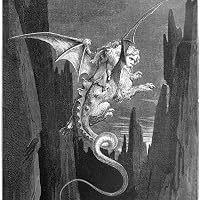
Yes, I’m excited because it’s been quite awhile since I read a book on the paranormal, and even longer when it comes to cryptids, but I’m extra excited by the sheer volume of information Offutt put together in this book. Sure, the entirety of the United States is represented, but so is all of Canada and Mexico. There are also entries for countries rarely seen in these types of books, such as Cuba, Jamaica, and Belize. With that diversity of regions comes an impressive collection of creatures (And yes, there are illustrations)! Are you familiar with the cadejo, el comelenguas, or Chan del Agua? I wasn’t, but now I am! And you could be too.
“Chasing North American Monsters” Jason Offutt is a straightforward, slam dunk of a book for all lovers of cryptozoology. A fantastic resource for those on the hunt for fantastic creatures, or for those like me, who prefer to imagine from the comfort of my armchair.
The worst book I have finished so far this year. This book covers monster legends throughout North America, covering every country, every province of Canada and every state of both Mexico and the USA. I appreciate the thoroughness, and I appreciate the coverage of some fairly obscure monsters. I do not appreciate the actual writing. Every single geographic division is introduced with a paragraph of basic geography facts, ended with “and then of course, there’s [Monster X].” Every. Single. One. The discussions of the monsters themselves are facile and sensationalistic, basically summaries of the first couple Google results for each creature and leaning heavily into tropes around “Native American curses” and other racist projections by modern white people instead of actual ethnography. And all the illustrations are done with AI! Honestly, considering how samey those intros are, they could have been written by AI too. I only cared enough to finish it because it was the book by my nightstand for when I wanted to read a little before I went to bed but didn’t have the attention span for something actually thoughtful or good. Not recommended.