

What do you think?

Elle Humour
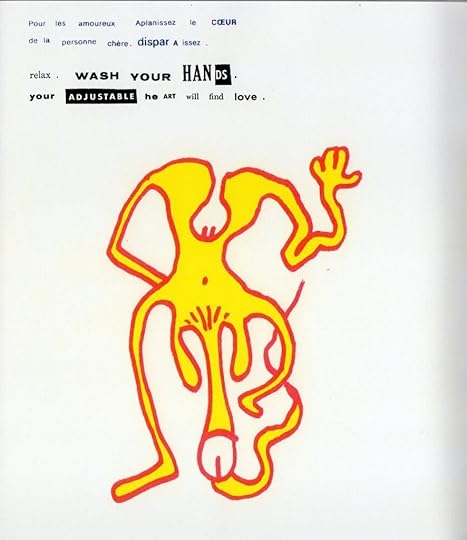
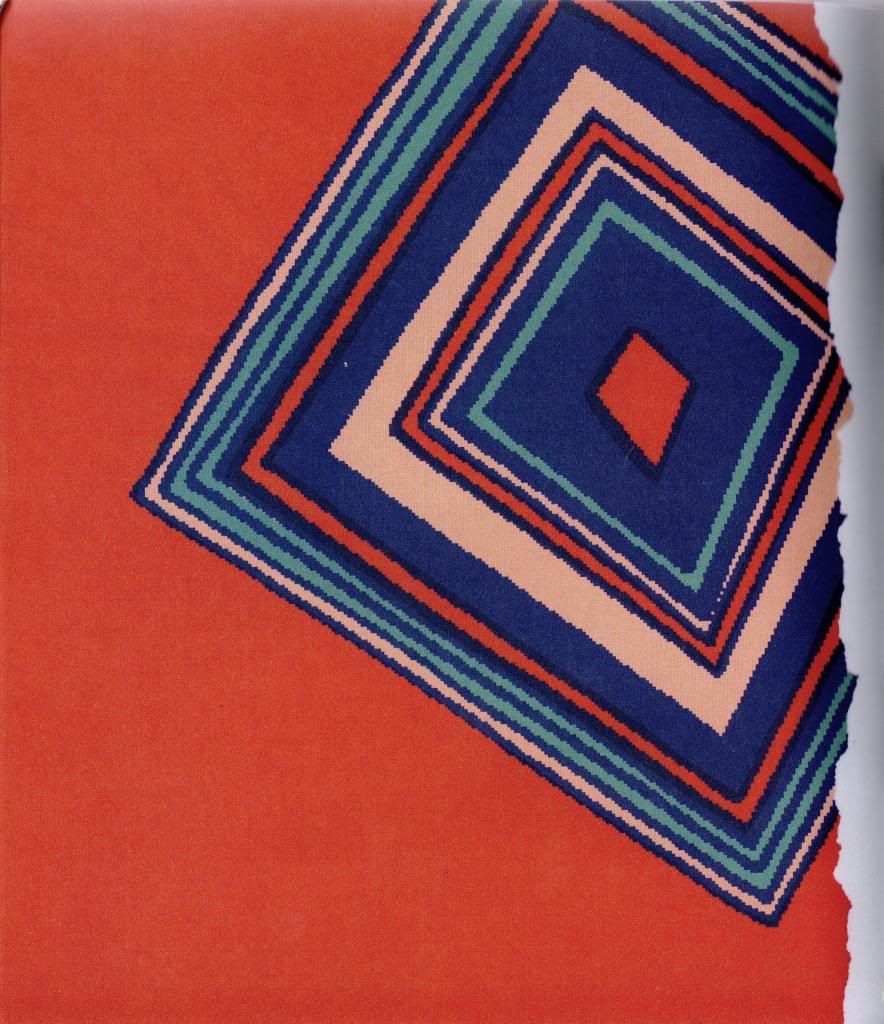
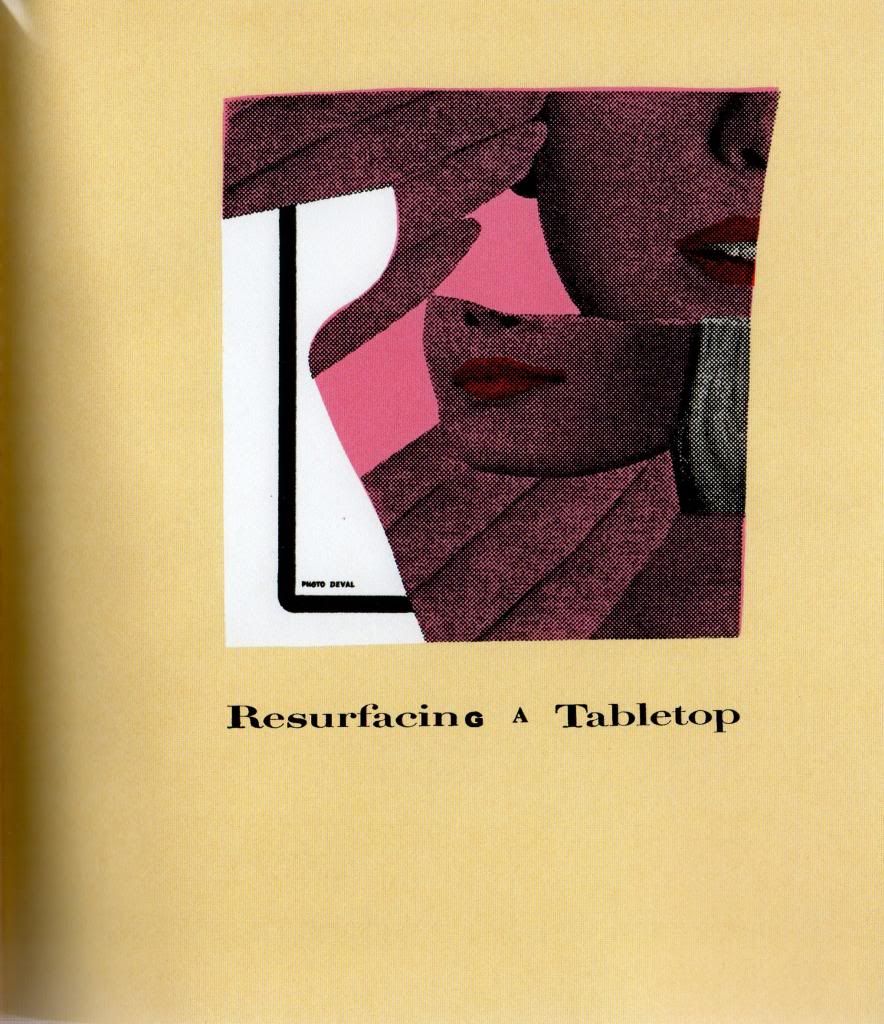
Renowned cartoonist Julie Doucet has created a unique, mass produced artist’s book. Printed on a half dozen different papers in eight colors, this amalgamation of drawing, collage, painting, and narrative is a visionary meditation on love and its discontents. Using cut out, collaged letters and phrases to compose her oblique, poetic text, Doucet’s words are as graphically enticing as her images. The book moves from pointed collages made from 1960s Quebecois magazines to abstract, psychedelic drawings to a moving catalog of her lover’s possessions, and back again. The diversity of images could be the work of multiple artists, but Doucet’s funny, frank sensibility ties it all together. Doucet, long known as the "female R. Crumb," and regarded as the finest female cartoonist of the 20th century, has never before published a book like a pure, non-comics distillation of her artistic sensibility. This complete work of art will appeal both to fans of her graphic novels—who will appreciate her sense of humor and vivacious drawing—and art aficionados who will be moved and surprised by her skills, and bowled over by her unforgettable images.
- GenresArtGraphic Novels
144 pages, Hardcover
First published December 4, 2006
About the author
Julie Doucet
64 books190 followersJulie Doucet is a Canadian underground cartoonist and artist, best known for her autobiographical works such as Dirty Plotte and My New York Diary.
Doucet began cartooning in 1987. Her efforts quickly began to attract critical attention, and she won the 1991 Harvey Award for "Best New Talent".
Shortly thereafter, she moved to New York. Although she moved to Seattle the following year, her experiences in New York formed the basis of the critically-acclaimed My New York Diary (1999). She moved from Seattle to Berlin in 1995, before finally returning to Montreal in 1998. Once there, she released the twelfth and final issue of Dirty Plotte before beginning a brief hiatus from comics.
She returned to the field in 2000 with The Madame Paul Affair, a slice-of-life look at contemporary Montreal which was originally serialized in Ici-Montreal, a local alternative weekly. At the same time, she was branching out into more experimental territory, culminating with the 2001 release of Long Time Relationship, a collection of prints and engravings. In 2004, Doucet also published in French an illustrated diary (Journal) chronicling about a year of her life and, in 2006, an autobiography made from a collage of words cut from magazines and newspapers (J comme Je).
In 2007, Doucet published 365 Days, in which she chronicles her life for a year, starting in late 2002.
After a long hiatus, Doucet came back to publication with Time Zone J (2022).
Doucet began cartooning in 1987. Her efforts quickly began to attract critical attention, and she won the 1991 Harvey Award for "Best New Talent".
Shortly thereafter, she moved to New York. Although she moved to Seattle the following year, her experiences in New York formed the basis of the critically-acclaimed My New York Diary (1999). She moved from Seattle to Berlin in 1995, before finally returning to Montreal in 1998. Once there, she released the twelfth and final issue of Dirty Plotte before beginning a brief hiatus from comics.
She returned to the field in 2000 with The Madame Paul Affair, a slice-of-life look at contemporary Montreal which was originally serialized in Ici-Montreal, a local alternative weekly. At the same time, she was branching out into more experimental territory, culminating with the 2001 release of Long Time Relationship, a collection of prints and engravings. In 2004, Doucet also published in French an illustrated diary (Journal) chronicling about a year of her life and, in 2006, an autobiography made from a collage of words cut from magazines and newspapers (J comme Je).
In 2007, Doucet published 365 Days, in which she chronicles her life for a year, starting in late 2002.
After a long hiatus, Doucet came back to publication with Time Zone J (2022).
Ratings & Reviews
Friends & Following
Create a free account to discover what your friends think of this book!
Community Reviews
Displaying 1 - 3 of 3 reviews

April 30, 2013
Well, I guess this is what happens when I read an article about the grotesque comics of Julie Doucet, think "Who?," mentally chastise myself for my appalling ignorance, and grab the cheapest Julie Doucet book from bookdepository.com without knowing anything about it (or checking GR).
This was . . . an unexpected book. It reminded me of a student work. It's like the worst kind of postmodernism, where I'm not sure if the artist is phoning it in, or being deliberately provocative. Example: one signature in my book was inserted upside down and the pages were uncut. I think this was on purpose. I'm pretty sure it was. 90% sure. Is this very, very clever or thoughtless whimsy? Does the fact I'm giving this so much thought inherently make it clever? If it's by accident does this make me a doofus for giving it so much consideration? Ah, pomo, how you mock poor readers.
It's certainly not what I was expecting from "the female Robert Crumb." One series of drawings in the book (the yellow one below is one of them) hints that Doucet might have some great work to see: it's just not in this book. I'm kind of appalled at the ecological footprint caused by sending it from the US to the UK, then all the way to the other side of the world to me.
Clearly I would feel differently about this book if I already knew and loved Doucet's work. This was a terrible choice for me to actually get to know her drawings. Approaching this as someone completely unfamiliar with Doucet's work I do leave it wanting to know more, but only because of Kohlert's interesting article. Not because of these works. Nope.
2.5 stars, rounded up
This was . . . an unexpected book. It reminded me of a student work. It's like the worst kind of postmodernism, where I'm not sure if the artist is phoning it in, or being deliberately provocative. Example: one signature in my book was inserted upside down and the pages were uncut. I think this was on purpose. I'm pretty sure it was. 90% sure. Is this very, very clever or thoughtless whimsy? Does the fact I'm giving this so much thought inherently make it clever? If it's by accident does this make me a doofus for giving it so much consideration? Ah, pomo, how you mock poor readers.
It's certainly not what I was expecting from "the female Robert Crumb." One series of drawings in the book (the yellow one below is one of them) hints that Doucet might have some great work to see: it's just not in this book. I'm kind of appalled at the ecological footprint caused by sending it from the US to the UK, then all the way to the other side of the world to me.
Clearly I would feel differently about this book if I already knew and loved Doucet's work. This was a terrible choice for me to actually get to know her drawings. Approaching this as someone completely unfamiliar with Doucet's work I do leave it wanting to know more, but only because of Kohlert's interesting article. Not because of these works. Nope.
2.5 stars, rounded up
April 11, 2023
This is actually a 3,5 gone 4 because I know some of the other work. I guess I’m not too fond of the graphic mix of the volume. I really LOVE some parts and really don’t like some other parts. I don’t mind the styles being different and interweaved, though. I just don’t like the way they fit, even if the goal is to be “chaotic” in the graphic sense.

January 7, 2014
bad choice if not familiar with Doucet's work.
Displaying 1 - 3 of 3 reviews