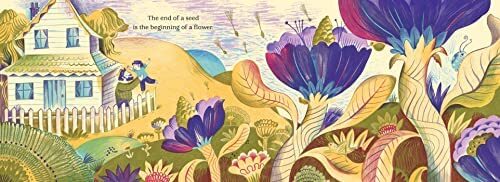
Thomas’s picture book Beginning follows a young child and their father on a gentle journey through the natural world. As they walk, they observe a series of transformations: a tiny seed sprouting into a plant, an egg cracking open into a chick, and a caterpillar emerging from its cocoon as a butterfly. On its surface, the narrative acts as a simple, poetic celebration of the everyday wonders found in nature, providing young readers with clear visual examples of growth, natural cycles, and environmental connection.
Beneath its accessible surface, the story carries a philosophical framework centered on the concept of transitions and impermanence. The core message reframes how we view endings; rather than treating the conclusion of a phase as a point of loss or finality, the book positions every ending as an essential, prerequisite doorway to a new start. By grounding this concept in natural metaphors like the metamorphosis of a butterfly, Thomas normalizes change for young children. The story addresses the subtle anxieties associated with growing up, shifting environments, or leaving familiar states behind, offering comfort by framing life as an ongoing, continuous rhythm rather than a series of abrupt stop-and-start events.
The deeper meaning is further amplified by the presence of the father figure, who acts as a grounding guide throughout the child's exploration. The father does not lecture; instead, he models quiet observation and emotional security, reassuring the child that while external circumstances and life stages constantly shift, steady support remains constant. Ultimately, Beginning operates as a meditative reflection on resilience and continuity, reassuring readers of any age that every closed chapter inherently carries the seed of a new adventure.