

What do you think?
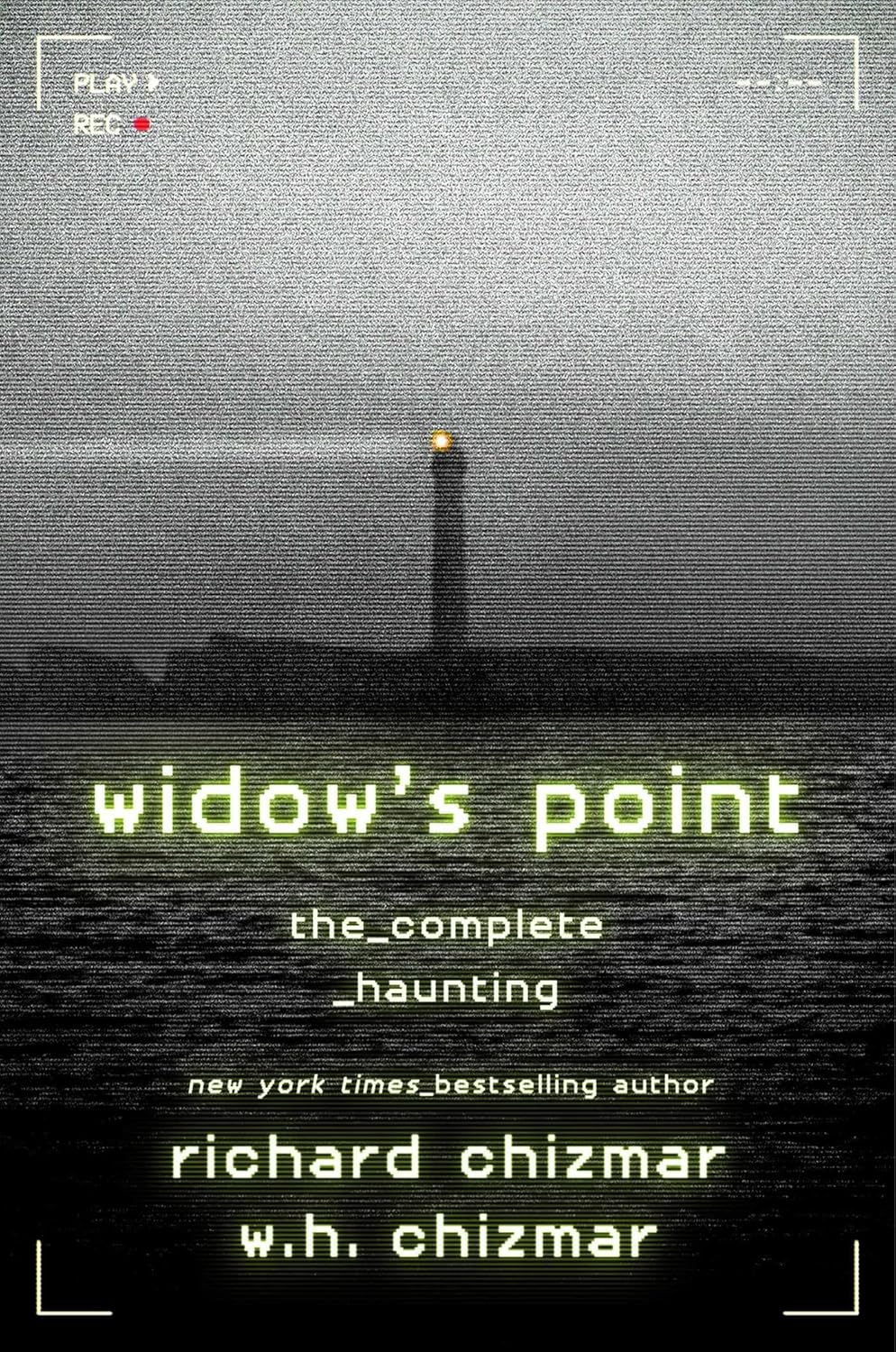
Widow's Point: The Complete Haunting
'This is a bad place. I don't think people are meant to live here.'
Longtime residents of Harper's Cove believe that something is wrong with the Widow's Point Lighthouse. Some say it's cursed. Others claim it's haunted.
Originally built in 1838, three workers were killed during the lighthouse's construction, including one who mysteriously plunged to his death from the catwalk. That tragic accident was never explained, and it was just the beginning of the terror. In the decades that followed, nearly two dozen additional deaths occurred in or around the lighthouse including cold-blooded murder, suicide, unexplained accidents and disappearances, the slaughter of an entire family, and the inexplicable death of a Hollywood starlet who was filming a movie on the grounds.
The lighthouse was finally shuttered tight in 1988 and a security fence was erected around the property. No one has been inside since. Until now.
Told across two harrowing incidents from 2017 and 2025, those who enter the Widow's Point Lighthouse searching for supernatural proof and the next big thing find themselves cut off from the outside world. And although no one has recently stepped foot inside the structure, they are not alone.
In this remarkable collaboration, father and son writing team, Richard and W.H. Chizmar combine forces to tell a terrifying ghost story that will make you think twice about what's waiting for you in the dark.
Longtime residents of Harper's Cove believe that something is wrong with the Widow's Point Lighthouse. Some say it's cursed. Others claim it's haunted.
Originally built in 1838, three workers were killed during the lighthouse's construction, including one who mysteriously plunged to his death from the catwalk. That tragic accident was never explained, and it was just the beginning of the terror. In the decades that followed, nearly two dozen additional deaths occurred in or around the lighthouse including cold-blooded murder, suicide, unexplained accidents and disappearances, the slaughter of an entire family, and the inexplicable death of a Hollywood starlet who was filming a movie on the grounds.
The lighthouse was finally shuttered tight in 1988 and a security fence was erected around the property. No one has been inside since. Until now.
Told across two harrowing incidents from 2017 and 2025, those who enter the Widow's Point Lighthouse searching for supernatural proof and the next big thing find themselves cut off from the outside world. And although no one has recently stepped foot inside the structure, they are not alone.
In this remarkable collaboration, father and son writing team, Richard and W.H. Chizmar combine forces to tell a terrifying ghost story that will make you think twice about what's waiting for you in the dark.
336 pages, Hardcover
First published September 30, 2025
Ratings & Reviews
Friends & Following
Create a free account to discover what your friends think of this book!
Community Reviews
Displaying 1 - 30 of 1,226 reviews

October 19, 2025
⭐️ ⭐️ ⭐️ ⭐️
Found footage is a guilty pleasure of mine. I know that the plot typically defies logic and relies upon brain dead young people making unbelievable decisions, but I just don’t care. I find it to be fascinating and terrifying, if done well.
The beauty of found footage in book form is that you can evade some of the logic traps that require the camera to be rolling at all times. You can go inside people’s heads and advance plot through off screen happenings. This book does this incredibly well, and is a stand out amongst the books I’ve read this year.
I love Chizamar, and enjoy almost everything the man puts out (sorry Memorials). Having this be a co-written novel with his son only adds to my delight. I love the thought of them ping-ponging ideas back and forth, and the final product feels cohesive, avoiding the jarring nature that combining writing styles can sometimes produce.
This book is creepy, and will stay with me for a while. It’s another notch in Chizmar’s belt as he continues his climb towards elite horror writer status…
Found footage is a guilty pleasure of mine. I know that the plot typically defies logic and relies upon brain dead young people making unbelievable decisions, but I just don’t care. I find it to be fascinating and terrifying, if done well.
The beauty of found footage in book form is that you can evade some of the logic traps that require the camera to be rolling at all times. You can go inside people’s heads and advance plot through off screen happenings. This book does this incredibly well, and is a stand out amongst the books I’ve read this year.
I love Chizamar, and enjoy almost everything the man puts out (sorry Memorials). Having this be a co-written novel with his son only adds to my delight. I love the thought of them ping-ponging ideas back and forth, and the final product feels cohesive, avoiding the jarring nature that combining writing styles can sometimes produce.
This book is creepy, and will stay with me for a while. It’s another notch in Chizmar’s belt as he continues his climb towards elite horror writer status…
August 9, 2025
In 2017, a paranormal investigator attempts to document his time spent in Widow‘s Point, a haunted lighthouse in Nova Scotia. He disappears, almost without a trace. His recordings and equipment are the only things left behind. Fast-forward to present day and a new team is once again determined to stay in the lighthouse and document their findings all the while coming out alive.
The entire story is told through different multimedia communications, however focuses prominently on video recordings. It took me a minute to get used to the entire novel being written this way, but once I got into the groove of the story, it didn’t bother me. The story itself is certainly very creepy and I enjoyed the backstory of the lighthouse. The atmosphere just oozed creepiness and the setting of Nova Scotia fit it perfectly. Where I got a little bit lost was at the end. It felt a bit open ended and I found myself a little confused at some of the things that happened, but overall I got the gist.
This definitely would make for a good spooky Halloween read, especially if you enjoy haunted lighthouses and found video footage similar to Blair Witch.
Thank you to NetGalley and the publisher for my advanced copy in exchange for an honest review.
The entire story is told through different multimedia communications, however focuses prominently on video recordings. It took me a minute to get used to the entire novel being written this way, but once I got into the groove of the story, it didn’t bother me. The story itself is certainly very creepy and I enjoyed the backstory of the lighthouse. The atmosphere just oozed creepiness and the setting of Nova Scotia fit it perfectly. Where I got a little bit lost was at the end. It felt a bit open ended and I found myself a little confused at some of the things that happened, but overall I got the gist.
This definitely would make for a good spooky Halloween read, especially if you enjoy haunted lighthouses and found video footage similar to Blair Witch.
Thank you to NetGalley and the publisher for my advanced copy in exchange for an honest review.

November 4, 2025
I'm of two minds when it comes to this novel.
The Widow's Point lighthouse in Nova Scotia has an unfortunate and gruesome history that claimed the lives of many that crossed its path.
In 2017 Thomas Livingston, an author of the paranormal, decides he'll spend a weekend inside the notorious lighthouse to see what goes bump in the night and it does not end well.
Fast forward to 2025 and a new crew of paranormal investigators decide they'll spend Halloween week in the lighthouse to see if they can finally solve the mystery. Do they? You'll have to read this to find out.
The 2017 timeline, which is the original novella, was outstanding. Creepy and horrific just how I like my haunted house stories.
The father and son author duo felt the story was incomplete so they added the new timeline to tell the "complete" story and I honestly wish they had just left well enough alone.
I struggled through the 2025 timeline. The characters were all cringeworthy and annoying. The spooks didn't spook and the creeps didn't creep. It was a total slog to wade through.
Ultimately, I wish I had just read the novella. Bummer. 2 stars!
The Widow's Point lighthouse in Nova Scotia has an unfortunate and gruesome history that claimed the lives of many that crossed its path.
In 2017 Thomas Livingston, an author of the paranormal, decides he'll spend a weekend inside the notorious lighthouse to see what goes bump in the night and it does not end well.
Fast forward to 2025 and a new crew of paranormal investigators decide they'll spend Halloween week in the lighthouse to see if they can finally solve the mystery. Do they? You'll have to read this to find out.
The 2017 timeline, which is the original novella, was outstanding. Creepy and horrific just how I like my haunted house stories.
The father and son author duo felt the story was incomplete so they added the new timeline to tell the "complete" story and I honestly wish they had just left well enough alone.
I struggled through the 2025 timeline. The characters were all cringeworthy and annoying. The spooks didn't spook and the creeps didn't creep. It was a total slog to wade through.
Ultimately, I wish I had just read the novella. Bummer. 2 stars!

July 17, 2026
“Widow's Point: The Complete Haunting” by Richard Chizmar & W.H. Chizmar is one of those books that, simply put, you must read. If you enjoy haunted house novels but want to take a stab at a haunted lighthouse novel with a found-footage twist, this one has your name written in blood all over it.
Before I dive into my horror book review, here are all the trigger warnings I found while reading:
- Self-harm
- Suicide
- Rape
- Cancer
- Violence against children
- Religion
- Domestic abuse
- Sexual abuse
If any of these trigger you, please do not read this novel. Moving along, I originally read “Widow’s Point” by this father-son author duo back in 2022, and it was a 5-Star horror short-story masterpiece. I loved that book, especially the scary illustrations that grew crazier and more horrific as I kept reading. There are a few illustrations here, but not as many as in the original, as the Chizmars decided to revise the original short story into a full horror novel that includes the original with Thomas Livingston, along with a sequel with a whole new cast of characters.
They did a phenomenal job here, as I still remembered the original, and continuing where that left off with a whole "ghost hunting" group to investigate was awesome. I grew up watching and loving ghost-hunting shows, especially my all-time favorite, "Ghost Hunters." As an adult, I got major vibes of that show here, but in written form.
Everything from the letters, diary entries, transcribed audio recordings, police reports, and backstory, while reading, added an immersive, modern feel to everything. It made it feel even creepier and more authentic. When it came to the actual horror, my goodness, all the horror events and situations were absolutely insane. I made many weird faces while reading, as they were gory, graphic, and terrifying.
Don’t worry, no spoilers here, but this was a genuine page-turner. I loved the suspense and buildup of the first part into the second part, as I couldn’t put this book down, especially with all the fantastic evil ghostly vibes. The general tension here, leading up to some wild events, was well worth the book's slow-burning nature. Yes, some parts might drag on due to dialogue and descriptions, but trust me when I say, it’s well worth it in the grand scheme of things.
The atmospheric writing of the lighthouse itself, characters, and the woods around it were all brilliantly written. The climactic race to the end, with multiple things happening at once, was magnificent. Seriously, I couldn’t turn the pages fast enough because I was dying to know how this would all end.
Speaking of which, the ending was insane, and something I didn’t see coming at all. It ends with a drop-the-mic moment, and similar to the original short story, I had my jaw on the floor with how everything ended. With all the great storytelling, the plot twists, and characters, plus whatever the hell is ultimately at Widow’s Point, this was one hell of a superb read.
I give “Widow's Point: The Complete Haunting” by Richard Chizmar & W.H. Chizmar a 5-Star rating out of 5. Not only does this complete Widow’s Point from the original short story, but it also expands the lore, adds some new characters, and continues the story of Livingston. I’ve always loved reading Chizmar’s work, and to see him tag-team this book with his son was a lot of fun. Clearly, it runs in the family, because the horror in this novel will make you think twice the next time you see a lighthouse or mannequins, for that matter. I also loved the Stephen King references you’ll find while reading, which put a smile on my face.
WE ARE STILL HERE
Before I dive into my horror book review, here are all the trigger warnings I found while reading:
- Self-harm
- Suicide
- Rape
- Cancer
- Violence against children
- Religion
- Domestic abuse
- Sexual abuse
If any of these trigger you, please do not read this novel. Moving along, I originally read “Widow’s Point” by this father-son author duo back in 2022, and it was a 5-Star horror short-story masterpiece. I loved that book, especially the scary illustrations that grew crazier and more horrific as I kept reading. There are a few illustrations here, but not as many as in the original, as the Chizmars decided to revise the original short story into a full horror novel that includes the original with Thomas Livingston, along with a sequel with a whole new cast of characters.
They did a phenomenal job here, as I still remembered the original, and continuing where that left off with a whole "ghost hunting" group to investigate was awesome. I grew up watching and loving ghost-hunting shows, especially my all-time favorite, "Ghost Hunters." As an adult, I got major vibes of that show here, but in written form.
Everything from the letters, diary entries, transcribed audio recordings, police reports, and backstory, while reading, added an immersive, modern feel to everything. It made it feel even creepier and more authentic. When it came to the actual horror, my goodness, all the horror events and situations were absolutely insane. I made many weird faces while reading, as they were gory, graphic, and terrifying.
Don’t worry, no spoilers here, but this was a genuine page-turner. I loved the suspense and buildup of the first part into the second part, as I couldn’t put this book down, especially with all the fantastic evil ghostly vibes. The general tension here, leading up to some wild events, was well worth the book's slow-burning nature. Yes, some parts might drag on due to dialogue and descriptions, but trust me when I say, it’s well worth it in the grand scheme of things.
The atmospheric writing of the lighthouse itself, characters, and the woods around it were all brilliantly written. The climactic race to the end, with multiple things happening at once, was magnificent. Seriously, I couldn’t turn the pages fast enough because I was dying to know how this would all end.
Speaking of which, the ending was insane, and something I didn’t see coming at all. It ends with a drop-the-mic moment, and similar to the original short story, I had my jaw on the floor with how everything ended. With all the great storytelling, the plot twists, and characters, plus whatever the hell is ultimately at Widow’s Point, this was one hell of a superb read.
I give “Widow's Point: The Complete Haunting” by Richard Chizmar & W.H. Chizmar a 5-Star rating out of 5. Not only does this complete Widow’s Point from the original short story, but it also expands the lore, adds some new characters, and continues the story of Livingston. I’ve always loved reading Chizmar’s work, and to see him tag-team this book with his son was a lot of fun. Clearly, it runs in the family, because the horror in this novel will make you think twice the next time you see a lighthouse or mannequins, for that matter. I also loved the Stephen King references you’ll find while reading, which put a smile on my face.
WE ARE STILL HERE

October 5, 2025
Atmospheric, creepy, and downright spine-chilling, Widow’s Point was the perfect kind of read for this spooky season. From the original mixed media format to the Blair Witch Project vibes, I had to read this one with the lights on and I’m still likely to have nightmares later tonight. After all, following a slow-burning start that built an increasingly terrifying dark history for this haunting locked room setting, the eerie events quickly transformed into some truly blood-curdling scenes. All I know is that I’m already well aware that I’ll never look at a lighthouse the same way again. You see, the authors’ easily brought to life a definite sense of suffocating claustrophobia as this cursed abode attempted to hold on to all possible victims.
All said and done, in spite of the slow start and somewhat open-ended conclusion, I was completely spellbound to this unputdownable novel of supernatural horror. With a rich cinematic feel thanks to the found footage narrative, the dual timelines and multiple POVs kept me firmly in suspense from beginning to end. You see, the terror in this novel was the kind I grew up watching with glee as a teen. A masterclass on how to build palpable tension and rising levels of foreboding, this writing duo now has a brand-spanking-new fan in this newbie to horror. So if you’re looking for a book sure to scare you but good, add this one to your list ASAP. Sinister, ominous, and menacing, it was an utter home run. Rating of 4.5 stars.
SYNOPSIS:
Longtime residents of Harper’s Cove believe that something is wrong with the Widow’s Point Lighthouse. Some say it’s cursed. Others claim it’s haunted.
Originally built in 1838, three workers were killed during the lighthouse’s construction, including one who mysteriously plunged to his death from the catwalk. That tragic accident was never explained, and it was just the beginning of the terror. In the decades that followed, nearly two dozen additional deaths occurred in or around the lighthouse including cold-blooded murder, suicide, unexplained accidents and disappearances, the slaughter of an entire family, and the inexplicable death of a Hollywood starlet who was filming a movie on the grounds.
The lighthouse was finally shuttered tight in 1988 and a security fence was erected around the property. No one has been inside since. Until now.
Told across two harrowing incidents from 2017 and 2025, those who enter the Widow’s Point Lighthouse searching for supernatural proof and the next big thing find themselves cut off from the outside world. And although no one has recently stepped foot inside the structure, they are not alone.
Thank you to Richard Chizmar, W.H. Chizmar, and Gallery Books for my complimentary copy. All opinions are my own.
PUB DATE: September 30, 2025
Content warning: violence, ghosts
All said and done, in spite of the slow start and somewhat open-ended conclusion, I was completely spellbound to this unputdownable novel of supernatural horror. With a rich cinematic feel thanks to the found footage narrative, the dual timelines and multiple POVs kept me firmly in suspense from beginning to end. You see, the terror in this novel was the kind I grew up watching with glee as a teen. A masterclass on how to build palpable tension and rising levels of foreboding, this writing duo now has a brand-spanking-new fan in this newbie to horror. So if you’re looking for a book sure to scare you but good, add this one to your list ASAP. Sinister, ominous, and menacing, it was an utter home run. Rating of 4.5 stars.
SYNOPSIS:
Longtime residents of Harper’s Cove believe that something is wrong with the Widow’s Point Lighthouse. Some say it’s cursed. Others claim it’s haunted.
Originally built in 1838, three workers were killed during the lighthouse’s construction, including one who mysteriously plunged to his death from the catwalk. That tragic accident was never explained, and it was just the beginning of the terror. In the decades that followed, nearly two dozen additional deaths occurred in or around the lighthouse including cold-blooded murder, suicide, unexplained accidents and disappearances, the slaughter of an entire family, and the inexplicable death of a Hollywood starlet who was filming a movie on the grounds.
The lighthouse was finally shuttered tight in 1988 and a security fence was erected around the property. No one has been inside since. Until now.
Told across two harrowing incidents from 2017 and 2025, those who enter the Widow’s Point Lighthouse searching for supernatural proof and the next big thing find themselves cut off from the outside world. And although no one has recently stepped foot inside the structure, they are not alone.
Thank you to Richard Chizmar, W.H. Chizmar, and Gallery Books for my complimentary copy. All opinions are my own.
PUB DATE: September 30, 2025
Content warning: violence, ghosts

June 29, 2025
Get this on your spooky 👻 TBR ASAP!! I absolutely loved it!!! 👏👏 Thank you so much @richard_chizmar @whchizmar @gallerybooks for this gorgeous gifted copy!!! 🥰
Pub date is 9/30🥳🥳 PERFECT timing for spooky 👻 season!! Just saying!! 😉
Okay wow!! First off… @richard_chizmar has quickly become a favorite author of mine!! I read my first @richard_chizmar book last year… and loved it!! This is my third and ALL three have been hands down 5 stars!! ⭐️ He doesn’t just tell you a story… he makes you live it! 😳🫣😳
A lighthouse with a history of massacres… ghosts..people disappearing poof 💥 into thin air… never to be seen again. 😳
Fast forward to 2025 and our dude Trent decides he is getting to the bottom of this… 😳 … and that is a story in itself. Why did I love this so much??
✅ Brilliant… mesmerizing… chilling.. terrifying… Yep this book puts the C in creeptastic!! 👏
✅ SO original… even the King 👑 of Horror says so.. See what @stephenking had to say about it… on the cover.. it’s spot on.
✅ A WTFFFF ending!! 😮😳🤯🤯
Okay seriously… this is one of the BEST books I’ve read this year!! I loved it and can’t recommend it enough. I had to message @nikkileethrillseeker and freak out about it because she loved it too!! 😉
So 🏃 run preorder a copy and get a friend that you can flip out with!! Or message me.😂 P. S…if you are still reading this.. @richard_chizmar wrote this with his son @whchizmar !! Who now I am a fan of too!! Make sure you read the author’s note. This book was an incredible journey! 🖤
Pub date is 9/30🥳🥳 PERFECT timing for spooky 👻 season!! Just saying!! 😉
Okay wow!! First off… @richard_chizmar has quickly become a favorite author of mine!! I read my first @richard_chizmar book last year… and loved it!! This is my third and ALL three have been hands down 5 stars!! ⭐️ He doesn’t just tell you a story… he makes you live it! 😳🫣😳
A lighthouse with a history of massacres… ghosts..people disappearing poof 💥 into thin air… never to be seen again. 😳
Fast forward to 2025 and our dude Trent decides he is getting to the bottom of this… 😳 … and that is a story in itself. Why did I love this so much??
✅ Brilliant… mesmerizing… chilling.. terrifying… Yep this book puts the C in creeptastic!! 👏
✅ SO original… even the King 👑 of Horror says so.. See what @stephenking had to say about it… on the cover.. it’s spot on.
✅ A WTFFFF ending!! 😮😳🤯🤯
Okay seriously… this is one of the BEST books I’ve read this year!! I loved it and can’t recommend it enough. I had to message @nikkileethrillseeker and freak out about it because she loved it too!! 😉
So 🏃 run preorder a copy and get a friend that you can flip out with!! Or message me.😂 P. S…if you are still reading this.. @richard_chizmar wrote this with his son @whchizmar !! Who now I am a fan of too!! Make sure you read the author’s note. This book was an incredible journey! 🖤

August 3, 2026
Do You Dare Enter Widow's Point Lighthouse?
Small backstory:
A team of paranormal investigators decide to stay a few days in the Widow's Point Lighthouse as they want to see if the local legends are true about it being haunted. Another paranormal investigator had disappeared from the lighthouse a few years before so this team wants to see if they can find out what is going on there.
The team of investigators have better equipment and setup so they are hoping to catch footage of anything creepy and try to find out what happened maybe to the other investigator. Little do they know that something does lie within and it might not want them to leave!
That is about all I can hand out with a small backstory without giving away spoilers so if you want to know more then go read this book!
Thoughts:
This book is told in two parts - one part is told with the first paranormal investigator and what he went through at the lighthouse which is only about 25% of the first part of the book. The second part is told with the new team of paranormal investigators and their findings of whether the lighthouse is haunted or not.
The first part of the book seemed to move a little slow for me that was wrapped around the first investigator but when the second part opens up with the new team is when the book takes off. I like how the story was written by the authors as each team member gets their take on what is happening around them. The pace picks up around the 50% mark and I had a hard time putting the book down. I ended up reading the last 30% in just a few hours and the story just blew me away! I loved this book!
There is a movie out there called Widow's Point and I did watch it awhile back but that story is only wrapped around the first investigator and it doesn't involve this new team. There was another book that was written by the author, Richard Chizmar of Widow's Point which is where the movie came about however this book was released last year in 2025 with tons of more content including the new paranormal team. Loved the characters in this book even though a handful were kind of quirky but I felt that the book deserves the five stars for it's creepy and spooky atmosphere! Giving this book five "Freaky Found Footage" stars!
Small backstory:
A team of paranormal investigators decide to stay a few days in the Widow's Point Lighthouse as they want to see if the local legends are true about it being haunted. Another paranormal investigator had disappeared from the lighthouse a few years before so this team wants to see if they can find out what is going on there.
The team of investigators have better equipment and setup so they are hoping to catch footage of anything creepy and try to find out what happened maybe to the other investigator. Little do they know that something does lie within and it might not want them to leave!
That is about all I can hand out with a small backstory without giving away spoilers so if you want to know more then go read this book!
Thoughts:
This book is told in two parts - one part is told with the first paranormal investigator and what he went through at the lighthouse which is only about 25% of the first part of the book. The second part is told with the new team of paranormal investigators and their findings of whether the lighthouse is haunted or not.
The first part of the book seemed to move a little slow for me that was wrapped around the first investigator but when the second part opens up with the new team is when the book takes off. I like how the story was written by the authors as each team member gets their take on what is happening around them. The pace picks up around the 50% mark and I had a hard time putting the book down. I ended up reading the last 30% in just a few hours and the story just blew me away! I loved this book!
There is a movie out there called Widow's Point and I did watch it awhile back but that story is only wrapped around the first investigator and it doesn't involve this new team. There was another book that was written by the author, Richard Chizmar of Widow's Point which is where the movie came about however this book was released last year in 2025 with tons of more content including the new paranormal team. Loved the characters in this book even though a handful were kind of quirky but I felt that the book deserves the five stars for it's creepy and spooky atmosphere! Giving this book five "Freaky Found Footage" stars!

August 7, 2026
This one is a hard one for me to rate/review.
Overall rating, I’ll go with a solid 4 stars ⭐️⭐️⭐️⭐️.
Original Novella - 5 stars ⭐️⭐️⭐️⭐️⭐️
When the novella came out in 2018 by Richard & W.H. Chizmar (father/son writing duo), I didn’t get to it but I’m glad to read it first in “The Complete Haunting”.
The novella called Widow’s Point, which was around 150+ pages, was about Thomas Livingston doing an investigation on the Widow’s Point Lighthouse. It's located in Harper’s Cove of Nova Scotia and it's a small fishing village. The lighthouse has had multiple deaths and tragedies surrounding it.
It’s said to be haunted, and Livingston is looking for supernatural material for his next book. He goes to Nova Scotia to do a solo investigation and makes the decision to lock himself in the lighthouse for 3 days.
Super freaking scary! I loved everything about this part along with the “found footage”. The mixed media from diary entries to audio recordings was so good.
New Storyline – 3/3.5 stars ⭐️⭐️⭐️
In 2025, our writing duo decides to revisit this cursed lighthouse. This time a ghost hunting group is doing the investigating and footage for their fans. The group also brings in two new paranormal experts to help out.
Does anyone remember Ghost Adventures and especially the main investigator, Zak Bagans?!
I could not get him out of my head when the character of Trent was around. This type of show makes someone like Zak or in this case Trent into a cheesy TV personality. He’s there in the book to be “that” character and I realized that, but he still annoyed the hell out of me. ¯\_(ツ)_/¯
I think the new storyline should have been fleshed out more with the backstory of the lighthouse and the area that it stands on. One of the characters at the end needs more information as well. Obviously, I’m keeping this brief due to spoilers.
If those things could have been expanding on, the ending wouldn’t have felt so indecisive and lost to me, especially with the
Overall, I had a fun time reading this. I always love a good haunting and if it involves found footage, even better!
Overall rating, I’ll go with a solid 4 stars ⭐️⭐️⭐️⭐️.
Original Novella - 5 stars ⭐️⭐️⭐️⭐️⭐️
When the novella came out in 2018 by Richard & W.H. Chizmar (father/son writing duo), I didn’t get to it but I’m glad to read it first in “The Complete Haunting”.
The novella called Widow’s Point, which was around 150+ pages, was about Thomas Livingston doing an investigation on the Widow’s Point Lighthouse. It's located in Harper’s Cove of Nova Scotia and it's a small fishing village. The lighthouse has had multiple deaths and tragedies surrounding it.
It’s said to be haunted, and Livingston is looking for supernatural material for his next book. He goes to Nova Scotia to do a solo investigation and makes the decision to lock himself in the lighthouse for 3 days.
Super freaking scary! I loved everything about this part along with the “found footage”. The mixed media from diary entries to audio recordings was so good.
New Storyline – 3/3.5 stars ⭐️⭐️⭐️
In 2025, our writing duo decides to revisit this cursed lighthouse. This time a ghost hunting group is doing the investigating and footage for their fans. The group also brings in two new paranormal experts to help out.
Does anyone remember Ghost Adventures and especially the main investigator, Zak Bagans?!
I could not get him out of my head when the character of Trent was around. This type of show makes someone like Zak or in this case Trent into a cheesy TV personality. He’s there in the book to be “that” character and I realized that, but he still annoyed the hell out of me. ¯\_(ツ)_/¯
I think the new storyline should have been fleshed out more with the backstory of the lighthouse and the area that it stands on. One of the characters at the end needs more information as well. Obviously, I’m keeping this brief due to spoilers.
If those things could have been expanding on, the ending wouldn’t have felt so indecisive and lost to me, especially with the
Overall, I had a fun time reading this. I always love a good haunting and if it involves found footage, even better!
June 13, 2025
A deliciously eerie twist on hauntings that will have you squirming with stomach-churning dread, WIDOW'S POINT cements itself as one of the best found-footage horror stories of all time. I've still got goosebumps!
February 7, 2026
It bored the heck out of me.

August 14, 2026
Friends, when we think of a lighthouse, we picture a beautiful structure guiding lost ships through stormy seas. But the lighthouse in this book, known as 'Widow's Point,' does not spread light; it swallows it. Over the last century and a half, this place has witnessed dozens of gruesome deaths, brutal murders, and mysterious suicides. This lighthouse is not just a building of brick and stone—it is a living, breathing, hungry entity.The novel masterfully connects two different timelines. The first takes us back to 2017, where Thomas Livingston, a skeptical paranormal author, locks himself inside the lighthouse for a weekend to research his next bestseller. He believes ghosts are nothing but myths. However, as the hours tick away, the lighthouse begins to hijack his mind, twist his thoughts, and ultimately drives him to the brink of absolute madness.But the most terrifying and modern twist occurs in the second timeline, set in the year 2025. In today’s digital age, where everyone is starved for 'content' and 'views,' a team of popular YouTubers and social media influencers decides to live-stream from this cursed lighthouse. They enter with cameras, high-tech gadgets, and supreme confidence, expecting to create a viral internet sensation. But the moment they step inside, the doors lock on their own.What makes this place truly terrifying is that it doesn’t frighten you with simple ghosts or jump scares. Instead, the lighthouse unearths your deepest fears, past traumas, and psychological vulnerabilities, turning them against you. Driven by illusions, the team members lose their minds, turn on each other, and become their own worst enemies.My friends, this book serves as a powerful critique of our modern generation. Today, in the relentless pursuit of making reels, going viral, and chasing a few thousand likes, people are willingly risking their lives. We often forget that life is not a game or an internet prank. 'Widow’s Point' serves as a chilling reminder that there are boundaries we must never cross. Because when humanity's hunger for digital validation grows, the hunger of entities like that lighthouse wakes up to feed on human souls.Let us learn to set boundaries for technology and entertainment, before our own minds turn into a horror story we cannot escape.
October 5, 2025
A skin-prickling, parapsychological-investigative novel follows a cast of clout-chasers, truth-seekers, and researchers as they camp in a lighthouse infamous for its dark history of frightful events. In modern terms, FAFO but with more objectivity and in pursuit of truth and knowledge.
Prompted by anecdotes, the characters, equipped with a variety of tech, attempt to explain the lighthouse’s chilling history. Meaningfully, the perceived supernatural events are rationalised within both a naturalistic framework (based on empirical observation) and a phenomenological one (focusing on lived experience and perception). The novel’s appeal lies in the formulation of theories coloured by personal histories, knowledge, interests, motives, and biases. The plot is stirred further by frequent equipment malfunctions which distort perception and time, causing recordings to become shorter, fragmented, or unintelligible, punctuated by temporary moments of clarity and terror.
Without discounting the possibility that some phenomena exist beyond scientific explanation, this reflection is arguably my own attempt at self-preservation; the writing can make it easy to forget its fictional nature. Make of it what you will, my literary notes and personal reflections follow:
A central tension in the novel is the ever-present possibility that many events may be explained as natural phenomena or engineered occurrences rather than purely supernatural, raising doubts about whether a truly sinister force is at work, though some characters are quicker to lean towards ghosts and supernatural causes than others. Notably, lighthouse’s unique architecture and geographical location create conditions conducive to white noise, exposure to which can induce illusions, hallucinations, or psychotic symptoms, particularly in individuals at risk of psychotic disorders. This occurs as the brain, ever pattern-seeking, fills gaps by interpreting random sounds as meaningful. Moreover, prolonged exhaustion and agitation (from climbing hundreds of steps), poor lighting that casts shadows, inadequate nutrition and being huddled up in an unfamiliar environment with strangers can, when taken together, produce psychosomatic symptoms. Combined with expectancy bias, anything unusual may be interpreted as (not) supernatural by those actively searching or denying it.
Things can get so bad that one might properly question whether it is meaningful to distinguish the two (supernatural or not), since in either case, they are powerless to resist an inevitable collapse. The frequency and unhinged nature of the events make any attempt at logical explanation look out of depth by comparison, by which point, the novel takes on a truly frightening character.
For fans of ghost hunters, paranormal investigators etc.
“Ghosts are feelings of the past making themselves known to the present”
“I don’t want to sensationalise or trivialise, I just want to find closure and some level of understanding”
“I want to go home…There’s evil here… it’s lurking above the stairway and slumber upon the catwalk. It breathes the salt of the ocean and exhales darkness… I can feel it oozing through the stonewalls and slithering into my skin. It’s swimming in my veins… I can feel it eating my brain”
Prompted by anecdotes, the characters, equipped with a variety of tech, attempt to explain the lighthouse’s chilling history. Meaningfully, the perceived supernatural events are rationalised within both a naturalistic framework (based on empirical observation) and a phenomenological one (focusing on lived experience and perception). The novel’s appeal lies in the formulation of theories coloured by personal histories, knowledge, interests, motives, and biases. The plot is stirred further by frequent equipment malfunctions which distort perception and time, causing recordings to become shorter, fragmented, or unintelligible, punctuated by temporary moments of clarity and terror.
Without discounting the possibility that some phenomena exist beyond scientific explanation, this reflection is arguably my own attempt at self-preservation; the writing can make it easy to forget its fictional nature. Make of it what you will, my literary notes and personal reflections follow:
A central tension in the novel is the ever-present possibility that many events may be explained as natural phenomena or engineered occurrences rather than purely supernatural, raising doubts about whether a truly sinister force is at work, though some characters are quicker to lean towards ghosts and supernatural causes than others. Notably, lighthouse’s unique architecture and geographical location create conditions conducive to white noise, exposure to which can induce illusions, hallucinations, or psychotic symptoms, particularly in individuals at risk of psychotic disorders. This occurs as the brain, ever pattern-seeking, fills gaps by interpreting random sounds as meaningful. Moreover, prolonged exhaustion and agitation (from climbing hundreds of steps), poor lighting that casts shadows, inadequate nutrition and being huddled up in an unfamiliar environment with strangers can, when taken together, produce psychosomatic symptoms. Combined with expectancy bias, anything unusual may be interpreted as (not) supernatural by those actively searching or denying it.
Things can get so bad that one might properly question whether it is meaningful to distinguish the two (supernatural or not), since in either case, they are powerless to resist an inevitable collapse. The frequency and unhinged nature of the events make any attempt at logical explanation look out of depth by comparison, by which point, the novel takes on a truly frightening character.
For fans of ghost hunters, paranormal investigators etc.
“Ghosts are feelings of the past making themselves known to the present”
“I don’t want to sensationalise or trivialise, I just want to find closure and some level of understanding”
“I want to go home…There’s evil here… it’s lurking above the stairway and slumber upon the catwalk. It breathes the salt of the ocean and exhales darkness… I can feel it oozing through the stonewalls and slithering into my skin. It’s swimming in my veins… I can feel it eating my brain”

May 28, 2025
his book LEGIT scared me. I think I jumped 4 times, and my heart was racing a majority of this book. I absolutely loved how this story was told, they used: found footage, twitch streams, Reddit, emails, voice recordings, newspapers, etc.
I flew through this one, and absolutely think it’s going to be a must read this spooky season. If you loved “Episode 13” by Craig DiLouie you will LOVE this one.
⭐️⭐️⭐️⭐️💫/5
Thank you @gallerybooks for the arc in exchange for my honest review. PUB DATE: 9/30
I flew through this one, and absolutely think it’s going to be a must read this spooky season. If you loved “Episode 13” by Craig DiLouie you will LOVE this one.
⭐️⭐️⭐️⭐️💫/5
Thank you @gallerybooks for the arc in exchange for my honest review. PUB DATE: 9/30
October 14, 2025
This was one I was pretty excited to read because I love lighthouses and I've heard Chizmar compared to Stephen King, who is one of my favorite authors, but I just could not get into this book. I hate to say this about any book, but this really would have made a much better movie or limited series. While the "found footage" element felt original for a written work, the novelty quickly wore off and it just became tedious. Further, the storytelling was dry and full of cliches, leading to an incredibly boring read. It was also much longer and more drawn-out than it probably needed to be (maybe it would have been better as a short story?).

June 14, 2025
ARC for review. To be published September 30, 2025.
3.5 stars
A slightly disjointed horror book (if you read the Afterword you’ll understand why, I think) written by Chizmar and his son. I LOVED the “Boogeyman” books and enjoyed MEMORIALS so I was really looking forward to this new book.
The fishing village of Harper’s Cove in Nova Scotia is home to Widow’s Point Lighthouse. Many terrible things have befallen people who lived, worked or visited there, starting with its construction in the 1800s and all those stories are part of local lore. In 2017 a ghost hunter attempted to spend a weekend locked in the lighthouse; when the owner came to release him, he had vanished.
Now an internet star has purchased the property and he, some coworkers and some paranormal investigators plan to stay at the lighthouse for a week. They have the audio recordings from 2017 and the diary of a young girl who died at the lighthouse. The group will record and investigate everything and find out the truth once and for all.
So, the book was fine. Fairly typical haunted lighthouse story. And while I love books that are mixed media (and lived the format again here) I was just hoping for more since I like Chizmar so much. Here you had your usual….you know, people are keeping secrets, people are left alone, etc. Nothing really innovative. So, 3.5 stars.
3.5 stars
A slightly disjointed horror book (if you read the Afterword you’ll understand why, I think) written by Chizmar and his son. I LOVED the “Boogeyman” books and enjoyed MEMORIALS so I was really looking forward to this new book.
The fishing village of Harper’s Cove in Nova Scotia is home to Widow’s Point Lighthouse. Many terrible things have befallen people who lived, worked or visited there, starting with its construction in the 1800s and all those stories are part of local lore. In 2017 a ghost hunter attempted to spend a weekend locked in the lighthouse; when the owner came to release him, he had vanished.
Now an internet star has purchased the property and he, some coworkers and some paranormal investigators plan to stay at the lighthouse for a week. They have the audio recordings from 2017 and the diary of a young girl who died at the lighthouse. The group will record and investigate everything and find out the truth once and for all.
So, the book was fine. Fairly typical haunted lighthouse story. And while I love books that are mixed media (and lived the format again here) I was just hoping for more since I like Chizmar so much. Here you had your usual….you know, people are keeping secrets, people are left alone, etc. Nothing really innovative. So, 3.5 stars.

July 12, 2026
A creepy, dreadfully atmospheric can’t-stop-reading story. Intimately pulls you in for a spirited hug. Truly believable, interesting characters that make you care. A haunted lighthouse that is a character unto itself. Brooding, startling, a claustrophobic read that encompasses two modern timelines, both trying to outdo the other in their tales of dark, frigid nightmares. And oh, yes, a feeling of wrongness. A series of incidences that shouldn’t be. Exactly what is going on? Is there a past here? Null Null 00. A quiet, quick and solid, yet slightly open ending. As they all should be. Horror stories that is. One of the best haunted places novels I have read in many a year. Just get to it.

February 3, 2026
2.5 Stars
These kinds of unconventional horror novels are so popular these days but unfortunately I don't love them. I find the narrative format quite dry and would personally rather read this in a traditional novel format.
That being said, I suspect people who love this format, will enjoy this one more than I did.
These kinds of unconventional horror novels are so popular these days but unfortunately I don't love them. I find the narrative format quite dry and would personally rather read this in a traditional novel format.
That being said, I suspect people who love this format, will enjoy this one more than I did.

September 3, 2026
These ghost hunters are all in, and they are busting out. They’ve got all of the best technology, a devoted crew, and 2 paranormal experts. No playing around here; they just bought one of the most haunted lighthouses in all of Nova Scotia. Some extremely bad things have gone down at this awful place, and they are going to find out real fast… This is no Anne of Green Gables.
Yeah, this was a fun read. It had all kinds of great horror themes and kept the pace steady in a found footage format that kept things interesting. The narrative got a little wonky towards the end, but the story was well done, and I’d recommend this.
Yeah, this was a fun read. It had all kinds of great horror themes and kept the pace steady in a found footage format that kept things interesting. The narrative got a little wonky towards the end, but the story was well done, and I’d recommend this.

September 18, 2025
Now this a locked room story! I will never look at a lighthouse the same way again. Richard Chizmar and his son scared the bejeezus out of me with this dark, creepy and terrifying story of a lighthouse with a mind of its own.
Do not turn out the lights while you read this. Told entirely with mixed media (audio recordings , video clips, letters, diaries, newspaper articles, emails etc) Widows Point would be amazing on audiobook. An abandoned lighthouse with a reputation for bad things happening , and yet people keep going there and think that they will be ok. My goodness this was scary. I heard every little noise my house was making in the night while reading this.
The perfect book for Halloween, so spooky and unsettling.
Thank you Gallery Books for my early copy of this book to read. Published on September 30th.
Do not turn out the lights while you read this. Told entirely with mixed media (audio recordings , video clips, letters, diaries, newspaper articles, emails etc) Widows Point would be amazing on audiobook. An abandoned lighthouse with a reputation for bad things happening , and yet people keep going there and think that they will be ok. My goodness this was scary. I heard every little noise my house was making in the night while reading this.
The perfect book for Halloween, so spooky and unsettling.
Thank you Gallery Books for my early copy of this book to read. Published on September 30th.

May 28, 2025
This book scared the ever loving sh*t out of me in the BEST way.

October 7, 2025
Widow's Point is centered around an infamous lighthouse built in 1838, with a long history of unexpected deaths and tragedies - leaving people to claim it is cursed and haunted. While it was being built, three construction workers died - and that is only the start of the deaths surrounding the lighthouse. In the years that followed, dozens of people died by suicide, murder, and unexplained disappearances - all centered around Widow's Point. The lighthouse was finally shut down, and a fence was erected to keep all out, until now.
It is told across dual timelines, first we have a paranormal investigator in 2017 who does a solo investigation of the lighthouse while being locked inside for three days.
Then, we have a group of investigators in 2025 who want to discover the secrets of the lighthouse. They both quickly discover they are not alone.
This was my first found footage book and I want more. The way it was told was descriptive and easy to follow, leaving me feeling like I was watching a movie rather than reading a book. There are a few points I gasped out loud and had to explain to my husband what just happened. The ending was a little corny but hey I loved it.
5 stars ⭐️⭐️⭐️⭐️⭐️
It is told across dual timelines, first we have a paranormal investigator in 2017 who does a solo investigation of the lighthouse while being locked inside for three days.
Then, we have a group of investigators in 2025 who want to discover the secrets of the lighthouse. They both quickly discover they are not alone.
This was my first found footage book and I want more. The way it was told was descriptive and easy to follow, leaving me feeling like I was watching a movie rather than reading a book. There are a few points I gasped out loud and had to explain to my husband what just happened. The ending was a little corny but hey I loved it.
5 stars ⭐️⭐️⭐️⭐️⭐️

December 15, 2025
Ever since I read Annihilation I’ve been completely obsessed with lighthouses and searching for more books that give me that Annihilation feeling. (I know I have set myself up for failure & that Annihilation is heavy on the sci-fi side of horror ok but the heart wants what it wants. 🤷🏻♀️)
This book had a great atmosphere and an incredible premise, I absolutely adore found footage style horror so this felt like it could easily be a 4 star read.
However I must say that while interesting in its idea and having read the acknowledgements and understanding that idea further, the two timelines…weren’t necessary and didn’t really make much sense together as a story. And I just had a ton of unanswered questions at the end so it wasn’t really that satisfying of a read. And it’s not like I was reaching for this book all that often, I think I’ve been reading this off and on in bits and pieces for like, a month, maybe a month and a half? Nothing wrong with that if you do it, but for me it means I don’t find a book all that interesting.
Ah well, the search continues.
This book had a great atmosphere and an incredible premise, I absolutely adore found footage style horror so this felt like it could easily be a 4 star read.
However I must say that while interesting in its idea and having read the acknowledgements and understanding that idea further, the two timelines…weren’t necessary and didn’t really make much sense together as a story. And I just had a ton of unanswered questions at the end so it wasn’t really that satisfying of a read. And it’s not like I was reaching for this book all that often, I think I’ve been reading this off and on in bits and pieces for like, a month, maybe a month and a half? Nothing wrong with that if you do it, but for me it means I don’t find a book all that interesting.
Ah well, the search continues.

August 11, 2026
After an initial episode in 2017 that begins the first part of this novel and is truly creepy - - things slow down a bit and this is only borderline scary until Page 220, and then - - - OMG! Horrifying. Shocking. Brutal. Definitely worth the wait.
This is a fascinating and compelling read for several reasons:
1) The storytelling method - - just like a found footage horror movie, and in my opinion, better utilized here than what Paul Trembly was attempting in his HORROR MOVIE novel.
2) A unique and totally different haunted house story. It's better that I don't say too much here. Reminds me a little bit of the classic THE HAUNTING black-and-white film from the 1960's.
3) The build-up to the core events may catch you off-guard, just after your expectations are somewhat diminished and you are no longer prepared. Not as immediate as a jump-scare, but just as effective.
4) Characters that I did not like but kept reading anyway - because everything else held my attention.. I wasn't wishing for bad things for them and only wanted one of them to have a favorable outcome. I won't say that was exactly what happened, but it was satisfactory. Usually, if I can't find a character in a novel that I can empathize or have any feelings for I will stop reading. This was the exception.
5) Short sections, sometimes only a paragraph (due to the story-telling method). This gives the reader multiple points of view - - but not from a character, but from a camera. This allows you to read in short sittings - - just a few pages at a time or more.
I participated in a group read with the Horror Aficionados community . If you want to get a better feel for this novel, go to their link and read the reader messages. There are some great insights, questions raised, and appreciation for the novel. Just don't read the spoilers until you have finished your own reading.
This is a fascinating and compelling read for several reasons:
1) The storytelling method - - just like a found footage horror movie, and in my opinion, better utilized here than what Paul Trembly was attempting in his HORROR MOVIE novel.
2) A unique and totally different haunted house story. It's better that I don't say too much here. Reminds me a little bit of the classic THE HAUNTING black-and-white film from the 1960's.
3) The build-up to the core events may catch you off-guard, just after your expectations are somewhat diminished and you are no longer prepared. Not as immediate as a jump-scare, but just as effective.
4) Characters that I did not like but kept reading anyway - because everything else held my attention.. I wasn't wishing for bad things for them and only wanted one of them to have a favorable outcome. I won't say that was exactly what happened, but it was satisfactory. Usually, if I can't find a character in a novel that I can empathize or have any feelings for I will stop reading. This was the exception.
5) Short sections, sometimes only a paragraph (due to the story-telling method). This gives the reader multiple points of view - - but not from a character, but from a camera. This allows you to read in short sittings - - just a few pages at a time or more.
I participated in a group read with the Horror Aficionados community . If you want to get a better feel for this novel, go to their link and read the reader messages. There are some great insights, questions raised, and appreciation for the novel. Just don't read the spoilers until you have finished your own reading.

July 9, 2026
i always love a good multi media horror, it’s one of my fav styles and the way this story unfolded was genuinely creepy at times. the most unsettling lighthouse that i cannot believe people continue to fuck with lol. my biggest critique is this felt so slow paceddddd, like pls move along. might be just me

May 8, 2026
Would be phenomenal as a movie.
August 2, 2025
This is probably the scariest book I’ve ever read. it is genuinely creepy and the last 50 pages had my heart racing. It's a haunted lighthouse story, but it's told via different media outlets like found footage, article excerpts, and news reports. After setting up the creepy and tragic history of the Widow's Point lighthouse in Nova Scotia, the majority of the story is told through found footage transcripts, when a social media star buys the lighthouse for him and his friends to stay there. Trent invites some special guests to spend the week in the lighthouse as well: a paranormal investigator and an academic doctor specializing in the paranormal, who happens to be from the town where the Widow's Point lighthouse is. Hoping for some entertaining content, Trent and crew get more than they bargained for. I like to read horror, but when people ask what book actually scared me....I didn't have an answer. Now I do! This was such a fun reading experience, I highly recommend it if you're looking for a creepy story! Easy 5 stars.
Huge thanks to Richard Chizmar for so kindly sending me a signed physical ARC! Book releases 9/30/25.
Huge thanks to Richard Chizmar for so kindly sending me a signed physical ARC! Book releases 9/30/25.
July 30, 2026
Widow’s Point by Richard Chizmar and W.H. Chizmar is one of the creepiest found-footage novels I’ve read. Told through recordings, articles, letters, emails, and recovered material, the story builds the tragic history of an abandoned lighthouse that feels less haunted than hungry.
The slow burn worked for me because every new detail added another layer of dread. By the final stretch, the tension becomes unbearable, and the lighthouse’s claustrophobic grip makes the story feel disturbingly real. I especially loved how cohesive the writing felt despite being co-written by father and son. Nothing about it felt stitched together.
There are moments when you want to yell at the characters for going inside, but that is part of the fun. Sinister, cinematic, and genuinely unsettling, Widow’s Point gave me Blair Witch vibes and had me noticing every sound in my house. I will never look at a lighthouse the same way again
The slow burn worked for me because every new detail added another layer of dread. By the final stretch, the tension becomes unbearable, and the lighthouse’s claustrophobic grip makes the story feel disturbingly real. I especially loved how cohesive the writing felt despite being co-written by father and son. Nothing about it felt stitched together.
There are moments when you want to yell at the characters for going inside, but that is part of the fun. Sinister, cinematic, and genuinely unsettling, Widow’s Point gave me Blair Witch vibes and had me noticing every sound in my house. I will never look at a lighthouse the same way again

September 3, 2025
Widow’s Point by Richard and WH Chizmar. Thanks to @gallerybooks for the gifted Arc ⭐️⭐️⭐️⭐️
Widow’s Point Lighthouse has a violent history. The town’s people stay away from it. Now two recent events in the lighthouse, in 2017 and 2025, are recapped.
This was so darn creepy. I’ve never read a haunted lighthouse story so that was very unique. The way it’s written is as a transcript, which I was concerned I wouldn’t love but I got used to it very quickly and it really added a Blair Witch level of creepiness. There was kinda two stories that come together; I loved the first shorter history part. The second took some time to get going but ended with a bang! The back history and stories of the lighthouse were so creative.
Widow’s Point comes out 9/30.
“There’s evil here. It’s in the walls, the floorboards, the air. It’s lurking along the stairway, slumbering upon the catwalk. It breathes in the salt of the ocean and exhales darkness. It survives on the town’s fear.”
Widow’s Point comes out 9/30.
Widow’s Point Lighthouse has a violent history. The town’s people stay away from it. Now two recent events in the lighthouse, in 2017 and 2025, are recapped.
This was so darn creepy. I’ve never read a haunted lighthouse story so that was very unique. The way it’s written is as a transcript, which I was concerned I wouldn’t love but I got used to it very quickly and it really added a Blair Witch level of creepiness. There was kinda two stories that come together; I loved the first shorter history part. The second took some time to get going but ended with a bang! The back history and stories of the lighthouse were so creative.
Widow’s Point comes out 9/30.
“There’s evil here. It’s in the walls, the floorboards, the air. It’s lurking along the stairway, slumbering upon the catwalk. It breathes in the salt of the ocean and exhales darkness. It survives on the town’s fear.”
Widow’s Point comes out 9/30.
December 6, 2025
This was… fine. I remember the novella being entertaining, but predictable. This wasn’t quite predictable, but I wasn’t really engaging with the story as much as I expected. I love found footage as a whole and epistolary novels, but this didn’t quite work for me. I just had a hard time believing that any of the characters were talking the way that they were written. Nothing was really all that scary, but the zaniness ramped up a lot at the 80% mark.
Displaying 1 - 30 of 1,226 reviews