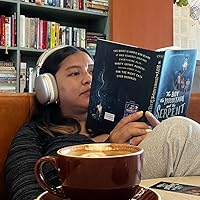
What does a Mananangal (Viscera Sucker) in Riyadh, A Mambabarang (Witch) in Dubai and an Oryol (Water Nymph) in Hong Kong have in common? In this collection of short stories, they are all Filipino migrant workers struggling to survive the challenges of the OFW experience.
These are stories of love and resilience. Of enduring against the monstrosity of abuse, assault, isolation and fractured family dynamics. A speculative exploration that answers the question; What would happen if mythic Philippine supernatural creatures were forced confront the horrors of the OFW life?
Short Book Review: Jet Tagasa's The Secret Lives of OFWs
Jet Tagasa's debut book, The Secret Lives of OFW, was an additional to the growing collection of pinoy horror tales. And we should be glad that horror fiction is still alive and kicking which is a trear for horror junkie like me 😊.
The Secret Lives of OFWs, for me, has the the most interesting concept that I wish I thought about before. Fusing the drama of OFW tales and the sinister to at times bloody tales of our folk monsters from the classic Aswang, mystifying engkantos, and even the likes of the Oryol from Bicol mythos. Who would have thought our folkloric beasts can cross borders and sprinkle foreign lands with nasty, native terror? That's what makes this collection of tales a worthy part of every pinoy horror story lovers.
Personally, I love the story "The Cook" which features a deeper mythos of the Anduduno from Bicol folklore. I love to read a sequel of this story and witness how the corpse-eating father and mother exact their vengeance for their daughter. "The Part-Timer" was also another story that examined the age-old debate of who is the real monster: man on its peak inhuman state or a literal monster who is willing to disregard her humanity for her love ones.
Go get Jet Tagasa's book right here and right now. Revisit our folkloric tales with a brand new lens from our modern day, overseas heroes.
This novel is a collection of stories focusing on the extraordinary lives of OFWs. Struggling to sustain the needs of their families, they take their chances working abroad, only to end up in situations far worse than what they experienced in their hometowns.
The title intrigued me during the 2025 MIBF because I initially thought it was some sort of nonfiction novel that emphasized the realities faced by migrant workers. When I learned that it was a horror novel, I hesitated to pick it up. However, after reading reviews from the book community, I knew it had to be on my reading list this year. Luckily, I was able to purchase a copy from our city’s local bookstore.
This is not your usual horror novel, as it goes beyond societal horror by using the supernatural—the aswang. It is a narrative device that drives the stories. It blends the real-life struggles of our kababayans who tried their luck abroad but ended up facing the worst possible situations. The symbolism of the aswang may represent their desire to fight back against exploitation, suffering, and the hardships they endure.
There are stories that are truly heartbreaking, especially The Domestic Helper and The Part-Timer. I almost got teary-eyed because the descriptions felt so vivid and painfully real. Personally, The Domestic Helper resonated with me the most because I once heard almost the exact same story from two domestic helpers from the Middle East whom I met during a solo trip to Gensan. These issues are real, and Filipinos are not the only nationality that experiences such brutality in the Middle East.
After finishing the book, it left me with the thought of sana walang anak at magulang na aalis ng bansa at uuwi nang walang buhay o puno ng galos ang puso. It is my hope that every Filipino could have access to decent and well-paying jobs here in the Philippines so they would no longer feel forced to leave the country and their families.
However, with all the current drama in the government, who would not consider leaving the country?
BTW, this book is one of my best reads of the year.
I loved it! One of my best reads for this year. I had this growing obsession for Philippine folklore and mythology ever since I encountered a post about aswangs on reddit. I feel it was destiny that made me go into that bookstore and purchase a copy. I wasn’t planning to buy a book that day but this caught my attention.
The stories blend well with modern times while still keeping the plot loyal to Philippine myth and folklore. The author weaved stories that I heard as a kid, I grew up in the province, and having first hand experience with “engkantos” (a story for a different time) made me realize how universal these beliefs and stories have basis! I’m happy that a Filipino author was able to let the audience know the horrors OFWs face while making a living abroad but to mix it with myth and lore, it was a literary experience just going through every page.
THE SECRET LIVES OF OFWs has an irresistible premise. What if the Filipino migrant worker is actually a mythological creature, with enough supernatural power to take revenge against abusive foreigners?
In Jet Tagasa's book, one detects ... a strong desire for retribution, a kababayan crying out against the injustice done to her countrymen. It could have been me, she seems to say, then writes a narrative where the foreign oppressor suddenly finds the tables turned when the would-be-victim turns out to be not so helpless, after all.
The Secret Lives of OFWs is a powerful collection that blends Filipino folklore with the harsh realities of migrant labor. By infusing supernatural creatures like the Manananggal, Mambabarang, and Aswang into the OFW experience, Jet Tagasa creates a unique and imaginative exploration of the emotional and physical toll of working abroad.
What sets this book apart is the use of folklore as metaphors for the struggles of OFWs. These mythical creatures, traditionally symbols of destruction and isolation, mirror the real-life challenges of abuse, exploitation, and fractured family dynamics. Despite their supernatural powers, the characters are still vulnerable to loneliness, guilt, and fear; human emotions that no magic can shield them from. Tagasa does a remarkable job of humanizing these figures, making their struggles relatable and deeply moving.
Two standout stories for me were The Domestic Helper and The Balikbayan.
Horror is cathartic indeed. Given the often violent exploitation OFWs have to suffer to support their families back in the Philippines, these stories provide comfort in that their abusers get theirs, or at least get found out by the people they’ve wronged. And since the latter aren’t actually human, the reckoning they will deal out will most likely be brutal.
My top three favorites are The Domestic Helper, The Seafarer, and The Balikbayan.