

What do you think?

Sunward
A 2026 Philip K. Dick Award Finalist
A debut science fiction novel by National Book Award–winning writer William Alexander, this story of found family follows a planetary courier training adolescent androids in a solar system grappling with interplanetary conflict after a devastating explosion on Earth’s moon.
Captain Tova Lir chose a life as a courier rather than get involved in her family’s illustrious business in politics. Set in humanity’s far future, hiring a planetary courier is essential for delivering private messages across the stars.
Encouraged by friends, Tova begins mentoring baby bots, juvenile AI who are developmentally in their teens, and trains them how to interact within society essentially becoming their foster mom. Her latest charge, Agatha Panza von Sparkles, named herself on their first run from Luna to Phoebe station. But on their return, they encounter a derelict spaceship and a lurking assassin, igniting a thrilling chase across the solar system.
Tova and Agatha’s daring actions leave Agatha’s mind vulnerable, relying on Tova’s former AI pupils for help. As Tova starts gathering her scattered family around her, she is chased through the solar system by forces who want her captured and her family erased. This debut science fiction novel by National Book Award–winning author William Alexander is a must-read for fans of Becky Chambers and Ursula K. Le Guin. Lovers of poignant science fiction, where the bonds of found family, the evolution of AI, and the building distrust of centuries of bias, come together in this visionary look at humanity’s future.
A debut science fiction novel by National Book Award–winning writer William Alexander, this story of found family follows a planetary courier training adolescent androids in a solar system grappling with interplanetary conflict after a devastating explosion on Earth’s moon.
Captain Tova Lir chose a life as a courier rather than get involved in her family’s illustrious business in politics. Set in humanity’s far future, hiring a planetary courier is essential for delivering private messages across the stars.
Encouraged by friends, Tova begins mentoring baby bots, juvenile AI who are developmentally in their teens, and trains them how to interact within society essentially becoming their foster mom. Her latest charge, Agatha Panza von Sparkles, named herself on their first run from Luna to Phoebe station. But on their return, they encounter a derelict spaceship and a lurking assassin, igniting a thrilling chase across the solar system.
Tova and Agatha’s daring actions leave Agatha’s mind vulnerable, relying on Tova’s former AI pupils for help. As Tova starts gathering her scattered family around her, she is chased through the solar system by forces who want her captured and her family erased. This debut science fiction novel by National Book Award–winning author William Alexander is a must-read for fans of Becky Chambers and Ursula K. Le Guin. Lovers of poignant science fiction, where the bonds of found family, the evolution of AI, and the building distrust of centuries of bias, come together in this visionary look at humanity’s future.
224 pages, Kindle Edition
First published September 16, 2025
About the author
William Alexander
9 books147 followersLibrarian Note: There is more than one author by this name in the Goodreads data base.
William Alexander won the National Book Award in 2012 for his first book, Goblin Secrets, and the Earphones Award for his narration of the audiobook. He has since written three more novels for Middle Grade audiences: Ghoulish Song, Ambassador, and Nomad.
Will is Cuban-American. He studied theater and folklore at Oberlin College, English at the University of Vermont, and creative writing at the Clarion Workshop. He currently teaches at the Vermont College of Fine Arts program in Writing for Children and Young Adults.
Source: William Alexander's website
William Alexander won the National Book Award in 2012 for his first book, Goblin Secrets, and the Earphones Award for his narration of the audiobook. He has since written three more novels for Middle Grade audiences: Ghoulish Song, Ambassador, and Nomad.
Will is Cuban-American. He studied theater and folklore at Oberlin College, English at the University of Vermont, and creative writing at the Clarion Workshop. He currently teaches at the Vermont College of Fine Arts program in Writing for Children and Young Adults.
Source: William Alexander's website
Ratings & Reviews
Friends & Following
Create a free account to discover what your friends think of this book!
Community Reviews
Displaying 1 - 30 of 343 reviews

April 16, 2025
It's a sweet and uplifting read. The vibe is definitely cozy, but still the story has real stakes with some action and the world is richly built.
I had a really good time in this universe and I hope to see more books in the future.
I had a really good time in this universe and I hope to see more books in the future.

October 20, 2025
Third-class Intrasolar Courier, Lunar Princess, and robot mama Tova Lir flees across the inner solar system, chased by religious fanatics and Lunar law enforcement, to save one of her children.
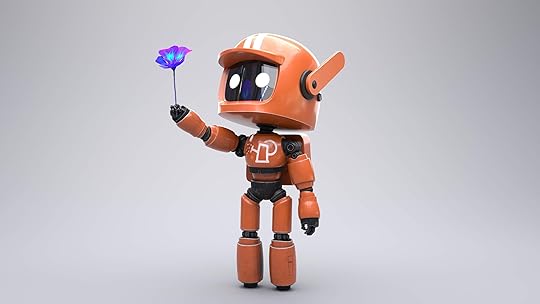 Agatha Panza von Sparkles, Tova Lir’s injured robot child.
My audio edition ran about 5.5 hours. A dead-tree copy is 224 pages. The original U.S. copyright was 2025.
William Alexander is an American writer and academic with about ten books for Young Children, Middle Grade (MG), and Adult readers. This is his first book for “Grownup Readers.” It’s also the first of his works I’ve read.
Lindsey Dorcus was the narrator—an experienced voice artist with about 120 titles. She handled the women’s and cutesy anthropomorphized robot voices well but offered too few variations for the male ones. Her narration also didn’t enhance any adult themes that might have been present.
I picked up this audiobook on impulse, based on the review of a Goodreads member I follow. The only reason I stayed with it was that I was trapped on an airplane, in a middle seat, between two enormous middle-Americans, and unable to move.
The Rebellious Spirited Tova Lir, a member of the Lunar ruling family, had been going Princess Incognito as a third-class courier delivering parcels and physical documents across the inner solar system—just like her courier birth mother—despite the disapproval of her Fantasy-Forbidding Queen Mother and toadying prince brother. To cope with her Ambiguously Absent Birth Mother issues, Tova Lir becomes a Parental Substitute , raising child robots shipboard into full sentience—leading into the book’s main What Measure Is a Non-Human theme.
Returning from a typical delivery, Tova Lir encounters a dead courier and acquires a Dead Man’s Writing , which puts her into a Fugitive Arc alongside her injured robot child, Agatha Panza von Sparkles, as they flee across the inner solar system in a generally "Sunward" direction.
This book was advertised as a cozy sci-fi. It was also Alexander’s first novel for Adult Readers—a misnomer that really means Young Adult (YA).
Alexander does not seem to know how to write for even the most vapid of Young Adults. This book is about as deep as a carpark puddle: a string of rote tropes with a HFN kludged onto the end, no doubt in hopes of spinning it into Serial Fiction. It’s a MG-level story dressed-up as a space opera in a tortured pseudo-technical fashion, with vague pretensions toward sapphic frenemy romances, throuples, found family, and “robots-are-people” themes. However, none of these threads are developed enough to qualify the story for adult consumption. I suspect that because "Tova Lir had two mommies" was what got this labeled "Adult"?
I’ve decided I’ve had an eye-full and ear-full of books described as “cozy”—this includes Cozy Space Operas.
“Cozy” appears to be code for written for folks of voting age who prefer unchallenging Middle Grade reads but want a tiny bit of titillation. There can only be the occasional four-syllable word, and all plotting must feel familiar from half-hour episodic broadcast television.
The trifecta of “Death, Disease, and Divorce” (the 3 Ds) is acceptable in cozy fiction. Likewise, violence—even leading to death—is fine, because violence is endemic in American culture. Sexual violence, however, is verboten because it falls into the “Sex, Drugs, and Rock’n’Roll” trifecta of more mature reading territory, which may contain explicit material. Anything potentially explicit cannot, by definition, be cozy.
I can only imagine how much more interesting this book could have been if there had been some exploration of Tova Lir’s personal sexual health, self-medication beyond a fizzy cocktail-party drink, or tunes more complicated than child-robot educational music—chants, jingles, and school songs.
This book was drivel. I can’t recommend it to anyone older than a tween. Even they might not be challenged.
Agatha Panza von Sparkles, Tova Lir’s injured robot child.My audio edition ran about 5.5 hours. A dead-tree copy is 224 pages. The original U.S. copyright was 2025.
William Alexander is an American writer and academic with about ten books for Young Children, Middle Grade (MG), and Adult readers. This is his first book for “Grownup Readers.” It’s also the first of his works I’ve read.
Lindsey Dorcus was the narrator—an experienced voice artist with about 120 titles. She handled the women’s and cutesy anthropomorphized robot voices well but offered too few variations for the male ones. Her narration also didn’t enhance any adult themes that might have been present.
I picked up this audiobook on impulse, based on the review of a Goodreads member I follow. The only reason I stayed with it was that I was trapped on an airplane, in a middle seat, between two enormous middle-Americans, and unable to move.
The Rebellious Spirited Tova Lir, a member of the Lunar ruling family, had been going Princess Incognito as a third-class courier delivering parcels and physical documents across the inner solar system—just like her courier birth mother—despite the disapproval of her Fantasy-Forbidding Queen Mother and toadying prince brother. To cope with her Ambiguously Absent Birth Mother issues, Tova Lir becomes a Parental Substitute , raising child robots shipboard into full sentience—leading into the book’s main What Measure Is a Non-Human theme.
Returning from a typical delivery, Tova Lir encounters a dead courier and acquires a Dead Man’s Writing , which puts her into a Fugitive Arc alongside her injured robot child, Agatha Panza von Sparkles, as they flee across the inner solar system in a generally "Sunward" direction.
This book was advertised as a cozy sci-fi. It was also Alexander’s first novel for Adult Readers—a misnomer that really means Young Adult (YA).
Alexander does not seem to know how to write for even the most vapid of Young Adults. This book is about as deep as a carpark puddle: a string of rote tropes with a HFN kludged onto the end, no doubt in hopes of spinning it into Serial Fiction. It’s a MG-level story dressed-up as a space opera in a tortured pseudo-technical fashion, with vague pretensions toward sapphic frenemy romances, throuples, found family, and “robots-are-people” themes. However, none of these threads are developed enough to qualify the story for adult consumption. I suspect that because "Tova Lir had two mommies" was what got this labeled "Adult"?
I’ve decided I’ve had an eye-full and ear-full of books described as “cozy”—this includes Cozy Space Operas.
“Cozy” appears to be code for written for folks of voting age who prefer unchallenging Middle Grade reads but want a tiny bit of titillation. There can only be the occasional four-syllable word, and all plotting must feel familiar from half-hour episodic broadcast television.
The trifecta of “Death, Disease, and Divorce” (the 3 Ds) is acceptable in cozy fiction. Likewise, violence—even leading to death—is fine, because violence is endemic in American culture. Sexual violence, however, is verboten because it falls into the “Sex, Drugs, and Rock’n’Roll” trifecta of more mature reading territory, which may contain explicit material. Anything potentially explicit cannot, by definition, be cozy.
I can only imagine how much more interesting this book could have been if there had been some exploration of Tova Lir’s personal sexual health, self-medication beyond a fizzy cocktail-party drink, or tunes more complicated than child-robot educational music—chants, jingles, and school songs.
This book was drivel. I can’t recommend it to anyone older than a tween. Even they might not be challenged.

Did Not Finish
January 24, 2026Dnf page 70
The writing style in this is very “list like.” You know the whole “it’s doing a lot of telling, not showing”? That was hardcore the case here. Most of the action happening was just said through dialogue and I wasn’t into it.
The writing style in this is very “list like.” You know the whole “it’s doing a lot of telling, not showing”? That was hardcore the case here. Most of the action happening was just said through dialogue and I wasn’t into it.
September 19, 2025
Tova Lir is pilot of the courier ship Needle and a part-time mother of AI children as they experience their first year embodied in a bot chassis. On their latest mission, Tova and her latest AI child Agatha encounter another courier's destroyed ship and they soon find themselves in the sights of the killer.
This starts very strong. Tova is a superb parent and Agatha Panza von Sparkles, her current charge, is a delightful child, and their relationship could be the heart and soul of the book. Not this book though, because Agatha is out of the picture after the first chapter. Instead we have Tova acting as a grieving mother and interacting with her failed assassin, religious zealots and a general solar system community that seems to have lost its mind with regards to bots existing alongside humans.
A sub-population of people who aren't like the majority and are just trying to live their lives in a world with religious extremists looking for an excuse and a general population who are scared. See any parallels with the current world? It's a strong allegory, but it's also a muddled one. And that's probably my general opinion about this book; it's an interesting story with some fascinating world-building, but the thematic elements come through strong but don't seem to go anywhere.
This starts very strong. Tova is a superb parent and Agatha Panza von Sparkles, her current charge, is a delightful child, and their relationship could be the heart and soul of the book. Not this book though, because Agatha is out of the picture after the first chapter. Instead we have Tova acting as a grieving mother and interacting with her failed assassin, religious zealots and a general solar system community that seems to have lost its mind with regards to bots existing alongside humans.
A sub-population of people who aren't like the majority and are just trying to live their lives in a world with religious extremists looking for an excuse and a general population who are scared. See any parallels with the current world? It's a strong allegory, but it's also a muddled one. And that's probably my general opinion about this book; it's an interesting story with some fascinating world-building, but the thematic elements come through strong but don't seem to go anywhere.
May 2, 2026
1.75⭐
Ojoj... bardzo płaskie cosy sci-fi, czasem napisane tak, że za kij nie wiesz co się dzieje
Ojoj... bardzo płaskie cosy sci-fi, czasem napisane tak, że za kij nie wiesz co się dzieje

February 14, 2026
An imaginative premise and a strong opening pulled me in, particularly the scientific underpinning. However, the narrative never builds the structural density needed to support its own universe. Without deeper psychological texture or ontological weight, the story feels charming but insubstantial, more concept than lived world.

September 18, 2026
Who deserves to be treated as fully human? Expansive and bright, bursting with discovery, this journey is heartfelt and a delight. The world building is done really well, without any exposition but just sharing bits and pieces here and there to give us a glimpse of what the future has become, making the word feel full and realized while still leaving it open-ended. The main character is creative and endearing, and her struggle with embracing the identity of being a mother is fulfilling and feels genuine. The ancillary characters, including the non-human ones, are all enjoyable and feel like they have depth, even though we don’t spend too much time with any of them. The story and the plot are very much a quest story, going on an adventure to save a loved one, and it moves through that quest meaningfully without ever lagging. This does make it feel a bit segmented, very methodically moving from one scene to the next, and this could have been smoother but did maintain a sense of propulsion or movement.
The writing has a sense of curiosity that I appreciate, and it is very comfortable in its descriptions, reading comfortably and quickly. I know this is the author’s debut in terms of an adult sci-fi novel, and it does have the feel of writing aimed at younger readers. I don’t mean that in a bad way, but the structure is simple and doesn’t challenge the reading experience, always moving more or less exactly where you expect it to go. There is one narrative device he adopted which I found quirky and interesting at first but grew to find a bit uninspired by the end, which is that he had the main character (knowingly) invent an imaginary friend so she could have conversations with herself. He then used this internal dialogue to tell us backstory, to add humor to some tense scenes, and do various bits of behind-the-scenes narrative work. It was a cute idea, but some of the actual dialogues felt far too cutesy, whimsical dialogues and jokes that were a bit too heavy-handed. I think this “imaginary friend” could have really been an engaging way to convey a stronger sense of pathos but by the end it felt like a thinly veiled narrative crutch and wasn’t particularly interesting to me.
There are some really wonderful ideas this story explores, though, and it does so in a gentle way that is never didactic or too painfully on-the-nose. There are questions about who deserves to be treated as human, as equals, as deserving of attention and comfort and rights. It explores not just the importance of family but also what it means to discover parts of yourself you didn’t realize were there, parts that can only be nurtured through relationships with others. There are interesting explorations of social roles, of religion and government, and also what responsibilities humans will have to each other as we invent more and more technologies that interfere with life as we know it.
(Rounded from 3.5)
The writing has a sense of curiosity that I appreciate, and it is very comfortable in its descriptions, reading comfortably and quickly. I know this is the author’s debut in terms of an adult sci-fi novel, and it does have the feel of writing aimed at younger readers. I don’t mean that in a bad way, but the structure is simple and doesn’t challenge the reading experience, always moving more or less exactly where you expect it to go. There is one narrative device he adopted which I found quirky and interesting at first but grew to find a bit uninspired by the end, which is that he had the main character (knowingly) invent an imaginary friend so she could have conversations with herself. He then used this internal dialogue to tell us backstory, to add humor to some tense scenes, and do various bits of behind-the-scenes narrative work. It was a cute idea, but some of the actual dialogues felt far too cutesy, whimsical dialogues and jokes that were a bit too heavy-handed. I think this “imaginary friend” could have really been an engaging way to convey a stronger sense of pathos but by the end it felt like a thinly veiled narrative crutch and wasn’t particularly interesting to me.
There are some really wonderful ideas this story explores, though, and it does so in a gentle way that is never didactic or too painfully on-the-nose. There are questions about who deserves to be treated as human, as equals, as deserving of attention and comfort and rights. It explores not just the importance of family but also what it means to discover parts of yourself you didn’t realize were there, parts that can only be nurtured through relationships with others. There are interesting explorations of social roles, of religion and government, and also what responsibilities humans will have to each other as we invent more and more technologies that interfere with life as we know it.
(Rounded from 3.5)

July 3, 2025
I am biased because this novel emerged from Will’s wonderful Sunday Morning Transport story “A Body in Motion,”- and I’m beaming at it like a proud aunt.
Do you want highly intelligent intelligences in training? A Moon Queen? Intrigue and Murder? All packaged up and delivered to you by secret interstellar courier? YES yes you do. This book is a delight and brings so much joy into the universe.
Do you want highly intelligent intelligences in training? A Moon Queen? Intrigue and Murder? All packaged up and delivered to you by secret interstellar courier? YES yes you do. This book is a delight and brings so much joy into the universe.

August 20, 2025
TL;DR: The ending on this came out of nowhere, and I’m so confused.
Source: NetGalley - Thank you to the publisher!!
Plot: Swiss Cheese. There are so many holes and dangling loose bits by the end.
Characters: I liked the characters and the dynamic here.
Setting: Zooming around the galaxy to save a little bot, it was a fun setting if not super detailed.
SciFi/Cozy: There was some light scifi that we never got fully explained and I would hesitate to label this as Cozy.
Thoughts:
What happened here? I’m so disappointed by the ending of this. Sunward had such a great premise. Captain Tova is attempting to save the life of the child bot she is fostering and training and ends up bringing together previous bots she had trained. There is some conclusion here but so much was said or done and then completely left in the dust. From the start I really liked the idea of bots being fostered for a time with a non-bot to train them. Tova is interesting, but reads a lot like any other modern ‘cozy book female lead’. She’s quirky, anti-social to a degree, and prone to talking to herself. That would be totally fine if we weren’t left going “What about everything else?” in the end.
This truly felt like an unfinished novel. There is a bare hint of a romance, there are teases to more bots, and more worlds. There is a huge ‘we don’t go here, but oops she went there’ moments that are just ignored. Reasons are given but not explained for huge plot events. There are no big repercussions for anything that happen. We might get a hint at what could be but our characters skate around any big risk.
It almost feels like someone thought ‘cozy’ meant invisible plot armor. Cozy is low stakes, but things happen and characters deal with things. Where here we are shown things, meet people, and we have so much potential but it’s all avoided by the magic of *plot*. Tova avoids any consequences or any big change. I finished this feeling like I was missing a huge chunk of the book. Where was the rest? This had such potential for a 5 star, and now I’m just frustrated.
Source: NetGalley - Thank you to the publisher!!
Plot: Swiss Cheese. There are so many holes and dangling loose bits by the end.
Characters: I liked the characters and the dynamic here.
Setting: Zooming around the galaxy to save a little bot, it was a fun setting if not super detailed.
SciFi/Cozy: There was some light scifi that we never got fully explained and I would hesitate to label this as Cozy.
Thoughts:
What happened here? I’m so disappointed by the ending of this. Sunward had such a great premise. Captain Tova is attempting to save the life of the child bot she is fostering and training and ends up bringing together previous bots she had trained. There is some conclusion here but so much was said or done and then completely left in the dust. From the start I really liked the idea of bots being fostered for a time with a non-bot to train them. Tova is interesting, but reads a lot like any other modern ‘cozy book female lead’. She’s quirky, anti-social to a degree, and prone to talking to herself. That would be totally fine if we weren’t left going “What about everything else?” in the end.
This truly felt like an unfinished novel. There is a bare hint of a romance, there are teases to more bots, and more worlds. There is a huge ‘we don’t go here, but oops she went there’ moments that are just ignored. Reasons are given but not explained for huge plot events. There are no big repercussions for anything that happen. We might get a hint at what could be but our characters skate around any big risk.
It almost feels like someone thought ‘cozy’ meant invisible plot armor. Cozy is low stakes, but things happen and characters deal with things. Where here we are shown things, meet people, and we have so much potential but it’s all avoided by the magic of *plot*. Tova avoids any consequences or any big change. I finished this feeling like I was missing a huge chunk of the book. Where was the rest? This had such potential for a 5 star, and now I’m just frustrated.

March 2, 2026
Enjoyable. (I didn't know cozy sci-fi was a thing but I guess it is & would say this fits the bill.) A solid 3 stars.

June 9, 2026
The world was quite interesting, the descriptions vivid and the stakes real. I didn't enjoy the book as much as I expected, part of that being I'm not much of a sci-fi fan but overall a decent read for me
January 12, 2026
Why you should read it:
It's about a courier who flies her spaceship between colonies, carrying private messages, and also fostering baby AIs as they learn to use robot bodies. One message turns out to be much more than expected, causing her youngest AI bot to fragment, and helping her recompile is the drive for the plot. I loved how warm and almost fairytale-ish this felt, cosy vibes with a pacy plot. I've been secretly complaining about how much of 'found family' turns out to be Just Regular Friends, but this really does deserve that label.
Why you shouldn't read it: (spoiler tagged in case you don't care, not because I'm detailing the ending.)
Books it reminded me of:
The Mossa and Pleiti books by Malka Older or Murder by Memory by Olivia (for the length, genre, tone and centred FMC). In The Lives of Puppets by TJ Klune (for the slight goofiness, travel and perhaps found family.)
It's about a courier who flies her spaceship between colonies, carrying private messages, and also fostering baby AIs as they learn to use robot bodies. One message turns out to be much more than expected, causing her youngest AI bot to fragment, and helping her recompile is the drive for the plot. I loved how warm and almost fairytale-ish this felt, cosy vibes with a pacy plot. I've been secretly complaining about how much of 'found family' turns out to be Just Regular Friends, but this really does deserve that label.
Why you shouldn't read it: (spoiler tagged in case you don't care, not because I'm detailing the ending.)
Books it reminded me of:
The Mossa and Pleiti books by Malka Older or Murder by Memory by Olivia (for the length, genre, tone and centred FMC). In The Lives of Puppets by TJ Klune (for the slight goofiness, travel and perhaps found family.)
August 15, 2025
This book hit so many heartstrings for me. I wanted it to be longer! The main character in this sci-fi novella is a 3rd class courier of messages throughout the solar system. She pilots a ship called The Needle and has a side job of mentoring/mothering baby AI bots for a year each as they mature.
I loved the complex relationships between all the characters, the sign language, the silliness. But mostly, I need to know what happens next! This is marketed as a cozy sci-fi, but for cozy -- the stakes are pretty high for everyone involved.
I hope this is a prologue/introduction to a series based on this world, because I need to know more about what happens next for all of these characters. The world building was too rich to leave all this behind.
Thank you Saga Press and NetGalley for a digital ARC of this book. All opinions are my own.
I loved the complex relationships between all the characters, the sign language, the silliness. But mostly, I need to know what happens next! This is marketed as a cozy sci-fi, but for cozy -- the stakes are pretty high for everyone involved.
I hope this is a prologue/introduction to a series based on this world, because I need to know more about what happens next for all of these characters. The world building was too rich to leave all this behind.
Thank you Saga Press and NetGalley for a digital ARC of this book. All opinions are my own.
February 6, 2026
(2 stars) Creative concept and I appreciated the science in it, but the writing is simple, shallow, and boring. There’s no depth whatsoever to the characters. A cute story though.
July 22, 2026
The premise was good and the world was interesting. It wasn't very challenging and things just kinda happened.

April 19, 2026
Tova Lir est courrier de troisième classe. Son travail : livrer des colis dans l’espace. En parallèle de ça, elle s’occupe aussi de bébés IA pour les éduquer dans leur première année. Tout va pour le mieux pour elle jusqu’à ce qu’elle tombe sur le cadavre d’un courrier de première classe. En voulant l’aider, elle n’a pas conscience qu’elle sera bientôt sur les traces d’un attentat que des robots auraient commis contre l’humanité.
⠀
Destination Soleil est une courte novella très agréable à lire, notamment lorsqu’on a envie d’une lecture plutôt légère. Je redoutais pas mal le côté cosy SF parce que ça n’est vraiment pas mon truc mais j’ai trouvé qu’il y avait quand même des enjeux ici, et que le récit était plutôt rythmé.
⠀
Maintenant est-ce que cette lecture va longtemps me marquer ? J’en doute un peu. C’était très sympa, plutôt rigolo, avec de jolis messages et des bonnes valeurs véhiculées, mais ça n’est clairement pas le genre de récit qui m’emballe le plus.
⠀
Si vous aimez la vibe cosy SF / solar punk, n’hésitez pas une seconde, ça devrait vraiment vous plaire. Si comme moi, vous préférez lire des choses un peu plus sombres, vous pouvez quand même tenter le coup. Personnellement, je ne lirais pas forcément ce genre d’histoires tous les jours, mais une fois de temps en temps, ça fait du bien de lire des choses un peu plus positives et légères.
⠀
Destination Soleil est une courte novella très agréable à lire, notamment lorsqu’on a envie d’une lecture plutôt légère. Je redoutais pas mal le côté cosy SF parce que ça n’est vraiment pas mon truc mais j’ai trouvé qu’il y avait quand même des enjeux ici, et que le récit était plutôt rythmé.
⠀
Maintenant est-ce que cette lecture va longtemps me marquer ? J’en doute un peu. C’était très sympa, plutôt rigolo, avec de jolis messages et des bonnes valeurs véhiculées, mais ça n’est clairement pas le genre de récit qui m’emballe le plus.
⠀
Si vous aimez la vibe cosy SF / solar punk, n’hésitez pas une seconde, ça devrait vraiment vous plaire. Si comme moi, vous préférez lire des choses un peu plus sombres, vous pouvez quand même tenter le coup. Personnellement, je ne lirais pas forcément ce genre d’histoires tous les jours, mais une fois de temps en temps, ça fait du bien de lire des choses un peu plus positives et légères.

September 28, 2025
Not bad. Interesting little scifi novel. Unfortunately it felt a little too brief (not that it was rushed). I feel like it doesn't have any staying power. I started and finished it so quickly that I worry I just won't remember it in a while. Nothing wrong with short books! This Is How You Lose the Time War is shorter than this, I think, and it's stuck with me. I just didn't feel the same locked-in feeling with this.
April 20, 2025
3.5 stars!
A nice bite-size read with a great premise and kind of a confusing follow-through. Definitely a good time but with a Becky Chambers comp my standards are going to be unreasonably high.
Much to her dismay, alongside her usual job as a courier, Tova Lir's boss encourages her to foster adolescent AI androids who need to be paired up with a guardian for a year to socialize and develop. After many foster children come and go, Tova's latest charge ends up scattered in the data stream after a tragic accident on Earth's moon. With tensions between humans and androids mounting and many forces at work behind the scenes, Tova must revisit all of her found and lost family members scattered across the solar system in order to put her charge Agatha's mind back together. I love this android fostering premise, and the moments where Tova is reminiscing about parenting all the androids and reuniting with them were some of the best parts of the book. There are also some really beautiful lines about family and grief, and I liked the concept of the Sun cult and would have liked to know more. The world-building and more action-forward plot outside of that gets a little lost in the sauce. I feel like I half-understand a whole bunch of components instead of fully understanding a select few, which made some of the scenes and character relationships hard to follow.
This book is very cool and there's nothing really bad about it, it's just a little overly ambitious considering it's cozy premise and 200 page run. Still probably worth a try and I'll keep an eye on what the author writes next!
Thank you to William Alexander and Saga Press for this ARC in exchange for my full, honest review!
Happy reading!
A nice bite-size read with a great premise and kind of a confusing follow-through. Definitely a good time but with a Becky Chambers comp my standards are going to be unreasonably high.
Much to her dismay, alongside her usual job as a courier, Tova Lir's boss encourages her to foster adolescent AI androids who need to be paired up with a guardian for a year to socialize and develop. After many foster children come and go, Tova's latest charge ends up scattered in the data stream after a tragic accident on Earth's moon. With tensions between humans and androids mounting and many forces at work behind the scenes, Tova must revisit all of her found and lost family members scattered across the solar system in order to put her charge Agatha's mind back together. I love this android fostering premise, and the moments where Tova is reminiscing about parenting all the androids and reuniting with them were some of the best parts of the book. There are also some really beautiful lines about family and grief, and I liked the concept of the Sun cult and would have liked to know more. The world-building and more action-forward plot outside of that gets a little lost in the sauce. I feel like I half-understand a whole bunch of components instead of fully understanding a select few, which made some of the scenes and character relationships hard to follow.
This book is very cool and there's nothing really bad about it, it's just a little overly ambitious considering it's cozy premise and 200 page run. Still probably worth a try and I'll keep an eye on what the author writes next!
Thank you to William Alexander and Saga Press for this ARC in exchange for my full, honest review!
Happy reading!

July 11, 2026
3.5 rounded down

December 13, 2025
Full of sci fi dangers, plots, religious fanaticism, and AI bots connected in their strange dreamings, but mostly about the love of a parent for her children. In a future where Earth has become unhabitual and humanity has perforce colonized the solar system, the protagonist of the story raises bots from their infancy while working as a courier. Her small space ship is home to a succession of bot children, each of whom is different, each of whom is loved and nurtured and encouraged to grow before setting out for their own lives. But when the current bot child, Agatha, sacrifices her core self to save her Mom, she will do anything to bring her back and keep her safe in a solar system that is growing horribly, terribly hostile to bots due to misplaced suspicion (and increasingly hostile to science--religious sun worshipping zealots take control of the science colony of Venus). It is sweet, frenetic in places, and thought-provoking, and I will probably have to go buy my own copy.
March 9, 2026
So much to think about! And in such a short book. Reminding me why I need to read more sci-fi

April 5, 2026
This book was short. This book was fun. The protagonist, Tova Liv, is a daughter of a wealthy, powerful family on Luna, the Moon. She is a courier, 3rd Class. She has her own ship her own life. She also is a mentor/tutor/mom for young robots or bots. She helps them develop their own personalities and she teaches them how to exist in a universe of humans. She becomes emotionally attached to her "pupils" and vice versa. Seems like a good gig, until. Until she stops enroute to recover a dead body from an accident in space. Until a Courier, 1st Class, also an assassin tries to kill her while she is stopped to retrieve the corpse while she was enroute to deliver a message. To escape the assassin, her young charge Agatha, separates herself to distract the assassin, which she does, but in doing so, risks never being able to be put back together. As you can guess, the story involves the task of putting Agatha back together again.
This story takes us all over the solar system. It involves the destruction of the docks on Luna causing the deaths of thousands. It involves escape from custody and false accusations. It involves family strife extreme. It involves enlisting the aid of her former mentees and a return to Earth, long abandoned.
Really a fun chaotic adventure.
This story takes us all over the solar system. It involves the destruction of the docks on Luna causing the deaths of thousands. It involves escape from custody and false accusations. It involves family strife extreme. It involves enlisting the aid of her former mentees and a return to Earth, long abandoned.
Really a fun chaotic adventure.

June 9, 2026
all the anticipation and build-up while waiting for the spot and opportunity to read this one.. was rewarded with a really good story.
unique world and environment that Alexander built. powerfully crafted and some outstanding characters-- robots, zealots, or otherwise-- and a nice feeling alternating between (the new seemingly-overused buzzword these days) 'Cozy' and edge-of-your-seat happenings.
felt real, made this reader curious and inquisitive, and had me pulling for people and their successes.
yes, quick/abrupt ending.. and/but slightly curious if another installment may soon be in the making.
anyway, glad to finally reach this one in my TBR stack. and, left hoping for a potential for more someday.
unique world and environment that Alexander built. powerfully crafted and some outstanding characters-- robots, zealots, or otherwise-- and a nice feeling alternating between (the new seemingly-overused buzzword these days) 'Cozy' and edge-of-your-seat happenings.
felt real, made this reader curious and inquisitive, and had me pulling for people and their successes.
yes, quick/abrupt ending.. and/but slightly curious if another installment may soon be in the making.
anyway, glad to finally reach this one in my TBR stack. and, left hoping for a potential for more someday.

November 13, 2025
This was a fun, cozy sci-fi. I think it could have been longer, so a bunch of things would have had more time to develop, but it was an enjoyable read for what it was. I would definitely read more books set in this universe.

November 19, 2025
This is a nice novella that’s somewhat let down by the execution. It felt strangely disjointed as I was reading, not properly fleshed out. It made so much sense when I learned it’s a short-story-turned-a-novel(la). I feel it either should have stayed a short story or should have been longer, more developed and polished. It’s still worth a read if you like robots and found family.

February 13, 2026
4.75 stars

April 27, 2026
Picked this novella up on a whim and found it super creative. Tova Lir, a Lunar Princess who's bypassed that life to be a third-class courier but REALLY a mother to autonomous robots, picks up a dead courier and gets wrapped up in galactic intrigue. All while she's trying to save her latest charge Agatha Panza von Sparkles from an end as a distributed and potentially unrecoverable consciousness.
This makes it sound more complicated than it is, but this story reveals itself in layers in a not-overwhelming fashion and the plot keeps moving forward as Tova revisits her Lunar family and other bot children.
The story has super fun characters all along the way and interesting debates about bot consciousness and even how that will affect writing and art (which seems relevant to today). Plus I love the ghost story history around Earth's last working space elevator.
Considering this is much more about parenthood than I expected, I liked it a lot. I'd read more from Alexander.
This makes it sound more complicated than it is, but this story reveals itself in layers in a not-overwhelming fashion and the plot keeps moving forward as Tova revisits her Lunar family and other bot children.
The story has super fun characters all along the way and interesting debates about bot consciousness and even how that will affect writing and art (which seems relevant to today). Plus I love the ghost story history around Earth's last working space elevator.
Considering this is much more about parenthood than I expected, I liked it a lot. I'd read more from Alexander.

May 19, 2026
Captain Tova Lir chose to work as a courier rather than get involved with her famous family's political business. She likes the travel between planets, and mentors baby bots during her transits, teaching them how to pilot, and also trains them in how to interact with humans by acting as their foster mother. She guides them, answers questions, has them solve problems, and reads them many, many stories.
During Tova's latest trip, her charge is a new AI who has named herself Agatha Panza von Sparkles (what a fantabulous name!) When they come across a dead courier and an assassin, Agatha saves them, but at great cost to herself.
Refusing to accept that Agatha may have to be reset to her factory default, Tova returns to Luna to consult with one of her past charges, Cosmas, another bot who has become a respected researcher into AI in an effort to deal with the loss of his own brother.
What greets Tova is the destruction of Luna's docks, and a rising fear and anger towards bots, who are reputed to have destroyed the docks, then vanished. Luna's government responds with directives to all humans everywhere else to essentially lobotomize all bots to prevent a similar occurrence anywhere else.
Tova decides, after finding an odd clue left by Cosmas, to follow this, and other clues, which lead her to several of her former charges, all of whom join her aboard the ship, along with Agatha's inert chassis. Tova hope Cosmas will have a way to reintegrate Agatha back into her chassis, while also saving the bots with her from erasure of their selves, thanks to a rising religious zealotry everywhere they stop.
Along the way, we're treated to the ways in which humans have expanded into the solar system, with each habitation fostering the rise of new cultures, artwork, beliefs, etc. We also learn that the bots Tova has fostered have all developed into much more fascinating and complex beings than is typically seen in bots, which only goes to prove that stories, which Tova relates to all of them from the time she takes them on to releasing them into the universe, have the ability to fire the imagination and expand one's thinking, which accelerate the development of her children.
I loved the concept, and also the gentleness of this narrative, despite the clear parallels to the rise of religious-based bigotry and extremism in our own world to huge, complex situations. William Alexander also has some interesting things to say about identity, and kindness.
During Tova's latest trip, her charge is a new AI who has named herself Agatha Panza von Sparkles (what a fantabulous name!) When they come across a dead courier and an assassin, Agatha saves them, but at great cost to herself.
Refusing to accept that Agatha may have to be reset to her factory default, Tova returns to Luna to consult with one of her past charges, Cosmas, another bot who has become a respected researcher into AI in an effort to deal with the loss of his own brother.
What greets Tova is the destruction of Luna's docks, and a rising fear and anger towards bots, who are reputed to have destroyed the docks, then vanished. Luna's government responds with directives to all humans everywhere else to essentially lobotomize all bots to prevent a similar occurrence anywhere else.
Tova decides, after finding an odd clue left by Cosmas, to follow this, and other clues, which lead her to several of her former charges, all of whom join her aboard the ship, along with Agatha's inert chassis. Tova hope Cosmas will have a way to reintegrate Agatha back into her chassis, while also saving the bots with her from erasure of their selves, thanks to a rising religious zealotry everywhere they stop.
Along the way, we're treated to the ways in which humans have expanded into the solar system, with each habitation fostering the rise of new cultures, artwork, beliefs, etc. We also learn that the bots Tova has fostered have all developed into much more fascinating and complex beings than is typically seen in bots, which only goes to prove that stories, which Tova relates to all of them from the time she takes them on to releasing them into the universe, have the ability to fire the imagination and expand one's thinking, which accelerate the development of her children.
I loved the concept, and also the gentleness of this narrative, despite the clear parallels to the rise of religious-based bigotry and extremism in our own world to huge, complex situations. William Alexander also has some interesting things to say about identity, and kindness.
January 18, 2026
This was just okay. “Cozy” science fiction without much to say. I was not invested in the characters, which is a shame because I feel like good characterization is the whole point of “soft” sci-fi. There were places where there could have been angst, or romance, or some deeper thinking about motherhood and family and what makes a creature a person… but nothing was pursued, and nothing properly wraps up. There were parts where I could see the author was being quirky and weird, but there wasn’t enough time spent on anything to give it weight to the larger story. Everything felt piecemeal and disconnected. I think the concepts would have been better served by a series of short stories, with a single topic or character focus for each. Also there’s something annoyingly twee about the constant mentioning of coffee, but maybe now I’m just being mean.
And another thing, the action scenes were so bizarre. The main character just casually kills people, which seemed really misaligned with all of her thoughts and actions in any other setting. Like why are we spending a sentence on stabbing someone’s space suit so that they depressurize and then next chapter I’m reading four paragraphs of some space children’s song as if we are pure and thoughtful and have no reason for remorse…
And another thing, the action scenes were so bizarre. The main character just casually kills people, which seemed really misaligned with all of her thoughts and actions in any other setting. Like why are we spending a sentence on stabbing someone’s space suit so that they depressurize and then next chapter I’m reading four paragraphs of some space children’s song as if we are pure and thoughtful and have no reason for remorse…

Want to Read
January 17, 2026Jo Walton gave this 2025 novel high marks: https://reactormag.com/jo-waltons-rea...
"Now this is a very, very good book. It’s SF, set in a settled solar system without Earth, and it’s about families and robots and what it means to be a person. It’s as if Will imprinted on John Varley’s Eight Worlds stories and decided to reimagine the setting with modern sensibilities. It’s also a brilliant example of how you can write better about human nature when you have something to contrast it with. I raced through this short book and thoroughly enjoyed it. Highly recommended."
This one gets mixed reviews from GR friends. Check back, as Walton is usually a reliable guide.
"Now this is a very, very good book. It’s SF, set in a settled solar system without Earth, and it’s about families and robots and what it means to be a person. It’s as if Will imprinted on John Varley’s Eight Worlds stories and decided to reimagine the setting with modern sensibilities. It’s also a brilliant example of how you can write better about human nature when you have something to contrast it with. I raced through this short book and thoroughly enjoyed it. Highly recommended."
This one gets mixed reviews from GR friends. Check back, as Walton is usually a reliable guide.
Displaying 1 - 30 of 343 reviews