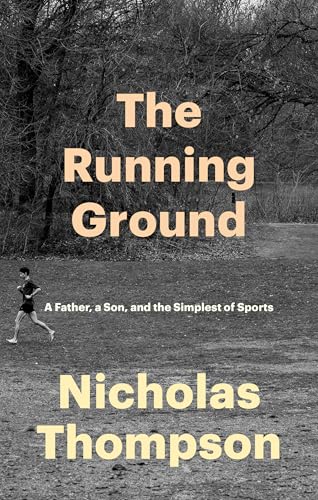
A profound meditation on what running can teach us about our limits and our lives by a record-setting distance runner who is now the CEO of The Atlantic.
“This is not just an engaging memoir about running. It’s a meditation on what it takes to marshal and maintain motivation.”—ADAM GRANT, #1 New York Times bestselling author of Hidden Potential and Think Again
“Endlessly surprising, revelatory, and heart-rending.”—ANNA WINTOUR
For Nicholas Thompson, running has always been about something more than putting one foot in front of another. He ran his first mile at age five, using it as a way to connect with his father as his family fell apart. As a young man, it was a sport that transformed, and then shook, his sense of self-worth. In his 30s, it was a way of coping with a profound medical scare.
By his early 40s, Thompson had many accomplishments. He was the Editor in Chief of a major magazine; a devoted husband and father; and a passionate runner. But he was haunted by the recent death of his brilliant, complicated father and the crack-up that derailed his father’s life. Had the intensity and ambition he’d inherited made a personal crisis inevitable for him as well?
Then a chance offer gave him the opportunity to train for the Chicago Marathon with elite coaches. Giving himself over to the sport more fully than ever before, he discovered that aging didn’t necessarily put you on an unbroken trajectory of decline. For seven years after his father died, Thompson transforms his body to perform at its highest capacity, and the profound discipline and awareness he builds along the way changes every aspect of his life. Throughout the narrative, he weaves in stories of remarkable men and women who have used the sport to transcend some of the hardest moments in life.
The Running Ground is a story about fathers, sons, and the most basic and most beautiful of sports.
What a gift. Oftentimes in life I’ve felt the acute absence of a book which captures the uncaptureable about running and life. I lamented that no author out there possessed the speed on the road, the talent in prose, and the openness of heart to render in print what many runners have experienced over their years of diligent and not so diligent miles. Literary minded runners can now do away with the pretense that Haruki Murakami’s book on writing and running is worth all that much. Nicholas Thompson has written *the* book about running. Or, at least, he has written the book about running that I needed to read the most.
It is the most definitive book about running because it is a book about life. It is a book about growth and about complex relationships. It does not romanticize the grind and the training, or overly dramatize the highs and lows of races. While forthright and direct, it is not simple. It gives an honest account of what running can give to you if you give yourself to it.
Thompson looks back on his life of running with remarkable clarity and it is uncanny to recognize the parallels in our running careers. From the early high school successes to the failures under Vin Lananna in college to the growing evolution towards running at a high-level while balancing a committed career. To say that many of these reflections hit close to home is an understatement. I’m grateful to have (seemingly) learned some of lessons quicker than Thompson about living a full life alongside running. I’m equally sure (and hope) there are many, many more I have to learn ahead of me.
This is also a book about his father. It should come as no surprise to those who know me why this emotional thread resonates. He wrote this after he finally lost his father after decades of slowly losing parts of him. He grapples with what it means to love deeply flawed people in a more mature and honest way than almost any other writer I’ve read.
Of note, in writing this story he does something which few others pull off but which is the sign of a fundamentally good person. Without breaking the narrative he weaves in the stories and details of every day people and friends who helped him along his way. He names incredible people who would otherwise go unnamed in a book of this caliber. In this way he reminds me of Vannevar Bush’s memoir, Pieces of the Action, in which Bush spends quite a bit of time giving credit to lower level staff and ordinary people who competently did their jobs with determination and intelligence during and after World War II, but were not otherwise recognized in the annals of history.
Thompson’s early brush with death and awareness of his mortality likely gifts him the perspective needed to succeed as he did in running later in life, as well as to ultimately write this book decades on. We should all be so lucky as to somehow gain that appreciation for life and respect for death (ideally without getting cancer).
P.S. (His description, quoted below, of what kind of coaching he thrives under nails most people to a T, though they may not realize it when younger. Most NCAA coaches cannot fathom treating a runner as a whole person, it’s why they succeed in the ways they do but leave behind trails of broken people. It’s rare the ones that can balance the thing.)
“Finley built a program that would work with my whole life, which is what the best line of coach should do. ‘A big piece of my coaching philosophy is how can we accomplish that holistic experience from having a great family to doing great work? How does running add to all this? And it should never stand in the way. My job is to make sure you can do all of this at a high level. It’s not that you just have that one goal. It’s all the goals.’ This was a profound insight, and it was, in retrospect, the only kind of coaching that would have worked for me. Running has never been the most important thing in my life. I’ve always cared more about family, about work, about many things. A coach who didn’t see or couldn’t accept that could never have gotten the best out of me. That’s part of why I failed under Lananna and succeeded under Finley.”
This was a breezy read. Thompson writes with a light and deft touch, even about heavy subject matter, particularly his emotionally abusive, burdensome, and alcoholic father, who came out as gay at 40 and blew up his life. I got the impression that Thompson is a constitutionally optimistic, driven, and efficient person, blessed with his father's gifts and spared his father's demons. Focused work -- whether it be excelling academically, running a workout solo without headphones, or practicing guitar until his fingers bleed -- is second nature to him; he does not dwell on the costs. He seems able to deal with the damage his father’s demons wrought without indulging in resentment or revenge. This is partly on account of his father's virtues, including his care for his children and his shared love of running with Thompson.
The book's breeziness is both due to its style and the fact that Thompson doesn't dig too deep on any topic. He scratches the surface and moves on -- whether he's talking about why he runs, how he processes physical pain, presenting a biographical sketch of a runner he admires, or recounting wildly unacceptable behavior by his father. This, coupled with Thomson's nature, gives the book a somewhat detached, Zen-like quality, despite how personal it is. I would have preferred more digging -- more exposition of how he felt, of how hard he must have tried to save his father from himself, of how he is the kind of person who can handle and achieve so much so effectively.
“I think about many things during the week, seldom about my father, but when I sit down to do something so serious as to write about my thoughts, I can only write about him.”
Really well done and inspiring/motivating/spiritual while at times I wondered if it was self-indulgent. But maybe that is my counter transference expecting him to be self-indulgent…
An easy 5 stars!! This book has something for everyone: having a parent, being a parent, having your own hobbies as a parent, sharing your hobbies with your children, achieving your peak fitness in your 30s and 40s while working a demanding job and being present for your kids (hint: you cheer on the soccer game from the sidelines but you may be doing planks during halftime), the amazing power of eating beets, Andover, Stanford, Anthony Fauci, John McPhee, David Remnick, and Ernest Shackleton.
I am lucky enough to have both of my parents still around, and I am sure they will be moving to Denver any day now, but this quote about the loss of a parent really resonated with me:
“I had to figure out how to process life now that one of the two people who had loved me every minute of it was gone. I had many other people I cared about, and many other people that cared for me, but from this moment onward I would always be more alone.”
Also, this: “When you have an exhausting job, is it really a good idea to commit more fully to your exhausting hobby?” Spoiler: yes, it is!
"Running gives me a way to connect with my father; it also gives me a way to avoid becoming him."I imagine most people who liked "What I think about when I think about running" would really like this. Makes me wish I had access to more memoirs of folks I occasionally run by in the park!
A very timely read amidst marathon training (mostly just long runs if we are being real). This book reminded me of all the reasons why we run and shared so many inspiring stories of people running in pursuit of something greater than themselves. I am still mind blown that there is a 3100 mile race around a single block in New York…the fact that people can do that is just wild. Now to run 42k…
For those who run to loosen their minds, for those who run to understand themselves in solitude, for those who run because they are amazed at the very high capacity they can push their bodies and will.
I find that the act of running can be very poetic in its nature and practice, and that translates beautifully into writing, as I found out. Coming across this book (accidentally) was a blessing in disguise, by the end of the book, I was yearning for my first run in this upcoming season.
Thompson, unlike myself, started off his running journey through races and real competitive running, and through obstacles in his life (health, this relationship with his father who introduced him to the sport, and age) he found himself having to rediscover running as a state-of-mind rather than just a life style.
I am trying to broaden my horizon and read more life writing and non-fiction, and I couldn't have picked up a better book to get me started.
My dad also (although more obliquely) gifted me the joy of running, something I have really come to appreciate this year. This book is, at its best moments, a wonderful rumination on the author's relationship with his dad -- and oh my, his dad is a lot to unpack! lol -- and how that relationship has changed his perception of running, work, and parenting. All of this was very thoughtful.
The inclusion of other runners felt kind of random to me -- especially bc each of them only got like 5-10 pages (the cynic in me is thinking he just wanted to expand the page count). And the section talking about how much effort it took to go from 2:43 to 2:29 marathons was just pretty unrelatable and thus got kind of slow for me, but still cool to hear about.
Other than those small aspects, I thought this was overall really moving. Loved the way he talked about his draw to the sport and how crazy he was about getting each and every mile in. Def is inspiring me to continue deepening my running practice and making me think a lot about my own limits and why I run in the first place. Good stuff!
A beautiful book that is part heartfelt memoir, part meditation on the meaning of life as viewed through running. No other book—save for the classic novel ‘Once a Runner’—quite captures the unique emotions and sensation of running, and ultimately what the sport really means to me and so many others.
There is no doubt Thompson is a good writer, but this book seemed to have an identity crisis. A personal memoir about his relationship with his dad, mini biographies of other runners, a recap of his own running career- these feel forced together way too often.
The moment I find out Nicholas Thompson had written a book about running, I knew I would love it. It’s a gift. Nicholas’s views are simple, natural, wise, and modest. The flow of running matches the flow of life: you can always be a little bit better, or at least try.
alright i was skeptical of this book at first and maybe books about running writ large but i found myself quite drawn to this book and really cooked thru it.
i’m writing this review as i sit on a W train on my way to run 20.25 miles to close out 2025 so think im in a good headspace to reflect on it.
Thompson discusses his relationship with running from childhood to present day, with a specific focus on how the sport both bonded him to and differentiated himself from his father, with whom he had a fraught relationship. Along the way, he gives short bios on some other runners that he crossed paths with while running.
i think rather than comment on the main thesis of the book, my two main takeaways here are: the potentially profound and personal relationship that many runners have with the sport and the capacity of running to tie different communities together.
one the first point, between Thompson’s own story and those that he discussed in standalone chapters, it’s clear that the ability of running to kind of strip down a person into their most fundamental selves fosters a pretty complicated dynamic between runner and sport, leading to questions like: Why do something so hard on the body? What’s the point of competition? What is worth sacrificing for a completely optional, self-imposed goal? The book made me interested in interrogating these questions for myself.
on the second, Thompson connects many of the runners reviewed in the book, as well as his own story, via one of the NYC Marathons that his father ran. This picture Thompson paints immediately made me think of an interview Kipchoge gave right before his first and last NYC marathon in 2025, where he talks about running being a unique sport in that it is really the only places that the best of the best professionals and amateur will be on the same course and are essentially “competing” against one another. it does really feel that runners, especially in Nyc, are like 1 or 2 degrees of separation from one another, and i think the sport’s ability to forge these connections is impressive, and something definitely captured by Thompson’s writing.
so overall i guess i did enjoy this book if i had this much to say about it. i will give it a 4.5.
This book was spectacular and easily the best book I read this year. Nick tells an incredible story and communicates it beautifully. His journey of becoming a runner early on, beating cancer, navigating a career in journalism, and his return to running in adulthood was fascinating and meaningful. His reflections on life, parenting, and persevering through difficult times, including his complex relationship with his dad, were especially powerful to hear about. I mostly listened to this book while running, which I thought was fitting, but I soon realized it is much more than a running memoir. His passion for journalism, professional growth, and vivid connection to the DC area made the book feel relatable and authentic. What a guy-Everyone should read this!
Great to see the perspective of other runners and how they push themselves. His style of wanting to be faster and faster is very inspiring for those looking for that. I am not one of those people but people who are constantly looking for that improvement and challenging themselves in that way would really love it. For me, as a person who is always going, running is more about slowing down. My personal best changes according to what I’m doing. “Am I having the most fun?” If the answers no then I’m not doing my best. But if your best is to win and be as fast as you possibly can, you’ll appreciate his perspective (he does touch on enjoyment toward the end of the book, just not enough for me)
The love for the sport is contagious from the very first pages. If motivation were something you could buy, it would simply be this book. I loved the positive attitude, the joy, the forgiveness toward his father, the wins.
At some point while reading, I found myself afraid of what might come next, wondering how much longer he could keep climbing the mountain. And I’m so glad we don’t have that figured out yet. It makes me hopeful about my own running ground.
how can you not be romantic about running!!! i just love it. he is obviously a good writer. great stories to tell and he tells them well. also he is simply very impressive. i was left still a bit curious about his sisters' relationships with their dad but perhaps that wasn't the point of this book.
The first chapters had me on the verge of tears a few times. I guess it's special to hear someone talk about running in a deeply personal way. On the other hand, it's easy to tire of interesting, important people telling you why their lives are interesting and important. A pretty good book with some inspiring bits from the world of running.
complicated feelings about this one. some of the ideas themselves are like running — constantly circling the same point, coming back to it and then departing just as quickly. yet, very enjoyable, and nice to read someone’s perspective on running that’s similar enough to mine.
I love this book, I found myself not be able to put it down. The father son and then son father dynamic is beautifully troubled, very human and very real. And it is all held together by the simplest of sports.
I saw a lot of myself in these pages. Truly inspiring stories of how the lessons of running interact with life and how the lessons of life interact with running. What a great piece of writing.
Annotated a lot of this one. I thought Thompson did a great job of highlighting both the performance and mental sides of running, in a world where people seem to be increasingly on one side or the other. Living in New York as a reader adds a lot of color to the book, visualizing not only just the roads he's pounding day after day, but also having relationships / interactions with a few of his prominent people. A few quotes I really liked and felt particularly relevant:
"You still have a slight naivete about the harshness and pain of life, which might cause you to be blindsided at some point."
"Running has become part of my day where I disconnect from screens and let my mind drift usefully and turn over problems. It encourages simple habits -- healthy sleep, healthy eating, moderate drinking -- that help as much as 8 A.M. meetings as they doat 6 A.M. runs. It taught me to have total trust in the compound interest gained by steady day-to-day work. I got fast by running hard, consistently, and wasting very little time worrying about how ambitious my goals were. I had learned that time spent fretting about a task is almost always better spent doing the task. I had also succeeded because I had learned, through practice, how to stay calm under pressure."
Thompson’s memoir is raw also balanced especially on his complicated relationship with his complex character father. I didn’t understand the title until he brought up the Maximus of Tyre in chapter ten or so. He has great credentials and his level of running is way out of my league so not many takeaways for me, except for interesting real life experiences on how to fit in a demanding hobby along with a demanding job and family life.
I’ve already bought two copies of this as thank yous for my son’s cross country coaches and loaned my copy to a runner friend with another runner friend next in line.