

What do you think?

The Club: Where American Women Artists Found Refuge in Belle Époque Paris
"Through masterful research and sparkling prose, The Club feels like an exclusive invitation to a Parisian enclave during an era of artistic and social transformation." -Michael Finkel, #1 New York Times best-selling author of The Art Thief
A deliciously entertaining, never-before-told history of a residence for American women artists in Paris from 1893 to 1914.
In Belle Époque Paris, the Eiffel Tower was newly built, France was experiencing remarkable political stability, and American women were painting the town and gathering at a female-only Residence known as The American Girls' Club in Paris. Opened in 1893, The Club was the center of expatriate living and of dedication to a calling in the fine arts, and singularly harbored a generation of independent, talented, and driven American women.
Now in The Club, curator, art historian, and podcast host Jennifer Dasal presents the never-before-told story of the Club, the philanthropists who created it, and the artists it housed. These women forged connections in the arts and letters with luminaries like Auguste Rodin and Gertrude Stein or became activists through their relationships with the likes of Emmeline Pankhurst. But just as importantly, these women's lives revealed the power of the Club itself, and the way that having a safe home for single women of ambition allowed them to grow as teachers, artists, suffragists, and people.
For readers interested in women's lives as captured in books like The Barbizon, art history buffs who loved Ninth Street Women, and armchair travelers longing to visit Belle Époque Paris, The Club is a captivating, colorful new history.
A deliciously entertaining, never-before-told history of a residence for American women artists in Paris from 1893 to 1914.
In Belle Époque Paris, the Eiffel Tower was newly built, France was experiencing remarkable political stability, and American women were painting the town and gathering at a female-only Residence known as The American Girls' Club in Paris. Opened in 1893, The Club was the center of expatriate living and of dedication to a calling in the fine arts, and singularly harbored a generation of independent, talented, and driven American women.
Now in The Club, curator, art historian, and podcast host Jennifer Dasal presents the never-before-told story of the Club, the philanthropists who created it, and the artists it housed. These women forged connections in the arts and letters with luminaries like Auguste Rodin and Gertrude Stein or became activists through their relationships with the likes of Emmeline Pankhurst. But just as importantly, these women's lives revealed the power of the Club itself, and the way that having a safe home for single women of ambition allowed them to grow as teachers, artists, suffragists, and people.
For readers interested in women's lives as captured in books like The Barbizon, art history buffs who loved Ninth Street Women, and armchair travelers longing to visit Belle Époque Paris, The Club is a captivating, colorful new history.
327 pages, Kindle Edition
Published July 15, 2025
Ratings & Reviews
Friends & Following
Create a free account to discover what your friends think of this book!
Community Reviews
Displaying 1 - 30 of 43 reviews
July 30, 2025
I won an ARC of The Club in a Goodreads Giveaway. Thank you to the author and publisher; it’s much appreciated.
I am certainly not an expert but I do enjoy artsy books and this one is informative while being chatty and full of fascinating facts and dishy tidbits. What I wouldn’t give to be in Paris during this vibrant time. I definitely recommend to those who would like to visit a different time and place with these creative women.
I am certainly not an expert but I do enjoy artsy books and this one is informative while being chatty and full of fascinating facts and dishy tidbits. What I wouldn’t give to be in Paris during this vibrant time. I definitely recommend to those who would like to visit a different time and place with these creative women.

July 23, 2025
A terrifically immersive read from art historian Jennifer Dasal about the American Girls Club in Belle Époque Paris.
The tone of this is delightfully conversational and the book reads like fiction, with an appropriate balance between facts and atmosphere.
Dasal does a lovely job of explaining the significance of the club as well as what it meant for an artist (especially a female artist) to be able to go to Paris to study at this time. It makes for an interesting blend of sociocontextual art history and philosophical discussion about the way America failed its female creatives at the time, and in some ways is failing all of its creatives now.
While we get plenty of specifics on some of the artists who spent time at the club, Dasal focuses more on slice of life and contextual significance rather than straight biography, which makes the book both more readable and able to demonstrate greater significance toward the evolution of art and the evolution of attitudes toward art and artists in general.
*I received an ARC of this book in exchange for an honest review.*
The tone of this is delightfully conversational and the book reads like fiction, with an appropriate balance between facts and atmosphere.
Dasal does a lovely job of explaining the significance of the club as well as what it meant for an artist (especially a female artist) to be able to go to Paris to study at this time. It makes for an interesting blend of sociocontextual art history and philosophical discussion about the way America failed its female creatives at the time, and in some ways is failing all of its creatives now.
While we get plenty of specifics on some of the artists who spent time at the club, Dasal focuses more on slice of life and contextual significance rather than straight biography, which makes the book both more readable and able to demonstrate greater significance toward the evolution of art and the evolution of attitudes toward art and artists in general.
*I received an ARC of this book in exchange for an honest review.*
June 19, 2025
This review is based on an advance copy.
I admit I am not really the target audience for this book. I have little interest in art history and am in general rather uncultured and bored by most art museums. This book piqued my interest though because I have recently become curious about WWI and the sweeping changes it brought to Europe and the world. This book touched on that a bit, but that was definitely not the focus.
This book IS the story of some remarkable women, with the "girls' club" in Paris as its center point. Through the stories of some of the resident artistes, Dasal created a vision for the reader of what the US, Paris and the world were like not just for artists, but for women in general. While the book is focused around the club, and Dasal does cover its creations, iterations, and updates by Mrs. Reid, much of the book is focused on the stories of the women themselves.
While overall I found this book to have some interesting information, as one who is not an art historian, or even really a fan of the art from this period, I did find that it dragged on at times, especially when names were mentioned that someone better educated in art would know, but I did not. It is short though, so I wouldn't call it a slog by any means.
Bottom line is that this book is great for anyone with even a passing interest in the art of this era, as it details an interesting historical nugget.
I admit I am not really the target audience for this book. I have little interest in art history and am in general rather uncultured and bored by most art museums. This book piqued my interest though because I have recently become curious about WWI and the sweeping changes it brought to Europe and the world. This book touched on that a bit, but that was definitely not the focus.
This book IS the story of some remarkable women, with the "girls' club" in Paris as its center point. Through the stories of some of the resident artistes, Dasal created a vision for the reader of what the US, Paris and the world were like not just for artists, but for women in general. While the book is focused around the club, and Dasal does cover its creations, iterations, and updates by Mrs. Reid, much of the book is focused on the stories of the women themselves.
While overall I found this book to have some interesting information, as one who is not an art historian, or even really a fan of the art from this period, I did find that it dragged on at times, especially when names were mentioned that someone better educated in art would know, but I did not. It is short though, so I wouldn't call it a slog by any means.
Bottom line is that this book is great for anyone with even a passing interest in the art of this era, as it details an interesting historical nugget.

August 11, 2025
In the United States in the 1800s and later, women were barred from attending the best art academies and denied admission to life-drawing classes with nude models—a basic and essential element of an artist’s education. To fill that gap in young women’s art education, many traveled to France, the epicenter of art and more welcoming to women artists. Two American women established the “American Girls Club,” as it was commonly known, a residence for young American artists studying in Paris during the Belle Époque, 1890s-1914, a home away from home, a safe and secure place for these young girls to experience life in Paris while honing their craft as artists. From letters, journals, newspaper articles, Dasal writes of the beginnings of the Club, the importance for many young women to have a place to gather, to socialize, to engage with others similarly situated, to show their art, to ease the fears of their parents. The book sheds light on the various art schools, art movements, and importance of Paris as the center of art at that time. Well-researched, especially the perspectives of the residents, why women artists aren’t more well-known, etc.
March 15, 2026
When I picked up The Club: Where American Women Artists Found Refuge in Belle Époque Paris, I imagined American young women strolling along the Seine with sketchbooks in hand, full of good cheer, camaraderie and hope. I was excited to hear about The American Girls’ Club in Paris at 4 rue de Chevreuse. I was eager to read the tales of struggle and success of these American women at such an exciting time in art history.
And yet, perhaps, I hoped for too much and was expecting something more like a novel instead of the rather dry academic history that it was. I expect this was my fault.
Still there was interesting information, small biographies and stories about the women who roomed there. So many names; Anne Goldwaite, Alice Rumph, Elizabeth Taylor (not that one), Elizabeth Jane Gardner among others.
The book continues to explore the history of 4 rue de Chevreuse past the time of the American Girls Club and this part is also of interest.
This really is a book for a very specific interest.
And yet, perhaps, I hoped for too much and was expecting something more like a novel instead of the rather dry academic history that it was. I expect this was my fault.
Still there was interesting information, small biographies and stories about the women who roomed there. So many names; Anne Goldwaite, Alice Rumph, Elizabeth Taylor (not that one), Elizabeth Jane Gardner among others.
The book continues to explore the history of 4 rue de Chevreuse past the time of the American Girls Club and this part is also of interest.
This really is a book for a very specific interest.
March 31, 2026
I was already familiar with Jennifer Dasal’s voice and way of storytelling because of her podcast and book: “The Art Curious.” This book contains her signature conversational tone with a more formal study of Belle Epoque Paris. She does a good job at communicating the mood of France as we pass through the late nineteenth century and into the First World War and how that environment shaped the growth of ‘The Club.’ You get background information on the woman who started it all, as well as several chapters following many of the different women artists who lived and studied there. A good blend of entertaining and educational!

September 29, 2025
I've been a fan of Ms. Dasal since her ArtCurious podcast days, so as soon as I heard about this book I knew I had to read it. Before doing so, I read a lukewarm review that suggested that it wasn't worth reading because there was nobody famous discussed in it, but that reviewer missed the point. This book needed to be written because the stories it tells and the women who lived those stories would otherwise be lost to history (or in many cases have been), and Dasal does an excellent job of explaining why in the book's penultimate chapter. This is a work of social history as well as art history, and reveals both the obstacles women faced in pursuing their artistic ambitions and what they were able to achieve in spite of them.

March 20, 2026
I loved learning about this little part of history! I hope one day to maybe be somewhat like Elizabeth Mills Reid, with her unwavering dedication to the education of women and to the arts.

September 15, 2025
I enjoyed this non fiction accounting of American women artists studying in Paris prior to WW1. The many quotes fron Louisville native, Enid Yandell were an added bonus.
The home provided to them has a rich and interesting history as well.
The home provided to them has a rich and interesting history as well.

June 13, 2025
Got the ARC to read for DailyArt Magazine. I enjoyed this but more details will be in my upcoming article.

November 11, 2025
Excellent book …. but no artist list!
This was a very enjoyable listen, well researched. Lots of information in this book that I have not found in other books about the art scene in Paris at the time. The stories of these young women arriving in Paris, finding their way around, meeting their peers, and finding spaces to work were well described.
It was a bit strange not to hear the dark underbelly of the story. It was all a bit rosy, when I am sure there were liaisons, losses, broken hearts and more than a few pregnancies. That said, lesbian relationships were explored. I don’t know, it just left me wondering.
I’m normally not keen on authors narrating their own books, but she did a pretty good job, to the extent I forgot it was self-narration fairly early on.
Annoyingly, there is no PDF accompaniment. I was able to look at the map showing the location of the Club in Paris in a preview of the Kindle version, but nowhere is there a list of the women artists profiled in the book, as it seems part of the motivation behind writing the book was to raise the profile and awareness of women artists, this is profoundly disappointing.
I did relisten to the Afterlives Appendix (to note some names), but later learned it was abridged from the print/Kindle book. I was particularly concerned about this, as the book is marketed as unabridged.
I had hoped for a refund from Audible, in order to buy the Kindle to get the full artist list (as I wasn’t going to pay for two versions), but they were not forthcoming. I will continue to watch for the Kindle to be on sale, so I can access the full list.
As the audiobook doesn’t include a list of artists, I’ve pieced one together below. I am sharing it to save others the effort!
Included in the book (I had to build this from relistening, then researching spellings - it could very well be incomplete):
Birgitta Moran Farmer
Meta Vaux Warrick Fuller
Anne Goldthwaite
Anna McNulty Lester
Florence Lundborg
Alice Edith Rumph
Elizabeth Taylor
Frances Quarles Thomason
Grace Turnbull
Mary Rogers Williams
Alice Morgan Wright
Enid Yandell
Marguerite Thompson Zorach
Also stayed at the Club (from my research)
Blondelle Malone
Emma Cheves Wilkins
Other American women who studied in Paris in this era (Club status unknown)
Ellen Kendall Baker
Constance Bigelow
Lucy Lee-Robbins
Margaret Foster Richardson
Audiobook edition information (from the version in my Audible collection):
The Club: Where American Women Artists Found Refuge in Belle Époque Paris
Written by: Jennifer Dasal
Narrated by: Jennifer Dasal
FORMAT Unabridged Audiobook (questionable as Afterlives appendix is abridged)
LENGTH 8 hrs and 49 mins
PUBLISHER Bloomsbury Publishing
©2025 Jennifer Dasal (P)2025 Bloomsbury Publishing Plc
This was a very enjoyable listen, well researched. Lots of information in this book that I have not found in other books about the art scene in Paris at the time. The stories of these young women arriving in Paris, finding their way around, meeting their peers, and finding spaces to work were well described.
It was a bit strange not to hear the dark underbelly of the story. It was all a bit rosy, when I am sure there were liaisons, losses, broken hearts and more than a few pregnancies. That said, lesbian relationships were explored. I don’t know, it just left me wondering.
I’m normally not keen on authors narrating their own books, but she did a pretty good job, to the extent I forgot it was self-narration fairly early on.
Annoyingly, there is no PDF accompaniment. I was able to look at the map showing the location of the Club in Paris in a preview of the Kindle version, but nowhere is there a list of the women artists profiled in the book, as it seems part of the motivation behind writing the book was to raise the profile and awareness of women artists, this is profoundly disappointing.
I did relisten to the Afterlives Appendix (to note some names), but later learned it was abridged from the print/Kindle book. I was particularly concerned about this, as the book is marketed as unabridged.
I had hoped for a refund from Audible, in order to buy the Kindle to get the full artist list (as I wasn’t going to pay for two versions), but they were not forthcoming. I will continue to watch for the Kindle to be on sale, so I can access the full list.
As the audiobook doesn’t include a list of artists, I’ve pieced one together below. I am sharing it to save others the effort!
Included in the book (I had to build this from relistening, then researching spellings - it could very well be incomplete):
Birgitta Moran Farmer
Meta Vaux Warrick Fuller
Anne Goldthwaite
Anna McNulty Lester
Florence Lundborg
Alice Edith Rumph
Elizabeth Taylor
Frances Quarles Thomason
Grace Turnbull
Mary Rogers Williams
Alice Morgan Wright
Enid Yandell
Marguerite Thompson Zorach
Also stayed at the Club (from my research)
Blondelle Malone
Emma Cheves Wilkins
Other American women who studied in Paris in this era (Club status unknown)
Ellen Kendall Baker
Constance Bigelow
Lucy Lee-Robbins
Margaret Foster Richardson
Audiobook edition information (from the version in my Audible collection):
The Club: Where American Women Artists Found Refuge in Belle Époque Paris
Written by: Jennifer Dasal
Narrated by: Jennifer Dasal
FORMAT Unabridged Audiobook (questionable as Afterlives appendix is abridged)
LENGTH 8 hrs and 49 mins
PUBLISHER Bloomsbury Publishing
©2025 Jennifer Dasal (P)2025 Bloomsbury Publishing Plc
November 29, 2025
This was a very well-written and enjoyable read about a topic I know very little about. Dasal did such a good job of laying the groundwork -- explaining what the Belle Époque was in Paris, how it came about and what impact it had on those studying art in Europe and in the fledgling art community in America. She also told of how men were the first to realize the importance of studying art in Paris and then around the turn of the century, women also chose to go there to study. However, as usually happens, the women (usually called girls in the book) had a tougher time of it, finding it difficult to find housing, an atelier that would be willing to take them on, and various issues about living temporarily in Paris. In steps Elisabeth Mills Reid, a philanthropist who leases a building and fits it out for a place that girls can live, either full-time or temporarily, enjoy a library and a lovely garden where tea was served every afternoon, and the company of like-minded women. Although the book never specifically mentions how many girls spent time there from the 1890's until the beginning of WWI, it does feature several female artists who managed to make a name for themselves, both with their artwork and with the teaching they did later in life. Many others either got married and had families or were relegated to the status of "amateur" or "hobbyists". The reason for this lack of knowledge and recognition stems from the same kind of biases that female composers and musicians have faced historically. Basically, as in most things especially during the time covered in the book, men are the most highly recognized and therefore have the most opportunities for advancement. Reading about this charming place where women could come and learn more about their calling, as well as make contacts with people from all over Europe and America was very interesting. I loved Dasal's style. She was very conversational and informative.

May 15, 2026
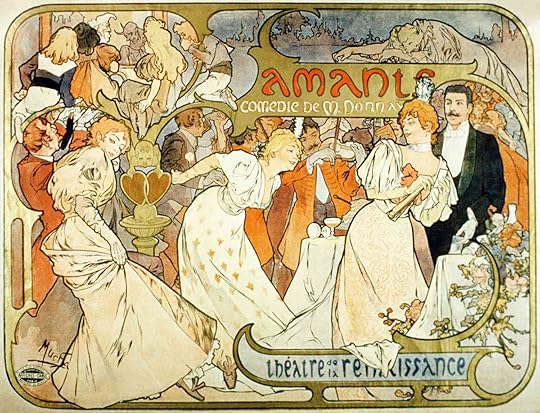
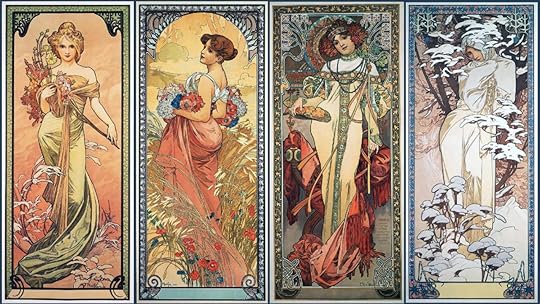
The Belle Époque artistic era that seems solely devoted to art about women (paintings, fashion, Art Nouveau) yet few artworks were made by women. Women of colour, less so. No names carried significantly forward in history.
The irony is mind-shattering.
But for 20 years, there was the American Girls' Club in Paris, 4 Rue de Chevreuse in the 6th Arrondissement, for budding women artists. American (mostly) women who were barred in their own country from attending prestigious art schools or even from drawing the male body nude. Funny story of one artist who went to boxing matches just so she could see "skin" to sketch/draw/paint realistically.
Tho Jennifer Dasal is quick to shed a historical light on those few American women artists who were able to break free from society & masculine restrictions

Read
December 11, 2025The existence of the American Girls Club in Belle Epoque Paris (1871-1914) had been all but lost to history before author/narrator Jennifer Dasal unearthed details about it. This audiobook is pieced together from artists' autobiographies and American journalists' coverage of the expatriates. Bubbly, enthusiastic Dasal recounts the highs and lows of bohemian life in the famed Latin Quarter but resists romanticizing. It was not so simple at that time for a single woman to travel abroad to further her career, and many women who did have been forgotten despite their successes. Dasal's narration indulges in the glorious romance of the City of Light while also balancing somber coverage of the challenges these women faced. THE CLUB is an honorable act of remembering. K.L.L. © AudioFile 2025, Portland, Maine [Published: AUGUST 2025]
https://www.audiofilemagazine.com/rev...
https://www.audiofilemagazine.com/rev...

June 24, 2026
Meh. Audible did it no favors (it said the author narrated but the mispronunciations sounded like AI). The writing about individual people was reasonably compelling but the writing about the background and the minutiae was dull and a slog of a listen. And I don’t mean to be dismissive but the “why should we care” was a little lacking. A handful went on to have long careers as activists or professional artists or teachers but the majority seem to have disappeared from the record after their Parisian sojourn. She can and does explain this by discussing gender roles and institutional sexism, but this seemed like it could have been a chapter in a book about those challenges and little would have been lost. Maybe it simply would have functioned better as a monograph for a more specialized audience, particularly an academic one. In its actual format though it was just so-so for me.
August 14, 2025
What a wonderful slice of nearly forgotten history! As a fan of the Art Curious podcast, I was immediately drawn to Jennifer Dasal’s latest book. I loved how the narrative unfolded through the perspectives of former students, intertwined with the broader events of the time.
My only quibbles: I wish the small illustrations had been larger, and I was left wondering how the women navigated the language barrier, as I assume classes were taught in French.
Highly recommended for anyone interested in art, history and Paris.
My only quibbles: I wish the small illustrations had been larger, and I was left wondering how the women navigated the language barrier, as I assume classes were taught in French.
Highly recommended for anyone interested in art, history and Paris.
March 8, 2026
In the Belle Époque Era(1871-1914) American women artists were traveling to Paris further their artistic endeavors and seek adventure. During this period, women were discouraged from roaming freely through the streets of Paris and so “The Club” was created to provide housing, food and companionship for the young American artists. The book offers an interesting perspective on not only The Club but also the general atmosphere of the Parisian art scene. Several American women artists are highlighted in the book.
December 18, 2025
I was excited for “The Club” to come out after I finished Dasal’s “Artcurious” book. My expectation was that it would be written in a similar fashion— entertaining and informational. “The Club” is well researched, dry, and uneventful with images too small for impact. While the information is there, the entertaining aspect is not and prevents this book from being a page turner. After months of trying to convince myself it’ll get better, I’ve stopped at page 83.

August 13, 2025
I was thrilled to see someone finally do the deep dive necessary to tell the full story of the American Girls Art Club in Paris. I dipped my toes into the subject when I lived in Paris over a decade ago and have been inspired by it ever since. Many thanks for the author’s nod to me in the acknowledgments. I’m glad my blog inspired a book!
(Americangirlsartclubinparis.wordpress.com.)
(Americangirlsartclubinparis.wordpress.com.)
March 3, 2026
Very, very interesting to read about the women who went to Paris to better their art in the late 1800s to the early 1900s.Elizabeth Reid who made The Club even a possibility for these artists is nothing short of amazing. As I explore American art in art museums, I will be looking for the artists described here.

October 22, 2025
As a longtime fan of Dasal’s Art Curious podcast, I know and love her delightful conversational style of conveying history and art history to her readers! I learned a lot of the women who studied in Paris—what an opportunity that would’ve been back at the turn of the century!
October 30, 2025
An interesting history of women artists breaking into the art world in the early 1900s and finding a safe residence in Paris. Such courage and commitment involved by not only the potential artists but also those who made “the club” possible for them.
November 7, 2025
I was excited to read this, but found it too dry and too full of historical tangents early on. Would have preferred sticking with the artists who went through as a full chapter and then full chapters of the historical relevances.
I stopped reading halfway through. Something I rarely do.
I stopped reading halfway through. Something I rarely do.

December 17, 2025
This book is by a local author with information about a local artist. For those reasons this book was worth reading for me. If you enjoy information about art history, this book might be worth reading. I don’t think I would recommend this book to the general reader.
February 19, 2026
Well researched, and a good read. You probably need to have a specific interest in the subject -- women studying art in Paris between 1880 and 1914 -- to really enjoy it. Fortunately, I do have an interest, so I'm glad I bought it and read it.

May 8, 2026
Love love love this book. As a southern female artist who just recently studied in France, this hit on every note. I’m so grateful for the awareness of these women, especially Blondelle Malone, as I also spent my life avoiding Columbia SC 😂. A delightful read!
May 15, 2026
A fascinating book for those of us who love art and love Paris. It would be wonderful if such a place would exist today, but I am so glad it did at the turn of the century for all those brave young women.

September 12, 2025
May be enjoyable for some readers but I found it really dull and uninspired writing.
DNF @ page 66.
DNF @ page 66.
September 20, 2025
3.5 Interesting look at the American Club for Women Artists, which was established in Paris at the end of the nineteenth century.
September 20, 2025
The history of women artists in Paris is interesting, but somewhat slow.
Displaying 1 - 30 of 43 reviews