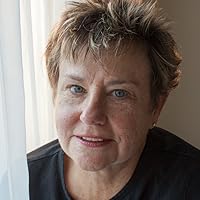
Jennifer Johnston was an Irish novelist. She won a number of awards, including the Whitbread Book Award for The Old Jest in 1979 and a Lifetime Achievement from the Irish Book Awards (2012). The Old Jest, a novel about the Irish War of Independence, was later made into a film called The Dawning, starring Anthony Hopkins, produced by Sarah Lawson and directed by Robert Knights.
A typically excellent novel from the criminally-undersung Jennifer Johnston. The story revolves around Irish politics and society, and part of its brilliance is in the portrayal of those who mete out fatal justice (as they see it) to their opponents. Johnston does not deal in cliches, and there is no character who emerges as entirely saint or sinner. There is a particular description of death which is exquisitely rendered and intensely moving, and which stayed (and stays) in my mind long after the book was finished.
This is perhaps the most beautiful, heart breaking book I've read. It is perfection. Every word carries meaning. I learned more about the Irish Tragedy from this slim volume than countless history books.
I just didn't like it. There's a thin handling of every character and situation, simplistic, in my opinion. There's nothing to make a reader feel or believe that Miranda is as supernaturally to be adored as Johnston tells us she is, or that Andrew is justified in being such a total prick, so he's just a total prick, or that Harry is as funny as Miranda keeps saying he is. Often, Johnston requires me to have some patience until her plots or characters engage me, but this time, it never happened. I never felt there was any purpose for the shifting point-of-view, between first and third person. If the story's point is to explore the complexities of the War of Independence by focussing on a day in the life of one Anglo-Irish family, it misses. I was disappointed. Johnston's How many Miles to Babylon? and Sebastian Barry's The Whereabouts of Eneas McNulty are better choices.
On some 150 pages, Johnston managed to convey deep emotions and vivid characters trapped in a fight that is still going on today. The prose is simply beautiful and the narrative unfolds subtly and building up to a grand finale that might have been obvious, yet it still manages to grip you. After having read The Old Jest as well, I think I'll be thinking about bits and pieces of this novel for a long time to come as well. It's just one of those books that leave a lasting impression, possibly because the setting is so succinct being just this one house and just these chosen few characters.
The book moves seamlessly between Miranda's deathbed, her memories, and the Irish fight for independence in the 1920s. The book reminds me of Elizabeth Bowen's The Last September, but the Anglo-Irish in Johnston are not as politically clueless.
I picked up this book in a Little Free Library, not remembering that I'd read and really liked two other novels by this writer.
As an old woman, Miranda recalls the divided loyalties, hardcore idealism, and violence of the Irish War of Independence that invaded the musty tranquility of her family's rural estate when she was a teenager. This gripping story contrasts a young woman's almost careless innocence, and her father's wistful naivete, with the brutality of civil conflict. The seaside setting, the F. Scott Fitzgerald-esque feeling of romance, all shadowed by a sense of doom--Johnston packs a lot into 130 pages, believe me.
sad little book anout troubles in Ireland after Easter rebellion. . characters finely drawn, though young daighter seems oddly aimless...just alive and pleasant. father imagines new ireland, son spy for Britain, family tenant new man, IRA, killed for alerting son/ brother he is to be killed. perhaps Harry was a respite for author as well as readers...to keep it all from exploding.
A moving story of a family and a young couple torn apart...themes of loyalty to family and nation, duty and love. Succinct as Jennifer Johnston usually is.
Bleak and dreary......I have read five other Johnston novels and admired and enjoyed them. Not so here. Maybe it’s me, this time. The ghostly characters were more believable than the live ones.
This book reminded me very much of "Atonement" (the film, not the book, since, frankly, I couldn't get past the first 50 pages of the book), but better because the book was so smartly written with flashbacks that were well spaced throughout the book's central action.
I wonder what McEwan would say about this potent novel filled with ghosts, dashed love, family struggles. I loved the father and his life's work. I loved the way his calm, mindful environmentalism (or socialism as others perceived it) stood in contrast with his son's anger and violence. A fascinating book about the cost of Ireland's freedom and the lives destroyed in its wake.
I'm not really sure what to say about this. I picked it up at the library because of the Penguin binding, and because the blurb on the back was intriguing, and right up my alley time period-wise. But I feel like I raced through it, it was so short. I think I'm going to read one of Jennifer Johnston's longer books, because the prevailing feeling I had while reading this one was MORE. Though she does that thing that Muriel Spark does that drives me mad, where she reveals the most important event of the book in the first few pages. In any event, I think the writing style is very cool, but it went by so fast that I don't have an opinion yet.
As I noted at the time, this book (set in post-WWI Ireland) was very much like a play: in fact, its premise was a woman on her deathbed, remembering the tragic events of her youth as a play ("just one more time I must assemble the cast)."
Conflicting loyalties lead to tragedy in 1920's Ireland in this beautifully written, clearly observed short novel which captures the truth of those times with the inevitability of a minuet.