
What do you think?
Rate this book


Audible Audio
First published August 5, 2018


"It is not yet widely understood, though it will be, that the politician who claims that climate change is uncertain betrays humanity [sic]. It is not yet widely understood, though it will be, that when a government relaxes regulations on coal-fired plants or erases scientific data from a federal website, it is guilty of more than merely bowing to corporate interests; it commits crimes against humanity."
"Forty years ago, the political scientists, economists, social theorists, and philosophers who studied the slow-moving threat of climate change generally agreed that we could not be counted on to save ourselves. Their theories shared a common principle: that human beings, whether in international bodies, democracies, industries, political parties, or as individuals, are incapable of sacrificing present convenience to forestall a penalty imposed on future generations."
"Adaptation to climate change, the philosopher Klaus Meyer-Abich observed in 1980, “seems to be the most rational political option.” It is the option that we have pursued, consciously or not, ever since."In other words, we're just going to wing it.
"it was an existential problem—the fate of civilization depended on it, the oceans would boil, all of that. But it wasn’t a political problem. Know how you could tell? Political problems had solutions. And the climate issue had none."
"William Nordhaus, upon winning the Nobel Prize in 2018, made the same point: “The problem is political, rather than one of economics or feasibility.” We can trust the technology and the economics. It’s harder to trust human behavior."Not that the industries didn't contribute to a growing desire to deny climate change. Similar to tobacco, they began to push the studies towards "inconclusive" and "it isn't the fault of humans", knowing that was false. And the Federal government walked hand in hand with industries to obfuscate.
" But Hansen [scientist] would have his way too. As soon as he hung up, he drafted a letter to Gore[Senator Al Gore. Not yet VP]. He explained that OMB wanted him to demote his own scientific findings to “estimates” from models that were unreliable and “evolving.” His anonymous censor wanted him to say that the causes of global warming were “scientifically unknown” and might be attributable to “natural processes,” caveats that would not only render his testimony meaningless but make him sound like a moron. The most bizarre addition, however, was a statement of a different kind. He was asked to demand that Congress consider only climate legislation that would immediately benefit the economy, “independent of concerns about an increasing greenhouse effect”—a sentence no scientist would ever utter, unless perhaps he was employed by the American Petroleum Institute."
"He also included a statistic rarely mentioned in accounts of the science. A warming world, he explained, would stimulate greater energy use, mainly due to higher demand for air-conditioning and refrigeration. By 2055, he told the executives, climate change would increase national energy consumption by 4 to 6 percent."And bonus, initially the impact of climate change would first be felt by people who contributed the least to the problem at hand.
"The greatest victims will be the world’s most impoverished, particularly in those nations that have not yet enjoyed the benefits of industrial energy consumption, and particularly those who do not have white skin, who will disproportionately suffer from natural disasters, declines in arable land, food and water shortages, and migratory chaos. Climate change amplifies social inequity."
"Actions to hasten carbon dioxide emissions are the ineluctable corollary of climate denialism. Once it becomes possible to disregard the welfare of future generations, or those now vulnerable to flooding or drought or wildfire—once it becomes possible to abandon the constraints of human empathy—any monstrosity committed in the name of self-interest is permissible."We have watched these last 4 years as Trump eliminates regulations designed to curtail energy use and reduce carbon emissions in the atmosphere. He flouts these regulations as obstacles to capitalism. He removed a mileage constraints that even the automobile manufacturers didn't want. He brought back the energy inefficient and much less effective light bulb. Got rid of mining regulations air and water pollution standards. Deliberately sabotaged alternative energy initiatives. The list goes on. Mankind is motivated by greed. Unfortunately, very clearly witnessing what is happening today, there is a reckoning. The things that Trump has done are stupid and they set us back. But the truth is that those things were not enough to impact the climate change in a meaningful way but were enough to encourage complacency.
"The cost-benefit analysis is rapidly shifting; the distant perils of climate change are no longer very distant. Many now occur regularly, flagrantly. Each superstorm and superfire is a premonition of more terrifying convulsions to come. But disasters alone will not revolutionize public opinion in the remaining time allotted to us. It is not enough to appeal to narrow self-interest; narrow self-interest, after all, is how we got here."And narrow self interest is still in power. And will be no matter who is elected in November. We are past the point of no return. The climate is changing. The question is how much longer can we continue before we own up to the fact that we have to make drastic changes. Just look at how Americans have reacted to COVID. Asking them to sacrifice their SUVs is a bridge too far for many. We have to convince folks that they should care about the future even though they may not see the benefits of their sacrifice in their lifetimes. The future really does depend on it.
"The denialist does not care about winning a war of ideas, only about avoiding the appearance of amorality. If the science is uncertain, inaction is blameless."More sociology than climate change, this book chronicles the reaction to the science of climate change. In order to respond effectively, the world must undergo some kind of "emotional intelligence" metamorphosis aka "GROW UP!! Remember, we have known this was coming for over 100 years. It is hard to resist liking a book that is almost hypnotizing in its righteous indignation about the ineffectiveness of government and society to deal with what is basically a potential extinction event.
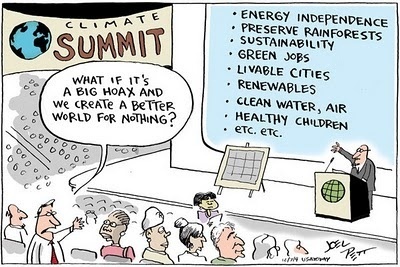
Nearly every conversation we have in 2019 about climate change was being held in 1979. That includes not only the predictions about degrees of warming, sea level rise, and geopolitical strife but also the speculations about geo-engineering technology, the appeals to help developing nations overcome starvation and diseases without relying, as we did , on massive increases in coal consumption, and the cost-benefit analyses that always seem to favour inaction.I was convinced by Rich's claim that we knew enough to act in 1979 and that we could have acted in the 1980s, even if he seems to overstate the likelihood of action.
"no longer fund 'public policy research groups' that advanced climate skepticism. But ExxonMobil has continued to do so to this day, even as it places national television advertisements featuring attractive young scientists experimenting with green algae."The advertisements are not isolated lies but rather longstanding structural deceptions designed to shape (or prevent) policy. This wariness should be applied to institutions, corporations, and individuals. So although George H.W. Bush made some bold comments about addressing climate change while on the campaign trail, we should not be surprised that his administration opposed meaningful action in response to climate change because his commitment to the issue was limited to a few signals made while campaigning.


