

What do you think?

Eines Morgens in Paris
Octavio ist Bäcker, sammelt Bücher und lernt durch eine Verkettung von Zufällen Isabeau kennen - die Liebe seines Lebens. Ein in grünes Leinen gebundenes Buch spielt dabei eine genauso große Rolle wie ein halbblinder Uhrmacher, eine Buchhändler-Familie und ein Künstler. Und dann ist da noch die schrullige Stammkundschaft der Boulangerie… Wir werden Zeuge einer gleichermaßen außergewöhnlichen wie unwahrscheinlichen Liebesgeschichte, die vom Glück des Zufalls und der Liebe erzählt.
240 pages, Paperback
First published January 1, 2012
About the author
C.S. Richardson
5 books64 followersCS Richardson’s first novel, The End of the Alphabet, was an international bestseller published in thirteen countries and ten languages. Winner of the Commonwealth Writers Prize for Best Book (Canada & the Caribbean), it was named on four Best of the Year lists and was adapted for radio drama by BBC Radio 4.
Richardson is also an accomplished and award-winning book designer. He lives and works in Toronto and is currently the Vice President and Creative Director at Random House Canada.
Richardson is also an accomplished and award-winning book designer. He lives and works in Toronto and is currently the Vice President and Creative Director at Random House Canada.
Ratings & Reviews
Friends & Following
Create a free account to discover what your friends think of this book!
Community Reviews
Displaying 1 - 30 of 284 reviews

September 3, 2012
This is a very difficult book to rate! Much of the writing is very fine, the novel is wonderfully evocative of Paris in all its historical diversity and depth of character, and the fundamental story told is emotionally powerful. But the structure of this book is seriously (and needlessly) frustrating -- as if someone instructed the author that he must make his novel as difficult as possible to savour and enjoy.
"Wear your clothes," someone must have said, "inside out and upside down -- and you will be noticed!"
After going through the book twice, I now can follow the hidden logic of what C.S. Richardson is writing -- and I can say that this is a beautiful tale of emerging love, set against the backdrop of grim times (World War One, and the Depression of the 1930's,) in the dramatic setting of the 8th arrondissement of Paris. It is a novel that captures the wonder of unlooked for passions, and presents a rich parade of fascinating characters who stay with you -- the baker Octavio Notre-Dame and his war-ridden father, the frustrated artist Jacob Kalb from Geneva, bookseller Henri Fournier with his magic book and the scarred woman Isabeau Normande, working so hard at safeguarding the paintings in the Louvre.
In his first book, Richardson had a straightforward structure -- the book was "The End of the Alphabet," and it was based around a dying man trying to pursue places in alphabetical order before his demise. No obscurity -- but wonderful writing and a devastating theme. Did someone tell the author he could prove he could rival Michael Ondaatje in structural complexity?
Too bad -- an excellent novel became, in my view, merely good through trying too hard.
"Wear your clothes," someone must have said, "inside out and upside down -- and you will be noticed!"
After going through the book twice, I now can follow the hidden logic of what C.S. Richardson is writing -- and I can say that this is a beautiful tale of emerging love, set against the backdrop of grim times (World War One, and the Depression of the 1930's,) in the dramatic setting of the 8th arrondissement of Paris. It is a novel that captures the wonder of unlooked for passions, and presents a rich parade of fascinating characters who stay with you -- the baker Octavio Notre-Dame and his war-ridden father, the frustrated artist Jacob Kalb from Geneva, bookseller Henri Fournier with his magic book and the scarred woman Isabeau Normande, working so hard at safeguarding the paintings in the Louvre.
In his first book, Richardson had a straightforward structure -- the book was "The End of the Alphabet," and it was based around a dying man trying to pursue places in alphabetical order before his demise. No obscurity -- but wonderful writing and a devastating theme. Did someone tell the author he could prove he could rival Michael Ondaatje in structural complexity?
Too bad -- an excellent novel became, in my view, merely good through trying too hard.

February 15, 2013
I wrote this review in the days when I dropped two lines if lucky, but this book deserves so much more. If you haven't read it, put it on your list. Two misfits, each with flaws either physical or functional yet with their own special gifts do not experience all that life might bring because they try to hide the secret of their flaws, and by doing that, themselves.
The magical story takes place in early 20th-century Paris. Octavio is an illiterate baker, and Isabeau, a book-obsessed girl who keeps her disfigured face hidden from others. Although on the surface they may seem to be an unlikely couple, their shared love of stories help to bring these two together through a strange chain of coincidences. There are many threads, which gradually weave together to form a lovely tapestry of interconnected stories. I loved this book. It is the most lovely Paris story I've come across.
Here is a current review worth checking out:
https://www.goodreads.com/review/show...
The magical story takes place in early 20th-century Paris. Octavio is an illiterate baker, and Isabeau, a book-obsessed girl who keeps her disfigured face hidden from others. Although on the surface they may seem to be an unlikely couple, their shared love of stories help to bring these two together through a strange chain of coincidences. There are many threads, which gradually weave together to form a lovely tapestry of interconnected stories. I loved this book. It is the most lovely Paris story I've come across.
Here is a current review worth checking out:
https://www.goodreads.com/review/show...

December 28, 2023
[7/10]
Have I told you the one about the birds? Monsieur said.
Octavio shook his head. Monsieur unlinked his hands and laid them flat on the table.
Very well. Imagine a time before this.
A father telling stories to his son in the basement of a Paris bakery: a simple enough premise, but one that gains a bittersweet poignancy when you know that both Monsieur, the thinnest baker in all Paris, and young Octavio are dyslexics and cannot process the written word.
They learn to compensate by making up stories from the pictures in books or newspapers,later from visits to the Louvre galleries.
This is their story, one that C. S. Richardson molds into the shape of a modern fairy tale that is also a love song to the magical city of Paris.
I picked the book because 2023 was a year I didn’t manage to visit what is probably my favorite city in the world, and my familiarity with the view of the Ile de la Cite from the Pont des Arts, with the endless corridors of the Louvre and with the faded, dusty treasures on offer in the stalls of the bouquinistes along the Quai of the Seine, helped me make the best of this rather strange and twisted tale.
On a July morning in the eighth district of Paris, it begins to snow.
The author plays with timelines and with character arcs in a forced convergence of stories that are broken apart like pieces in a kaleidoscope. The realism of historical events and the emotional trauma induced by the bloodbath in the trenches of the first world war are balanced by a whimsical, magical prose that almost convinces the reader that there really are fairies at the bottom of the garden.
At ten minutes to eleven on the morning of the 21st of January, 1910, with a tremendous scientific precision, the gears and wheels of the city’s public clocks stopped turning, their compressed-air power station flooded in the rising waters. Two days later the platforms of the Gare d’Orsay were drowning in an oily pool ten meters deep, with unclaimed luggage bobbing through the water like rootless archipelagos.
These historical details and some of the Paris landmarks [Pont des Arts, the Louvre, Tuilleries gardens, the bouquiniste stalls on the quai of the river] are extremely helpful to the reader who might get lost in the fractured timelines and in the fantastic visions of the main actors.
It may not be clear from the beginning, but the main argument here is that we live as much in the real world as we do in the imagination. It is the latter which enhances our lives and gives meaning to our struggles.
Did you know, gentlemen, that it was cut in the quarries of Tuscany? A slab as tall as the cake-slice. Shipped across a sea broiling with sharks and mermaids, you know, and loaded onto a fire-breathing train, non-stop, to the banks of the Seine. They winched it onto a barge rowed by a hundred men. A full day before it entered the city. It was hoisted to a cart pulled by five stallions named for kings, four Henris and a Louis. From the quai side to here you could hear twenty hooves shaking the cobblestones from their mortar. And now here it sits, mia bella Italiana , waiting for my dough.
This is Monsieur, the thinnest baker in all of Paris, describing to his customers how the marble table in his basement came into his possession.
Is the story true? Probably just a figment of Monsieur imagination, but who wouldn’t rather buy his daily croissant from a place of legends.
The other converging stories are about a young boy who sells second hand books from his green stall, a painter from the provinces who cannot adapt to the classical standards of his Academy training and a young girl with a scarred face who restores paintings in the Louvre. Linking them is 'the only river in the world that runs between two bookshelves' and their love for the hidden stories to be found in faces, paintings and books that cannot be read.
The boy would peer up and down the quai, satisfy himself that no one was approaching, and place the book on the pavement. Sliding the spectacles to the top of his head, the bookseller would plant his feet on the book’s open pages, lift his arms out from his sides and turn his face to the sky.
Learning to fly, learning to paint, learning to make bread, learning to fall in love : it’s all about believing in magic, in the the power of storytelling. Isabeau is urged by her museum mentor to dare, to dream, to fight for her passion.
Eyes up. You are in the Louvre, mademoiselle, not the Metro. You will not see anything by looking at your shoes.
The girl who dreams about paintings and hides her scars behind colourful scarves, the young man who paints the same view of the river every day only to wash out the canvas when he finishes, the young baker who builds up a library of books he cannot read, but believes the colour of the covers can tell him what the subject is – you need a wizard like Richardson to bring them together.
Red, the thinnest baker might say. The colour of passion, my boy, of beating hearts and action. They’re the bold ones, the reds, sure to be full of adventure. Or we could pick the blue ones, like the wide sea and those mermaids singing us home. Or perhaps the green of the trees in our Tuileries.
I have not told you about the emperor of Paris from the title: he is not one of the actors I already mentioned, but he is the bird collector from my opening quote, a good and simple emperor who couldn’t read, but who collected all the birds in his city, hoping they will grant him wisdom.
It’s a fable within a fable, and the reader should dig at the meaning free from spoilers in an online review. Richardson tells a better story than me anyway.
Have I told you the one about the birds? Monsieur said.
Octavio shook his head. Monsieur unlinked his hands and laid them flat on the table.
Very well. Imagine a time before this.
A father telling stories to his son in the basement of a Paris bakery: a simple enough premise, but one that gains a bittersweet poignancy when you know that both Monsieur, the thinnest baker in all Paris, and young Octavio are dyslexics and cannot process the written word.
They learn to compensate by making up stories from the pictures in books or newspapers,later from visits to the Louvre galleries.
This is their story, one that C. S. Richardson molds into the shape of a modern fairy tale that is also a love song to the magical city of Paris.
I picked the book because 2023 was a year I didn’t manage to visit what is probably my favorite city in the world, and my familiarity with the view of the Ile de la Cite from the Pont des Arts, with the endless corridors of the Louvre and with the faded, dusty treasures on offer in the stalls of the bouquinistes along the Quai of the Seine, helped me make the best of this rather strange and twisted tale.
On a July morning in the eighth district of Paris, it begins to snow.
The author plays with timelines and with character arcs in a forced convergence of stories that are broken apart like pieces in a kaleidoscope. The realism of historical events and the emotional trauma induced by the bloodbath in the trenches of the first world war are balanced by a whimsical, magical prose that almost convinces the reader that there really are fairies at the bottom of the garden.
At ten minutes to eleven on the morning of the 21st of January, 1910, with a tremendous scientific precision, the gears and wheels of the city’s public clocks stopped turning, their compressed-air power station flooded in the rising waters. Two days later the platforms of the Gare d’Orsay were drowning in an oily pool ten meters deep, with unclaimed luggage bobbing through the water like rootless archipelagos.
These historical details and some of the Paris landmarks [Pont des Arts, the Louvre, Tuilleries gardens, the bouquiniste stalls on the quai of the river] are extremely helpful to the reader who might get lost in the fractured timelines and in the fantastic visions of the main actors.
It may not be clear from the beginning, but the main argument here is that we live as much in the real world as we do in the imagination. It is the latter which enhances our lives and gives meaning to our struggles.
Did you know, gentlemen, that it was cut in the quarries of Tuscany? A slab as tall as the cake-slice. Shipped across a sea broiling with sharks and mermaids, you know, and loaded onto a fire-breathing train, non-stop, to the banks of the Seine. They winched it onto a barge rowed by a hundred men. A full day before it entered the city. It was hoisted to a cart pulled by five stallions named for kings, four Henris and a Louis. From the quai side to here you could hear twenty hooves shaking the cobblestones from their mortar. And now here it sits, mia bella Italiana , waiting for my dough.
This is Monsieur, the thinnest baker in all of Paris, describing to his customers how the marble table in his basement came into his possession.
Is the story true? Probably just a figment of Monsieur imagination, but who wouldn’t rather buy his daily croissant from a place of legends.
The other converging stories are about a young boy who sells second hand books from his green stall, a painter from the provinces who cannot adapt to the classical standards of his Academy training and a young girl with a scarred face who restores paintings in the Louvre. Linking them is 'the only river in the world that runs between two bookshelves' and their love for the hidden stories to be found in faces, paintings and books that cannot be read.
The boy would peer up and down the quai, satisfy himself that no one was approaching, and place the book on the pavement. Sliding the spectacles to the top of his head, the bookseller would plant his feet on the book’s open pages, lift his arms out from his sides and turn his face to the sky.
Learning to fly, learning to paint, learning to make bread, learning to fall in love : it’s all about believing in magic, in the the power of storytelling. Isabeau is urged by her museum mentor to dare, to dream, to fight for her passion.
Eyes up. You are in the Louvre, mademoiselle, not the Metro. You will not see anything by looking at your shoes.
The girl who dreams about paintings and hides her scars behind colourful scarves, the young man who paints the same view of the river every day only to wash out the canvas when he finishes, the young baker who builds up a library of books he cannot read, but believes the colour of the covers can tell him what the subject is – you need a wizard like Richardson to bring them together.
Red, the thinnest baker might say. The colour of passion, my boy, of beating hearts and action. They’re the bold ones, the reds, sure to be full of adventure. Or we could pick the blue ones, like the wide sea and those mermaids singing us home. Or perhaps the green of the trees in our Tuileries.
I have not told you about the emperor of Paris from the title: he is not one of the actors I already mentioned, but he is the bird collector from my opening quote, a good and simple emperor who couldn’t read, but who collected all the birds in his city, hoping they will grant him wisdom.
It’s a fable within a fable, and the reader should dig at the meaning free from spoilers in an online review. Richardson tells a better story than me anyway.

May 21, 2013
This book is pure magic. At the beginning you might scratch your head and wonder “where the heck is this story going?!” or even “is this a collection of short stories?” … but that’s where the magic begins. A baker and his wife have a boy. A designer and his wife have a daughter. The painter who isn’t quite good enough for the master’s to teach him and the booksellers son who is doomed to share his father and grandfather’s fate – sitting on the side of the river hoping to sell a book or two. Independently all of these stories sound unimpressive … and yet they all come together with such grace and through such beautiful imagery. I couldn’t put it down. The joy of reading and telling stories, the beauty of pictures and what they bring to people. A classic in the making. This is truly a book meant for book lovers and readers.

March 18, 2022
Good concept and story; terrible execution.
This could have been an amazing book. Unfortunately, the frustrating timeline (flashing back and forth but WITHOUT making it clear that the two timelines are about the same set of characters) and lack of punctuation (no quotation marks, a particular pet peeve of mine) made this a difficult book to read.
Not one I would recommend or revisit, despite an interesting story and likable characters. It was just so much work for the payout.
This could have been an amazing book. Unfortunately, the frustrating timeline (flashing back and forth but WITHOUT making it clear that the two timelines are about the same set of characters) and lack of punctuation (no quotation marks, a particular pet peeve of mine) made this a difficult book to read.
Not one I would recommend or revisit, despite an interesting story and likable characters. It was just so much work for the payout.

September 14, 2012
Richardson's second novel transports the reader to Paris in the early twentieth century, to the Boulangerie Notre-Dame, a bakery in the eighth arrondissement, in a flatiron building called the cake slice - ironic, perhaps, because this was a bakery, not a patisserie. Here, Emile Notre-Dame, the thinnest baker in Paris, brings his Italian wife, Immacolata in 1901. In 1908 they finally have a child, a son called Octavio, who inherits his father's dyslexia. Immacolata, after praying for years for a child, now finds herself in the grip of post-partum depression, the price, she feels, for asking for a child. When Octavio is still a child, his father enlists in the army after the great war (world war one) breaks out, and together he and his mother - with the help of the blind watchmaker, Grenelle, who lives upstairs - run the bakery. Years later, Emile is returned to them, a shadow of the man they used to know, who barely recognises his family and spends his time sitting in a chair in the cellar where the bread is baked.
After a time, Octavio begins to take his father on walks through the city, a city he's barely ever ventured into in his life before. Over time, they gain confidence, and start going to the Louvre every Sunday. Unable to read, they continue the story-telling tradition that Emile used to do with Octavio when he was little, creating stories behind the photos on the front pages of newspapers. It is there, in the galleries, that Isabeau Normande first sees Octavio.
Isabeau was born to merchant parents who were obsessed with appearances. When, as a little girl, Isabeau suffered an accident in the kitchen and was left with a scar on her face, her mother teaches her to always cover her head with a scarf, and to avoid being seen. She finds work in the basement of the Louvre, repairing old paintings from accumulated smoke and grime, and spends all her free time in the park, reading, losing herself in books. It is there that Octavio sees her for the first time, noticing her because he has a drawing of her hung up in the bakery - a sketch he bought from Henri who owns a bookstall along the river, from whom he's been buying books - he cannot read them, but he loves the colours, and the apartment above the bakery, the stairs as well, are overflowing with books.
It is through a book, an anonymous gift from Octavio to Isabeau, that brings them together, on a fateful day when a fire guts Octavio's home, making the summer streets of Paris snow with paper. The story begins here, and ends here, but it is not a story about plot. I'm not sure you could sum-up just what it is about, except to say it is an artistic piece, a stylistic novel mirroring the art - paintings and literature especially - that are, in a way, its focus. This is echoed in the beautiful design of the book: a small hardcover (the size they used to be, a long time ago), in a lovely read stamped with genie shoes on the front (the one book Octavio owned from the time of his birth was an illustrated Arabian Nights that his father gave him, and it recurs throughout the book - in fact, it's how Isabeau finds Octavio the day his bakery burns). The soft, slightly thick pages are deckled (unevenly cut), and the old-fashioned endpapers perfectly complement the lovely, textured dustjacket:
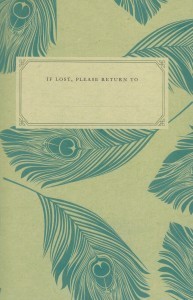
Everything about this book complements it, including - especially - the language, which is some ways is main focus of the novel, if not the story. It is written in a fable-like, omniscient style, like the dignified, elegant voice-over narrator to a quirky art-house period film. Words are chosen economically, precisely, sparsely, painting a picture in a few deft strokes -
I have to admire this kind of prose, which is so deft, so neat, so expressive and contained. But for as much as I admire it, and as much as it can conjure up colourful images in my head, it is still a style that renders me a passive reader, which is something I'm not so keen on. I could only work with what I was given, and outside of those images, the world of this story was a vague grey blank for the most part. The only thing I was actively engaged with, in reading this book, was in keeping track of events.
It is told mostly chronologically, but the story of Octavio and Isabeau's childhoods are interrupted by scenes in the lives of Henri the bookseller and Jacob the impoverished, homeless artist (the one who does the drawing of Isabeau reading), as well as short scenes from a single day in the "present", the day on which the bakery burns, which consist mostly of Isabeau's hasty journey across Paris. Keeping track of the different time periods and the cast of characters' stories (made trickier by their habit of jumping forward in age), was a struggle at times, though it would be a breeze on a second reading.
While the language is both simple and elegant, plain and sumptuous, it has a minimalist feel to it due to the absence of dialogue punctuation. I've read several books that employ this device - one I'm never exactly sure as to the authors' reasons for it - and this was definitely one of the most successful: it was always easy to tell when someone was speaking, and who was speaking, which isn't always the case.
One of the things I appreciated the most were the descriptions of books, and the pleasure Emile and Octavio - who couldn't read - got from books. When Octavio begins his almost obsessive book-buying habit (something I could entirely relate to), he doesn't choose books based on their stories or titles, but on what colour they are, and the descriptions he imagines his deceased father giving them:
It is this love for books, as much as the love for art, good food and companionship, that gives this book its heart. Everything is linked, connected - take that final description in the quote above, which is how Octavio's parents met, though this time he imagines it as a deliberate meeting, rather than a purely accidental one. The description of the books continues in a visual image that I found mesmerising:
When I began reading The Emperor of Paris, I fell into the writing easily and found it light and graceful, like a dance or a landscape. I enjoy stories told like a fable, tracing the generations in leaps and bounds, lighting up a scene here and there that speaks the loudest, so that the pieces accumulate in your mind into something larger, more comprehensive, than the individual scenes. And I didn't mind the lack of focus - in fact, I enjoyed the slower, more gently telling of Octavio's family and his and Isabeau's childhoods and early adulthoods, than the actual plot, the "present day" snippets that show Octavio's bakery burning and Isabeau running through Paris with the book, Arabian Nights in her hand - these snippets are interspersed throughout without warning, in an effort to build and maintain momentum and tension, yet I found them the weakest part of the novel. They were like annoying interruptions, ones that jolted the rhythm of the rest of the story, and it always took me a moment to catch my bearings and figure out where I was now and who the story was talking about. I think I would have preferred it to just gradually build toward their meeting, in a more linear fashion, especially because, in terms of the "past", it took so long for the two to even learn of each others' existence.
This left me with entirely mixed feelings about the book, by the end. In fact, after enjoying the first half so much, the story seemed to deflate like a soufflé at the end - all air and no substance (the cooking analogies are hard to resist, when so much of the story revolves around baking and uses many analogies of its own). I certainly enjoy books like this more in the moment, while reading, than afterwards, especially when it is so hard to grasp the disparate elements of such a stylistic novel, to say what it was that captivated you, and what left you unaffected. All I can say is that, with The Emperor of Paris, style won out over plot, and fable-like story-telling won out over the unexplored beginnings of romance between the two young adults, Octavio and Isabeau, and this left me ultimately less satisfied than I would otherwise have been.
After a time, Octavio begins to take his father on walks through the city, a city he's barely ever ventured into in his life before. Over time, they gain confidence, and start going to the Louvre every Sunday. Unable to read, they continue the story-telling tradition that Emile used to do with Octavio when he was little, creating stories behind the photos on the front pages of newspapers. It is there, in the galleries, that Isabeau Normande first sees Octavio.
Isabeau was born to merchant parents who were obsessed with appearances. When, as a little girl, Isabeau suffered an accident in the kitchen and was left with a scar on her face, her mother teaches her to always cover her head with a scarf, and to avoid being seen. She finds work in the basement of the Louvre, repairing old paintings from accumulated smoke and grime, and spends all her free time in the park, reading, losing herself in books. It is there that Octavio sees her for the first time, noticing her because he has a drawing of her hung up in the bakery - a sketch he bought from Henri who owns a bookstall along the river, from whom he's been buying books - he cannot read them, but he loves the colours, and the apartment above the bakery, the stairs as well, are overflowing with books.
It is through a book, an anonymous gift from Octavio to Isabeau, that brings them together, on a fateful day when a fire guts Octavio's home, making the summer streets of Paris snow with paper. The story begins here, and ends here, but it is not a story about plot. I'm not sure you could sum-up just what it is about, except to say it is an artistic piece, a stylistic novel mirroring the art - paintings and literature especially - that are, in a way, its focus. This is echoed in the beautiful design of the book: a small hardcover (the size they used to be, a long time ago), in a lovely read stamped with genie shoes on the front (the one book Octavio owned from the time of his birth was an illustrated Arabian Nights that his father gave him, and it recurs throughout the book - in fact, it's how Isabeau finds Octavio the day his bakery burns). The soft, slightly thick pages are deckled (unevenly cut), and the old-fashioned endpapers perfectly complement the lovely, textured dustjacket:
Everything about this book complements it, including - especially - the language, which is some ways is main focus of the novel, if not the story. It is written in a fable-like, omniscient style, like the dignified, elegant voice-over narrator to a quirky art-house period film. Words are chosen economically, precisely, sparsely, painting a picture in a few deft strokes -
One might have missed the soggy handkerchief, the stained headband, the flushed cheeks; such was the rehearsed swing of Pascal's walking stick. Here was a gentleman, one could assume, overdressed for the weather but still at ease with himself and his world, wanting for nothing. For Pascal Normande was in the business of illusion. [p.29]
I have to admire this kind of prose, which is so deft, so neat, so expressive and contained. But for as much as I admire it, and as much as it can conjure up colourful images in my head, it is still a style that renders me a passive reader, which is something I'm not so keen on. I could only work with what I was given, and outside of those images, the world of this story was a vague grey blank for the most part. The only thing I was actively engaged with, in reading this book, was in keeping track of events.
It is told mostly chronologically, but the story of Octavio and Isabeau's childhoods are interrupted by scenes in the lives of Henri the bookseller and Jacob the impoverished, homeless artist (the one who does the drawing of Isabeau reading), as well as short scenes from a single day in the "present", the day on which the bakery burns, which consist mostly of Isabeau's hasty journey across Paris. Keeping track of the different time periods and the cast of characters' stories (made trickier by their habit of jumping forward in age), was a struggle at times, though it would be a breeze on a second reading.
While the language is both simple and elegant, plain and sumptuous, it has a minimalist feel to it due to the absence of dialogue punctuation. I've read several books that employ this device - one I'm never exactly sure as to the authors' reasons for it - and this was definitely one of the most successful: it was always easy to tell when someone was speaking, and who was speaking, which isn't always the case.
One of the things I appreciated the most were the descriptions of books, and the pleasure Emile and Octavio - who couldn't read - got from books. When Octavio begins his almost obsessive book-buying habit (something I could entirely relate to), he doesn't choose books based on their stories or titles, but on what colour they are, and the descriptions he imagines his deceased father giving them:
Red, the thinnest baker might say. The colour of passion, my boy, of beating hearts and action. They're the bold ones, the reds, sure to be full of adventure. Or we could pick the blue ones, like the wide sea and those mermaids singing us home. Or perhaps the green of the trees in our Tuileries.
Octavio knew his father would assign each colour he saw. The golds would contain tales of treasure hunters and lost cities, the purples would conjur [sic] magic and spirits and fairy worlds. He wondered if his father would have considered black a colour at all. Regardless, he would have started with the red ones.
[...] Imagine a woman, my boy. Watch her as she steps out of a pastry shop. She does not look your way but, oh yes, you see her. Her face, her mouth, the curve of those red lips. You cannot resist. You wonder what would it be like to kiss those lips. As red as raspberries. You bump against her and find yourself sitting in the gutter. The red of raspberries, my boy. That is the colour we'll start with. [p.235]
It is this love for books, as much as the love for art, good food and companionship, that gives this book its heart. Everything is linked, connected - take that final description in the quote above, which is how Octavio's parents met, though this time he imagines it as a deliberate meeting, rather than a purely accidental one. The description of the books continues in a visual image that I found mesmerising:
The reds gathered in the attic, two or three at a time. Soon stacks of books threatened to block the doorways, as though a bricklayer was using them to slowly close up the apartment. When the walls could hold no more, the floors took over. In turn they began to sag, creaking bitterly under the weight. The blues descended the spiral staircase, half a dozen books to a step. By the time they reached the bottom tread, Octavio had moved on to the greens. These filled the kitchen. Piled under the sink, wedged behind the taps, thrown on top of the cupboards, jammed into the drawers, displayed on the table, three deep along the windowsill. Books in shades of gold followed the slope from bathroom to bedroom. A platform of editions bound in grey cloth raised the bed enough that Octavio needed four thick volumes as a stool to reach the mattress. He removed the mirrored door of the armoire so the purple ones might fit inside. The drawer where he had slept as a baby now barely closed, filled as it was with books the colour of wine. There were ones that flapped in the rafters: Octavio tied lengths of rope from one beam to the next and hung them open, gently nesting the rope into the gutter of each volume. [pp.239-240]
When I began reading The Emperor of Paris, I fell into the writing easily and found it light and graceful, like a dance or a landscape. I enjoy stories told like a fable, tracing the generations in leaps and bounds, lighting up a scene here and there that speaks the loudest, so that the pieces accumulate in your mind into something larger, more comprehensive, than the individual scenes. And I didn't mind the lack of focus - in fact, I enjoyed the slower, more gently telling of Octavio's family and his and Isabeau's childhoods and early adulthoods, than the actual plot, the "present day" snippets that show Octavio's bakery burning and Isabeau running through Paris with the book, Arabian Nights in her hand - these snippets are interspersed throughout without warning, in an effort to build and maintain momentum and tension, yet I found them the weakest part of the novel. They were like annoying interruptions, ones that jolted the rhythm of the rest of the story, and it always took me a moment to catch my bearings and figure out where I was now and who the story was talking about. I think I would have preferred it to just gradually build toward their meeting, in a more linear fashion, especially because, in terms of the "past", it took so long for the two to even learn of each others' existence.
This left me with entirely mixed feelings about the book, by the end. In fact, after enjoying the first half so much, the story seemed to deflate like a soufflé at the end - all air and no substance (the cooking analogies are hard to resist, when so much of the story revolves around baking and uses many analogies of its own). I certainly enjoy books like this more in the moment, while reading, than afterwards, especially when it is so hard to grasp the disparate elements of such a stylistic novel, to say what it was that captivated you, and what left you unaffected. All I can say is that, with The Emperor of Paris, style won out over plot, and fable-like story-telling won out over the unexplored beginnings of romance between the two young adults, Octavio and Isabeau, and this left me ultimately less satisfied than I would otherwise have been.

October 20, 2012
Lovely. Charming. Beautiful. The perfect book to read slowly, to savour.
Imagery that will take you to the boulangeries, bookshops and galleries of Paris (swoon!). A backwards sort of love story in which a serendipitous series of incidents and coincidences bring Isabeau and Octavio together at last, at the end.
“For weeks Octavio returned to the shelter of the trees. The woman would appear as the sun reached midday. She would walk to the edge of the trees, find her chair and drag it to the boat pond. Every Sunday the same chair, the same spot. Every Sunday a book.
He needed only one word to imagine a hundred stories: she -
was a dancer; cooling her feet after a morning of twists and leaps.
was the daughter of a sea captain, remembering her childhood as the toy boats crossed the pond.
was an empress hiding among her subjects, shielding her face with a scarf made from the silk of ten thousand worms. Five thousand green, five thousand blue.
was a teacher, a lover of learning, patient and gentle with her students.
She - was a reader.
He had a library.”
Imagery that will take you to the boulangeries, bookshops and galleries of Paris (swoon!). A backwards sort of love story in which a serendipitous series of incidents and coincidences bring Isabeau and Octavio together at last, at the end.
“For weeks Octavio returned to the shelter of the trees. The woman would appear as the sun reached midday. She would walk to the edge of the trees, find her chair and drag it to the boat pond. Every Sunday the same chair, the same spot. Every Sunday a book.
He needed only one word to imagine a hundred stories: she -
was a dancer; cooling her feet after a morning of twists and leaps.
was the daughter of a sea captain, remembering her childhood as the toy boats crossed the pond.
was an empress hiding among her subjects, shielding her face with a scarf made from the silk of ten thousand worms. Five thousand green, five thousand blue.
was a teacher, a lover of learning, patient and gentle with her students.
She - was a reader.
He had a library.”

August 14, 2012
Just a seriously lovely, romantic story that appears, at first blush, to be about the inevitable meeting—one man, one woman—but, as with all tales, it's *in* the telling. One word, and it begins.
A really nice love letter to books, readers, and storytellers.
A really nice love letter to books, readers, and storytellers.

September 6, 2012
It’s rare that a book as beautiful as C.S. Richardson’s The Emperor of Paris comes along. Set in and around the 8th District of Paris, France during the 1930s, a time filled with war and depression, Richardson’s novel is a delight for the senses. The reader can smell the scent of fresh baked baguettes wafting from the Boulangerie Notre-Dame bakery. They can see the vibrant shades of green reflected in the midday sun at the Fournier bookstall. They can hear the fabricated stories shared between an illiterate father and his Dyslexic son as if they were sitting there in the room with them. They can feel the passionate love between the skinniest baker and his plump wife as well as between their son Octavio and the disfigured girl Isabella, a relationship that serves as the focal point of the novel.
When the elder Notre-Dame is called away to serve in World War I it’s up to his young son Octavio, his overweight mother, and their nearly blind acquaintance to keep the family bakery open and operational. They succeed until he returns, but much to the dismay of his wife, he’s a changed man. The emotional damage the war inflicted on him has left him scarred. Despondent, his wife takes drastic measures with disastrous consequences.
READ MORE:
http://www.typographicalera.com/the-e...
When the elder Notre-Dame is called away to serve in World War I it’s up to his young son Octavio, his overweight mother, and their nearly blind acquaintance to keep the family bakery open and operational. They succeed until he returns, but much to the dismay of his wife, he’s a changed man. The emotional damage the war inflicted on him has left him scarred. Despondent, his wife takes drastic measures with disastrous consequences.
READ MORE:
http://www.typographicalera.com/the-e...

September 5, 2012
I’m always nervous about going into a book with my expectations too high. Managing expectations is key, whether because of great reviews, award nominations, or my love for the author’s previous works. In the case of CS Richardson’s The Emperor of Paris, however, I really had nothing to worry about. I adored his first novel, The End of the Alphabet, and am just as enchanted (if not more so!) with this new book.
The magical story takes place in early 20th-century Paris and centers around two main characters: Octavio, an illiterate baker, and Isabeau, a book-obsessed girl who keeps her disfigured face hidden from others. Although on the surface they may seem to be an unlikely couple, their shared love of stories help to bring these two together through a strange chain of coincidences. Richardson’s spare yet poetic writing truly lifts this story off the page and brings the reader into the magical world he’s created. I was completely swept away by this mesmerizing tale of love and imagination.
The magical story takes place in early 20th-century Paris and centers around two main characters: Octavio, an illiterate baker, and Isabeau, a book-obsessed girl who keeps her disfigured face hidden from others. Although on the surface they may seem to be an unlikely couple, their shared love of stories help to bring these two together through a strange chain of coincidences. Richardson’s spare yet poetic writing truly lifts this story off the page and brings the reader into the magical world he’s created. I was completely swept away by this mesmerizing tale of love and imagination.

August 25, 2018
The Emperor of Paris is a beautifully written book set in Paris in the early 20th century. The structure of the book is a series of vignettes featuring loosely interconnected people. This novel has an ethereal quality to it with fleeting images of Paris in an earlier time. You won't know what's happening until the very end making it a book that is best read a second time.

September 7, 2022
I’m not usually one to read romance novels but I’m so glad I decided to pick this one up. I don’t think it was as hard to follow as some reviews suggested, if you’re confused in the beginning I suggest continuing on, the stories fall into place. I loved how all the individual stories came together in the end. Such charming writing, I loved it!

September 1, 2012
This was a cute book, although I don't normally like my books to be cute. I also don't like to feel like the author I'm reading is talking down to me, and I definitely get the feeling that C.S Richardson thinks his writing sits above all else; he reads as pompous to me.
Yet, this is a vast improvement from his last book, "The End of the Alphabet".
Set in early 20th Century Paris, "The Emperor..." is a story about happenstance, about the forces that bring two people together. There is no love story here; instead, the events of the book lead up to the exact moment that the two would-be lovers finally connect. More than that, this book is about all the people around them and how they contribute to the fate of the two young people.
Flipping back and forth between the past and "the present", this book spends a lot of time talking about how the two protagonists were reared, what life was like for their parents, and also the histories of the peripheral cast; unfortunately, this sacrifices any character building in the protagonists. We never really understand why we should care about these two people meeting, why we should route for them to make contact. So what, two people meet on the street. It happens all the time.
It was a pleasurable and fast read, because it is bare-bones literature. The author whittles away any "needless" exposition, unfortunately, over-editing a love story out of its love. There is little description, which is sad, because it is a book set in Paris, but Paris is really only present in street-names, none of the history or magic or personality of that city is present. (It's Paris because we are in the Louvre. Plain and simple.) The characters are quirky, and there are some nice one-liners, but on the whole it is an average book. 3.5/5
Yet, this is a vast improvement from his last book, "The End of the Alphabet".
Set in early 20th Century Paris, "The Emperor..." is a story about happenstance, about the forces that bring two people together. There is no love story here; instead, the events of the book lead up to the exact moment that the two would-be lovers finally connect. More than that, this book is about all the people around them and how they contribute to the fate of the two young people.
Flipping back and forth between the past and "the present", this book spends a lot of time talking about how the two protagonists were reared, what life was like for their parents, and also the histories of the peripheral cast; unfortunately, this sacrifices any character building in the protagonists. We never really understand why we should care about these two people meeting, why we should route for them to make contact. So what, two people meet on the street. It happens all the time.
It was a pleasurable and fast read, because it is bare-bones literature. The author whittles away any "needless" exposition, unfortunately, over-editing a love story out of its love. There is little description, which is sad, because it is a book set in Paris, but Paris is really only present in street-names, none of the history or magic or personality of that city is present. (It's Paris because we are in the Louvre. Plain and simple.) The characters are quirky, and there are some nice one-liners, but on the whole it is an average book. 3.5/5

October 23, 2012
I was a big fan of THE END OF THE ALPHABET and couldn't wait to read this latest novel from C.S. Richardson.
Through a series of characters and events we are introduced to a young baker and a young art-restorer, the fated lovers of this book, though they don't actually meet until the final pages. Much like Sleepless in Seattle ( a great movie but perhaps a poor comparison here), we see the backstories and histories that lead to these two fated lovers meeting.
I waited until I would have a block of time so I could truly sit down and savour this quaint, gorgeous little love story. Richardson is in a class by himself. This book is almost like a fairytale of fable; it has that folkloric feel to it. It is an unabashed big time love story, but told in simple elegant prose and with not a drop of sentimentality. I don't know how he pulls it off, but I will read everything this man endeavours to publish. As perfect as a spring day in Paris.
Through a series of characters and events we are introduced to a young baker and a young art-restorer, the fated lovers of this book, though they don't actually meet until the final pages. Much like Sleepless in Seattle ( a great movie but perhaps a poor comparison here), we see the backstories and histories that lead to these two fated lovers meeting.
I waited until I would have a block of time so I could truly sit down and savour this quaint, gorgeous little love story. Richardson is in a class by himself. This book is almost like a fairytale of fable; it has that folkloric feel to it. It is an unabashed big time love story, but told in simple elegant prose and with not a drop of sentimentality. I don't know how he pulls it off, but I will read everything this man endeavours to publish. As perfect as a spring day in Paris.

April 10, 2020
This story was quite beautiful in the end, but for a short book, too much of it is just getting us to the main plot thread. It wasn’t until about halfway that the structure begun to finally pull us through, and when it did, I needed at least 100 pages more.

March 25, 2024
I would agree with others that the disjointed plot is a distraction. I quite enjoy the technique in most uses but here there are many shifts and it is difficult to follow all the plot lines. Beautiful descriptions and fascinating characters.

August 22, 2023
A series of vignettes on different characters set in Paris during the 1930s, The Emperor of Paris evokes the melancholy of that time and gives you a feel for the city before and after the war. The story begins in the 8th arrondissement of Paris with a couple who own the Notre-Dame bakery. They have Octavio, who has a keen interest in storytelling, just like his father. It follows him through his misfortunes and interactions with other people he meets as he eventually takes over the bakery. The daughter of the tailor, Isabelle, plays a big role in the story and the overlap of the other different characters eventually lead to Octavio meeting her.
The theme of the story revolves around storytelling. Octavio’s father who was a baker was known for his stories and in turn, Octavio became the storyteller as well as baker of Notre-Dame. This theme is repeated throughout the book, and it is felt when each character is introduced and given a story of his own.
It begins slow and the buildup of the story even more slow. The characters backstories are interesting, however the overlap is so minimal - I can’t help but wish there was more to it. As a result, the characters felt a bit drawn out.
The story was disappointing as it had a lot of potential but fell flat. The way it was written is hard to follow because there are no chapters. Also, the story line gets confusing as there are certain excerpts in the middle of the book that are glimpses into the future and flashbacks to the past. It isn’t clear who the characters are in these sequences, as they are not named but have vague references to the setting and the time. I found these glimpses confusing.
I was constantly waiting for something exciting to happen, and nothing ever did. There was not much drama or action with the characters. Even their interactions were downplayed and summarized rather than divulged.
I am not sure what the plot was, it felt like there wasn’t any. The story felt boring and written in an extremely detached way that left the reader feeling that disconnect.
I would recommend this book if you want to read something different and if you are particularly interested in the Paris of the 1930s.
The theme of the story revolves around storytelling. Octavio’s father who was a baker was known for his stories and in turn, Octavio became the storyteller as well as baker of Notre-Dame. This theme is repeated throughout the book, and it is felt when each character is introduced and given a story of his own.
It begins slow and the buildup of the story even more slow. The characters backstories are interesting, however the overlap is so minimal - I can’t help but wish there was more to it. As a result, the characters felt a bit drawn out.
The story was disappointing as it had a lot of potential but fell flat. The way it was written is hard to follow because there are no chapters. Also, the story line gets confusing as there are certain excerpts in the middle of the book that are glimpses into the future and flashbacks to the past. It isn’t clear who the characters are in these sequences, as they are not named but have vague references to the setting and the time. I found these glimpses confusing.
I was constantly waiting for something exciting to happen, and nothing ever did. There was not much drama or action with the characters. Even their interactions were downplayed and summarized rather than divulged.
I am not sure what the plot was, it felt like there wasn’t any. The story felt boring and written in an extremely detached way that left the reader feeling that disconnect.
I would recommend this book if you want to read something different and if you are particularly interested in the Paris of the 1930s.

August 28, 2018
J’aurais aimé lire ce livre en étant à Paris parce qu’il fait rêver de cette ville d’une si jolie façon! Plusieurs histoires se croisent par petites touches pour finir par n’en devenir qu’une, le tout porté par une écriture très fine et agréable. Ce livre donne envie de lire, de manger un bon pain près d’une rivière et d’admirer la vue, bref de profiter du faut d’être un lecteur!

August 29, 2017
This book is so lovely. Although it starts off as short confusing paragraphs of seemingly unintertwined stories it kept me enthralled to the last. Coming together with beautiful tidbits of the characters lives I read it with anticipation, knowing the ending but desperate to know how we got there.

May 22, 2023
A beautifully crafted story -- fairy tale -- set in Paris in the earlier part of the 20th century.
May 24, 2017
Lovely.

February 26, 2020
This book went from a 3 to a 4. It took many chapters for the story to launch and I seriously wondered whether to abandon it. But the links between the characters started to emerge, and so did the story.
The imagery is beautiful and it’s easy to feel right in the heart of Paris as it’s happening. The prose is lovely as is the budding love story.
If you have patience, go ahead and read it. It’s worth it.
The imagery is beautiful and it’s easy to feel right in the heart of Paris as it’s happening. The prose is lovely as is the budding love story.
If you have patience, go ahead and read it. It’s worth it.
July 18, 2012
Reading a book more than once is a practice I've never really gotten behind. I mean, why reread a book when there's a plethora of other books out there to read, a superfluity of other stories waiting to be told? I can honestly say I've never had the desire, upon finishing a book, to immediately flip back to the first page and read it all over again.
That is, of course, until now. As soon as I read the last page of CS Richardson's The Emperor of Paris, I wanted to experience it all over again, from the beginning. I wanted to reopen the doors to the Boulangerie Notre-Dame and let the intoxicating aromas of the baguettes and croissants fill my senses. I wanted to browse the books at the Fournier bookstall, painted in that peculiar shade of green, once again. I wanted to stroll down the corridors of the Louvre and marvel at the art just one more time. But mostly, I wanted to get swept away all over again in The Emperor of Paris' obvious love and appreciation for books, storytelling, and imagination.
Set in Paris, The Emperor of Paris is the story of Octavio Notre-Dame, an illiterate baker with a vivid imagination and a passion for stories, and Isabeau Normande, a disfigured art restorer with a love of books, and the events and characters that inadvertently bring the two together.
The Emperor of Paris is filled with all kinds of wonderful; it has memorable characters, vivid settings, and a story that's filled with heart and charm. Richardson carves out a little corner of Paris, and he doesn't just invite the reader in, but makes them feel welcome, and, even more so than that, makes them feel at home. This is the type of book I want to clutch close to my chest, my arms crossed over its cover, and hold it securely against my heart. While I was reading, I couldn't shake the feeling that this book was written for me, that Mr. Richardson was sitting across from me, his face animated, telling me the story it contained within. Of course, this is nonsense, for this book was not just written for me, but for anyone who has ever held a book in appreciation, anyone who has ever imagined something out of the ordinary, and, most of all, anyone who has ever delighted in a good story.
Once you read The Emperor of Paris, it becomes obvious that the end of the story is, essentially, the beginning. For a book that's about imagination and the joy of storytelling, it's a fitting way to end. Richardson has told the story up to this point, now it's up to the reader to take it from there.
That is, of course, until now. As soon as I read the last page of CS Richardson's The Emperor of Paris, I wanted to experience it all over again, from the beginning. I wanted to reopen the doors to the Boulangerie Notre-Dame and let the intoxicating aromas of the baguettes and croissants fill my senses. I wanted to browse the books at the Fournier bookstall, painted in that peculiar shade of green, once again. I wanted to stroll down the corridors of the Louvre and marvel at the art just one more time. But mostly, I wanted to get swept away all over again in The Emperor of Paris' obvious love and appreciation for books, storytelling, and imagination.
Set in Paris, The Emperor of Paris is the story of Octavio Notre-Dame, an illiterate baker with a vivid imagination and a passion for stories, and Isabeau Normande, a disfigured art restorer with a love of books, and the events and characters that inadvertently bring the two together.
The Emperor of Paris is filled with all kinds of wonderful; it has memorable characters, vivid settings, and a story that's filled with heart and charm. Richardson carves out a little corner of Paris, and he doesn't just invite the reader in, but makes them feel welcome, and, even more so than that, makes them feel at home. This is the type of book I want to clutch close to my chest, my arms crossed over its cover, and hold it securely against my heart. While I was reading, I couldn't shake the feeling that this book was written for me, that Mr. Richardson was sitting across from me, his face animated, telling me the story it contained within. Of course, this is nonsense, for this book was not just written for me, but for anyone who has ever held a book in appreciation, anyone who has ever imagined something out of the ordinary, and, most of all, anyone who has ever delighted in a good story.
Once you read The Emperor of Paris, it becomes obvious that the end of the story is, essentially, the beginning. For a book that's about imagination and the joy of storytelling, it's a fitting way to end. Richardson has told the story up to this point, now it's up to the reader to take it from there.

July 22, 2012
This is a sweet little beauty of creative fiction about the power of storytelling, of painting pictures with words, and of how storytelling can bring seemingly disparate people together. And Richardson does just that. He masterfully brings early 20th C. Paris to life, with the cake-slice building, the changing greens - depending on the time of day - of the bookstall beside the Seine, the marble slab table in the bakery. He transports us there - dipping our toes in the boat pond in the Tuileries, meandering through the Grande Galerie of the Louvre, lining up for our morning brioche at the Boulangerie Notre-Dame, pausing on the Pont des Arts to watch the sun dappling the water. The characters are all flawed, physically and/or emotionally, all searching in their own ways for truth and beauty. It's really quite bohemian and could easily have been set 20 years earlier during the Belle Epoque, but works just as well here, as the City of Lights deals with and emerges from World War One. The power and beauty of books swirls through the story - Henri, the young proprietor of the bookstall, closes his eyes and runs his fingers along the spines of the books as a way of choosing what to read next; Henri also uses a specific book to stand on, closing his eyes again, and being transported to other worlds; Octavio's one book, The Arabian Nights, and the pictures in it which allow his father and him to create their own stories; then his collecting of books - chosen by colour - to keep for the girl he admires but hasn't actually yet met; and Madame T's story of her first love and his library, allowing him to travel the world through books. Lush, magical and romantic, this is a lovingly crafted ode to imagination and art, and the best city in the world in which to find it.

November 18, 2012
Reading this book is like wandering through a well-stocked library with its walls covered in artwork. The smell of wood and paper and wax draw you inside; pages here and there are savoured and read; the colours in a painting arrest until a glimpse of shadow from a cloud passing by the window distracts; a murmured conversation pulls you to the next shelf.
Yes, pick up this book and feel the weight of it. Read the first page:
See? It has you now.
Can anyone actually smell a good book, Grandfather?
Of course not, the old man would bluster. All the buyer need do is hold it. As you are now. Let it rest in their hands. Curl fingers around the spine as if it were stitched for only them. Run a thumb along the soft edges of its pages. When they hold it, Henri, is when you have them. After that they can smell it all they like.
- C.S. Richardson, The Emperor of Paris, p.47
Yes, pick up this book and feel the weight of it. Read the first page:
For the gossips of the bakery it becomes irresistible: the wisps of smoke up their noses, the voices under their windows, the footfalls of curiosity on the move. They are the first to arrive, these busy bodies, shading their meddlesome eyes and comparing their hare-brained theories.
Mark this day, someone says. We are witnessing the devil's work. Only Satan would burn a library.
- C.S. Richardson, The Emperor of Paris, p. 1
See? It has you now.

February 28, 2014
A book I am delighted to own; to hold; to re-read. But not a story for everyone—the reader needs to be comfortable with holding the threads of multiple characters as they slide between the pages of the book and drift from the past to present to the past, creating ripples as they gently bump against one another; each telling his or her own story and also sharing the story of stories.
A story can begin with a word or by stepping onto a book or with the glimpse of an object or with the stroke of a paintbrush or with the uncovering of a scar. Each character shares her own personal way of stories and lets the reader become deliciously wrapped up in them, a chuckle here, a tear escaping there, a sigh.
The Emperor of Paris is as different from The Ocean at the End of the Lane as can be and yet they share the essence of story. Curl up with this book and let the story be unwrapped for you with language like the following:
A story can begin with a word or by stepping onto a book or with the glimpse of an object or with the stroke of a paintbrush or with the uncovering of a scar. Each character shares her own personal way of stories and lets the reader become deliciously wrapped up in them, a chuckle here, a tear escaping there, a sigh.
The Emperor of Paris is as different from The Ocean at the End of the Lane as can be and yet they share the essence of story. Curl up with this book and let the story be unwrapped for you with language like the following:
“The place I call there is not as cruel as you may think and you don’t have to go far to reach it. Sometimes all you need do is walk to the end of the street and turn the corner. And remember, no matter how far you wander, here will always be here.“

February 5, 2014
I enjoyed The Emperor of Paris immensely. Characters were sympathetic and beautifully presented to the reader--and there were somany of them that I would like to get to know--the artist, Fournier the book seller, Grenelle the old watch maker, Madam Tessier who restores paintings at the Louvre. The language of the book is sparse but charming and engaging. The book seems gentle and light, but it touches on the profound cruelty of the world--a boy who cannot read, a child who is facially scarred and her damaged face won't allow her parents to live up to their (slightly warped) social expectations, the horror of war. How can people find solace, comfort, connection? By gathering at the bakery to partake of its beneficence, by creating stories, by offering friendship, by telling stories, by immersing themselves in art, by having books--whether to read them, sell them or to use their beauty to decorate interiors.

September 10, 2014
What I enjoyed about this book: The descriptions of settings in Paris were lovely. I also liked many of the characters but didn't get to know them as well as I would have hoped.
What frustrated me about this book: It jumps all over the place between the handful of "main" characters. There is no single main character. It jumps backwards and forwards in time as their individual plots overlap. It's not a book that is easy to lose yourself in when you're tired before bed. You wake up the next day and start reading on the subway and say, "Wait a minute - Who is this I'm reading about now? What's happening?" Reading the last few pages of the previous chapter does nothing to put you back on track as it's about somebody else in a different point in the timeline of the story.
I won't be suggesting this book to friends but would consider another work by this author if it were written in a different style.
What frustrated me about this book: It jumps all over the place between the handful of "main" characters. There is no single main character. It jumps backwards and forwards in time as their individual plots overlap. It's not a book that is easy to lose yourself in when you're tired before bed. You wake up the next day and start reading on the subway and say, "Wait a minute - Who is this I'm reading about now? What's happening?" Reading the last few pages of the previous chapter does nothing to put you back on track as it's about somebody else in a different point in the timeline of the story.
I won't be suggesting this book to friends but would consider another work by this author if it were written in a different style.

September 25, 2012
Just couldn't get into this one. From the reviews I'd read, it sounded like The Emperor of Paris was a slow start for most, but if hung onto long enough would pay off. Not for me. Too many characters within a jumbled chronology made for a terribly hard read, one I found extremely hard to focus on long enough to really get into.
I get the feeling that a second read would really change my perspective on this novel, but for now there are far too many other books I need to get to!
I will say however that C.S. Richardson has a wonderful way with words; his work might benefit from a much more linear story.
I get the feeling that a second read would really change my perspective on this novel, but for now there are far too many other books I need to get to!
I will say however that C.S. Richardson has a wonderful way with words; his work might benefit from a much more linear story.

January 21, 2013
A very lyrical and romantic book with a charming story and likely a happy (although largely unrevealed) ending. Set in the times leading up to and after the first World War in the 8th arrondissement in Paris. Intense poverty and sadness for many people in those years. The book is a little hard to follow at times because no names are used - or at least very few - in the early pages. I would read it again to get more from it if I didn't have so many to get into on my side table. I will another day!
Displaying 1 - 30 of 284 reviews