Une curieuse solitude est le premier roman de Philippe Sollers: un adolescent, la province, une femme de trente ans. C'est le récit d'une éducation sentimentale. Sentimentale ? Il est surtout question de sensation. Education ? Sans doute, mais bizarre. Le jeune garçon est riche et oisif. La jeune femme est une domestique espagnole (du moins apparemment). Ils s'attachent violemment l'un à l'autre, se perdent, se retrouvent à Paris, se perdent encore. Ecrit à vingt ans, ce livre décrit la formation du narrateur. Qui semble s'intéresser davantage aux éclairages physiques et métaphysiques qu aux répercussions psychologiques et à la société qui l'entoure. D'où sa solitude. Curieuse. Mélodique, au fond.
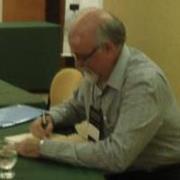
Philippe Sollers (born Philippe Joyaux) is a French writer and critic. In 1960 he founded the avant garde journal Tel Quel (along with the writer and art critic Marcelin Pleynet), published by Seuil, which ran until 1982. In 1982 Sollers then created the journal L'Infini published by Denoel which was later published under the same title by Gallimard for whom Sollers also directs the series.
Sollers was at the heart of the intense period of intellectual unrest in the Paris of the 1960s and 1970s. Among others, he was a friend of Jacques Lacan, Louis Althusser and Roland Barthes. These three characters are described in his novel, Femmes (1983) alongside a number of other figures of the French intellectual movement before and after May 1968. From A Strange Solitude, The Park and Event, through "Logiques", Lois and Paradis, down to Watteau in Venice, Une vie divine and "La Guerre du goût", the writings of Sollers have often provided contestation, provocation and challenging.
In his book Writer Sollers, Roland Barthes discusses the work of Phillippe Sollers and the meaning of language.
An exquisite novel that charts the interior distance between solitude and intimacy and the subtle play of aloneness that introspection brings, even in the midst of a passionate first love; the narrative explores the interplay of physical and verbal intimacy created by both the physical act of loving someone and by the act of writing about love to a distant stranger, to some imagined audience of readers. It is the novel of a young man written through a distortion lens of distant memory and from a perspective of age despite the fact that Sollers was himself only 22 when he wrote A Strange Solitude. The seeming perspective of age, of distance in time from the events described, I suppose, is rather a function of the interior distance created by the act of verbally narrating the events. The novel begins with a telling preface that aims the narrative at "someone thousands of years and miles from my own life." Such spatial and time panoramas become entirely interior here as the narrator recounts his first love--for a Spanish governess who is, he seems to infer, ill-suited for him in almost every possible way. Exactly because of the irreconcilable differences between the narrator and his beloved Concha--nationality, class, role, age, experience, and even temperament--the affair approaches obsession and therefore constructs itself here, in language as text. In the words of the pseudo-memoir--the form of the novel--new horizons open up and the narrator explores the verbal interstices between act and expression, love and the language of love, himself and the textual expression of himself that becomes the text. It is a lovely and practically lyrical meditation, filled with precious meditations around the simplest of plots--really more of a situation.
Ler esse livro nos ajuda a reviver nossas próprias lembranças e questionamentos que habitaram a passagem para a vida que vivemos. Os momentos de solitude onde vida, amor e morte ocupam espaços importantes da elucidação do porque estamos aqui nesta vida.
This book I had on my bookshelf for years but never read it till this week. What was I waiting for? It's a quiet book regarding a young man, a teenager, who has a sexual affair with his family's much older maid from Spain. It sounds like a classic dirty book narrative, and it is, but filtered through Philippe Sollers thoughts on the nature of eros, romance, and the older woman of his dreams. I enjoyed "A Strange Solitude" but it's not a major book in my life. If I ever do have an affair with an older maid from Spain (or elsewhere) I will come back to this novel. Till then, it goes back to its space in the bookshelf.