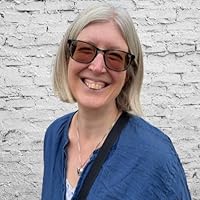
Your body is your life partner, not your life's project. The anti-aging and diet/wellness industries have scammed us into believing that thinner and younger is always better-that there's a "right" way to eat and move to age "well". But that's a lie-and it's doing real harm. When Deb Benfield, a Registered Dietitian Nutritionist, turned 60, she went looking for guidance on how to care for her changing body. What she found was the same tired and disempowering narrative centering on controlling weight-a goal that puts us at war with our bodies right when we most need to feel at home in them. Unapologetic Aging gently unravels the toxic messages of anti-aging and diet culture, helping you let go of rigid rules and tune into what truly nourishes and delights you. When you stop fighting your body, you make room for vitality, self-trust, and joy. Midlife and beyond isn't a crisis to manage-though it may feel like one sometimes. It's a powerful unfolding. Not a time to shrink or submit to yet more rules, but a time to rise into your fullest self. You can age with confidence, ease, and deep self-respect. Unapologetically.
Deborah Benfield it’s a very important and informational book about how the diet and wellness industry/culture intersect with the anti-aging culture/industry in this country. The author does a great job explaining where body image stories come from and gives thoughtful and practical guidance on how to heal and begin to see the body as a partner. I highly recommend this book to women in midlife, whether you are feeling unhappy about the changes in your body or not, the conversation in this book is important to have.
I’m reviewing this as a woman who has reached her menopause following cancer treatment that changed my body beyond recognition. I also work in the same speciality as the author so found the detail and the research that has been put into this book just outstanding. I think for most women body image difficulty is always a smokescreen for something far deeper and approached this book with trepidation. I did take my time to read this book and I don’t think it’s a book you can rush. I chose this book because the author is a Registered Dietitian who, in my experience, are some of the best health professionals out there, full disclosure I am a nurse so I am unbiased. I love the author starts with a proclamation of potential fallibility, there is nothing else that gives me more confidence in any one. It’s a hard topic and I really felt the embodied breaks the author recommends shows their clinical experience and care. I think so many other books I’ve read would greatly benefit from these additions. A book can not tell when you are triggered so I think this such a caring idea and also instils this concept for beyond reading this book. I also know so many of my patients and so many people with trauma struggle to be with their body so the acknowledgment that this might not suit all is also very helpful. The addition of alternative methods of self care were a welcome addition and gave me an insight into why so many people have already given this such a glowing review. I have to say the reminder to take a break makes me want to cry every time it comes up, I hope this author writes more books as god knows we need them! The content is well written, well researched and written with passion. I found each chapter interesting and loved the references and index. I would recommend this book for all women, people who work with women and people with body image difficulties. I think men could also benefit from reading this…so basically everyone! Thank you to NetGalley for providing this book for my consideration, this is all my own rambling, honest and personal opinion
As a 35 year old, I was probably a bit on the younger side for this book but it still made a big impact. Unapologetic Aging is a clear guide to step away from diet culture and towards a more respectful and realistic relationship with your body. Debra Benfield doesn’t offer quick fixes or idealised wellness plans. Instead, she shares practical advice and emotional insight for anyone tired of feeling like their body needs to be changed to be accepted.
I’ve had a relationship with disordered eating for most of my life and started attending weight loss clubs when I was 15. I’ve lived in a body that’s been labelled “too big” for as long as I can remember, and this book reminded me that health and worth aren’t defined by size or age. Some chapters spoke more directly to women further along in life, but I still found it empowering and I know I’ll return to it again and again as I get older. It’s the kind of book that grows with you.
If you’ve ever felt like your body story was written by someone else whether that’s the media or social pressure this book helps you take it back.
Thank you to NetGalley and the publisher for this ARC!
I read this despite being in my mid-twenties because I suffer from several of the other marginalisations mentioned in this book, such as physical and mental disability, and being fat (in this book generally referred to as large-bodied). Also, I know that as a woman*, I am likely to experience much of the pressure detailed here once I do start growing older (some people literally think 30 is Jurassic Age now, like... we're really getting there), so I was thinking of getting ahead and maybe unlearning harmful stereotypes while I'm young, not only for myself, but also for the old(er) women around me.
I will start with my criticisms. There were some things I took issue with in this book, which I will get out of the way now.
One is that the author mentions how Western society values "the [...] Judeo-Christian body" - I take issue with the term used here (Judeo-Christian) as Jewish people are still treated very differently from Christian people to this day, and Jewish bodies, Jewish traits, are still not considered good or desirable. Things I witnessed personally, for having a "Jewish-coded" body, include calling children (me, in this case) witches for stereotypically Jewish noses and Jewish hair (that's still a thing), and I remember my ex telling my I have a "real Jew's nose" - and it was not a compliment. The (perceived) Jewish body is not neutral and not valued, so that is something I personally did not appreciate, as well as the term in general, as anti-Semitism is very much still a thing and there is no "Judeo-Christian" identity much like how "Abrahamic" identity is reductive and, frequently, lumping in oppressed with their oppressors. Similarly, using "male" and "masculine" interchangeably when talking about body hierarchies fails to acknowledge the ways in which masculine women are punished, as in them, masculinity is not something to be desired.
Second, the author does do her best with acknowledging disability and disability in young age, but nonetheless, several of the journal prompts still felt like they are based on the idea of an abled body that might lose its ability in old age (how do you feel about your ability, brain functioning, etc. now that you get older; what kind of movement would you want to do if you weren't concerned about the appearance of your body), neglecting the experiences of people whose bodies already lost significant part of their functioning in young age or perhaps never had it, and for whom appearance is not the only limit when it comes to joyful movement.
What I appreciated, on the other hand, was the author's awareness that these topics and realisations might be potentially triggering, even if on surface level they seem pretty harmless, as much of the myths she debunks and much of the societal attitudes towards aging bodies are deeply rooted and realising just how much of an effect they have on any individual's psyche can feel overwhelming and like one's world was shattered.
I also love the awareness of different experiences with seemingly "harmless" exercises, such as focusing on one's breath. As someone with psychosis, "traditional" body scans, back when I was forced to do them at the hospital, would trigger tactile hallucinations, which is why I have avoided them ever since. Focusing too much on my body, to this day, makes me scared and anxious, so I appreciate that the author frequently EXPLICITLY mentions that it is okay to skip an exercise, to adjust it, and that these experiences are not "weird" or shameful.
I think I am quite lucky in that I already spend a lot of time in fat liberation spaces and with other marginalised peers, so that many of the links discussed in the book (of ageism, fatphobia, ableism, racism, misogyny, etc.) were already familiar to me. In that way, this book did not provide me with much new information or places to start from, but that is only because I have already spent significant amounts of time thinking about these issues, and had an amazing community by my side. For someone who has not yet spent the time I did examining these issues, this book is likely to hold many new insights, and I would definitely recommend it (if my mum knew English, I'd get it for her, too!).
I thought that this book would be more about how important it is to have a regular exercise regimen as we get older, and I awarded it four stars because the author is very kind, and compassionate and it could be helpful to people who struggle with negative body images who are perpetually dieting or controlling their food intake. It covers ageism and not embracing your getting older as wisdom like ages ago that was celebrated. The book is helpful in regulating your nervous system which is not something most people are conscience of, but what I am already very aware of. She gives questions at the end of each chapter which I knew didn't resonate with me as journal prompts to gain self awareness which as an author whose anecdotes were of clients who have issues with food. I could tell that most of this has to do with women who struggle with being overweight. She has a gentle approach but I was always someone who was active, and I don't mean to sound like I'n insensitive to the audience that this is too oriented around which I'm aware in this country I know this is a great resource. The author had many anecdotes from clients who are bulimic, or anorexic which is a serious disorder who this could help, but I am the wrong reader since I am not the right fit for this, which I read the entire book, and there were questions like how do I feel about food, which I eat whatever I want, as I have my entire life, and I have always been thin. I have my own areas that I struggle with, like everyone does. I would have never requested this, because it is written by a Registered Dietitian who works with mostly people who are so not comfortable in their bodies with have struggles that I am going to be more careful with what I request because there was nothing new that I didn't already know, and I am frustrated that the title is very misleading. I had to read an entire book, and spend even more time that I devoted writing a review that explained why I'm frustrated and I hope the title gets changed since I have many other ARCS that are not a great fit either. I hope the title gets changed with a more accurate one that actually is more related to the majority of the content I read that deals with the book and the author's true passion is. I do have compassion for those who struggle, but this was also very basic below my taste in its simplicity. The author is extremely kind, and I'm grateful for the opportunity to have been gifted the ARC.
Publication Date: December 18, 2025
Thank you to Net Galley, Debra Benfield, and John Murray Press US--Sheldon Press for generously providing me with my ARC, in exchange for a fair and honest review. All opinions are my own, as always.
How many of us would watch our Moms, Grandmothers or other maternal figures stand in front of a mirror & be unhappy w/their completely normal & perfect bodies? They would grimace & criticize themselves just because they didn't fit the societal images that were promoted by marketing teams or clothing designers made up of men in years gone by?
This book is The Bible for body & age acceptance & the demand for the respect that any age deserves. Make living well & being healthy the priority vs trying to fit some heavily edited, AI generated or filtered photo. Loving your body "as is" isn't wrong.
The author has been a Registered Dietician for 40 years & she covers far more topics than I can write about in this review. That is why I call the book, The Bible, because it covers it all. I most admired the chapters devoted to the concept of shame vs guilt, the 10k step myth, the small % of individuals that are actually underweight despite being bulimic or anorexic & just the general mantra that I do not have to change this body of mine. (On a personal note, I lived about 5 miles from the original Renfrew Center for 20+ years when it originally opened in Bryn Mawr. I remember how cutting edge it was in the late 1980s).
This book will be a welcome change from what we see online with social media, television and movies & it applies to the very young as well as our older & wiser population.
To quote Mark Twain, "Do Not Complain About Growing Older. It Is A Privilege Denied To Many".
I thank NetGalley for the opportunity to review this book in exchange for a fair & honest review.
This is a book we have all been waiting for. Have you been bombarded with ads for every anti-aging product and diet now that you're a person of a certain age? Instead of anti-aging (which is actually not possible), Deb Benfield brings us Unapologetic Aging. She shares from her decades of clinical experience a hopeful view of our relationship with our aging bodies -- one where, instead of chasing endless unrealistic expectations (fueled by capitalism), we embrace our most authentic selves. What a different world it would be if we honored and cared for our bodies as we age instead of demeaning or restricting them. If you struggle to be unapologetic in your aging (and it's hard not to in this culture), you must read this book. Then, please pass it on to all of your friends. We change this ageist culture with ripples of understanding and compassion. Let's change the conversations around growing older and get wiser together. This book is a brilliant invitation to embrace body liberation and joy, at any age.
Heidi Schauster, MS, RD, CEDS-C, SEP
Author of Nourish: How to Heal Your Relationship with Food, Body, and Self and Nurture: How to Raise Kids Who Love Food, Their Bodies, and Themselves
This book is such an important topic that I've thought about for so long. I'll be honest, I often have to be in a very specific headspace to read self-help types of books because it's not 'entertainment' and requires some self reflection and can often be confronting. This book is not like that. While it is filled with really great information, it is also gentle with the reader and encourages non-judgmental self-reflection. It is more about encouraging the reader to understand how their attitudes about their body, their beauty, etc. is a product of societal conditioning, much of which is incredibly insidious and backed by huge marketing budgets. Most of us had no chance to develop healthy and accepting attitudes about our bodies and aging against the capitalist machine that wants to keep us spending to attain the unattainable. It's such an easy read, almost like a conversation. I know this author is an RD who specializes in disordered eating (among other credentials!) and I felt like I was in a conversation with a very trusted and capable professional, who was so focused on my well being. I really can't recommend this book enough.
As a therapist who specializes in eating disorders and body image, I struggle to find books and resources in/for midlife and beyond that align with my values of living and practicing from a non-diet approach. Unapologetically Aging is exactly what I’ve been looking for! It’s the antidote we need to cultivate a peaceful relationship with our bodies at this stage of life. It’s a guide to learn how to care for our bodies as we age free of the narrative we’re sold about our bodies being wrong and needing to be changed.
Signe Darpinian, LMFT, CEDS, author of A Woman's Guide to Menopause, Body Image, and Emotional Well-being at Midlife
This book is a must-read IMO, especially for women aligned with the idea of a feminist menopause. I love how Deb helps us redefine our beliefs about aging, and let go of the fear we’ve been conditioned to believe is normal.
I liked this book. It’s an extremely positive and life affirming read, as you would expect. At heart it’s an anti diet and anti ageism manifesto. The reflections and journal prompts give the reader some practical work to do but you may find yourself wanting more. The diet culture is so ingrained that the thought of giving it all up is scary to me. This book has not been enough for me to ditch all my unhealthy ‘healthy’ habits. But, it’s a journey and I am certainly all the better for having read this book. Thanks to NetGalley and John Murray Press for the ARC.