

What do you think?
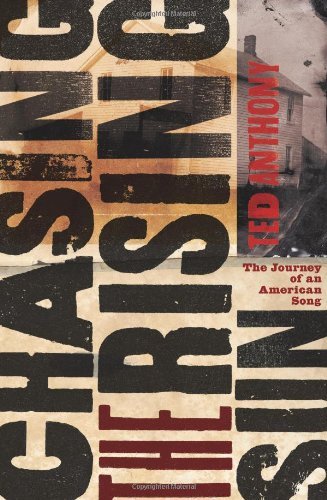
Chasing the Rising Sun: The Journey of an American Song
Chasing the Rising Sun is the story of an American musical journey told by a prize-winning writer who traced one song in its many incarnations as it was carried across the world by some of the most famous singers of the twentieth century.
Most people know the song "House of the Rising Sun" as 1960s rock by the British Invasion group the Animals, a ballad about a place in New Orleans -- a whorehouse or a prison or gambling joint that's been the ruin of many poor girls or boys. Bob Dylan did a version and Frijid Pink cut a hard-rocking rendition. But that barely scratches the surface; few songs have traveled a journey as intricate as "House of the Rising Sun."
The rise of the song in this country and the launch of its world travels can be traced to Georgia Turner, a poor, sixteen-year-old daughter of a miner living in Middlesboro, Kentucky, in 1937 when the young folk-music collector Alan Lomax, on a trip collecting field recordings, captured her voice singing "The Rising Sun Blues." Lomax deposited the song in the Library of Congress and included it in the 1941 book Our Singing Country. In short order, Woody Guthrie, Pete Seeger, Lead Belly, and Josh White learned the song and each recorded it. From there it began to move to the planet's farthest corners. Today, hundreds of artists have recorded "House of the Rising Sun," and it can be heard in the most diverse of places -- Chinese karaoke bars, Gatorade ads, and as a ring tone on cell phones.
Anthony began his search in New Orleans, where he met Eric Burdon of the Animals. He traveled to the Appalachians -- to eastern Kentucky, eastern Tennessee, and western North Carolina -- to scour the mountains for the song's beginnings. He found Homer Callahan, who learned it in the mountains during a corn shucking; he discovered connections to Clarence "Tom" Ashley, who traveled as a performer in a 1920s medicine show. He went to Daisy, Kentucky, to visit the family of the late high-lonesome singer Roscoe Holcomb, and finally back to Bourbon Street to see if there really was a House of the Rising Sun. He interviewed scores of singers who performed the song. Through his own journey he discovered how American traditions survived and prospered -- and how a piece of culture moves through the modern world, propelled by technology and globalization and recorded sound.
Most people know the song "House of the Rising Sun" as 1960s rock by the British Invasion group the Animals, a ballad about a place in New Orleans -- a whorehouse or a prison or gambling joint that's been the ruin of many poor girls or boys. Bob Dylan did a version and Frijid Pink cut a hard-rocking rendition. But that barely scratches the surface; few songs have traveled a journey as intricate as "House of the Rising Sun."
The rise of the song in this country and the launch of its world travels can be traced to Georgia Turner, a poor, sixteen-year-old daughter of a miner living in Middlesboro, Kentucky, in 1937 when the young folk-music collector Alan Lomax, on a trip collecting field recordings, captured her voice singing "The Rising Sun Blues." Lomax deposited the song in the Library of Congress and included it in the 1941 book Our Singing Country. In short order, Woody Guthrie, Pete Seeger, Lead Belly, and Josh White learned the song and each recorded it. From there it began to move to the planet's farthest corners. Today, hundreds of artists have recorded "House of the Rising Sun," and it can be heard in the most diverse of places -- Chinese karaoke bars, Gatorade ads, and as a ring tone on cell phones.
Anthony began his search in New Orleans, where he met Eric Burdon of the Animals. He traveled to the Appalachians -- to eastern Kentucky, eastern Tennessee, and western North Carolina -- to scour the mountains for the song's beginnings. He found Homer Callahan, who learned it in the mountains during a corn shucking; he discovered connections to Clarence "Tom" Ashley, who traveled as a performer in a 1920s medicine show. He went to Daisy, Kentucky, to visit the family of the late high-lonesome singer Roscoe Holcomb, and finally back to Bourbon Street to see if there really was a House of the Rising Sun. He interviewed scores of singers who performed the song. Through his own journey he discovered how American traditions survived and prospered -- and how a piece of culture moves through the modern world, propelled by technology and globalization and recorded sound.
- GenresMusicNonfictionHistory
320 pages, Hardcover
First published January 1, 2007
Ratings & Reviews
Friends & Following
Create a free account to discover what your friends think of this book!
Community Reviews
Displaying 1 - 18 of 18 reviews

June 8, 2015
AAnthony traces the song "House of the Rising Sun" to and from its historical, geographical, cultural, and musical roots in this entertaining tale.
Anthony started his search, in New Orleans before finding that this song, about a woman's (or man's) life ruined in a whorehouse (or prison or roadhouse or gambling den) in New Orleans (or Lowestoft, England or Baxter Springs, Kansas or "yondos" town or "the strip club out on Old 87") is really about an outsider's warning to those who might hop a train and end up down and out in the Rising Sun.
Anthony might have traced the ultimate roots of the story back to the prodigal son of the Bible, but does find the first recorded versions arising out of "The Village", his name for the culturally-consistent and distinct intersection of Kentucky, Tennessee, North Carolina, and Virginia in the Appalachian mountains. Folk musicologist Alan Lomax recorded Georgia Turner, a 16-year-old miner's daughter in Middlesboro, Kentucky singing the song in 1937. Anthony unearths other obscure versions (Clarence Ashley from Tennessee recorded in 1933, Homer and Walter Callahan from North Carolina, recorded in 1934) that bubbled up around the same time and place, suggesting common folk sources. While Ashley references family history tracing the song back to the turn of the century or beyond, Anthony never comes up with a genesis document.
But the journey takes him all over the US and even to China and Thailand during career-driven stays in those far flung outposts of Appalachian roots music. But more interesting than the places are the people Anthony meets and introduces to us during the journey. He is able to interview some of those there at the beginning in The Village in the 1930s, a first-hand resource fast disappearing as age and hard times and hard living claim that generation. Sadly, Georgia Turner died young in 1969, but her voice on Lomax's Library of Congress recordings and in the voice of seven of her surviving children sharing laughter, tears, and songs around the tape player replaying that old song that now reverberates through the popular culture.
Anthony has traced down over 200 different recorded versions of the song that came from those roots, and spread around the world. Most famous, of course, is The Animals seminal version from 1964, that defined the song for the Baby Boomer generation that dominated and defined (then and now) the popular culture. His descriptions and list of superlatives (oddest, most danceable, and so on) from his collection are enough to make the reader perhaps wish for a CD set of selected versions from his collection.
The only thing that keeps this book from a five-star rating is Anthony's occasional tendency to overwrite his emotion. While his sincerity comes through the writing, one suspects he is unsure of both his ability to deal with the book form (as a career journalist) and with the strength of his material. When he relaxes and lets the places, people, and music speak through his abilities, this is a five-star book.
Anthony started his search, in New Orleans before finding that this song, about a woman's (or man's) life ruined in a whorehouse (or prison or roadhouse or gambling den) in New Orleans (or Lowestoft, England or Baxter Springs, Kansas or "yondos" town or "the strip club out on Old 87") is really about an outsider's warning to those who might hop a train and end up down and out in the Rising Sun.
Anthony might have traced the ultimate roots of the story back to the prodigal son of the Bible, but does find the first recorded versions arising out of "The Village", his name for the culturally-consistent and distinct intersection of Kentucky, Tennessee, North Carolina, and Virginia in the Appalachian mountains. Folk musicologist Alan Lomax recorded Georgia Turner, a 16-year-old miner's daughter in Middlesboro, Kentucky singing the song in 1937. Anthony unearths other obscure versions (Clarence Ashley from Tennessee recorded in 1933, Homer and Walter Callahan from North Carolina, recorded in 1934) that bubbled up around the same time and place, suggesting common folk sources. While Ashley references family history tracing the song back to the turn of the century or beyond, Anthony never comes up with a genesis document.
But the journey takes him all over the US and even to China and Thailand during career-driven stays in those far flung outposts of Appalachian roots music. But more interesting than the places are the people Anthony meets and introduces to us during the journey. He is able to interview some of those there at the beginning in The Village in the 1930s, a first-hand resource fast disappearing as age and hard times and hard living claim that generation. Sadly, Georgia Turner died young in 1969, but her voice on Lomax's Library of Congress recordings and in the voice of seven of her surviving children sharing laughter, tears, and songs around the tape player replaying that old song that now reverberates through the popular culture.
Anthony has traced down over 200 different recorded versions of the song that came from those roots, and spread around the world. Most famous, of course, is The Animals seminal version from 1964, that defined the song for the Baby Boomer generation that dominated and defined (then and now) the popular culture. His descriptions and list of superlatives (oddest, most danceable, and so on) from his collection are enough to make the reader perhaps wish for a CD set of selected versions from his collection.
The only thing that keeps this book from a five-star rating is Anthony's occasional tendency to overwrite his emotion. While his sincerity comes through the writing, one suspects he is unsure of both his ability to deal with the book form (as a career journalist) and with the strength of his material. When he relaxes and lets the places, people, and music speak through his abilities, this is a five-star book.

November 1, 2014
I always liked the song, I like learning about music, and I thought a whole book about the history of House of the Rising Sun would be interesting.
Wrong. Maybe I'm not being fair, as I admit to skimming through this the further I read, but it seems the basic information in it could have been told in a chapter, an essay. He goes to the south, to New Orleans, to England, all in pursuit of finding out the history of the song, and writes paragraphs every time he finds a new verse or variation. And, basically, there is no definitive information to share: it's a folk song, it's changed and grown through the ages as folk songs do, it's a compilation of a multitude of other songs..... There are doubtless songs that have a more distinct, interesting, definable history - this isn't it.
I did try to read this book several times; it's one that's been sitting on my book shelf for several years, that I've picked up and put down before. Maybe I shouldn't even rate it, as I'm always leery about hurting any book sales with low ratings, but I need to prove to myself that I'm capable of giving a negative review and low number rating when I feel it's deserved. Sorry, this just didn't do it for me.
Wrong. Maybe I'm not being fair, as I admit to skimming through this the further I read, but it seems the basic information in it could have been told in a chapter, an essay. He goes to the south, to New Orleans, to England, all in pursuit of finding out the history of the song, and writes paragraphs every time he finds a new verse or variation. And, basically, there is no definitive information to share: it's a folk song, it's changed and grown through the ages as folk songs do, it's a compilation of a multitude of other songs..... There are doubtless songs that have a more distinct, interesting, definable history - this isn't it.
I did try to read this book several times; it's one that's been sitting on my book shelf for several years, that I've picked up and put down before. Maybe I shouldn't even rate it, as I'm always leery about hurting any book sales with low ratings, but I need to prove to myself that I'm capable of giving a negative review and low number rating when I feel it's deserved. Sorry, this just didn't do it for me.

February 7, 2014
This book is a marvel, one that’s hard to put down. It’s about history, family, culture and it all centers around one song….”The House of the Rising Sun”. The author begins by discussing his love of the song, of the many different recordings he eventually heard of it. He then begins a journey to trace the song’s origins, a tale that begins in Appalachia, but ends up taking him around the world. As it would be with any such journey, the things and people he discovers along the way are the real story…..he shares openly how this all changed his understanding of the song, and how it changed him in the process. Toward then end, as he shares the song and his journey with family, you understand how it’s now become a legacy for him….one that is as folk based and organic as the song. A highly recommended read.

March 10, 2023
Everything you wanted to know about “House of the Rising Sun” and a lot you really didn’t need to learn. The song has roots in the mountains of Kentucky (probably) and dates to the early 20th Century or earlier. It became a folk standard before the Animals made it a rock monster hit in the ‘60s. Interesting stories about the earliest singers of the songs. But the author goes on at length about the hundreds of versions of the song and details every TV show and movie that has “Rising Son” in the plot or title, including a couple of porn movies.
May 24, 2024
Very disappointing. As a long time lover of roots blues music I was really keen to read this but I just found it dull and, in the end, couldn't finish it. Anyone who's even remotely interested in American roots should already know that a lot of folk/blues songs have evolved over time and will have different versions in different places so there's really very little new here.

July 26, 2019
by local author Ted Anthony
everyone on amazon gives it 5 stars, but i thought it was only Ok
everyone on amazon gives it 5 stars, but i thought it was only Ok

January 12, 2008
Other writers have written similar explorations of roots music, folk music, and explored what this music says about our culture and our character. You should reaf one of those other books rather than this one. Ted Anthony quotes amply from those other books anyway. Chasing The Rising Sun is a history of Anthony's obsession with the song "House of the Rising Sun". In it, he tells us all about the famous and cool people he met, the money he spent on music, and how important music is to him. He writes as if the reader is as obsessed as he is; he repeatedly, annoyingly, refers to "House of the Rising Sun" as "our song". And, as with most obsessions, he reaches all the conclusions, about the song, about the role of music in our lives, about the early folk artists, that justify his obsession. I wasn't necessarily swayed by his arguments. For instance, while I enjoyed his description of a karaoke club, I'm not convinced it is an incarnation of "folk" music. If you read Chasing The Rising Sun, read it for the source material. It did renew my interest in folk music and led me to pull out some albums I haven't listened to in a while. I even checked out a local records store for some artists I hadn't heard of before.

December 11, 2007
Another book based on an attempt to trace a very well known song, but Anthony makes it much more of a personal odyssey than Cecil Brown did in "Stagolee Shot Billy". The story is fascinating, from the Lomax recording of a white teenager's version through various commercial and folk versions of the song to Anthony's connection with the children of the woman whom Lomax first recorded in 1937. Along the way, I picked up some recommendations for musicians to listen for, too.

February 15, 2015
This should have been a very interesting and fun book to read, but it wasn't. The author has a passion for the song, and that comes through, but it would have been better as a long form essay. Instead the length here, is the detractor. It allows for filler and aimless wandering that takes you away from the central goal of the book.
I liked the overall idea, and the intention, but not the execution. Too bad.
I liked the overall idea, and the intention, but not the execution. Too bad.
August 2, 2008
Great Book. Traces the history of the song house of the rising sun from it's first known recording to the present day. Some interesting reflections on how people, culture and music interact in America.

Read
October 9, 2009This is one of the most well written books I've read in some time. The concept of following the roots and history of a single song is facinating, and the writing style is engaging and fun. If all non-fiction was written this well, I'd hardly need to read fiction at all.

January 1, 2008
sub-greil marcus but i finished it anyway

January 23, 2008
Fascinating. I do, however, get the feeling the author had too much material for a magazine article, but not quite enough for a book. But fascinating nonetheless.

January 27, 2009
Not bad but didn't really live up to expectations and its reviews.

February 8, 2009
A fascinating history, chasing the song through many variations as it came up from the 1800s and up to the present. Not only a story of music, but of people. Interestingly written.
February 24, 2010
Interesting book about the origins of the song The House of the Rising Sun, although he can't trace it back past the 20th century.
May 2, 2014
A fascinating look at the history of this song. This book went places I never expected. A must read for anyone interested in the history of Americana, folk, or rock music.
Displaying 1 - 18 of 18 reviews