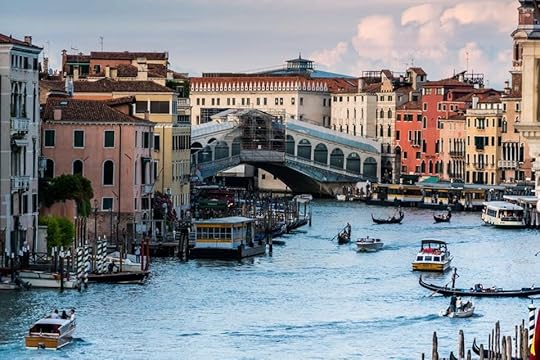
In Profane Friendship, Harold Brodkey tells an odd and strangely beautiful Venetian love story, sounding its depths with the suppleness and virtuosity of style that in recent years have won him worldwide admiration as a uniquely gifted American writer. Growing up in Venice in the 1930s, Niles O'Hara, the son of an expatriate American novelist, loves a Venetian boy named Giangiacomo Gallieni, fondly known as Onni. After the Second World War, Niles and his mother return to Venice, and he becomes involved in a complex on-again, off-again affair with his childhood friend, now an adolescent with a wartime history of sexual trespass. Profane Friendship is a remarkable depiction of an intense and enduring relationship conducted in the triumphantly alluring setting of the world's most beautiful city. Searching, comic, romantic, and ironic. Harold Brodkey's novel is at once the most sumptuous modern evocation of Venice and a truly singular exploration of human emotion and passion.
Growing up in Venice in the 1930s, Niles O'Hara, the son of an expatriate writer, befriends a Venetian boy. After the war, Niles and his family return, and he becomes involved in a kind of semi-affair with his childhood friend, who is now an adolescent with a wartime history of sexual trespass.
Одна сплошная радость, а не роман, с массой маячков и вешек, раскиданных там и сям на потеху литературоведам (которые его все равно читать не станут). Чуть облегчим им задачу. Это текст-лабиринт в традиции Джуны Барнз, вычурный и причудливый, как сама Венеция, о которой он, собственно, и повествует (венецианскость тут при этом выступает синонимом византийскости). Синтаксис здесь — городская архитектура, затапливаемая и крошащаяся, выстроенный в словах, как Горменгаст Мервина Пика (Сережа Ильин такое полюбил бы, наверное). Бродки в нем так же скрупулезно приметлив и тщателен, как Набоков. Сам по себе роман по большей части — о детстве (и старости, но старость наступит позже) при тоталитарном/тираническом режиме, и при этом он — своеобычный извод «обывательского романа»: сродни, в общем, Гайдару, который писал, в общем, о том же, только, кажется, не прочитывается так до сих пор, да и в моменте своем — в котором писал — не был таким умным, как Бродки (а тот в юности все ж никого не расстреливал и полками не командовал). А еще это — неоднократно вывернутый и перевывернутый Крапивин, если такое кому-то ближе. И, кроме того, Бродки создает свою версию Пинчоновой Зоны — только, понятно, в отдельно взятой Венеции. Сам автор говорит что этот текст — как «безумный венецианский дом», только мне все ж кажется, что бери выше — в нем Бродки пытается воссоздать весь город. Чем дальше в него углубляешься, тем больше и город этот, и язык, из которого он выстроен, приобретают мифическое и метафизическое измерения, становятся сюрреалистическим коллажем и миражом. Это не роман-кино, хотя кино (и немножко театр) он затрагивает, вскрывая саму анатомию гламура, показывая его изнанку. Это роман-фотография. Стоя на венецианской улочке, ты не просто смотришь на каменную стену, а часто разглядываешь саму каменность стены. В этом — особенность оптики Бродки. Глядя на мозаику, видишь, в первую очередь, не отдельные разноцветные кусочки смальты, которые лишь на расстоянии складываются в картинку, — а само их свойство, смальтовость. И что делать с такой оптикой, поначалу непонятно: первая задача, какая стоит перед нами, — понять, как видимое хотя бы поименовать, а разбираться со смыслами — ну и общей картиной — это дело восемнадцатое. Проза Бродки здесь (в рассказах она у него все ж иная) в высшей степени сансарна: фактически, это полевой справочник по пребыванию в сансаре, если оставить за скобками гомоэротизм и детскую сексуальность, которых, к слову, тут не так уж и много.
p.s. хотя этот роман не считается его magnum opus-ом, сравнений с “Тоннелем” Гэсса мне сейчас избегнуть трудно (you’re always, сука, on my mind): на мой взгляд, это гораздо более цельная и удачная попытка полностью сконструировать литературную реальность: не можешь не поверить, что сам автор, прикрывшийся маловероятным псевдонимом и причудливым происхождением, не провел детство в Венеции. а он не провел, у него вообще другое детство было. его фиктивная биография же – полезный ключ к пониманию текста.
(This review has taken a long time to write and to avoid losing it while paused it has been saved and posted a number of times. It is now finished and I apologise for any confusion caused).
"The pulsing in the peter in the companionship of this intrusively cockeyed act, and the maybe criminal energy of the madness of sexual hallucination carried me as did Onni's body beneath me in its somewhat coldly male approximation, not a travesty but a busineeslike, Venetian joke-y/serious version and half-imitation of a woman. He was to some extent serious in giving pleasure. In trying to.
"I had to get very strong images going in order to have the sensations of light in sequences of pleasure at speed, a rhythm that would bring me to orgasm again in circumstances not directly exciting for me. The progress into deeper, or higher, sexuality was harder than before and dryer and more formula-ridden. The abridgement of humiliations in the complicity, such as it was, the semi cooperative engineering of the so called pleasure, did not hide the imbalances in the reality of the pleasures. The too clear evidence of sexual individuality and of the need consequently for technique and for soul and spirit to attenuate the technique, the absolutely incredible degree and number and variations of feelings, of sensations, the absolute blindsidedness of the moments here, or put it like this, the need for a technical approach as well as for some ludicrous amount of passion to drive the motor of the heart and the motor of the mind, such different motors, such different gauziness and solidity in harness weighed on me in an onset of adulthood. The syncopation and the sense of place, and the sense of movement, the sense of light, the sense of spirit, the sense of the darkness of sexuality, the desire to ride, to grip with the knees, to hold his arms squizzingly, to hurt and rein, even to explode him, to explore and explode him, the need, the requirement that one love and accept the world, this world, this private corner of the world and the stuff one did here - well, add it all up, and being sensible, sensibly reasonable, I felt in the absurd calculation of feelings that Giangiacomo, after all, was loveable in a way, his way, to a degree. I was shy and inhibited toward myself and a little unnerved by my desires, animal desires. I put it all into caring for Onni. This was perhaps counterfeit sense of meaning, but it felt like a meaning, one to be chary about, in the way I was chary about my nutty impulses.
"The story was very clear even if unsayable." (from the bottom of page 126 to nearly the bottom of page 127 in the 1994 Jonathan Cape hardback edition).
I have quoted so extensively (and I assure you I could quoted many other examples) because it was at this point that I nearly abandoned this novel for the second (the first time was after reading the first half dozen pages) but I continued to persevere until page 206 (out of 387) when I gave up because I was not simply skimming passages like the above but was beginning to skip whole pages. I had to ask myself why should I keep reading? Sitting on my shelves are, amongst many unread books, 'The War at the End of the World' by Mario Vargas Llosa; 'The Memoirs of the Count de Grammont'; 'Children of the Arbat' by Anatoli Rybakov; the two volumes of 'Sansevero' by Andrea Giovene; and 'Lieutenant-Colonel de Maumort' by Roger Martin du Gard. In addition there are numerous novels by Dickens, James, Mann, Joyce, Tolstoy and Dostoevsky, to name but the most obvious, that I want to read or read again (and, since I am nearly 70, probably never will). Brodkey's writing style/intent is often compared to Proust (I suggest reading the very interesting article at: https://brickmag.com/harold-brodkey-y...-) but I have well over half of 'Remembrance of Things Past' still to read and, I defy any one to read again these lines from the above quote:
"The syncopation and the sense of place, and the sense of movement, the sense of light, the sense of spirit, the sense of the darkness of sexuality, the desire to ride, to grip with the knees, to hold his arms squizzingly, to hurt and rein, even to explode him, to explore and explode him..."
and to not regard Proust at his most expansive madeleine prolixity as a writer of succinct prose.
What is Brodkey writing about in the quote above (and for a ridiculously large number of pages before and after it)? The first sexual encounter between the two adolescent males in his novel. Does it sound like the thoughts of a 14 year old American boy in 1947? Does it sound like any 14 year old boy at any time? even one described in retrospect by his adult self? Does it even sound like a writer struggling a la James, Joyce, Mann or many others to use words precisely to ensure he expresses what he means to say or is a load of obfuscation to conceal? I'll be honest but for me way too much of the prose in 'Profane Friendship' appears to be the adult Brodkey struggling to deny that he liked cock (before it became generally known that he had AIDS and the secret would be out).
Yes the big elephant in the room about Brodkey is that he was deeply attracted to other men. I do not say he was gay, after all Gore Vidal wouldn't have called himself gay and didn't believe there was such a thing as 'gay' person, never mind a gay writer. But that wasn't because Vidal was in denial about his sexual habits. But Brodkey appears to have been, and that possibly explains the torturous prose - he doesn't want to admit that he in anyway liked, lusted after, or admired male flesh. Even bisexuality was to much, even when he was dying of AIDS.
The most interesting/amusing thing about Brodkey is that he is remembered, if at all, as a writer once regarded as “unparalleled in American prose fiction since the death of William Faulkner” but who became an "urban legend—Behave yourself, some sage editor might advise a young writer, or you’ll be forgotten just like Brodkey" all because he spent thirty years not publishing his first novel (see my footnote *1 below) and when it finally appeared his place in American letters vanished (again it is worth reading https://brickmag.com/harold-brodkey-y...) though its critical failure did improve his speed of production - this novel was published two years later. But then it shows in the numerous absurdities, mistakes and general howlers - grass football pitches in downtown Venice? Fourteen and sixteen year olds playing football on the same school team? no explanation of why his older brother who is 17 when they live in Venice before WWII returns in 1947 as a 24 year old. What does he do all day? (please see my footnote *2 below). For that matter who are the other brothers and sisters who are mentioned but never named, numbered or described? Why did his mother return to Venice after WWII? She and the children had lived there for two years before WWII while her husband, (who she was now divorced from) researched a book. She wasn't Italian or of Italian descent, she wasn't even Catholic, so why go back to Venice? if she was going to live in Italy Rome or Florence were more obvious choices.
But dissecting the novel's creaky plot or numerous improbabilities is really beside the point. What matters is the prose and this returns me to my original point - is what I quoted at the beginning of my review even satisfactory English? or is it twaddle? I hope I will have left you no doubt what I think.
For a more positive view of this novel see: https://dooneyscafe.com/love-in-venice/ were the writer Stan Persky, who I much admire but don't agree with, finds many positive things to say about this novel.
*1 Brodkey of course was a writer on the New Yorker and the New Yorker has a history of collecting writers who spend decades failing to produce novels, see Katherine Anne Porter and 'Ship of Fools'. I highly recommend reading the review in Commentary (https://www.commentary.org/articles/t...) for an acerbic look at the novel and Ms. Porter. *2 If any of my questions are explained later in the novel I apologise but at over halfway through they hadn't been explained.
Too. Fucking. Much. Vuole essere un mix tra Proust, il Thomas Mann di Morte a Venezia e Ruskin, ma risulta solo stucchevole e ripetitivo. Perversamente contorto nelle metafore, artificiosamente profondo negli arzigogoli di una prosa volutamente gaddiana, che però sfinisce il lettore senza concedergli mai tregua. Conclusione: di Recherche ce n'è una sola, e sti 25€ me li sarei potuti risparmiare, assieme al mal di testa che mi ha tormentata nei sei giorni che questa tortura mi ha strappato.
Aveva il dono di sapersi divertire, ma era poco portato per la felicità.
Recensione a cura del blog "La Libreria di Ale" Blog | Instagram
Uno stile senza filtri, una storia raccontata senza pudore, proprio come Brodkey ci tiene ad avvisare. Mette quasi in allerta il lettore che si appropinqua a leggere il labirintico “Amicizie profane”, romanzo dai tratti autobiografici e incompleto.
In una Venezia senza veli, personificata in sentimenti che pulsano nelle vene dei personaggi, caratterizzante anche nei loro atteggiamenti e decisioni, si accende come un fuoco l’amicizia-amore-odio di Niles O’Hara e Giangiacomo Galliani, detto “Onni”. Tra i fili tessuti di una narrazione in prima persona, che incespica e si aggroviglia in sogni, accadimenti preannunciati e ricordi, Nino, protagonista ed autore, tratteggia il suo legame con Onni. Una spirale di sentimenti il più delle volte contradditori. L’amicizia tra Nino e Onni non è un’amicizia comune. L’attaccamento avvenuto tra i due all’inizio degli anni Trenta, dopo un momento di stasi a causa della guerra, riprende nel fiore della loro adolescenza. Se Nino vive il periodo bellico negli Stati Uniti, Onni la guerra la tocca con le mani, e quando Nino ritorna a Venezia lo trova cambiato, marchiato, macchiato, corrotto…difficile...Continua a leggere
"Love... Love... Love... Love exists... I say so... But it exists only in reality and only without fantasy and only in the wats that reality permits it to exist..."
Fue un libro difícil de leer, no sólo porque decidí leerlo en su idioma original, sino por la trama y la voz de Nino, el narrador, quien en momentos sacudía la mente al relatar hechos y sentimientos intrincados. Es la historia de una amistad singular, llena de camaradería, deseo, ¿amor? y violencia. El personaje de Onni a veces pareciera un cínico y otras un chico roto, mientras que Nino, a pesar de ser el narrador, es indescifrable porque no llega a decir del todo lo que siente. Harold Brodkey firma esta novela con fuerza en su prosa y en las emociones que le otorga a su narrador. Me parece importante e interesante este relato debido a que no es una historia de amor homosexual, sino de atracción, deseo y violencia entre dos chicos, muchas veces invisibilizadas estas interacciones.
If it was possible I would kick this book's ass. Don't mistake that I would want to fight this book no that would imply that I respect this book in some way (which I don't). I picked up this book expecting a wistful and bitter sweet love story but instead landed my self a one way ticket to Freudian-pretentiousness land. It has some good points in it but I can no longer remember what they are as every time I think about or look at this book the only thought that goes through my mind is " I going to kick your freaking ass "
Скрестите Керуака с Куприным (фасона "Гранатового браслета", например), накрените в эротизм, добавьте точечно легкую порнографию, и все это в галлюциногенно подробнейших декорациях Венеции с 1930-х и далее, безвылазно, все 20 листов, -- такой вот роман. Не исключительное, но умеренно редкое читательское переживание: первые три четверти книги пребываешь вроде как на экскурсии по Серениссиме, параллельно огребая роман взросления, причем с полносенсорной эмуляцией бурлящей овсяной каши, какая творится в голове у любого подростка. А потом р-раз -- и в последней четверти автор, не выходя из Венеции, объясняет, зачем на самом деле читателю были предложены предыдущие три четверти романа (помимо дневниковых реминисценций лирического героя). В целом роман показался мне в этих первых трех четвертях несколько расхристанным, но самую малость. Титаническая переводческая работа.
I learned a lesson in this book: there is such a thing as too much good
I read The State of Grace which is a short story by this author and thought it was the greatest thing ever so I was really excited to read a full length novel and it was literally just nonsensical. He’s got a fantastic command of language and a truly fascinating style that crosses poetry and narrative but it was largely incomprehensible in this form. So stick to the short stories if you want to enjoy it I guess — I really do recommend The State of Grace
Where to begin with this Harold Brodkey novel? I’ll first say that I am so so glad I picked this up and read. And I couldn’t put it down. Another (what I assume is) deeply personal novel about friendship and all that comes with loving someone. I can’t recall another author who has the vocabulary chops and gravitas that writes personal stories. It’s a book (and author) that I read both for the language and the characters. Really great.
There are a couple of overwritten passages and a couple of chapters that went on too long. Or give me more of them throughout their lives. I’m obviously not afraid to read 700+ page novels but almost all of those have a flow to them. Profane Friendship had a couple of areas that slowed down for me. An absolutely worthwhile read. He’s criminally under-read in my opinion.
Genres : Liefde;Holebi;Mood: Delicaat, gevoelig Citaat : Ik probeer de wereld te aanvaarden. Soms voelt deze aanvaarding aan als liefde. Review : In Profane Vriendschap worden we op een heel aparte manier geconfronteerd met de vriendschap, die ook erotische elementen kent, tussen de Amerikaan Nino en de Italiaanse Onni. Het verhaal start in een vooroorlogs Italië en eindigt in de jaren tachtig van de vorige eeuw. Het volgt de levensloop van de twee mannen die mekaar beminnen en ontvluchten.
Zelden las ik een boek dat zo immens de emoties weergeeft die een hartstochtelijke maar on-evenwichtige relatie kenmerkt. De taal en stijl die Harold Brodkey op onevenbare wijze hanteert zijn overweldigend. Elke emotie, elk evenement, elk gebaar dat de zoetheid maar ook de kwelling van deze profane vriendschap gestalte geeft, beent hij tot op het bot uit. Niet alleen de profane vriendschap krijgt alle eer die ze verdient, ook de stad Venetië is in al haar pracht, glorie en deca-dentie op elke bladzijde in steen en water aanwezig.
Een aangrijpend boek, zowel omwille van het gegeven als omwille van het prachtige taalgebruik van de schrijver en de vertaler Paul Syriër.
Harold Brodkey was a gifted, original prose writer. I remember reading Stories in an Almost Classical Mode during college and really enjoying it for its brilliant prose style. This novel, however, despite having brief moments of likewise excellent prose, is overall bloated, flaccid (pun intended, given the subject matter), and ridiculous.
What happens in this story? Two boys walk around Venice, fight each other, smoke cigarettes, experiment sexually, and wonder about what love is and why they feel so connected to/repulsed by each other. Decades later, they meet each other again in Venice after one of the friends has become a movie star and more or less do the same thing.
That’s basically it. For almost 400 pages. There are so many descriptions of “pricks”, so many cringey old-man-writing-voyeuristically accounts of adolescent gay sexuality, so many complex block paragraphs of difficult prose that really say nothing meaningful.
Had the author written this novel as a 25 or 30 page short story, I’m sure its Venetian charm and dreamy prose would have rubbed off on me more endearingly. As it stands, I would pass on this dull, overwritten brick of disappointment.
This entire review has been hidden because of spoilers.
"Amicizie profane" è un complesso e grandioso romanzo veneziano, un racconto di formazione e una spietata e lucida analisi di rapporti e sentimenti tra amicizia e amore, un viaggio lungo una vita tra struggimenti, ossessioni morbose e rimpianti, il «tentativo di rappresentare un piccolo aspetto dell'amore nelle sue dimensioni limitate e nel suo colore, nella sua pochezza». Recensione completa http://unfaronellanebbia.blogspot.com...
Das ist Literatur. Erinnert sich noch jemand an die körperliche Welt, als man drei oder vier Jahre alt war, und an die absolute Dunkelheit an den Rändern dieser Welt, die völlige Abhängigkeit von einer beschützenden Hand? Oder als Jugendlicher die endlosen Nachmittage, stoned und angetrunken, in erotischer Verbundenheit mit einem Freund, streunend durch Venedigs Gassen, angeberisch, lakonisch, verführerisch, oder zerstritten, angeödet, befremdet? Nun gut, wie auch, ich kenne Venedig nur als Besucher. Das Wetter, die Kanäle, die Gerüche und Geräusche sind hier nicht Bühne, sondern Welt, eine profane Freundschaft in Venedig, ausschnittsweise, über viele Jahrzehnte. Der eine erst italienischer Faschist und später berühmter Filmschauspieler, der andere Amerikaner, der Erzähler, dessen Vater mit Hemingway bekannt war, wird berühmter Autor. Selbstverliebt, beobachtend, brilliant und dann wieder abseitig, tiefgründig, der eigenen Erinnerung misstrauend - das war keine leichte Lektüre, fast 600 Seiten geht das so, aber es hat mich sehr beeindruckt. Im echten Leben lernt man selten jemanden so intim kennen.