A compassionate and comprehensive guide to parenting neurodivergent children.
Finalist of the 2025 Foreword INDIES Award in the Family and Relationship Category, by the FOREWORD Reviews
Your Kid Belongs Here is a heartfelt, practical guide to parenting children in a world not designed for them―or their parents. Combining personal stories, research, and helpful strategies, Katie Rose Guest Pryal shares her journey as a neurodivergent mother raising neurodivergent children and offers a powerful narrative of advocacy, empathy, and resilience.
This book addresses the unique challenges faced by neurodiverse families while celebrating the strengths of neurodivergent children and parents alike. With a focus on building trust, fostering self-advocacy, and embracing neurodiversity, this • Provides advice on parenting children with developmental neurodivergences such as ADHD and autism; psychiatric disabilities such as anxiety and depression; and acquired neurodivergences such as post-concussion syndrome. • Outlines strategies for supporting emotional regulation and managing children's meltdowns, anxiety, and other emotional challenges. • Guides parents on navigating schools and advocating for their child's rights in educational settings, including securing accommodations like IEPs and 504 plans. • Discusses the psychological impact of masking and how to create spaces where children can express their true selves. • Offers balanced insights into medication use, addressing societal shame, and emphasizing informed, personalized choices. • Encourages parents to support and engage with their children's special interests and passions as a pathway to growth and confidence. • Highlights the importance of parents' self-care and well-being, with practical tips for managing stress and maintaining resilience.
An empowering, empathetic resource for parents, educators, and advocates, this guide invites readers to reimagine how inclusive and supportive parenting can contribute to a more compassionate world.
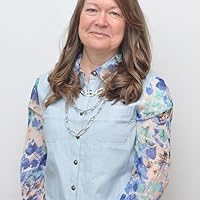
I am a Bipolar-AuDHD award-winning author of more than 15 books in very different genres, all of which I love to both read and write.
In nonfiction, my trade nonfiction books include YOUR KID BELONGS HERE (Johns Hopkins 2025) and A LIGHT IN THE TOWER (Kansas 2024). My literary memoir, AN AUTISTIC GIRL’S GUIDE TO HORSES, is forthcoming from West Virginia. My books have won the IPPY Gold and Bronze Medals and the Gold INDIES Award. A Pushcart nominee, my work has appeared in The Coachella Review, Catapult, Ecotone, Full Grown People, and many more.
I also write angsty contemporary and paranormal romance with a neurodivergent twist. My romance novels include the complete Hollywood Lights Series; the final installment, TAKE YOUR CHARMING SOMEWHERE ELSE (Blue Osprey 2021), won the IPPY Gold Medal for Romance, my proudest literary achievement (I’m serious). My spicy paranormal Demonkin World novels include DEMON’S BLOOD (2026) and the final book will be released in time for Valentine’s Day 2027.
I earned my master’s degree in creative writing from the Johns Hopkins Writing Seminars (and some other degrees that are less interesting). When I’m not writing, I teach creative writing in the Drexel University MFA Program. I live in North Carolina with my husband, two children, and many rescue pets. In my free time, I’m an avid equestrian, competing in dressage and show jumping. If you can’t find me, look for me at the barn or hiding in my room watching motorsports.
Good information to learn about people’s brains but I don’t need help seeing how broken the world is. This was another book encouraging me to raise my middle finger to the world which I don’t care to do. Also the authors dialect came off as a “hot take” to me .
Katie Rose Guest Pryal's essays on parenting have been some of the most impactful for me. I have felt so seen reading her writing, particularly as a parent of young disabled children. As a neurodivergent parent raising neurodivergent kids, I also relate to a lot of this book and Pryal consistently is able to express so many feelings I haven't been able to put into words.
And.
Posssibly due to my increasing dissatisfaction with the way neurodiversity has become a buzzword, this book didn't fully land for me. I find myself increasingly frustrated in general at the stratification and isolation of "neurodivergent" in general when it comes to separating it from disabled people overall. Looking at you, all the "when you're the parent of a neurodivergent kid..." memes that would remain just as accurate (MORE accurate!) by replacing "neurodivergent" with disabled. Yes, you can do that. Really. Promise. It's better.
Neurodiversity as a concept isn't at odds with those things -- neurodiversity is, in simple terms, the concept that brains are different. Where I'm struggling is when it becomes another euphemism for disabled, or another way to narrow the discussion in a way that honestly feels isolating for parents who are already very isolated.
I don't think any of that was the intent. Pryal has written copiously about disability before. But whenever I read neurodivergence-focused parenting content anymore, I find myself thinking so often that these things apply to all families of disabled children. Families of children whose disabilities aren't necessarily invisible, families of autistic children who don't just appear quirky, super smart, and maybe just a little bit weird (complimentary). Kids who are never going to pass as neurotypical, or aren't instantly clocked as autistic. Kids who are nonspeaking. etc.
Because my hyperlexic, gifted, quirky, weird-but-charming-about-it, autistic ass feels a distinct connection with those kids too. There is something deeply inherent connecting us and a shared way of processing the world that is tangibly the same. There is a sense of sameness that feels cultural, for lack of a better word. Some sort of shared energetic language, in a non woo-woo way.
I'm now off the rails on a soapbox, but I think this book hit me at a time in my life where it was like, yes, this is an important and overall good book, and I can't overlook how it's contributing to the way "neurodiversity" has been coopted or used to just create further stratification. Which is never positive or helpful. It wasn't positive when it was Asperger's, it isn't positive now when it's PDA or a misapplication of the concept of neurodiversity.
And while the subtitle does say "children," and technically "neurodiverse" can be used in that context (children is plural!), it feels like it's a case of "neurodiverse" being used incorrectly when the term should be "neurodivergent." Because make no mistake, this is not a book about raising neurotypical children alongside neurodivergent children, therefore having a "neurodiverse" group. It is a book about the unique experience of parenting neurodivergent children. It is focused on the unique experience of raising children whose brains, processing, and way of existing in the world is not the norm.
Also worth noting a lot (a lot) of this book is taken from essays previously published online. And they are BRILLIANT essays. They are essays I go back and read often. Pryal's "The World Doesn't Bend for Disabled Kids" is a piece of writing I find myself returning to and referring others to at least 2-3 times a year. I'm thrilled that that piece, among others, is reaching a wider audience. But having already read a lot of these articles, the book didn't add a lot for me.
Katie Rose Guest Pryal is a fiercely passionate advocate for neurodiverse people. In Your Kid Belongs Here, she brings a rare and powerful combination of expertise, lived experience, and deep empathy to her storytelling.
Katie writes through multiple lenses—expert and advocate, parent and, at one time, a child who had to navigate a world that wasn’t built for her. This layered perspective allows her to speak directly to parents of neurodivergent children while also reaching anyone who’s ever felt unseen or misunderstood.
She has a remarkable knack for breaking down complex ideas in digestible, actionable ways that leave you feeling both understood and empowered—you walk away not only with insight, but with a sense of what to do next.
With clarity, compassion, and courage, Katie challenges us to expand our definitions of normal and to build spaces where every kind of brain can thrive. Your Kid Belongs Here is more than a guide—it’s a manifesto for love, inclusion, and the radical belief that every child deserves to belong.
This is a decent resource book for adults who interact closely with neurodivergent youth. The various testimonials were genuinely eye opening for me. From the perspective of allowing people to have empathy for the lived experience of neurodivergent kids and their families, this book offers something valuable and worthwhile.
However, this book lacked tangible takeaways for me. If you have a kind heart, a basic intro psych education, and strong emotional intelligence, then most of the "lessons" in this book are self-evident and are things you're already doing/thinking about just by virtue of being kind and humanistic in your approach.
The writing was compelling throughout the anecdotes, but was highly repetitive in the theory/explanation portions.
our Kid Belongs Here is an incredible tool for any parent or caregiver trying to push past institutional barriers. Pryal does a brilliant job breaking down complex topics like securing school accommodations, IEPs, and 504 plans in an accessible way. She truly reframes neurodivergence from a 'deficit' to a beautiful difference that enriches our communities. My minor critique is that the book leans heavily on the school-aged experience, so I wish it offered a bit more advice tailored specifically to early childhood or toddlers. Still, it provides an amazing, empowering blueprint for radical inclusion and true acceptance.
"Your Kid Belongs Here" by Katie Pryal will speak to parents feeling alone in this journey of navigating school and life with neurodivergent kids. As a neurodivergent adult, the book didn't tell me anything I didn't already know from my own lived experiences. "Your Kid Belongs Here" might be best for extended families (grandparents and such) who don't quite get "it" yet. I think those with real life communities of ND adults and peers will not find new information or connection from this book. Thank you to Johns Hopkins University Press and Netgalley for this ARC.
Self absorbed, cringeworthy author - I got nothing out of this book, and I’ve read them all. This book insists the world change to accommodate our kids. It won’t.
This book was given to me by Johns Hopkins University Press in exchange for my honest review.
Fantastic book. Has loads of scientific data but also personal anecdotes. Easy to read and absorb, especially for someone with ADHD. This book isn't so much a how to as it is a book on how neurodiverse children and families fit into the world. Its a commentary on society and where we fit into it. The author also gives us permission to make our own space, to take up space.
A lot of books about ND children reads like a list of all the ways you can get them to act like NT kids. This book teaches us how to make the world better for our kids. How to advocate, where to get extra information, how to protect them from a world that often seems bent on crushing them. A lot of (if not most) parents of ND children are ND themselves, and it is very hard to navigate the systems that we were forced to be molded by. I really appreicated that the author often spoke about her own struggles to be a voice for her children and how she has become better at it over the years.
The chapter on bullying was especially a chapter I needed to read. I have often struggled with this myself. I was bullied as a ND child, and my children have faced some of the same issues. It is impossible to fit in with NT people, no matter how hard you mask. The author has a lot of great advice about this which was a great help to me.