

What do you think?

The Circle of Karma
The Circle of Karma is the first novel by a woman to come out of the small kingdom of Bhutan. Written in English, the novel tells the story of Tsomo, a young Bhutanese woman who embarks on the difficult and lonely journey of life. Tsomo's travels, which begin after her mother's death, take her away from her family, and leads her across Bhutan and into India. All the while, Tsomo seeks to find herself and a life partner, and grows as a person and a woman. The text of this unusual work is enriched by detailed descriptions of ritual life in Bhutan. The text of this unusual work is enriched by detailed descriptions of ritual life in Bhutan. The novel weaves a complex tapestry of life from a relatively unknown part of the world.
316 pages, Paperback
First published January 1, 2005
About the author
Kunzang Choden
16 books82 followersKunzang Choden was born in 1952, in the year of the dragon, in Bumthang, Central Bhutan. She spent her early childhood in Bhutan but went to India (Darjeeling) for her primary and secondary education. She has a BA Honours in Psychology from Indraprastha College in Delhi and a BA in Sociology from the University of Nebraska, USA.
She has worked as a teacher and later for the UNDP in Bhutan. From 1990 onwards, Kunzang has been writing on Bhutanese oral traditions, folklore and women. She lives in Thimphu Bhutan with her husband and continues to research and document Bhutan's oral traditions.
She has worked as a teacher and later for the UNDP in Bhutan. From 1990 onwards, Kunzang has been writing on Bhutanese oral traditions, folklore and women. She lives in Thimphu Bhutan with her husband and continues to research and document Bhutan's oral traditions.
Ratings & Reviews
Friends & Following
Create a free account to discover what your friends think of this book!
Community Reviews
Displaying 1 - 30 of 100 reviews

October 6, 2019
I was off of my Asia 2019 project for too long, but this was a nice book to pick it back up with. The novel tells the story of Tsomo, a Bhutanese woman, from childhood to elderly years. It tackles all the life events - siblings, growing up, rituals, death, marriage, employment, journeys, religious practice, etc. Tsomo finds herself on a journey for blessings from several lamas once she decides her marriage has brought her into a place of bad karma and that is the majority of the book. And just like I like in a book I'm reading to learn about another place, there is a lot about food and ritual and societal structures/differences between the Bhutanese themselves but also between the Bhutanese and the surrounding groups. As far as I can tell, this is written in English, not translated from another language. Even so there are too many commas at times, and not enough other times, and a few other grammatical errors in this printing. I suspect that is the price you pay when you try to read a book from every country.

April 10, 2022
Around the World Reading Challenge: BHUTAN
===
I wasn't quite sure what to expect when I picked up this book for Bhutan, but I really quite enjoyed it! I thought it did a great job giving a sense of place and I found myself quite drawn into the story of Tsomo. Despite the somewhat difficult themes, I never felt overwhelmed with misery the way that can sometimes happen with these kinds of novels. I actually found it quite lovely and enjoyable.
===
I wasn't quite sure what to expect when I picked up this book for Bhutan, but I really quite enjoyed it! I thought it did a great job giving a sense of place and I found myself quite drawn into the story of Tsomo. Despite the somewhat difficult themes, I never felt overwhelmed with misery the way that can sometimes happen with these kinds of novels. I actually found it quite lovely and enjoyable.

September 19, 2022
I loved this novel!
Awhile back I watched Lunara: A Yak in the Classroom, set in Bhutan and nominated for Best International Feature in the 2022 Oscars. I might have heard of Bhutan but really had no idea where it was. It is a landlocked country, just south of China, north of India, and east of Tibet, traditionally Buddhist, and tucked into the southern slope of the eastern Himalayas. It takes map study to truly understand the location.
I was moved emotionally by the movie, so I went looking for novels set in Bhutan. The Circle of Karma is the first novel by Kunzang Choden, renowned writer in her country and the first novel written in English by a Bhutan woman.
Tsomo is the daughter of a hardworking mother and a Buddhist teacher father. Her mother has borne twelve children, Tsomo being the third. Only seven lived. Tsomo wants more than anything to learn to read, but that is forbidden for females. She also wants to see the world and asks her mother where is the furthest she can travel.
Her first journey is to a faraway village where she goes to light the ritual butter lamps in her mother's memory. Her mother had died while in labor with her 12th child, who also died. Life is, from the viewpoint of an American woman, almost unbelievably hard for women in Bhutan. Yet, that journey set Tsomo on a life journey both inside her being and across many towns and countries.
I became deeply involved with Tsomo's inner and outer journeys, with the rituals and beliefs of Buddhism and with the ways that women assist each other through their many trials. I gained a look at Bhutan, Tibet, Nepal and India that is rarely seen in the news.
Most of all, I got an understanding of the Buddhist belief in karma. Back in my misspent youth we all went around saying "instant karma's going to get you" thanks to John Lennon. We were reminding ourselves that our actions mattered. They do, but not only in the moment. Actions are part of a long chain that weaves through lives and time. Thanks to Kunzang Choden, I understand the concept better than I ever have before.
Awhile back I watched Lunara: A Yak in the Classroom, set in Bhutan and nominated for Best International Feature in the 2022 Oscars. I might have heard of Bhutan but really had no idea where it was. It is a landlocked country, just south of China, north of India, and east of Tibet, traditionally Buddhist, and tucked into the southern slope of the eastern Himalayas. It takes map study to truly understand the location.
I was moved emotionally by the movie, so I went looking for novels set in Bhutan. The Circle of Karma is the first novel by Kunzang Choden, renowned writer in her country and the first novel written in English by a Bhutan woman.
Tsomo is the daughter of a hardworking mother and a Buddhist teacher father. Her mother has borne twelve children, Tsomo being the third. Only seven lived. Tsomo wants more than anything to learn to read, but that is forbidden for females. She also wants to see the world and asks her mother where is the furthest she can travel.
Her first journey is to a faraway village where she goes to light the ritual butter lamps in her mother's memory. Her mother had died while in labor with her 12th child, who also died. Life is, from the viewpoint of an American woman, almost unbelievably hard for women in Bhutan. Yet, that journey set Tsomo on a life journey both inside her being and across many towns and countries.
I became deeply involved with Tsomo's inner and outer journeys, with the rituals and beliefs of Buddhism and with the ways that women assist each other through their many trials. I gained a look at Bhutan, Tibet, Nepal and India that is rarely seen in the news.
Most of all, I got an understanding of the Buddhist belief in karma. Back in my misspent youth we all went around saying "instant karma's going to get you" thanks to John Lennon. We were reminding ourselves that our actions mattered. They do, but not only in the moment. Actions are part of a long chain that weaves through lives and time. Thanks to Kunzang Choden, I understand the concept better than I ever have before.

August 9, 2018
Set in Bhutan, the first ever novel written by a woman from the strongly gender-discriminated country, gives a thorough account of an unfortunate female protagonist, Tsomo, who walks through life mistreated, illiterate and diseased. She copes with the misfortunes under the name of bad karma and when her life goes on a pleasant path, she associates it with her husband's good karma. Even though incidents happen that give a tit-for-tat effect in her marital relations, I feel she has suffered more than needed if it was indeed the circle of karma. Perhaps, that suffering is compensated with a peaceful end and establishes another circle. It was a decent read although the concept of Karma and the feminine repression threw me off constantly. There was one part, however, which I deemed sensible in the book. It was how women lamented their inferior gender but Tsomo realizes in the middle that it was women themselves who put the other women in compromising positions instead of confronting egoistic, immoral and misogynistic men.

September 8, 2018
Nel corso della narrazione non sono riportati eventi eclatanti ma l’autrice ci accompagna nel lungo viaggio che porta Tsomo dal Bhutan all’India e poi di nuovo in Bhutan, un viaggio che inizia nel 1950 (anno in cui la Cina invade il Tibet) e termina, più o meno, nel 2004; sono questi i pochi riferimenti temporali che si possono dedurre dal libro ma aiutano a comprendere i grandi cambiamenti a cui assiste Tsomo nel corso della sua vita nonostante siano pochissimi i riferimenti ad essi e questo perché il viaggio di cui si parla è il cammino interiore che accompagna la protagonista verso una maggiore consapevolezza di sé e del ruolo della donna nella cultura buddista.
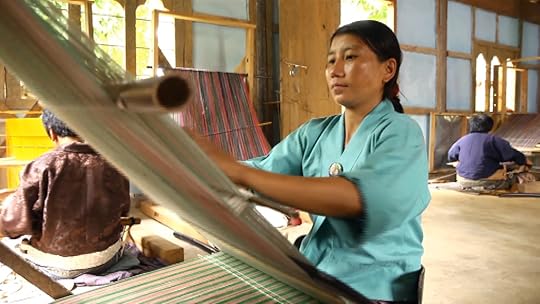
La tessitura è una delle principali attività delle donne in Bhutan.
Conosco pochissimo del buddismo ma immaginavo che la condizione della donna fosse migliore, probabilmente perché attribuisco una grande tolleranza verso gli altri a questa religione; nascere donna significa non avere accumulato abbastanza meriti nelle vite precedenti per nascere maschi e proprio al maschio spetta obbedienza e sottomissione.
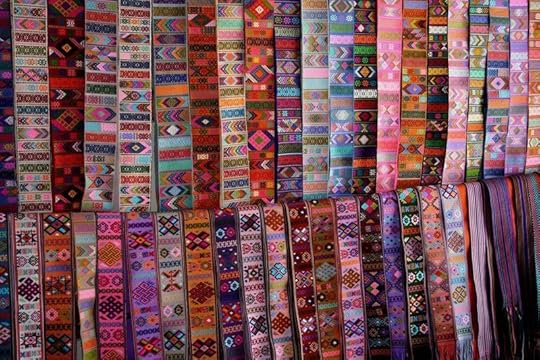
I tessuti tradizionali rappresentano la principale fonte di reddito per le donne sole che devono provvedere a se stesse e ai figli.
Mi ha stupito che la famiglia non ruoti necessariamente attorno a una forma legale di matrimonio: un uomo e una donna vanno a vivere insieme e questo è sufficiente per considerarsi (ed essere considerati) marito e moglie; potrebbe essere un esempio di grande apertura mentale (una sorta di unione civile) se non fosse che la donna non viene in nessun modo tutelata: il marito può decidere di andarsene prendendosi i beni comuni, abbandonando i figli senza incorrere in alcuna sanzione materiale o stigma sociale. Inoltre, al danno si aggiunge la beffa: la responsabilità è sempre attribuita alla donna che, in qualche modo, non è stata in grado di accudire e soddisfare il marito che quindi ha cercato una compagna migliore.
L’unica possibilità di sfuggire al controllo sociale che impone alle donne di avere un marito e la consacrazione alla vita monastica: le monache possono viaggiare da sole, decidere autonomamente in quale luogo vivere e affidarsi alla comunità per il loro sostentamento senza che questo rappresenti un’onta per sé e per la famiglia d’origine.
La tessitura è una delle principali attività delle donne in Bhutan.
Conosco pochissimo del buddismo ma immaginavo che la condizione della donna fosse migliore, probabilmente perché attribuisco una grande tolleranza verso gli altri a questa religione; nascere donna significa non avere accumulato abbastanza meriti nelle vite precedenti per nascere maschi e proprio al maschio spetta obbedienza e sottomissione.
I tessuti tradizionali rappresentano la principale fonte di reddito per le donne sole che devono provvedere a se stesse e ai figli.
Mi ha stupito che la famiglia non ruoti necessariamente attorno a una forma legale di matrimonio: un uomo e una donna vanno a vivere insieme e questo è sufficiente per considerarsi (ed essere considerati) marito e moglie; potrebbe essere un esempio di grande apertura mentale (una sorta di unione civile) se non fosse che la donna non viene in nessun modo tutelata: il marito può decidere di andarsene prendendosi i beni comuni, abbandonando i figli senza incorrere in alcuna sanzione materiale o stigma sociale. Inoltre, al danno si aggiunge la beffa: la responsabilità è sempre attribuita alla donna che, in qualche modo, non è stata in grado di accudire e soddisfare il marito che quindi ha cercato una compagna migliore.
[…] Tsomo provò a considerare la cosa sotto una luce diversa. voleva punire una bambina per una cosa fatta da un uomo adulto che avrebbe potuto essere suo padre. Sì, le donne cercavano il nemico tra di loro, e lasciano che gli uomini se ne vadano con un ghigno sulle labbra, rassicurati di avere il diritto di fare come più aggrada loro, solo perché sono uomini. Ora tutto le parve chiaro. […] Le donne tendono a interiorizzare i problemi e il dolore credendo che tutte siano in errore. Le donne erano ladre, si rubavano gli uomini l’un l’altra, vivendo nel sospetto e nell’odio. […] Abbiamo sbagliato tutto. dobbiamo imparare a ripensare i nostri ruoli e i nostri doveri. I doveri verso noi stesse e tra di noi.
L’unica possibilità di sfuggire al controllo sociale che impone alle donne di avere un marito e la consacrazione alla vita monastica: le monache possono viaggiare da sole, decidere autonomamente in quale luogo vivere e affidarsi alla comunità per il loro sostentamento senza che questo rappresenti un’onta per sé e per la famiglia d’origine.

January 13, 2018
È un romanzo abbastanza semplice come trama, che racconta la vita di una donna bhutanese e delle tante prove che affronta, ma che offre uno spaccato di vita interessante su un paese lontano di cui non sapevo quasi nulla. Tsomo è una donna di campagna, a cui è impedito l'accesso allo studio sebbene suo padre sia un religioso laico e quindi un insegnante nella loro comunità, si innamora di un uomo già sposato che la mette incinta e la segue nel suo villaggio, ma che .
Tsomo è una donna ribelle, nel suo mondo: si allontana dai legami familiari, si "abbassa" a lavori umilissimi pur di sopravvivere, assistendo a situazioni di degrado sociale e umano non da poco, e si mette a viaggiare, diventando una pellegrina e spostandosi da un tempio buddista a un altro, cercando di trovare il suo posto nel mondo. Anche quando invecchia, dopo una serie di peripezie e di incontri (alcuni migliori di altri), rinuncia ad avvicinarsi alla famiglia, pur riallacciando i rapporti, per non rinunciare alla sua indipendenza. Tsomo riesce a intraprendere un percorso di consapevolezza anche nei rapporti umani che potrebbe adattarsi a contesti molto più vicini alla nostra realtà.
Un romanzo piacevole per imparare qualcosa su un paese lontano e poco conosciuto e per riflettere sulla condizione delle donne che, per quanto cambino i contesti sociali o culturali, sembra purtroppo molto simile in tutto il mondo.
Tsomo è una donna ribelle, nel suo mondo: si allontana dai legami familiari, si "abbassa" a lavori umilissimi pur di sopravvivere, assistendo a situazioni di degrado sociale e umano non da poco, e si mette a viaggiare, diventando una pellegrina e spostandosi da un tempio buddista a un altro, cercando di trovare il suo posto nel mondo. Anche quando invecchia, dopo una serie di peripezie e di incontri (alcuni migliori di altri), rinuncia ad avvicinarsi alla famiglia, pur riallacciando i rapporti, per non rinunciare alla sua indipendenza. Tsomo riesce a intraprendere un percorso di consapevolezza anche nei rapporti umani che potrebbe adattarsi a contesti molto più vicini alla nostra realtà.
Un romanzo piacevole per imparare qualcosa su un paese lontano e poco conosciuto e per riflettere sulla condizione delle donne che, per quanto cambino i contesti sociali o culturali, sembra purtroppo molto simile in tutto il mondo.

July 2, 2023
This was an eye-opening book for me. The first English book written by a Bhutanese woman. It tells the story of Tsomo, who grows up in a village in Bhutan and faces the harsh realities of life. She's the eldest daughter in a family of 13. Life turns upside down when her mother passes away. She is illiterate but feels very responsible to her younger siblings. She would like to learn how to read and study religion. Her life takes an even worse turn when she meets Wangchen. I was so angry when I read these chapters. All the mistreatment she received, Tsomo blamed on her bad karma when it was in fact injustice and misogyny. I once read that Bhutan is the happiest country on earth but this book paints a very different picture. But maybe things have changed since this story takes place during Bhutan’s modernization period. However, misogyny also exists in Buddhist societies. Women are just used by men. There were some aspects of Bhutanese culture, which I wasn't aware of at all. Men and women can have intercourse before marriage and if the woman gets pregnant and the man acknowledges the pregnancy, a simple ceremony suffices to deem the act not sinful and arrange a quick marriage. I never heard of such a practice in other Asian cultures. If the man doesn’t acknowledge the pregnancy, the woman can organize a ceremony in order to depollute the act. I was angered how entitled men were to women's bodies. Tsomo suffered a stillbirth and then carried around a belly that looked still pregnant for much of her adulthood. It was a disease but I'm not sure what. Maybe a tumor? I was also frustrated by Tsomo's attitude and her simplistic reasoning of karma. When women fought against each other about men, the women failed to realize that the men were actually the root of their problems. All in all, this was a really eye-opening book, but very sad one indeed.

March 14, 2014
The Circle of Karma: http://readwithstyle.wordpress.com/20...
The story follows the simple and uneventful life of Tsomo – the uneducated daughter of a priest in some unnamed village of Bhutan, who dreams of studying religion alongside her brothers. Even though it’s the 1950s and Bhutan is supposedly in the process of government regulated modernization, Tsomo’s place is as far away as possible from the books and as close as possible to the kitchen. The young girl attempts to follow in her mother steps and to be a good housewife and wife, but her heart aims at higher achievements. As we all know, tragedy never travels alone so when her mother dies, her husband leaves her and she has a miscarriage, Tsomo is forced to leave the safety of her home for other adventures. Her mysterious illness makes her unattractive to men, which turns out to be both a blessing and a curse. Working various jobs and travelling throughout Bhutan and India, Tsomo begins to understand more about herself as well as more about repressed women in general. The relationships she forms with other women in a similar situation as herself paint a picture of an entire generation of socially and politically suppressed females, who struggle to position themselves in the world.
Read more: http://readwithstyle.wordpress.com/20...
The story follows the simple and uneventful life of Tsomo – the uneducated daughter of a priest in some unnamed village of Bhutan, who dreams of studying religion alongside her brothers. Even though it’s the 1950s and Bhutan is supposedly in the process of government regulated modernization, Tsomo’s place is as far away as possible from the books and as close as possible to the kitchen. The young girl attempts to follow in her mother steps and to be a good housewife and wife, but her heart aims at higher achievements. As we all know, tragedy never travels alone so when her mother dies, her husband leaves her and she has a miscarriage, Tsomo is forced to leave the safety of her home for other adventures. Her mysterious illness makes her unattractive to men, which turns out to be both a blessing and a curse. Working various jobs and travelling throughout Bhutan and India, Tsomo begins to understand more about herself as well as more about repressed women in general. The relationships she forms with other women in a similar situation as herself paint a picture of an entire generation of socially and politically suppressed females, who struggle to position themselves in the world.
Read more: http://readwithstyle.wordpress.com/20...

August 11, 2020
'Where is the furthest I can travel to Mother?' Tsomo asks her mother dreamily.
'Where? I don't know. Where can a girl travel to?' Her old thoughts are stirred by the childish question. Then, gently, teasing, 'Perhaps as far north as Tibet and as far south as India.' Mother laughs at the irony of this prediction. Where can girls travel?
Well, Tsomo, a girl from Bhutan, traveled to these places eventually, in her search for her true self.
I liked the descriptions of ritual life in countries I scarcely knew a thing about, where women, or their karma, were considered to be responsible for all the evils that could occur in their communities.

March 16, 2019
That kind of title just has to lure me in. That and the fact that this is the first novel written in English by a Bhutanese woman. Bhutan is my favorite country, a land of incredible peace. Yet, Tsomo, the main character here sees very little of that peace. I was drawn to the story drawn from Bhutan's remotest villages with vivid etchings of a life I certainly didn't see during my journey there. At the heart of it also is the best of Buddhist philosophy - that's where you get the 'circle of karma' - the idea that our actions come with consequences and the idea of impermanence.
I enjoyed this book being as it was just the second book I have read based in Bhutan. Perhaps, it was my karma to read. It in a good way.
I enjoyed this book being as it was just the second book I have read based in Bhutan. Perhaps, it was my karma to read. It in a good way.

December 6, 2015
Great to read about everyday life from an area where not much is translated and brought to the west. The main character Tsomo is one of the strongest and most interesting women in modern literature I have encountered. She goes through so much and is easily relatable with her constant questioning of her self and her purpose.
I am wishing the copy I had access to was better edited, it was distracting to have to wonder what words the author ment to use (soap or soup? constitution or concentration?)
It is a wonderful story about keeping on, and finding your strength.
I am wishing the copy I had access to was better edited, it was distracting to have to wonder what words the author ment to use (soap or soup? constitution or concentration?)
It is a wonderful story about keeping on, and finding your strength.

October 20, 2017
[#96: Bhutan] This is the story of Tsomo, a young girl who was born in rural Bhutan and who's longing for education. This is the story of her journey through Bhutan, India, ans Nepal as she seeks spirituality and self-knowledge. It's truly a wonderful book: Tsomo is an endearing character who is clever and passionate. You learn a lot about the culture and traditions in this part of the world, and I was pleasantly surprised by some of the reflections on feminism and solidarity that felt very familiar, even though the story is from the opposite side of the globe.

September 4, 2007
This book is great for the detail of rural life and ritual in Bhutan that it presents (though admittedly in the recent past). The writing is nothing spectacular and the characterisation and pacing and development are all uneven. But it's an easy read, and I eagerly followed the narrator on her journeys.

May 15, 2017
An awesome piece! A piece of reality. It broke me all long, besides I have come to realised the simple dynamics of life and to understand life/people better.

July 15, 2023
Un gros coup de coeur pour se roman, si il ma pris environ 100 pages pour embarquer dans l’histoire le reste de l’ouvrage ma tellement charmée que je crois qu’il fait maintenant partie de mon top 5! C’était a la fois dure et doux, je m’attendais à pleurer tout le long, mais il y avait beaucoup de passage de douceur, d’amitié, et je crois que ce qui ma le plus marqué de se livre est la gradé générosité des gens qui n’ont rien. À un passage Tsomo dit que les gens riche font la charité et les gens pauvre partage, que seule la dame qui na rien va donner parce que elle sait se que c’est que de me rien avoir et sa ma vraiment toucher. Les amitiés qu’elle se crée tout au long du livre était si douce et pure que malgré tout les épreuves que la vie mettait sur son passage elle n’était pas seule à les affronter. J’ai beaucoup aimé découvrir la culture du Bhoutan que je ne connaissais pas du tout, apprendre la réalité des femmes là bas. J’ai été charmer par l’écriture, la douceur des mots mais également tout c’est passage si dure que je n’est pas pu retenir mes larmes, tout cette violence et tout cette injustice envers les femmes et tout cette pauvreté.

July 23, 2025
This was fascinating. I never knew anything about Bhutan before reading this book! As a friend shared with me, the protagonist Tsomo is an Everyman (or in this case, an Everywoman) struggling with the demands, journeys, grief, and unfairness of life, believing that her challenges arise from bad karma. But in her own way, she transcends all these things and finds hope and meaning in her journey. Worthwhile.

January 3, 2021
Bhutanese Buddhist feminist roman a clef. I don't know that I can say anything more to emphasise how powerful this book is. It's so gentle yet firm. I adore learning about everyday life and ritual from places I don't know much about, and The Circle of Karma was incredibly rewarding in that regard.

May 1, 2025
This was my global reading challenge book for Bhutan and it was excellent. It took a while to read, but it really is an incredible journey through Bhutan, Nepal, Tibet and Northern India by one woman and the people that weave in and out of her life.

March 29, 2025
Desafío "Leyendo a través de Asia": Bután (créditos a Lee (Books With Lee)).

February 4, 2020
Un voyage fascinant à travers le Bouthan et l'Inde dans un récit initiatique parfois frustrant mais enrichissant !

August 7, 2015
E io che avevo temuto scioccamente il Bhutan quale tappa potenzialmente improbabile del giro del mondo letterario… Il piccolo Stato asiatico abbarbicato sulla catena himalayana mi ha regalato un romanzo solido, leggibile, certamente interessante.
Mi sembra una costante nelle mie peregrinazioni letterarie intorno al pianeta: per un motivo o per l’altro, finisco per capitare spesso attorcigliato a storie di figure femminili che stanno cercando l’emancipazione da tradizioni millenarie, baggianate religiose o qualsiasi altra forma di distorsione del pensiero che preveda che la donna si concepita in rapporto non paritetico con l’uomo.
“Il viaggio di Tsomo” non fa differenza: con una scrittura semplice che forse non rende del tutto giustizia alla profondità dei temi, Kunzang Chode racconta la storia di una ragazza di villaggio a cui è negata l’istruzione, figlia di una sorta di monaco laico e di una madre dolcissima e sfortunata. Le opportunità che non vengono elargite e la scarsa considerazione di cui gode spingono Tsomo verso un viaggio attraverso l Buthan, il Nepal e l’India, in un cammino che farà decisamente rima con “conoscenza di se stessa”.
Bel personaggio, questa Tsomo: priva di soldi e cultura, costretta a firmare intingendo un dito nella fuliggine (la versione orientale della nostra X), eppure enormemente dignitosa, con un desiderio di felicità in cui potersi riconoscere. Certo, le esperienze vissute e il racconto di luoghi che percepiamo infinitamente lontani – e non solo per il chilometraggio – non aiuta nell’immedesimazione, ma sono certo che ritroverete nelle vicende di questa ragazza-donna-anziana un pezzetto della vostra strada, quella percorsa inciampando sempre negli stessi sassi (cit.) e con lo sguardo costantemente orientato alla comprensione di quello che ci circonda e che ci si muove dentro.
Parte del mio giro del mondo letterario: http://www.masedomani.com/il-giro-del...
Mi sembra una costante nelle mie peregrinazioni letterarie intorno al pianeta: per un motivo o per l’altro, finisco per capitare spesso attorcigliato a storie di figure femminili che stanno cercando l’emancipazione da tradizioni millenarie, baggianate religiose o qualsiasi altra forma di distorsione del pensiero che preveda che la donna si concepita in rapporto non paritetico con l’uomo.
“Il viaggio di Tsomo” non fa differenza: con una scrittura semplice che forse non rende del tutto giustizia alla profondità dei temi, Kunzang Chode racconta la storia di una ragazza di villaggio a cui è negata l’istruzione, figlia di una sorta di monaco laico e di una madre dolcissima e sfortunata. Le opportunità che non vengono elargite e la scarsa considerazione di cui gode spingono Tsomo verso un viaggio attraverso l Buthan, il Nepal e l’India, in un cammino che farà decisamente rima con “conoscenza di se stessa”.
Bel personaggio, questa Tsomo: priva di soldi e cultura, costretta a firmare intingendo un dito nella fuliggine (la versione orientale della nostra X), eppure enormemente dignitosa, con un desiderio di felicità in cui potersi riconoscere. Certo, le esperienze vissute e il racconto di luoghi che percepiamo infinitamente lontani – e non solo per il chilometraggio – non aiuta nell’immedesimazione, ma sono certo che ritroverete nelle vicende di questa ragazza-donna-anziana un pezzetto della vostra strada, quella percorsa inciampando sempre negli stessi sassi (cit.) e con lo sguardo costantemente orientato alla comprensione di quello che ci circonda e che ci si muove dentro.
Parte del mio giro del mondo letterario: http://www.masedomani.com/il-giro-del...
October 27, 2022
J'ai adorer découvrir le Bhoutan à travers les yeux de Tsomo! J'avais peur en commençant que le roman soit uniquement constitué d'un long récit de malheur, mais j'ai été agréablement surprise par le côté très humain de l'écriture et l'alternance entre les malheurs et l'espoir. La protagoniste était très agréable à suivre. Elle est surprenamment optimiste face à sa situation et ses introspections et sa foie sont généralement très intéressantes. Elle est aussi complétement non-confrontasionnelle ce qui peut être énervant mais on voit bien d'où lui vient cette attitude. L'une des résolutions finale m'a cependant un peu déçue. Alors que l'autrice avait réussi à évité ce piège durant tout le reste du roman, une coïncidence forcée vient briser le réalisme de ce qui aurait du être une scène forte en émotion. De plus, plutôt que de réalisé elle-même qu'elle tourne toujours sa colère vers les femmes plutôt que les hommes qui l'ont blessé, il faut que ce soit un personnage masculin peut développé et sorti de nul part qui le lui explique! J'ai vraiment trouvé ça dommage car ça aurait du être un moment fort du roman. J'ai aussi trouvé que je ne ressentais pas vraiment le passage du temps et que j'étais toujours surprise lorsque la narration rappelait le temps écoulé depuis le départ de la protagoniste mais c'était peut-être voulu de la part de l'autrice.

October 29, 2014
Bhutanese, Buddhist, feminist ---all ingredients for a fine book. Another aspect central to the novel which really appealed to me was it features lots of travel by subaltern migrants and gives insight into how illiterate women working on road crews at the India-Bhutan border negotiate their way through Buddhist pilgrimage circuits (they have their own name for the Indian site Bodh Gaya where Buddha is supposed to have achieved enlightenment--they call it Dorjiten). These women are not wealthy and privileged like Elizabeth Gilbert (author of Eat, Pray, Love) for whom spiritual retreats are exotic and sexy. In the novel, Choden outlines the pervasive violence women face within the family and outside it as they attempt to make their ways in the world and pursue their own paths to enlightenment. As a Delhi resident I was thrilled to learn of a small enclave mentioned in the novel which is home to the Tibetan and Bhutanese community in old Delhi but is missing from my otherwise very detailed Eicher map. Thank you, Kunzang Choden and please, please keep writing more novels!

March 22, 2010
Written by a Bhutanese female author, this is the (fictional) life story of a Bhutanese woman who left her village as a young adult, and spent her life moving between various places in the area where Bhutan, India, Tibet, and Nepal meet. It is somewhere between a folk tale and a modern novel. I liked it a lot for its very lively account of the daily life of an illiterate but not stupid Bhutanese woman. It is somewhat feminist, but mostly very Buddhist.

February 2, 2012
I read a Dutch translation of the book for the Spring Challenge 2013 of the Netherlands & Flanders group. For a review in Dutch, please see Spring Challenge 2013 (message 17).
I really liked reading this book, as it not only tells the life story of Tsomo but it also taught me a lot about Buddhism, a religion I hardly knew anything about until now.
I really liked reading this book, as it not only tells the life story of Tsomo but it also taught me a lot about Buddhism, a religion I hardly knew anything about until now.

March 12, 2017
I you are planning a trip to Bhutan than you should read this book. During my trip in Bhutan I met the writer. A very friendly person who owns a very interesting museum.
March 27, 2021
Such a heartwarming book, reminds me of the Wild Swangs.

October 5, 2021
De Bhutanese schrijfster Kunzang Choden is de eerste auteur uit haar land die een roman in het Engels geschreven heeft. Deze taal leerde ze op een school in India, waar ze op haar negende naar toegestuurd werd. Later studeerde ze psychologie en sociologie en is ze voor het United Nations Development Program in Bhutan gaan werken. De debuutroman in kwestie is The circle of Karma dat in 2005 is uitgebracht en in 2009 in het Nederlands is vertaald onder de titel Tsomo’s karma.
Tsomo is opgegroeid in een groot huis in het dorp Wangleng. Als ze veertien jaar oud is, overlijdt haar moeder en een jaar later besluit ze om naar een tempel in Trongsa te gaan om haar moeder te herdenken. Tijdens haar reis ontmoet ze Wangchen, waar ze mee trouwt. Het is geen goed huwelijk en door een aantal vernederingen besluit ze haar geboortedorp te verlaten. Haar reis leidt haar door Bhutan en India en op de ene plek blijft ze langer dan op de andere. Ze kent gelukkige en ongelukkige momenten, maakt nieuwe vrienden, maar kan nooit de rust en vrede vinden waar ze naar verlangt.
Tsomo’s karma, dat met een proloog die zich in het heden afspeelt begint, wordt volledig vanuit het perspectief van Tsomo verteld. Ze is inmiddels non, maar ook oud. Na deze inleiding maakt het verhaal een flinke sprong terug en gaat het naar het jaar dat Tsomo nog een klein meisje is. Vanaf dat moment verloopt de plot chronologisch en volgt de lezer haar levenspad. Omdat er geen gebruik wordt gemaakt van tijdsaanduidingen is het niet altijd duidelijk wanneer een periode uit haar leven zich precies afspeelt. Het is soms raden, maar door de diverse beschrijvingen valt er over het algemeen wel uit op te maken wanneer dat tijdvak is. Behalve een reis door het leven van Tsomo, is het in zekere zin ook een reis door de tijd.
Doordat de auteur het verhaal op deze manier geschreven heeft, geeft het een goed beeld van de cultuur van Bhutan, de gebruiken van dit land, het bijgeloof dat veel mensen hadden of hebben, maar ook van het Boeddhistische geloof. Omdat dit voor de westerse wereld een redelijk onbekend gebied is, is het interessant en boeiend om hier meer over te weten te komen. De roman is volledig fictief, maar onder andere door het verwerken van de hiervoor genoemde elementen kan het ook maar zo waargebeurd zijn. Het leven van Tsomo zal vele Bhutanese vrouwen niet vreemd in de oren klinken.
De schrijfstijl van de auteur is beeldend en prettig, maar lijkt soms wat simpel. De lezer kan zich bijzonder goed in Tsomo inleven; hij voelt en leeft met haar mee en begrijpt hoe ze zich in vele situaties moet voelen. Toch kan hij zich niet aan de indruk onttrekken dat ze in veel gevallen wel wat naïef is. Voor een heel groot deel zal dit komen doordat ze opgroeide in een tijd dat het voor meisjes en vrouwen niet gebruikelijk was om te leren lezen en schrijven. Ze werden destijds – en er zullen ongetwijfeld nog regio’s zijn waar dit nog steeds zo is – als lagere wezens beschouwd. Dit heeft dan ongetwijfeld invloed op je ontwikkeling als mens. Het is dus niet zo heel erg vreemd dat Tsomo zich over de dingen die in haar leven niet goed gingen schuldig heeft gevoeld.
Uiteindelijk weet Tsomo de rust te vinden die ze verdient en is haar reis ten einde gekomen. Voor de lezer geldt dit eveneens en na de afsluitende epiloog, die verteld wordt vanuit het perspectief van haar vriendin Lham Yeshi, kun je niet anders dan concluderen dat Tsomo’s karma een enigszins onbekende wereld opent. En die is zeer de moeite waard.
Tsomo is opgegroeid in een groot huis in het dorp Wangleng. Als ze veertien jaar oud is, overlijdt haar moeder en een jaar later besluit ze om naar een tempel in Trongsa te gaan om haar moeder te herdenken. Tijdens haar reis ontmoet ze Wangchen, waar ze mee trouwt. Het is geen goed huwelijk en door een aantal vernederingen besluit ze haar geboortedorp te verlaten. Haar reis leidt haar door Bhutan en India en op de ene plek blijft ze langer dan op de andere. Ze kent gelukkige en ongelukkige momenten, maakt nieuwe vrienden, maar kan nooit de rust en vrede vinden waar ze naar verlangt.
Tsomo’s karma, dat met een proloog die zich in het heden afspeelt begint, wordt volledig vanuit het perspectief van Tsomo verteld. Ze is inmiddels non, maar ook oud. Na deze inleiding maakt het verhaal een flinke sprong terug en gaat het naar het jaar dat Tsomo nog een klein meisje is. Vanaf dat moment verloopt de plot chronologisch en volgt de lezer haar levenspad. Omdat er geen gebruik wordt gemaakt van tijdsaanduidingen is het niet altijd duidelijk wanneer een periode uit haar leven zich precies afspeelt. Het is soms raden, maar door de diverse beschrijvingen valt er over het algemeen wel uit op te maken wanneer dat tijdvak is. Behalve een reis door het leven van Tsomo, is het in zekere zin ook een reis door de tijd.
Doordat de auteur het verhaal op deze manier geschreven heeft, geeft het een goed beeld van de cultuur van Bhutan, de gebruiken van dit land, het bijgeloof dat veel mensen hadden of hebben, maar ook van het Boeddhistische geloof. Omdat dit voor de westerse wereld een redelijk onbekend gebied is, is het interessant en boeiend om hier meer over te weten te komen. De roman is volledig fictief, maar onder andere door het verwerken van de hiervoor genoemde elementen kan het ook maar zo waargebeurd zijn. Het leven van Tsomo zal vele Bhutanese vrouwen niet vreemd in de oren klinken.
De schrijfstijl van de auteur is beeldend en prettig, maar lijkt soms wat simpel. De lezer kan zich bijzonder goed in Tsomo inleven; hij voelt en leeft met haar mee en begrijpt hoe ze zich in vele situaties moet voelen. Toch kan hij zich niet aan de indruk onttrekken dat ze in veel gevallen wel wat naïef is. Voor een heel groot deel zal dit komen doordat ze opgroeide in een tijd dat het voor meisjes en vrouwen niet gebruikelijk was om te leren lezen en schrijven. Ze werden destijds – en er zullen ongetwijfeld nog regio’s zijn waar dit nog steeds zo is – als lagere wezens beschouwd. Dit heeft dan ongetwijfeld invloed op je ontwikkeling als mens. Het is dus niet zo heel erg vreemd dat Tsomo zich over de dingen die in haar leven niet goed gingen schuldig heeft gevoeld.
Uiteindelijk weet Tsomo de rust te vinden die ze verdient en is haar reis ten einde gekomen. Voor de lezer geldt dit eveneens en na de afsluitende epiloog, die verteld wordt vanuit het perspectief van haar vriendin Lham Yeshi, kun je niet anders dan concluderen dat Tsomo’s karma een enigszins onbekende wereld opent. En die is zeer de moeite waard.

September 1, 2021
Les vicissitudes de Tsomo et sa vie tragiquement douloureuse m'ont donné l'opportunité de faire un tour au Bhoutan ! Hormis sa position géographique et la religion bouddhiste, je connaissais très peu de ce pays qui semble enveloppé d'une aura de mystère. En quelque sorte, on pourrait dire que le livre lui-même est parfois cryptique : il est très difficile de comprendre dans quelle période historique les événements se déroulent, sinon de manière minimale (l'occupation chinoise du Tibet, les premières voitures sur la route, le communisme ) , de nombreux personnages importants dans la vie de la protagoniste disparaissent et sont à peine évoqués plus tard (Chimme, Dechen Choki).
Le thème principal du livre est la condition de la femme dans la culture traditionnelle bhoutanaise et bouddhiste. En substance, la femme était doublement désavantagée : soit reléguée au dernier rang de l'échelle sociale, soit considérée comme un être inférieur pour la religion, vu qu' on naît femme quand on n'a pas accumulé assez de mérites dans les vies antérieures. Partant d'une situation de désavantage à la fois passée et présente, les femmes se retrouvaient à excuser tout malheur, oppression ou abus à cause du mauvais Karma.
Le livre m'a tout de suite saisie, par la précision et la délicatesse avec lesquelles tout ce qui était communément interdit aux femmes était décrit à travers les yeux de Tsomo : l'impossibilité de voyager, d'apprendre à lire et à écrire, de s'initier à des pratiques religieuses, de n'avoir aucun choix que d'être une femme respectable. Qualification, celle-ci, qui ne peut être obtenue qu'accompagnée d'un homme : mari ou père des enfants (la coutume de placer une marionnette à côté des mères célibataires pour bénir leur enfant est emblématique).
Tsomo dans la première partie du livre était une femme guerrière : on respirait sa ténacité, sa détermination et le désir de s'opposer à ces mécanismes. Elle réfléchit sur sa condition et s'y opposa à sa manière modérée. Le début de son voyage et son départ de la maison correspondent à la partie la plus ennuyeuse et décadente du livre : Tsomo s'adapte aux circonstances qui lui arrivent (épouser un homme qui est allé vivre avec elle dans sa maison sans sa permission) et semble ne plus se faire une auto-analyse. Son rêve de pratiquer la religion semble s'estomper à mesure que sa vie se normalise. L'analyse intérieure de Tsomo semble être traitée dans la deuxième partie du livre avec plus de légèreté et moins de ferveur, tout comme la juste importance ne semble pas être accordée à la réalisation de son objectif, qui ne semble plutôt s'accomplir que parce que son mari l'a abandonné pour une femme plus jeune. Il ne me semble pas du tout que le livre traite d'un voyage intérieur, mais plutôt d'un pèlerinage dans lequel la vie du pèlerin est analysée en parallèle.
J'ai été un peu déçue à la fin : le lecteur connaît désormais tous les détails de la vie de la protagoniste, mais sérieusement, sauriez-vous décrire son caractère à partir de tout ce qui nous a été raconté ? Très peu je dirais, sa caractérisation s'est beaucoup affaiblie avec la succession de l'histoire.
Qui est sensible aux préceptes de la religion, pourrait sûrement être fasciné par la foi qui accompagne chaque action dans le livre et par les rituels bouddhistes qu'on peut découvrir.
Le livre a commencé très bien, mais il m'a finalement déçue. Dans ce cercle de Karma qui est la lecture, dans ce cas, dans la vie précédente, ça ne s'est pas si bien passé pour moi.
Le thème principal du livre est la condition de la femme dans la culture traditionnelle bhoutanaise et bouddhiste. En substance, la femme était doublement désavantagée : soit reléguée au dernier rang de l'échelle sociale, soit considérée comme un être inférieur pour la religion, vu qu' on naît femme quand on n'a pas accumulé assez de mérites dans les vies antérieures. Partant d'une situation de désavantage à la fois passée et présente, les femmes se retrouvaient à excuser tout malheur, oppression ou abus à cause du mauvais Karma.
Le livre m'a tout de suite saisie, par la précision et la délicatesse avec lesquelles tout ce qui était communément interdit aux femmes était décrit à travers les yeux de Tsomo : l'impossibilité de voyager, d'apprendre à lire et à écrire, de s'initier à des pratiques religieuses, de n'avoir aucun choix que d'être une femme respectable. Qualification, celle-ci, qui ne peut être obtenue qu'accompagnée d'un homme : mari ou père des enfants (la coutume de placer une marionnette à côté des mères célibataires pour bénir leur enfant est emblématique).
Tsomo dans la première partie du livre était une femme guerrière : on respirait sa ténacité, sa détermination et le désir de s'opposer à ces mécanismes. Elle réfléchit sur sa condition et s'y opposa à sa manière modérée. Le début de son voyage et son départ de la maison correspondent à la partie la plus ennuyeuse et décadente du livre : Tsomo s'adapte aux circonstances qui lui arrivent (épouser un homme qui est allé vivre avec elle dans sa maison sans sa permission) et semble ne plus se faire une auto-analyse. Son rêve de pratiquer la religion semble s'estomper à mesure que sa vie se normalise. L'analyse intérieure de Tsomo semble être traitée dans la deuxième partie du livre avec plus de légèreté et moins de ferveur, tout comme la juste importance ne semble pas être accordée à la réalisation de son objectif, qui ne semble plutôt s'accomplir que parce que son mari l'a abandonné pour une femme plus jeune. Il ne me semble pas du tout que le livre traite d'un voyage intérieur, mais plutôt d'un pèlerinage dans lequel la vie du pèlerin est analysée en parallèle.
J'ai été un peu déçue à la fin : le lecteur connaît désormais tous les détails de la vie de la protagoniste, mais sérieusement, sauriez-vous décrire son caractère à partir de tout ce qui nous a été raconté ? Très peu je dirais, sa caractérisation s'est beaucoup affaiblie avec la succession de l'histoire.
Qui est sensible aux préceptes de la religion, pourrait sûrement être fasciné par la foi qui accompagne chaque action dans le livre et par les rituels bouddhistes qu'on peut découvrir.
Le livre a commencé très bien, mais il m'a finalement déçue. Dans ce cercle de Karma qui est la lecture, dans ce cas, dans la vie précédente, ça ne s'est pas si bien passé pour moi.
December 12, 2020
THE CIRCLE OF KARMA: A Bhutanese novel of high distinction
The Circle of Karma (New Delhi: Zubaan Publishers, 2005; reprint 2014 ), a Bhutanese novel written in English rather than Dzongkha, the primary language of the small Himalayan kingdom, should have a much wider readership than it has yet achieved.
It is about the life of the woman Tsomo from childhood to transformation into a spiritual form several decades later. She grows up in a small mountain village where her father is a man of religious prestige although they are not wealthy. She marries a man who then takes up with her sister. Devastated, Tsomo becomes a pilgrim traveling around the kingdom and the larger world of northern India and Nepal, meeting many members of the Bhutan diaspora. She is deeply religious, an adherent of a Bhutanese offshoot of Tibetan Buddhism. She ends up living for many years in New Delhi with a parasitic man who finally leaves her for a younger woman. Influenced by a guru (the "Rinpoche") who accepts her as a nun, she is able to make peace in her heart with those who have wronged her (but in a "fool me twice shame on me" spirit).
The book is set, as best I can tell, in a period from the 1950s to the 1990s during which the kingdom emerges from feudalism while retaining a culture that is a mixture of a sophisticated Buddhism and various folk beliefs. Especially vivid is the description of an unsuccessful attempt at exorcising a hernia from Tsomo's body, of the unconcealed sexual games of young teens, of the cooperation of villagers in getting in the harvest, of how families cook their meals, of how women who become pregnant outside of marriage (and the infant) become accepted into the community through various rituals, of how widows and abandoned women support one another in starting small businesses, and of how Tsomo the aspiring nun goes to a barber (who thinks she's a madwoman) to get her head shaved. As described in The Circle of Karma, Bhutanese culture was (and probably still is in most respects) very different from ours.
The author, Kunzang Choden, has spoken in interviews about her difficulties in finishing the book in a society that had no publishing infrastructure and no skilled editors. Her English is very fluent but there are a few (very few) places where a sentence reads as first draft, where a sentence seems to be missing, or where an incident is not in the right order. This could all be corrected very easily in a revised edition.
Here is the author's description of Tsomo's state of mind after being abandoned by her second husband:
"[Pema Buti, a longtime friend] squinted with her old watery eyes and cocked her head to stare her in the face, 'Do you miss this man?' Tell me, she interrogated Tsomo in her usual forthright way.
"It was a simple question that could be answered simply, but Tsomo could not bring herself to answer it honestly. In a strange inexplicable way, the void left by Lhatu remained both in her physical world as well as in her mind. The nails on the wall where his clothes used to hang were now empty. The emptiness was a constant reminder that something was amiss. One day she pulled out all the nails but even the holes left by them were enough to distress her. Finally she plastered all the walls with old newspapers and magazines that she had collected. There were no traces of any reminders now but she always remembered why she had plastered the walls. She had to tell herself that she was alone and on her own. She continued to think in terms of 'we' rather than 'I' and every time she made a decision she spontaneously wondered what Lhatu would have said. She had become so used to sharing her life with somebody else that she had to learn to live on her own and think on her own. She could not answer Pema Buti's simple question. She had no answer."
Kunzang Choden has written what may be the "national" novel of Bhutan for many years to come. She is a graduate of Willa Cather's alma mater, the University of Nebraska at Lincoln, with a B.A. in Sociology. I'd like to think that Cather would agree with my praise of the above passage.
The Circle of Karma (New Delhi: Zubaan Publishers, 2005; reprint 2014 ), a Bhutanese novel written in English rather than Dzongkha, the primary language of the small Himalayan kingdom, should have a much wider readership than it has yet achieved.
It is about the life of the woman Tsomo from childhood to transformation into a spiritual form several decades later. She grows up in a small mountain village where her father is a man of religious prestige although they are not wealthy. She marries a man who then takes up with her sister. Devastated, Tsomo becomes a pilgrim traveling around the kingdom and the larger world of northern India and Nepal, meeting many members of the Bhutan diaspora. She is deeply religious, an adherent of a Bhutanese offshoot of Tibetan Buddhism. She ends up living for many years in New Delhi with a parasitic man who finally leaves her for a younger woman. Influenced by a guru (the "Rinpoche") who accepts her as a nun, she is able to make peace in her heart with those who have wronged her (but in a "fool me twice shame on me" spirit).
The book is set, as best I can tell, in a period from the 1950s to the 1990s during which the kingdom emerges from feudalism while retaining a culture that is a mixture of a sophisticated Buddhism and various folk beliefs. Especially vivid is the description of an unsuccessful attempt at exorcising a hernia from Tsomo's body, of the unconcealed sexual games of young teens, of the cooperation of villagers in getting in the harvest, of how families cook their meals, of how women who become pregnant outside of marriage (and the infant) become accepted into the community through various rituals, of how widows and abandoned women support one another in starting small businesses, and of how Tsomo the aspiring nun goes to a barber (who thinks she's a madwoman) to get her head shaved. As described in The Circle of Karma, Bhutanese culture was (and probably still is in most respects) very different from ours.
The author, Kunzang Choden, has spoken in interviews about her difficulties in finishing the book in a society that had no publishing infrastructure and no skilled editors. Her English is very fluent but there are a few (very few) places where a sentence reads as first draft, where a sentence seems to be missing, or where an incident is not in the right order. This could all be corrected very easily in a revised edition.
Here is the author's description of Tsomo's state of mind after being abandoned by her second husband:
"[Pema Buti, a longtime friend] squinted with her old watery eyes and cocked her head to stare her in the face, 'Do you miss this man?' Tell me, she interrogated Tsomo in her usual forthright way.
"It was a simple question that could be answered simply, but Tsomo could not bring herself to answer it honestly. In a strange inexplicable way, the void left by Lhatu remained both in her physical world as well as in her mind. The nails on the wall where his clothes used to hang were now empty. The emptiness was a constant reminder that something was amiss. One day she pulled out all the nails but even the holes left by them were enough to distress her. Finally she plastered all the walls with old newspapers and magazines that she had collected. There were no traces of any reminders now but she always remembered why she had plastered the walls. She had to tell herself that she was alone and on her own. She continued to think in terms of 'we' rather than 'I' and every time she made a decision she spontaneously wondered what Lhatu would have said. She had become so used to sharing her life with somebody else that she had to learn to live on her own and think on her own. She could not answer Pema Buti's simple question. She had no answer."
Kunzang Choden has written what may be the "national" novel of Bhutan for many years to come. She is a graduate of Willa Cather's alma mater, the University of Nebraska at Lincoln, with a B.A. in Sociology. I'd like to think that Cather would agree with my praise of the above passage.
Displaying 1 - 30 of 100 reviews