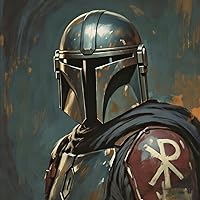
Marcion presents the life, thought, and work of Marcion of Pontus in its historical, theological, ethical, and liturgical contexts. It distinguishes itself from its competitors by employing a new rigorously critiquing heresy reports by means of the testimony of Marcion's scriptures. It devotes attention to the reliable reconstruction of those scriptures, arguing for the chronological priority of Marcion's Gospel over what is now known as canonical Luke. It seeks to overthrow the common heresiological (and sometimes scholarly) portraits of Marcion as a ditheist, a docetist, a world-denier, requiring divorce, and deleting scripture. In so doing, it creates a new portrait of Marcion that is substantially different from everything that has come before.
David Litwa’s aim in this book is to rehabilitate the image of the second-century heretic, Marcion of Sinope. He thinks that Marcion’s true theological insights have been misunderstood, particularly by the famous early twentieth-century historian Adolph von Harnack. The subtitle of his book is an homage to Harnack. Thus, while Harnack’s subtitle was “The Gospel of an Alien God,” Litwa’s is “The Gospel of a Wholly Good God.” For Harnack, this “Good God” was absolutely “other”; for Litwa, Marcion’s deity was entirely good, particularly compared to the deity worshipped by the Jews.[1]
1. Harnack’s Absolutely Alien God For Harnack, “alien” meant that Marcion’s deity, the “Good God” (“GG”), had absolutely no connection to the created world. The GG had not created anything in the world, including human beings, and therefore owed nothing to human beings. Nonetheless, because of its radical goodness, the GG had condescended to send Jesus as a full-grown adult to exercise radical grace in offering salvation to human beings to whom it owed absolutely nothing. The essential alienness of the GG meant that nothing in the Jewish bible applied to the GG. The prophecies and promises had nothing to do with the GG, which meant that the Jewish scriptures were jetsam that could be tossed off the Christian ship.
In contrast, for Harnack, the Jewish Creator God (“JCG”) was mercurial, vengeful, vain, a creator of evil, and without mercy.
2. Litwa’s Not So Alien God For Litwa, Marcion’s GG is not entirely alien. The GG is the real god of all creation with all the properties of divinity. The JCG is not God. The JCG is a lesser divine being who was given the power to create by the GG, much as certain strands of Judaism theorized that their god had given angels the task of creation. In exercising this function, the JCG was unwittingly acting as a subordinate agent of the GG. Thus, for Litwa, the GG was the ultimate creator of the material world. As a result, although created through a “cut-out,” Creation was not entirely alien from the GG.
Also, for Litwa, Marcion was not anti-Jewish. His goal was to leave Jewish texts to the Jews. Marcion was against “cultural appropriation” before it was cool.
Litwa’s Marcion did not compel his followers to be celibate or vegetarian. If they sought to be baptized, then they had to give up sexual relations, but the unbaptized could remain in church during Marcionite Eucharistic rites. Women were involved in rites, including baptism, which made the Marcionite church less hierarchical than the Catholic church. Marcionites were “more ethically rigorous than their catholic counterparts.” (p. 220) Litwa denies that Marcion’s Jesus was a docetic, that Marcion despised the JCG, or that Marcion completely rejected the Jewish scriptures.
In sum, for Litwa, Marcion's theology was more humane, less rigorous, and more reasonable than earlier historians would allow.
3. The Fiduciary Relationship between Author and Reader Of course, characterizations like “reasonable” are relative to culture. Harnack spent fifty years reading Marcion and discovered a proto-Reformer who anticipated Luther. Litwa studies Marcion and uncovers a figure who might be a proto-liberal Protestant, and who had ideas that would enrich Christianity if adopted today.
How should we assess these claims? Ultimately, we have to trust Litwa.
Can we?
There’s the rub. Litwa’s analysis might be absolutely correct. The second century is a black box. We don’t have anything written by Marcion. We have writings by his opponents. Although Justin Martyr was a contemporary of Marcion and might have met him, most of these writings are not contemporaneous with Marcion. For example, Tertullian wrote his “Against Marcion” (“AM”) around forty to fifty years after Marcion. Similarly, Irenaeus’s writings on Marcion were about twenty to thirty years after Marcion established his church. Justin Martyr and Irenaeus lived in Rome, but Tertullian lived in Carthage. Thus, the connections with Marcion are not close as a matter of journalism, but they are surprisingly close as historical records. For Tertullian and Irenaeus, Marcion’s Roman period was the equivalent of the Reagan-Clinton era for us in the late 2020s. Nonetheless, these men were opponents of Marcion for a reason, and their information is second-hand.
Can they be trusted?
Litwa is a trained scholar. He has a Ph. D in Religious Studies from the University of Virginia and a Th. M. from Duke. He has written ten books on early Christianity. His work focuses on early Christian heresies. His opinions carry prima facie authority.
But what do I care about credentials? I am a trial attorney. I regularly cross-examine expert witnesses with credentials. In civil litigation, both sides hire people with doctorates and other scholarly credentials to offer opinions in their subject areas. I know that the opinions of witnesses are no better than the facts and logic that support them. No expert opinion is beyond questioning. All expert opinions must be tested by the adversarial process.
The first question we should ask is whether Litwa is a disinterested scholar or whether he has a bias that affects the objectivity of his opinion. Obviously, everyone has biases. For example, every expert I’ve cross-examined is being paid, and all experts have a sense of ownership and pride about their opinions. In themselves, these quotidian biases are no reason to discount an expert’s opinion. Frankly, no jury has ever disregarded an expert’s opinion for those reasons alone.
However, experts who are in the tank for one side are awful witnesses. I regularly destroy such witnesses for two related reasons. First, the opinions of such witnesses are usually given without regard to the facts of the case. This means they cherry-pick facts that support partisan positions. Consequently, they can be easily impeached by facts their analysis disregarded. Second, because they are forcing an opinion on recalcitrant facts, their reasoning can break down as they engage in special pleading or depart from the laws of logic. When juries see this, they often conclude that the opinion can’t be trusted.
4. The poison in the tail: Litwa’s Theological Reform Agenda. So, how does Litwa do?
Not well.
We should first start with the end of Litwa’s book. In his conclusion, Litwa tells the reader that Harnack got something right, namely, the idea of redacting the problematic portions of the Old Testament from the Christian canon. Litwa writes:
Having refused to defend scripturalized violence, one must find a better way to approach it. Harnack found such a way, and he is often quoted—not without a faint gasp of horror and contempt:
To reject the Old Testament in the second century was a mistake which the Church rightly repudiated; to retain it in the sixteenth century was a fate which the Reformation could not yet avoid; but to continue to keep it in Protestantism as a canonical document after the nineteenth century is the consequence of religious and ecclesiastical paralysis.48
Harnack clarified that it is not about rejecting the “Old” Testament plain and simple, but about removing it from the Christian canon. The “Old” Testament, he said, “will only be appreciated and valued everywhere for its distinctiveness and importance (the prophets), first when canonical authority, which does not belong to it, is removed.”
Litwa, M. David. Marcion: The Gospel of a Wholly Good God (pp. 245-246).
Why should Christians do this niw? Because Old Testament texts encourage violence:[2]
It’s high time to stop defending biblical “texts of terror.”46 This includes the strategy of deeming violent Scriptures useful because they “raise awareness.” Violent biblical texts do not usually invite violent people to reevaluate their violent behavior.47 Violent people read Scripture like all other people—with their cognitive biases. They do not stop to peruse a scholarly handbook on how to read nonviolently. Rather, they underscore the violence because it reinforces their authoritarian predisposition. Violence is valorized in Scripture. The towering authority of the Bible means that, practically speaking, most of its main audience (devout Christians) will not read it with the tools of ideological criticism.
Litwa, M. David. Marcion: The Gospel of a Wholly Good God (p. 245).
Litwa offers a recent example of what he is talking about. He writes:
Christians have used the Bible to justify colonialism, the crusades, slavery, the displacement and murder of first peoples in Australia and America—the list goes on. In late 2023, “destroy Amalek” has been used in a war with horrific collateral damage inflicted on civilians in Gaza.
Litwa, M. David. Marcion: The Gospel of a Wholly Good God (p. 246).
Let’s pause a moment. Amalek? 2023? Gaza?
Who is he talking about?
Why, it’s the Jews, the followers of the JCG, and readers of the Jewish canon.
Incredibly, Litwa argues that Christians should alter their canon because Jews are citing their scriptures in ways that Litwa considers improper. How is that supposed to work? Why is the rhetoric used by some Jews after the rape and murder of civilians by Gazans evidence that supports a reformation of the Christian canon?
Of course, it does not. This is what I meant by “reasoning breaks down.”
But Litwa is not limiting redaction to the Old Testament. He writes:
Decanonization need not be done with an axe, but with a scalpel. Not everything needs to go, because not everything is theologically unredeemable. Entire books need not be omitted, only passages and verses from both Testaments. To agree on what to remove, Christians of all denominations (and none) would have to come together to do very hard, soul-searching work. And of course, they would not agree, and different Bibles would be produced. But different Bibles are already being produced and have been for centuries.
Litwa, M. David. Marcion: The Gospel of a Wholly Good God (p. 248).
Litwa justifies this as follows:
When it comes to revising the canon, there is the problem of inertia, but also lack of courage. It should be remembered, however, that God spoke Scripture, not canon. God never said: “this book is in the canon, and this one isn’t.” Canon lists are entirely human products, representing an ancient—but never complete—consensus about what churches took to be scriptural. Accordingly, the canon can always be revised. If a purge was done in the sixteenth century, it can be done today. Most publishers are not afraid to add things to the Bible, such as introductions, blurbs, pastoral admonitions, and study tools. During the 2024 presidential campaign, former President Trump sold a Bible that adds the US Constitution and the words to the song, “God Bless the USA.” If parts can be added, they can also be removed.
Litwa, M. David. Marcion: The Gospel of a Wholly Good God (pp. 248-249).
But notice that in the prior paragraph, he was talking about taking a “scalpel” to “texts and verses” of the New Testament. So, aren’t those scriptures that “God spoke.” And what is this deal about “former President Trump”? Are we supposed to think that this is support for a theological position, or is it, perhaps, a gratuitous political swipe like the bit about Israeli’s saying “Death to Amalek”? [3]
To summarize, we have Litwa telling us that (a) Harnack was wrong about Marcion but was right about redacting scripure; (b) the Christian canon should be redacted to protect Christians from misusing their scripture because of its putative misuse by non-Christians; (c) canon is malleable, scriptures are “God spoke,” but both should be edited to promote a theological position; and (d) Marcion had nothing against the Jews but Jews subscribe to a violent theology.
In a nutshell, these positions are inconsistent. The only consistent “through-line” is that Christianity needs to “reform” by redacting its canon. [4]
5. Broken Trust There is a fiduciary relationship between author and reader. The reader grants the author a provisional space of trust, relying on the author as an authority to fill the reader’s mind with credible information. No reader wants this trust to be abused, which tangibly means being defrauded of time, money, and mental space.
The author’s credibility is the foundation of the author-reader relationship. Like an expert witness, if the author ruins his credibility by making silly or incredible arguments in one place, a critical reader may reasonably conclude that the author cannot be trusted at all.
I have been discussing Litwa’s conclusions. By the time a reader gets to the conclusion, the author should have demonstrated his bona fides such that he can sell the conclusion. If the sales pitch has been shaky, the conclusion may be “no sale.” Alternatively, if the buildup is followed by a weak conclusion, the reader might rethink the sales pitch from the start.
I am afraid that Litwa did not make the sale to me long before the conclusion. I am an inveterate checker of footnotes. I recently read Tertullian’s Against Marcion. I kept track of Litwa’s inconsistent positions. Because I saw him engaging in various intellectual sleights of hand, I was skeptical before I reached his reform proposal.
6. Questionable Starting Point Litwa basis his portrait of Marcion as a prototype of a liberal Protestant on one key axiom. He writes:
These six d’s are demolished by one single rule—a rule as simple as it is underused—that Marcion’s beliefs are defined by the touchstone of his Scriptures.
Litwa, M. David. Marcion: The Gospel of a Wholly Good God (pp. 4-5) (Emphais added.)
In short, if Litwa can find some position written in Marcion’s canonical text, i.e. his variant and unknown version of Luke, ten of Paul’s letters, and the antithesis, then Litwa will conclude that those words state Marcion’s theology. Another way of stating this idea is that Litwa’s axiom is that Marcion’s theology is identical to the text of Marcion’s canonical books.
Is this a realistic assumption? Is it what we see people do? Do we ever see people have text that is superfluous to or contradicts their theology?
For example, all Protestants have a bible that includes the Gospel of John. John 20:22-23 says:
22 And with that he breathed on them and said, “Receive the Holy Spirit. 23 If you forgive anyone’s sins, their sins are forgiven; if you do not forgive them, they are not forgiven.”
Guided by Litwa’s Axiom, we should conclude that Protestant theology includes the doctrine of sacramental confession to a priest.
Unfortunately, if you are Catholic, this is nonsense. I have pointed out the language of “not forgiven” (or “retained”) to a lot of Protestants, and not one of them has agreed to accept the doctrine of sacramental confession to a priest.
Likewise, John 6 says:
53 Jesus said to them, “Very truly I tell you, unless you eat the flesh of the Son of Man and drink his blood, you have no life in you. 54 Whoever eats my flesh and drinks my blood has eternal life, and I will raise them up at the last day. 55 For my flesh is real food and my blood is real drink.
Litwa’s Axiom instructs us to conclude that Protestants believe in transubstantiation.
Of course, virtually all do not, and they are quite happy to explain why not.
People are quite capable of subordinating texts to theology through a variety of techniques, ranging from adopting variant interpretations of the language of the Scriptures to simply ignoring “difficult scriptures.” In general, the words of a text tell us nothing. We need to know how the words were used.[5] For Marcion, the best evidence of how the words were used by Marcion and Marcionites is found in Tertullian, but Litwa adamantly and explicitly discounts what Tertullian tells us about how Marcion used the words of scripture by referring to putative “words” of Marcion’s canon, which means, of course, Litwa is substituting his interpretation of those words for what Tertullian explains Marcionites meant by those words.
Did Marcion use interpretative techniques to give the words of Luke and Paul a Marcionite spin? We know that Gnostics used such techniques to give the words of catholic texts a Gnostic meaning. Litwa cites Robert M. Grant’s “Heresy and Criticism.” On the first page of the preface of that book, Grant writes, “Others took Christian texts more or less as they stood and drastically reinterpreted them in the light of their own theologies” (p. ix). Grant points out that the letter of Second Peter complained about heretics “twisting” Paul’s words. (Id. at 4).
Are we supposed to assume that Marcion didn’t do this?
Why?
Litwa doesn’t explain.
In fact, Tertullian gives an example of such Marcionite reinterpretation of catholic texts:
The remarks I have advanced on this case will be also of use to me in illustrating the subsequent parable of the rich man tormented in hell, and the poor man resting in Abraham’s bosom. For this passage, so far as its letter goes, comes before us abruptly; but if we regard its sense and purport, it naturally fits in with the mention of John wickedly slain, and of Herod, who had been condemned by him for his impious marriage. It sets forth in bold outline the end of both of them, the “torments” of Herod and the “comfort” of John, that even now Herod might hear that warning: “They have there Moses and the prophets, let them hear them.” Marcion, however, violently turns the passage to another end, and decides that both the torment and the comfort are retributions of the Creator reserved in the next life for those who have obeyed the law and the prophets; whilst he defines the heavenly bosom and harbour to belong to Christ and his own god. Our answer to this is, that the Scripture itself which dazzles his sight expressly distinguishes between Abraham’s bosom, where the poor man dwells, and the infernal place of torment.
Recommended to anyone interested in the case for Marcionite priority over canonical Luke, or Marcion in general.
The book ends with a reasonable plea to decanonize terror verses from the Bible. I don’t like this. A much better solution is I think already proposed by modern theologians (e.g Barth, Bulttman etc); that is to simply treat the Bible as a human witness to divine truths. And like every human witness a deeply flawed, fallible effort. The task of theology is to illumine what God has revealed.
I read this book for a bookclub and my prevailing thought after reading it is - Go Marcion! It’s fascinating to me the variety of early Christian beliefs. It’s too bad some early church leaders developed a bug in their bonnet re Marcion, because his ideas were interesting then, and still are now. i’m a nonbeliever, but enjoy the historical study of early Christianity.
I lost interest after chapter three. I slogged through the rest. I found it disappointing to learn that the book doesn't develop an argument per se; it posits an opinion as a probability. Overall, I think this book is not as reliable as litwa's doctoral dissertation.
An excellent homage to one of the most demonized—yet profoundly misunderstood—Church Fathers of early Christianity. This book is a must‑read for anyone who wishes to discover the true story of Marcion of Sinope, and it includes a superb reconstruction of his Antitheses.