Ever since Ezra Pound's exhortation to 'make it new', experimentation has been a hallmark of contemporary literature. Ranging from the modernists, through the Beats to postmodernism and contemporary 'hyperfiction', this is a unique introduction to experimental fiction.
Creative exercises throughout the book help students grapple with the many varieties of experimental fiction for themselves, deepening their understanding of these many forms and developing their own writing skills.
In addition, the book examines the historical contexts and major themes of 20th-century experimental fiction and new directions for the novel offered by writers such as David Shields and Zadie Smith.
Making often difficult works accessible for the first time reader and with extensive further reading guides, "Experimental Fiction" is an essential practical guidebook for students of creative writing and contemporary fiction.
Writers covered include: James Joyce, Virginia Woolf, Franz Kafka, Marcel Proust, Ralph Ellison, Allen Ginsberg, Jack Kerouac, William Gibson, Italo Calvino, Jeanette Winterson, Don Delillo, Caitlin Fisher, Geoff Ryeman, Xiaolu Guo, Tom McCarthy, James Frey and David Mitchell.
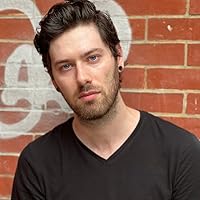
Dr Julie Armstrong was a university lecturer teaching Creative Writing, she now writes full time. Julie worked alongside her partner, Dr Dave Colton, who created an interactive magazine which sold nationally and internationally via their New York agent for many years. Yorkshire TV commissioned them to write TV scripts based on the magazine. Julie gave readings of her published poetry at venues in Manchester.
Her recent work is creative non-fiction, memoirs, which include: The Root & The Wing, Walking The Celtic Wheel and just published, September, 2024, Journal Of A Nature Lover. Her novels are: The Magic Of Wild Things and A Wild Calling. She borrows from faery tales, folklore, myths and legends. Her work has been published by: Cheshire Life, Crocus Books, Bloomsbury, Little Toller, Palgrave Macmillan, The Guardian's Country Diary and Moonflower Press. Julie's writing is often inspired by walking ancient landscapes where she lives in Cheshire; she regularly posts her journal entries on Facebook: m.facebook.com/Julie.armstrong.3323 She loves travel, art galleries, theatre and is a yogini
this is a textbook for university, so I didn't read it by choice. It's a competent, pretty thorgh from what I can judge, introduction to modernist, post-modernist and experimental fiction, with some added exercises for the student, or writer, who's been compelled to study this genre (and, let's face it, it is a genre, although Armstrong shies away from saying that).
Though the author seems keen on experimental fiction, this is just shy of being a polemic, and is a light and enjoyable read. It's not a getting a fourth star for re-readability because I'm going to be forced to refer to as this semester drags on.
The overview of literary techniques and their motivations was useful (especially for the modernist and postmodernist sections), but there is a massive oversimplification of historical conditions and philosophical concepts that borders on completely incorrect. This is neither a history or philosophy book, so that’s fine. But the superficiality in which these elements were explained in relation to writers who deeply understood and incorporated them into their writing is a weakness of the book.
There’s also a ton of typos and oddly phrased sentences that make it irritating to read at points. Some of the prose makes it hard to believe the author is a published novelist and PhD in writing. A lot of this seems like it didn’t get a good copy edit before publication. It would be a three star book without the typos/style issues.
Quite a neat little book. Would have been better if the first three sections (history) were excluded and the last section (what's happening now) was expanded. Some great exercises. Crap editing of bad grammar/punctuation. It just didn't flow well at times.
Neat survey of experimental fiction from modernist era to new era (post-post modern). I enjoy reading a book that expands my “to read” list by 5%. The writing prompts / exercises are mostly useless.