

What do you think?

Deeper Water
A profound and sensuous novel of grace and beauty from a stunning young Australian talent.
Innocent and unworldly, Mema is still living at home with her mother on a remote, lush hinterland property. It is a small, confined, simple sort of life, and Mema is content with it.
One day, during a heavy downpour, Mema saves a stranger from a flooded creek. She takes him into her family home, where, marooned by floods, he has to stay until the waters recede. And without either of them realising it, he opens the door to a new world of possibilities that threaten to sweep Mema into the deep.
Innocent and unworldly, Mema is still living at home with her mother on a remote, lush hinterland property. It is a small, confined, simple sort of life, and Mema is content with it.
One day, during a heavy downpour, Mema saves a stranger from a flooded creek. She takes him into her family home, where, marooned by floods, he has to stay until the waters recede. And without either of them realising it, he opens the door to a new world of possibilities that threaten to sweep Mema into the deep.
384 pages, Paperback
First published August 1, 2014
About the author
Jessie Cole
13 books63 followersJessie Cole is a writer. Her first novel, Darkness on the Edge of Town, was shortlisted for the 2013 ALS Gold Medal and longlisted for the Dobbie Literary Award. Her second novel, Deeper Water, was released in 2014 to critical acclaim. Staying, a memoir, was longlisted for the 2019 Colin Roderick Award and shortlisted for the Victorian Premier’s Literary Award for Non-Fiction. Her latest memoir, Desire, A Reckoning, was released in 2022. She lives in northern New South Wales.
Ratings & Reviews
Friends & Following
Create a free account to discover what your friends think of this book!
Community Reviews
Displaying 1 - 30 of 73 reviews

September 12, 2014
This book has the reader on the edge of their seat within the first two paragraphs, which is an impressive feat in any book, although the opening scenario does have a slightly unreal quality to it. While trying to save a calf that is being born in the middle of a flood, Mema also rescues Hamish, a city slicker who was silly enough to get his car washed off a bridge by the floodwaters. Stranded with Mema and her all-female family on their farm while the flood recedes, professional environmentalist Hamish opens Mema's eyes to the world beyond her own small existence. But good things do come in small packages, and Mema has a thing or two to teach Hamish, too. Think you know where all of this is leading? Well, think again. In DEEPER WATER, there is a palpable feeling that things aren't happening like they do in a storybook, they're happening like they do in life - a bit chaotically, a bit unpredictably, and more than a bit imperfectly.
The story's narrative voice is almost conversational and very authentic - in the first-person telling of her story, Mema says things like "real" instead of "really" and "'cause" instead of "because," but rather than sounding crude, this makes her narrative feel intimate and therefore a privilege to read. It is difficult to describe the narrator's tone as anything other than "very Australian" - and particularly RURAL Australian, to boot. Above all, the narrative voice is very personable, an easy mixture of humor and frankness. It must be said that the author is not shy about including the occasional well-placed expletive, especially in dialog, where it is usually a natural fit. Such inclusions are in no way excessive, though, and should not deter anyone from dipping their toe into DEEPER WATER.
Every character in the book is either interesting, likable, or intriguing, which makes for nary a dull moment. Perhaps the most real, the most perfectly imperfect phenomena in the book are the relationships of all kinds - between parents and children, siblings, friends, strangers. The casual depth of the author's insights here never ceases to be surprising. It is made clear from the start that Mema's family is as dysfunctional as anyone else's, but there are also subtle hints that she has secrets that are buried even deeper and are painful even for her to contemplate privately. While we get to know Mema's family and especially Mema herself quite well, Hamish remains virtually a closed book for much of the time, very good at holding his tongue and playing the enigmatic, mysterious stranger. But if Hamish is enigmatic, Mema's neighbor and best friend, Anja, is positively mercurial, and one of the most fascinating creatures I've encountered in fiction recently. It is because of her that DEEPER WATER contains one of the most moving, succinct, and heart-piercing accounts of the horrifyingly co-dependent relationship between the perpetrator and the victim of domestic violence that I have ever read.
Mema seems so young and inexperienced in matters of the heart that it is easy to forget that she is actually in her early twenties - she usually seems more like sixteen, a difference that is, as we all know, significant at that stage of life - and thus, her more "adult" moments come as a bit of a shock. Her isolated lifestyle has made Mema extremely romantically naive, so that it is easy to vacillate between exasperation with her and a feeling of protectiveness toward her. This book delves deeply into the question: Do men always leave women, sooner or later? Mema's mother and sister have taught her by example that the answer is yes, but does the answer have to be the same for Mema herself? Whatever her answer is, the reader can rest assured that it will be arrived at in unconventional and unexpected ways.
This book gives a most realistic view of small towns in Australia - they're not all CWA meetings, farmers looking for wives, and community spirit, they're often also over-burdened with teenage mothers, drug problems, and family feuds. The residents of the story's small town also make it abundantly clear that the great age-old "Double Standard" (which says that a man who sleeps with many women is to be admired and envied, but a woman who sleeps with even one man is a "slut," a "slag," or a "whore") is still alive and well.
The descriptions of the story's natural surroundings, usually my least favorite part of a book, contain the same earthy, unprepossessing, almost unconscious grace that permeates every other part of the book - the kind of grace that is found in hanging washing out to dry, helping with a calving, or watching a two-year-old child sleep. Mother Nature is a powerful presence in this book, and in more ways than one. In our technologically sophisticated cyber age, the setting of the story is a refreshing return to a world ruled by natural rhythms and events. The world of the book is also very female, vaguely reminiscent of a matriarchal society, in which mothering and nurturing take precedence and womanhood is a closely guarded secret world. There is a raw, exuberant wildness to Mema's life that is intoxicating. Mema's connection to the land she lives on is deeper even than a general love of nature, it is specific and profound - you get the sense that if she ever had to leave it, it would be like a death in the family. Mema does a very effective job of drawing our attention to all of the everyday miracles of nature, giving us the eyes to see again and stare in wonderment at the minutiae of the world we live in. There is quite a pointed juxtaposition in this book between the peace and innocence of nature and children on the one hand and the wanton cruelty and vindictiveness of adults on the other. In many ways, the homage to Nature contained in DEEPER WATER reminds me of Barbara Kingsolver's PRODIGAL SUMMER - a large compliment, indeed, considering Kingsolver is one of my favorite authors.
Animals are a constant, quiet but important presence in this book, and it may be presumptuous to say so, but it really seems as though the author herself must have a particular love and understanding of animals in order to have written about them with such respectful familiarity. The dynamic between Hamish the academic, almost corporate, environmentalist and Mema the hands-on animal lover is an interesting one indeed, and makes for some memorable culture clashes. This book is a rather strident twenty-first century reality check, and the message is loud and clear: Man may not be able to live on bread alone but he CAN live without computers and the Internet! The book makes a very pointed and interesting suggestion that our reliance on modern technology is almost akin to an addiction like alcoholism - and just as unhealthy, because it is so unnatural.
DEEPER WATER is nothing if not unusual. It is a coming-of-age story about a girl becoming a woman, and that in itself is unusual - aren't most of the coming-of-age stories we read about boys becoming men, not girls becoming women? And any female reader will recognize that Mema's entry into womanhood is confusing, fraught, full of high emotions and profound discoveries, and is therefore entirely authentic. It seems apt that Mema greets the sunrise, quietly and alone, so often in this story, since it is essentially the tale of the dawning, the emergence, of her self-identity. Just don't ever make the mistake of stereotyping Mema as one more young woman growing into adulthood. There is nothing stereotypical about Mema, her place, her people ... or her story.
Thank you to NetGalley and the publisher for providing me with an ARC of this book in exchange for my honest review.
The story's narrative voice is almost conversational and very authentic - in the first-person telling of her story, Mema says things like "real" instead of "really" and "'cause" instead of "because," but rather than sounding crude, this makes her narrative feel intimate and therefore a privilege to read. It is difficult to describe the narrator's tone as anything other than "very Australian" - and particularly RURAL Australian, to boot. Above all, the narrative voice is very personable, an easy mixture of humor and frankness. It must be said that the author is not shy about including the occasional well-placed expletive, especially in dialog, where it is usually a natural fit. Such inclusions are in no way excessive, though, and should not deter anyone from dipping their toe into DEEPER WATER.
Every character in the book is either interesting, likable, or intriguing, which makes for nary a dull moment. Perhaps the most real, the most perfectly imperfect phenomena in the book are the relationships of all kinds - between parents and children, siblings, friends, strangers. The casual depth of the author's insights here never ceases to be surprising. It is made clear from the start that Mema's family is as dysfunctional as anyone else's, but there are also subtle hints that she has secrets that are buried even deeper and are painful even for her to contemplate privately. While we get to know Mema's family and especially Mema herself quite well, Hamish remains virtually a closed book for much of the time, very good at holding his tongue and playing the enigmatic, mysterious stranger. But if Hamish is enigmatic, Mema's neighbor and best friend, Anja, is positively mercurial, and one of the most fascinating creatures I've encountered in fiction recently. It is because of her that DEEPER WATER contains one of the most moving, succinct, and heart-piercing accounts of the horrifyingly co-dependent relationship between the perpetrator and the victim of domestic violence that I have ever read.
Mema seems so young and inexperienced in matters of the heart that it is easy to forget that she is actually in her early twenties - she usually seems more like sixteen, a difference that is, as we all know, significant at that stage of life - and thus, her more "adult" moments come as a bit of a shock. Her isolated lifestyle has made Mema extremely romantically naive, so that it is easy to vacillate between exasperation with her and a feeling of protectiveness toward her. This book delves deeply into the question: Do men always leave women, sooner or later? Mema's mother and sister have taught her by example that the answer is yes, but does the answer have to be the same for Mema herself? Whatever her answer is, the reader can rest assured that it will be arrived at in unconventional and unexpected ways.
This book gives a most realistic view of small towns in Australia - they're not all CWA meetings, farmers looking for wives, and community spirit, they're often also over-burdened with teenage mothers, drug problems, and family feuds. The residents of the story's small town also make it abundantly clear that the great age-old "Double Standard" (which says that a man who sleeps with many women is to be admired and envied, but a woman who sleeps with even one man is a "slut," a "slag," or a "whore") is still alive and well.
The descriptions of the story's natural surroundings, usually my least favorite part of a book, contain the same earthy, unprepossessing, almost unconscious grace that permeates every other part of the book - the kind of grace that is found in hanging washing out to dry, helping with a calving, or watching a two-year-old child sleep. Mother Nature is a powerful presence in this book, and in more ways than one. In our technologically sophisticated cyber age, the setting of the story is a refreshing return to a world ruled by natural rhythms and events. The world of the book is also very female, vaguely reminiscent of a matriarchal society, in which mothering and nurturing take precedence and womanhood is a closely guarded secret world. There is a raw, exuberant wildness to Mema's life that is intoxicating. Mema's connection to the land she lives on is deeper even than a general love of nature, it is specific and profound - you get the sense that if she ever had to leave it, it would be like a death in the family. Mema does a very effective job of drawing our attention to all of the everyday miracles of nature, giving us the eyes to see again and stare in wonderment at the minutiae of the world we live in. There is quite a pointed juxtaposition in this book between the peace and innocence of nature and children on the one hand and the wanton cruelty and vindictiveness of adults on the other. In many ways, the homage to Nature contained in DEEPER WATER reminds me of Barbara Kingsolver's PRODIGAL SUMMER - a large compliment, indeed, considering Kingsolver is one of my favorite authors.
Animals are a constant, quiet but important presence in this book, and it may be presumptuous to say so, but it really seems as though the author herself must have a particular love and understanding of animals in order to have written about them with such respectful familiarity. The dynamic between Hamish the academic, almost corporate, environmentalist and Mema the hands-on animal lover is an interesting one indeed, and makes for some memorable culture clashes. This book is a rather strident twenty-first century reality check, and the message is loud and clear: Man may not be able to live on bread alone but he CAN live without computers and the Internet! The book makes a very pointed and interesting suggestion that our reliance on modern technology is almost akin to an addiction like alcoholism - and just as unhealthy, because it is so unnatural.
DEEPER WATER is nothing if not unusual. It is a coming-of-age story about a girl becoming a woman, and that in itself is unusual - aren't most of the coming-of-age stories we read about boys becoming men, not girls becoming women? And any female reader will recognize that Mema's entry into womanhood is confusing, fraught, full of high emotions and profound discoveries, and is therefore entirely authentic. It seems apt that Mema greets the sunrise, quietly and alone, so often in this story, since it is essentially the tale of the dawning, the emergence, of her self-identity. Just don't ever make the mistake of stereotyping Mema as one more young woman growing into adulthood. There is nothing stereotypical about Mema, her place, her people ... or her story.
Thank you to NetGalley and the publisher for providing me with an ARC of this book in exchange for my honest review.

July 11, 2014
Jessie Cole's second novel, Deeper Water, is a graceful, captivating novel introducing Mema, a young woman who lives a simple life with her mother in a remote valley in Northern New South Wales.
Mema is twenty two but, having spent most of her life isolated from wider society, has an innocence more befitting a young teenager, happiest running barefoot in the rain with her only friend, Anja, or watching the sky lighten at dawn. She is not uneducated but is unworldly, with little curiosity about what lies beyond the boundary of the family property. She is naive but not unknowing, aware of her mother's reputation for promiscuity, but uninterested in men or relationships. But everything begins to change for Mema when rescues a stranger, Hamish, from the flooded creek and slowly her 'unknowns become knowns'.
They say every hero has to leave home, but what those first steps are like I’m yet to know"
Deeper Water beautifully explores Mema's belated coming-of-age, her growing awareness of herself, of her desires, and of what the outside world may have to offer her. Mema is a richly drawn character struggling with the emotional changes Hamish's presence awakens, and the way they affect her relationships, with her family, Anja and a neighbour, Billy, in particular.
Deeper Water is also about connection, or the lack there of. Mema is intimately connected to the landscape in which she lives, and the family she loves, but divorced from the wider world. Hamish, despite being horrified by Mema's lack of internet and mobile access, can claim no real anchor, and despite his environmental credentials, has little connection to the land.
The landscape in which Deeper Water is set has character of its own and is brought to life by Cole's evocative descriptions.
"At dusk the creek takes on a certain colour. velvety brown. Without the dapples sunshine, its depths are muted and mysterious and all the creatures seem to come to the surface. The catfish linger on their nests and the eels float by like black ribbons. The turtles perch on the flats of exposed rocks and the kingfishers fly past like the brightest of tailsmans."
With its simple yet elegant prose, and quiet yet deeply felt emotion, Deeper Water is a mesmerising story about a woman's awakening to the possibilities of love and life.

June 18, 2014
4.5★s
Life for Mema was simple, uncomplicated and serene – living on an isolated property with only a small town in the vicinity, she quietly enjoyed her day to day activities. Her mother was a potter and spent her days in the shed creating beautiful pots which they would sell at the markets. Mema’s four brothers had long since left home; her sister Sophie lived nearby with two small children and her best friend Anja was in a cabin up the mountain.
The day of the storm Bessie was about to calve – Mema was with her, drenched to the skin, but calm, helping her through her ordeal. As they neared the bridge over the rushing waters, she tried to stop Bessie getting too close to the creek’s edge – she didn’t want the calf to fall into the water and drown when it was born. Suddenly she spied a car trying to cross the bridge – the water was already above the road and the speed of the current was such that when she saw the car wash sideways into the railing, she wasn’t surprised….
Mema’s rescue of Hamish was something she did as a matter of course – but the ensuing effect of him entering her life was profound. In the days of isolation that followed, small but subtle changes began to occur in Mema. She had no idea that her life was about to be tumbled into turmoil, just like the raging waters of the creek on their property….
This is a truly amazing novel. Beautifully written, evocative and poignant, the innocence of Mema was sweet and pure. A thoroughly enjoyable novel by Aussie author Jessie Cole – a writer I’m going to keep reading. I definitely have no hesitation in recommending this one highly.
With thanks to NetGalley and the publisher for my copy to read and review.
Life for Mema was simple, uncomplicated and serene – living on an isolated property with only a small town in the vicinity, she quietly enjoyed her day to day activities. Her mother was a potter and spent her days in the shed creating beautiful pots which they would sell at the markets. Mema’s four brothers had long since left home; her sister Sophie lived nearby with two small children and her best friend Anja was in a cabin up the mountain.
The day of the storm Bessie was about to calve – Mema was with her, drenched to the skin, but calm, helping her through her ordeal. As they neared the bridge over the rushing waters, she tried to stop Bessie getting too close to the creek’s edge – she didn’t want the calf to fall into the water and drown when it was born. Suddenly she spied a car trying to cross the bridge – the water was already above the road and the speed of the current was such that when she saw the car wash sideways into the railing, she wasn’t surprised….
Mema’s rescue of Hamish was something she did as a matter of course – but the ensuing effect of him entering her life was profound. In the days of isolation that followed, small but subtle changes began to occur in Mema. She had no idea that her life was about to be tumbled into turmoil, just like the raging waters of the creek on their property….
This is a truly amazing novel. Beautifully written, evocative and poignant, the innocence of Mema was sweet and pure. A thoroughly enjoyable novel by Aussie author Jessie Cole – a writer I’m going to keep reading. I definitely have no hesitation in recommending this one highly.
With thanks to NetGalley and the publisher for my copy to read and review.

June 19, 2014
I really, really enjoyed DEEPER WATER. I enjoyed it so much that I am at a loss as to how to review it to give it full justice and no spoilers. I am not sure ‘just because’ is a credible reason as to why I hold the beautiful writing in such high esteem. I am going to give it a try anyway.
Mema is twenty-two and has spent all her life more or less isolated from nearby town and community in their remote NSW home. Home-schooled by her mother, Mema is certainly not uneducated; she is just not very connected to the world outside their property. She is much happier living at one with the land; the flora, the fauna and the creek that runs through it are part of her reason for being – she is at one with it all. The local community have passed judgement on her mother and, as a flow on effect, Mema and her sister. Her mother is a potter who sells her produce in the nearby town and has a reputation for promiscuity because each of her children have had different fathers who have all since moved on. Mema’s brothers have also all left home and there is no contact with them now. Her sister lives nearby with her children but her partner has just abandoned her so when the rain comes and the creek floods she and her children come up to the family home. So it is a very female dominant world that Hamish finds himself in when his car is washed off a bridge while crossing the flooding creek and he is rescued by Mema. For Mema it was just something you do in the bush – lend assistance – but little does she know that when she rescues Hamish from certain death in the raging creek that her contended little universe is going to suddenly expand. Hamish is an Environmental Scientist who is in the area for work; he is a city boy through and through. He is horrified that there is no internet connection, no mobile coverage and the land line doesn’t work; for the first day or so there isn’t even any electricity. And sharing his shower with cane toads does not go down well either, as does the family cat running free. However in the few days that he stays with Mema’s family he learns that simple things like swimming in the creek and running in the rain can be just as enjoyable as being plugged into google. And in return Mema starts to be aware of passions deep inside as she has never spent time alone with a man before, without knowing it Hamish has triggered something deep inside Mema. She is not unaware of sexual attraction – she lives on a farm, and she and she has pleasured herself – but she just hasn’t felt sexual attraction and doesn’t know what to do with it. Having said that DEEPER WATER is not a romance it is a record of the awakening of desire, the awakening of a sleeping woman, the gradual awareness that she can’t ignore the world beyond their property.
The writing is superb – the birth of the calf, the rescue of Hamish, boarding down the creek, and running in the rain. Tension is added in the form of Mema’s wild child friend Anja, another fabulous support character. With a drunken and violent father Anja grew up sleeping rough. Threatened by the arrival of Hamish, Anja is responsible for a disquieting sub-plot in the story. In fact all of the characters that appear fit into their part of the story well; there is not one superfluous character. Each has their role to play, their purpose for being, no one is totally good and no one is totally bad even though some do bad things. DEEPER WATER leaves you thinking long after the last page has been read, and that is how a book should work. As I mentioned earlier, I have really struggled to say why this is such an exquisite story, other than saying that it is beautifully written, evocative and poignant maybe the best I can do is say read it for yourself.
With thanks to Harper Collins and the author via Netgalley for my copy to read and review
Mema is twenty-two and has spent all her life more or less isolated from nearby town and community in their remote NSW home. Home-schooled by her mother, Mema is certainly not uneducated; she is just not very connected to the world outside their property. She is much happier living at one with the land; the flora, the fauna and the creek that runs through it are part of her reason for being – she is at one with it all. The local community have passed judgement on her mother and, as a flow on effect, Mema and her sister. Her mother is a potter who sells her produce in the nearby town and has a reputation for promiscuity because each of her children have had different fathers who have all since moved on. Mema’s brothers have also all left home and there is no contact with them now. Her sister lives nearby with her children but her partner has just abandoned her so when the rain comes and the creek floods she and her children come up to the family home. So it is a very female dominant world that Hamish finds himself in when his car is washed off a bridge while crossing the flooding creek and he is rescued by Mema. For Mema it was just something you do in the bush – lend assistance – but little does she know that when she rescues Hamish from certain death in the raging creek that her contended little universe is going to suddenly expand. Hamish is an Environmental Scientist who is in the area for work; he is a city boy through and through. He is horrified that there is no internet connection, no mobile coverage and the land line doesn’t work; for the first day or so there isn’t even any electricity. And sharing his shower with cane toads does not go down well either, as does the family cat running free. However in the few days that he stays with Mema’s family he learns that simple things like swimming in the creek and running in the rain can be just as enjoyable as being plugged into google. And in return Mema starts to be aware of passions deep inside as she has never spent time alone with a man before, without knowing it Hamish has triggered something deep inside Mema. She is not unaware of sexual attraction – she lives on a farm, and she and she has pleasured herself – but she just hasn’t felt sexual attraction and doesn’t know what to do with it. Having said that DEEPER WATER is not a romance it is a record of the awakening of desire, the awakening of a sleeping woman, the gradual awareness that she can’t ignore the world beyond their property.
The writing is superb – the birth of the calf, the rescue of Hamish, boarding down the creek, and running in the rain. Tension is added in the form of Mema’s wild child friend Anja, another fabulous support character. With a drunken and violent father Anja grew up sleeping rough. Threatened by the arrival of Hamish, Anja is responsible for a disquieting sub-plot in the story. In fact all of the characters that appear fit into their part of the story well; there is not one superfluous character. Each has their role to play, their purpose for being, no one is totally good and no one is totally bad even though some do bad things. DEEPER WATER leaves you thinking long after the last page has been read, and that is how a book should work. As I mentioned earlier, I have really struggled to say why this is such an exquisite story, other than saying that it is beautifully written, evocative and poignant maybe the best I can do is say read it for yourself.
With thanks to Harper Collins and the author via Netgalley for my copy to read and review

August 13, 2014
Mema lives a sheltered life, at home with her mother in a remote cottage deep in bushland. Homeschooled, Mema has rarely ventured beyond the farm, making only brief journeys to the small town nearby and the markets where she and her mother sell their pots.
During heavy summer floods Mema is out tending to a cow who is about to give birth when she sees a car washed off a bridge and into the creek. Thinking quickly, she is able to encourage the driver to smash the window and she helps him get to shore by extending a large branch for him to hold onto. Mema takes him home as there is no where else for him to go. Hamish, an environmental consultant from the city is a fish out of water in the small cottage which loses power in heavy storms, that doesn’t have a computer or the internet.
Hamish has to stay at the cottage with Mema and her mother until the waters recede and he can get to the nearby town. Mema shows him what her life involves – bodyboarding down the swollen creek, exploring the local bush and running in the rain. Sheltered as she has been, Mema has never really spent much time with a man before and he opens up a whole new world of feeling and intrigue for her.
In the last four years, I’ve reviewed a lot of books. Sometimes the words come easy, sometimes I have to coax them. The reasons for the writers block can be varied but I honestly think this is probably the first time I haven’t really known what to write because the book is so beautifully written and I’m not sure how to convey that accurately. It’s now almost two weeks since I read this book, having come down with the flu the day after I finished it. I normally like to write the review as close to finishing the book as possible, so everything is fresh in my mind. However perhaps with this book, time to reflect on it and mull it over in my mind is a bonus, rather than a disadvantage.
Mema is a truly unique character, sheltered from the outside world in many ways. She spends most of her time at her family’s isolated cabin where there’s no television and no computer. Mema’s mother earns just enough money for them to survive by selling the clay pots she makes and Mema contributes too, making mugs and smaller items to sell at markets. There’s an innocence to Mema that’s so utterly charming, she has a really interesting way of looking at nature and the environment. Her surroundings are precious to her and she has love for everything that makes up nature, even the ugly parts that no one else cares for, such as cane toads which are known pests. Seeing the world through Mema’s eyes was somewhat of a revelation as she takes the time to really see and experience what is happening around her. She takes pleasure from the simplest things – running as fast as she can manage in the rain, body boarding down the creek swollen in the floods. Her childlike enthusiasm and wonder is infectious and city boy Hamish finds himself rather swayed by her even as he doesn’t really understand her.
If this book was a romance, Hamish would turn his back on his city life and live happily ever after in the bush with Mema, building them a cabin or something. But that isn’t the way this story unfolds – there’s much more realism in this story. Hamish is trapped with Mema’s family and he is intrigued by her but at the same time it is quite obvious that Mema is innocent in so many ways, not used to men at all. Mema, although aware of her own ability to self-pleasure, has never connected this to another person before and the arrival of Hamish triggers her sexual awakening and feelings involving other people, wanting to be with another person in a way that she hasn’t before. Mema isn’t unaware of sex and she’s certainly aware of her own mother’s reputation surrounding it, but it’s not something that she seems to have ever been interested in for herself, before Hamish.
It’s hard to accurately describe how vivid the writing is in this novel. Every nuance of the bush is so easy to picture – I experienced running in the rain, the bodyboarding down the creek, even Mema pulling Hamish to safety and then searching for the cow had calved, like I was there myself. Mema’s small cabin that she shares with her mother and occasionally her sister and her sister’s two children is wonderfully depicted, right down the the occupants that occasionally invade the shower and freak Hamish out so much. Mema’s friendship with the troubled Anja is full of an unexpected depth and intrigue. I felt a real connection to Mema and her observations about life – she has older brothers who have all left home, some of which they no longer even hear from anymore and yet Mema remains, not quite ready to leave the nest. The world beyond doesn’t seem to interest her as much as her own surroundings do. Hamish shakes her comfortable existence, offers new experiences and feelings and paves the way toward a new future.
I read Jessie Cole’s first novel, Darkness On The Edge Of Town and was impressed by it but this novel showcases her evolution and advancement as a writer. It’s the sort of book that you wish went a bit longer, just so you could keep reading it and experiencing it.
During heavy summer floods Mema is out tending to a cow who is about to give birth when she sees a car washed off a bridge and into the creek. Thinking quickly, she is able to encourage the driver to smash the window and she helps him get to shore by extending a large branch for him to hold onto. Mema takes him home as there is no where else for him to go. Hamish, an environmental consultant from the city is a fish out of water in the small cottage which loses power in heavy storms, that doesn’t have a computer or the internet.
Hamish has to stay at the cottage with Mema and her mother until the waters recede and he can get to the nearby town. Mema shows him what her life involves – bodyboarding down the swollen creek, exploring the local bush and running in the rain. Sheltered as she has been, Mema has never really spent much time with a man before and he opens up a whole new world of feeling and intrigue for her.
In the last four years, I’ve reviewed a lot of books. Sometimes the words come easy, sometimes I have to coax them. The reasons for the writers block can be varied but I honestly think this is probably the first time I haven’t really known what to write because the book is so beautifully written and I’m not sure how to convey that accurately. It’s now almost two weeks since I read this book, having come down with the flu the day after I finished it. I normally like to write the review as close to finishing the book as possible, so everything is fresh in my mind. However perhaps with this book, time to reflect on it and mull it over in my mind is a bonus, rather than a disadvantage.
Mema is a truly unique character, sheltered from the outside world in many ways. She spends most of her time at her family’s isolated cabin where there’s no television and no computer. Mema’s mother earns just enough money for them to survive by selling the clay pots she makes and Mema contributes too, making mugs and smaller items to sell at markets. There’s an innocence to Mema that’s so utterly charming, she has a really interesting way of looking at nature and the environment. Her surroundings are precious to her and she has love for everything that makes up nature, even the ugly parts that no one else cares for, such as cane toads which are known pests. Seeing the world through Mema’s eyes was somewhat of a revelation as she takes the time to really see and experience what is happening around her. She takes pleasure from the simplest things – running as fast as she can manage in the rain, body boarding down the creek swollen in the floods. Her childlike enthusiasm and wonder is infectious and city boy Hamish finds himself rather swayed by her even as he doesn’t really understand her.
If this book was a romance, Hamish would turn his back on his city life and live happily ever after in the bush with Mema, building them a cabin or something. But that isn’t the way this story unfolds – there’s much more realism in this story. Hamish is trapped with Mema’s family and he is intrigued by her but at the same time it is quite obvious that Mema is innocent in so many ways, not used to men at all. Mema, although aware of her own ability to self-pleasure, has never connected this to another person before and the arrival of Hamish triggers her sexual awakening and feelings involving other people, wanting to be with another person in a way that she hasn’t before. Mema isn’t unaware of sex and she’s certainly aware of her own mother’s reputation surrounding it, but it’s not something that she seems to have ever been interested in for herself, before Hamish.
It’s hard to accurately describe how vivid the writing is in this novel. Every nuance of the bush is so easy to picture – I experienced running in the rain, the bodyboarding down the creek, even Mema pulling Hamish to safety and then searching for the cow had calved, like I was there myself. Mema’s small cabin that she shares with her mother and occasionally her sister and her sister’s two children is wonderfully depicted, right down the the occupants that occasionally invade the shower and freak Hamish out so much. Mema’s friendship with the troubled Anja is full of an unexpected depth and intrigue. I felt a real connection to Mema and her observations about life – she has older brothers who have all left home, some of which they no longer even hear from anymore and yet Mema remains, not quite ready to leave the nest. The world beyond doesn’t seem to interest her as much as her own surroundings do. Hamish shakes her comfortable existence, offers new experiences and feelings and paves the way toward a new future.
I read Jessie Cole’s first novel, Darkness On The Edge Of Town and was impressed by it but this novel showcases her evolution and advancement as a writer. It’s the sort of book that you wish went a bit longer, just so you could keep reading it and experiencing it.

August 11, 2014
I just adored this. W20.

January 21, 2020
Loved this book... loved Jessie Coles writing and the characters and setting ... beautifully written. The main character Meme was such a free spirit growing up in a hippy type surrounding with her Mum and sister and a troubled best friend all in the mix... loving the land and animals and caring for both.. innocent but strong and suddenly becoming aware of the incredible passions within her, after saving a guy from drowning...loved her inner journey. Loved the characters of them all.

July 25, 2014
Something rather odd happened when I finished reading Jessie Cole’s second novel last night.
Usually when I finish reading a book, I close the covers, and mull over it for a while. I give it time to settle, like leaving a curry in the fridge overnight to give the flavours a chance to meld together. But at the back of Deeper Water there is something I had never come across before: a section called Q & A with Jessie Cole – and the very first question is, ‘What do you think Deeper Water is about?’ And having spent 337 pages showing the reader what the novel is about, Jessie Cole proceeds to tell us. (To be fair, I doubt if this concept was her idea.)
Like a fool, I read it, and it spoiled the book for me. I was really, really cross. I felt as if I were back at school, being told what to think about what I had read. Because what the author thought this book was about, temporarily swamped what I thought it was about. I had to stomp around the kitchen doing irrelevant housekeeping things for a long time this morning, before I could get the author’s earnest voice out of my head.
Deeper Water is the story of an innocent called Mema whose sheltered world on a bush block is disrupted by a stranger trapped there by floodwaters. This man, Hamish, is an eco-consultant and his world is turned upside-down when he is marooned in a place where there is no internet or phone, and all his possessions are gone. Mema finds herself attracted to Hamish, but her older and wiser sister and mother warn her off. The characterisation is so good that the reader becomes as convinced as Mema that there may be a future for this relationship. So yes, this is a (rather YA) story of sexual awakening, and yes, it’s an homage to getting in touch with the nature from which humans seem to be divorced.
But as discerning readers realise, authors often reveal more of themselves in their books than they know. Deeper Water is a more interesting book than either the author or the creator of those inane Book Group Questions also at the back of the book seem to realise. For once a book is out of the hands of its creator, it belongs to the reader, who makes of it what she will. And I thought there was much more to this story than the rather overwrought sexual awakening of its rather improbable character.
To read the rest of my review please visit http://anzlitlovers.com/2014/08/17/de...
Usually when I finish reading a book, I close the covers, and mull over it for a while. I give it time to settle, like leaving a curry in the fridge overnight to give the flavours a chance to meld together. But at the back of Deeper Water there is something I had never come across before: a section called Q & A with Jessie Cole – and the very first question is, ‘What do you think Deeper Water is about?’ And having spent 337 pages showing the reader what the novel is about, Jessie Cole proceeds to tell us. (To be fair, I doubt if this concept was her idea.)
Like a fool, I read it, and it spoiled the book for me. I was really, really cross. I felt as if I were back at school, being told what to think about what I had read. Because what the author thought this book was about, temporarily swamped what I thought it was about. I had to stomp around the kitchen doing irrelevant housekeeping things for a long time this morning, before I could get the author’s earnest voice out of my head.
Deeper Water is the story of an innocent called Mema whose sheltered world on a bush block is disrupted by a stranger trapped there by floodwaters. This man, Hamish, is an eco-consultant and his world is turned upside-down when he is marooned in a place where there is no internet or phone, and all his possessions are gone. Mema finds herself attracted to Hamish, but her older and wiser sister and mother warn her off. The characterisation is so good that the reader becomes as convinced as Mema that there may be a future for this relationship. So yes, this is a (rather YA) story of sexual awakening, and yes, it’s an homage to getting in touch with the nature from which humans seem to be divorced.
But as discerning readers realise, authors often reveal more of themselves in their books than they know. Deeper Water is a more interesting book than either the author or the creator of those inane Book Group Questions also at the back of the book seem to realise. For once a book is out of the hands of its creator, it belongs to the reader, who makes of it what she will. And I thought there was much more to this story than the rather overwrought sexual awakening of its rather improbable character.
To read the rest of my review please visit http://anzlitlovers.com/2014/08/17/de...

November 20, 2019
Loved this book centred around a strong female character, a 22 year old with a club foot, awakening through her interactions with a stranger she saved from drowning. Jessie Cole writes about sensations so well you can almost experience what she writes about yourself.

November 11, 2018
Cole has crafted an appealing, refreshing and easy-to-read tale which she brings to life with her poetic prose, plot development, Australian hinterland setting and strength of characterisation. Not only are the main characters living in the bush, a-la-natural hippy-style, almost wild and rough as if hewn from the surrounding hills, forest or surging creeks, but this local setting in which this isolated, mystery-of-life thrives, has as much character as the humans we meet. They all somehow meld together naturally and are shrouded in a past of mystery and intrigue yet this landscape, like its characters, has a future unknown. Both are on the verge of change.
Mema is the main narrator and protagonist thereby giving weight through her first-person perspective. She was home-schooled and has a club-foot which she rarely thinks about unless she visits the town and needs to put on her lace-up boots to cope with the man-made surfaces; she otherwise runs free of footwear in her natural habitat....she is not constrained by mechanisms, physically and emotionally...until she goes to town.
At 22 Mema is a free-spirit, at one with nature, yet innocent and unencumbered by not only her birth-deformity but also materialistic values, technology and men. Yet, from our perspective, she seems lonely, though comfortable with only a few close intimate family and friends like Anja, a wild-child in the hills nearby, living with a drunken, widowed father, who we eventually discover, beats Anja. Mema and Anja have a close affinity to their natural world, its animals and insects, and to each other. Their world is a lost world to city-slickers and their 24-7 techno lifestyles.
This is also a strong theme as we too ponder our reliance on our increasingly inhuman connection; more poignant as I'm sitting at my computer now while Mema has never sent an email. But she is fulfilled with her sense of place, the environment, its fauna, flora and landscape topography, especially the waterways. She senses it's life pulsing, the thrill it offers but respects the dangers lurking.
She is always saving, her mother points out. That the plot opens with her saving both a man and a calf is as natural to her way of life as this man's thirst for technology is. It jolts the reader into deeper thought immediately. This life, this plot, has something to offer us.
However it strikes us that perhaps they are like hillbillies, socially backward living ‘out there’, by our standards anyway. Yet deep down, we know they are far more capable of survival than us. They know every inch of their territory and treasure it …from the creeks to the camphor forests, the ochre paint, toads, frogs and ants.
Mema, at 22, lives with her mother who makes large clay pots but an older, recently single, sister Sophie visits with her baby and toddler Rory. This adds a familial bond especially the dialogue with Rory; giving humour, meaning and a realism to the characters and their existence. It’s a a snug and simple home-life, simplistically described too. They seem to yearn for nothing. Not even a man of which their lives are devoid of, with brothers having fled the nest and now rarely, if at all, are heard from.
Indeed, all is about to change as fast as the weather and rising waters. It’s the arrival of Hamish (a travelling environmental consultant), by way of a flooded creek, and who Mema saves with a tree branch, just in time before his hire car is swept away (a tad too unbelievable?), which gives the reader an immediate and suspenseful immersion into the beginning of this plot from page 1. Hamish is the catalyst for this change.
He becomes known henceforth as the ‘flood guy’ who metaphorically opens the flood gates for our main protagonist Mema in an intriguing coming-of-age story with its passionate realisation, yearning and build-up to her sexual awakening.
Slowly, but ever so carefully, un-rushed and contemplative, Cole takes you on Mema’s journey. A life lived as if it’s back in time, out of range from the Western world’s hi-tech lifestyle, away from the pressures of big city living and off-the-grid. Like going outback camping and looking at the stars and moon with clarity, at one with nature, Cole surreptitiously lures the reader into an almost fairy-like, forest existence initially and deploys the experience of her own childhood home (and where she has returned) and comprehension of a lifestyle on the periphery of town in northern NSW. It helps to shape her plot and characters with a simplicity and comfort that draws the reader in.
But there’s a lot more going on than you first realise; events like the flood, as well as the characters, are real and brittle, unexpected and destructive, natural and forceful, surging with life. The characters we meet understand the land, the weather, the forces of change. But not necessarily themselves within the scheme of it all.
They are human, have their own secrets, foibles and desires, developing urges and fears, though are seemingly haunted by the decision to ‘stay’ or ‘leave’ a cherished childhood environment and existence. Four brothers of Sophie and Mema have left. They are the obligatory ‘ghost’ males who once were present but now are gone…but where is the father?
As it turns out, all four boys seem to have different fathers, one was Sophie and Max’s father and many dads, it seems, gave practical contributions in building additions into the basic house structure such as the bathroom with a window view of the bush and frogs in the shower etc. Now the mother holds the hearth intact with her daughter Mema but it is implied that she did not have one partner for long.
And later, the town gossip, via a male assault on Mema who says 'like mother like daughter’, confirms this thought. The free-love, hippy lifestyle gave rise to free-food and lodgings for men if they put their strength into practicalities but then nothing is permanent in this scenario…they are free to leave. You can’t hold onto them forever. But was there a marriage at all with any of the fathers? I can’t recall.
Like their fathers before them, the four sons depart and it would appear, none are committed enough to stay or even remain connected, again like their fathers. Role-models non-existent. Is this Cole's experience?
Thus one can understand the fierce independence of Mema’s mother but her loneliness too is felt in parallel. Her earlier hippy lifestyle might have been fun with little thought of consequences at the time but companionless later in life was not what she expected…or did she? Is this why the mother home-schooled her youngest, Mema? Not wanting to set her free? Or was it to avoid bullying about her club-foot?Keeping Mema as her companion though, can only last so long.…they all fly the nest eventually…
Later in the plot, Frank is the ideal male for Mema's mother, brought to her by Hamish also. Frank is a genuine widowed neighbour who puts flowers at the property gate; he is tentative yet brave, consistent and caring. A most likeable character to save a mother. But it’s the male stranger Hamish who is forced to stay within this all-female house until water levels drop, that surges this inkling of desire in the mother but mostly with her daughter.
This high-tech, city-stranger from ‘out there’, interrupts their rather isolated world by being plucked out from the rising and rapidly flowing floodwaters…by Mema herself as her cow gives birth to a calf at the water’s edge and which Hamish then holds onto with all its bloody placenta etc to carry back up the hill…the act of fertilisation at its fruition with a baby calf is not lost on the reader when you realise that ‘fertility’ is also the meaning of Mema’s name, the mythical Artemesia. But she never uses this name. She symbolically avoids it. It was her mother’s choice for the last of her six children.
The females in this plot, apart from Anja, are tied traditionally to motherhood and nurturing, caring for Sophie’s babies and bolstering their income by selling pottery. But it’s Mema’s forthright mother who also holds tight to her ‘baby-girl’ as she is called, until Mema, later in the plot, tells them otherwise. There is that sense of coming-of-age at this point, at last. But it’s this name which symbolically restrains Mema’s natural growth and development up until then (but which is let free by Billy later; symbolised too by his gentle caressing of her club foot is a most endearing quality of acceptance of who Mema is and that he is probably now going to be her carer in life, replacing the mother and sister). But 'baby-girl' is not used by Billy.
Emotionally, physically and mentally, the name kept Mema a child. It’s this entrapment, like the flood waters upon the family and stranger, that isolate Mema. It takes on an ominous yet thought-provoking nuance in this plot. When the flood level subsides, so too does the direction of Mema’s life. And in enter the male protagonists to lure a mother and daughter. The winds of change.
We see the change occurring when Frank comes to tell them, politely, to ‘tie up the bitch’ pup…but which Mema’s mother becomes distressed over… a fear of what is to come, another child leaving. Blossom the pup, like Mema, is in bloom and on-heat, as the male dog-howlers, like the men in town, especially love-struck Billy, are encroaching fast on the perimeter. It’s a great image and serves as a metaphor and new direction of plot soon after the Old Dog dies (inferring Mema's past life) and after she accepts the new and excitable pup (her future life) from Hamish, the ‘flood guy’.
Blossom is the catalyst for Mema’s future now and even her sister Sophie can sense it, saying to toddler Rory that “Mema’s like a flower blossoming”. Everyone can sense it. It spills over the pages like a rising tide.
Mema is on the verge of her major change…Billy symbolically prowls along the creek at night like the dogs howl for the pup. He has held a ‘torch’ for Mema for years, indicated literally with the torch he uses to lighten the path forward on their paddock treks at night, under the moon (also the mythical meaning of Mema’s full goddess name), but also upon their future. A sexual awakening and deeper mysteries of our wildness emerge in them like it does in animals…our animal instinct.
Billy becomes the hero male who worships Mema and together they forge strong physical intimacies first evoked from Hamish’s presence (and who only wanted Mema as a friend). With Billy, the two experiment with a natural outdoor bed; eroticism on forest floors, in deep creek waters and against camphor tree roots. It’s a tantalising read.
Billy turns up at the right moment and in the right outdoor setting with a creek to swim over to reach her though. He plucks her blooming sexuality gently into a physical reality. Quite a bit of the later part of the plot develops around this and since the floods have receded, as has Hamish, the upbeat sensuality becomes the main theme.
This surge of sexuality, not long after Anja’s sudden surprise kiss, was like a flood itself….awash with feelings ignited initially by the ‘flood guy’…perhaps a metaphor for this animal instinct. And Anja though was more ‘in love’ with Mema than Mema was with her; she was probably homosexual and when she finally departs at the end, burning her past, with memories of her father’s drunken bouts, that left her deeply hurt and bruised, physically and emotionally, she leaves her treasure with Mema. It is symbolic of a relationship that once was, and one that will always will be cherished. Anja chooses to leave but Mema chooses to stay.
Hamish has given her reason to stay also, to find a voice, when he tells her about the felling of her camphor trees, the mill, the frogs etc. But we get the feeling that Hamish’s environmental views and perspective have also changed from spending time with Mema and her family.
But throughout he seems somewhat of a mystery man, not divulging much about his identity, past or future. An enigma. He is a loner, flirts a little with the waitress from The Savoy (a basic cafe unlike its namesake overseas but no doubt typical of small country towns), but Hamish indicates it’s for fun. He doesn’t appear to have a permanent address as he travels, though he gives information to Mema at the end in the hope she will come and visit, as a ‘friend’.
Hamish’s role in the plot has to be Mema’s reflection, to hold up a mirror to her and since there are literally none around the house she rarely sees herself. This is a telling sign of a lack of physical awareness and identity. Hamish activates it in Mema; a new view of the world 'out there' and with it an awareness of men (as also with her mother and Frank).
An arousal in her sexuality, that seemed dormant, occurs. One suspects that he becomes aware of her change especially as Mema tells him she doesn’t “do men”…they share some wonderful conversations and it's how we find out more about Mema, her thoughts and feelings.
But in return, she has given Hamish the gift of furthering his knowledge and understanding of what is beautiful in the fauna and flora of nature, pests included. The enjoyment in life away from a screen....sharing face-painting in ochre, swimming, creek-riding and walks, clay sculpting on the potter’s wheel (a very sensual and erotic activity as per the movie Ghost) etc.
However, Mema gave him the gift of life by saving him…he returned the favour by helping with Bessie’s newborn calf and giving Mema a pup. There was a grateful bond which developed. And it stays at just that; it did not develop into a romantic tale but became something more powerful in essence.
Cole could have turned this into an intimate relationship but instead chose to remove Hamish from the setting and replace it with Billy’s love, a sense of permanency. And you would expect that, if Mema fell pregnant, Billy would move in and together they would raise a family, look after her mother and Frank and care for Sophie and family too…Billy being a strong, practical worker who seems to get jobs done. Another likeable character.
But Hamish’s presence in town gives rise to change; it’s in the air re the forests and animals, the use of the mill etc Hamish has gone from Mema’s life but his actions now have taken on a new angle as a result. You can’t hold back the flood of change but you can try to manoeuvre it safely. He has given Mema hope of a different sort, to save fauna, in her newly acquired adulthood status, minus the ‘baby-girl’ tag.
Hamish gives her inspiration about the rare frogs that look like baby cane toads found in her locale and shower, studied and researched by an active university student. Hamish gives her the contact number. She will find a cause and a passion for her world where she lives and now loves Billy in replacing her childhood friend Anja. There is tremendous growth and certain optimism at the end, even with Anja.
The character of destruction is Jim, Anja’s drunken and brutal father, but her desperate actions wipe the past away and with her fashionista clothing, leaves Mema to be with Billy, though saddened by her choice. Anja is a perplexing character, unique and intriguing, wild yet tamed, athletic and lonely, like a Tarzan of the hills not wanting to be found, hiding in trees and shacks and disappearing for days at a time, the result of a final beating by Jim. She is a tortured soul who has no family other than Mema’s.
She is like a weed out-of-control, running around all over the hills in short skirts and wearing lipstick which seems out-of-kilt with her natural environment and free existence. But her experimentation with her own sexuality and identity is evident even before Mema’s in this instance. You can understand her desperation to escape at the end and hope she is emotionally stable but I have doubts as she said earlier that “everyone leaves me” and she asked Mema to promise her she wouldn’t. That we don’t know what happens to her, as also with Mema’s brothers, raises more questions but also answers some…they escape, they find work, they experience new horizons and the world 'out there'. You feel as if they are all running away from a troubled past to find themselves. And survive well.
In Anja’s mind, being thwarted for Billy was more than she could carry. But her father was sickeningly frightening. She was co-dependent on him which made it worse. Living in natural ways still brings the low side of humanity into being and sadly domestic violence is a sub-theme infused by alcohol. Anja needed to be strong. She had Mema as support. Their bond is what holds them up. You ask, is Mema better off not knowing who her father is then? Did Mema's mother have any experience with Jim?
Anja was a character who observed from afar, hard to pin down, yet she knew how the ‘flood guy’ ignited feelings in Mema. Anja’s jealousy was aroused but you felt that through Mema’s first person narration that she had little understanding of Anja’s true feelings and was stunned when she kissed Mema.
But she was more frightened when they were sprung by Jim. You do wonder what would have eventuated if he did not burst in on them? He was the cataclysmic character for Anja’s decision but who was also his own nemesis. What becomes of him after he is released from lock-up?
This tragic sub-plot added so much to the overall feel of the book and was woven into the story in such a strong and natural manner that the climax of the fire, in opposition to water as life, created opposing elements (like staying or leaving). Along with Billy helping Anja to escape, it gave a superb resolution and respect for this youthful male character in contrast to Jim and thereby making him a hero in Mema’s eyes particularly. He and Frank are the same in strength, care and love for a mother and daughter. A good-feel bit of positivity.
It was a fabulous read. Like the flood, we get swept along too, avidly reading…in fact, the title, ‘Deeper Water’ is apt. And like the flood again, it becomes the metaphor for the plot and its development, characters and setting. It causes havoc and change, stops what was as time stands still until, waiting and watching, anxious and fearful, it recedes, and the protagonists, like the creek and surrounds, the mill and the forest, are no longer the same. Our environment shapes who we are and it needs to be protected is a theme in this plot in the course of change.
Mema knows that too well and she inspires Hamish further. In reverse, she is like a flood of knowledge for him without realising her own impact. It's not until the end when Hamish inspires her to pursue an activism of protection that Mema is awakened anew. An adult authority in the making. A hero in her own right, capturing the words on the first page. She has come of age as has Jessie Cole in her authorial ship.
After finishing we observe with clarity what has survived, what has blossomed, what has been destroyed in this flood induced plot line. And just like fire…after death, there is a renewal and restoration period. The resolution.
It is an evolution of life in the natural world that impacts lives greatly in this story. And upon the reader too. A well-written and most personable story; a page-turner that you can't put down!
Mema is the main narrator and protagonist thereby giving weight through her first-person perspective. She was home-schooled and has a club-foot which she rarely thinks about unless she visits the town and needs to put on her lace-up boots to cope with the man-made surfaces; she otherwise runs free of footwear in her natural habitat....she is not constrained by mechanisms, physically and emotionally...until she goes to town.
At 22 Mema is a free-spirit, at one with nature, yet innocent and unencumbered by not only her birth-deformity but also materialistic values, technology and men. Yet, from our perspective, she seems lonely, though comfortable with only a few close intimate family and friends like Anja, a wild-child in the hills nearby, living with a drunken, widowed father, who we eventually discover, beats Anja. Mema and Anja have a close affinity to their natural world, its animals and insects, and to each other. Their world is a lost world to city-slickers and their 24-7 techno lifestyles.
This is also a strong theme as we too ponder our reliance on our increasingly inhuman connection; more poignant as I'm sitting at my computer now while Mema has never sent an email. But she is fulfilled with her sense of place, the environment, its fauna, flora and landscape topography, especially the waterways. She senses it's life pulsing, the thrill it offers but respects the dangers lurking.
She is always saving, her mother points out. That the plot opens with her saving both a man and a calf is as natural to her way of life as this man's thirst for technology is. It jolts the reader into deeper thought immediately. This life, this plot, has something to offer us.
However it strikes us that perhaps they are like hillbillies, socially backward living ‘out there’, by our standards anyway. Yet deep down, we know they are far more capable of survival than us. They know every inch of their territory and treasure it …from the creeks to the camphor forests, the ochre paint, toads, frogs and ants.
Mema, at 22, lives with her mother who makes large clay pots but an older, recently single, sister Sophie visits with her baby and toddler Rory. This adds a familial bond especially the dialogue with Rory; giving humour, meaning and a realism to the characters and their existence. It’s a a snug and simple home-life, simplistically described too. They seem to yearn for nothing. Not even a man of which their lives are devoid of, with brothers having fled the nest and now rarely, if at all, are heard from.
Indeed, all is about to change as fast as the weather and rising waters. It’s the arrival of Hamish (a travelling environmental consultant), by way of a flooded creek, and who Mema saves with a tree branch, just in time before his hire car is swept away (a tad too unbelievable?), which gives the reader an immediate and suspenseful immersion into the beginning of this plot from page 1. Hamish is the catalyst for this change.
He becomes known henceforth as the ‘flood guy’ who metaphorically opens the flood gates for our main protagonist Mema in an intriguing coming-of-age story with its passionate realisation, yearning and build-up to her sexual awakening.
Slowly, but ever so carefully, un-rushed and contemplative, Cole takes you on Mema’s journey. A life lived as if it’s back in time, out of range from the Western world’s hi-tech lifestyle, away from the pressures of big city living and off-the-grid. Like going outback camping and looking at the stars and moon with clarity, at one with nature, Cole surreptitiously lures the reader into an almost fairy-like, forest existence initially and deploys the experience of her own childhood home (and where she has returned) and comprehension of a lifestyle on the periphery of town in northern NSW. It helps to shape her plot and characters with a simplicity and comfort that draws the reader in.
But there’s a lot more going on than you first realise; events like the flood, as well as the characters, are real and brittle, unexpected and destructive, natural and forceful, surging with life. The characters we meet understand the land, the weather, the forces of change. But not necessarily themselves within the scheme of it all.
They are human, have their own secrets, foibles and desires, developing urges and fears, though are seemingly haunted by the decision to ‘stay’ or ‘leave’ a cherished childhood environment and existence. Four brothers of Sophie and Mema have left. They are the obligatory ‘ghost’ males who once were present but now are gone…but where is the father?
As it turns out, all four boys seem to have different fathers, one was Sophie and Max’s father and many dads, it seems, gave practical contributions in building additions into the basic house structure such as the bathroom with a window view of the bush and frogs in the shower etc. Now the mother holds the hearth intact with her daughter Mema but it is implied that she did not have one partner for long.
And later, the town gossip, via a male assault on Mema who says 'like mother like daughter’, confirms this thought. The free-love, hippy lifestyle gave rise to free-food and lodgings for men if they put their strength into practicalities but then nothing is permanent in this scenario…they are free to leave. You can’t hold onto them forever. But was there a marriage at all with any of the fathers? I can’t recall.
Like their fathers before them, the four sons depart and it would appear, none are committed enough to stay or even remain connected, again like their fathers. Role-models non-existent. Is this Cole's experience?
Thus one can understand the fierce independence of Mema’s mother but her loneliness too is felt in parallel. Her earlier hippy lifestyle might have been fun with little thought of consequences at the time but companionless later in life was not what she expected…or did she? Is this why the mother home-schooled her youngest, Mema? Not wanting to set her free? Or was it to avoid bullying about her club-foot?Keeping Mema as her companion though, can only last so long.…they all fly the nest eventually…
Later in the plot, Frank is the ideal male for Mema's mother, brought to her by Hamish also. Frank is a genuine widowed neighbour who puts flowers at the property gate; he is tentative yet brave, consistent and caring. A most likeable character to save a mother. But it’s the male stranger Hamish who is forced to stay within this all-female house until water levels drop, that surges this inkling of desire in the mother but mostly with her daughter.
This high-tech, city-stranger from ‘out there’, interrupts their rather isolated world by being plucked out from the rising and rapidly flowing floodwaters…by Mema herself as her cow gives birth to a calf at the water’s edge and which Hamish then holds onto with all its bloody placenta etc to carry back up the hill…the act of fertilisation at its fruition with a baby calf is not lost on the reader when you realise that ‘fertility’ is also the meaning of Mema’s name, the mythical Artemesia. But she never uses this name. She symbolically avoids it. It was her mother’s choice for the last of her six children.
The females in this plot, apart from Anja, are tied traditionally to motherhood and nurturing, caring for Sophie’s babies and bolstering their income by selling pottery. But it’s Mema’s forthright mother who also holds tight to her ‘baby-girl’ as she is called, until Mema, later in the plot, tells them otherwise. There is that sense of coming-of-age at this point, at last. But it’s this name which symbolically restrains Mema’s natural growth and development up until then (but which is let free by Billy later; symbolised too by his gentle caressing of her club foot is a most endearing quality of acceptance of who Mema is and that he is probably now going to be her carer in life, replacing the mother and sister). But 'baby-girl' is not used by Billy.
Emotionally, physically and mentally, the name kept Mema a child. It’s this entrapment, like the flood waters upon the family and stranger, that isolate Mema. It takes on an ominous yet thought-provoking nuance in this plot. When the flood level subsides, so too does the direction of Mema’s life. And in enter the male protagonists to lure a mother and daughter. The winds of change.
We see the change occurring when Frank comes to tell them, politely, to ‘tie up the bitch’ pup…but which Mema’s mother becomes distressed over… a fear of what is to come, another child leaving. Blossom the pup, like Mema, is in bloom and on-heat, as the male dog-howlers, like the men in town, especially love-struck Billy, are encroaching fast on the perimeter. It’s a great image and serves as a metaphor and new direction of plot soon after the Old Dog dies (inferring Mema's past life) and after she accepts the new and excitable pup (her future life) from Hamish, the ‘flood guy’.
Blossom is the catalyst for Mema’s future now and even her sister Sophie can sense it, saying to toddler Rory that “Mema’s like a flower blossoming”. Everyone can sense it. It spills over the pages like a rising tide.
Mema is on the verge of her major change…Billy symbolically prowls along the creek at night like the dogs howl for the pup. He has held a ‘torch’ for Mema for years, indicated literally with the torch he uses to lighten the path forward on their paddock treks at night, under the moon (also the mythical meaning of Mema’s full goddess name), but also upon their future. A sexual awakening and deeper mysteries of our wildness emerge in them like it does in animals…our animal instinct.
Billy becomes the hero male who worships Mema and together they forge strong physical intimacies first evoked from Hamish’s presence (and who only wanted Mema as a friend). With Billy, the two experiment with a natural outdoor bed; eroticism on forest floors, in deep creek waters and against camphor tree roots. It’s a tantalising read.
Billy turns up at the right moment and in the right outdoor setting with a creek to swim over to reach her though. He plucks her blooming sexuality gently into a physical reality. Quite a bit of the later part of the plot develops around this and since the floods have receded, as has Hamish, the upbeat sensuality becomes the main theme.
This surge of sexuality, not long after Anja’s sudden surprise kiss, was like a flood itself….awash with feelings ignited initially by the ‘flood guy’…perhaps a metaphor for this animal instinct. And Anja though was more ‘in love’ with Mema than Mema was with her; she was probably homosexual and when she finally departs at the end, burning her past, with memories of her father’s drunken bouts, that left her deeply hurt and bruised, physically and emotionally, she leaves her treasure with Mema. It is symbolic of a relationship that once was, and one that will always will be cherished. Anja chooses to leave but Mema chooses to stay.
Hamish has given her reason to stay also, to find a voice, when he tells her about the felling of her camphor trees, the mill, the frogs etc. But we get the feeling that Hamish’s environmental views and perspective have also changed from spending time with Mema and her family.
But throughout he seems somewhat of a mystery man, not divulging much about his identity, past or future. An enigma. He is a loner, flirts a little with the waitress from The Savoy (a basic cafe unlike its namesake overseas but no doubt typical of small country towns), but Hamish indicates it’s for fun. He doesn’t appear to have a permanent address as he travels, though he gives information to Mema at the end in the hope she will come and visit, as a ‘friend’.
Hamish’s role in the plot has to be Mema’s reflection, to hold up a mirror to her and since there are literally none around the house she rarely sees herself. This is a telling sign of a lack of physical awareness and identity. Hamish activates it in Mema; a new view of the world 'out there' and with it an awareness of men (as also with her mother and Frank).
An arousal in her sexuality, that seemed dormant, occurs. One suspects that he becomes aware of her change especially as Mema tells him she doesn’t “do men”…they share some wonderful conversations and it's how we find out more about Mema, her thoughts and feelings.
But in return, she has given Hamish the gift of furthering his knowledge and understanding of what is beautiful in the fauna and flora of nature, pests included. The enjoyment in life away from a screen....sharing face-painting in ochre, swimming, creek-riding and walks, clay sculpting on the potter’s wheel (a very sensual and erotic activity as per the movie Ghost) etc.
However, Mema gave him the gift of life by saving him…he returned the favour by helping with Bessie’s newborn calf and giving Mema a pup. There was a grateful bond which developed. And it stays at just that; it did not develop into a romantic tale but became something more powerful in essence.
Cole could have turned this into an intimate relationship but instead chose to remove Hamish from the setting and replace it with Billy’s love, a sense of permanency. And you would expect that, if Mema fell pregnant, Billy would move in and together they would raise a family, look after her mother and Frank and care for Sophie and family too…Billy being a strong, practical worker who seems to get jobs done. Another likeable character.
But Hamish’s presence in town gives rise to change; it’s in the air re the forests and animals, the use of the mill etc Hamish has gone from Mema’s life but his actions now have taken on a new angle as a result. You can’t hold back the flood of change but you can try to manoeuvre it safely. He has given Mema hope of a different sort, to save fauna, in her newly acquired adulthood status, minus the ‘baby-girl’ tag.
Hamish gives her inspiration about the rare frogs that look like baby cane toads found in her locale and shower, studied and researched by an active university student. Hamish gives her the contact number. She will find a cause and a passion for her world where she lives and now loves Billy in replacing her childhood friend Anja. There is tremendous growth and certain optimism at the end, even with Anja.
The character of destruction is Jim, Anja’s drunken and brutal father, but her desperate actions wipe the past away and with her fashionista clothing, leaves Mema to be with Billy, though saddened by her choice. Anja is a perplexing character, unique and intriguing, wild yet tamed, athletic and lonely, like a Tarzan of the hills not wanting to be found, hiding in trees and shacks and disappearing for days at a time, the result of a final beating by Jim. She is a tortured soul who has no family other than Mema’s.
She is like a weed out-of-control, running around all over the hills in short skirts and wearing lipstick which seems out-of-kilt with her natural environment and free existence. But her experimentation with her own sexuality and identity is evident even before Mema’s in this instance. You can understand her desperation to escape at the end and hope she is emotionally stable but I have doubts as she said earlier that “everyone leaves me” and she asked Mema to promise her she wouldn’t. That we don’t know what happens to her, as also with Mema’s brothers, raises more questions but also answers some…they escape, they find work, they experience new horizons and the world 'out there'. You feel as if they are all running away from a troubled past to find themselves. And survive well.
In Anja’s mind, being thwarted for Billy was more than she could carry. But her father was sickeningly frightening. She was co-dependent on him which made it worse. Living in natural ways still brings the low side of humanity into being and sadly domestic violence is a sub-theme infused by alcohol. Anja needed to be strong. She had Mema as support. Their bond is what holds them up. You ask, is Mema better off not knowing who her father is then? Did Mema's mother have any experience with Jim?
Anja was a character who observed from afar, hard to pin down, yet she knew how the ‘flood guy’ ignited feelings in Mema. Anja’s jealousy was aroused but you felt that through Mema’s first person narration that she had little understanding of Anja’s true feelings and was stunned when she kissed Mema.
But she was more frightened when they were sprung by Jim. You do wonder what would have eventuated if he did not burst in on them? He was the cataclysmic character for Anja’s decision but who was also his own nemesis. What becomes of him after he is released from lock-up?
This tragic sub-plot added so much to the overall feel of the book and was woven into the story in such a strong and natural manner that the climax of the fire, in opposition to water as life, created opposing elements (like staying or leaving). Along with Billy helping Anja to escape, it gave a superb resolution and respect for this youthful male character in contrast to Jim and thereby making him a hero in Mema’s eyes particularly. He and Frank are the same in strength, care and love for a mother and daughter. A good-feel bit of positivity.
It was a fabulous read. Like the flood, we get swept along too, avidly reading…in fact, the title, ‘Deeper Water’ is apt. And like the flood again, it becomes the metaphor for the plot and its development, characters and setting. It causes havoc and change, stops what was as time stands still until, waiting and watching, anxious and fearful, it recedes, and the protagonists, like the creek and surrounds, the mill and the forest, are no longer the same. Our environment shapes who we are and it needs to be protected is a theme in this plot in the course of change.
Mema knows that too well and she inspires Hamish further. In reverse, she is like a flood of knowledge for him without realising her own impact. It's not until the end when Hamish inspires her to pursue an activism of protection that Mema is awakened anew. An adult authority in the making. A hero in her own right, capturing the words on the first page. She has come of age as has Jessie Cole in her authorial ship.
After finishing we observe with clarity what has survived, what has blossomed, what has been destroyed in this flood induced plot line. And just like fire…after death, there is a renewal and restoration period. The resolution.
It is an evolution of life in the natural world that impacts lives greatly in this story. And upon the reader too. A well-written and most personable story; a page-turner that you can't put down!

May 23, 2018
an enjoyable read
January 22, 2020
A wonderful book by one of my favourite authors.

January 29, 2015
Meme has been enjoying the simple life in Northern News South Wales; that was until she saves the life of Hamish in a heavy summer downpour. Cut off from the rest of world Hamish discovers a world cut off from technology. During this time with this stranger in the house, Meme also learns about the world outside of her own.
Jessie Cole’s novel Deeper Waters is a coming of age story about the sexual awakening of twenty-something year old Meme. However it is also a culture clash novel between the lifestyle people in the city (Hamish) are used to and just how different the rural outback can be. Both Meme and Hamish are from the same country but their lives are very different. Growing up with technology, it is hard to see a world without it and interestingly enough Deeper Waters manages to capture this perfectly. At times you think you are reading a book set in the 1970s or early 1980s but then the mention of technology reminds you that this is a book set in current times.
This was a book club pick and not something I would generally pick up on my own but it did make an interesting choice to discuss. However, I found the character development a little problematic; Meme was well developed but Hamish was very two dimensional and her best friend Anja was just a pile of clichés. The book did show a lot of promise for this emerging Australian author, her writing was solid and atmospheric but she could have developed all the other characters a whole lot more.
I really did enjoy the culture clash but after that the book did fall a little short. There was one thing that was mentioned in our book club discussion that I did not pick up on but now seems to bother me. Meme has a clubfoot (congenital talipes equinovarus) which is a birth defect that you do not really hear about these days, due to the advancement of medical treatments. However this might be a sign of the area Meme grew up in but all I can think now is that Hamish travelled back to the 1970s.
Deeper Waters is an interesting book to discuss however there are so many novels about the sexual awakening that explore this topic so much better. I am glad I read this Australian novel but I feel like Jessie Cole had the opportunity to do a lot more with the book but didn’t take it. Having said that, it is still a good read and Cole is an author worth watching. I have heard from multiple reviewers that Jessie Coles has improved greatly since her first novel, so that must mean her next book will be well worth checking out.
This review originally appeared on my blog; http://literary-exploration.com/2015/...
Jessie Cole’s novel Deeper Waters is a coming of age story about the sexual awakening of twenty-something year old Meme. However it is also a culture clash novel between the lifestyle people in the city (Hamish) are used to and just how different the rural outback can be. Both Meme and Hamish are from the same country but their lives are very different. Growing up with technology, it is hard to see a world without it and interestingly enough Deeper Waters manages to capture this perfectly. At times you think you are reading a book set in the 1970s or early 1980s but then the mention of technology reminds you that this is a book set in current times.
This was a book club pick and not something I would generally pick up on my own but it did make an interesting choice to discuss. However, I found the character development a little problematic; Meme was well developed but Hamish was very two dimensional and her best friend Anja was just a pile of clichés. The book did show a lot of promise for this emerging Australian author, her writing was solid and atmospheric but she could have developed all the other characters a whole lot more.
I really did enjoy the culture clash but after that the book did fall a little short. There was one thing that was mentioned in our book club discussion that I did not pick up on but now seems to bother me. Meme has a clubfoot (congenital talipes equinovarus) which is a birth defect that you do not really hear about these days, due to the advancement of medical treatments. However this might be a sign of the area Meme grew up in but all I can think now is that Hamish travelled back to the 1970s.
Deeper Waters is an interesting book to discuss however there are so many novels about the sexual awakening that explore this topic so much better. I am glad I read this Australian novel but I feel like Jessie Cole had the opportunity to do a lot more with the book but didn’t take it. Having said that, it is still a good read and Cole is an author worth watching. I have heard from multiple reviewers that Jessie Coles has improved greatly since her first novel, so that must mean her next book will be well worth checking out.
This review originally appeared on my blog; http://literary-exploration.com/2015/...

July 8, 2014
Jessie Cole's Deeper Water is the story of Mema, a young woman who has lived most of her life in remote Australian hinterland. This is a simple, albeit isolated life, social contact limited to her family and a few others, just as isolated as Mema is herself, if not more so. Mema is content with this life, happy to remain within her own little bubble. However, her rescue of a strange man, trapped in a flooding creek, becomes a catalyst for change and growth.
This is a truly awesome novel, which had me hooked from the opening line:
Cole's characters are rich and detailed. No one – at least no one present in the narrative – is painted wholly good or wholly bad, with their flaws and good traits allowed to shine. For example, Hamish – the stranger than Mema rescues – is allowed to be seen as both incredibly and thoughtful and a man who uses women for his own gratification. I also particularly adored Anja and was a little sad that we didn't see more of her.
Mema's home, and the nearby town and community, are well developed, showing both the beautiful and ugly sides to this small, often close-minded, community. Setting is paramount in this story and Cole delivers beautifully.
I really, really loved the complexity of Mema's relationships with Hamish and the local boy, Billy. The relationships could easily be reduced to overly simplistic, somewhat stereotypical tropes. Hamish, while serving as the catalyst for Mema's growth, is not presented as someone who opens doors for Mema, whisking her off to a new, better life. Nor is the character of Billy used as a rebound figure, to ground Mema after a flight of fancy.
I'm really struggling to write this review because Deeper Water is such a stunning book. I don't feel like I can properly do it justice but I do highly recommend it.
Disclaimer: I received a free copy of this book from the publishers via Netgalley for review.
This is a truly awesome novel, which had me hooked from the opening line:
They say every hero has to leave home, but what those first steps are like I'm yet to know.Like Mema's world, the novel Jessie Cole has crafted is undeniably beautiful and haunting. The prose is deft and light (but never light-weight), allowing this sense of calmness and quietness to permeate, but it maintains a sense of rawness and perfectly captures Mema's confusion and growth throughout the story. Imagine a lake. The surface is calm, barely a ripple, but underneath, the water is teaming with life and movement. That's Jessie Cole's writing.
Cole's characters are rich and detailed. No one – at least no one present in the narrative – is painted wholly good or wholly bad, with their flaws and good traits allowed to shine. For example, Hamish – the stranger than Mema rescues – is allowed to be seen as both incredibly and thoughtful and a man who uses women for his own gratification. I also particularly adored Anja and was a little sad that we didn't see more of her.
Mema's home, and the nearby town and community, are well developed, showing both the beautiful and ugly sides to this small, often close-minded, community. Setting is paramount in this story and Cole delivers beautifully.
I really, really loved the complexity of Mema's relationships with Hamish and the local boy, Billy. The relationships could easily be reduced to overly simplistic, somewhat stereotypical tropes. Hamish, while serving as the catalyst for Mema's growth, is not presented as someone who opens doors for Mema, whisking her off to a new, better life. Nor is the character of Billy used as a rebound figure, to ground Mema after a flight of fancy.
I'm really struggling to write this review because Deeper Water is such a stunning book. I don't feel like I can properly do it justice but I do highly recommend it.
Disclaimer: I received a free copy of this book from the publishers via Netgalley for review.

September 3, 2014
After reading some of the reviews for this book I started to think I had missed something. People were raving. People loved this book. People adored it. Five stars. I'd give it 3.5 if I could. I'm not going higher because I just couldn't connect with it, I didn't mind the characters or the story, but it didn't feel right to me. I found it tedious in sections and wanted the story to move... To do something more! It was like falling asleep during a movie, waking up when things happened. I think that's the thing. I want more from my books, I want a different reader experience. I can appreciate the style and quality of the writing and would deliver praise on that score but in terms of the book's substance let's just say it just didn't move me. Glad I read it but I wouldn't write home about it.

July 25, 2014
I really wanted to like this, and the writing and atmosphere are solid, but the whole sexual awakening of the naive Mena didn't really work for me. Mena was a frustrating character - implausibly innocent and clueless about the world - so having the story come from her perspective left me struggling to engage.

Read
August 17, 2016This was the first book I read by Jessie Cole. I loved it so much I went back and read her first novel. Her sense of place is so evocative. I know this country and she portrays it so vividly I feel like I am there with her characters. Her protagonist Mema, in particular, is beautifully drawn. Highly recommend this.

August 6, 2014
A beautiful voice that has captured the sense of isolation but also connection with nature of a young woman growing up in rural NSW. Reminded me a bit of Tim Winton. Low on plot twists but high on beautiful poetic imagery.

October 4, 2014
Enjoyed getting to know Mema and her unfolding journey. I know jessie Cole and it was as is she was talking to me when she described the landscape in the story Another beautiful book from such a talented writer.

May 16, 2015
It’s a quiet story that did keep me enthralled. The characters were raw and real with beautiful and ugly sides to the story. Complex, unpredictable relationships, old wooden crumbling farmhouses and seemingly an untouched natural world, bringing sex and nature aligned for an engaging read.
November 21, 2015
Wonderful Australian drama, rich and powerful language. There are so many good Aussie writers worth reading!

August 8, 2019
Though beautifully written, I just wasn’t a fan of the story.

March 14, 2018
Well I wouldn't call myself a reviewer. There seems to be heaps of reviews, so it's probably best just to tell you some thoughts :)
It's a great story. The simpleness of life of Mema and her family is refreshing to read, and you just find yourself engrossed in each page.
If you have too many expectations of a book, then you will find yourself disappointed, though to me, this was beautifully written and you can follow Mema, her friends, her township, the ups, the downs, the colourfulness of her siblings and mother and the lushness of her surroundings.
Not being raised in the city was most probably why it grabbed my attention.
Sit back, pick up this book and enjoy :)
It's a great story. The simpleness of life of Mema and her family is refreshing to read, and you just find yourself engrossed in each page.
If you have too many expectations of a book, then you will find yourself disappointed, though to me, this was beautifully written and you can follow Mema, her friends, her township, the ups, the downs, the colourfulness of her siblings and mother and the lushness of her surroundings.
Not being raised in the city was most probably why it grabbed my attention.
Sit back, pick up this book and enjoy :)
July 13, 2020
Although the location is not specified, this book transports you to the humid hinterland of northern NSW. It is beautifully written, honest and raw. It evokes the innocence and curiosity of youth and also of the unique and almost isolating wisdom and intuitiveness of someone who has grown up in nature, spared from the oppressiveness of technology and metropolitan society.

July 2, 2019
Something a little different than the usual tale of life in the Australian bush. I loved how Mema’s relationship with the environment, her family and best friend is all interwoven throughout the time of her sexual awakening.
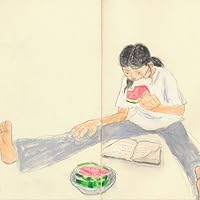
December 24, 2017
it was ok in the beginning but boring overall especially the middle to end.

August 6, 2023
Highly recommend - puts you into another world for a while

November 27, 2023
3.5 stars

January 9, 2025
Loved it so much I didn’t want it to be over but I couldn’t put it down.
Displaying 1 - 30 of 73 reviews