

What do you think?
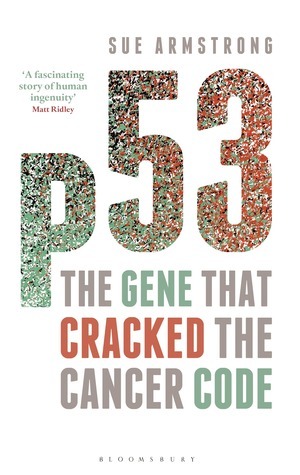
p53: The Gene that Cracked the Cancer Code
All of us have lurking in our DNA a most remarkable gene. Its job is to protect us from cancer. This gene--known simply as p53--constantly scans our cells to ensure that when they grow and divide as part of the routine maintenance of our bodies, they do so without mishap. If a cell makes a mistake in copying its DNA during the process of division, p53 stops it in its tracks, sending in the repair team before allowing the cell to carry on dividing. If the mistake is irreparable and the rogue cell threatens to grow out of control (as happens in cancer), p53 commands the cell to commit suicide. Cancer cannot develop unless p53 itself is damaged or handicapped by some other fault in the system. Not surprisingly, p53 is the most studied single gene in history.
p53: The Gene that Cracked the Cancer Code tells the story of the discovery of the gene and of medical science's mission to unravel its mysteries and get to the heart of what happens in our cells when they turn cancerous. Through the personal accounts of key researchers, the book reveals the excitement of the hunt for new cures--the hype, the enthusiasm, the lost opportunities, the blind alleys and the thrilling breakthroughs. As the long-anticipated revolution in cancer treatment tailored to each individual patient's symptoms starts to take off at last, p53 is at the cutting edge. This is a timely tale of scientific discovery and advances in our understanding of a disease that still affects more than one in three of us at some point in our lives.
p53: The Gene that Cracked the Cancer Code tells the story of the discovery of the gene and of medical science's mission to unravel its mysteries and get to the heart of what happens in our cells when they turn cancerous. Through the personal accounts of key researchers, the book reveals the excitement of the hunt for new cures--the hype, the enthusiasm, the lost opportunities, the blind alleys and the thrilling breakthroughs. As the long-anticipated revolution in cancer treatment tailored to each individual patient's symptoms starts to take off at last, p53 is at the cutting edge. This is a timely tale of scientific discovery and advances in our understanding of a disease that still affects more than one in three of us at some point in our lives.
288 pages, Hardcover
First published November 20, 2014
Ratings & Reviews
Friends & Following
Create a free account to discover what your friends think of this book!
Community Reviews
Displaying 1 - 30 of 88 reviews

May 1, 2016
This book was pitched wrong for me given my degree involved biochemistry and molecular biology and I worked on a cancer journal for a couple of years, but I rattled through it regardless for the handful of interesting nuggets it provided, filling in the history of familiar topics. However, I would have liked much more detail, if not on the science then at least on the people and personalities.
The style was somewhat formulaic and journalistic, making it a lighter, though far far less satisfying, read than The Emperor of All Maladies. It seems unfair to compare it to that masterpiece though, as it is not trying to emulate that and it certainly has something of its own to offer. Although Armstrong seriously overuses the word "serendipitous", I enjoyed various little anecdotes about how chance can complement the hard work and ingenuity of researchers, such as when the temperature-sensitive mutant of p53 was discovered because of a faulty thermostat, and work against progress as findings that emerge before the world is ready for them sink without trace.
Not a bad book at all and worth picking up if you like pop-science and don't know much about the molecular biology of cancer.
The style was somewhat formulaic and journalistic, making it a lighter, though far far less satisfying, read than The Emperor of All Maladies. It seems unfair to compare it to that masterpiece though, as it is not trying to emulate that and it certainly has something of its own to offer. Although Armstrong seriously overuses the word "serendipitous", I enjoyed various little anecdotes about how chance can complement the hard work and ingenuity of researchers, such as when the temperature-sensitive mutant of p53 was discovered because of a faulty thermostat, and work against progress as findings that emerge before the world is ready for them sink without trace.
Not a bad book at all and worth picking up if you like pop-science and don't know much about the molecular biology of cancer.

January 14, 2015
As newer molecular truths about cancers get unfurled every day, newer pharmacological targets get identified and novel treatment modalities go for trial, the thirst for a binded narrative to this barely half-a-century old and continuously unfolding story of knowing and beating the cancer cell is clearly there. Close on the heels of the first successful oncology pop science juggernaut The Emperor of Maladies by Siddharth Mukherjee comes Sue Armstrong's p53, although she has spared giving it an anthropomorphic subtitle, despite penning a biography-of-sorts for the gene.
The pitch here is that p53 being the most studied gene in history of genetics requires it's own tome. While I feel uncertain about such atomised celebration of a small particle selectively chipped from a vastly interconnected and integrated science, I can see how as a publishing decision this was necessary to take something from the footnotes of medical textbooks and abstracts of biomedical journals to have it ready and digestible for pop science readers. I felt a bit queasy seeing one of the heavily profiled scientists within the book's pages endorsing it on the back cover making me wonder if the book is also probably a veiled soft-sell for the Big Pharma and other undeclared stakeholders to take notice and pump resources in its direction, but maybe it's just me reading too much into things. To Armstrong's credit, her deceptively simple prose does articulate the complex cellular realities and terminologies without much fuss and patronising for a casual, genetics and cell biology virgin reader. Rest assured, by the time you have flipped that last page, you'll know how different apoptosis is from senescence and not confuse shrinkage necrosis with linkage analysis. In the same breath I must add that the writing's simplicity makes the book cramp under the accumulated burden of information that gets presented in successive, predictable chunks of an oncology-concept tagged to a transcription of a conversation and a life-montage of a new researcher. The brain-fog one experiences after reading it cover-to-cover is akin to reading an elongated longread piece in a weekly.
The book, divided into twenty bite-size chapters gives a fairly interesting account of the discovery and re-discovery of the titular gene. It's change of status from being an oncogene to a tumour suppressor one to then behaving as a bit of both, along with its role as a transcription factor that adds more scaffolding to its monumental yet mysterious role in cancerous and normal cells certainly kept my attention. Seen as a model representative of the zillions of small genes being tested in research centers around the world, it instructs on two levels: Firstly, the holographic and complex nature of these coding fragments that are more heterogeneous in behaviour than all the concerted imagination of the researchers working for years on them is fascinating. With the different in-vitro and in-vivo manners, the multi-fangled downstream effects on cell's life cycle and longevity, the myriad of ways in which the gene interacts with the external environment or mutagenic substances, there is no wonder that the scientific thinking with its consequent detection and targetting technologies is always a step behind. The second connected triumph is absorbing oneself in an etymological narrative of scientific thought: how observing a new sub-cellular behaviour, contrasting it with known paradigms and facts, then reporting and naming it transforms it into an integral part of the future science and sprouts a next batch of enquiries that are each be pursued in the laboratories and conferences. Whole new branch of science erupts from air, turns to sponge and then to serpentine.
Armstrong brings all the parallel experimental narratives across labs in America, Israel and the world that led to each of the successive "nunataks" or acmes in understanding p53's nature, the moments of serendipitous collaboration or unintentional inspiration or the sheer pot luck of managing to sequence the right stretch of DNA with a journalistic pithiness. She leaves us with salivating prospects of better viral vehicles as gene therapy, more widespread p53 testing, cyclotherapy and p53 based drugs that are able to manipulate the tumour suppressor pathway for annihilating the cancer cells. More power to ingenuous scientific and clinical research across the globe I say; and to Ms Armstrong: not the most imaginative projects this book, but certainly a very worthy one.
The pitch here is that p53 being the most studied gene in history of genetics requires it's own tome. While I feel uncertain about such atomised celebration of a small particle selectively chipped from a vastly interconnected and integrated science, I can see how as a publishing decision this was necessary to take something from the footnotes of medical textbooks and abstracts of biomedical journals to have it ready and digestible for pop science readers. I felt a bit queasy seeing one of the heavily profiled scientists within the book's pages endorsing it on the back cover making me wonder if the book is also probably a veiled soft-sell for the Big Pharma and other undeclared stakeholders to take notice and pump resources in its direction, but maybe it's just me reading too much into things. To Armstrong's credit, her deceptively simple prose does articulate the complex cellular realities and terminologies without much fuss and patronising for a casual, genetics and cell biology virgin reader. Rest assured, by the time you have flipped that last page, you'll know how different apoptosis is from senescence and not confuse shrinkage necrosis with linkage analysis. In the same breath I must add that the writing's simplicity makes the book cramp under the accumulated burden of information that gets presented in successive, predictable chunks of an oncology-concept tagged to a transcription of a conversation and a life-montage of a new researcher. The brain-fog one experiences after reading it cover-to-cover is akin to reading an elongated longread piece in a weekly.
The book, divided into twenty bite-size chapters gives a fairly interesting account of the discovery and re-discovery of the titular gene. It's change of status from being an oncogene to a tumour suppressor one to then behaving as a bit of both, along with its role as a transcription factor that adds more scaffolding to its monumental yet mysterious role in cancerous and normal cells certainly kept my attention. Seen as a model representative of the zillions of small genes being tested in research centers around the world, it instructs on two levels: Firstly, the holographic and complex nature of these coding fragments that are more heterogeneous in behaviour than all the concerted imagination of the researchers working for years on them is fascinating. With the different in-vitro and in-vivo manners, the multi-fangled downstream effects on cell's life cycle and longevity, the myriad of ways in which the gene interacts with the external environment or mutagenic substances, there is no wonder that the scientific thinking with its consequent detection and targetting technologies is always a step behind. The second connected triumph is absorbing oneself in an etymological narrative of scientific thought: how observing a new sub-cellular behaviour, contrasting it with known paradigms and facts, then reporting and naming it transforms it into an integral part of the future science and sprouts a next batch of enquiries that are each be pursued in the laboratories and conferences. Whole new branch of science erupts from air, turns to sponge and then to serpentine.
Armstrong brings all the parallel experimental narratives across labs in America, Israel and the world that led to each of the successive "nunataks" or acmes in understanding p53's nature, the moments of serendipitous collaboration or unintentional inspiration or the sheer pot luck of managing to sequence the right stretch of DNA with a journalistic pithiness. She leaves us with salivating prospects of better viral vehicles as gene therapy, more widespread p53 testing, cyclotherapy and p53 based drugs that are able to manipulate the tumour suppressor pathway for annihilating the cancer cells. More power to ingenuous scientific and clinical research across the globe I say; and to Ms Armstrong: not the most imaginative projects this book, but certainly a very worthy one.

February 3, 2017
This is a good survey of the study of the p53 gene: one gene which turns out to have quite a bit influence on whether or not cancer develops in the body. It features some science, some history, some characters, and generally clear explanations of exactly how the science all works. It’s evident that it’s written by a journalist and not an expert, but that’s usually the perfect level for a casual reader anyway.
Now, if you don’t find cancer and how it progresses interesting, this will probably be lost on you. But if you have any interest, the background covered here is quite important to understanding cancer as a disease. It covers stuff like the “two hits” theory, why some children can be born with cancer, etc, etc. Enjoyable might be the wrong word for it, but I found it easy to read and informative.
Originally reviewed for my blog.
Now, if you don’t find cancer and how it progresses interesting, this will probably be lost on you. But if you have any interest, the background covered here is quite important to understanding cancer as a disease. It covers stuff like the “two hits” theory, why some children can be born with cancer, etc, etc. Enjoyable might be the wrong word for it, but I found it easy to read and informative.
Originally reviewed for my blog.

October 28, 2024
I’ve got mixed feelings about this book. On the one hand, it is your one-stop shop for the history of p53, explaining the jargon in a way a review paper wouldn’t be able to capture. But the book itself feels a bit like a hodgepodge of all these different stories explaining various discoveries of p53 without an underlying narrative, which makes it less of a “couldn’t put the book down” and more of a “graze a chapter a day” book.
Things I loved:
🧫 emphasis on the biggest breakthroughs being about collaboration and combining disciplines (eg. cancer and apoptosis).
🧫how much of science is down to chance, luck, and a lot a lot a lot of repeats (eg. catching p53 mutants).
🧫it takes time to change scientific theories even if you have the evidence.
I think the underlying reason why the stories are disjointed is because the author is first and foremost a journalist, not a scientist. She has reported on p53 for decades and the book reads like a series of news articles. So many names, so many places, it’s near impossible to keep track of them all. I also think the ending was a bit too broad and a bit too optimistic quoting scientist Gerard Evan saying “I can pretty confidently say [my kids] will never, ever have to worry about dying from cancer.”
Overall 4/5⭐️ massive appreciation for the amount of work it would take to compile a narrative on the most studied protein in the world into a book. But don’t go into it looking for a cohesive story, rather an explanation of all the discoveries and setbacks that led to the understanding of p53.
Things I loved:
🧫 emphasis on the biggest breakthroughs being about collaboration and combining disciplines (eg. cancer and apoptosis).
🧫how much of science is down to chance, luck, and a lot a lot a lot of repeats (eg. catching p53 mutants).
🧫it takes time to change scientific theories even if you have the evidence.
I think the underlying reason why the stories are disjointed is because the author is first and foremost a journalist, not a scientist. She has reported on p53 for decades and the book reads like a series of news articles. So many names, so many places, it’s near impossible to keep track of them all. I also think the ending was a bit too broad and a bit too optimistic quoting scientist Gerard Evan saying “I can pretty confidently say [my kids] will never, ever have to worry about dying from cancer.”
Overall 4/5⭐️ massive appreciation for the amount of work it would take to compile a narrative on the most studied protein in the world into a book. But don’t go into it looking for a cohesive story, rather an explanation of all the discoveries and setbacks that led to the understanding of p53.
December 30, 2016
This was such a great book! I've got a BS in genetics so I could have handled more technical details, but it was very well written. Someone without my background would not have trouble reading this, although to be honest I don't know if I would have been interested in the book if I didn't have a genetics degree.
If you are remotely interested in cancer biology or molecular biology, read this book!
If you are remotely interested in cancer biology or molecular biology, read this book!
April 26, 2015
A must read for all molecular biology students. Good to see how hard it was to clone, sequence and understand proteins such as P53 back in the 80s and early 90s.

November 10, 2020
A good book if you are into scientific reading about this subject.
Me and my professor did had a couple of question marks about some of the statements made in the book.
Nevertheless, a nice read which can function as an introduction into the complex world of cancer.
Me and my professor did had a couple of question marks about some of the statements made in the book.
Nevertheless, a nice read which can function as an introduction into the complex world of cancer.

September 14, 2023
Interesting overview of the ups and downs in the research history of this important cancer gene, and the human stories involved. Quite complex theories are explained well, but someone with no biology knowledge whatsoever might find it a bit dry

May 31, 2016
Great introduction to biochem, with a particular focus on the gene pathways involved in cancer. This author provided a nice history of how researchers came to understand how P53 worked to inhibit cancer growth.

August 27, 2019
Breezy survey of the history, science and impact of p53, a protein (and associated gene) that suppresses tumors and basically prevents cancer. Discusses the impact of mutations, temperature, and more without getting too technical, and is a good starting point for current knowledge.
The history starts early and covers the breakthroughs that led to where we are now. This was the most interesting portion for me. The science is not as well covered, and left me wanting a little more. Armstrong does cover what we know (so far) of explanations for inherited cancer, childhood cancer and damage caused by environment (e.g. smoking and sunburn).
I started with breezy because the journalism might seem excessive. Knowing she met a scientist on a spring day or that he has curly hair is a little outside the topic at hand. Aside from that, this book does cover a lot of ground in its less than 300 pages. 3 stars (out of 5).
The history starts early and covers the breakthroughs that led to where we are now. This was the most interesting portion for me. The science is not as well covered, and left me wanting a little more. Armstrong does cover what we know (so far) of explanations for inherited cancer, childhood cancer and damage caused by environment (e.g. smoking and sunburn).
I started with breezy because the journalism might seem excessive. Knowing she met a scientist on a spring day or that he has curly hair is a little outside the topic at hand. Aside from that, this book does cover a lot of ground in its less than 300 pages. 3 stars (out of 5).

March 28, 2020
I was one of those students who hated biology. Even dropped the subject in my 12th standard. But in last few years, I have specific interest in genes and microbiology. And this one, There was a specific reason for me reading this book.
This book is overdose of information and history of Cancer. The central topic being the p53 gene which is responsible for stopping and causing cancer. The author went through all the trouble of gathering data and doing research to make this book authentic. It does feels so.
Once finished I was able to conclude one thing. If at all a cure for cancer is found, we will also find how to stop the aging process. This book is full of jargons and overdose of information. Read only if you are deeply interested.
This book is overdose of information and history of Cancer. The central topic being the p53 gene which is responsible for stopping and causing cancer. The author went through all the trouble of gathering data and doing research to make this book authentic. It does feels so.
Once finished I was able to conclude one thing. If at all a cure for cancer is found, we will also find how to stop the aging process. This book is full of jargons and overdose of information. Read only if you are deeply interested.

January 4, 2023
Bastante interesante! Lo leí porque me lo recomendó un doctor de la facultad, es muy interesante conocer y aprender un poco sobre cómo funciona el Cáncer y en específico el p53, su historia y los diversos descubrimientos que se han hecho acerca de este. No conocía muchos de los síndromes mencionados aquí como el síndrome Li Fraumeni, entre otros, me dejó de tarea leer un poco más sobre cada uno. Debo admitir que me espanta la delgada línea que nos divide en cuanto al funcionamiento del p53 pero el final me dejo un poco más optimista de acuerdo a los comentarios de Gerard Evan, sobre lo que el futuro nos depara gracias a los constantes avances y descubrimientos. Lo recomendaría a cualquier a que quiera informarse un poco más sobre el Cáncer en general, ya que sentí que el era fácil de entender y las cosas vienen bastante simplificadas.

August 28, 2023
Armstrong has a wonderful topic and access to multiple brilliant researchers, and yet comes up with a very underwhelming read. The science has been simplified to a point where it no longer interests me.

May 12, 2019
Este libro tiene un lenguaje tan sencillo que hace honor a la divulgación científica, permitiendo que los que poco entendemos de biología, genética nos quede clara esta enfermedad. Otra virtud de este libro es que, a diferencia de otros con la misma temática, no lo aborda desde el sentimentalismo.

April 11, 2026
I forget that reading is completely optional

June 9, 2023
The p53 gene - also known as the "guardian of the genome"- plays a very crucial tumour suppression role in our body, primarily by ensuring the prevention of genome mutations. But it took many years of relentless scientific experimentation by researchers in labs across the world to understand the true and crucial role of this gene and its protein in mammalian cancer. In this book, Armstrong dons her journalistic hat to travel across the world and conduct research and interviews to put the pieces of this amazing story together. In the process, one discovers the role of p53 not just in cancer but also various other crucial concepts like the use of transgenic mice as well as the most fascinating apoptosis or 'cell death'. Another takeaway from this story is the strength of collaborative research with a healthy dose of competition - something academics/scientists often tend to forget easily nowadays.
Books like these are also a useful reminder of why basic scientific research is so immensely powerful and necessary, despite all the trials that accompany it. From a popular science perspective, the writer does make a significant effort at various points to break down the concepts for the reader without dumbing it down too much, always a delicate balance to achieve. Great stuff overall.
Books like these are also a useful reminder of why basic scientific research is so immensely powerful and necessary, despite all the trials that accompany it. From a popular science perspective, the writer does make a significant effort at various points to break down the concepts for the reader without dumbing it down too much, always a delicate balance to achieve. Great stuff overall.
January 4, 2026
You simply cannot convince me that there is anything more fascinating than the fields of molecular and cellular biology. In addition to accessibly and narratively explaining p53 (though I will always take issue with how these books never have diagrams/visuals despite cell and molecular biology mechanisms being so difficult to imagine), this book does such justice to research and scientific processes. I literally felt like I was there as we were discovering p53’s function.

June 4, 2016
Very informative and very readable book on recent progress in cancer science.

December 28, 2019
W książce "Gen, który złamał kod raka. Białko p53" autorka napisała: "...Tak narodził się pomysł książki. Nie jest to jednak prosta historia, bo w nauce nic nie jest proste." Okazuje się, że zadanie zrelacjonowania ciekawej - moim zdaniem - historii badań i eksperymentów, które doprowadziły do odkrycia i opisania genu p53 przerosło Sue Armstrong. Pozostaje mi wierzyć, że niezrozumienie tematu nie było z jej strony intencjonalne, a wprowadzenie czytelników w błąd celowe?!
I tak, S. Armstrong napisała, że mięsak to "typ nowotworu powstający w tkance łącznej organizmu, czyli np. w mięśniach, kościach i tkance tłuszczowej."
Nie do końca jest to prawda. Tkanka mięśniowa nie jest tkanką łączną. To są dwie różne tkanki.
Dalej, autorka wymiennie stosuje pojęcia: gen p53 i białko p53, a to nie to samo. Gen p53 składa się z 11 eksonów (egzonów), które w tzw. splicingu (po usunięciu fragmentów niekodujących, które nazywa się intronami) mogą zostać połączone tak, jak występują (naturalna kolejność eksonów w genie) lub też mogą ulec tzw. splicingowi alternatywnemu. Splicing alternatywny dopuszcza łączenie eksonów:
a) niekoniecznie wszystkich z puli (w tym wypadku: 11),
b) w różnej kolejności.
Dlatego niewielka w sumie ilość genów może kodować olbrzymią ilość białek. Mam podejrzenie graniczące z pewnością, że gen p53 koduje więcej niż jedno białko.
W innym miejscu autorka wymienia: "...(w jej skład wchodzą na przykład kości, chrząstki, tkanka włóknista, czyli ścięgna i więzadła, a także kolagen i tkanka tłuszczowa)." Albo podajemy nazwy części ciała, albo nazwy tkanek, z których te części są zbudowane, ale nie mieszamy ich jak bigosu. To duży błąd.
Czarę goryczy przelał tekst o wirusach: "Te mikroskopijne organizmy mają... ." Wirusy nie są organizmami, nie prowadzą własnego metabolizmu, a to podstawowe kryterium, by coś zakwalifikować jako organizm lub też nie. Co najwyżej są czynnikami chorobotwórczymi lub patogennymi.
Stanowczo odradzam. Tekst nadaję się tylko do korekty.
I tak, S. Armstrong napisała, że mięsak to "typ nowotworu powstający w tkance łącznej organizmu, czyli np. w mięśniach, kościach i tkance tłuszczowej."
Nie do końca jest to prawda. Tkanka mięśniowa nie jest tkanką łączną. To są dwie różne tkanki.
Dalej, autorka wymiennie stosuje pojęcia: gen p53 i białko p53, a to nie to samo. Gen p53 składa się z 11 eksonów (egzonów), które w tzw. splicingu (po usunięciu fragmentów niekodujących, które nazywa się intronami) mogą zostać połączone tak, jak występują (naturalna kolejność eksonów w genie) lub też mogą ulec tzw. splicingowi alternatywnemu. Splicing alternatywny dopuszcza łączenie eksonów:
a) niekoniecznie wszystkich z puli (w tym wypadku: 11),
b) w różnej kolejności.
Dlatego niewielka w sumie ilość genów może kodować olbrzymią ilość białek. Mam podejrzenie graniczące z pewnością, że gen p53 koduje więcej niż jedno białko.
W innym miejscu autorka wymienia: "...(w jej skład wchodzą na przykład kości, chrząstki, tkanka włóknista, czyli ścięgna i więzadła, a także kolagen i tkanka tłuszczowa)." Albo podajemy nazwy części ciała, albo nazwy tkanek, z których te części są zbudowane, ale nie mieszamy ich jak bigosu. To duży błąd.
Czarę goryczy przelał tekst o wirusach: "Te mikroskopijne organizmy mają... ." Wirusy nie są organizmami, nie prowadzą własnego metabolizmu, a to podstawowe kryterium, by coś zakwalifikować jako organizm lub też nie. Co najwyżej są czynnikami chorobotwórczymi lub patogennymi.
Stanowczo odradzam. Tekst nadaję się tylko do korekty.
June 17, 2021
Nice and succinct coverage
The book documents the journey of p53 in very eloquent way. The story telling is engaging and author set the premise and build some kind of suspense before revealing the main story of discovery of the gene. The book follows the great debate in next ten year after the gene discovery on what is the role whether its an oncogene or tumor suppressor. The detailing and conversation of the actors involved in this debate is enriching. The book also shows the dark side of research where promising scientist were forced to choose a different paths, just because some top level scientist thought this field is not rewarding enough. The book tries to cover almost every piece of information on the gene, all kind of debate around the gene. The book surprisingly tell us how a research on p53 in cancer led to the validation of prion theory.
The most interesting chapter of the books are where author speak about the familial cancer commonly known as Li-Fraumeni syndrome. The whole buildup toward the discovery of the syndrome even before when cancer genetics field was not even in existence and how it has impacted many families especially in Brazil.
The book mostly present the story of gene via the scientist and somehow the patient stories are missing. It would have been an excellent read, if there were more human stories and cancer patients sharing their turmoil and how these discoveries have played a vital role in saving the life. The human touch is kind of missing, which is very evident in books like "Breakthrough".
Overall strongly recommended for people who want yo know the historical challenges in the story of p53, a gene which has changed the complete cancer landscape.
The book documents the journey of p53 in very eloquent way. The story telling is engaging and author set the premise and build some kind of suspense before revealing the main story of discovery of the gene. The book follows the great debate in next ten year after the gene discovery on what is the role whether its an oncogene or tumor suppressor. The detailing and conversation of the actors involved in this debate is enriching. The book also shows the dark side of research where promising scientist were forced to choose a different paths, just because some top level scientist thought this field is not rewarding enough. The book tries to cover almost every piece of information on the gene, all kind of debate around the gene. The book surprisingly tell us how a research on p53 in cancer led to the validation of prion theory.
The most interesting chapter of the books are where author speak about the familial cancer commonly known as Li-Fraumeni syndrome. The whole buildup toward the discovery of the syndrome even before when cancer genetics field was not even in existence and how it has impacted many families especially in Brazil.
The book mostly present the story of gene via the scientist and somehow the patient stories are missing. It would have been an excellent read, if there were more human stories and cancer patients sharing their turmoil and how these discoveries have played a vital role in saving the life. The human touch is kind of missing, which is very evident in books like "Breakthrough".
Overall strongly recommended for people who want yo know the historical challenges in the story of p53, a gene which has changed the complete cancer landscape.

September 19, 2020
Brilliant, amusing read. Review to follow.
ETA I read many books, but not often books that are from my field of work. But recently I was asked for a recommendation for a public science book on cancer biology, and I realised I didn’t have anything to recommend since I don’t read much of this genre – so I thought I’d fix that! Happens that this one was being promoted by Foyles when I went to have a browse so I picked it up and started reading straightaway.
Armstrong is a journalist, and that does show, but not in a bad way. She’s clearly very thorough in her research, and the good rapport she has established with a couple of scientists whose work drives much of the book is very apparent. I found this one a really interesting read – not so much because of the material that I’m quite familiar with already as I work in the field – but more for the journey of how the scientists got there and how the different findings either complemented or contradicted each other at the time, and how these were subsequently resolved (or in some cases, as this is an active field of research, still haven’t).
There’s good balance here between understandability and accuracy, and in the places where Armstrong chooses to use a technical term rather than a simpler analogy-type word, she goes through the trouble to explain both the meaning of the term and her justification for sticking to it, and things like these made her writing come off as very transparent, it was almost as though the reader was being walked through her thoughts as she put the book together. Title’s a bit clickbait – the cancer code certainly has not and isn’t anywhere close to being cracked – but that’s quite literally the only thing I didn’t like about this book.
Oh, and I loved how each chapter started with a short introduction as to the “what we are learning in this chapter” followed by a quote either from a previous work of literature or one of the scientists interviewed for the material that was about to be discussed. I thought this was a quick way of essentially setting the scene for what is to follow, and for a topic as diverse as the functions of p53 this worked really well. 5 stars.
ETA I read many books, but not often books that are from my field of work. But recently I was asked for a recommendation for a public science book on cancer biology, and I realised I didn’t have anything to recommend since I don’t read much of this genre – so I thought I’d fix that! Happens that this one was being promoted by Foyles when I went to have a browse so I picked it up and started reading straightaway.
Armstrong is a journalist, and that does show, but not in a bad way. She’s clearly very thorough in her research, and the good rapport she has established with a couple of scientists whose work drives much of the book is very apparent. I found this one a really interesting read – not so much because of the material that I’m quite familiar with already as I work in the field – but more for the journey of how the scientists got there and how the different findings either complemented or contradicted each other at the time, and how these were subsequently resolved (or in some cases, as this is an active field of research, still haven’t).
There’s good balance here between understandability and accuracy, and in the places where Armstrong chooses to use a technical term rather than a simpler analogy-type word, she goes through the trouble to explain both the meaning of the term and her justification for sticking to it, and things like these made her writing come off as very transparent, it was almost as though the reader was being walked through her thoughts as she put the book together. Title’s a bit clickbait – the cancer code certainly has not and isn’t anywhere close to being cracked – but that’s quite literally the only thing I didn’t like about this book.
Oh, and I loved how each chapter started with a short introduction as to the “what we are learning in this chapter” followed by a quote either from a previous work of literature or one of the scientists interviewed for the material that was about to be discussed. I thought this was a quick way of essentially setting the scene for what is to follow, and for a topic as diverse as the functions of p53 this worked really well. 5 stars.

January 24, 2017
In this book, Sue Armstrong wishes to inform you about p53, a key tumor-suppressor gene or more grandly named as the the guardian of the genome , by telling you stories of the scientists who tried to understand it. It is not a book that will tell you the detailed molecular mechanism by which this gene will prevent or cause cancer.
Still, this book not only tells what is right, which is what a standard textbook would have otherwise done, but also what was once thought to be true but later revealed to be wrong. p53 was thought to be an oncogene but scientists discovered that it was a tumor-suppressor. Yet, it was later revealed that it can indeed be an oncogene but in more specific circumstances. The history shows how scientists come to have a more nuanced understanding of the gene.
p53 is clearly not an insignificant gene but it is also clear that it is embedded in the bigger molecular breakthroughs of the recent age. Without Bishop and Varmus' discovery of oncogene or the knockout mouse (i.e. mouse with a particular gene knock out to see the effect of the absence of such gene), the many discoveries about p53 would have never been possible.
Still, this book not only tells what is right, which is what a standard textbook would have otherwise done, but also what was once thought to be true but later revealed to be wrong. p53 was thought to be an oncogene but scientists discovered that it was a tumor-suppressor. Yet, it was later revealed that it can indeed be an oncogene but in more specific circumstances. The history shows how scientists come to have a more nuanced understanding of the gene.
p53 is clearly not an insignificant gene but it is also clear that it is embedded in the bigger molecular breakthroughs of the recent age. Without Bishop and Varmus' discovery of oncogene or the knockout mouse (i.e. mouse with a particular gene knock out to see the effect of the absence of such gene), the many discoveries about p53 would have never been possible.

February 7, 2020
(3.5 stars) This is the story of a remarkable gene/protein that turned out to be a key player in the search for a cause for cancer. Some of the most intriguing information discovered was that p53 is not a tumor promoter, but rather a tumor suppressor, and loss of function leads a cell to become vulnerable to transformation into a cancerous form. The intricacies of feedback loops that occur within cells to manage expression. It is linked to a genetic condition, called Li Fraumeni, where one copy is mutated and nonfunctional. People with this condition are more susceptible to developing a variety of cancers at a young age, particularly sarcomas. The author takes us through a sometimes challenging and twisting path through the discovery and understanding of its purpose within cells. The style is accessible to non-scientists, but provides enough insight and detail for those with more medical/scientific knowledge.

July 25, 2020
Four stars because not everyone is going to read it plus it's almost 10 yrs old. Written by a science reporter it's very accessible for me 30 plus years after studying biology etc. I recommend it for everyone to understand the complexity of cancer and of just one protein! The book covers 30 years of research and uses as filler stories of the scientists involved from all over the world to drop the science from 190 proof to maybe 80. It explains some of why there is no cancer cure yet! P53 started off as a gene suspected of causing cancer. Then it was a protein involved in telling cells with a lot of DNA damage to go and die in a peaceful way rather than with say explosives. And the story goes on to cell senescence, aging, natural selection, knockout mice and everything else. The protein is a Swiss army knife for the boy scout cell as many other proteins are, probably. Plus you can take 2 and make another tool! It slices, it dices, it changes your oil and oil filter ... Etc...
February 23, 2025
Very high-level overview of the discovery of p53, an important tumor suppressor gene. The narrative framework was that of the author interviewing and visiting the various scientists who had contributed to these discoveries. So there are plenty of anecdotes of the type "After I had given my talk at this conference, this young researcher approached me with this new idea and we decided to collaborate" or "We wanted to get this paper published as soon as possible because we knew another group was on the same trail".
This is undoubtedly how science works, but I would have preferred to see more detail about the actual science. There's not a single graph or figure in the book.
Bottom line: I think I was not the right audience for this book and approached it with incorrect expectations. Thus, the 2-star rating reflects my personal experience, and I can absolutely understand how others might give it a much higher rating.
This is undoubtedly how science works, but I would have preferred to see more detail about the actual science. There's not a single graph or figure in the book.
Bottom line: I think I was not the right audience for this book and approached it with incorrect expectations. Thus, the 2-star rating reflects my personal experience, and I can absolutely understand how others might give it a much higher rating.

June 29, 2026
4.5 out of 5 stars
Interesting read. Could be a little slow and hard to get through even for a fellow in hematology/oncology which is why I give 4.5 stars instead of 5. As a clinical physician rather than a bench research scientist, I would have liked to see more info on upcoming treatments and clinical applications. I also think it would have been more fun to read if there had been more incorporation of real-life stories to make the "characters" and scientific information presented easier to digest and remember. I think me being a clinical person rather than a lab person is why this book was a little hard for me to get through. Overall though it was a good read and a really interesting run through of probably the most impactful gene in oncology. I recommend for readers with at least some background in molecular biology and/or oncology, don't really think a lay person would find this easy/fun to read.
Interesting read. Could be a little slow and hard to get through even for a fellow in hematology/oncology which is why I give 4.5 stars instead of 5. As a clinical physician rather than a bench research scientist, I would have liked to see more info on upcoming treatments and clinical applications. I also think it would have been more fun to read if there had been more incorporation of real-life stories to make the "characters" and scientific information presented easier to digest and remember. I think me being a clinical person rather than a lab person is why this book was a little hard for me to get through. Overall though it was a good read and a really interesting run through of probably the most impactful gene in oncology. I recommend for readers with at least some background in molecular biology and/or oncology, don't really think a lay person would find this easy/fun to read.
October 28, 2021
A really clear, informative, and engaging read which very nicely towed the subtle line between being purely biologically informative, and telling the story of the scientists involved. I've enjoyed it in the past when that narrative is presented almost like a thriller (e.g. Watson's The Double Helix), but Armstrong was able to retain some excitement, whilst also demonstrating that real research is a slow, arduous process, driven as much by chance and collaboration than by lightbulb moments. That said, it also became apparent that the story of p53 closely mirrors and aligns with the story of true cancer research, and it must have been amazing to be a cancer researcher at around this time.
It did also clarify exactly why I'm a computational research, and should not ever step foot in a wet lab ever again.
It did also clarify exactly why I'm a computational research, and should not ever step foot in a wet lab ever again.

June 29, 2019
If u are from a science background and have a curiosity as to how scientists actually think, plan and conduct experiments, then it's a delicacy for u ...very simple language, written by someone who is from journalism background..the fruits we enjoy today in the form of longevity of life,reduced suffering is due to efforts endured by such eminent personalities mentioned in the book who have strived for mankind...one clear message is u ought to think beyond what is known and accepted and believe in that no matter what the contemporary view prevails.

August 20, 2026
I would have been very excited about the potential discussed in this book if I had read it when it was published (assuming I had all of my current knowledge in the 7th grade). Unfortunately, knowing that we are no closer to a truly impactful p53 targeted agent than we were in 2015 made this a slightly depressing read. The story of its discovery and the human gene editing/screening ethics were interesting, but the last sentence being a quote about 20 year olds (would now be 30) never having to worry about dying of cancer left a sour taste
September 6, 2020
Many well told stories, connected by common threads, bring about an enjoyable and informative book. The real story is in the people who do important work, often in obscurity and sometimes in the limelight, but each advancing, broadening, and deepening our understanding of life (in the biological, not teleological sense).
The book is not very technical, so do not be afraid to pick up a copy just because you are not a biologist, biochemist, or the like.
The book is not very technical, so do not be afraid to pick up a copy just because you are not a biologist, biochemist, or the like.
Displaying 1 - 30 of 88 reviews