NEW YORK TIMES BESTSELLER • “Cameron has written a book that feels like music, an intimate souvenir, like a song you can’t stop listening to.” —Stevie Nicks • “A delicious tale of a devotee who worships at the altar of rock and roll….It’s a love letter to fandom, sealed with Cameron’s trademark sincerity and heart.” —Maggie Rogers • “Such a joy and so well written…My favorite book in a long, long time.” —Anderson Cooper
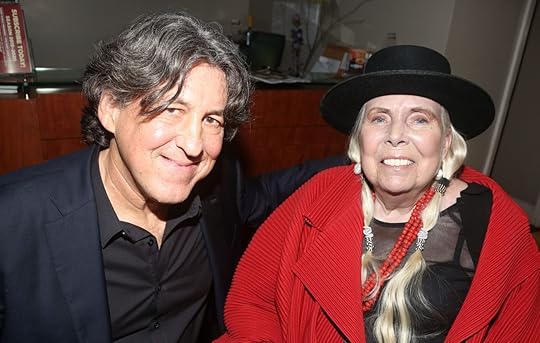
The long-awaited memoir by Cameron Crowe—one of America’s most iconic journalists and filmmakers—The Uncool is a joyful dispatch from a lost world, a chronicle of the real-life events that became Almost Famous, and a coming-of-age journey filled with music legends as you’ve never seen them before.
Cameron Bruce Crowe is an Academy Award winning American writer and film director. Before moving into the film industry, Crowe was contributing editor at Rolling Stone magazine, for which he still frequently writes.
Crowe has made his mark with character-driven, personal films that have been generally hailed as refreshingly original and void of cynicism. Michael Walker in the New York Times called Crowe "something of a cinematic spokesman for the post-baby boom generation" because his first few films focused on that specific age group, first as high schoolers and then as young adults making their way in the world.
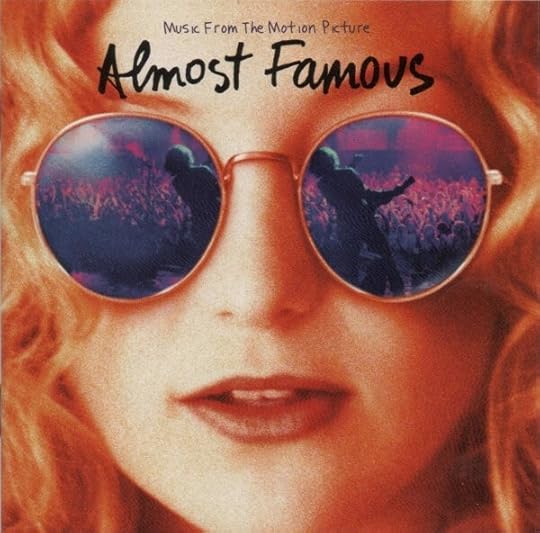
Crowe's debut screenwriting effort, Fast Times at Ridgemont High, grew out of a novel he wrote while posing for one year undercover as a student at Clairemont High School in San Diego, California, USA. Later, he wrote and directed one more high school saga, Say Anything, and then Singles, a story of Seattle twentysomethings that was woven together by a soundtrack centering on that city's burgeoning grunge music scene. Crowe landed his biggest hit, though, with the feel-good Jerry Maguire. After this, he was given a green light to go ahead with a pet project, the autobiographical effort Almost Famous. Centering on a teenage music journalist on tour with an up-and-coming band, it gave insight to his life as a 15-year-old writer for Rolling Stone. Also, in late 1999, Crowe released his second book, Conversations with Billy Wilder, a question and answer session with the legendary director.
"The only true satisfaction comes from doing good." —ALICE CROWE
Cameron Crowe's The Uncool: A Memoir is a love letter to music, creativity, and his family, equally.
I've been a fan of Crowe's work for over 40 years---like any true 80's kid I was watching and listening to media well beyond my years--- & couldn't get my hands on this book quick enough. I did a mix of the ebook and audio and loved them both. Listening to Crowe personally tell the incredible stories from his life took The Uncool to the next level for me. I also loved the nostalgic photographs sprinkled throughout the book.
Crowe's life and accomplishments are truly fascinating. From skipping grades in school, to graduating high school early, to being Rolling Stone magazine's youngest ever contributor, and turning his passion for music and journalism into a successful film career, there are tidbits of it all included. Chance encounters that turned into life long friendships & chances taken at every opportunity. Some of my favorite parts in the book were when we got to hear the "behind the scenes" moments that inspired scenes brought to life on screen in Almost Famous. A peek at how it all really went down.
While I enjoyed every word of this book and the fascinating tales he told, selfishly, I really wanted more about his filmography. Entire chapters devoted to each movie would have been nice. Or I'd have even settled on a mere two full chapters on Singles. Maybe that's what we've got to look forward to with the next book...?🤞🏻
Cameron Crowe may have branded himself “uncool,” but let’s be real—nobody else had a coming-of-age quite like his. As a teenager in the 1970s, he was out there interviewing rock legends while kids his age were sitting in classrooms. He was writing regularly for “The Door,” an underground San Diego publication. He then started contributing articles to Rolling Stone. His time on the road with a certain Southern rock band would eventually inspire the screenplay for Almost Famous, and the echoes of that film can be found all over this memoir.
Crowe’s stories are packed with the kind of details that make you want to hit pause on your day and just soak in the vibe—like him meeting Penny Lane, super fan, or Crowe being asked to cover the band he was touring with, just like in the movie. I actually rewatched Almost Famous while reading, and it made the whole experience feel even richer and immersive.
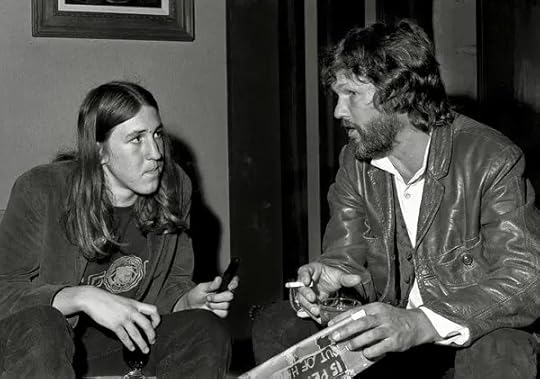
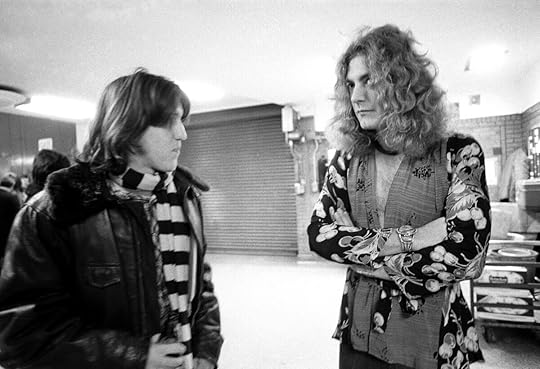
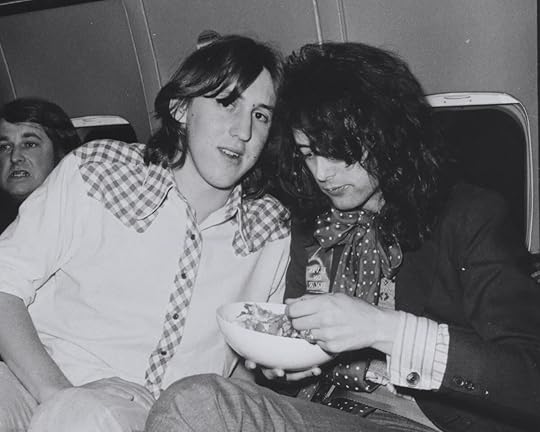
The chapters are quick, sharp, and ridiculously fun. Crowe doesn’t spend time tearing anyone down. He’s here to celebrate the artists who contributed to the rock culture and helped shape him, and I honestly love the upbeat tone. And the celebrity encounters? They’re gold. I couldn’t get enough. Some favorites are Kristofferson at a cantina where Cameron was blocked from entering because he was a minor—so Kristofferson just brought the interview to the lobby. Priceless! Some other great stories are David Bowie, Gregg Allman, The Eagles, Jimmy Page— the list goes on, and half the joy is discovering them yourself.
And then, at the age of 22, Crowe posed as a high schooler to research teenage America, since he was essentially robbed of his adolescence. This research became “Fast Times at Ridgemont High,” which captured the cultural zeitgeist of American youth of that era.
Crowe narrates the audiobook, which he gives a warm, infectious tone. He makes everything feel both intimate and legendary. This memoir was completely special and such a blast to read. I think a ton of people are going to fall for it just as hard as I did.
"The only true currency in this bankrupt world is what you share with someone else when you're uncool." - Almost Famous (2000)
I was so excited when I learned that Cameron Crowe was writing a memoir. Almost Famous is my all-time favorite movie and I’ve always been so interested in the real stories behind the movie. It’s just such a cool thing, that he was a teenage journalist getting behind the scenes access to rock stars in the 70s. I absolutely flew through this book, Crowe really knows how to bring the stories to life and have them be full of atmosphere. There are silly, fun stories like how he was able to be underage and get into bars or venues to get interviews. But also more serious moments, like getting stories from musicians who had experienced great loss.
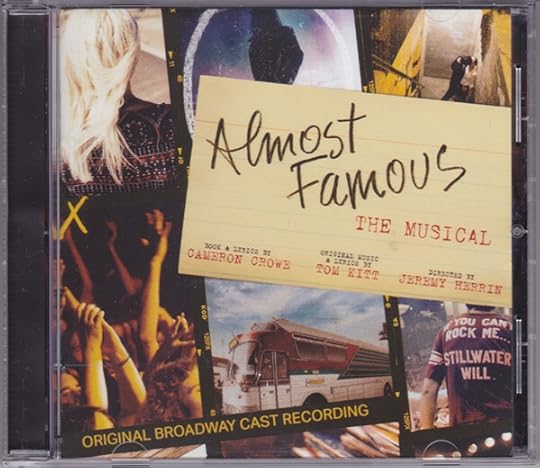
The vast majority of the book is focused on the years he was a rock writer. You do get some of his family life growing up, bits of his movie career, and some of the experience turning Almost Famous into a stage musical. But I was hoping for a bit more of a focus on the creation of Almost Famous as a movie. Or just for the book to not feel like it skips so much of his life as a filmmaker.
But overall I had a wonderful time reading this book. I’d definitely recommend it to people who are already fans of Crowe’s, but also to people who are interested in 70s rock overall. There are so many interesting stories about a bunch of iconic musicians.
Thank you to the publisher for providing an advance copy via NetGalley. All opinions are my own.
Crowe may be a writer, but I would recommend coming to this like you would to any celebrity memoir. Structure is not the point, a real arc is hard to find. What it's for is to share the best stories. And, in this case, it's very specific. This book really doesn't care about Crowe's film career. It is about his family and about his time as a music writer. If you want to know where all those stories in Almost Famous came from, how they were lifted from Crowe's on life, then this book is absolutely for you. You can see where specific characters came from, experiences that are lifted almost verbatim from life, and where he extrapolated.
And yes, there are some truly amazing stories. It almost defies belief that Crowe was able to be in the right place at the right time with so many great musicians and bands from the 70's. And it is hard to understand how all these artists happily spilled their guts to a teenager. And yet, we know they did because we have the articles to prove it. If you're a lover of 70s rock, then there's again a lot to enjoy here.
As a work of memoir it leaves a lot to be desired. Crowe writes a lot about his mother, and the book can feel like two different books awkwardly stitched together. Once he begins his career as a journalist his family suddenly disappears almost entirely from the story. We get very little about how their relationship changed. Or about what it was like as a teenager to begin to pull away from everything around you with your peers to become a semi-adult. There are glimpses of this but only from the rock star side of things, never from the normal life side, which just goes away. And the cuts to the end of his mother's life almost out of nowhere, jumping ahead decades, are also awkward. (The filming of the movie Almost Famous gets maybe a minute of attention? Which seems odd!)
But I"m guessing most readers are going in wanting some specific things and in that way the book delivers. I did audio, which Crowe reads, and there are many times when you can hear him smiling or getting emotional, and sometimes he does some good impressions, too. It's probably the best way to read it, I think.
Well I knew that this was going to be great, and it is. It’s spectacular. I loved it. Cameron Crowe was almost Forrest Gump-like in his uncanny ability to be in the right place at the right time with the right people. He has some amazing stories to tell, and the talent to tell them well. I don’t know if it’s possible, but I’d love to read a compilation of his Rolling Stone interviews. I would also like a Volume Two of this book, focusing on his movie career. Truly, I’m interested to read anything he wants to write! Many thanks to NetGalley and the publisher for providing this ARC in exchange for an honest review.
3.5 rounded up. I had such high expectations for this memoir, and, while I enjoyed it, I was also somewhat let down. Crowe's memoir spends most of his time focusing on his music journalism career and his family, which included a sister who had mental illness and died young, a mother/sister conflict that defined their family, and his relationship with his mother. His movie career only gets a few blips--we spend way more time focusing on the making of Almost Famous: The Musical than we do that film or any of his movies, in part because of the tie-in to his mother.
The chronicles of his career as a teenager who ends up becoming a rock journalist is full of lots of instances of being in the right place or knowing the right people at the right time. He recounts a lot of stories of his encounters with everyone from the Allman Brothers to David Bowie to Joni Mitchell in a way that humanizes these iconic figures. There are some comical elements of being a teenager in this scene--not being able to get into the venues of the bands he's covering, lacking a driver's license to get there. I wanted more of Crowe's perspective of not just the stories but reflection on what it was like being included in this world and his feelings over its end, as his assignments dried up. Similarly, he mostly glosses over his undercover high school year researching what was to become Fast Times at Ridgemont High, the book the movie is based on. As a kid who skipped grades, graduated early, and ended up spending most of his time in adult spaces, this period seems ripe for more introspection, which was mostly lacking.
What was more successful for me were the parts about his family. I loved the details around how his sister's love of music influenced him. His mother's gumption, reinvention, and unconventionality, both in her own life and how she approached parenting, were also highlights. These family elements were where more of the author himself comes out and were some of my favorite parts of the memoir.
As it is Crowe's story to tell, it's a bit unfair to judge it based on what I, as a reader wanted him to include or how he chose to tell it. Also, in a life and career that is so full of fascinating stories and encounters and shifts and stages in life, it's impossible to cover it all in depth or with a lot of reflection. Overall, I enjoyed what was here, while also hoping there might be a second volume someday that covers more territory or digs a little deeper.
Thanks to Edelweiss and Avid Reader Press / Simon & Schuster for providing an eARC of The Uncool prior to publication.
Imagine being fifteen and finding yourself in a room with your greatest musical heroes, when they're almost at the peak of their careers. That was the teenage reality of Cameron Crowe, a writer with the rare ability to be in the right place at the right time, armed with both curiosity and humility. His memoir, The Uncool, captures that era (early to mid 1970s) with the same earnestness and honesty that defines his best work. Some of the stories are so wild they would seem impossible if he did not have the tapes to prove them.
However, this is not just a backstage pass to rock legends and youthful awe. It is also a story about family, loss, and finding your way back to what matters. Crowe writes with a sincerity, humor, and truth that makes the unbelievable feel intimate and real.
And if you can, listen to the audiobook. He narrates it himself, and the emotions in his voice adds an extra layer of authenticity and warmth.
That was the perfect book for finals time, a good distraction from grading. I enjoyed all of the music stories, and how his memoir resonates with the movie Almost Famous, which I enjoy. I’d like to have read more about how he actually learned to conduct interviews.
Ultimately I didn't see this as so much as a memoir as it was a series of kind of interesting stories about some amazing bands and musicians. Sometimes I'm amazed by how much is available to straight, white men.... Even the story of Sean Penn not auditioning or rehearsing for his role in Fast Times - you think - wow what would have happened to an unknown female actress who refused to audition or rehearse? There's not a lot of awareness of how white, male privilege operated in this whole book. I love his work but this fell flat.
** I received an advance digital review copy from the publisher, because I am a librarian and librarians are awesome **
Are you ready for waves of Almost Famous nostalgia? Crowe's memoir put me deep into the years of 2000-2002, between watching the movie in the theatre as an ecstatic 20 year old and watching the DVD on repeat in the years that followed. (I experienced waves of indignance every time he mentioned that the movie flopped in theatres, because it had never felt like a flop to me.)
Even more than rehashing the movie (even though it recaptures dialog verbatim in places, to the point where I hear Philip Seymour Hoffman echoing in my head), it captured a time in history when you could be young and influential, just by being [young, lucky, white, male] present in a space at the right time. In that way, teen Crowe's journey reminded me of all I had forgotten about my youth - the reason why being an unpaid web journalist in the early 2000s felt like entering a new world of promise and possibility, and not just the 45 year old cynic's rearview mirror take that I was taken advantage of for free labor.
But! Enough about me! Crowe's writing style was absorptive (even though the Bowie chapter needs to run through some edits before final press) and the story of his family, vivid and tragic all at once, pulled this from the realm of 70s-rock-meets-wunderkind into something new and meaningful for anyone who has struggled with their family relationships. (That is, all of us.) Come for the pop culture, stay for the legacy of Alice Crowe.
Honestly a bit disappointing. My favorite parts were Bowie’s Station to Station sessions and Kris Kristofferson.
An overview of the real life of Almost Famous (he had a dad and a second older sister) and his love of bands I’m indifferent to (Deep Purple, The Eagles), it’s dismissive of Pamela Des Barres and the GTO’s, still buys into the idea that the Sex Pistols were the antidote to arena bloat, barely covers his screenwriting/directing career other than Fast Times, and I still have no idea how he started dating Nancy Wilson.
I wanted to be a journalist when I grew up. I’ve seen Almost Famous countless times, the musical once. I’m from San Diego and … I’ve loved Cameron Crowe for longer than I can remember.
His new memoir is masterful storytelling of his coming of age in a time where you really could be —- anything. Stories of meeting his rock star heroes, his family, hard lessons, difficult times, best shows, comedic characters on the road, unforgettable moments, happy/sad memories. His book captures a time when you could get opportunity and access like one could never recreate in 2025.
A teen who didn’t have a childhood but did have a wondrous, magical trip in the 70s … adventures with some of the greatest legends of rock.
Loved reading about my town back in the 60s and 70s. Had to giggle doesn’t sound the Sports Arena has changed any of at all since his days of hanging out at the loading dock with the Band-Aids.
I received an ARC of this book from NetGalley in exchange for my honest review.
3.5 stars rounded up. Almost Famous is my favorite movie and I was really looking forward to reading this memoir and learning more about Crowe's time interviewing some of my favorite bands as a teenage writer for Rolling Stone. I was surprised by just how much of Crowe's life was replicated in the movie. I enjoyed reading about the truth behind the story and doing the mental compare/contrast with the film.
My major qualm was that I didn't love the framing device of the musical version of Almost Famous and would've preferred a more chronological telling. By bringing the story to present day, I was expecting a bit more about Crowe's "second" career as a screenwriter/director, but there was only mention of Fast Times at Ridgemont High and the briefest of info about the actual filming of Almost Famous. I would've loved a bit more detail about the movie making portion of his life.
Overall, glad to have read it and will recommend to any classic rock music lover.
"The Uncool" is Cameron Crowe's long-awaited memoir chronicling his youth and career as a journalist. While Crowe's masterpiece "Almost Famous" told the story from a semi-autobiographical perspective, "The Uncool" is particularly special because readers get to experience Crowe's story in the medium that launched his career and in his unmistakable voice.
Crowe gives us a raw and deeply personal look into his family's life and his upbringing and then shifts the story into full gear as he gets more and more access to rock's biggest stars. "The Uncool" is at times, an achingly human coming-of-age story and at others an all-access pass to one of music's greatest eras. What's striking is just how much rock and roll history lives in Crowe and his experiences. David Bowie's autobiography? He has it. Tapes of Don Henley and Glenn Frye working their creative process and penning some of the Eagles biggest hits? Yep. It's a bit overwhelming to just sit back and think about all the shows and performances that Crowe witnessed. Crowe barely scratches the surface on his unprecedented relationships and trust with the artists, and yet, in doing so, reveals so much about his own maturity and wisdom as a writer. While his mentor cautions Crowe against becoming friends with the stars, it's clear than in many cases, Crowe did just that, though not intentionally. One gets the sense that for many of the stars that dust the pages of this memoir, Crowe provided grounding, a mechanism for keeping touch with the fans at a time well before social media, when artists' lives were still mysterious. It also led me to wonder if some of the artists recognized a fellow artist in Crowe, even at that early age.
Anyone who has seen Crowe's movies knows that he has a gift for storytelling and for writing flawed characters you want to root for because they are so human and relatable. "The Uncool" turns the lens on Crowe and allows him to delve into the moments of self-doubt, frustration, and sometimes embarrassment, but also of joy and triumph.
As a fan of Crowe's film work, I was excited to read this and was not disappointed, but "The Uncool" is really an appealing book for all, striking the same chords as "Almost Famous." You don't have to be a music fan to appreciate it, but if you are, it's that much more special. You don't have to be a fan of Cameron Crowe movies, but if you are, it's a lovely peek behind the curtain. More than anything, "The Uncool" is just great storytelling by one of America's great storytellers, and that makes it very cool.
Thanks to NetGalley and the publisher for the advanced read.
Thanks to #AvidReaderPress and #NetGalley for the DRC of #TheUncool. The opinions expressed here are entirely my own.
I've enjoyed most of Cameron Crowe's movies (especially Almost Famous) and I grew up in the 70s, listening to a lot of the music he wrote about as a teenaged writer for Rolling Stone magazine. Crowe chronicles his introduction to music, despite his mother's disdain for rock & roll, and how it impacted his life. This memoir is also about his family - especially his mother and older sister - but you still get the vibe of "uncool" kid who just loves the music.
If you're a fan, you've likely heard or read most of what this memoir includes. But it's still a fun and engaging read with several behind the scenes photos.
A feast of a read. The book's gentle, vignette-brief chapters tell the tale of his life and his family's and expands in its closing pages with a heart-squeezing poignancy as he accepts the passing of his mother and reflects on the bonds he and his father did have throughout their lives. Beyond the family focus, there are, of course the portraits of the musicians that he had encountered throughout his precocious career. Crowe pulls back the curtain at times, but also sheds light on the questions that fame and those encounters have left him and would leave all of us with as we fantasize or simply reflect on aspects of life and the relationships we form along the way.
Apart from Crowe pulling back the curtain on his life and career enough to reveal how close Almost Famous actually was to his own life, there are accounts of the work that went into the interviews he did and the writing that came out of them -- something that might prompt a publisher to follow this up with an anthology of his articles from over the years. Brilliant.
I have loved Cameron Crowe since "Say Anything" [though it was years before I knew he was the director; I just knew that whoever made that movie was amazing and then it turned out to be one of my favorites], but it wasn't until "Almost Famous" [my GOSH I love that movie - LOVE LOVE LOVE] that I truly felt I understood him *AND* his genius. Then I read this book and was just completely blown away by ALL that he shared about his life, his growing up, and his interesting, fragile, fraught, love/angst -filled relationship with his parents, but especially with his Mom [I remember when we bought the "Bootleg Cut" of Almost Famous and listened to the commentary with the movie and his Mom was a part of that and W O W did it get hilarious and...well...interesting. She was a force of nature for sure as well as a beautiful hidden gem].
This book is such a beautiful nod to Cameron's childhood, his parents, his sisters, and the music that shaped that time AND his life. This book is absolutely fantastic. I loved every second of it.
Thank you to NetGalley, Cameron Crowe, and Avid Reader Press/Simon & Schuster for providing this ARC in exchange for an honest review.
With Almost Famous being my favorite movie, this felt like a necessary read and I’m thankful I did. I thoroughly enjoyed to hear how bits of the movie came to life through lived experiences; meeting Penny Lane, touring with the Allman Brothers, even inspiration from Gran Parsons and Emmylou Harris that gave us the smallest, but also most beautiful cut scene of the movie. Known facts from movie fans turned into longer narratives giving small details, even specific quotes, that gave us more insight into the events of the movie (and his life of course). I sort of left with a familiar feeling that the movie gave me which is music journalism is a new world nowadays, focused on short term interactions rather than deeper relationships. No more following a band and getting to know them over time. Mind you, this isn’t bad, maybe just more a sign of the times. Hearing Cameron’s fond memories and the effect artists had on him made me happy that other music journalists probably have the same fondness in their relationship with music. I could go on but I’m sure Lester already talked about it better than I could. Really relished in hearing his memories of one of my favorite eras of music.
Huge fun for anyone with an affinity for early 1970’s rock and roll. Cameron Crowe was there as a precocious 16 year old whose talent and connections ended up giving him—and us—intimate experiences with many of the personalities of that dynamic era. There’s also Crowe’s mom, who’s an unforgettable character in her own right. Highly recommend the audiobook, which Crowe himself reads.
Meh. I had high expectations of this, but they weren't really fulfilled. As it's his memoir it (rightly) focuses on him, where I wanted to hear more about the artists. I'd rather just watch Almost Famous again.
Sometimes when I’m wavering on my feelings about a book, I read other reviews to try to make sense of it all. In this case, I found many others in the same confused boat. I wanted to love this book from the outset being a long time fan of Cameron’s movies, writings and previous books. Ultimately it just felt incomplete.
These stories are absolutely worthy of being told and I’m glad they were but it felt like a collection of Rolling Stone story backgrounds and a biography of his mother put together rather than a true autobiography. So much of his life is seemingly intertwined with his mother’s and I kept wanting him to tell his own story outside of hers. The moments of true introspection are fleeting and you’re left desiring more. You also come away from The Uncool hoping for a Part 2. There’s still so much to be told about his life and his filmmaking career.
Thank you to NetGalley, Avid Reader and Simon & Schuster for the opportunity to read and review.
I was kindly sent an advance reading copy of this book. This is a solid 3.5 stars, but as a fan of Cameron Crowe, I just wanted a little bit more. Almost famous, is one of my favourite movies and this did accompany the story, filling in gaps of what the movie didn’t cover. All in all, a very enjoyable read.
Disappointing. Perhaps if I had realized the focus of the book I would have been less miffed? I wrongly assumed this would be a book about his entire life, including the movies he directed. It is not. The book is about his writing career for Rolling Stone, ground he already covered in Almost Famous. Honestly, this read like an extended version of that story. His mother and his music writing are the two subjects of this memoir.
I have to assume he is doing what the publishing world has been doing for a while; dividing up one story into multiple parts in order to make more money. I loathe that they do this. It's bad enough when fiction does it but at least I grasp that they are following the traditional concept of serialization and book series. For a memoir to do this is nuts. No one needs multiple memoirs about their life. You wanna write a thousand plus pages about yourself? Then be like Barbra Streisand and publish a door stopper like she did. At least she is honest about it. I almost threw John Cleese's memoir across the room when I finished it. His memoir ended just as Monty Python was created. Yes, you read that right. His entire memoir was about his life prior to being famous. 300+ pages about his schooling and his family. I kid you not. He is not the only celeb who has done this. Chrissie Hynde's memoir ended just as she joined The Pretenders. Angelica Huston's first memoir is all about her childhood. Just. Stop. It.
I was looking forward to reading about the movies Crowe directed. Sigh. At the very end of the book he writes a small amount about Fast Times but that is it. Speaking of Fast Times, I was also looking forward to learning more about the actual year he spent going to high school and how that contrasted with his earlier actual high school experience. Again, he write a few paragraphs but that's it. No details. Him back at school should have warranted an entire chapter, not a page. He could have removed some of his gushing about The Allman Brothers if he needed room for a Fast Times chapter.
I'd raced through my own Catholic school education. I never really had the time to do the things that most kids my age did- to fail, to waste time, to spend summers on the beach. I'd jumped into the ocean of adulthood and ultimately got caught in a riptide. I hadn't even gone to my own prom.All I had was the high school diploma sent to me in the mail. My sister Cindy was right all along. I skipped too many grades. I skipped adolescence. I'd traded it for a backstage pass.
Again, this one paragraph hints at some much more. Why did he gloss over all these interesting parts?
Besides my issues about what he included and what he left out, I was disappointed in the amount of self awareness and self understanding Crowe revealed. At first I wondered if it was like some memoirs where the author is naturally reticent. Some celebs write memoirs because they need the money and they do not want to share much of their interior world. Others - my favs - are oversharers. And the best memoirs have the perfect percentage of insight, awareness, and sharing of their exciting lives. Imagine my surprise when at one point Crowe writes about how open he is being, that he is revealing himself warts and all to the reader. Huh. I actually made a noise of surprise when I read that he felt he was really scrutinizing his life.
Crowe is grossly unaware of how his experience as a straight white guy impacted the trajectory of his life. He never ever ever mentions how the girls his age who also loved music and were fans and wanted to hang out with the bands had to perform sexually in order to do so. Crowe didn't have to give a blowjob to a roadie in order to talk to the band. He didn't have to have sex with a band member to gain access to an interview. The throwaway scene when Crowe is in Arizona and runs across a girl he knew in the parking lot and she was sobbing because a roadie "sold her" to another roadie for a case of beer was highly disturbing. Crowe is completely nonplussed. It doesn't strike him as awful. The roadies are his "friends" and they look out for Crowe, they actively help him. Those same guys are sexually harassing and assaulting the girls in his position. Crowe never mentions Lori Mattix, who was 13 and passed around from Jimmy Page to David Bowie to Mick Jaggar. Instead we get an entire chapter of Bowie taking Crowe under his wing and being like a mentor to him.
Crowe shows that same level of cluelessness when discussing his family. Man, I need to talk to his sister Cindy to get the actual lowdown about what went on. In passing, Crowe mentions his sister went no contact with their mother for DECADES. The siblings were also estranged but Crowe doesn't share why. I can certainly guess. Their mom was a real piece of work, extremely controlling and judgmental. Crowe was wildly enmeshed with his mother and unable to step back and really see what was going on. I gathered Cindy was more capable of seeing the truth and she saw the only way to protect herself was to set boundaries, something Crowe never learned to do with his mother. Hopefully now that his mother has passed, he will be able to mature in a way that he never was able to.
The entire time I read this book I pictured the actress Frances McDormand as his mother since she played that role in Almost Famous. I do think that as a character his mother was entertaining. She sounded like an excellent teacher and mentor. A mother, not so great. A wife, even worse. I started thinking she sounded like she was on the spectrum, very high functioning. The mysterious older sister who tragically committed suicide sounded like she was autistic. Crowe even asks his mother at one point what his sister's diagnosis was and she refused to answer. She refused! And he dropped it! Oh boy Cindy, thank God at least you escaped.
My mother was famously unable to chitchat. A simple question about the weather could flummox her. Why should we talk about the weather?There's nothing we can do about it. What about world hunger?
One day when I was fourteen, she invited Cesar Chavez, the farm-worker and political activist, to speak at one of her classes. Chavez showed up in a faded denim work shirt and loose pants, wan from fasting but charged with commitment.
Crowe is also extremely vague about his personal life, to a shocking degree I thought. I got the vibe that he had a lot of sublimated anger issues towards women. He looks a bit like the deformed kid from the Cher movie Mask. That, combined with being young and naive, was not a recipe for being a teenage Lothario. The guys in The Eagles actually gave him a pep talk, saying it was Crowe's attitude that was the problem. Eh, I beg to differ Glenn Fry. I think it was looks and age, to a large part. Ok, I do see that attitude is a factor. There were a lot of ugly rock stars in the 1970s having a lot of sex. The attitude that comes from being a successful rock star I am sure played a role in attracting women. What worked so well as a journalist - that hangdog gee I am so happy to be around such a cool guy like you - was like catnip to the male rock stars. They loved the little brother idolizing them. That sort of subservient vibe didn't wash when it came to picking up women, though.
During the emotional chaos and drug-fueled paranoia that followed, there was certainly one thing he could depend on: the constant look of delight on my young face.
I kept hoping he would relate his dating problems with his mother but he never did. Jane Fonda in her memoir did a great job of relating her attraction towards cold, controlling, successful men to her issues with her father. Crowe should get some therapist referrals from Jan Fonda, now that I think about it. He really needs to work on his unspoken hidden issues before it's too late.
This is all is writes when discussing his first girlfriend. I mean, WHAT? This is it? This paragraph should be its own chapter. He didn't break up with her? He ghosted her? She moved their stuff? Where was he? Weren't sure you were in love? Why is suddenly your age relevant? I have many questions.
One day Mary Beth showed up having signed the lease for an apartment that was a whopping $400 a month.She had moved my albums and all my other stuff into the apartment.Having lived through the emotions of others in books and movies and songs, I was utterly unprepared for real life. She was seven years older than me and I wasn't even sure I was truly in love. I panicked and fled back to California without a proper goodbye. I don't know what happened to my records. Someone told me she dumped them on the sidewalk for anybody to take.
While I did find the memoir to be a fun quick read, I just could not rate it more than three stars. It had the bones to be a five star read, if only he had more awareness.
I loved this book, not only for the incredible music stories about musicians, but also for the narrative about Cameron Crowe's family. In the middle of a chapter, I would look up the cover of Rolling Stone magazine to see the bandshot Crowe was referring to or I would play songs like "Whipping Post" or "Take It To the Limit" and reminisce. "The Uncool" reminded me how much I love music and how it's always been a part of our family too. Thank you for sharing an ARC with me! Looking forward to handselling this book!