If you’ve ever wondered what happened to the biblical characters after Acts—from the well-known Matthew to the lesser-known Bartholomew—then this book is for you. Join Dr. Bryan Litfin as he guides you through Scripture and other ancient literature to sift fact from fiction, real-life from legend.
Skillfully researched and clearly written, After Acts is as accurate as it is engaging. Gain a window into the religious milieu of the ancient and medieval church. Unearth artifacts and burial sites. Learn what really happened to your favorite characters and what you should truly remember them for.
Did Paul ever make it to Spain' Was he beheaded in Rome' Is it true that Peter was crucified upside down' Was the Virgin Mary really bodily assumed into heaven' The book of Acts ends at chapter 28. But its characters lived on.
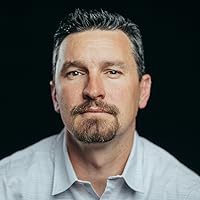
Bryan Litfin received his PhD in Religious Studies from the University of Virginia and a Master of Theology from Dallas Theological Seminary. His undergraduate work was at the University of Tennessee in the field of Communications.
Bryan now works as Head of Strategy and Advancement at Clapham School, after serving for 16 years as Professor of Theology at Moody Bible Institute in Chicago and 3 years as an editor and writer at Moody Publishers. He is the author of The Conqueror (Revell, 2020), Every Knee Shall Bow (Revell 2021), the Chiveis Trilogy (Crossway, 2010, 2011, 2012), Early Christian Martyr Stories (Baker, 2014), After Acts (Moody, 2015), and Getting To Know the Church Fathers (Brazos, 2007, 2nd ed. 2016), as well as numerous scholarly articles and essays. In early 2022, he will release Wisdom from the Ancients (Harvest House).
Bryan is married to Carolyn, and they have two adult children. He enjoys writing, traveling, teaching, reading, spending time with family, and being involved in his local church.
I had hoped to be able to read book this devotionally and also recommend it to small groups for spiritual growth. The topic is interesting and unique--what happened to the apostles in history after the Bible finishes telling their story? The author is an evangelical professor at my alma mater and really knows his stuff.
Yet while this book is definitely worthwhile to read, it's not the book I was hoping it would be. The main problem is just how difficult it is to faithfully reconstruct the history of the apostles. Take this paragraph about Peter for example:
"Since the early Christina were aware that Peter had followed in the footsteps of the Savior to the same kind of death, it wasn't long before fictional narratives emerged that purported to recount the whole epic story. These tales are filled with holy saints and vanquished heretics, giving us reasons to view them critically. Yet just because the texts have a legendary, even lurid, flavor doesn't mean they don't have a historical kernel of truth. The trick is to separate fact from fiction!" (pg. 149).
Yep, that's the trick. And while Litfin does a yeoman's work of trying to untangle those things, it makes the book difficult to read and the end result is unsatisfying if you're only moderately interested in the historical method.
On the other hand, I'm glad that someone has done this work and that it's here in a readable format. As an accessible reference work, it's very good. The best feature is a scorecard at the end of each chapter assigning a grade to each historical assertion about the apostles for how likely the "facts" about them truly are. For anyone who wonders if Peter was crucified upside down or where Paul is buried or if Thomas made it to India, this book will do the best job of summarizing the evidence. But if you're looking for a lot more fodder for your own personal spiritual growth, turn back to Acts.
A fascinating but frustrating introduction to church history through the apostles, Liftin briefly shows what studying history looks like but doesn't show all his work.
•••
The book is written concisely and easy to read, and the stories are interesting. Some reviewers complain that there's too much we don't know for this book to feel substantial, but not only is that an exaggeration (many chapters feature reliable traditions), it is a sign of honest scholarship to say something cannot be known. Lay readers will find his preface helpful to understand academic liberalism, gnosticism, and other key concepts for studying this history.
However, his representation of the historical method was frustrating at times. While I love the idea of the end-of-chapter report cards evaluating each tradition, his grading seemed arbitrary at times, especially regarding giving a + or - to the letter grade. In some chapters, it felt as though he would spend pages proving a position that's nearly unanimously held, then briefly state a disputed or novel concept as fact.
For instance, after quoting multiple early sources to demonstrate Matthew's authorship of the Gospel of Matthew, he follows it up with a section on Matthew's use of an editorial team to rewrite the text over the next decade or so — a major concept for which he provides no historical reasoning. He then proceeds to grade "Wrote his biblical gospel by himself" a B-, which confuses the matter more. Similar can be said for his dating of the writing of biblical books, a field which has a lot of fascinating reasoning and usually produces various opinions. For those books he discussed the date of writing, he typically only mentions one possible date (possibly a controversial one), which makes the subject seem simpler than it is — which works against the book's partial goal of introducing someone to the process of historical scholarship.
•••
The book is a neat little read, but I would have preferred it to show its work in order to verify its claims and demonstrate the historical method better — or else he could have stuck more to the narratives, rather than trying to include and explain little details such as dates. In the final analysis, the book is fairly well-written and interesting, and it may be exactly what some people need, but I'm not sure I could really recommend it. Just didn't hit the nail on the head for me.
I've always been interested in early church history, and got After Acts hoping to learn a few new facts about the later lives of the Apostles. Unfortunately, it turns out that the actual, verifiable material on this subject found outside of the Bible is so thin that it would probably all fit into an average-sized gospel tract. Because of this, I feel like the book sets up its readers for disappointment. You think you're going to pick up new information, and instead, you mostly just find out that things you thought you knew are probably wrong. (For instance, it appears that there's no clear evidence that all the apostles except John were martyred.) This, of course, is worth knowing, but still disappointing.
I also frankly found the author's perspective on Scripture a bit unsettling. I appreciate the fact that he personally affirms inerrancy, but some of his discussions about Biblical authorship seem to lend too much credence to liberal skepticism. Also, I absolutely cannot agree with his view that the title "Mother of God" for Mary is justified because it affirms the Deity of Christ. My personal belief is that Mary, whose meek and humble attitude is clearly attested in Scripture, would be absolutely horrified that such an appellation should attach itself to her.
On the whole, I have to say that After Acts did hold my attention, but then again, I'm probably more interested in the subject matter than the average reader. (I even read the footnotes at the end.) There is good information here, but don't expect a thrilling read, and be aware that some of the material may be less than faith-building.
thoroughly researched and well written, the intro was a beast to get thru but each chapter was much more understandable . i have a love hate relationship with how “incomplete” each story was. on one hand i appreciate the authors authenticity to history and ability to sift thru myths and fables. on the other hand, i feel like the book was false advertisement. it was much more “during acts” than anything. would recommend to anyone who enjoys history tho
What an interesting look at the post-Acts lives of the Apostles. I appreciated Litfin’s careful analysis of biblical and historical data to sift through what is likely fact and what is mere legend. (Although there is much that we cannot be certain about.) I had never thought much about what happened to key NT figures after biblical events were recorded, but now I’m encouraged to study more early church history.
After Acts: Exploring the Lives and Legends of the Apostles by [Litfin, Bryan]I was given this book by Moody Publishing in exchange for my honest review.
This is an interesting book. The author, Bryan Litfin used research found in ancient manuscripts, legends, geography and history to help show what may have happened to each of the apostles after the telling of Acts.
I do like they present possible and unsubstantiated beliefs along with the reasoning behind them. I feel that the way it is written it encourages the reader to look into these people more.
I also found the layout of the book to be logical and easy to read. It starts off with a chronological timeline with best possible dates and dates where the author feels they would fall.
The chapters include recorded events of Matthew, Mark, Luke, John, Mary, Thomas James, Peter and Paul and other apostles. There are familiar stories, explanations and a report card about different claims.
This short book is an easy and interesting one to pick up and explore
Ever wondered how the lives of the Apostles ended?
A friend of mine gave this book to me and I enjoyed the read. Litfin's use of a "report card" style evaluation at the end of every chapter helps to illustrate the historical probability of legends and other events in the lives of the apostles. Drawing on a body of research and archeological findings, the book answers many questions about what happened next to the fathers of the Christian faith.
While I enjoyed the book and found it informative, I'm not sure that I would recommend it to someone unless they were specifically interested in the topic.
Interesting book, fairly quick run down on the post biblical lives of the disciples and early apostles. Really intriguing to learn just how little we know about so many famous biblical figures. The report card at the end of each chapter was really helpful. Maybe a bit too much focus on where people's bones are lol
Fascinating look at the facts and legends relating to the apostles (and a few other people, including Mary, mother of Christ) after the end of the Bible. Recommended for those interested in Biblical history.
Interesting stuff. Helpful to hear the evidence behind so many common stories. Though many of the Apostle's deaths were likely less fantastical than is often recounted they were no less glorifying to God. An easy introduction to Church history as well.
First of all I want to thank Moody Publishers for making an Advance Readers Copy available for me to read and review before the release of the book. The book will be released on February 1, 2015.
In this thesis you will find a treatment on the lives of nine notable figures from the New Testament. They are;
Matthew Mark Luke John Mary, the mother of Jesus Thomas James Peter Paul
There is also a chapter devoted to “The other Apostles.”
The book is well written and very well researched using the Nicene Fathers, Anti-Nicene and early day historians such as Eusebius. This book is a bit more of a scholarly textbook type discussion than it is a simple read for laypeople. While I don’t think the average layperson would care much for the book that doesn’t mean they wouldn’t benefit from reading it, there are truths here they will find interesting. For the Theologian or Scholar I would think that much of what is written here you have already read or studied, but it gives a good concise summary in one book.
Thus I would suggest that the book is written for Pastor’s and Lay-Professional’s who want a treatment on the life of the Apostles after Christ’s ascension. It will delve into many of the details that are needed to be assured that the writings of the four Gospels are truly penned by the men who are claimed to have written them.
It will also give us details on some of the aspects of their travels and the churches that they started and or visited on their journeys. It gives a small bit of detail on the end of life of these men, but not as much as I thought it would. Probably Fox’s book of Martyr’s is a better treatment for that.
This book will wet your appetite for more study on the lives of the Apostles and the early church. If you enjoy it you will find yourself wanting to delve into early church history and working through more documents to gain more information.
Liftin does a great job of pulling together all the resources and putting them into a volume that will enhance your understanding of the early church.
I think I am entirely too [former] Catholic for this book. While I found the research to be well done and the ideas presented in a relatively clear way, I have reservations on the interpretations of the author. This is mainly related to the interpretation of apocryphal texts and how some felt like a stretch and others felt like the author was fitting the text to his narrative as opposed to other way around.
I am also willing to bet my edition of the Bible is not the same as his, because I already noticed a few word changes in quoted scripture (as a note, I have both the Catholic and the NIV Study Bibles). Biblical translations, as the same with any scholarly translations, are difficult to come to a consensus on. As this book was written by an evangelical scholar, one who is clearly well-educated, there is no sense denying that I am going to disagree with interpretations and beliefs because I'm a former Catholic who has done my own independent study. Plus, I will readily admit that I have not translated any version of the Bible or other apocryphal texts from any of the original languages. During his PhD studies, I am sure Dr. Liftin has.
That being said, as a trained historian, I did have two rather large qualms about Dr. Liftin's research.
1. The dismissal of oral tradition: Multiple times throughout the book, oral tradition is dismissed as nothing more than the talk of the locals. Maybe that was not how Dr. Liftin intended his interpretation to come off, but that is how it was read. Oral tradition is absolutely key to understanding societies and cultures in the past. Yes, they are often dramatic and over-sensationalized, but Saint George slaying the dragon, for example, is still a vital story in the history of the development of England. The Sermon on the Mount is oral tradition, even though it was later written down by the apostles. That's how these stories survive persecution and time. The offhand remarks on how oral traditions are only machinations of the locals and should not be taken as any support that an apostle visited that region are way too dismissive of someone with a PhD in historical theology - from UVA. UVA is a good school and I know they would have taught anthropology and sociology as part of this course. He should know better.
2. "But if we set aside concerns about biblical inerrancy, good scholarly method requires that theories about deception lurking behind historical texts must be based on overwhelming evidence to contradict the plain assertion of authorship.": First, that sentence is a mouthful (purposefully?). Second, this is entirely incorrect. History is not a court of law. The text is not innocent until proven guilty by a smoking gun. If, at any point in time, you find a historical text that contradicts your narrative/theory, you must give it credence. That is one of the major road bumps in a historian's life. We are interpreting as we go along and very few things are definitive. This sentence was included towards the end of the book, referencing the Petrine epistles and the theory that they were not, in fact, entirely all written by Peter. Dr. Liftin serves around this theory by saying, "For an author to falsify his identity and represent himself as Peter would seem to violate the truthfulness of Scripture." (p. 146). I don't know how to say this without being rude but this is utter bull. The gospels contradict themselves regularly, with Matthew, Mark, and Luke reiterating the same story in a different way. A later author attributing themselves to Peter is nowhere near a bad theory and is supported by Dr. Liftin himself! He even states that 1 Peter and 2 Peter sound different, which he chalks up to transcribers like Mark. If Peter's words were in fact transcribed and not actually written by him, then that changes how we interpret them. Peter may have been the one speaking, but the transcriber decides what's important enough to write down. Thus, the idea that Peter didn't actually write everything in his epistles has full merit. We cannot dismiss this theory simply because "it would not be in the spirit of scripture." That is not how true scholarly work is conducted.
A final note that is based purely on my Catholic upbringing: I read another review of this book that mentioned that Mother Mary would be horrified to be referred to as "the Mother of God" and that she was "meek and humble" and only wished to serve God. While I don't disagree that she would object to the title, Mary was in no way meek nor was she "humble" in the sense this reviewer was intending. Mary made the trek to Bethlehem fully pregnant and gave birth alone. She fled to Egypt after Herod's decree. She endured her son being attacked by fearful rabbis, Roman guards, and even crowds of regular people. She watched her son be crucified on the cross. You may not agree with the veneration of Mother Mary by Catholics, but Mary was chosen by God and endured painful trials to serve him. She does not deserve to be relegated to a meek and humble woman who only served as a vessel to birth Jesus. She was as important to his story as the apostles and deserves at least that much respect. Mary was not an apostle, so I did find her inclusion in this book to be odd. If you want to include an apostle who was a woman, why not Mary Magdalene? She is a saint in Catholic liturgy and her gospel was found in the late 1800s. I know many scholars do not consider Mary's gospel to be a "gospel", but by their definition, neither is Paul's. Paul met the recently risen Jesus on the road to Damascus, but had never met Jesus during his living years. I have my own qualms about using Paul as a definitive source on the teachings of Jesus, especially since, once again, Paul's letters constantly contradict themselves and he never heard the living word of Jesus - but that is another thing entirely. I felt Mother Mary's inclusion in this book was purely to criticize the Catholic veneration of Mary - but that might just be me. If you're going to include a woman, you might as well use Mary Magdalene, an easy person to discredit. Just an interesting choice to include Mother Mary in a book about the apostles.
I chose not to rate this book because it was not written for me and I don't think it would be fair to Dr. Liftin to rate a book based on personal interpretation of a very controversial topic. That being said, I would offer 2.75/5 stars for research and presentation, but with a clear bias in interpretation and inclusion of certain apocryphal texts over others (such as not including the Gospel of Philip but quoting heavily from the writings of Jerome, Clement of Alexandria, and Origen). The Bible is controversial, so any book written about will be too.
This book is an overview of the background and "possible" life-stories of the apostles and prominent early Christians. The author uses the Bible, historical documents, oral traditions and even legends to do this; of what really happened and could have possibly happened to them especially outside what was written in the Bible.
In saying these though, please read this book with caution. The author is liberal in some of his views on how the gospels were written. His position leans towards the possibility of Matthew's gospel using Mark's and a "Q" document as part of its sources. And Luke's gospel using Mark's, "Q" and "L" as part of its sources.
We should remember that in John 14:26, Jesus said "But the Helper, the Holy Spirit, whom the Father will send in My name, He will teach you all things, and bring to your remembrance all things that I said to you." And in 2 Peter 1:20-21, "knowing this first, that no prophecy of Scripture is of any private interpretation, for prophecy never came by the will of man, but holy men of God spoke as they were moved by the Holy Spirit." Scripture came about by the Holy Spirit using and equipping men of His choosing. It is not through man's doing alone.
The author also limits the gospel writers by their human capabilities like John (p. 74). At Pentecost, we should also keep in mind that through the Holy Spirit, the apostles and disciples were able to preach the gospel with boldness and in different tongues. So why should it be hard for people to believe that the Holy Spirit can equip the gospel writers to compose Scripture?
This entire review has been hidden because of spoilers.
This is an excellent introduction to the historical research done on the twelve apostles and their lives during and after acts. The author gives the legends a score card rating their authenticity, traces information back to first, second and third century scholars and builds strong arguments for his own conclusions. I appreciated the footnotes, which showed the author had done his research and helped whenever I wanted to do additional explorations on a topic he discussed. Mr. Liften has strong credentials; believe it or nor, there are a lot of people writing on this subject who have none. I did feel at times he dumbed down the discussion but that was understandable. I'm sure he didn't want to overwhelm his readers with information they didn't want or probably didn't need.
Overall, this is a very readable historical account regarding the apostles lives after acts.
[Note: This book was provided free of charge by Moody Publishers. All thoughts and opinions are my own.]
For the most part, this book is immensely enjoyable to read. The author takes a subject of importance but also considerable challenge and discusses it in a way that will make many readers more familiar with the writings of the early supposed "Church Fathers," and that will hopefully encourage a great deal more study about these interesting people [1]. That is not to say that the author and I have similar views in certain areas of the legitimacy of the Hellenistic authorities cited here, but rather the author does a good job at bringing somewhat vague areas into greater clarity that will be of great aid to professed Christians in being able to better weigh and balance claims about what 'tradition' says. That itself is a worthy purpose, and makes this short book of less than 200 pages a genuine joy to read. Given the frequency that discussions about the extrabiblical travels and behavior and fates of the apostles appear in sermon messages and writings, this book does a good job at showing the intellectual scaffolding that exists in making claims about the apostles.
In terms of its contents, this book is organized in a very pleasing fashion, even if its contents are not as complete as one would wish. The book begins with a chronology that places the traditions in a temporal context and then a thoughtful explanation of the diverse sources, some of which are widely accessible as the ante- and post-Nicene Fathers, which determine what is meant by church 'tradition' in the jargon of pastors giving extrabiblical discussions in sermons. The author then has chapters about the traditions that have been recorded about Matthew, Mark, Luke, John, Mary, Thomas James, the other apostles, Peter, and Paul. Included in these chapters are many familiar stories, such as the beheading of Paul or how it was that Peter, who was not even mentioned in Romans, came to be associated with that city at the end of his life--coming to the reasonable conclusion that his stay in the city may not have been for very long. Each chapter concludes with a report card that gives subjective but on the whole reasonable grades about various claims made about the person or people within the chapter. No claim gets an F, but several get a D, and quite a few claims are given A's, so this is not an ungenerous judge.
A large part of what makes this author an enjoyable one to read, even where there are differences in perspective, is that the author manages to combine two very unusual qualities. On the one hand, the author is a genuine textual conservative who has a high degree of respect for the Bible. On the other hand, the author also has a great deal of thoughtful as a textual critic when dealing with the nonbiblical texts such as the writings of Papias, Clement, Irenaeus, and Eusebius, all of whom appear relatively frequently in this book. Ultimately, this is a book that deals with matters of possibility and probability rather than certainty, and the author does a good job of showing the critical nature of his task in assessing the likelihood of various accounts. The historiography on the whole is sound and the author comes off as appealing and easy-going in his judgment. One is correspondingly encouraged to be easy-going and generous in one's own judgment of the author, which is makes for a pleasant reading experience all around.
While the Bible documents some history of the ministry of Jesus and the foundation of the early church, that history is hardly comprehensive, and we often appeal to church tradition for extra-biblical history. In this book, Dr. Litfin critically evaluates that tradition regarding the activities of various prominent individuals in the early church:
• Matthew • Mark • Luke • John • Mary • Thomas • James the Just • Peter • Paul
As a starting point for his evaluations, Dr. Litfin distills church tradition into specific points. For example, consider his points for Matthew:
• Ministered in Antioch • Published a Jewish-Christian gospel in Aramaic • Led a Jewish-Christian congregation • Took notes that were used in the composition of his biblical gospel • Directly shaped the composition of his biblical gospel • Wrote his biblical gospel by himself • Went on evangelistic missions to Ethiopia or cannibalistic tribes
As an aside, it may seem strange that there is church tradition regarding Matthew’s role in writing the gospel that bears his name, but the gospel according to Matthew does not name its author. According to church tradition, he wrote it.
After a review of evidence for each point, Dr. Litfin provides a probabilistic assessment of how likely it is to be true. In other words, the evidence strongly suggests that certain points are true, but the evidence for others is weak to non-existent. In general, I found his assessments to be compelling, but one assessment gave me pause. In his discussion of John’s authorship of Revelation, Dr. Litfin dated its writing to the 60’s A.D. on account of the allusion to 666 as the name of the beast and the reference in Revelation 17 to eight kings, “five of whom have already fallen, while the sixth currently exists, the seventh will come soon, and the eighth will be a terrible beast from out of the seven who is headed for destruction.” Some church fathers dated Revelation to the time of Domitian, three decades after Nero, and Dr. Litfin gets around this external evidence by arguing that John wrote Revelation during the days of Nero, but its editorial process didn’t end until the reign of Domitian. Various commentators have argued that 666 refers to Nero on the basis of the conversion of letters of his name, Neron Caesar, to numbers and adding them together. That is possible, but does someone’s interpretation of this count as historical evidence for dating the composition of the book? Likewise, he argues that the five kings who have fallen were Augustus, Tiberius, Claudius and Nero, that the sixth is Galba, the seventh Vespasian and the eighth a revived Nero who was expected to return from the dead. I have several problems with this. First, what about Otho and Vitellius, who came between Galba and Vespasian. Second, if the eighth king is a revived Nero, which never happened, then Revelation, part of scripture, was a false prophecy and thereby worthless. Given that there are other interpretations of the identity of these kings, it seems problematic to use a week interpretation as the basis for dating the composition of the book. I guess I find it disturbing that I, an engineer by profession, can so easily poke holes in the arguments of a PhD theologian.
I have been reading my way through early church history, and hoped this would be a good addition to the end the apostolic period. The fact is, we have very little record of what happened to the apostles other than what is written in the Bible. A few historians such as Eusebius have recorded some things, but their accuracy is questionable... so all we really have is tradition, legend, speculation, and hearsay. So the book starts with a disadvantage that there's not much to go on. In that respect, I feel it could have been about half the length without really losing anything.
The author does a good job (albeit a bit wordy, at times) of compiling most of these theories and traditions for each person considered in his book, then explores their plausibility with logic and some historical proof. Sometimes he notes the source, but not always, and I found myself wishing for a lot more bibliographic information after each chapter... but then, I've been reading grad level textbooks, so I might be a bit spoiled academically. In that regard, the final three chapters were the best. The 'Other Apostles' concisely hit the most relevant facts, with just a few pages per person; and the chapters on Peter and Paul were full of source references and documented facts.
What I specifically disliked, however, and would give me pause on recommending this book to others, was the author's casual view of Scripture. He claims to hold conservative views of biblical authority and inerrancy, but his arguments and logic prove otherwise: an easy acceptance of Q as major source material for the synoptic Gospels; a sometimes-skeptical view of inerrancy (such as his choice to "set aside concerns about biblical inerrancy," p.154); downplaying divine intervention in the lives of the apostles (ie, if it's not 'humanly possible' than it probably didn't happen... never mind what supernatural feats God allowed the apostles while Jesus walked on earth); and occasional agreement with liberal skepticism. While you might think that historical facts can be separated from biblical theology, when considering the lives of such biblical characters it's not really a wise idea to attempt such a thing.
I will also add that I wondered about the inclusion of Mary. Yes, she was a crucial New Testament character... but certainly not one of the apostles. She would fit in a book about the lives of "major NT characters" but felt out of place, to me, in this one. However I don't see many other reviews sharing that thought, so it could just be personal preference.
So imagine my surprise, when I found out that he writes novels. He wrote a book titled, "Early Christian Martyr Stories". He is a story teller but for this book he didn't want to just spin a yarn, he wanted the inquisitive believer to know with certainty what happened.
And in my opinion, he has done that and more. He has surprised the reader with some amazing stories to whet the appetite and has show us how he sifts through the source materials to get to the his conclusions. In that sense, I would recommend this book for both the casual reader and the thinking Christian.
Before I end the book review, I want to share how this book aroused my curiousity of Peter's adventures. So I went to the website Litfin recommended and I skimmed through translation of "The Acts of Peter".
Here I read how Peter tells a guy Marcellus that if you believe in the Lord, just sprinkle water over a broken statue and it will become whole. And it did.
Peter comes knocking at Simon the sorceror's house and Simon instructs a dog, "Tell Peter that I am not within."
And the dog answers!
> Thou exceeding wicked and shameless one, enemy of all that live and believe on Christ Jesus, here is a dumb animal sent unto thee which hath received a human voice to confound thee and show thee to be a deceiver and a liar.
Peter sees a herring, a sardine hung on a window and tells the crowd, "If you see this swimming in the water like a fish, will you be able to believe in him whom I preach?" The crowd say yes. Peter takes the herring, "In the name of Jesus, swim." And he throws the herring into the waters, it comes alive and swims.
I can see why Litfin didn't tell these stories because once you start, you can't stop. And these stories are not so edifying. We don't expect our preachers to bring cans of sardines to evangelistic rallies.
But what this shows is Litfin has succeeded to make the early church writings more attractive and more accessible than I had thought possible. And I think if you read this book, you will feel the same too.
Book Description: "If you’ve ever wondered what happened to the biblical characters after Acts—from the well-known Matthew to the lesser-known Bartholomew—then this book is for you. Join Dr. Bryan Litfin as he guides you through Scripture and other ancient literature to sift fact from fiction, real-life from legend. "
Whew! I wanted to finish one last book for June and I've finished this one with 40 minutes to spare!
I was immediately intrigued by the timeline at the beginning of this book, and once I began to read it, I realized this will make a great study book for the teens during our Bible time.
I had mixed reactions to the different stories in this book. The stories of the four gospel writers didn't really contain a whole lot of new-to-me information. Others, like those of Mary, Thomas, and Paul, were really informative and interesting. The report card at the end of each chapter seemed odd and out of place. Why is the author grading the individuals based on the veracity of rumors about them? It was just a weird addition.
Even with the interesting information offered on several of the figures, I didn't feel there were enough answers given on any of the characters to fit the promise on the back of the book, "Learn what really happened to your favorite characters." Something else that drove me mad is the author's use of weird terms like "Johannine", "Marian", and "Petrine." Nobody talks like that in a book written for the average Joe. Because the rest of the book is written for the average Joe, these "scholarly" adjectives were way out of place.
Overall the information was interesting---but don't get too excited. Aside from a couple assumed exceptions, the book doesn't really give any concrete answers at all.
This book is targeted at novice to intermediate readers, and as such, does not include sufficient citations for much of the evidence cited, which scholarly readers would require for the purposes of academic research.
Litfin writes skillfully and excitingly, with many times this reader feeling that he had been transported to the ancient world of the disciples. As Church History is not my cup of tea, I appreciated how Litfin did all the heavy lifting research and study, and packaged all of that into a neat little package. I especially appreciated the chapters on Peter and Paul, because I doubt that I would have the dedication to trace their ministry journies and deaths on my own. One feature of the book that was extremely helpful - the report card at the end of each chapter - which allows us to review Litfin's evaluation of the plausibility of the legendary claims/facts about each apostle.
Because of limited space on my bookshelf, I usually only keep the 6 star books (books that are outstanding and punch way above its peers), yet I recognise that this topic - of the lives of the apostles - would be helpful in time to come for bible study lessons on most NT topics, and so this 4.5 starred book shall be spared from the chopping block.
I still struggled to get through the book in a single sitting, though it is no fault of his, given how much church history often is a struggle for me. So what could make this book truly outstanding? Perhaps more pictures and charts/diagrams would help with the grabbing of our attention, and a more extensive endnote section whereby more advanced readers can pursue further reading.
I received this book from the Moody Publishers Newsroom program for the purposes of providing an unbiased review. All views are my own.
If you’ve ever heard your pastor mention in passing that certain apostles died or did this or that “according to tradition…” or maybe you’ve wondered what became of the apostles yourself, you may enjoy “After Acts” by Bryan Liftin. As the back of the book states “The book of Acts ends at chapter 28. But its characters lived on.” So what did they do historically? After scripture ceases to record the happenings of their lives? These are questions this book seeks to answer.
The main issue I take with the book is how short it is. I’d love to read this book, by this author, but with at least 500 pages to elaborate further. From the introduction to the conclusion it is just under 200 pages. There are slightly more than 10 pages to a chapter covering each individual, including a chapter on “The Other Apostles” which covers multiple apostolic figures at once.
Extremely helpful is the presence of “report” cards at the end of each chapter. On these small sheets, the author grades each major point of the chapter, traditions associated with each person, such as Mary’s perpetual virginity which receives a D- (meaning not very reliable). These serve both to clarify reliability and as a sort of recap of the chapter.
Overall, I enjoyed “After Acts,” my only disappointment is the length for the topic.
I received a copy of this book in exchange for my fair and honest review.
The book is a series of investigation of the apostles and apostolic individuals.
I appreciated the overviews of the NT that laid the groundwork of each individual. The subsequent tracings of the characters is quite impressive given the vast research the author would have needed to conduct. (I'd assume it is part of or a long extension of his dissertation as do other books by him seem to be?!) However, it was a bit too scholarly at places for this being a layman volume; I was lost in some of the details. Guess what, my lack of knowledge in this field is not the only fault. Inclusion of several maps, charts, and photos would have helped tremendously!! (Sure, some website links are given but in the reference/notes pages... but figures next to texts are indispensable... also, could these be brought to where the endnotes occur?? And increase the font size, too -- hey Moody Publisher...)
The report cards at the end of the chapters were quite useful in summarizing them.
One complaint: It was regrettable that he, even as a conservative, follows the general consensus that Mark was written before Matthew and Luke.
A miscellaneous thing/curiosity -- I'd like to ask the author if he had written the chapters on Peter and Paul first, though placed the last. Just curious.
Overall, I'd give something like a 4.5. And I think I will pick up other books of his.
Liftin reviews the various legends that have accrued around the apostles and a few other important New Testament figures and provides an evaluation of their likelihood. Liftin is a conservative scholar, which means he more typically accepts biblical accounts for what they are, rather than arguing against their accuracy, though he does sometimes note what secular and liberal scholars believe on such subjects. The book is written at a basic level, such that someone with only a little biblical knowledge and very little knowledge of postbiblical Christian history should have no difficulty with understanding it. For me, the work was a bit more basic than I anticipated and so proved mostly a useful review rather than a work that provided new insight. (Sean McDowell's Fate of the Apostles does similar work, though he focuses solely on the apostles, whereas Liftin looks more at prominent people, giving just one chapter over to the lesser known apostles. McDowell's work is more thorough, however, and as such more informative.) Like William McBirnie's classic The Search for the Twelve Apostles, Litfin spends quite of a bit of ink on relics and gravesites, often less with written documents, many of which are of such later dating that they're unreliable anyway. Litfin's work is not as detailed at McBirnie's either, but it's easier to follow. I'll come back to it, likely, as a reference.
This book is an entry-level introduction to the earliest era of church history. It has some value for Christians who have never read any early church history besides Acts.
It is largely a summary of Eusebius' comments on the era, joined with analysis of the credibility of some of the more realistic claims of the apocryphal gospels. If you have read Eusebius or other works on early church history, you won't find much new.
One eccentricity is that the book treats a pre-AD 70 authorship of Revelation as a settled fact instead of a minority position in conservative/evangelical scholarship. The author, who gives many direct quotes from church fathers elsewhere, does not do so here. It's perhaps understandable for someone who holds a preterist position but nevertheless disappointing because the reader is not given the crucial basic facts to determine the veracity of the claim.
'After Acts' explored the stories and traditions of the Apostles after the Book of Acts comes to an end. Lifting goes to lengths to discuss all the traditions and legends that abound around each of the Apostles and major figures of the founding Christian movement.
I loved the depth that Lifts went, and the fact that there were times he admitted we don't have any information so we cannot make assumptions. One of the most useful tools he provides is a "report card" that synthesizes the likelihood of traditions, stories, or legends being true or not at the end of each chapter.
There was not one thing I did not like about this book, other than I want to read more.
If you have heard about how Peter was crucified upside down, or Paul was beheaded, or Thomas evangelizes India ... Read this book. If you had never heard of those traditions ... Read this book.
A very approachable primer on the lives of the disciples & apostles after the book of Acts ends. I enjoyed the search through Scripture, early church fathers and historians, and the sifting of legends to discover how they passed the Gospel-torch on to the next generation. Recommend for anyone wanting a good starting place to learn about the first church founders.
Interesting insight and study of the lives of the Apostles & Paul after the death of Christ. Thrown off by the need & usage of the "Report Cards" after each chapter but all in all an interesting read for those who've wondered like myself about the lives of the disciples beyond the death and resurrection of our Savior.
Fantastic read and good resource for those interested in the early apostles. I especially liked the author's grading system on what is fact and what is legend. I highly recommend.
Succeeds in what it tries to do, i.e. show the reader what happened to the apostles "after acts". The probilities assigned to the events corresponded with the given data. Overall, it was well written, and I would highly suggest this book.