Just Food author James McWilliams's exploration of the "compassionate carnivore" movement and the paradox of humanity's relationship with animals.
In the last four decades, food reformers have revealed the ecological and ethical problems of eating animals raised in industrial settings, turning what was once the boutique concern of radical eco-freaks into a mainstream movement. Although animal products are often labeled “cage free,” “free range,” and “humanely raised,” can we trust these goods to be safe, sound, or ethical?
In The Modern Savage, renowned writer, historian, and animal advocate James McWilliams pushes back against the questionable moral standards of a largely omnivorous world and explores the “alternative to the alternative”—not eating domesticated animals at all. In poignant, powerful, and persuasive prose, McWilliams reveals the scope of the cruelty that takes place even on the smallest and—supposedly—most humane animal farms. In a world increasingly aware of animals' intelligence and the range of their emotions, McWilliams advocates for the only truly moral, sustainable choice—a diet without meat, dairy, or other animal products.
In the spirit of Fast Food Nation and The Omnivore's Dilemma, McWilliams’s The Modern Savage is a riveting expose of an industry that has typically hidden behind a veil of morality, and a compelling account of how to live a more economical, environmental, and ethical life.
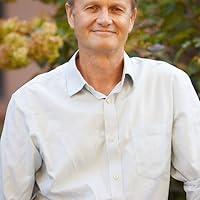
He received his B.A. in Philosophy from Georgetown University in 1991, his Ed.M. from Harvard University in 1994, his M.A. in American Studies from the University of Texas at Austin in 1996, and his Ph.D. in History from Johns Hopkins University in 2001. He won the Walter Muir Whitehill Prize in Early American History awarded by the Colonial Society of Massachusetts for 2000, and won the Hiett Prize in the Humanities from the Dallas Institute of Humanities and Culture in 2009. He has been a fellow in the Agrarian Studies Program at Yale University. He currently is a Professor in the History Department at Texas State University.
Writing has appeared in The Paris Review daily, The New Yorker.com, The New York Times, Harper’s, The Washington Post, Slate, The American Scholar, Texas Monthly, The Atlantic, and The Virginia Quarterly Review. McWilliams writes column at Pacific Standard. Literary non-fiction has appeared in The Millions, Quarterly Conversation, The New York Times Book Review, and The Hedgehog Review.
The other day a new friend happened to mention that she is a foodie and that she has a great "pork shoulder" recipe, or something like that. I quickly explained that I'm a vegetarian, though perhaps she already knew that, because she immediately asserted that her meat is ethically okay because it's obtained from local organic farms etc.. So I wanly reassured "Oh, okay, I guess that's different" and "my ethical objections are to factory farming" (and environmental reasons too, although I didn't mention that). I tried to hide my discomfort.
But why did I feel I needed to reassure her? And why did she think her explanation was sufficient? Aside from the obvious social implications of initiating a fraught conversation with someone you don't know well? I had never yet thought this out fully, only noticing that when offered some meal prepared with flesh from "humanely-raised" animals I have still turned it down. I say "Oh, I ate earlier" or "Thanks, but I'm just in the mood for salad tonight....."
Now after reading this book I'm considering this anew. I don't actually need that meat to live, and there is no guarantee that a locally grown pig or chicken lived a natural life or is disease free or never received antibiotics or, most importantly, did not suffer at its death. There never was a guarantee - that we think that way is the result of a story ethically-conscious consumers tell themselves and that agribusiness + the food industry exploits and relies on, all the while contributing to the North American "omnivore's contradiction." Whether factory-raised or homegrown those chickens, cows, and pigs have only been bred and raised to be killed and eaten by us.
I have to say I was surprised by this book's message and the author's accusations against Michael Pollan, Mark Bittman, Barbara Kingsolver, and especially, Jonathan Safran Foer. (See Eating Animals) McWilliams claims that the food reform movement is on an "intellectually dishonest foundation" and he calls them complicit in supporting unnecessary suffering and furthering the industrial food industry.
This book is very well-written, but its message is radical. I wouldn't recommend it to someone just exploring the idea of going vegetarian or vegan, but to those like myself who have already made a switch after absorbing all the data about factory farming. One could find points to disagree with, but McWilliams's practical application of ethical philosophy leaves me plenty to think about. And perhaps a polite new way to respond to ethically-conscious meat eaters.
Once again McWilliams proves that he is one of the most articulate thinkers and writers we have on the subject of how we treat animals used for food. Regarding so-called "humanely-raised" meat, he shows readers that chickens, pigs, and cows have emotional lives, suffer and do not want their lives cut short to provide food humans don't need. It is not ethically acceptable to claim to care about them, give them a more natural life for awhile, and then kill them. And in case you want details on typical slaughter procedures, that's in here too.
"Humanely-raised" animals allowed to live outdoors can be even more disease-prone than those in factory farms, picking up infections from the soil and contact with feces. McWilliams cites numerous blog posts from small farmers giving their animals a marginally better life, but dealing not only with frequent diseases arising from an outdoor environment, but losses to extreme weather and, in the case of chickens and turkeys, to predators--often a grisly death for the prey. These "humane" farmers also mutilate their animals--for example castrating male pigs without anesthesia--and farmers who do their own slaughtering can be shockingly inept, causing greater suffering than if the animals had been taken to a commercial slaughterhouse.
Food labels can mislead consumers about what they are really buying. So-called "grass-fed" cattle are not entirely grass-fed; many must be fed hay to survive--hay that must be grown elsewhere. And here's a surprise: grass-fed cattle are no less likely to be infected with deadly E.coli than those fed grain and confined on feedlots.
The outrages go on and on. The only way to remove oneself from supporting cruel treatment of "food" animals is not to eat them. Period.
(3.5) McWilliams was inspired to look into the issue of animal rights when he saw a video of a milk cow having her newborn calf taken away. She struggled and cried out a sound he’ll never forget. So this book is born out of emotion, but also out of reason: McWilliams is a philosopher by training. His central argument is that even supporting non-industrial farming perpetuates industrial practices by increasing demand and pushing industrialists to offer cheaper options. “We cannot afford to indulge in agricultural fantasies. Time is short and too much is at stake with the global food system and the industrial giants that dominate it.”
The author responds to other food ethicists such as Michael Pollan and Jonathan Safran Foer, whose anti-suffering message he applauds, but who he thinks doesn’t goes far enough – a hard argument to make from the brilliant polemic that is Eating Animals, but apparently Foer has been capitulating by looking for methods of raising chickens humanely and sustainably. “We have to look at the problem that is front of us,” Foer (quite reasonably) seems to be saying; McWilliams counters that by descending into practicalities he’s not holding a hard enough line. But perhaps willingness to enter the trenches of practical ethics is more helpful than idealism.
McWilliams is especially critical of home chicken slaughterers; he critiques in detail a number of blog accounts, which surely are easy targets with their grammatical errors and haphazard informality. Why not engage with Barbara Kingsolver’s excellent, nuanced narrative of poultry sacrifice in Animal, Vegetable, Miracle instead?
As you might imagine, McWilliams’s investigations into factory farming lead him to embrace veganism (Foer is only vegetarian, as far as I know). This is a good introduction to the issues involved in eating meat. If you want a better narrative, read Eating Animals or David Foster Wallace’s essay “Consider the Lobster.” If you want to weigh up less extreme solutions, try the aforementioned Kingsolver or Pollan (The Omnivore’s Dilemma).
I really liked the first half of the book. I am interested in philosophies behind veganism and animal rights. I usually prefer approaches that appeal to reason and not emotions, but I think McWilliams makes some valid points asking us to bond with animals and practice thoughtful observation.
The descriptions of killings were disturbing but I guess these are necessary. But of course the most important thing is that this books shows us that there are no humane farms, no humane killing, that there is nothing happy about using animals be it factory farming or small scale farming.
I wish that the book had made a stronger and bolder suggestion to go vegan. I understand the milder approach but I don´t agree that it is a better approach.
"The Modern Savage" attempts to raise reader's awareness that just because meat is labeled as locally grown does not mean that the animals have an ethical ending to their lives. McWilliams asks the reader to ponder what the purpose of a happy life of frolicking in the pastures means when it all ends terribly in a slaughterhouse. Furthermore, the raising of animals for commercial sale (and even for small-scale farmers) often causes many negative implications to the environment including large amounts of waste from both living and deceased animals as well as an exorbitant amount of water used during the slaughtering and processing of the animals. (A single cow requires a minimum of 400 gallons of potable water to be cleaned and properly processed). Another issue that is of serious concern is the disposal of the water used during the slaughtering process. (And that's not even considering the amount of insecticide that has to be used to stop the pests that gravitate to the animal waste!) There is absolutely nothing humane or sustainable during the entire process!
McWilliams' book is definitely not old news to current vegans and vegetarians, but it does raise several ethical issues for people like me who are not vegetarian. Quite honestly, it is not the meat I crave but the animal bi-products (oh, cheese, GLORIOUS cheese!). As consumers we are so far removed from the forces of our food. Just go down the meat aisle at a grocery store...Meat is neatly packaged without any signs of being freshly butchered. (That tube of ground beef at Walmart still grosses me out!) "Modern Savage" rudely awakens to the reader to be AWARE and MINDFUL of what we ingest. We need to view animals as living, sentient beings instead of as our next meal. Will I stop eating meat altogether? That is difficult for me to say at this point, but I know I will definitely think twice before purchasing meat again.
An issue that is not addressed in "Modern Savage" but that would add depth to this discussion is aquaculture and the process of raising fish for food. I guess that is a topic for another book!
Industrialized animal agriculture is morally and intellectually bankrupt. Society is slowly but increasingly becoming aware of the cruel, unnatural, and environmentally harmful aspects of factory farms. But what is going to replace it?
Well-known food intellectuals such as Michael Pollan, Mark Bittman, Joel Salatin, and Jonathan Safran Foer have advocated returning to localized, more traditional ways of raising animals. Encouraged by some environmentalists and even some animal welfare supporters, nonindustrial animal agriculture has grown tremendously in the past decade. Across the United States, we have seen a lot more backyard chickens, grass-fed beef, and humanely treated pigs — what many vegans refer to derisively as “happy meat.”
This is where James McWilliams’ brilliant and articulate book The Modern Savage steps onto the stage. McWilliams’ critique is devastating because he is so thoroughly familiar with the accounts of the very people who practice this new agriculture. In many cases, the very words of the these new farmers are more eloquent than anything we could say or add. The problems of nonindustrial agriculture are quite significant. McWilliams quotes from one nonindustrial chicken farmer, who poignantly notes about predation problems: “It doesn’t even take a minute for things to become utterly sad and regrettable.”
Predation is a significant problem for nonindustrial farmers, much worse than in factory farms. And death from predation can be quite grisly. Diseases are just as widespread in nonindustrial settings. Salmonella is sometimes more prevalent in a “free range” or “all natural” hens, than in their caged companions (p. 146); and internal parasites are often more common among free-range chickens than in caged birds (p. 147).
Little related to nonindustrial animal farming escapes McWilliams’ view. He looks at the emotions of animals, the mechanics of slaughter, backyard chickens, grass-fed beef, and the painful lives of pigs. The problem with industrialized animal agriculture is not the industrialization, but a more basic problem — the fact that it utilizes animals at all.
Localized cruelties are just as cruel. Even small-scale farmers often mutilate their animals in just the same ways that factory farms do: debeaking, castration without anesthesia, and so forth. One mostly-overlooked mutilation is nose rings for pigs — a mutilation which is essential on “natural” pig farms before pigs can be released into open pasture. The nose ring prevents one of the pig’s most natural behaviors, namely rooting; rooting with a nose ring is instantly and severely painful for a pig. When you hear about it, “nose rings” don’t sound that bad; but it is a special torture reserved just for the “happy pigs” when their natural rooting behavior becomes intensely painful.
What looks like a “natural” setting to our human view, is often anything but that for the animal. For “free-range” chickens, to be in an open pasture is actually an exquisite form of discomfort. Chickens are prey animals, and so to place them in open pasture is especially nerve-wracking for them because they cannot use their natural defenses. They naturally desire low overhanging branches so they can fly up into branches to protect themselves from ground predators; they also like higher tree cover to obscure them from hawks and high-flying predators.
“Do it yourself” slaughter often does not go as advertised. “Botched slaughters abound in these narratives,” McWilliams notes in examining small-scale slaughtering operations, “and are, be forewarned, disturbing.” One such account begins, “we came to believe that piercing the chicken’s brain would be the least traumatic for all involved. Not so.” Mobile slaughter units, an attempt to decentralize the slaughter process, may be marginally more “humane,” but are much more expensive and vastly more wasteful of resources than industrialized slaughterhouse facilities.
And what is the consequence of all this on the human psyche? What are backyard farmers doing to themselves when they try to “take back our food” in this primitive way? Forget about the animals for a moment — what is it doing to us? Isn’t it turning us all into monsters? McWilliams dissects the predictable rationalizations which backyard farmers often offer for the rattling of their own psyches by these obviously violent and disturbing events. “The butchers are,” McWilliams notes, “trapped in an unconscious but ingrained habit of moral disengagement.”
The Modern Savage is in the tradition of such books as Peter Singer’s Animal Liberation and shows just how far the discussion of eating animals has come in the past 40 years. It is also, at least in part, an eloquent response to Jonathan Safran Foer’s Eating Animals and Michael Pollan’s The Omnivore’s Dilemma. Both of these latter books indicted factory farms but sought to exculpate nonindustrial animal agriculture.
McWilliams exposes the fallacy of this line of reasoning. The problem with these nonindustrial systems is that localized cruelty is still cruelty. It’s the same thing, with a new type of practitioner — the “modern savage.”
I picked up The Modern Savage after hearing about it from a friend, whose copy was backordered until December. After receiving my copy in a week, I was determined to finish only to spite him. What started as a sort of joke turned into a genuine interest into the themes that author James McWilliams raises in his book, and a serious reevaluation into my eating habits.
The logic of this book is basically as follows: We eat animals even though there are serious ethical (and environmental) concerns. We do not need to eat animals to survive. Why cause unnecessary suffering? It's an important question to ask, and the author does a fairly solid job of explaining why one should opt for veganism. Early in the book, he introduces what he calls The Omnivore's Contradiction (what I assume is a reference to Michael Pollan's The Omnivore's Dilemma, which McWilliams sometimes derides as being half-baked). It's the idea that it is contradictory to advocate higher standards of animal welfare when we prematurely kill the animals for meat anyways.
McWilliams attempts to pull at the strings of the readers' hearts by first establishing a commonality between humans and animals based on sentience, and then discussing the inhumane practices of slaughter and cultivation that occur on both conventional and organic farms. Judging by the manner in which McWilliams portrays slaughterers as either complete fools or devils, The Modern Savage is a rather fitting title. While the examples the author includes to highlight the immorality of carnivorism are moving, I was most swayed by the facts that McWilliams included in regards to the impact of eating meat on the environment and on our health. I had no idea that one pound of beef requires 2500 pounds of water to make, or that salmonella is present in nearly 20% of conventionally-raised chickens and in an even higher percentage of free-range chickens. I am interested in learning more about this side of the story.
McWilliams presents a fairly sound argument, but I do have a few questions/areas of concern regarding the author's logic, including: - If we're relying on the logic of chicken farming being inhumane in part because chickens naturally take up several dozens of square miles, is having a pet inhumane? By this logic, McWilliams would agree; however, he references the emotional connection humans share with animals and would likely see the value in keeping a pet. Is keeping an animal in the confines of a home not abusive? - Where do fish fit into this equation? - Why criticize Mark Bittman's "Vegan before 6:00pm" philosophy? McWilliams compares being "semi-vegan" to being "semi-pregnant," which is frustrating. If he's advocating gradual reform - as he notes in the final chapter - simply decreasing the amount of meat in one's diet is the obvious first step. - Does killing animals really erode our self-worth? I had never even considered this before reading this book, and I can't imagine the average meat-eater consciously thinks about this.
All in all, The Modern Savage provided some serious food for thought. I have no plans as of now to shift to veganism, but I am glad I can make a more informed decision in regard to my use of animal products. For that reason, The Modern Savage is a book that most people would benefit from reading.
As you might guess, The Modern Savage is not an easy book to read. That's not a reflection on the writing: it is well written, conversational in tone,and well thought out. It is, instead, a reflection of the subject matter. Most of this was not a great surprise to me. I began my journey towards veganism a couple of years ago and get closer to my ideal every day - and that journey was inspired by the animals who, I realized, are beautiful, intelligent creatures who deserve better than what we do to them. I knew a lot about the animals and about factory farming but didn't know much about small farms / free range farms, etc. And that's where the real eye opener was, for me, in this book. The chapter entitled "Backyard Butchery" was especially surprising and disturbing to me. As I said, this is not an easy book to read.
McWilliams may appear to be harsh to small farms / free range farms. What is really going on in this book though is a fuller, more accurate picture is being painted. Some would like to think that the grass fed cow, for example, leads a life that's something like heaven - at least until that point when a knife, gun, etc. brings it to a screeching halt. On the human side of this, many would like to think that being a "grass farmer" is easy - just let the cows out to graze and everybody's happy. McWilliams sheds a lot of light on why most of our assumptions about small farms and animals that live and die on them are in no way the complete picture. Some of the stats on disease on small farms vs. factory farms were especially stunning.
In the end, McWilliams makes a good case for the fact that while these small farms provide a better life for the animals involved, they are wrought with their own problems. Ultimately, as a result, we can really only see eating "grass fed beef," etc. as a stepping stone towards the true "alternative," the one that agribusiness truly fears if enough people open their eyes - a plant based diet. Only in getting to that conclusion can we make life truly better for the animals and the planet we're killing with our meat habit. Hopefully with help from The Modern Savage we're just a little bit closer to that.
From the page and a half that I read, its clear that McWilliams is a very adept writer. However, I am a vegetarian that does not eat dairy products. I already believe that factory farming and inhumane treatment for profit is unacceptable. This is an excellent book to educate people about the full implications of their actions.
The Modern Savage: Our Unthinking Decision to Eat Animals by James McWilliams is a personal and emotional argument against the killing of and abuse of animals that are not necessary for man to survive. McWilliams received his B.A. in Philosophy from Georgetown University in 1991, his Ed.M. from Harvard University in 1994, his M.A. in American Studies from the University of Texas at Austin in 1996, and his Ph.D. in History from Johns Hopkins University in 2001. He currently teaches history at Texas State University, San Marcos.
I will start this review by stating that I have been a strict vegetarian for over ten years. I do not like the term vegan because I find it misleading. I do not eat meat of any kind and do my best to avoid using any animal products. That includes using not driving a motor vehicle because of the death it causes on our roadsides and the damage to the environment drilling for oil frequently causes. I try and do my best to leave a minimal footprint and cause as little pain to other inhabitants of the earth as possible.
I usually really like books like this because they reinforce what I believe. That is pretty simple human nature. However, I found McWilliams arguments to take an emotional approach to animal slaughter. Too many of the examples are what I would call “touchy-feely.” I am a little older than the author and like factual arguments. Emotional arguments may work on a younger audience, but to me they seemed more preachy than anything else.
I will give McWilliams credit for taking on some of the big names in the “sustainable” food world. He does a good job bring up some of the hypocrisy in the message. McWilliams also warns against listen to those who sold out to big media. Big media exists to make money and to make money the full and honest truth is often left behind.
On myth that McWilliams blows out of the water is that humanely raise animals live a happy life, except for one very bad day. That bad day is death, and death extends far beyond a day, and comes much earlier than expected in a normal life cycle. Factory farms are much maligned and with good reasons. The alternatives, however, are also deeply flawed. McWilliams explores these alternatives and presents the flaws in theories. Backyard (raised) animals still experience slaughter and well as animals raised in the other popular phrased environments, such as free range. They may have a happy life, but it is short. They are simply a means to an ends.
Another point brought out in the book is the natural life humanely raised animals live. The idea of green fields and the former California “Happy Cows” make the idea of dairy and meat consumption a sound like a happy bargain. The idea that domesticated animals live in a state of nature on small farms is ludicrous. Has anyone seen a wild cow? Perhaps a wild chicken? The fact that livestock do not exist in nature makes it a difficult case that they live a natural life. Breeding of livestock makes it harmful for poultry to live a free range life. Fast growth and oversized bodies make walking free dangerous to the chicken.
McWilliams makes his case fairly well. I wish it would have relied less on emotional response. Some of the stories are touching others a bit too emotional for something that could be a bit more fact based. I appreciate McWilliams convictions. He stands by his beliefs and does not waver even in the face of such popular writers as Michael Pollan. McWilliams does his best to end that terrible phrase “one bad day.” He digs deeper into that feel good area of humanely raised and free range labeling to expose what it really is. The Modern Savage is a well written book and helps re-establish the beliefs of those who already do their part. The emotional tone, however, is unlikely to win new converts.
This is a really important book because it isn't just about eating animals in general. It takes on the tendency for "compassionate carnivores" to think they are doing a good thing for the animals by buying animal products from free-range, cage-free, humane, ethical, artisanal, organic, sustainable, family-type farms instead of factory farms. I don't think I have read any other book about the problems with animal products that comes at it from this angle. The move to want to buy "humane" meat, dairy, and eggs (honey, too, though the author doesn't get into that) shows that on some level people care enough about the welfare of animals to spend more and shop more consciously to feel better about their decision. It is another step, although a big step for some, to go even farther and give up animal products altogether. This book shows them why. The only two issues I have with the way it is written is that at the beginning, the author tends to cater a little bit to the prevalent idea that animals are not like us when he states about animal suffering that it is, "Not the same suffering. But suffering nonetheless." I happen to think it is the same suffering in almost every way. The other thing is that he reiterates throughout the book that all of these terrible things happen to animals, and the environment, for food "that we do not need." He states this many times. The problem is that I know we don't need it and why. He knows that. Other vegans know that. However, he does not include a chapter to explain to the average meat eater, who thinks that animals foods are absolutely essential, why that is. It's a big chunk of the explanation left out if his target audience is people who still eat meat, but think family farm raised is better. Making the assumption that the reader knows this is kind of like preaching to the choir. Otherwise, I think it is a fantastic book and makes the case very well, that we all need to move away from using the animals for our purposes, even if we try to salve our consciences with the thought that, "at least they had a good life."
A very powerful summation that will have omnivores reconsidering their options. I read this book more by accident than by plan. Veganism comes clearly into focus as a for some, difficult yet effective means of evading industrial animal agriculture, massive cruelty to food source animals, human exposure to a host of nasty and dangerous diseases, chemicals and antibiotics, plus serious pollution of our environment. I must seriously reconsider my options! You will too after reading this intelligent book.
I felt like this book didn’t hold my interest simply because the author writes with the intention to convince and persuade the audience why eating animal products is wrong. However, I agree with each point, but felt that I was reading facts that I already knew and already was on board with. Great information, just nothing new to my knowledge.
This book starts out annoying but once through the first two chapters, extremely informative, well-researched, & quite thought-provoking. I read it as a library book but will be buying a copy for myself.
I've published an e-book by James McWilliams ("Politics of the Pasture") at Lantern Books, and he contributed an essay to an anthology I edited at Lantern called "Running, Eating, Thinking: A Vegan Anthology." I am also a vegan. So, I'm not a disinterested reader of McWilliams' work or this book. That said, I can't believe I'm so biased that others wouldn't find this work highly readable, mordantly amusing, and persuasive. McWilliams sets himself a particular task: to interrogate the notion that the solution to ending the horrors of industrialized animal agriculture is to switch to pasture-raised and free-range systems that offer a more "sustainable" and "humane" way of raising animals. McWilliams argues that not only is the central ethical issue of whether we should kill animals for food avoided by this switch, but the sustainability of such ventures is questionable (to say the least) and the realities of rearing animals outside are far from idyllic.
McWilliams is at pains to point out that he doesn't deny that extensive systems are more humane than the moral abomination that CAFOs are. He himself, he notes, has supported welfarist measures. However, as he illustrates, the "humane" system only survives because of the industrial model's remarkable efficiencies and its supply of breeds, feed, and various other mechanisms that curtail the very freedoms that animals express in extensive systems and that get them into trouble. The extensive systems allow consumers to salve their consciences without changing their eating habits, even though if they knew just what goes on on free-range farms their consciences may be pricked once again. McWilliams doesn't offer a defense of veganism; he doesn't need to. The book irresistibly points in that direction.
Those of us who've been vegan for years are constantly surprised at how tenaciously omnivores who've been presented with the evidence of animal agriculture's negative effects on the environment, animal welfare, climate change, and human health seek to continue to eat meat and dairy products rather than change. This book--occasionally a little snarky, but witty and, in the end, responsible and compassionate--is the perfect response.
This book brought up some interesting points about small scale farming/ranching that I had not previously thought of. Meat eaters try to defend their choice to consume animals and their products with many bad arguments, and one of the more recent ones I have encountered are that the small scale production techniques are better. My gut reaction to that was always, 1) you are still raising an animal for a human purpose, and 2) you are still murdering the animal at the end. I was pleased to see that Mr. McWilliams states the same.
The first part of the book is great because he goes into the philosophical ideas about animal consumption, but he did not do it in a way where someone less versed in philosophy would be put off by it. One of the most unique parts is that he states that humans should be emotional about the slaughter of millions of animals. It is refreshing to see someone standing up and saying that yes, we humans should have the emotional reaction to this brutality. Often times people take the emotional component out of the argument, and while I think that works in some areas, in others it does not. Humans are emotional creatures, other animals are emotional creatures, not robots or machines, so why constantly argue for the removal of emotion?
In the second part he discusses the issues with backyard butchers, grass fed beef, and other supposed "more humane" techniques. Tough to read if you are sensitive about those stories, although he did not go too in depth as some others do, so it is tolerable; I just had to take a few breaks in between chapters.
The first quarter of the book was a bit dry, it consisted mostly of quotes from other sources and provided little of its own (as it felt to me) Since it summarized a lot of books I already read, it was a bit of a boring read. Also the part in which the existing situation in slaughterhouses is described wasn't very fresh although it was important to get it into people's minds (again). And I guess this was neccessary to get all readers onto the same level of background information.
The main point of the author though is that as bad as things are in slaughterhouses, it would be wrong to believe that things are handled less brutal or in a way less prone to the viruses etc. that stirr up huge meat scandals on a regular basis.
What follows now is what made the book stand out for me: A far more unique part: The author collected bits and pieces by hobby farmers, backyard breeders etc. His main source here is the internet, it might be a selective way to reflect the voice of that kind of farmers but it was interesting and impressive. Blog posts about backyard slaughtering are analysed as well as forum discussions of breeders.
It might not be an objective, scientific way to analyse the collective way of thinking of those backyard and smallscale farmers but it sheds a light on the way of thinking of way too many and it makes you rethink „greener“ alternatives to big slaughterhouses. He tries to make clear that one shouldn't go the „slightly better“ way but the right way.
The writing wasn't that captivating, I am aware it is a non-fiction book, but they can be written in a more entertaining way too I think, without loosing their serious approach at all. When it got a bit less dry it soon seemed dismissive (towards the bloggers and farmers) to me.
I did enjoy the book as dispite the beginning that seemed like a collection of thoughts and quotes from other books, it did go a unique way in the end.
(I received a free digital copy of this book via NetGalley.)
This book basically preaches to the choir. It won't convince anyone who is not already a vegetarian.
It contains a number of flawed premises. McWilliams says that farm animals are "sentient beings with a sense of self."(p. 6) Really? Cows and pigs do not pass the mirror test, a standard method of assessing an animal's capacity for self-awareness (http://www.sciencedaily.com/terms/mirror_test.htm. Arguing for a form of anthropomorphism, he says "Abstract reason can liberate us from logic."(p. 29) Really? Logic is the highest form of abstract reason!
More troubling, however, is McWilliams' moralism. He attempts to guilt-trip the reader into vegetarianism by appeals to morality. Being a vegetarian is "the right thing to do" he says. It is a "basic moral truth" that we should not kill farm animals in order to eat them.(p. 6) Doing so violates their "right to live."(p. 9) Now if you are inclined to believe in those moral rules, you will agree. But if you don't then McWilliams gives you no reason why you should. Some people say it is immoral to eat meat and others say it's not. There is no way to tell which one is correct.
We would be better off if we abandoned appeals to morality and instead appealed to self-interest, for instance by promoting the health benefits of vegetarianism. I expand on this idea here: http://www.bmeacham.com/blog/?p=1426.
A powerful, often gut-wrenching landscape analysis of the horrors and ethically dubious rationalizations surrounding animal agriculture, whether factory or backyard. He fleshes out well the "Omnivore's Contradiction" of believing, on the one hand, that animals have moral worth and that the harsh reality of factory farming violates that worth, while on the other hand, still thinking it's morally consistent that we treat them as objects, as means to food (which we don't even need to live happy, healthy, and ethical lives in the modern era), so long as the animals aren't treated quite as horribly on a family, free-range farm. He also effectively called bullsh*t on the free-range movement in several ways: (a) the movement is unsustainable except for the wealthy, and that 95%+ of meat still comes from factory farms, (b) backyard butchers often inflect as much or more pain on the animals at the time of slaughter, and often during their lives, through both act (e.g. castration, horn removal, teeth crushing, all without anesthesia, nose rings to cause pain in order to prevent rooting) and omission (allowing free range results is more disease transmission, in volume and variety, more crushed piglets), and (c) it's still advancing the notion that it's OK to unnecessarily raise and kill sentient beings -- what many have rightfully deemed a "karmic disaster."
Free-range or factory farmed, McWilliams believes that pigs, chickens, and cattle are sentient beings with a moral right to a good life and not to be killed for food. Eating animals is bad for the environment, cruel to the animals, unhealthy for us and morally wrong, he argues. "kale and quinoa could be obtained without the additional methane output .. and most important, without the slaughter of sentient animals who would rather not be born in order to be killed and eaten by people with a warped sense of what cows were meant to do." (p194) Reading about the suffering of pigs and cows in factory farms causes me to consider what makes for a good human life. In a world where many people live in poverty, struggle with homelessness or inadequate food, and die painfully and slowly of an illness for which there is no cure, I wish to see less suffering for all animals - both human and ones we use for food.
In The Modern Savage, James McWilliams is trying to do for free-range farming (any animal farming, really, but with a focus on free-range farming in particular) what Upton Sinclair did for slaughterhouses in The Jungle. His goal is to illustrate the inherent cruelty of raising animals for food products, and to convince readers to consider a purely plant-based diet instead. He appeals heavily to emotional reasoning, but the actual examples he uses in the text almost serve to make industrial agriculture more attractive from an ecological standpoint. The result is a book that will likely validate the decisions of readers who are already vegan or vegetarian, but is unlikely to convince omnivores to alter their diets.
In compliance with FTC guidelines, I disclose that I received the book for free through Goodreads First Reads.
This book is definitely in the top five best books I've read on the topic of animal agriculture. The writer debunks the myths so many people believe about "humane meat" and the superiority of the quality of life and the quality of the product that comes from animals raised on small farms. A very eye-opening book for everyone, not just the plant-based crowd.
Knowing most of the information contained thus far (I'm a vegetarian) parts of this tome are still difficult to read, especially the chapter titled 'Humane Slaughter,' which goes into a bit of detail to the end-of-life process for the animals.
This was a very well researched argument for how "humane" meat is not actually better than factory farmed meat. It was all encompassing and included environmental, ethical, health, and economic reasons for adopting a plant based diet. I highly recommend it!
This is the most boring and useless book I have read in awhile. I have read many other books pertaining to this topic that were actually informative and interesting. This just read like a really bad RANT! I would not recommend this to anyone.