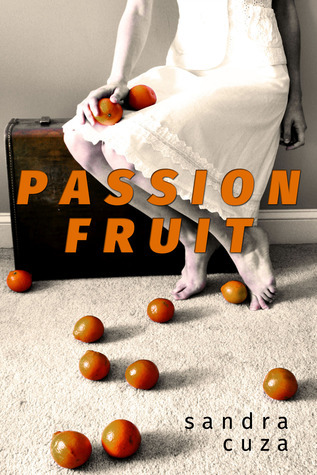
Happily married and living in Venice Beach, California, television executive Julia Elliott’s orderly life collapses when her husband is sent to Brazil for a two-year assignment by his company. Knowing that she will not be rehired once she leaves her job, she nevertheless agrees to follow him to the land of sunshine, tropical fruit and string bikinis.
But on arrival in São Paulo, Julia is shocked to discover that the city is marred by chaotic traffic, pollution, endemic graffiti and appalling slums. This is not the exotic paradise she envisioned.
As her husband works the long hours typical of American businessmen in São Paulo, their marital relationship frays; and remembering warnings about glamorous, seductive Brazilian women, Julia becomes concerned about her husband’s late nights and weekends at the office.
Is her husband having an affair with his gorgeous secretary? And how does Julia really feel about Max Calhoun, the married, off-beat minister that she’s met at an ex-pat theatrical group she joins?
Passion Fruit explores the personal and social lives of ex-pat wives following their husbands along the path of international business: the challenges are momentous, and the consequences of bad decisions are life-changing. Yet through it all another Julia emerges, and the ‘other Julia’ is indeed a pièce de résistance.
Born in Kansas and raised in California, Sandra Cuza has lived in London for nine years, Sao Paulo, Brazil for twenty-one and Orleans, France for a year and a half. Her credits include three earlier novels, one made into a feature film, a Brazilian cookbook in English, numerous articles and short stories. Passion Fruit and Game of Chance are her latest novels. She has recently moved to Urbana, Illinois.
3.5 stars. Light and breezy novel set among the US expat set in São Paulo. Julia, a successful television executive who has been forced to give up her career in order to advance her husband's ambition, finds herself at loose ends in Brazil after her husband Jack is transferred there. The supporting characters are vividly portrayed, even if the "villains" are a little one-dimensional. I especially liked the melodramatic art historian Celeste, who habitually wears mourning for either Princess Diana or the Brazilian artist Cândido Portinari years after their deaths. Passion Fruit is a pleasant read, although the plot meanders somewhat for two-thirds of the novel and accelerates in the last hundred pages.
Any North American planning to work or study in Brazil -- or who is accompanying someone who is planning to work or study in Brazil -- should read this book for some insights into differences between the Brazilian and North American cultures.