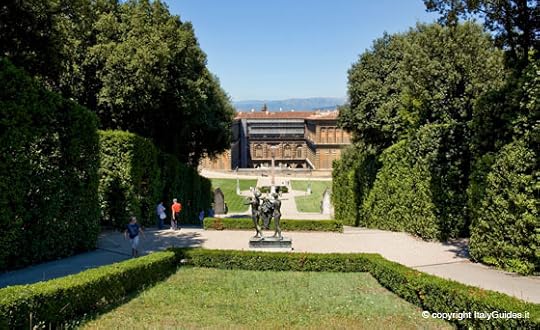
The marshal must leave his snug world at the Pitti Palace to seek a criminal in the shadowy haunts of prostitutes, pimps, and tricks. No one believes that he can navigate in this milieu, much less identify a killer, but once again he confounds their expectations.
MAGDALEN NABB was born in Lancashire in 1947 and trained as a potter. In 1975 she abandoned pottery, sold her home and her car, and came to Florence with her son, knowing nobody and speaking no Italian. She has lived there ever since, and pursues a dual career as crime writer and children's author.
She has written fourteen crime novels featuring Marshal Guarnaccia of the carabinieri, all set in Florence, which she describes as 'a very secret city. Walk down any residential street and you have no idea what is going on behind those blank walls. It's a problem the Marshal comes up against all the time.'
Magdalen Nabb also writes the immensely successful Josie Smith books, set in her native Lancashire, which form the basis of the Granada children's TV series, Josie Smith, scripted by the author. Her first book, Josie Smith, was runner-up for the Guardian Children's Fiction Award in 1989, and in l99l, Josie Smith and Eileen was winner of the prestigious Smarties Book Prize for the 6-8 age group.
First Sentence: The week that school opens for the autumn term is as bad a Christmas.
An older woman asks the Marshal to look for her 45-year-old son, missing for two weeks and his own son is having problems in school. When pieces of Lulu turn up in plastic garbage bags, Guarnaccia is assigned to lead the murder investigation. With the assistance of his Captain’s man, Ferrini, the Marshal is introduced to Florence’s transsexual community to find a killer and save an innocent man’s life.
In many ways, this is a book about those on the outside; children teased at school, immigrants whose lives were intolerable in their native lands yet find themselves abused in a place they took refuge, those emotionally abused and those whose sexual preferences do not conform.
Marshal Salvatore Guarnaccia doesn’t feel he fits in; he is big, clumsy, and allergic to the sun, has always been told he is a dreamer and never feels as smart or clever as those around him. He loves his family yet is uncomfortable showing or expressing his emotions.
Even Guarnaccia’s Captain views him as “…none too bright and far from articulate but there was no getting away from the fact that he didn’t miss much and that the quieter he got, the nearer he was to whatever he was after.” It’s nice to have a protagonist who is not handsome and macho, but has insecurities as we all do.
While some may choose not to read this book because of the subject matter, that would be a shame. Ms. Nabb introduces us to a cross-section of the transgender community in a sensitive and non-sensational, non-judgmental manner establishing back stories for each of the characters, individualizing them.
Nabb, once again, takes us to a new area of Florence. Beyond providing a sense of physical place, for part of the book, she takes the weather and makes it an element that is almost another character.
The plot is engrossing, emotional, tragic and poignant. I applaud Nabb for not employing a clichéd ending. Each book in this series has, so far, been better than the last. This is no exception. The impact has stayed with me far beyond the final page.
Like other entries in this series, this is just a little too dated for today's reader. The story of Florence's transvestite community and a murder, just seems dated in attitude and content.
Parts of a dead body are found dumped illegally. They are thought to be female, but forensic examination reveals the body of a trans woman. At the time of the novel, the only profession available to the victim would be prostitution, so investigation begins with the specialized community of sex workers who frequent a certain park by night.
By day, the park is a haven for families, and so, from a literary perspective, the park becomes a kind of symbol for the clash of cultures. The park also houses a feral cat colony, another symbol. (If you love cats, an incident occurs that is difficult to read.)
Although the attitudes and situations are dated, the book helped me understand certain things better. Magdalen Nabb differentiates between sympathetic and non-sympathetic people by the pronouns they use. Every time someone used the wrong pronouns (as the police, including Guarnaccia, always did), it irked me. But then again, the police are the ones dealing with official identification, and the problem of where to house a trans woman they have in custody if she is sent to prison, an issue which can still cause problems today.
The title of the book refers to the fact that Guarnaccia has been put in charge of running the case. Unfortunately this is not something he enjoys—far from it—and we are treated more than ever in this book to the self-doubt that holds Guarnaccia back. In the end, he is offered promotion, which he turns down.
I’ve given this book 4 out of 5 stars because, in spite of the dated attitudes, it illustrates the clash between traditional family life and those who navigate the world outside its bounds.
🍷🍷🍷 I cannot say enough good things about this mystery! We begin with the familiar: Marshal Guaranaccia himself, a wonderful protagonist throughout the series, Italy and specifically the Florentine setting, and Nabb’s inimitable ability to draw the lives of the humble people in the stories in such detailed, loving and attractive ways. Here, we get the added bonus of a deeper glimpse into Guarnaccia’s personal/family life, a tale that features the Marshal as the lead investigator in a murder - never mind that it’s given him because it’s a potentially controversial, dare we say career threatening case? And of course Guarnaccia is as ever bumblingly and charmingly unaware of it all; repelled by the grisly nature of the murder, uncomfortable with the milieu in which it occurs (prostitution AND sexual roles/identities) but ultimately determined to see the right thing done - justice - to the best of his ability. That Nabb juggles all these balls so deftly and still limns an appealing and thought provoking reading experience is high praise that’s well deserved. As one of the reviewers mentioned, this series (and Marshal Guarnaccia) have never received the acclaim they merit. These mysteries rank quite high in my pantheon of detective fiction.
An intriguing, enjoyable, short murder mystery, set in Florence, Italy. The story centers on the largely hidden underworld of male prostitution, transsexuals and transvestites in Florence’s late 20th century. At times I found it difficult to remember where the scenes were occurring (I must go see them in Florence) and as another reader noted, some of the characteristics of Italian life were confusing. However, I enjoyed the book once I got used to the pace, characters and particularities of the setting. This is the second book I’ve read in this slightly different but enjoyable detective series. Three and a half stars.
A trans prostitute is killed and butchered and the Marshal is given the case because his superiors find it distasteful - plus they have no real belief that it can be solved. Despite his bewilderment and conservatism about sexuality - as well as his perpetual self doubt - the Marshal is his usual exemplary self, solving the case and treating the trans community with dignity. The subtext is parents and children as the Marshal’s son is going through a bad patch.
Es war ein sehr interessantes Buch. Es wurde nicht nur von dem Fall erzählt, sondern auch von dem Privatleben des Wachtmeisters, welches nicht oft in solchen Romanen vorkommt. Dies war für mich persönlich eine ganz tolle Erfahrung und ich kann das Buch nur weiter empfehlen.
The Marshal has his own case to lead for the first time and he is not happy. He is a wonderful character but this crime was not one he could relate to (and neither could I).
I really wanted to like this book. When a friend gave it to me, I imagined I would, since I do see myself as one of the "readers who like sophisticated, literate mysteries in foreign settings", for whom the Library Journal "strongly recommended" this book. But sadly - no. In my view it was all around just very meager compared with such strong characters, lush and vivid descriptions and psycho/socio/political observation and commentary as I have found in Andrea Cammilleri (Sicily), Michael Dibden (all of Italy), Philip Kerr (Berlin during the Nazi regime and immediately post-war - talk about intense, hard-boiled writing! Move over, Raymond Chandler!), and even Donna Leon, of whose happily married and Greek classics reading Venetian detective Guido Brunetti I am quite fond, despite what I consider a sort of thinness in her use of language (perhaps an occupational hazard of being an expat writer?). But this book failed to impress, with its underdog carabiniere as its reluctant detective, its attempts to convey Italian vernacular with a sort of English countryside style that seemed straight from Agatha Christie. So few views of the city, so few insights into Italian character; yes, some psychological probing here and there, which is why I gave it two stars instead of one, but not enough, not enough! Sure, I like Inspector Colombo well enough, in whose Magdalen Nabb's Sicilian, transplanted to Florence, Salvatore Guarnaccia, seems to be sort of cast, but without the warmth and charm, but - as a rule I don't like my detectives to be too fumbling or depressed. I'm sure it's just me, but I prefer them wisecracking and hardboiled, or at least sort of profoundly philosophically astute. Sorry, maybe I'm just having a cranky day. (Any readers out there, tell me: Is there something I missed?) But when I have a moment, I think I'll go back and revisit Aurelio Zen (gotta love the name), Michael Dibden's coolly cynical and utterly human anti-hero.
This turns out to be a story that reverberates in later books: the confrontation between Marshal Salvatore Guarnaccio and his son Toto. It's just a short scene that plays no great importance in the plot of the novel, but it sears the Marshal's life in a way he can never foget.
In it, Toto is picked up for shoplifting and the source of his school boy unhappiness comes out: the burden of being a policeman's son and the constant teasing about his goody-goody family. He hates that his father is a policeman and that he isn't rich.
It wounds the Marshal. His family life is so much more comfortable than his own childhood circumstances. He's middle-class and respectable. And he's a step above his working-class father and the frequent poverty they experienced.
Part of the wounding is that it pierces the Marshal's childhood dream. As a boy, he saw the respect that was afforded three men in his village: the priest, the marshal and the magistrate. He decided to grow up and be the Marshal. It was the culmination of his childhood longing for a better life. And his son disdains it; hates it even.
I'm not sure he ever gets over it. Many parents experience this situation with their children. They work hard to give their kids better than what they had at home and their kids turn on them, citing everything they lack compared to their friends. It pierces a lot of dreams. The parents are appalled at their children's greediness and selfishness. And while they can see the injustice of it, it stings and brings a sense of failure where none is in actual evidence.
Just like that, poof! Imperfect, unappreciative children; deeply hurt parents who are wounded in their own childhood dream of success. A tragedy worthy of Shakespeare.
Yet another good Magdalen Nabb mystery…and I think the best so far. The Marshal is given a case that no one else wants because of its unpleasant nature…the death of a transsexual. Marshal Guarnaccia is at first disgusted and very uncomfortable when he has to investigate the murder of “Lulu”, who is a transsexual prostitute. But Guarnaccia’s disgust and discomfort soon turns to understanding and empathy as he finds out more about the men whose lives are affected by the brutal murder of one of their own. The character development in this book takes a big leap from the previous Nabb books, with Marshal Guarnaccia now a full blown figure who walks off the page for me.
Jacket Notes: “A transsexual is dead. Now the Marshal must solve a mystery greater that just the gender of the corpse. Lulu, a transsexual prostitute, has been found brutally murdered and dismembered in a park in Florence, Italy. Nobody want this difficult murder case, especially not Marshal Guarnaccia. Forced to move into an alien, shadowy city of which he knows little and understands less, the Marshal faces his greatest challenge. Although an arrest is made after only a few days, he can’t believe that the hot-tempered, unbalanced suspect could have planned and perpetrated such a cold-blooded and complicated murder. But the Marshal must confront the Public Prosecutor and battle with his own prejudices before he can discover the startling answer.”
Marshal Guarnaccia is modest and unambitious, yet he nevertheless succeeds in resolving very difficult cases throughout this entertaining series. Guarnaccia uses plodding police work, helped by moments of inspiration. He is foremost, however, a policeman who is tempered in all things by his deep compassion.
I've read the first book in this series and The Marshal's Own Case, and I enjoyed both of them very much. At times I wanted to shake the Marshal to snap him out of his reveries, but then when he did come to life, it was well worth the wait. The omniscient narrative style lets us get into everyone's head, which is a refreshingly traditional approach to this genre, where we are so often stuck in one character's head through the whole story, either as a 1st person narration or a 3rd person limited narration. What comes across from the book most strongly is the protagonist's profound decency, which is also refreshing!
A really enjoyable short mystery that focuses on the murky underworld of male prostitution in Florence, Italy, as well as a gruesome unsolved murder. The story starts out somewhat slow, but the reader is increasingly drawn in as the plot develops. This is more of a subtle European-style psychological thriller rather than the typical "action" novel. The characters and their emotions are well-developed and realistic, especially the main character, Marshal Guarnaccia, who leads the investigation while dealing with his own family problems. The vocabulary is definitely British English (a "chemist" is a pharmacist, for example), but readers accustomed to British mysteries would have no issues. This is not a translation - the author Magdalen Nabb lived in Florence for more than 30 years. I found some of the characteristics of Italian life confusing (do stores really reopen at 5 in the afternoon?) but I liked the book more once I was able to orient myself and get used to the particularities of the setting. This is one of those books where I felt sorry when the story came to an end.
This is a very interesting and compelling entry in the Marshal Guarnaccia series, largely because of the contrast between his fatherly concern for his schoolboy son's behavior and his utter discomfort with the world of transsexuals and transvestites where his latest case is played out. One of the Marshal's appealing qualities is his diffidence: here, he feels inadequate to deal with either his home situation or the investigation, but as usual he is more qualified than he thinks, and each problem leads him to a better understanding of the other. I suppose this book could be characterized as a police procedural with heart, not as dependent on Florentine local color as some of the earlier ones in the series.
It was a bit hard to get into this story in which Marshall Guarnaccia in in charge of the murder investigation of a transsexual. The Marshall is at first ill-at- ease with the subjects he is interviewing but as he gains a bit of understanding about these individuals who live life between a rock and a hard place he begins to see the motives for this murder.
The author sprinkles the book with comments from other cops and co-workers of the Marshall who consider him not very bright, a bit simple and slow on the uptake and I was not sure what was to be gained from these remarks. It is true that the Marshall appears to be a imperturbable man of few words but in this story we see that he can and does feel things very deeply.
Amazing....this book held my interest and once I started it, I didn't want to put it down.
A young man is missing, a young woman's chopped up body turns up in garbage bags & a suitcase...upon autopsy the young woman is found to be a transsexual prostitute that was very much disliked by her community.
The marshal has his work cut out for him...not only must he earn the trust of the transsexuals in order to solve the murder and find the missing young man, but his oldest son his having problems in school and has taken up with the "wrong crowd".
Although on the surface the book is about murder & missing persons, the underlying theme is family & family relationships.
Due to the distaste of his superiors, the Marshall is given charge of investigating the death of a transgender prostitute. Finding the obvious suspect does not sit well with him and he perseveres, seeing connections between his cases, and wrapping up the murderer. He also deals awkwardly with his youngest son's problems at school. The mystery is fine, if a bit gruesome, but what matters, as always is the Marshal's empathy and his ability to listen and finally to understand. Even if, as his superior said, he was not that bright. Glad to have stumbled across one of the few Marshal books I have not read yet.
Oh, Marshall Salvo Guarnaccia is such a wonderful character! Usually he solves other people's cases, but here he is given his own case. It causes many sleepless nights and much angst as he learns about transgender prostitutes. I learned about them, too. I can't imagine what they go through. The Marshall's dogged determination helps him solve the case along with his partner Ferrini and rookie Bruno.
Excellent premise and storyline - I score it lower only because of some gratuitous animal violence (a personal pet peeve of mine, I admit). But Guarnaccia's character gets more and more layered and intriguing with each successive book.
This entire review has been hidden because of spoilers.
I try to read at least one Marshal Guarnieri novel by Magdalen Nabb each time I am in Tuscany. Although by now the settings sometimes are a bit outdated they are nice enough to read.
In this episode the Marshal gets his own case because nobody else wants to investigate the murder of a transsexual prostitute in the Cascine park.
Unlike earlier books the Marshal now has his family living with him in the Carabinieri barracks in Florence which becomes a new red line in the book.