

What do you think?

Putin's Kleptocracy: Who Owns Russia?
The raging question in the world today is who is the real Vladimir Putin and what are his intentions. Karen Dawisha's brilliant Putin's Kleptocracy provides an answer, describing how Putin got to power, the cabal he brought with him, the billions they have looted, and his plan to restore the Greater Russia.
Russian scholar Dawisha describes and exposes the origins of Putin's kleptocratic regime. She presents extensive new evidence about the Putin circle's use of public positions for personal gain even before Putin became president in 2000. She documents the establishment of Bank Rossiya, now sanctioned by the US; the rise of the Ozero cooperative, founded by Putin and others who are now subject to visa bans and asset freezes; the links between Putin, Petromed, and Putin's Palace near Sochi; and the role of security officials from Putin's KGB days in Leningrad and Dresden, many of whom have maintained their contacts with Russian organized crime.
Putin's Kleptocracy is the result of years of research into the KGB and the various Russian crime syndicates. Dawisha's sources include Stasi archives; Russian insiders; investigative journalists in the US, Britain, Germany, Finland, France, and Italy; and Western officials who served in Moscow. Russian journalists wrote part of this story when the Russian media was still free. Many of them died for this story, and their work has largely been scrubbed from the Internet, and even from Russian libraries, Dawisha says. But some of that work remains.
Russian scholar Dawisha describes and exposes the origins of Putin's kleptocratic regime. She presents extensive new evidence about the Putin circle's use of public positions for personal gain even before Putin became president in 2000. She documents the establishment of Bank Rossiya, now sanctioned by the US; the rise of the Ozero cooperative, founded by Putin and others who are now subject to visa bans and asset freezes; the links between Putin, Petromed, and Putin's Palace near Sochi; and the role of security officials from Putin's KGB days in Leningrad and Dresden, many of whom have maintained their contacts with Russian organized crime.
Putin's Kleptocracy is the result of years of research into the KGB and the various Russian crime syndicates. Dawisha's sources include Stasi archives; Russian insiders; investigative journalists in the US, Britain, Germany, Finland, France, and Italy; and Western officials who served in Moscow. Russian journalists wrote part of this story when the Russian media was still free. Many of them died for this story, and their work has largely been scrubbed from the Internet, and even from Russian libraries, Dawisha says. But some of that work remains.
464 pages, Hardcover
First published September 16, 2014
About the author
Karen Dawisha
27 books30 followersKaren Dawisha was an American political scientist, professor and writer.
Ratings & Reviews
Friends & Following
Create a free account to discover what your friends think of this book!
Community Reviews
Displaying 1 - 30 of 148 reviews

February 10, 2015
Here is a picture of George Bush meeting Vladimir Putin. Take a look at that stupid grin on Bush’s face. A few moments before Bush, that subtle judge of human character, would have “…looked into his eyes…and got a sense of the soul…” of Pootie-Poot, and Bush liked what he saw. Could that be a small, self-satisfied smile falling across Pootie-Poot’s normally severe face?

Here is a picture of David Cameron meeting Vladimir Putin. Cameron looks earnest but Putin looks bored. Putin knows that the UK has taken privatization further than any other country and the best of the UK state’s assets have already been spirited away. Pickings would be slim, so no wonder he's bored.

Here is a picture of Angela Merkel meeting Vladimir Putin. Merkel doesn’t look happy while Putin looks amused.
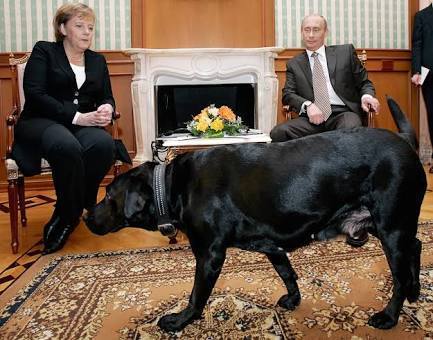
Can you spot something in this picture that isn’t in the other two? That’s right – a large black dog. Merkel is phobic about dogs and if you believe Putin’s excuse that he didn’t know about Merkel’s phobia and just wanted to be friendly then you will also believe in the objectivity of the review below by “smith”, who joined goodreads in November 2014 but who apparently has only ever read one book. There surely must be openings for more subtle propagandists in the Russian Ministry of Information,
Chronologically Putin’s Kleptocracy tails nicely onto Lenin's Tomb: The Last Days of the Soviet Empire. The book begins shortly before the 1991 coup which lead to the collapse and ban of the Communist Party. A significant problem facing the KGB in the period up to the coup was what to do with the loot, with the billions in funds under Communist Party control that might help sustain its future or at worst provide a decent retirement package for ex-spies and apparatchiks.
The solution was to hide these funds in lawless tax havens far from any government control, such as Jersey or the City of London. This money became the seed money helping pay for much of the subsequent fraud and theft.
Right through Putin’s career he has been the man in the right place at the right time. In this era he was with the KGB in Dresden, so was one of the relatively few KGB operatives with an understanding of foreign trade and business and contacts overseas who could facilitate later fraud. This book starts by explaining how Putin began to acquire the circle of friends and cronies that were to support his later career, with the next stage working on economic liaison board in St Petersburg,
Putin’s career in St Petersburg seems to have given him ample opportunity to build his and his cronies’ fortunes and the book goes into some detail in this area. This is a daunting read as once you have read through the first few plots to enrich Putin’s judo instructors (now billionaires), his old interpreter (now a billionaire) or other ex KGB friends (now mostly billionaires) you’ve pretty much read them all. Two hundred odd pages of secret bank accounts, fake invoicing, money laundering, share swindles, wire fraud, black market dealings, real estate swindles and so on could be skipped by a casual reader or anyone who isn’t researching a crime novel.
The latter half of the book gets more interesting, concentrating on Putin’s election to President. A key issue in Putin’s rise seems to have been the need of Yeltsin’s supporters to find a candidate who would issue a Presidential Pardon to Yeltsin and help shut down related corruption investigations as soon as they took office. Again, Putin was best placed for the job, having more than a few of his own corruption investigations that needed suppression.
Putin and his cronies now face the problem of staying in power and preventing their own past catching up with them. Thanks partly to the complacency of the rest of the world during the first few years of Putin’s rule - during which Bush looked to Putin for support on the misguided and failed “War on Terror” - this is looking like a challenge Putin looks well able to meet.
To what do we owe the Putin-Trump bromance - those honeyed words of mutual admiration and affection - the "Putin's praise is a great honor" and the "Donald Trump is a very bright and talented person"? Could this come from a shared love of bling?
The book includes a famous anecdote about Putin pocketing the jewel encrusted Superbowl ring of Robert Kraft, the US billionaire owner of the New England Patriots, who was attending a trade delegation at the time.
In truth I doubt that a joint appreciation of the use of gold plating in interior decoration is what really ties Putin, Trump, the US right wing and Fox News together in their communal love-in. More likely what they have in common is an authoritarian streak, as this interesting article on The One Weird Trait That Predicts Whether you are a Trump Supporter explains.
In theory the US Right wing should see Putin as an enemy of freedom and American values and oppose everything he stands for, but like some love struck teenage girl they just can’t stop themselves fawning over that bad-boy persona. Frankly it's embarrassing.
The introduction to Putin’s Kleptocracy includes a very telling point. The author notes that for the first time in US history sanctions against state action, Putin's annexation of the Crimea, were imposed not on the state itself but on named individuals, being the cronies surrounding Putin. This book goes a long way to explaining the logic of that approach and is a good case study in where twenty first century authoritarianism can lead.
Here is a picture of David Cameron meeting Vladimir Putin. Cameron looks earnest but Putin looks bored. Putin knows that the UK has taken privatization further than any other country and the best of the UK state’s assets have already been spirited away. Pickings would be slim, so no wonder he's bored.
Here is a picture of Angela Merkel meeting Vladimir Putin. Merkel doesn’t look happy while Putin looks amused.
Can you spot something in this picture that isn’t in the other two? That’s right – a large black dog. Merkel is phobic about dogs and if you believe Putin’s excuse that he didn’t know about Merkel’s phobia and just wanted to be friendly then you will also believe in the objectivity of the review below by “smith”, who joined goodreads in November 2014 but who apparently has only ever read one book. There surely must be openings for more subtle propagandists in the Russian Ministry of Information,
Chronologically Putin’s Kleptocracy tails nicely onto Lenin's Tomb: The Last Days of the Soviet Empire. The book begins shortly before the 1991 coup which lead to the collapse and ban of the Communist Party. A significant problem facing the KGB in the period up to the coup was what to do with the loot, with the billions in funds under Communist Party control that might help sustain its future or at worst provide a decent retirement package for ex-spies and apparatchiks.
The solution was to hide these funds in lawless tax havens far from any government control, such as Jersey or the City of London. This money became the seed money helping pay for much of the subsequent fraud and theft.
Right through Putin’s career he has been the man in the right place at the right time. In this era he was with the KGB in Dresden, so was one of the relatively few KGB operatives with an understanding of foreign trade and business and contacts overseas who could facilitate later fraud. This book starts by explaining how Putin began to acquire the circle of friends and cronies that were to support his later career, with the next stage working on economic liaison board in St Petersburg,
Putin’s career in St Petersburg seems to have given him ample opportunity to build his and his cronies’ fortunes and the book goes into some detail in this area. This is a daunting read as once you have read through the first few plots to enrich Putin’s judo instructors (now billionaires), his old interpreter (now a billionaire) or other ex KGB friends (now mostly billionaires) you’ve pretty much read them all. Two hundred odd pages of secret bank accounts, fake invoicing, money laundering, share swindles, wire fraud, black market dealings, real estate swindles and so on could be skipped by a casual reader or anyone who isn’t researching a crime novel.
The latter half of the book gets more interesting, concentrating on Putin’s election to President. A key issue in Putin’s rise seems to have been the need of Yeltsin’s supporters to find a candidate who would issue a Presidential Pardon to Yeltsin and help shut down related corruption investigations as soon as they took office. Again, Putin was best placed for the job, having more than a few of his own corruption investigations that needed suppression.
Putin and his cronies now face the problem of staying in power and preventing their own past catching up with them. Thanks partly to the complacency of the rest of the world during the first few years of Putin’s rule - during which Bush looked to Putin for support on the misguided and failed “War on Terror” - this is looking like a challenge Putin looks well able to meet.
To what do we owe the Putin-Trump bromance - those honeyed words of mutual admiration and affection - the "Putin's praise is a great honor" and the "Donald Trump is a very bright and talented person"? Could this come from a shared love of bling?
The book includes a famous anecdote about Putin pocketing the jewel encrusted Superbowl ring of Robert Kraft, the US billionaire owner of the New England Patriots, who was attending a trade delegation at the time.
In truth I doubt that a joint appreciation of the use of gold plating in interior decoration is what really ties Putin, Trump, the US right wing and Fox News together in their communal love-in. More likely what they have in common is an authoritarian streak, as this interesting article on The One Weird Trait That Predicts Whether you are a Trump Supporter explains.
In theory the US Right wing should see Putin as an enemy of freedom and American values and oppose everything he stands for, but like some love struck teenage girl they just can’t stop themselves fawning over that bad-boy persona. Frankly it's embarrassing.
The introduction to Putin’s Kleptocracy includes a very telling point. The author notes that for the first time in US history sanctions against state action, Putin's annexation of the Crimea, were imposed not on the state itself but on named individuals, being the cronies surrounding Putin. This book goes a long way to explaining the logic of that approach and is a good case study in where twenty first century authoritarianism can lead.
October 3, 2014
First, I have noticed that 3 people (at the moment of writing) gave this book 1 star, identically claiming that this book is not based on facts but pretty much work of fiction. It is coincidentally that this book is the ONLY book they have read. Also these reviewers did not reveal their names using pseudo names instead. Also ALL 3 joined goodreads in November 20014. I do not know what their real interest are and who they are working for, but even if they are and their opinions are for real, they are wrong. Book contains extensive bibliography, full version of which can be found on Miami University web site. If you google "Dawisha Putin's Kleptocracy Complete Bibliography" you will find it. There is possibilities of some inaccuracies (intentional or accidental) but I have ability to check it out yourself.
I have left Russia in 1995 but keep following via news and friends who are still there. Some general information was known to me already in rather anecdotal or rumor level form. However, book's author went extra mile to process extraordinary amount of sources and compile hair raising evidences of evil done by Putin. Even if Karen invented 99% of the information laid out in the book, remaining 1% is more then enough to put Putin to the a worse spot in Hell. Yes, he did not kill millions of people yet, but he already deserved a prominent spot among worst scumbags this planet has yet to produce, among Hitler, Stalin, Lenin etc.
I am surprised of by Karen's dry narrative, because her word are really causing pain and incredulity.
See it for yourself.
I have left Russia in 1995 but keep following via news and friends who are still there. Some general information was known to me already in rather anecdotal or rumor level form. However, book's author went extra mile to process extraordinary amount of sources and compile hair raising evidences of evil done by Putin. Even if Karen invented 99% of the information laid out in the book, remaining 1% is more then enough to put Putin to the a worse spot in Hell. Yes, he did not kill millions of people yet, but he already deserved a prominent spot among worst scumbags this planet has yet to produce, among Hitler, Stalin, Lenin etc.
I am surprised of by Karen's dry narrative, because her word are really causing pain and incredulity.
See it for yourself.

October 30, 2014
Thanks for the link, Susanna. PBS documentary: http://www.pbs.org/wgbh/pages/frontli...
16th March 2015: "As the shortlist for the annual Pushkin House prize for the best book about Russia was announced last week, judges lamented that the new work, Putin’s Kleptocracy, by US academic Karen Dawisha, was not eligible for the prize because it is not for sale here.
The author said this is “a win for Team Putin”, and argues that concerns about libel have made Britain a safe space for rich Russians. Academic publishers who have previously brought out several of Dawisha’s works explained their fears in a letter to her last year: “The decision has nothing to do with the quality of your research or your scholarly credibility. It is simply a question of risk tolerance in light of our limited resources,” wrote John Haslam, an executive publisher at Cambridge University Press (CUP)."
Read More

March 18, 2016
Dawisha shows how Putin and the oligarchs amassed personal wealth and became the modern day tsar and boyars. She meticulously documents Putin building a tight network of powerful allies in politics, business and organized crime to dominate Russia. As Spanish investigators in 2008 concluded, Russia had become “a virtual mafia state.” Dawisha’s account is specific and convincing, naming names in what reads like a legal brief. The amount of detail can be overwhelming, but her points come through clearly and while her book takes some effort it is time well spent. I knew Putin’s reputation before, but now I know how he earned it. My notes follow.
In 1991 the Soviet Union descended into chaos under Gorbachev with the failed August 1991 coup, the dissolution of the Soviet Union and the usurpation of power by Yeltsin. The economy floundered and law enforcement was non-existent. Displaced KGB and communist party insiders vied with existing black market mafias for control of businesses and trade. They took the country’s money and stashed it abroad. Former communist party assets and properties were snapped up at ridiculously low prices. Thus the Russian oligarchy was created. These tightly connected officials, including many former KGB, would use their control of commerce for political dominance. Their long standing hierarchy which enforced loyalty enabled them to succeed.
Putin worked for the KGB in East Germany (GDR) in the late 1980s. His roles included monitoring GDR officials and recruiting East and West Germans who travelled between the two Germanys. This evolved into stealing information and designs for weapons and high tech goods. He also was sure to secure loot for himself as was common practice. When the East German government fell apart in 1989 Putin’s objectives changed. He began recruiting former Stasi for the KGB. One close associate Matthias Warnig would help by opening a bank in Dresden for KGB and Putin’s personal use. Putin would later fill important positions in Russia with loyal friends he made as a KGB agent in the GDR and conceal dirty money through banks such as Warnig’s.
In 1991 Putin became an advisor to St. Petersburg Mayor Sobchak progressing to deputy mayor in 1994. He embraced the newly established Bank Rossiya which would launder KBG and CPSU money for Putin’s clique. Putin sold lucrative opportunities in state controlled businesses and established a network of friends who rewarded each other with tribute and patronage. Collaboration and turf wars with organized crime and mysterious unsolved murders were common. Putin was chairman of the St. Petersburg Committee for Foreign Liaison (KVS) from June 1991 to June1996. In this role he was responsible for foreign investment in and via St. Petersburg through which 20% of Russia’s foreign trade moved. This position facilitated his ownership and investment in numerous business ventures as well as put him in control of a huge cache of favors he could dispense quid pro quo.
The Mayor’s Contingency Fund proved a good vehicle for money laundering. For example shortly after the Soviet Union’s collapse there was a food shortage. Authority was granted to trade oil for food. Putin’s network bought oil and other raw materials at artificially set low domestic prices and sold it for many times more abroad. Putin issued the contracts through the KVS charging huge commissions which were put into the contingency fund that Putin effectively controlled. The food was not delivered and money from the sale of the oil went into Putin’s foreign bank accounts. Putin frequently traveled abroad to manage his affairs during his time in St. Petersburg.
Putin was also in charge of the gambling industry in St. Petersburg managing the state’s 51% interest. Putin claimed the state was ripped off by operators who skimmed the cash showing losses. True but Putin’s security operation was one of the skimmers. This was one of many cases where Putin was happy to work with organized crime as long as they knew Putin was the boss who took a generous cut. Another example was the St. Petersburg Real Estate Holding Company (SPAG). SPAG was used to bring stashed money in foreign banks back into the country cleanly. It could be mixed in with legitimate money from duped foreign investors to further disguise it. Much of the gang money originally came from Russia. But some came from Columbian drug gangs who bought Russian property, later sold it and were allowed to export the money making it look clean. Putin always took 25% commission on SPAG transactions for his, rather the city’s, contingency fund. Another vehicle for Putin’s fortune was the Petersburg Fuel Company (PTK) where the underworld could easily skim cash from gas station sales, evade taxes and fix prices. But of course they had to share it with Putin and his friends at Bank Rossya and the insurance company Rus’. Another example of easy money for the Putin network was the Twentieth Century Trust designed to fund construction projects. The St. Petersburg administration made loans to the trust that were never repaid for projects that often were never built, the money spirited away by the Putin network. Projects that were completed included everything from villas in Finland to land deals in Spain for Putin and his friends.
In 1996 failing to get his ally Mayor Sobchak reelected he moved to Moscow but retained his St. Petersburg connections. Putin started using the Ozero Cooperative which funded dachas for him and his friends and provided a convenient alternative to the city’s contingency fund. Putin, who supported Yeltsin’s reelection, got a post in the Presidential Property Management Department, a perfect tie in to his past activities. The division had a rich collection of properties following Yeltsin’s nationalization of communist party properties. These provided homes and investments for Putin’s circle and could be traded for favors. Putin directly controlled billions of dollars of these properties on foreign soil. He was responsible for reclassifying them. He and his friends picked them clean, using the best to build their personal fortunes. In 1997 Putin became chief of the Main Control Directorate (GKU), the Russian equivalent of Inspector General. This put Putin in control of files collected on him and his friends. One who needed special care of was former Mayor Sobchak. To thwart pending investigations into Putin’s and Sobchak’s illicit activities in St. Petersburg, Putin arranged for emergency medical treatment for Sobchak in Paris. He had him spirited out of the country on a private plane.
In 1999 Putin became head of the FSB, successor to the KGB. He immediately brought in his old KGB and St. Petersburg cronies, demoted the old hands and got rid of entire organizations that had been investigating economic crimes. Putin went on to use his position to protect Yeltsin’s “Family” and the oligarchs against enemies who were trying to expose their widespread corruption. In 1999 Yeltsin made Putin prime minister to ensure Putin would stick with him in the fight against his opponents who were planning to create massive unrest, declare a state of emergency and unseat him from the presidency. Given Yeltsin’s physical and psychological deterioration, the Family needed someone strong. Who better than Putin? And Putin took control. Needing to rally the country behind him, Putin’s pals in the FSB blew up apartment buildings in Moscow and blamed it on the Chechens. The plan was to terrify the country, show toughness in a little war and be the nation’s savior. Despite a lot of evidence that the apartment bombings were not done by the Chechens, most of the country bought into it and Putin was favored to be the next president.
The Duma election in 1999 was clearly rigged as the European Observation Mission noted. It was no accident that Putin’s opponents’ results were much weaker than expected. Similarly there were widespread discrepancies in the votes in Putin’s election victory for president in 2000. Immediately upon being elected, Putin went after the media. TV and newspapers had publicized his corruption including the FSB bombings blamed on Chechens. Investigative reporters were subjected to blackmail, threats and even death. Media outlets were subjected to cyber-attacks and Putin’s puppet intelligentsia engaged in PR to discredit critical journals.
The ostensible battle in the new Russia was between economists who believed in a free market Western style economy and the oligarchs who controlled most large businesses. Putin’s idea was control by the state, not communist style, but through the oligarchs, subjugating them to the Kremlin. Those who opposed Putin found their businesses heavily taxed or forced into sale, their owners charged with tax evasion or other crimes and imprisoned. Those who played ball did well as did Putin who collected a fortune in tribute. A good example is the forced sale of the major media outlets NVT and ORT. The owner had already been forced into exile but still refused to sell his shares. Putin didn’t care about the money just control of the networks which had criticized his handling of the sinking of the Russian submarine Kursk. In August 2000 the Kursk disaster played out as a huge national drama as trapped sailors tapped out pleas for help. Putin had the oligarch’s close associate in Russia arrested, blackmailing the oligarch into selling to his designated buyer. The new owner quickly appointed Putin’s handpicked administrators to run the networks.
Oligarchs found themselves regularly shaken down for tens of millions of dollars at a time by the Kremlin for contributions to “charities”. One of the beneficiaries was the opulent billion dollar Putin presidential palace in southern Russia which is officially listed as a private residence. Its gates are appropriately adorned with the tsarist double-headed eagle resurrected to become the new state seal. In addition to shakedowns Putin continued to employ as he had since his early days in St. Petersburg intermediary companies to skim profits. Thus sales and purchases from giants like Gazprom and Petromed were made through these Putin controlled intermediaries which altered prices at will with the difference going to the Putin circle.
What all of this has meant for Russia is astronomical income disparity. Forget the top 1%; in Russia the top 110 individuals have 35% of the country’s wealth. But despite the country’s vast oil wealth the median wealth of a Russian family, $871, is less than that of a family in India. Yet Putin’s tightly controlled media validated his strident nationalism winning the average Russian’s support. Most Russians buy the Putin line that the West is the cause of Russia’s problems. The 110 have prospered due to unwavering loyalty to Putin which is why the 2014 US sanctions following Putin’s Crimea invasion appropriately targeted key individuals. The financial interests of Putin’s favored oligarchs and allied organized crime played an underreported role in the 2008 Soviet war in Georgia, the 2014 takeover of Crimea and the war in Ukraine. The oligarchs sell cheap gas and oil on credit to countries adjoining Russia. When the debts can’t be repaid they take equity in local infrastructure in lieu of repayment. This creates important economic interests in these regions for the oligarchs. Just as in Russia they use criminal elements to exploit local populations for illicit profits in these outlying areas destabilizing them. The oligarch’s mafia style tactics pervade not only Russia but everything Russia touches.
In 1991 the Soviet Union descended into chaos under Gorbachev with the failed August 1991 coup, the dissolution of the Soviet Union and the usurpation of power by Yeltsin. The economy floundered and law enforcement was non-existent. Displaced KGB and communist party insiders vied with existing black market mafias for control of businesses and trade. They took the country’s money and stashed it abroad. Former communist party assets and properties were snapped up at ridiculously low prices. Thus the Russian oligarchy was created. These tightly connected officials, including many former KGB, would use their control of commerce for political dominance. Their long standing hierarchy which enforced loyalty enabled them to succeed.
Putin worked for the KGB in East Germany (GDR) in the late 1980s. His roles included monitoring GDR officials and recruiting East and West Germans who travelled between the two Germanys. This evolved into stealing information and designs for weapons and high tech goods. He also was sure to secure loot for himself as was common practice. When the East German government fell apart in 1989 Putin’s objectives changed. He began recruiting former Stasi for the KGB. One close associate Matthias Warnig would help by opening a bank in Dresden for KGB and Putin’s personal use. Putin would later fill important positions in Russia with loyal friends he made as a KGB agent in the GDR and conceal dirty money through banks such as Warnig’s.
In 1991 Putin became an advisor to St. Petersburg Mayor Sobchak progressing to deputy mayor in 1994. He embraced the newly established Bank Rossiya which would launder KBG and CPSU money for Putin’s clique. Putin sold lucrative opportunities in state controlled businesses and established a network of friends who rewarded each other with tribute and patronage. Collaboration and turf wars with organized crime and mysterious unsolved murders were common. Putin was chairman of the St. Petersburg Committee for Foreign Liaison (KVS) from June 1991 to June1996. In this role he was responsible for foreign investment in and via St. Petersburg through which 20% of Russia’s foreign trade moved. This position facilitated his ownership and investment in numerous business ventures as well as put him in control of a huge cache of favors he could dispense quid pro quo.
The Mayor’s Contingency Fund proved a good vehicle for money laundering. For example shortly after the Soviet Union’s collapse there was a food shortage. Authority was granted to trade oil for food. Putin’s network bought oil and other raw materials at artificially set low domestic prices and sold it for many times more abroad. Putin issued the contracts through the KVS charging huge commissions which were put into the contingency fund that Putin effectively controlled. The food was not delivered and money from the sale of the oil went into Putin’s foreign bank accounts. Putin frequently traveled abroad to manage his affairs during his time in St. Petersburg.
Putin was also in charge of the gambling industry in St. Petersburg managing the state’s 51% interest. Putin claimed the state was ripped off by operators who skimmed the cash showing losses. True but Putin’s security operation was one of the skimmers. This was one of many cases where Putin was happy to work with organized crime as long as they knew Putin was the boss who took a generous cut. Another example was the St. Petersburg Real Estate Holding Company (SPAG). SPAG was used to bring stashed money in foreign banks back into the country cleanly. It could be mixed in with legitimate money from duped foreign investors to further disguise it. Much of the gang money originally came from Russia. But some came from Columbian drug gangs who bought Russian property, later sold it and were allowed to export the money making it look clean. Putin always took 25% commission on SPAG transactions for his, rather the city’s, contingency fund. Another vehicle for Putin’s fortune was the Petersburg Fuel Company (PTK) where the underworld could easily skim cash from gas station sales, evade taxes and fix prices. But of course they had to share it with Putin and his friends at Bank Rossya and the insurance company Rus’. Another example of easy money for the Putin network was the Twentieth Century Trust designed to fund construction projects. The St. Petersburg administration made loans to the trust that were never repaid for projects that often were never built, the money spirited away by the Putin network. Projects that were completed included everything from villas in Finland to land deals in Spain for Putin and his friends.
In 1996 failing to get his ally Mayor Sobchak reelected he moved to Moscow but retained his St. Petersburg connections. Putin started using the Ozero Cooperative which funded dachas for him and his friends and provided a convenient alternative to the city’s contingency fund. Putin, who supported Yeltsin’s reelection, got a post in the Presidential Property Management Department, a perfect tie in to his past activities. The division had a rich collection of properties following Yeltsin’s nationalization of communist party properties. These provided homes and investments for Putin’s circle and could be traded for favors. Putin directly controlled billions of dollars of these properties on foreign soil. He was responsible for reclassifying them. He and his friends picked them clean, using the best to build their personal fortunes. In 1997 Putin became chief of the Main Control Directorate (GKU), the Russian equivalent of Inspector General. This put Putin in control of files collected on him and his friends. One who needed special care of was former Mayor Sobchak. To thwart pending investigations into Putin’s and Sobchak’s illicit activities in St. Petersburg, Putin arranged for emergency medical treatment for Sobchak in Paris. He had him spirited out of the country on a private plane.
In 1999 Putin became head of the FSB, successor to the KGB. He immediately brought in his old KGB and St. Petersburg cronies, demoted the old hands and got rid of entire organizations that had been investigating economic crimes. Putin went on to use his position to protect Yeltsin’s “Family” and the oligarchs against enemies who were trying to expose their widespread corruption. In 1999 Yeltsin made Putin prime minister to ensure Putin would stick with him in the fight against his opponents who were planning to create massive unrest, declare a state of emergency and unseat him from the presidency. Given Yeltsin’s physical and psychological deterioration, the Family needed someone strong. Who better than Putin? And Putin took control. Needing to rally the country behind him, Putin’s pals in the FSB blew up apartment buildings in Moscow and blamed it on the Chechens. The plan was to terrify the country, show toughness in a little war and be the nation’s savior. Despite a lot of evidence that the apartment bombings were not done by the Chechens, most of the country bought into it and Putin was favored to be the next president.
The Duma election in 1999 was clearly rigged as the European Observation Mission noted. It was no accident that Putin’s opponents’ results were much weaker than expected. Similarly there were widespread discrepancies in the votes in Putin’s election victory for president in 2000. Immediately upon being elected, Putin went after the media. TV and newspapers had publicized his corruption including the FSB bombings blamed on Chechens. Investigative reporters were subjected to blackmail, threats and even death. Media outlets were subjected to cyber-attacks and Putin’s puppet intelligentsia engaged in PR to discredit critical journals.
The ostensible battle in the new Russia was between economists who believed in a free market Western style economy and the oligarchs who controlled most large businesses. Putin’s idea was control by the state, not communist style, but through the oligarchs, subjugating them to the Kremlin. Those who opposed Putin found their businesses heavily taxed or forced into sale, their owners charged with tax evasion or other crimes and imprisoned. Those who played ball did well as did Putin who collected a fortune in tribute. A good example is the forced sale of the major media outlets NVT and ORT. The owner had already been forced into exile but still refused to sell his shares. Putin didn’t care about the money just control of the networks which had criticized his handling of the sinking of the Russian submarine Kursk. In August 2000 the Kursk disaster played out as a huge national drama as trapped sailors tapped out pleas for help. Putin had the oligarch’s close associate in Russia arrested, blackmailing the oligarch into selling to his designated buyer. The new owner quickly appointed Putin’s handpicked administrators to run the networks.
Oligarchs found themselves regularly shaken down for tens of millions of dollars at a time by the Kremlin for contributions to “charities”. One of the beneficiaries was the opulent billion dollar Putin presidential palace in southern Russia which is officially listed as a private residence. Its gates are appropriately adorned with the tsarist double-headed eagle resurrected to become the new state seal. In addition to shakedowns Putin continued to employ as he had since his early days in St. Petersburg intermediary companies to skim profits. Thus sales and purchases from giants like Gazprom and Petromed were made through these Putin controlled intermediaries which altered prices at will with the difference going to the Putin circle.
What all of this has meant for Russia is astronomical income disparity. Forget the top 1%; in Russia the top 110 individuals have 35% of the country’s wealth. But despite the country’s vast oil wealth the median wealth of a Russian family, $871, is less than that of a family in India. Yet Putin’s tightly controlled media validated his strident nationalism winning the average Russian’s support. Most Russians buy the Putin line that the West is the cause of Russia’s problems. The 110 have prospered due to unwavering loyalty to Putin which is why the 2014 US sanctions following Putin’s Crimea invasion appropriately targeted key individuals. The financial interests of Putin’s favored oligarchs and allied organized crime played an underreported role in the 2008 Soviet war in Georgia, the 2014 takeover of Crimea and the war in Ukraine. The oligarchs sell cheap gas and oil on credit to countries adjoining Russia. When the debts can’t be repaid they take equity in local infrastructure in lieu of repayment. This creates important economic interests in these regions for the oligarchs. Just as in Russia they use criminal elements to exploit local populations for illicit profits in these outlying areas destabilizing them. The oligarch’s mafia style tactics pervade not only Russia but everything Russia touches.
October 28, 2015
The first part of the book of Karen Dawisha follows the rise of Putin from anonymous KGB agent, stationed in Germany, in Soviet times till his ascend as the Russian president with distinct authoritarian and hands-on rule of the country. To showcase that Putin basically promoted to the positions of power his close associates from early days as a student, KGB officer and Saint-Petersburg deputy mayor, Karen allocates a lot of effort to follow their path within Putin's orbit. Mrs. Dawisha also elaborates on the criminal cases, directly or indirectly involving Putin, that were sabotaged, backtracked and ultimately closed after his rise to power.
Although Karen mentions that she didn't find direct evidence proving that Putin took bribes, she brings up enough material that in a less authoritarian state with real rather than declared separation of powers should've been properly investigated and either confirmed or denied Putin's implication in corruption affairs. And there are definitely some serious question marks regarding some goings Karen mentions, inter alia about the alleged connections with the organized crime. Few of the alleged wrongdoings though, in my opinion, should have more political evaluation rather than criminal.
To demonstrate what I mean I can use Yulia Timoshenko, a former Prime-Minister of Ukraine, example, who was accused and indicted of abuse of powers and sent to imprisonment as a result of a clearly politically motivated court process. Many in the West claimed that she shouldn't has been prosecuted for taking the responsibility to resolve the gas conflict with Russia and signing unfavorable gas contracts to save her countrymen from freezing during the winter.. And I totally agree with this approach. Some of the described Putin's dealings may also fall into a political sphere rather than criminal.
The second part, which I enjoyed more, offers a more general study of distinctive features of Putin's governance, goals, modus operandi as the President of Russian Federation. I like Karen's observations, examples and conclusions, and particularly how the freedom of media and thinking was oppressed, oligarchs subdued, opposition 'choked' and dispersed. Karen attributes paramount importance to the document leaked sometime in 2000, encompassing a strategy how to change the President's administration to rule Russia and tries to prove that it is authentic and is being implemented. Her conclusion is that Putin's motivation is only enrichment and protection from possible prosecution.
I personally think that these motives may be true and I wouldn't be surprised, if Vladimir Vladimirovich would turn out as one of the richest persons on the planet, but I think they are incomplete and may also be outdated. I think at first these may have been the initial incentives, but over the years they evolved into a wider range of objectives. I think one of the 'newer' objectives is to return Russia's 'greatness', to bring back some territories and in a broader sense to reverse the Big Bang of the USSR. After so many years in power, Putin, in my opinion, strives now to enter history books as the leader who managed to bring in territories and with them some glory. I should mention here though, that I object any use of military means for achieving these goals, if they indeed exist, and belligerence towards Russian neighbor countries.
As opposed to Ukraine for example, where 'personal money-making' was unfortunately almost always the only agenda for any politician or functionary, Russia was clearly different having always some ideology - that of 'empire', 'greatness' and pride.
I think Karen deserves credit for such a detailed research.
Few general notes:
Although I never knew the details to this extent, the world she describes, its intricacies, personal connections and manus manum lavat of the close to the boss circle, pretty much coincide with my own observations and I'm sure those in Russia and neighboring countries that preserved independent thinking over TV propaganda know more or less what's going on.
I would also prefer a more balanced approach, i.e. not only the justified criticism of Putin, but also mentioning of the positive sides. Many, even though oppose the methods how it was done, view positively the subordination of the oligarchs to the state, instead of chaotic and unrestrained rule of oligarchic clans and their influence on the governance, preceding his access to power. Also the notion of a 'strong leader' was always important to a big segment of Russian population even at the expense of personal freedoms, to which many are not that accustomed anyway. So Putin for many symbolizes such a strong leader, who can mock Obama and exert authority on others. That's why he's still very popular in Russia (and among many abroad), despite distinct decline in economical wellbeing of Russian population.
There are some inaccuracies in the book. For example, Sevastopol is mentioned as the capital of Crimea peninsula, while it's Simferopol.
On a more personal note, this is a rather cold study from someone, who doesn't have any feelings towards Russia, while for me having at least some sentimentality towards this country and its people, it's a bit too cold and one-sided -:)
To draw the line - it's a well-researched and informative book for all those who want to know Putin's background and that of his close circle. Its conclusions should be viewed as a substantiated theory for a debate rather than axiom.
3.5 out of 5 stars
Although Karen mentions that she didn't find direct evidence proving that Putin took bribes, she brings up enough material that in a less authoritarian state with real rather than declared separation of powers should've been properly investigated and either confirmed or denied Putin's implication in corruption affairs. And there are definitely some serious question marks regarding some goings Karen mentions, inter alia about the alleged connections with the organized crime. Few of the alleged wrongdoings though, in my opinion, should have more political evaluation rather than criminal.
To demonstrate what I mean I can use Yulia Timoshenko, a former Prime-Minister of Ukraine, example, who was accused and indicted of abuse of powers and sent to imprisonment as a result of a clearly politically motivated court process. Many in the West claimed that she shouldn't has been prosecuted for taking the responsibility to resolve the gas conflict with Russia and signing unfavorable gas contracts to save her countrymen from freezing during the winter.. And I totally agree with this approach. Some of the described Putin's dealings may also fall into a political sphere rather than criminal.
The second part, which I enjoyed more, offers a more general study of distinctive features of Putin's governance, goals, modus operandi as the President of Russian Federation. I like Karen's observations, examples and conclusions, and particularly how the freedom of media and thinking was oppressed, oligarchs subdued, opposition 'choked' and dispersed. Karen attributes paramount importance to the document leaked sometime in 2000, encompassing a strategy how to change the President's administration to rule Russia and tries to prove that it is authentic and is being implemented. Her conclusion is that Putin's motivation is only enrichment and protection from possible prosecution.
I personally think that these motives may be true and I wouldn't be surprised, if Vladimir Vladimirovich would turn out as one of the richest persons on the planet, but I think they are incomplete and may also be outdated. I think at first these may have been the initial incentives, but over the years they evolved into a wider range of objectives. I think one of the 'newer' objectives is to return Russia's 'greatness', to bring back some territories and in a broader sense to reverse the Big Bang of the USSR. After so many years in power, Putin, in my opinion, strives now to enter history books as the leader who managed to bring in territories and with them some glory. I should mention here though, that I object any use of military means for achieving these goals, if they indeed exist, and belligerence towards Russian neighbor countries.
As opposed to Ukraine for example, where 'personal money-making' was unfortunately almost always the only agenda for any politician or functionary, Russia was clearly different having always some ideology - that of 'empire', 'greatness' and pride.
I think Karen deserves credit for such a detailed research.
Few general notes:
Although I never knew the details to this extent, the world she describes, its intricacies, personal connections and manus manum lavat of the close to the boss circle, pretty much coincide with my own observations and I'm sure those in Russia and neighboring countries that preserved independent thinking over TV propaganda know more or less what's going on.
I would also prefer a more balanced approach, i.e. not only the justified criticism of Putin, but also mentioning of the positive sides. Many, even though oppose the methods how it was done, view positively the subordination of the oligarchs to the state, instead of chaotic and unrestrained rule of oligarchic clans and their influence on the governance, preceding his access to power. Also the notion of a 'strong leader' was always important to a big segment of Russian population even at the expense of personal freedoms, to which many are not that accustomed anyway. So Putin for many symbolizes such a strong leader, who can mock Obama and exert authority on others. That's why he's still very popular in Russia (and among many abroad), despite distinct decline in economical wellbeing of Russian population.
There are some inaccuracies in the book. For example, Sevastopol is mentioned as the capital of Crimea peninsula, while it's Simferopol.
On a more personal note, this is a rather cold study from someone, who doesn't have any feelings towards Russia, while for me having at least some sentimentality towards this country and its people, it's a bit too cold and one-sided -:)
To draw the line - it's a well-researched and informative book for all those who want to know Putin's background and that of his close circle. Its conclusions should be viewed as a substantiated theory for a debate rather than axiom.
3.5 out of 5 stars

October 18, 2014
Frightening and enlightening! An incredibly well researched expose' on what is known (and can be speculated with high confidence) on the rise of Vladimir V Putin to power. From humble KGB beginnings and early development in the world of espionage, subversion, criminality and deception as well as direct participation in the KGB's pivotal actions to divert Soviet wealth to holdings abroad in order to save the state from itself (i.e. from Gorbachev and Perestroika), we see how Putin learned skills and developed relationships early on that would serve him time and again in positions of increasing power and responsibility. Karen Dawisha tells a story of Putin's first person involvement in intrigue, crime, corruption, extorsion, intimidation, fraud, murder and terror that over time increases to the point where he is perfectly positioned to leverage the power of money, politics, and information he has acquired to control a nation. The details exposed are so profound, so well documented, and so terrible that no reader can be left unmoved or unconvinced of the threat Putin poses - to his people, to his country's future (economy & social well being), to Russia's near abroad, and potentially to world order.

April 10, 2021
I will review this more in detail soon. What an amazing book! Although if you ever noticed any of my status updates, you may know that this is not some sensationalized account about Putin that everyone will enjoy. It is more of a scholarly expose. Hence, you may need to be a bit of a political science nerd to truly appreciate this as a five star book. It’s beyond fascinating how Dawisha is able to connect all of the threads of a very intricate web together in order to highlight that without any doubt, Putin and his inner circle are committing this heinous acts of suppressed democracy, suppressed media, massive voter fraud, intimidation tactics, and so much more to ensure their power is upheld. It was, after all, recommended to me by one of my favorite professors (shoutout to Dr. Shapovalov if he does ever join Goodreads as I suggested to him!) who taught me a wonderful course in the Politics of Russia last fall.

October 23, 2014
I have put my detailed thoughts here: http://deceptioninhighplaces.com/revi....
But in essence I worry about the quality of the evidence in the book and the uncritical way it is treated.
But in essence I worry about the quality of the evidence in the book and the uncritical way it is treated.

Read
December 7, 2014The KGB always had control of the Communist Party's money. When the CP was outlawed, it became the KGB's money. Putin, a KGB agent, was always a crook. He formed a gang with a bunch of other spies and started a crooked bank in the 80s. When industry was privatized, they used their influence and money to buy companies. They've used their organization to make sure they keep their money. They're crooks, but they see themselves as patriots. They're sure that Glaznost was a western plot, and they want to put things back the way they were, but with private enterprise, with them in control.

April 12, 2022
(The English review is placed beneath the Russian one)
Всё пройдёт, всё проходит когда-то
Будет год, будет день, будет миг
В одиночестве, в морге вчерашний диктатор
А теперь просто мёртвый старик
И с петель срежут двери в Лефортово
И Россия воспрянет от сна
Малайзийским, истерзанным, взорванным бортом
В твою ледяную избушку ворвётся весна
(Эта рецензия была написана задолго до 22.02.22)
По-настоящему страшная книга, ибо она открывает глаза на то, кто на самом деле руководит страной, в которой ты живёшь. Более того, она показывает людей, что пришли во власть вместе с Путиным, их психологию, их методы решения проблем, а также на что они способны (чтобы остаться у власти). Эта книга показывает, каким человеком является Владимир Путин, какие ценности ему близки и каковы его цели (какова его психология или каков его психологический портрет).
Читая книгу, мы понимаем, что на самом деле тут нет места советской ностальгии или романтизации царского времени, а есть только жажда власти, ибо власть, это деньги, а это единственное что интересует Путина и его окружение. Все эти фильмы про Александра III и Сталина, это всего лишь попытка бросить пыль в глаза, т.е. это создание иллюзии. Скрыть за разговорами об империи и сильной власти (которая якобы наведёт порядок) истинные мотивы, а они, как я уже сказал, заключаются в одной лишь жажде наживы. Как однажды правильно сказал Станислав Белковский, это экономика РОЗ (распил-откат-занос). И вот именно это и описывает книга, т.е. как, начиная с крушения СССР, Путин занимался собственным обогащением, и как это обогащение происходило. Другими словами, как это проходило через бандитизм и мафию и, что самое главное, как он связан с этим. Автор будет детально описывать всё то огромное количество реально существующих расследований, в которых прямо или косвенно фигурирует Путин. И как люди, которые расследовали коррупционные дела, в которых будет фигурировать будущий президент, либо внезапно погибали, либо загадочным образом прекращали какую-либо прежнюю деятельность и уходили на дно. Это поистине самый комплексный взгляд на тёмное прошлое президента Путина. Я даже представить себе не мог, что иностранцы обладают таким количеством информации. И что интересно, что даже я, человек, который следит за российской политикой, практически ничего не слышал о тех расследованиях, которые детально описывает автор. Детальность и тщательность, с которой подходит автор, может быть как плюсом, так и минусом, т.к. определённо существует вероятность, что читатель просто потеряется во всех этих историях, фамилиях, расследованиях и пр., ибо ну уж очень детально описывает автор каждое дело.
В общем, первая часть книги, это описание расследований связанных с тем временем, когда Путин работал на Собчака (дело Салье). Что касается второй и менее важной части, то это о том, как Путин шёл к абсолютной власти. Тут информация широко известна для многих читателей, ибо автор будет писать о взрывах домов в Москве, о Курске, об уничтожении независимых (альтернативных) СМИ и о концентрации всей власти в одних руках, руках Владимира Путина.
(This review was written long before 22/02/22)
This is a scary book because it opens your eyes to who really runs the country you live in. Moreover, it shows the people who came to power with Putin, their psychology, their methods of solving problems, and what they are capable of (to stay in power). This book shows what kind of person Vladimir Putin is, what values are close to him, and what his goals are (what is his psychology or what is his psychological portrait).
Reading the book, we realize that there is no place for Soviet nostalgia or romanticizing the Tsarist era, but only a thirst for power because power is money, and this is the only thing Putin and his entourage are interested in. All these films about Alexander III and Stalin are just an attempt to throw dust in the eyes, i.e., they create an illusion. It is an illusion to hide behind talk of empire and strong power (which supposedly will bring order) the real motives, which, as I have already said, are nothing but lust for profit. And that is what the book describes, i.e., how, beginning with the collapse of the USSR, Putin was engaged in his own enrichment, and how this enrichment took place. In other words, how it went through gangsterism and the mafia and, most importantly, how he was involved in it. The author describes, in detail, the huge number of investigations that directly or indirectly involve Putin. And how the people who investigated the corruption cases in which the future president will be involved either suddenly died or mysteriously stopped any activities. This is truly the most comprehensive look at President Putin's shady past. I could not have imagined that foreigners had so much information. And what is interesting is that even I, a person who follows Russian politics, have heard practically nothing about the investigations the author describes in detail. The detail and thoroughness with which the author approaches the case can be both a plus and a minus because there is a possibility that the reader will simply get lost in all these stories, the names, investigations, etc. because the author describes each case in great detail.
In general, the first part of the book is a description of the investigations related to the time when Putin worked for Sobchak. The second and less important part is about how Putin went to absolute power. Here the information is widely known to many readers because the author writes about the explosions of houses in Moscow, Kursk, the destruction of the independent (alternative) media, and the concentration of all power on one hand, the hand of Vladimir Putin.
Всё пройдёт, всё проходит когда-то
Будет год, будет день, будет миг
В одиночестве, в морге вчерашний диктатор
А теперь просто мёртвый старик
И с петель срежут двери в Лефортово
И Россия воспрянет от сна
Малайзийским, истерзанным, взорванным бортом
В твою ледяную избушку ворвётся весна
(Эта рецензия была написана задолго до 22.02.22)
По-настоящему страшная книга, ибо она открывает глаза на то, кто на самом деле руководит страной, в которой ты живёшь. Более того, она показывает людей, что пришли во власть вместе с Путиным, их психологию, их методы решения проблем, а также на что они способны (чтобы остаться у власти). Эта книга показывает, каким человеком является Владимир Путин, какие ценности ему близки и каковы его цели (какова его психология или каков его психологический портрет).
Читая книгу, мы понимаем, что на самом деле тут нет места советской ностальгии или романтизации царского времени, а есть только жажда власти, ибо власть, это деньги, а это единственное что интересует Путина и его окружение. Все эти фильмы про Александра III и Сталина, это всего лишь попытка бросить пыль в глаза, т.е. это создание иллюзии. Скрыть за разговорами об империи и сильной власти (которая якобы наведёт порядок) истинные мотивы, а они, как я уже сказал, заключаются в одной лишь жажде наживы. Как однажды правильно сказал Станислав Белковский, это экономика РОЗ (распил-откат-занос). И вот именно это и описывает книга, т.е. как, начиная с крушения СССР, Путин занимался собственным обогащением, и как это обогащение происходило. Другими словами, как это проходило через бандитизм и мафию и, что самое главное, как он связан с этим. Автор будет детально описывать всё то огромное количество реально существующих расследований, в которых прямо или косвенно фигурирует Путин. И как люди, которые расследовали коррупционные дела, в которых будет фигурировать будущий президент, либо внезапно погибали, либо загадочным образом прекращали какую-либо прежнюю деятельность и уходили на дно. Это поистине самый комплексный взгляд на тёмное прошлое президента Путина. Я даже представить себе не мог, что иностранцы обладают таким количеством информации. И что интересно, что даже я, человек, который следит за российской политикой, практически ничего не слышал о тех расследованиях, которые детально описывает автор. Детальность и тщательность, с которой подходит автор, может быть как плюсом, так и минусом, т.к. определённо существует вероятность, что читатель просто потеряется во всех этих историях, фамилиях, расследованиях и пр., ибо ну уж очень детально описывает автор каждое дело.
В общем, первая часть книги, это описание расследований связанных с тем временем, когда Путин работал на Собчака (дело Салье). Что касается второй и менее важной части, то это о том, как Путин шёл к абсолютной власти. Тут информация широко известна для многих читателей, ибо автор будет писать о взрывах домов в Москве, о Курске, об уничтожении независимых (альтернативных) СМИ и о концентрации всей власти в одних руках, руках Владимира Путина.
(This review was written long before 22/02/22)
This is a scary book because it opens your eyes to who really runs the country you live in. Moreover, it shows the people who came to power with Putin, their psychology, their methods of solving problems, and what they are capable of (to stay in power). This book shows what kind of person Vladimir Putin is, what values are close to him, and what his goals are (what is his psychology or what is his psychological portrait).
Reading the book, we realize that there is no place for Soviet nostalgia or romanticizing the Tsarist era, but only a thirst for power because power is money, and this is the only thing Putin and his entourage are interested in. All these films about Alexander III and Stalin are just an attempt to throw dust in the eyes, i.e., they create an illusion. It is an illusion to hide behind talk of empire and strong power (which supposedly will bring order) the real motives, which, as I have already said, are nothing but lust for profit. And that is what the book describes, i.e., how, beginning with the collapse of the USSR, Putin was engaged in his own enrichment, and how this enrichment took place. In other words, how it went through gangsterism and the mafia and, most importantly, how he was involved in it. The author describes, in detail, the huge number of investigations that directly or indirectly involve Putin. And how the people who investigated the corruption cases in which the future president will be involved either suddenly died or mysteriously stopped any activities. This is truly the most comprehensive look at President Putin's shady past. I could not have imagined that foreigners had so much information. And what is interesting is that even I, a person who follows Russian politics, have heard practically nothing about the investigations the author describes in detail. The detail and thoroughness with which the author approaches the case can be both a plus and a minus because there is a possibility that the reader will simply get lost in all these stories, the names, investigations, etc. because the author describes each case in great detail.
In general, the first part of the book is a description of the investigations related to the time when Putin worked for Sobchak. The second and less important part is about how Putin went to absolute power. Here the information is widely known to many readers because the author writes about the explosions of houses in Moscow, Kursk, the destruction of the independent (alternative) media, and the concentration of all power on one hand, the hand of Vladimir Putin.

August 27, 2025
Pretty thorough discussion of how Russia's dominant kleptocracy network came together. I have read other books on the topic and learned a lot of new details about Putin's relationships with some key members of his networks.
Dawisha's argument is that these networks came together very intentionally, which I do not quite agree with. While these corrupt people are very aware that what they are doing is corrupt, I would say it is more a symptom of the long-term fiefdom setup that has been in place in Russia since its early days many centuries ago.
Though I do not agree with that point, the book is worth a read for anyone interested in how kleptocracy works in Russia. It is thorough. The prose is not particularly engaging, hence the 3-star rating.
Dawisha's argument is that these networks came together very intentionally, which I do not quite agree with. While these corrupt people are very aware that what they are doing is corrupt, I would say it is more a symptom of the long-term fiefdom setup that has been in place in Russia since its early days many centuries ago.
Though I do not agree with that point, the book is worth a read for anyone interested in how kleptocracy works in Russia. It is thorough. The prose is not particularly engaging, hence the 3-star rating.

December 12, 2016
3.5, really, but this book is important, so I'm rounding up.
As an academic work written for a popular audience, this started off dreadfully slow. In order for the author to demonstrate the extent of corruption surrounding Putin's rise to power it was necessary for her to thoroughly detail the names of people, places, companies, shell companies, and dollar amounts shifted, hidden, disappeared, etc., - I understand this. A mere summary would have made for weak evidence, which in this circumstance (in an age of information wars), is worse than no evidence at all. The author's attention to detail is meticulous and damning.
However, if while reading this book, you find that you are discouraged by the plethora of detail, just skip ahead to Chapter 5, where the pace of this book picks up significantly. It is there that the author begins to zoom out to a level from which the reader can begin to see the bigger picture and how all of the pieces of the web fit together. From there, the book goes on to discuss the current and future implications Putin's thirst for power has for Russia and the rest of the world.
This book is incredibly timely and deeply chilling. Putin has - literally - less than zero respect for boundaries of any kind and it was uncanny to watch that truth unfold in the headlines as I read this book.
As an academic work written for a popular audience, this started off dreadfully slow. In order for the author to demonstrate the extent of corruption surrounding Putin's rise to power it was necessary for her to thoroughly detail the names of people, places, companies, shell companies, and dollar amounts shifted, hidden, disappeared, etc., - I understand this. A mere summary would have made for weak evidence, which in this circumstance (in an age of information wars), is worse than no evidence at all. The author's attention to detail is meticulous and damning.
However, if while reading this book, you find that you are discouraged by the plethora of detail, just skip ahead to Chapter 5, where the pace of this book picks up significantly. It is there that the author begins to zoom out to a level from which the reader can begin to see the bigger picture and how all of the pieces of the web fit together. From there, the book goes on to discuss the current and future implications Putin's thirst for power has for Russia and the rest of the world.
This book is incredibly timely and deeply chilling. Putin has - literally - less than zero respect for boundaries of any kind and it was uncanny to watch that truth unfold in the headlines as I read this book.

October 1, 2014
This is a pretty good book, but I prefer an earlier book by Masha Gessen about Putin titled "The Man Without a Face." Both detail the criminal steps used by Putin to gain control of Russia, but Gessen's book spent more time describing Putin and less on the fellow KGB agents and Russian mafia that he used for his rise to absolute power.
Today Putin is the most powerful man in the world and by far the richest. Western governments looked at his rise and said let's leave him alone and hope he just wants to be the richest man in the world. Let's not rock the boat. But now we find he wants more than being the richest man in the world. He wants the USSR back again.
He is now in the same position as Adolf Hitler and Josef Stalin in 1935. Taking land that doesn't belong to his country because he knows the West are weak and cowards, just as Hitler and Stalin did and started the ghastly horror of WWII. The average citizen in the West neither knows nor cares about it, just like 1935. You say it can't happen again. We shall see. Sixty million died the last time.
Today Putin is the most powerful man in the world and by far the richest. Western governments looked at his rise and said let's leave him alone and hope he just wants to be the richest man in the world. Let's not rock the boat. But now we find he wants more than being the richest man in the world. He wants the USSR back again.
He is now in the same position as Adolf Hitler and Josef Stalin in 1935. Taking land that doesn't belong to his country because he knows the West are weak and cowards, just as Hitler and Stalin did and started the ghastly horror of WWII. The average citizen in the West neither knows nor cares about it, just like 1935. You say it can't happen again. We shall see. Sixty million died the last time.

May 1, 2022
All data points are prior to 2014:
15 year olds in Haiti have better life expectancy than those in Russia (according to WHO)
There are five times more cardiac deaths among women in Russia than in Europe
Annually more women die of domestic violence in Russia than Russian KIA in the entire Afghan war
Household wealth in Russia is not quite $900 per household
Russia's compliance with international conventions on human trafficking -- the lowest ranking possible, below Rwanda
Much of the public health budget has been raided by corrupt actors, leading to untreated health conditions throughout the country, but worse in rural areas
2000-2011, country made almost two trillion dollars from extractive industries, but still there is no one road linking the length of Russia, while china trying to build 4,000 miles of Road a year.
Nordstream cost of construction per kilometer in Germany versus Russia:
2.1 vs 5.3 mill per million, implying that over three million per mile was embezzled (2.2 billion overall)
Half of the half a billion dollars for Sochi was stolen by the Rotenberg brothers
Putin's view of the world:
Putin's idea of a great power status is one that strikes fear in enemies
Putin's definition of misinformation is anything that does not support the Kremlin party line
Thoughts on the Corporatist thesis:
it's almost like the FSB is still a priesthood for the corporatist idea -- the the USSR with the extractive work going to the priesthood. Honestly tho as interesting as it is to compare to corporatist countries like Mexico under PRI or Salazar's Portugal or the obvious connection with the definition of fascism, in reality it's a feudalist criminal state, a parasitic state, because corporatism implies that all institutions will do their part for the collective, and that doesn't really fit for Russia.
If Russia did not have oil and other things to pull out of the ground, none of this would have played out this way.
It's really really depressing.
In relation to current events, Karen points out that 71% of all Russian arms deals were coming out of Odessa at the time of the writing-- and much of Russian shipping overall. Russia had its cronies in Ukraine and they now can't count on that
Also there's a quick mention that Transdenistria (as well as South Ossetia and God knows where else) are wholly owned corporations of the FSB (as opposed to the controlling interest they have in the mother country) wherein is conducted counterfeiting, smuggling, arms sales, things too hot even for the Homeland
And I just heard a podcast of ambassador McFaul talking about how Medvedev was a good guy back in halcyon Obama days and only recently is turned into a bad guy. Yet It's clear from this book he is a dyed-in-the-wool criminal from the first time he hooked up with Putin in St Petersburg 1991-- he is a core player in the rise of putinism, and probably already worth a couple hundred million dollars by 1994
15 year olds in Haiti have better life expectancy than those in Russia (according to WHO)
There are five times more cardiac deaths among women in Russia than in Europe
Annually more women die of domestic violence in Russia than Russian KIA in the entire Afghan war
Household wealth in Russia is not quite $900 per household
Russia's compliance with international conventions on human trafficking -- the lowest ranking possible, below Rwanda
Much of the public health budget has been raided by corrupt actors, leading to untreated health conditions throughout the country, but worse in rural areas
2000-2011, country made almost two trillion dollars from extractive industries, but still there is no one road linking the length of Russia, while china trying to build 4,000 miles of Road a year.
Nordstream cost of construction per kilometer in Germany versus Russia:
2.1 vs 5.3 mill per million, implying that over three million per mile was embezzled (2.2 billion overall)
Half of the half a billion dollars for Sochi was stolen by the Rotenberg brothers
Putin's view of the world:
Putin's idea of a great power status is one that strikes fear in enemies
Putin's definition of misinformation is anything that does not support the Kremlin party line
Thoughts on the Corporatist thesis:
it's almost like the FSB is still a priesthood for the corporatist idea -- the the USSR with the extractive work going to the priesthood. Honestly tho as interesting as it is to compare to corporatist countries like Mexico under PRI or Salazar's Portugal or the obvious connection with the definition of fascism, in reality it's a feudalist criminal state, a parasitic state, because corporatism implies that all institutions will do their part for the collective, and that doesn't really fit for Russia.
If Russia did not have oil and other things to pull out of the ground, none of this would have played out this way.
It's really really depressing.
In relation to current events, Karen points out that 71% of all Russian arms deals were coming out of Odessa at the time of the writing-- and much of Russian shipping overall. Russia had its cronies in Ukraine and they now can't count on that
Also there's a quick mention that Transdenistria (as well as South Ossetia and God knows where else) are wholly owned corporations of the FSB (as opposed to the controlling interest they have in the mother country) wherein is conducted counterfeiting, smuggling, arms sales, things too hot even for the Homeland
And I just heard a podcast of ambassador McFaul talking about how Medvedev was a good guy back in halcyon Obama days and only recently is turned into a bad guy. Yet It's clear from this book he is a dyed-in-the-wool criminal from the first time he hooked up with Putin in St Petersburg 1991-- he is a core player in the rise of putinism, and probably already worth a couple hundred million dollars by 1994

May 18, 2016
At face value, this is an enormously important account - in great detail - of Putin's criminal background and that of his cabal. It's highly readable with a strong narrative, and the sources, though secondary - there's no original research as far as I can tell on the part of the academic author - are innumerable and thorough.
Yes, Putin is a hard right extremist bent on turning Russia into a Great Power without the inconvenience of anything resembling a free press, independent judiciary or democratic process, and he is prepared to murder his opponents at home and abroad and even to bomb his own people to raise his own popularity in the face of the so-called threat of Chechen 'terrorism'. A so-called patriot - only much smarter and much tougher than British Tory prime minister David Cameron, for example, and with an immense capacity for taking risks and tolerating stress.
This should have five stars. Unfortunately, the author reveals herself as someone rather blinkered and unimaginative. She sees no kleptocrats in Washington, apparently, accepts the official account of 9/11, and ignores the origins of her own country. There's a general lack of historical context. Putin isn't the first Russian tyrant, after all. And the good professor is living under the misapprehension that her own government - that of the United States - is democratic and not as many of us would see it, an oligarchy in league with the worst of Wall Street. She disapproves of Wikileaks' leaking of un-redacted files - but they form an important source for much of her material. She is moralistic in tone and doesn't hesitate to judge her subject. In short, I found the author to be somewhat holier-than-thou and annoyingly patronising, especially in the hideous introduction to what would otherwise he regarded as an excellent contribution to understanding Putin's Russia.
Yes, Putin is a hard right extremist bent on turning Russia into a Great Power without the inconvenience of anything resembling a free press, independent judiciary or democratic process, and he is prepared to murder his opponents at home and abroad and even to bomb his own people to raise his own popularity in the face of the so-called threat of Chechen 'terrorism'. A so-called patriot - only much smarter and much tougher than British Tory prime minister David Cameron, for example, and with an immense capacity for taking risks and tolerating stress.
This should have five stars. Unfortunately, the author reveals herself as someone rather blinkered and unimaginative. She sees no kleptocrats in Washington, apparently, accepts the official account of 9/11, and ignores the origins of her own country. There's a general lack of historical context. Putin isn't the first Russian tyrant, after all. And the good professor is living under the misapprehension that her own government - that of the United States - is democratic and not as many of us would see it, an oligarchy in league with the worst of Wall Street. She disapproves of Wikileaks' leaking of un-redacted files - but they form an important source for much of her material. She is moralistic in tone and doesn't hesitate to judge her subject. In short, I found the author to be somewhat holier-than-thou and annoyingly patronising, especially in the hideous introduction to what would otherwise he regarded as an excellent contribution to understanding Putin's Russia.
December 3, 2014
Holy crapping crap. Poor Russians.
May 1, 2023
Fast scanning reading looking for some relevant insights for my master thesis.
In Putin's Kleptocracy, Dawisha retrace the main steps of Putin political career, from KGB officer in the DDR in the 1980s to the first years after his election to the presidency of Russia in the early 2000s.
Dawisha manages also to trace and list all the major Putin's associates that followed him to Moscow. The circle of Putin's kleptocrats is composed from people of multiple extractions and origins who shared significant business or political activity with the Kremlin's dictator. Their friendship and loyalty, as Dawisha shows, have always been largely remunerated since he got his first important position in the Russian administration.
The book frequently delves into details of trials, allegations, scandals and kompromats that deal with the ascent of Putin; this makes it a specialized reading for those who want to follow with specificity the corruption dynamics of Putin's Kleptocracy.
Nonetheless, I believe that, left these passages to the insiders, Putin's Kleptocracy can be a intriguing reading also for those who may want simply to go through the political career of Vladimir Valdimirovich and get a better understanding of Russian politics in the late 1990s.
In Putin's Kleptocracy, Dawisha retrace the main steps of Putin political career, from KGB officer in the DDR in the 1980s to the first years after his election to the presidency of Russia in the early 2000s.
Dawisha manages also to trace and list all the major Putin's associates that followed him to Moscow. The circle of Putin's kleptocrats is composed from people of multiple extractions and origins who shared significant business or political activity with the Kremlin's dictator. Their friendship and loyalty, as Dawisha shows, have always been largely remunerated since he got his first important position in the Russian administration.
The book frequently delves into details of trials, allegations, scandals and kompromats that deal with the ascent of Putin; this makes it a specialized reading for those who want to follow with specificity the corruption dynamics of Putin's Kleptocracy.
Nonetheless, I believe that, left these passages to the insiders, Putin's Kleptocracy can be a intriguing reading also for those who may want simply to go through the political career of Vladimir Valdimirovich and get a better understanding of Russian politics in the late 1990s.

August 6, 2024
3.5 Stars. This reads more like a seven part investigative report than a book or a history of the current situation in Russia. I think that a lot of things that Ms. Dawisha reported on has come true in some aspects, but there was less opining for the future versus how did we get here. I think the one thing that could have made this better was to either space out the chapters or cut back on some of the information. A lot of facts, figures, and names that all are shoved into a 60+ page chapter can be really exhausting to read.
May 21, 2018
Stunningly detailed, this book's flaw is Dawisha's curious confidence that Russia has got where it is today more by conspiracy than by accident. But she also describes Putin's mode of operations better than anyone else: "he made illegal activities legal." Worth critically engaging with.

October 17, 2014
Impressively researched. Dawisha's sources seem to have one thing in common: they're mostly dead. Courageous investigative reporting, synthesis and analysis. I nominate her for a Pulitzer. Boy, would that send a message eastward! If you haven't been keeping a close eye on Putin's vertical control of Russia, this is the book for you. Now I understand why his siloviki and oligarchs don't just take him out now that things in Russia aren't going well any time soon. There is no good end to his reign. Fascinating and sickening to witness it play out. He must be exhausted from all the scheming and cheating and deciding. I meekly withhold 1 star because it reads a bit like a list with many names to remember. Perhaps she deserves the 5th star for fortitude. Undecided. On a positive note, Dawish thanks a Muskie Fellow at her institute for help on the book! 3 degrees of separation.

July 23, 2019
Every word of this book is true, just look at the billions of comrade Putin's kleptocracy on rampage and stark impoverishment of the population, super-corrupt bureaucracy blown out of proportions who would not lift a finger without a bribe; a grotesque society where Orwellian phantasmagoria is flourishing with every passing month. This book was just a precursor of worse things to come, like a horrible prophecy coming true today. Agent Moth (Putin's nickname in the KGB) and his camarilla reign supreme. Excellent book, recommended to everybody interested in what is happening in Russia.
November 11, 2014
While the book was interesting I found the lack of evidence for many of Karens claims disturbing. The book is easy to understand and makes sense, yet when writing a book such as this you need solid evidence and evidence is something that is seriously lacking in this book. Overall the book wasn't bad, just the huge amount of speculation and opinion in this book makes me doubt that this book is worthy of being considered actual fact.

October 1, 2014
An excellent, well-researched, and thoroughly documented account of how Vladimir Putin operates. I've read a fair amount about what makes Putin tick, and Dawisha gives the most plausible and comprehensive explanation and analysis. She does not come across as though she has an ax to grind and appears to treat her subject fairly, making the book both credible and, unfortunately, depressing.
December 2, 2014
Probably, alongside with Masha Gessen's "The Man Without a Face: The Unlikely Rise of Vladimir Putin", is the best book about Russia's 90's years and VVP.
Karen Dawisha is a storyteller, but a one's who are sewing her story with a lot of well-documented facts, acts, opinions and data.
More than worth to be read !
Karen Dawisha is a storyteller, but a one's who are sewing her story with a lot of well-documented facts, acts, opinions and data.
More than worth to be read !
February 2, 2015
An excellent primer for every Kremlin watcher or anyone even tacitly interested in world events and Russia. Dawisha's book is a must read on how Putin and his cadre of siloviki rose to power and seized control of the Russian state.

Read
March 28, 2017The first couple of chapters neatly summarise how Russia's second crack at liberal democracy was virtually dead on arrival, courtesy of huge asset-stripping and slush-fund accumulation by soon-to-be ex-KGB and Komsomol leaders in the waning days of perestroika. The people with the keys to these offshore accounts weren't communist revanchists but shared a belief in a strong, centralised Russian state, with a rightful place at the top table of world affairs - and their own massive personal enrichment, of course.
Then for the next mammoth chapter the book takes up the tale of the rise of a (quite junior) member of this class, from his innocuous-sounding, but incredibly lucrative perch as head of St Petersburg's foreign liason committee. It's a tale of bribes, coercion, forged documents, foreign boltholes, embezzlement, land scams, shell companies, gangland killings, boardroom coups and one or two highly irradiated corpses, but unfortunately Dawisha can't seem to leave a single detail out, turning what amounts to non-fiction Ellroy into a bewildering mass of names and dates. This chapter is probably a wonderful trove for post-Soviet studies researchers or someone who lived in Leningrad/St Petersburg around then but I will admit I started skimming.
The pace picks up a fair bit in the subsquent chapters, when, forced from St Petersburg by rivals, our eponymous protagonist moves to Moscow and works his way into the good graces of the Yeltsin Familia, rising to FSB chief, prime minister and finally replacing the rapidly declining president in 1999, while some utterly murky stuff with exploding apartments and suprisingly successful Chechen border raids propelled Russia into a second, quite popular war. As a general rule I don't buy into false flag claims, but in this case I'm not sure it's just a coincidence that so many journalists, whistleblowers and MPs who made attempts to investigate the quite strong evidence of FSB collusion in the apartment bombings kept getting shot, arrested or dying very suddenly with symptoms consistent with radiation poisoning.
Anyway, Dawisha marshals strong evidence that the 1999 Duma elections were rigged in favour of the Familia's Unity Party, created in the space of a few months with the assistance of political technologists Gleb Pavlovsky and Vladislav Surkov. After this show of force, powerbrokers abandoned the rival Fatherland--All-Russia coalition (co-chaired by ex-KGB director and all-round good egg Yevgeny Primakov) and the real consolidation began. The final chapters detail the process by which Putin and his close associates made use of an already-compromised legal and political system to muscle the Yeltsin crew and a few troublesome oligarchs out of the way to assume their posts at the top of a consolidated kleptocracy, where they remain today.
For all the recent focus on Putin's Russia as an international menace, this book makes me worry more about what it represents on the domestic level. This is broadly a tale about how following a great political crisis, elements of the security services took full advantage of the tools of liberalised international financial architecture to plunder the commonwealth, subvert democracy and entrench themselves within the state using the rhetoric of return to national greatness and unrestricted warfare against enemies without and within. Some aspects of this particular story are uniquely post-Soviet, but recent events leave me wondering whether this tale might soon be told in other settings.
Then for the next mammoth chapter the book takes up the tale of the rise of a (quite junior) member of this class, from his innocuous-sounding, but incredibly lucrative perch as head of St Petersburg's foreign liason committee. It's a tale of bribes, coercion, forged documents, foreign boltholes, embezzlement, land scams, shell companies, gangland killings, boardroom coups and one or two highly irradiated corpses, but unfortunately Dawisha can't seem to leave a single detail out, turning what amounts to non-fiction Ellroy into a bewildering mass of names and dates. This chapter is probably a wonderful trove for post-Soviet studies researchers or someone who lived in Leningrad/St Petersburg around then but I will admit I started skimming.
The pace picks up a fair bit in the subsquent chapters, when, forced from St Petersburg by rivals, our eponymous protagonist moves to Moscow and works his way into the good graces of the Yeltsin Familia, rising to FSB chief, prime minister and finally replacing the rapidly declining president in 1999, while some utterly murky stuff with exploding apartments and suprisingly successful Chechen border raids propelled Russia into a second, quite popular war. As a general rule I don't buy into false flag claims, but in this case I'm not sure it's just a coincidence that so many journalists, whistleblowers and MPs who made attempts to investigate the quite strong evidence of FSB collusion in the apartment bombings kept getting shot, arrested or dying very suddenly with symptoms consistent with radiation poisoning.
Anyway, Dawisha marshals strong evidence that the 1999 Duma elections were rigged in favour of the Familia's Unity Party, created in the space of a few months with the assistance of political technologists Gleb Pavlovsky and Vladislav Surkov. After this show of force, powerbrokers abandoned the rival Fatherland--All-Russia coalition (co-chaired by ex-KGB director and all-round good egg Yevgeny Primakov) and the real consolidation began. The final chapters detail the process by which Putin and his close associates made use of an already-compromised legal and political system to muscle the Yeltsin crew and a few troublesome oligarchs out of the way to assume their posts at the top of a consolidated kleptocracy, where they remain today.
For all the recent focus on Putin's Russia as an international menace, this book makes me worry more about what it represents on the domestic level. This is broadly a tale about how following a great political crisis, elements of the security services took full advantage of the tools of liberalised international financial architecture to plunder the commonwealth, subvert democracy and entrench themselves within the state using the rhetoric of return to national greatness and unrestricted warfare against enemies without and within. Some aspects of this particular story are uniquely post-Soviet, but recent events leave me wondering whether this tale might soon be told in other settings.

July 31, 2019
The short answer to the titular question of this book's subtitle is that Putin and his KGB and Petersburg cronies own much of Russia and have converted Russia into a kleptocratic state where a well-educated populace struggles to support a bloated bureaucracy that is among the most corrupt in the whole of a corrupt world. It is rather telling that this book, which takes a hard anti-Putin line and is meticulously sourced with various dissident writings that have largely "disappeared" in Russia itself, has not been published in the UK so as to avoid the stringent anti-libel laws there. The reader is left to understand that the author is making the worst case scenario for Putin's corruption that goes beyond provable fact and wishes to make sure this book is published in a place where the author's anti-Russian perspective will be much better received, as seems likely to be the case. In this book, we have a clear example of a case where an author has an ax to grind, but where at least a great deal of what is written rests on solid evidence that presents Russia as a classic klepocratic state where the state has been captured for the interests of a corrupt elite. How corrupt they are is the question in dispute.
This book is about 350 pages or so and contains seven chapters. The author begins with an introduction and then looks at the USSR at the moment of collapse as setting up the situation where Putin and his associates were able to appeal for the restoration of Russian strength and prestige (1). After that the author examines the way that the author made money and power as a KGB agent in East Germany and then St. Petersburg from 1985-1996 (2). The author then points out the accusations that Putin and his boss faced during their time in the mayoral office in St. Petersburg (3) as well as the eventful time that Putin spent in Moscow rising up the ladder of those loyal to Yelstin and looking to ensure a position in power for the court party there (4). The author spends a chapter examining Putin's transition from Prime Minister to Acting President (5) and the way that electoral fraud may have paved the way for Putin's victory in the 2000 election there (6). Finally, the book concludes with a look at Russia, Putin, and the future of the Russian kleptocratic state (7) as well as acknowledgements, a selected bibliography, notes, and an index.
When dealing with a book like this one has a basic question to answer, and that is the extent to which one believes the worst case presented here. Does the author's approach of presenting Putin in the worst possible light amount to an overreach or is it possible to accept that there may be some exaggeration here about Putin's conduct, some interpretation that may be fanciful (but which may be largely correct) but where the essential of the book holds true? I tend to think that the second is possible, but not everyone will decide the same way. This is a book that is a compelling read, and a somewhat terrifying one, but also one that tends to point out the ways that the systems of authority in the world as a whole are easily corrupted and that one of the reasons why certain elites wish for power to be centralized is because it allows for state capture by those corrupt elements who can then siphon a society's benefits to themselves, even as others oppose that because they wish to protect smaller or local protection rackets of the same kind. We are thus faced frequently in politics with the false dilemma between tyranny and anarchy that is not only a problem in Russia, but in many other areas as well.
This book is about 350 pages or so and contains seven chapters. The author begins with an introduction and then looks at the USSR at the moment of collapse as setting up the situation where Putin and his associates were able to appeal for the restoration of Russian strength and prestige (1). After that the author examines the way that the author made money and power as a KGB agent in East Germany and then St. Petersburg from 1985-1996 (2). The author then points out the accusations that Putin and his boss faced during their time in the mayoral office in St. Petersburg (3) as well as the eventful time that Putin spent in Moscow rising up the ladder of those loyal to Yelstin and looking to ensure a position in power for the court party there (4). The author spends a chapter examining Putin's transition from Prime Minister to Acting President (5) and the way that electoral fraud may have paved the way for Putin's victory in the 2000 election there (6). Finally, the book concludes with a look at Russia, Putin, and the future of the Russian kleptocratic state (7) as well as acknowledgements, a selected bibliography, notes, and an index.
When dealing with a book like this one has a basic question to answer, and that is the extent to which one believes the worst case presented here. Does the author's approach of presenting Putin in the worst possible light amount to an overreach or is it possible to accept that there may be some exaggeration here about Putin's conduct, some interpretation that may be fanciful (but which may be largely correct) but where the essential of the book holds true? I tend to think that the second is possible, but not everyone will decide the same way. This is a book that is a compelling read, and a somewhat terrifying one, but also one that tends to point out the ways that the systems of authority in the world as a whole are easily corrupted and that one of the reasons why certain elites wish for power to be centralized is because it allows for state capture by those corrupt elements who can then siphon a society's benefits to themselves, even as others oppose that because they wish to protect smaller or local protection rackets of the same kind. We are thus faced frequently in politics with the false dilemma between tyranny and anarchy that is not only a problem in Russia, but in many other areas as well.

July 29, 2017
Detailed and engaging expose of how modern Russia and its economy came under the kleptocracic control of Vladimir Putin. Dawisha goes back to the days before the fall of the Soviet Union, and chronicles (with extensive sources) how various KGB members and other Soviet operatives funneled money out of the country in advance of the Soviet breakup. In addition to financial research, she takes the time to explain how in the wake of the Soviet collapse, the struggle for power and for a course forward (democracy, autocracy, something else?), and Putin's eventual elevation to the presidency and subsequent consolidation of power. Dawisha then follows the multiple aspects of corruption, coercion, and threats that Putin brought to bear over the course of his rise, with the closest attention paid to how Putin amassed economic control. To tell this story, we are also introduced to election shenanigans, press suppression, and political maneuverings. The story is convoluted but strongly sourced, showing the byzantine connections between Putin and the major businesses in Russia. A must read for those who want to understand Putin's economic power.

May 3, 2017
This book sets out to show that Putin's plan for Russia all along was to establish an authoritarian, crony capitalist system to the benefit of himself and his closest associates. I think the author does a good job doing just that. The scope of corruption, fraud, and strong man tactics outlined are mind boggling. Even so, keeping track of the relevant names, companies, and figures was a bit mind numbing. In the end, I was left thinking I owe Mitt Romney an apology. It seems his warnings in 2012 about Russia were well founded.

November 5, 2020
Džiugu, kad vakaruose pradedama suprasti Putino režimo prigimtį, esmę ir grėsmes. Galima sakyti, dar vienas lašas į potencialių pokyčių taurę.
Visus dokumentus, kuriais remtasi rašant knygą, ir papildomą medžiagą galima rasti Havighurst centro svetainėje:
https://www.miamioh.edu/cas/academics...
Visus dokumentus, kuriais remtasi rašant knygą, ir papildomą medžiagą galima rasti Havighurst centro svetainėje:
https://www.miamioh.edu/cas/academics...
Displaying 1 - 30 of 148 reviews