What do you think?
Rate this book


216 pages, Paperback
First published April 12, 1935

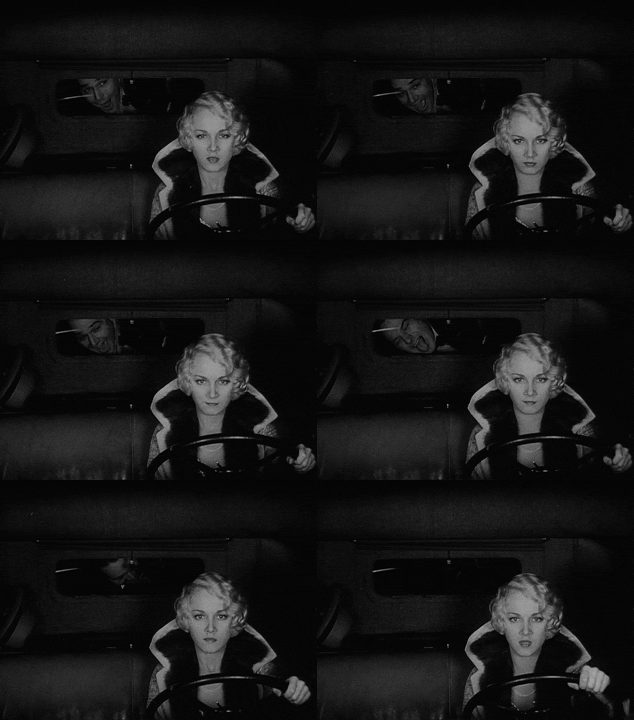
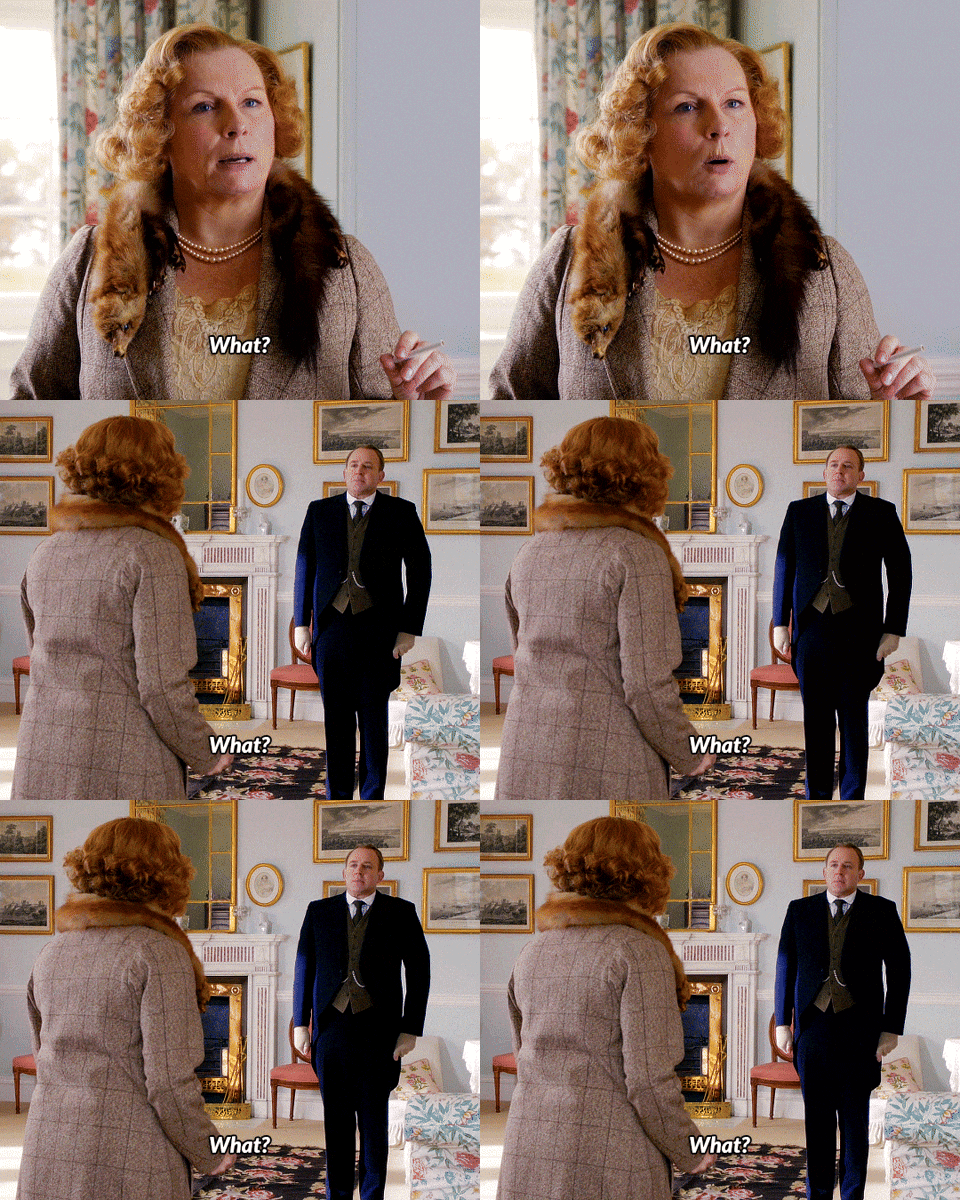
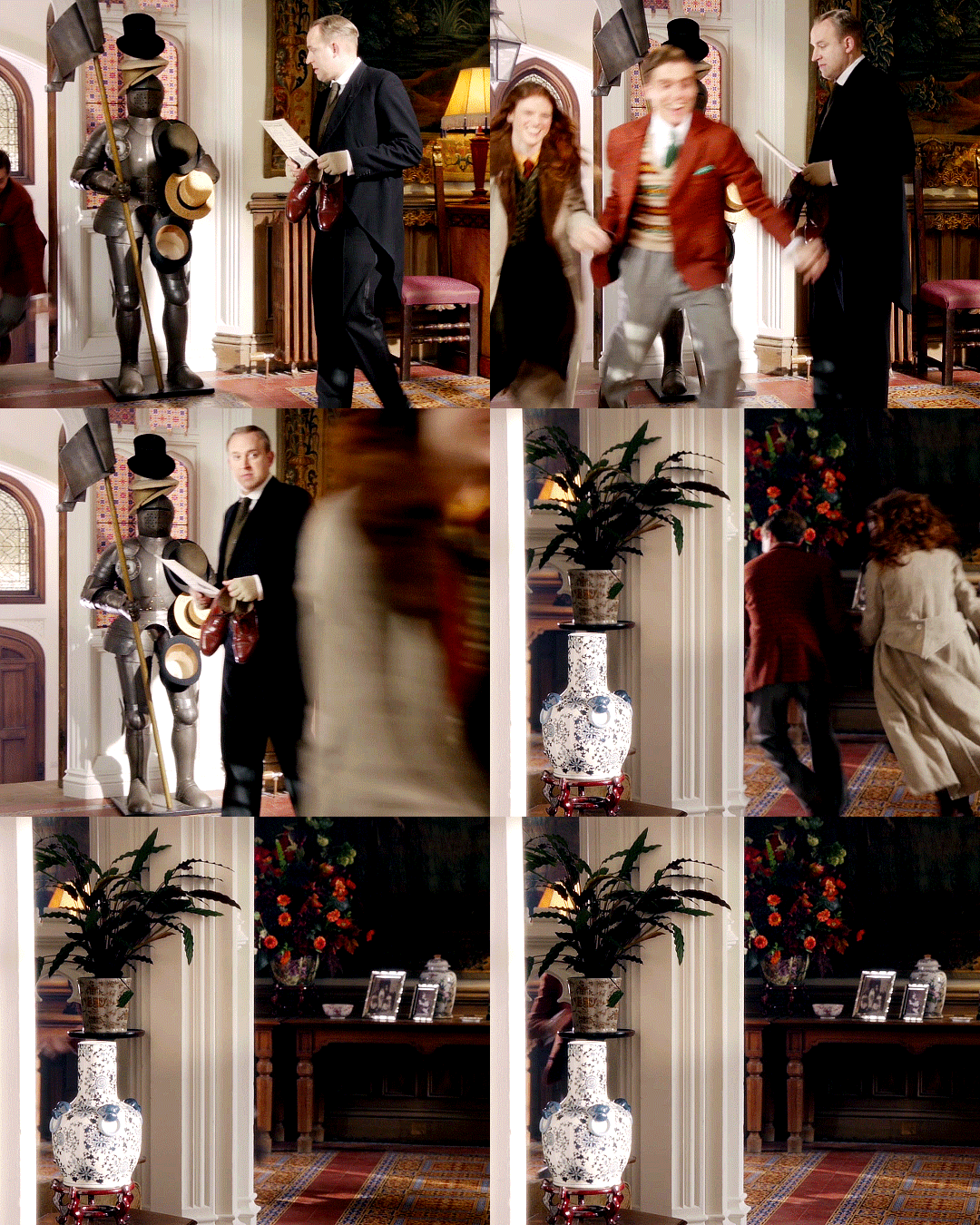




Unlike the male codfish, which, suddenly finding itself the parent of three million five hundred thousand little codfish, cheerfully resolves to love them all, the British aristocracy is apt to look with a somewhat jaundiced eye on its younger sons. And Freddie Threepwood was one of those younger sons who rather invite the jaundiced eye.
Years before, when a boy, and romantic as most boys are, his lordship had sometimes regretted that the Emsworths, though an ancient clan, did not possess a Family Curse. How little had he suspected that he was shortly about to become the father of it.
It is not easy to explain to the lay mind the extremely intricate ramifications of the personnel of a Hollywood motion-picture organization. Putting it as briefly as possible, a Nodder is something like a Yes-Man, only lower in the social scale. A Yes-Man's duty is to attend conferences and say "Yes." A Nodder's, as the name implies, is to nod. The chief executive throws out some statement of opinion, and looks about him expectantly. This is the cue for the senior Yes-Man to say yes. He is followed, in order of precedence, by the second Yes-Man - or Vice-Yesser, as he is sometimes called - and the junior Yes-Man. Only when all the Yes-Men have yessed, do the Nodders begin to function. They nod.
They looked at him, awed. Slowly, fading across hill and dale, the vast bellow died away. And suddenly, as it died, another, softer sound succeeded it. A sort of gulpy, gurgly, plobby, squishy, wofflesome sound, like a thousand eager men drinking soup in a foreign restaurant. And, as he heard it, Lord Emsworth uttered a cry of rapture.
The Empress was feeding.


The master of Blandings was one of those fluffy-minded old gentlemen who are happiest when experimenting with strange drugs. In a less censorious age, he would have been a Borgia.or his view of his fellow man:
"She is seeing far too much of this man Watkins."Granted - and in a style typical of lighthearted angst - many of those the Earl happens upon are grating:
"Well, so am I, for the matter of that. So is everybody who sees him more than once."
In matters where shades of feeling are involved, it is not always easy for the historian to be as definite as he could wish. He wants to keep the record straight, and yet he cannot take any one particular moment of time, pin it down for the scrutiny of Posterity and say, 'This was the moment when Lord Emsworth for the first time found himself wishing that his guest would tumble out of an upper window and break his neck.'But ultimately Wodehouse grows magnanimous towards his principal fop and, in the final story, bestows on him something very unlikely: saving grace.






![Profile Image for Namera [The Literary Invertebrate].](https://i.gr-assets.com/images/S/compressed.photo.goodreads.com/users/1773790297i/31792110._UX200_CR0,33,200,200_.jpg)