

What do you think?
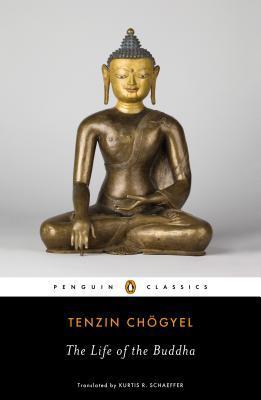
The Life of the Buddha
A blueprint for a life of mindfulness, dedicated to the easing of suffering both for oneself and for others
The story of Shakyamuni Buddha’s epic journey to enlightenment is perhaps the most important narrative in the Buddhist tradition. Tenzin Chögyel’s The Life of the Buddha , composed in the mid–eighteenth century and now in a vivid new translation, is a masterly storyteller’s rendition of the twelve acts of the Buddha. Chögyel’s classical tale seamlessly weaves together the vast and the minute, the earthly and the celestial, reflecting the near-omnipresent aid of the gods alongside the Buddha’s moving final reunion with his devoted son, Rahula. The Life of the Buddha has the power to engage people through a deeply human story with cosmic implications.
For more than seventy years, Penguin has been the leading publisher of classic literature in the English-speaking world. With more than 1,700 titles, Penguin Classics represents a global bookshelf of the best works throughout history and across genres and disciplines. Readers trust the series to provide authoritative texts enhanced by introductions and notes by distinguished scholars and contemporary authors, as well as up-to-date translations by award-winning translators.
The story of Shakyamuni Buddha’s epic journey to enlightenment is perhaps the most important narrative in the Buddhist tradition. Tenzin Chögyel’s The Life of the Buddha , composed in the mid–eighteenth century and now in a vivid new translation, is a masterly storyteller’s rendition of the twelve acts of the Buddha. Chögyel’s classical tale seamlessly weaves together the vast and the minute, the earthly and the celestial, reflecting the near-omnipresent aid of the gods alongside the Buddha’s moving final reunion with his devoted son, Rahula. The Life of the Buddha has the power to engage people through a deeply human story with cosmic implications.
For more than seventy years, Penguin has been the leading publisher of classic literature in the English-speaking world. With more than 1,700 titles, Penguin Classics represents a global bookshelf of the best works throughout history and across genres and disciplines. Readers trust the series to provide authoritative texts enhanced by introductions and notes by distinguished scholars and contemporary authors, as well as up-to-date translations by award-winning translators.
160 pages, Paperback
First published February 24, 2015
Ratings & Reviews
Friends & Following
Create a free account to discover what your friends think of this book!
Community Reviews
Displaying 1 - 22 of 22 reviews

Read
September 28, 2016This is by no means a primary source, written several thousand years after the events it describes, in a tradition in which the magical, mystical and divine elements have become paramount, the back cover blurb mis-sells the story, this can be no blue print for a life of mindfulness rather the opposite it enjoins the reader to faith in an orderly universe, in which salvation from the tiresome round of rebirth is assured through the intervention of other beings so beyond the human in their capabilities, that one can only gasp as a spectator in the audience of an elaborately staged play. At the same time this is a magnificently Rablesian work, the author reveals in huge numbers and vast units of time, I regret that he was not writing in the current age of astrophysics which would have provided him with an even larger canvas to describe his extravagances upon.
Everything is epic and awe inspiring here in a life structured from Heaven where the Buddha decides to enter upon his final life and chooses his parents, through to death, he descends into his mother in the form of a white elephant and the gods provide him with a many storied palace to live in while in the womb, unsurprisingly his mother dies soon after birth (of a broken heart "when she beheld that her son would leave home"). Interestingly this is a world whose feet stand in several realms just as the Buddha in this account interacts with the human and the divine, one foot is in the writer's present - ie 18th century Bhutanese monastic life, on the other in shamanism - several times wise men fly overhead like geeseand drop in on the narrative to foretell the future to people other than the Buddha - who already knows it (I felt that a weak point of this version of the Buddha's life is that it seemed rather pointless, he is already teaching the gods before his final incarnation and knows that he must face down Mara and his demon hordes in advance , this is a drama in which the principal actor at least knows the part he must play - perhaps this serves to demonstrate the illusory nature of life,in which case didactically it is a strength, although it is not great from a literary point of view). The flying wise men advise the Buddha's father as is well known that the youth must avoid seeing sickness. ageing or death. So naturally the father provides him with three palaces and a substantial harem of "eighty-four thousand young women" - just as in Rabelais there is a monastery with the rule' do as you want' leading the men and women there to behave in a decorous and modest manner so to the Buddha with his wife, fathers a son out of compassion , since otherwise she would be accused of being barren when he left to seek Enlightenment - which awareness of social judgement demonstrates the need that the world has for enlightenment I suppose. Still on account of her misdeeds in previous existences she must be pregnant for six years - again shades of Rabelais (Bakhetin would have loved the carnival indulgence in spectacle which this work enjoys). After six years of meditation and austerities he is ready to achieve Enlightenment and is ready for a meal: Indra summoned the village woman Sujata. She skimmed the milk of a thousand cows seven times, mixed fresh rice and grain into the cream, and boiled it (p54), having eaten this meal prepared by a mighty maid with a massive dairy the Buddha's skin turns golden in colour. And then:
the Teacher beheld the sufferings of the world:
Human beings are wrapped in a veil of ignorance,
Tied up in knots with belief in a self,
Crushed by a mountain of arrogance,
Scorched by flames of desire
Slashed by weapons of hatred,
Unable to cross the river of birth, ageing, sickness, death.(p74)
When he is ready to die, like a lion he lies down on his right side, is reconciled with his son, and "At midnight he passed completely from suffering. Immediately the earth rumbled, meteors fell, the ten directions blazed, and the music of the gods sounded forth." (p90)
A Joyful and exuberant little book.
Everything is epic and awe inspiring here in a life structured from Heaven where the Buddha decides to enter upon his final life and chooses his parents, through to death, he descends into his mother in the form of a white elephant and the gods provide him with a many storied palace to live in while in the womb, unsurprisingly his mother dies soon after birth (of a broken heart "when she beheld that her son would leave home"). Interestingly this is a world whose feet stand in several realms just as the Buddha in this account interacts with the human and the divine, one foot is in the writer's present - ie 18th century Bhutanese monastic life, on the other in shamanism - several times wise men fly overhead like geeseand drop in on the narrative to foretell the future to people other than the Buddha - who already knows it (I felt that a weak point of this version of the Buddha's life is that it seemed rather pointless, he is already teaching the gods before his final incarnation and knows that he must face down Mara and his demon hordes in advance , this is a drama in which the principal actor at least knows the part he must play - perhaps this serves to demonstrate the illusory nature of life,in which case didactically it is a strength, although it is not great from a literary point of view). The flying wise men advise the Buddha's father as is well known that the youth must avoid seeing sickness. ageing or death. So naturally the father provides him with three palaces and a substantial harem of "eighty-four thousand young women" - just as in Rabelais there is a monastery with the rule' do as you want' leading the men and women there to behave in a decorous and modest manner so to the Buddha with his wife, fathers a son out of compassion , since otherwise she would be accused of being barren when he left to seek Enlightenment - which awareness of social judgement demonstrates the need that the world has for enlightenment I suppose. Still on account of her misdeeds in previous existences she must be pregnant for six years - again shades of Rabelais (Bakhetin would have loved the carnival indulgence in spectacle which this work enjoys). After six years of meditation and austerities he is ready to achieve Enlightenment and is ready for a meal: Indra summoned the village woman Sujata. She skimmed the milk of a thousand cows seven times, mixed fresh rice and grain into the cream, and boiled it (p54), having eaten this meal prepared by a mighty maid with a massive dairy the Buddha's skin turns golden in colour. And then:
the Teacher beheld the sufferings of the world:
Human beings are wrapped in a veil of ignorance,
Tied up in knots with belief in a self,
Crushed by a mountain of arrogance,
Scorched by flames of desire
Slashed by weapons of hatred,
Unable to cross the river of birth, ageing, sickness, death.(p74)
When he is ready to die, like a lion he lies down on his right side, is reconciled with his son, and "At midnight he passed completely from suffering. Immediately the earth rumbled, meteors fell, the ten directions blazed, and the music of the gods sounded forth." (p90)
A Joyful and exuberant little book.

January 19, 2017
The book was written in 1740, thousands of years after the Buddha taught his way.
Tenzin Chogyel peaces together the story of the Buddha through the many scriptures that were present during his time. The literature is just beautiful at how he praised the Buddha as something beyond what is imaginable. You will not learn of the actual teachings from this book.
"The nature of birth is no birth.
The nature of aging is not aging.
The nature of illness is not illness.
The nature of death is no death.
The nature of diminishing is no diminishing.
Where does a state such as this exist? It is rare."
Tenzin Chogyel peaces together the story of the Buddha through the many scriptures that were present during his time. The literature is just beautiful at how he praised the Buddha as something beyond what is imaginable. You will not learn of the actual teachings from this book.
"The nature of birth is no birth.
The nature of aging is not aging.
The nature of illness is not illness.
The nature of death is no death.
The nature of diminishing is no diminishing.
Where does a state such as this exist? It is rare."

January 9, 2025
while i find all this information super cool this was a bit of a hard read. and i had to do it all in one day😅

November 26, 2019
I have long been interested in Buddhism, to the extent that when I was young I even called myself a "Buddhist", though the truth is that I didn't really know enough about Buddhism to have earned the right to do that. One of the things that strongly appealed to me back then was that Buddhism seemed more a philosophy of life than a religion.
Having just read this book, I now understand that I was wrong. It is (or can be) a religion with all the trappings, myths and adjuncts of the most ritual-heavy credo. This is the very first work of Bhutanese literature I have read. I found it rather boring in parts and then I felt guilty for feeling this way. I finished it but it felt more like a duty than a pleasure and I don't know if that's a good or bad thing.
Having just read this book, I now understand that I was wrong. It is (or can be) a religion with all the trappings, myths and adjuncts of the most ritual-heavy credo. This is the very first work of Bhutanese literature I have read. I found it rather boring in parts and then I felt guilty for feeling this way. I finished it but it felt more like a duty than a pleasure and I don't know if that's a good or bad thing.

December 6, 2017
I loved this book, but I wish I knew more about the religion. I think if I come back with more knowledge and reread it, I will get so much more out of it. In short though, I love the peace and individualism Buddhism teaches. It focuses on finding truth with one's self, not under the influence of others.

February 24, 2018
Decent storytelling. I was flat-out laughing hysterically at times.

September 14, 2017
“The Life of the Buddha” by Tenzin Chogyel is a concise, beautifully written Tibetan Buddhist retelling of the life of the Buddha. Written by an eighteenth-century Bhutanese monk, “The Life of the Buddha” gives the reader a fascinating view into the cosmological world of Tibetan Buddhism. Over the course of one-hundred pages, the author takes the reader through twelve episodes in the life of the Buddha from his resolution in a previous life to obtain enlightenment out of compassion for all living beings to his final release from the world of suffering.
The book was composed from many sources but it was meant to be a simple rendering of the story of the Buddha for the masses. The author writes, “I thought that if unbiased people of humble origins were to simply hear the name of the Buddha, this would be greatly beneficial” (5). Oftentimes surreal, the account shows a classic rendering of the Buddhist universe. The author points out that it is rare for a Buddha to be born in a universe and that makes the Dharma (teaching) of the Buddha all the more precious.
The story begins many lifetimes ago with the Bodhisattva (eventually our Buddha) being moved by compassion for all living beings and resolving to obtain enlightenment. The first few chapter take place in this cosmic time, even before the Buddha was born into our world. All the classical features of the story are present and the author tells the story concisely and with great energy. The story rolls and the text is a very quick read.
A few features that I found striking. The first is the complexity of the Buddhist universe written here. Oftentimes Buddhism is portrayed in the West as a supremely “rational” religion. While I agree that the Dharma of the Buddha is very rational and much to say about the way the Universe works, when people say that Buddhism is rational, they mean that it a religion that is devoid of any “mystical” or “unbelievable” elements. But the world presented here is an imminently enchanted world. The Buddha experiences countless lifetimes in his quest to liberate all living beings. There are multiple universes, gods that help the Buddha along the way, mystical realms, demons, etc…. The second striking feature is that the Bodhisattva was fully omniscient about his purpose and mission. So, in the story of how the Buddha encountered age, sickness, and death, the author states variations of the phrase “even though he knew what these were, he pretended not to.” This question of omniscience is one that you see play out in other religious traditions.
Finally, I would be remiss if I did not describe the last chapter, which recounts the Buddha’s death. In this story, the Buddha had a son named Rahula who became a monk. On the night of the Buddha’s death, his son refused to come and see him. The pathos of this chapter makes the work have much deeper emotional impression than it would have otherwise. On one hand, we have the death of the Buddha, who brought the Dharma into the world but the story ends with his son needed to come to terms with his father’s death. It is a profoundly human touch that gives the work a lasting impression.
This is nice book and I recommend it to anyone looking to explore Buddhism more generally and the Mahayana tradition and the Tibetan Buddhist tradition even more deeply. The translation of this text is very good and the introduction is very helpful.
The book was composed from many sources but it was meant to be a simple rendering of the story of the Buddha for the masses. The author writes, “I thought that if unbiased people of humble origins were to simply hear the name of the Buddha, this would be greatly beneficial” (5). Oftentimes surreal, the account shows a classic rendering of the Buddhist universe. The author points out that it is rare for a Buddha to be born in a universe and that makes the Dharma (teaching) of the Buddha all the more precious.
The story begins many lifetimes ago with the Bodhisattva (eventually our Buddha) being moved by compassion for all living beings and resolving to obtain enlightenment. The first few chapter take place in this cosmic time, even before the Buddha was born into our world. All the classical features of the story are present and the author tells the story concisely and with great energy. The story rolls and the text is a very quick read.
A few features that I found striking. The first is the complexity of the Buddhist universe written here. Oftentimes Buddhism is portrayed in the West as a supremely “rational” religion. While I agree that the Dharma of the Buddha is very rational and much to say about the way the Universe works, when people say that Buddhism is rational, they mean that it a religion that is devoid of any “mystical” or “unbelievable” elements. But the world presented here is an imminently enchanted world. The Buddha experiences countless lifetimes in his quest to liberate all living beings. There are multiple universes, gods that help the Buddha along the way, mystical realms, demons, etc…. The second striking feature is that the Bodhisattva was fully omniscient about his purpose and mission. So, in the story of how the Buddha encountered age, sickness, and death, the author states variations of the phrase “even though he knew what these were, he pretended not to.” This question of omniscience is one that you see play out in other religious traditions.
Finally, I would be remiss if I did not describe the last chapter, which recounts the Buddha’s death. In this story, the Buddha had a son named Rahula who became a monk. On the night of the Buddha’s death, his son refused to come and see him. The pathos of this chapter makes the work have much deeper emotional impression than it would have otherwise. On one hand, we have the death of the Buddha, who brought the Dharma into the world but the story ends with his son needed to come to terms with his father’s death. It is a profoundly human touch that gives the work a lasting impression.
This is nice book and I recommend it to anyone looking to explore Buddhism more generally and the Mahayana tradition and the Tibetan Buddhist tradition even more deeply. The translation of this text is very good and the introduction is very helpful.

July 21, 2024
“We become separated from everything that is dear, everything that is beautiful. We become divided from them. We lose them. All things are impermanent. They are suffering.”
Western accounts of the Buddha’s life usually just stick to the life of Siddhartha, and treat him simply as a man who found the right way to live and spent the rest of his life teaching others how to do the same.
But this 1740 biography of the Buddha, written in classical Tibetan by a Bhutanese Buddhist monk in Bhutan, tells the more holistic story, hitting what are, in the Buddhist tradition, the 12 key acts in the Buddha’s journey. This includes not only his life as Prince Siddhartha, the only part of his story usually picked up by Western biographers, but also his previous lives “over countless millions of eons” and his sojourns in heaven, enlightening the gods.
Also unlike Western accounts, the Buddha’s story is here full of the supernatural: gods, and magical feats. In typical hyperbolic fashion, the Buddha subdues “230 million” demons; he hides all the people of the world in a diamond tent to stop them being turned to dust (?); he shoots an arrow 10 miles, through the trunks of numerous mature trees (in an episode that rings of Homer’s Odyssey); he grows to the height of seven palm trees; he glides through the air over a river.
Were such elements added over time to embellish and enhance the story? How intrinsic are they to understanding, absorbing and benefiting from the Buddha’s life story? The film Troy (2004) loses by deleting the gods, but perhaps the Buddha’s story gains by shedding these elements, or perhaps by including them only as symbolism, metaphor and personification.
“Think upon him and develop faith.”
Western accounts of the Buddha’s life usually just stick to the life of Siddhartha, and treat him simply as a man who found the right way to live and spent the rest of his life teaching others how to do the same.
But this 1740 biography of the Buddha, written in classical Tibetan by a Bhutanese Buddhist monk in Bhutan, tells the more holistic story, hitting what are, in the Buddhist tradition, the 12 key acts in the Buddha’s journey. This includes not only his life as Prince Siddhartha, the only part of his story usually picked up by Western biographers, but also his previous lives “over countless millions of eons” and his sojourns in heaven, enlightening the gods.
Also unlike Western accounts, the Buddha’s story is here full of the supernatural: gods, and magical feats. In typical hyperbolic fashion, the Buddha subdues “230 million” demons; he hides all the people of the world in a diamond tent to stop them being turned to dust (?); he shoots an arrow 10 miles, through the trunks of numerous mature trees (in an episode that rings of Homer’s Odyssey); he grows to the height of seven palm trees; he glides through the air over a river.
Were such elements added over time to embellish and enhance the story? How intrinsic are they to understanding, absorbing and benefiting from the Buddha’s life story? The film Troy (2004) loses by deleting the gods, but perhaps the Buddha’s story gains by shedding these elements, or perhaps by including them only as symbolism, metaphor and personification.
“Think upon him and develop faith.”

July 7, 2017
There are quite a few ways people could engage with this book. If you are looking to learn about Buddhist ideas and practise (specifically directly applicable knowledge and technique) then I’d suggest you’d look elsewhere.
But if, like myself, you hope to learn a little about the Tibetan (specifically Kagyu school) conception of Buddhism, then by all means read on.
There is something intoxicating about the vision put forward by Chögyel, influenced as it is by the esoteric aspects of Hinduism and Bon Shamanism, and expressed in beautiful, poetic prose.
While I gained some understanding through this wonderfully written and translated 18th Century text, I really could have used a comprehensive reading guide to unpack the countless allusions. As a stand-alone, many of the references are impenetrable.
Having only lightly engaged with Tibetan Buddhist (most notably through ‘The Monk And The Philosopher’) I was slightly surprised by the intense focus on miracles, magical entities, demons, spirits, gods and alternate realms of existence. This side of Tibetan Buddhism holds an intense interest to me, and Chögyel's ’The Life Of The Buddha’ has helped fuel my interest into further research.
A fairly quick and easy read. Worth your time.

July 29, 2024
Chogyel's text was brief, yet informative. I think Buddhism is sometimes watered down in the West to become a mere philosophy, but the author here firmly plants Buddhism as growing out of the Hinduism tradition and being closely related to it in both teachings and doctrine. The mystical life of the Buddha, as described here, was both familiar and foreign to me.
My only complaint is the translator/editor didn't have great explanations or notes for foreign concepts or figures aside from the glossary at the end of the text (at least in the digital edition I read). This left me confused more than once and I needed to look elsewhere to find answers to my questions. I just felt the format could have been more conducive to learning.
My only complaint is the translator/editor didn't have great explanations or notes for foreign concepts or figures aside from the glossary at the end of the text (at least in the digital edition I read). This left me confused more than once and I needed to look elsewhere to find answers to my questions. I just felt the format could have been more conducive to learning.

October 17, 2025
The back cover copy promises a blue print for your own life, but that might be a bit optimistic if you don't have an army of gods watching and helping you like the protagonist had.
But for what it is (a Mahayana/Vajrayana narrative of the life of Gotama Buddha), I liked it very much.
The gushing, psychedelic style is a big contrast to the Theravada texts I read previously, which described the actions of the Buddha in a pretty naturalist way even though they too admit a huge cosmos with like 50 planes of existence, filled to the brim with devas, humans, demons etc., and that has already existed for countless eons.
But for what it is (a Mahayana/Vajrayana narrative of the life of Gotama Buddha), I liked it very much.
The gushing, psychedelic style is a big contrast to the Theravada texts I read previously, which described the actions of the Buddha in a pretty naturalist way even though they too admit a huge cosmos with like 50 planes of existence, filled to the brim with devas, humans, demons etc., and that has already existed for countless eons.

January 16, 2021
At the center of any religion there is a biography of its hero. For Buddhism it is the same, and this book is a good and concise story of the different stages through which Siddhartha Gautama passed on his way to Enlightenment. From bodhisattva to Buddha Vairocana, we follow the journey of the one who achieved peace. The writer's focus is on the main events of Siddhartha's life, not on his teachings. A good way for beginners to learn about Buddha. The introduction and notes by the translator Kurtis R. Schaeffer are both useful and interesting.

June 29, 2018
Surprised by how involved the Gods were in the Buddha’s life according to the Tibetan tradition. I enjoyed the imagery of the Buddha literally throwing an elephant by its toe. However, the final reunion with Rahula is the most powerful part of this book, and makes it worth reading alone.

June 23, 2018
If you're interested in Buddhism, then you'll be interested in this.

May 11, 2023
A hagiography, not a biography, but an interesting religious document nonetheless.
February 8, 2024
Read this book for a class I’m taking. Most important thing to take away is the renunciation of the Buddha’s life as a prince in order to follow the path towards enlightenment.

Read
September 8, 2025Had to read this for class but I think it’s a really good introductory book to Buddhism— definitely made more sense with some context from class
January 7, 2026
Next up, i need to read a book on the buddhist teaching cos i still don't know anything about the religion itself
January 26, 2024
Was interesting to see the 12 act structure of the Buddha’s life laid out so clearly. The poetry and language felt slightly lacking, especially compared to the Dhammapada or other works from the Pali canon (this may well be a fault of translation). Ultimately centred more around plot than revealing spiritual truths but there were some interesting moments. Siddhartha choosing to enter the world in elephant form was an interesting aspect to the story and his discussion with Rahula at the end was heart-wrenching. Rahula’s struggle to understand his father’s death was poignant as was Shakyamuni’s teaching: ’You will become separated from that which is dear, all that is pleasing. You will lose it’. The son’s lamentation at the loss of his father is poignant, and adds a personal perspective to the nature of suffering within the tale. There were two particularly wonderful moments of clarity:
’Now, living beings are like the sky. They are limitless. Every living being is in essence naturally luminous. Every living being possesses the enlightened heart of Buddha. […] Ethical cause and effect causes us to accumulate many greater and lesser mental attitudes. And because of this we uncontrollably experience every manner of grief.’
‘There are two extremes that a renunciation must not fall into: overindulgence in the pleasures of the senses and self-mortification. You must abandon these two extremes and take up a middle path.’
’Now, living beings are like the sky. They are limitless. Every living being is in essence naturally luminous. Every living being possesses the enlightened heart of Buddha. […] Ethical cause and effect causes us to accumulate many greater and lesser mental attitudes. And because of this we uncontrollably experience every manner of grief.’
‘There are two extremes that a renunciation must not fall into: overindulgence in the pleasures of the senses and self-mortification. You must abandon these two extremes and take up a middle path.’

April 24, 2016
Strange and beautiful little book. Probably too weird for someone looking to be inspired to practice or think the dharma is a science and look to this book as proof or evidence. (Which explains the negative reviews on this website misreading the book). It’s best for people who like reading literature from like medieval Europe and that sort of thing—this book literature in that sense. For those readers, pairing this with John Strong’s “The Buddha: A Beginner’s Guide” is essential.
For longtime students of Mahayana-Tantric traditions, this book is lovely way to refamiliarize yourself with the life story in one sitting since it brilliantly touches on the iconic moments with just one page or one paragraph or even sometimes just one quick sentence.
I’d recommend reading a few life stories together including the one published by Clay Sanskrit Library and the longer compilation published by Pariyatti Publishing—all titled “The Life of the Buddha”—followed by the masterpiece “The Life of Milarepa” published by Penguin Classics.
For longtime students of Mahayana-Tantric traditions, this book is lovely way to refamiliarize yourself with the life story in one sitting since it brilliantly touches on the iconic moments with just one page or one paragraph or even sometimes just one quick sentence.
I’d recommend reading a few life stories together including the one published by Clay Sanskrit Library and the longer compilation published by Pariyatti Publishing—all titled “The Life of the Buddha”—followed by the masterpiece “The Life of Milarepa” published by Penguin Classics.


October 3, 2021
A brief, mystical summary, of the Life of The Buddha.
Displaying 1 - 22 of 22 reviews