

What do you think?
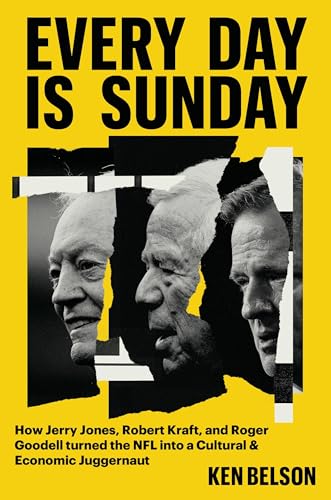
Every Day Is Sunday: How Jerry Jones, Robert Kraft, and Roger Goodell Turned the NFL into a Cultural & Economic Juggernaut
From veteran New York Times Business & NFL reporter, Ken Belson, a deeply-reported account of how the NFL’s Commissioner, Roger Goodell, and its two most powerful owners, Jerry Jones & Robert Kraft, turned the league into a financial and cultural juggernaut.
On February 11, 2024, NFL Commissioner, Roger Goodell, & the league’s two most powerful owners, Jerry Jones & Robert Kraft, looked down at the spectacle before them. What they saw was the sport’s championship game, the Super Bowl—now a de facto national holiday—being played in a shiny new $2B stadium, home to the first franchise based in Las Vegas, after the league’s embrace of nationwide gambling. The moment was over 30 years in the making.
“We’re not competing with the NBA or MLB,” Goodell later quipped in private. “Our competitors are Apple & Google.”
In Every Day is Sunday, veteran New York Times Business & NFL reporter, Ken Belson, traces the evolution of the league from “one of the four US professional sports,” into the cultural & economic juggernaut it is today.
Belson illustrates how the league’s rise coincided with the arrival of Jones & Kraft in the early 90’s. He provides an inside look on how these two men reshaped the league, taking readers into the secretive owner’s meeting, how they decided Goodell was the right man to place as Commissioner, and how the three built, wielded, and held on to their collective power.
Perfect for fans of THE DYNASTY and BIG GAME, Belson provides a unique peek behind the curtain of how America’s favorite sport achieved its status—and how these three men let nothing, or no one—stand in their way.
On February 11, 2024, NFL Commissioner, Roger Goodell, & the league’s two most powerful owners, Jerry Jones & Robert Kraft, looked down at the spectacle before them. What they saw was the sport’s championship game, the Super Bowl—now a de facto national holiday—being played in a shiny new $2B stadium, home to the first franchise based in Las Vegas, after the league’s embrace of nationwide gambling. The moment was over 30 years in the making.
“We’re not competing with the NBA or MLB,” Goodell later quipped in private. “Our competitors are Apple & Google.”
In Every Day is Sunday, veteran New York Times Business & NFL reporter, Ken Belson, traces the evolution of the league from “one of the four US professional sports,” into the cultural & economic juggernaut it is today.
Belson illustrates how the league’s rise coincided with the arrival of Jones & Kraft in the early 90’s. He provides an inside look on how these two men reshaped the league, taking readers into the secretive owner’s meeting, how they decided Goodell was the right man to place as Commissioner, and how the three built, wielded, and held on to their collective power.
Perfect for fans of THE DYNASTY and BIG GAME, Belson provides a unique peek behind the curtain of how America’s favorite sport achieved its status—and how these three men let nothing, or no one—stand in their way.
336 pages, Hardcover
Published October 14, 2025
Ratings & Reviews
Friends & Following
Create a free account to discover what your friends think of this book!
Community Reviews
Displaying 1 - 30 of 86 reviews

December 21, 2025
I'll grant that it's deeply reported. Not deeply analytical--fundamentally a bunch of his articles stuck together, with neither writer nor editors bothering to address continuity or repetition. We're introduced to Roger Goodell multiple times; stories are told repeatedly, each time as if they're new; most irritating, articles written at different times sit alongside each other, to no good effect. The kneeling chapter, the centerpiece of which is leaked audio from the players/owners meeting that reveals how thoughtfully and consistently the players sought to get the league to articulate anything more than vague gestures in the direction of support, ends with discussion of how the stigma around this question discouraged Black performers from doing halftime shows. But then Jay-Z steps in to handle programming, and make many bucks along the way, saying that it's now time for "actionable" things. Should we read this as high-level corporate cooperation, proof that love of the almighty dollar unites billionaires, regardless of race? An actual change in policy that shows the NFL's attempt to do...something? No answer is offered. And then, just to further not resolve things, the next chapter, about the Super Bowl, ends with the revelation that, due to kneeling, a lot of Black stars, like Jay-Z, have threatened that...they won't play the halftime show. Gosh, I wonder what happened next? We'll never know.
The details are often fun, particularly the exploration of how owners' meetings, apparently for years, did not bother to assign seats, which was apparently a big deal (and Belson knows who sat with whom, and why, and where)--the intrinsic grasp of strategic positioning of every high-school jock meant that it really mattered, at least to these billionaires, where you sat. The larger sense of dynamics of the league, its cultural transformation from a...not "clubby," but a very informal collection of semi-rich guys who loved football and didn't think all that much or all that well about maximizing returns to a media company concerned to produce and monetize as much content as possible by churning out as many games as it can on as many continents as it can, should be the big story here.
Unfortunately, it only sporadically is the story--due to the book's scattered structure and arguments, every so often Belson mentions this and then moves on to some more stuff, often just letting sections trail off with a semi-relevant bit. Stuff, there's a quite lot of--little bits about what and where people eat and how they act, many of which are odd/revealing/funny. But perspective, balance, connection, weighing of evidence, coming to a point...not so much.
The details are often fun, particularly the exploration of how owners' meetings, apparently for years, did not bother to assign seats, which was apparently a big deal (and Belson knows who sat with whom, and why, and where)--the intrinsic grasp of strategic positioning of every high-school jock meant that it really mattered, at least to these billionaires, where you sat. The larger sense of dynamics of the league, its cultural transformation from a...not "clubby," but a very informal collection of semi-rich guys who loved football and didn't think all that much or all that well about maximizing returns to a media company concerned to produce and monetize as much content as possible by churning out as many games as it can on as many continents as it can, should be the big story here.
Unfortunately, it only sporadically is the story--due to the book's scattered structure and arguments, every so often Belson mentions this and then moves on to some more stuff, often just letting sections trail off with a semi-relevant bit. Stuff, there's a quite lot of--little bits about what and where people eat and how they act, many of which are odd/revealing/funny. But perspective, balance, connection, weighing of evidence, coming to a point...not so much.

November 30, 2025
Learned a lot! A good book for any fan wanting to learn deeper details about the league’s growth and the business of it
January 10, 2026
I am a football fan. If given the choice, and I am, I will watch Pee-Wee football over a professional baseball game. More specifically though, I am a NFL football fan. Since I first saw my first game in person (around 1960) the sport has somehow resonated with me. I say this because I almost knew going into this book that I would like it.
This story of how the NFL grew into what is today is both an interesting business case and a sports story. If there is one key takeaway from the book it’s this … the NFL is a business & its number one priority is making money for the league, and equally if not more important for the team owners. Fans are a necessity but often an afterthought. The focus is on media, particularly broadcast rights and advertising. Very often the NFL pays lip service to its fans & to a lesser degree its players, evidence the leagues ‘casual’ handling of social justice issues, CTE & head trauma as well as gambling.
Three memorable quotes from the book (there are several more):
* “The campaign was consistent with the NFL’s approach to other crises: Create a slogan that makes the league appear to be taking action to address a problem, then use the league’s various media platforms to maximize exposure.” … In this case they were talking about the social justice protests surrounding Colin Kaepernick.
* Their growth formula from the game perspective is “Plays + Passes + Penalties = Points” … and more points lead to more compelling football. If you look at the history and evolution of the game it’s clear that this has driven things.
* “If you are going to eat shit, don’t nibble.” This may be one of my all time favorite quotes! It was attributed to Paul Hicks, the league spokesman from 2010-2015, when urging to league to be straight with the player’s union regarding player safety.
If you’re an NFL fan I think you’ll enjoy this book.
This story of how the NFL grew into what is today is both an interesting business case and a sports story. If there is one key takeaway from the book it’s this … the NFL is a business & its number one priority is making money for the league, and equally if not more important for the team owners. Fans are a necessity but often an afterthought. The focus is on media, particularly broadcast rights and advertising. Very often the NFL pays lip service to its fans & to a lesser degree its players, evidence the leagues ‘casual’ handling of social justice issues, CTE & head trauma as well as gambling.
Three memorable quotes from the book (there are several more):
* “The campaign was consistent with the NFL’s approach to other crises: Create a slogan that makes the league appear to be taking action to address a problem, then use the league’s various media platforms to maximize exposure.” … In this case they were talking about the social justice protests surrounding Colin Kaepernick.
* Their growth formula from the game perspective is “Plays + Passes + Penalties = Points” … and more points lead to more compelling football. If you look at the history and evolution of the game it’s clear that this has driven things.
* “If you are going to eat shit, don’t nibble.” This may be one of my all time favorite quotes! It was attributed to Paul Hicks, the league spokesman from 2010-2015, when urging to league to be straight with the player’s union regarding player safety.
If you’re an NFL fan I think you’ll enjoy this book.

January 24, 2026
This was an excellent read. As an avid Bears fan, it was eye-opening to the machinations behind the force that is the National Football League. Although the book focuses largely on Jerry and Kraft, Belson does a great job of sprinkling in other owners and their contributions to the league.
Belson also focuses on Tagliabue and Goodell, and their handling of several different NFL scandals. I thought the coverage of concussions/CTE was excellent, as well as Kaepernick. I thought it was really soft on the recent appearance of gambling within the sport though.
Only detraction I have is the book is a bit disorganized with its timeline and often repeats information/chunks that were just stated a few chapters before. I understand it’s a compilation/reorganization of a ton of NYT articles over the years, but reads a bit too much like it.
Belson also focuses on Tagliabue and Goodell, and their handling of several different NFL scandals. I thought the coverage of concussions/CTE was excellent, as well as Kaepernick. I thought it was really soft on the recent appearance of gambling within the sport though.
Only detraction I have is the book is a bit disorganized with its timeline and often repeats information/chunks that were just stated a few chapters before. I understand it’s a compilation/reorganization of a ton of NYT articles over the years, but reads a bit too much like it.

January 13, 2026
Major league baseball used to be considered America’s pastime. Sometime in the early 1990s after a number of decades the National Football League overtook baseball as the dominant spectator sport in America. Professional football always seemed to be in the news, even out of season with collegiate combines, the draft, off season practices, training camps and of course the season that lasted from July through February. The coaching carousel, which today is in full swing, trade speculation, sports betting, player safety, new stadiums seem like normal dinner time conversation, in homes, bars, and elsewhere. How did football achieve this exalted position in American culture and maintain it? According to New York Times business writer, Kris Belson in his new book EVERYDAY IS SUNDAY: HOW JERRY JONES, ROBERT KRAFT, AND ROGER GOODELL TURNED THE NFL INTO A CULTURAL AND ECONOMIC JUGGERNAUT the credit falls to a group of NFL owners who remade the league by taking a low scoring game dominated by defenses into a high scoring game dominated by unheard of athletic skill and controlled violence perfectly matched with a media revolution that is constantly seeking new content. Benson’s narrative is an entertaining examination of what he has labeled “an immensely profitable American religion.”
The book itself is more than mini-biographies of the three figures mentioned in the title. It explores the growth of the league going back to the 1960s and brings its focus to the 1980s onward emphasizing certain watershed dates and deals. Other figures aside from Jerry Jones, Robert Kraft, and Roger Goodell emerge as important to the leagues growth and success and Benson is able with his many contacts and deep research to formulate a number of important themes that dominate the book. They include a fascinating description of the evolution of NFL owner cliques that made the decisive decisions that led to the league’s unparalleled success – even describing how they fought for certain chairs at league meetings like a high school cafeteria. Certain personalities dominate but Benson’s thematic approach includes the growth of billion dollar stadiums and their financing, labor negotiations that allowed the league to take off financially, rules changes that altered the game into high scoring entertainment, and how the owners policed themselves to avoid renegades like Al Davis and Dan Snyder to impact league decision making.
Almost immediately Benson describes the NFL as more than a “sports league, it was an immensely profitable religion, complete with acolytes, pomp, and tax breaks.” Benson is correct in arguing that 1989 is a watershed date for the league as then commissioner Paul Tabliabue worked with players union head, former Oakland Raider offensive lineman, Gene Upshaw and owners like Dan Rooney of the Pittsburgh Steelers to craft a new revenue sharing agreement with a salary cap and free agency which still provides the economic foundation for the league today. It was also at this time that Jerry Jones and Robert Kraft entered the NFL as owners and over the next thirty years built their teams into two of the world’s most valuable franchises and had a hand in every financial decision the league made. Their partner in this endeavor was Roger Goodell, who craved being commissioner his entire adult life who always took a maximalist approach to growing the NFL.
Goodell and the owners have turned the league into a 365 day a year enterprise through record setting deals with networks and sponsors, and other businesses that have taken black Friday, Christmas day, and other sacrosanct holidays and turned them into NFL showcases. Further, the Draft has morphed from a sleepy event for football addicts that now draws hundreds of thousands of fans, the NFL even unveils its schedule on prime-time television – there is no off season. As a result, Benson is dead on when he states, it is highlighted by “measures of greed, corporate welfare, violence, misogyny, self-promotion, and bland officiousness.” The violence of the game and its resulting injuries that linger throughout the player’s lives is not the focus of fans as games are too much of a narcotic. Even the offseason provides drugs to feed the fan’s fix as owners created NFL films, NFL network and radio, with talking heads drawing fans in.
Benson describes in detail the labor deal of December 1992 that altered the trajectory of the league as it provided free agency for the players after five years in return for a salary cap and the credit goes to Tagliabue and Upshaw who got their constituents to agree to an almost 50/50 revenue sharing document. Of all the personalities not mentioned in the title perhaps the most impactful is Robert Murdoch the head of FOX television. It was Murdoch who watched his Sports subscription service in Britain through Sky sports showing Premier League matches and its success in attracting viewers and revenue who applied the model to the NFL, creating the FOX sports network. Benson explains how Murdoch outbid CBS, hired their football group, hired announcers like John Madden and Pat Summerall, created the glitzy pre and post-game programming in eight short months that created the foundation for the NFL to cash in on media revenue. Despite the fact, Murdoch overpaid in every area, Benso refers to him as a genius if one looks at the results of his actions.
Benson seems to have a handle on all the major issues that impacted the NFL over the last three decades. From spy gate and deflate gate involving Kraft’s Patriots to the problem the NFL had with women due to players like Ray Rice who was caught beating his girlfriend. Benson takes a deep dive into the misogyny that afflicted the NFL and how reluctantly they remediate the situation through suspensions and fines as it needed to tap the female market to enhance its profitability – a term that dominates everything Goodell and the league are obsessed with.
The game of musical chairs conducted by teams is a highlight of the book as owners like Art Modell sneaked his Browns out of Cleveland in the middle of the night to become the Baltimore Ravens. The movements of Al Davis’s Oakland Raiders from Oakland to Los Angeles and back, then Las Vegas is a fascinating story as are the Los Angeles Rams move to St. Louis leaving the second largest market in the United States without a football team. In the end there would be two teams in Los Angeles, expansion to Charlotte, Jacksonville, Nashville, and Cleveland which would bring the owners billions of dollars into a system that is socialist in nature. Roger Goodell, who replaced Tagliabue as commissioner in 2006 navigated the franchise game and in the end justifies a salary which approaches $60 million per year.
Perhaps the most important aspect of the monograph rests on the health of the players after they retire. The policy as with all things for the NFL was profitability. When Mike Webster died at age fifty of Chronic Brain Encephalopathy (CTE) and Junior Seau committed suicide at age forty-three the league would have to take notice. Benson argues that CTE was one of the rare existential threats to the league. His deep research into settlements and attitudes is eye opening as the NFL showed its true colors offering only $765 million to compensate players for ALS, Alzheimer’s and other illnesses without a trial or an admission of guilt. Eventually more money became available as post career disabilities other than head trauma were added. The depth of Benson’s discussion is highlighted by a 2020 discovery by lawyers that black players who filed dementia claims were denied more often than white players. The root cause was algorithms designed to estimate a players cognitive abilities years before they joined the NFL. The algorithms assumed Black players were less intelligent in theory and looked less demented later in life, so they did not qualify for restitution!
Another important issue that Benson explores, second to CTE in terms of the impact on the league’s bottom line, centered on San Francisco quarterback Colin Kapernick’s protest over social injustice resulting in players kneeling when the national anthem was played. Benson’s chapter analyzing the motivations and machinations of the owners who grew very uncomfortable with the situation when President Trump injected himself into the controversy does not reflect well on league executives. Trump’s interference exacerbated the situation, and the owners were mostly concerned with the impact on their bottom line. Benson relates the important roles played by Kraft and Goodell in defusing the conflict and reaching an accommodation that resolved Kaepernick being “blacklisted” by owners who were tone deaf when it came to issues of race. As usual the resolution of the issue centered around the owner’s, as per usual, throwing money at the problem in the hope the league and the players would move on.
The league is forever seeking new streams of revenue and after years of warning players about gambling on games (the Paul Hornung and Alex Karas cases of 1963 come to mind) they are now in bed with Caesars, Draftkings, and Fanduel – which operate in a number of league stadiums. Since the league is based on an addiction to the game, another addiction to gambling as a threat does not seem to bother them. Goodell’s rationalization is that “we didn’t support making it legal…but we just have to adjust to whatever the law is.”
Benson has written a marvelous expose of the NFL and the men who drive profitability. It does more than point out the negative aspects of decisions and Benson does devote pages to charities that men like Kraft, Jones, and other owners donate to. Despite this it seems when the league donates money for spousal abuse, CTE research, civil rights issues etc. it is doing so more as a marketing strategy rather than actually alleviating a basic problem fostered by the league.
The book itself is more than mini-biographies of the three figures mentioned in the title. It explores the growth of the league going back to the 1960s and brings its focus to the 1980s onward emphasizing certain watershed dates and deals. Other figures aside from Jerry Jones, Robert Kraft, and Roger Goodell emerge as important to the leagues growth and success and Benson is able with his many contacts and deep research to formulate a number of important themes that dominate the book. They include a fascinating description of the evolution of NFL owner cliques that made the decisive decisions that led to the league’s unparalleled success – even describing how they fought for certain chairs at league meetings like a high school cafeteria. Certain personalities dominate but Benson’s thematic approach includes the growth of billion dollar stadiums and their financing, labor negotiations that allowed the league to take off financially, rules changes that altered the game into high scoring entertainment, and how the owners policed themselves to avoid renegades like Al Davis and Dan Snyder to impact league decision making.
Almost immediately Benson describes the NFL as more than a “sports league, it was an immensely profitable religion, complete with acolytes, pomp, and tax breaks.” Benson is correct in arguing that 1989 is a watershed date for the league as then commissioner Paul Tabliabue worked with players union head, former Oakland Raider offensive lineman, Gene Upshaw and owners like Dan Rooney of the Pittsburgh Steelers to craft a new revenue sharing agreement with a salary cap and free agency which still provides the economic foundation for the league today. It was also at this time that Jerry Jones and Robert Kraft entered the NFL as owners and over the next thirty years built their teams into two of the world’s most valuable franchises and had a hand in every financial decision the league made. Their partner in this endeavor was Roger Goodell, who craved being commissioner his entire adult life who always took a maximalist approach to growing the NFL.
Goodell and the owners have turned the league into a 365 day a year enterprise through record setting deals with networks and sponsors, and other businesses that have taken black Friday, Christmas day, and other sacrosanct holidays and turned them into NFL showcases. Further, the Draft has morphed from a sleepy event for football addicts that now draws hundreds of thousands of fans, the NFL even unveils its schedule on prime-time television – there is no off season. As a result, Benson is dead on when he states, it is highlighted by “measures of greed, corporate welfare, violence, misogyny, self-promotion, and bland officiousness.” The violence of the game and its resulting injuries that linger throughout the player’s lives is not the focus of fans as games are too much of a narcotic. Even the offseason provides drugs to feed the fan’s fix as owners created NFL films, NFL network and radio, with talking heads drawing fans in.
Benson describes in detail the labor deal of December 1992 that altered the trajectory of the league as it provided free agency for the players after five years in return for a salary cap and the credit goes to Tagliabue and Upshaw who got their constituents to agree to an almost 50/50 revenue sharing document. Of all the personalities not mentioned in the title perhaps the most impactful is Robert Murdoch the head of FOX television. It was Murdoch who watched his Sports subscription service in Britain through Sky sports showing Premier League matches and its success in attracting viewers and revenue who applied the model to the NFL, creating the FOX sports network. Benson explains how Murdoch outbid CBS, hired their football group, hired announcers like John Madden and Pat Summerall, created the glitzy pre and post-game programming in eight short months that created the foundation for the NFL to cash in on media revenue. Despite the fact, Murdoch overpaid in every area, Benso refers to him as a genius if one looks at the results of his actions.
Benson seems to have a handle on all the major issues that impacted the NFL over the last three decades. From spy gate and deflate gate involving Kraft’s Patriots to the problem the NFL had with women due to players like Ray Rice who was caught beating his girlfriend. Benson takes a deep dive into the misogyny that afflicted the NFL and how reluctantly they remediate the situation through suspensions and fines as it needed to tap the female market to enhance its profitability – a term that dominates everything Goodell and the league are obsessed with.
The game of musical chairs conducted by teams is a highlight of the book as owners like Art Modell sneaked his Browns out of Cleveland in the middle of the night to become the Baltimore Ravens. The movements of Al Davis’s Oakland Raiders from Oakland to Los Angeles and back, then Las Vegas is a fascinating story as are the Los Angeles Rams move to St. Louis leaving the second largest market in the United States without a football team. In the end there would be two teams in Los Angeles, expansion to Charlotte, Jacksonville, Nashville, and Cleveland which would bring the owners billions of dollars into a system that is socialist in nature. Roger Goodell, who replaced Tagliabue as commissioner in 2006 navigated the franchise game and in the end justifies a salary which approaches $60 million per year.
Perhaps the most important aspect of the monograph rests on the health of the players after they retire. The policy as with all things for the NFL was profitability. When Mike Webster died at age fifty of Chronic Brain Encephalopathy (CTE) and Junior Seau committed suicide at age forty-three the league would have to take notice. Benson argues that CTE was one of the rare existential threats to the league. His deep research into settlements and attitudes is eye opening as the NFL showed its true colors offering only $765 million to compensate players for ALS, Alzheimer’s and other illnesses without a trial or an admission of guilt. Eventually more money became available as post career disabilities other than head trauma were added. The depth of Benson’s discussion is highlighted by a 2020 discovery by lawyers that black players who filed dementia claims were denied more often than white players. The root cause was algorithms designed to estimate a players cognitive abilities years before they joined the NFL. The algorithms assumed Black players were less intelligent in theory and looked less demented later in life, so they did not qualify for restitution!
Another important issue that Benson explores, second to CTE in terms of the impact on the league’s bottom line, centered on San Francisco quarterback Colin Kapernick’s protest over social injustice resulting in players kneeling when the national anthem was played. Benson’s chapter analyzing the motivations and machinations of the owners who grew very uncomfortable with the situation when President Trump injected himself into the controversy does not reflect well on league executives. Trump’s interference exacerbated the situation, and the owners were mostly concerned with the impact on their bottom line. Benson relates the important roles played by Kraft and Goodell in defusing the conflict and reaching an accommodation that resolved Kaepernick being “blacklisted” by owners who were tone deaf when it came to issues of race. As usual the resolution of the issue centered around the owner’s, as per usual, throwing money at the problem in the hope the league and the players would move on.
The league is forever seeking new streams of revenue and after years of warning players about gambling on games (the Paul Hornung and Alex Karas cases of 1963 come to mind) they are now in bed with Caesars, Draftkings, and Fanduel – which operate in a number of league stadiums. Since the league is based on an addiction to the game, another addiction to gambling as a threat does not seem to bother them. Goodell’s rationalization is that “we didn’t support making it legal…but we just have to adjust to whatever the law is.”
Benson has written a marvelous expose of the NFL and the men who drive profitability. It does more than point out the negative aspects of decisions and Benson does devote pages to charities that men like Kraft, Jones, and other owners donate to. Despite this it seems when the league donates money for spousal abuse, CTE research, civil rights issues etc. it is doing so more as a marketing strategy rather than actually alleviating a basic problem fostered by the league.

January 4, 2026
“Every Day is Sunday” is a book about the NFL, the key challenges it faces, and some of the ways it dealt with these problems and opportunities.
The story is told partly from the perspective of three strong protagonists - Jerry Jones (owner of the Dallas Cowboys), Robert Kraft (owner of the New England Patriots) and Roger Goodell, all of whom helped elevate the National Football League (NFL) into a cultural and economic juggernaut”.
While these protagonists help the author focus on important parts of the book, they are not the sole drivers of the book. It also has considerable commentary beyond these three leaders.
The book is also written by Ken Belson, who is a “veteran” business and sports reporter of The New York Times, who brings great knowledge and insight into the strategies of how the NFL has succeed over the past 30+ years, when the three protagonists became involved with the League.
As you can read in the “Acknowledgements” section at the end of the book, Mr. Belson stated covering the business of the NFL for the NYTimes in 2013. He has covered it from the perspective of a business and has had incredible access to those involved in the League and around the League, including the teams, players, and NFL executives. The list of people he interviewed is extensive.
That said, the NYTimes effectively outsourced most of its sports reporting by disbanding its dedicated sports department in 2023 and relying on content from its subsidiary, The Athletic, which it acquired in 2022, integrating The Athletic's extensive coverage into its digital and print platforms. While the NYT retains some investigative sports journalism, The Athletic now provides most game stories, features, and analysis, shifting the focus from the traditional sports desk to broader trends and investigations.
Note: This is a long review, as I took notes on the subject while reading it. That’s because I’m not the biggest football fan, and I tend to tune in more during playoffs or when watching it with friends.
__________________________________
Today, the NFL is the most valuable sporting franchise in the world drawing in revenues of $23 billion in 2024. It’s now as large as many Fortune 500 companies, and similar in size to Colgate-Palmolive and Goodyear. (Page 3.)
It’s culminating game – The Super Bowl - is a national event, has to most views of any event in America. NFL games made up ninety-three of the hundred most watched programs in the USA in 2023.
That said the NFL wasn’t always successful and has faced many challenges. Yet it has adapted and come out stronger through innovation, grit, and the ability to buy its way out of most problems. These challenges include:
1. Labor relations – how to settle the systematic battle between "Capital" and "Labor" with salary caps and revenue sharing agreements. (Some items such as the revenue from private boxes, apparently could be kept by the owners and not shared.)
2. Negotiating power over the media – how to keep the monopoly power of the league focused on dividing and conquering the Media – which has become and remains the prime source of the NFL’s revenue.
3. Concussions and player well-being – how to stop the NFL from becoming irrelevant like boxing because of the danger to its participants.
4. Bad/violent behavior from players off the field – especially in context of the “Me-Too” movement.
5. Moving teams to different cities, and how to extract the most concessions form cities and surroundings.
NFL owners are generally billionaires who fall into three groups. The first group includes multi-generation owners like Art Rooney of the Pittsburg Steelers. These men inherited their clubs and have most of their wealth tied up in their football teams.
The second group of men bought teams after making their money elsewhere. For example, Paul Allen of Microsoft fame, owned the Seattle Seahawks before his death in 2018. Robert Kraft is clearly within this second group.
Then there is Jerry Jones, owner of the Dallas Cowboys. He is an outlier as he made his initial fortune in Oil and Gas, Real Estate, etc. putting him in the second group. However, he is not only the owner of the team but is active in the organisation being the team President and General Manager. This puts him in a bit of league of his own.
What I liked most about the book was the author’s insights into the strategy of how the league operates. For example, he highlighted the ways the league:
1. Increased interest of fans in the NFL by working the rules to ensure higher scores happened throughout the matches. The author discussed how the league tweaked Plays, Passes and Penalties to improve the tempo of the game, and increase player safety.
2. Increased competition within the league – the salary caps helped ensure that rich teams did not tie up all the top talent, giving less-wealthy teams. This also caused teams to shift money from unproven rookies to proven starter, and particularly, quarterbacks.
3. Data experts – a cottage industry of experts grew who proposed ways to optimise a team.
4. Coaches – these became free agents as well and the average salary went from $300k in 1988 to $8 million per year in 2024.
5. Penalties increased as injuries became more costly. This brought in an era of increased safety for players, leading to a much-needed drop in concussions.
6. Tweaked rules sped up the game, resulting in more passing to achieve higher scores. The games became so fast that referees botched more calls. In turn this was corrected by using instant replays and challenges.
I also liked the “Inside view” the author gave of the owner’s meetings which he classified as “A high school cafeteria for Billionaires”. These powerful men fought for seating arranged for both friendship and power and status. Who would have thought that would happen? P 181.
Finally I liked the history, mathematics, and insights about the NFL. While I’ve lived on the fringe of the League, it’s good to know the details, that include:
1. A monopoly: the NFL and AFL merged in 1966 and won an antitrust exemption to become a monology in professional football in the USA.
2. Free agents: player strikes in 1982 and 1987 led to free agency in 1993.
3. Number of games per season: The league wanted 18 games per season; but players fought back for safety reasons.
4. Tenure: the average tenure of an NFLer was 4 years – an incredibly short period of time to make a lifetime of earnings.
5. Owner financing – they sometimes required a license fee before someone could buy seasons tickets. This fee was exempt from revenue sharing with players.
6. Perspective: “The NFL operates largely like a socialist collective where roughly two-thirds of every team’s revenue is shared”. Page 219.
7. Renaming – for example Native American activists sued to remove the Washington Redskins patent protection for its name, and logos citing a US Patent and Trademark Office provision that prohibits offensive titles and names. In the end the team’s owner ditched the name because FedEx threatened to revoke its sponsorship of the stadium and team.
8. Culture wars – President Trump complained that players like Colin Kaepernick were being unpatriotic because they took a knee during the national anthem to draw attention to social injustice and police brutality.
9. Sports Betting – the NFL doesn’t take a cut on bets on its games. But it licenses its data, logos, and trademarks to take revenue from it.
Regarding negatives, I feel that the author should have taken a position regarding where the NFL is headed. He’s clearly a fan and almost an insider, who has seen the League progress from strength to strength. What will happen in the future.
The author quotes Mark Patricof who feels that the $6 billion valuations, huge salaries and cost of tickets are signs that a bubble is soon going to burst. But Mr. Belson doesn’t take a position on this.
There was also little mentioned about how younger people are reacting to the NFL apart from it being an older TV audience. No mention was made of the idea that young Americans might be interested more in eSports than football.
Second, I thought that the author could comment more on why the NFL has captured the imagination of Americans more than other sports leagues including MLB and the NBA.
Finally, I always like to see visuals and photos in a book. This is partly because I’m a visual learner. But also this shows an investment in the work. There were no visuals -photos or illustrations – or charts in this book.
This was a good book about the NFL. It could have been a great book by addressing some of the shortfalls outlined above.
The story is told partly from the perspective of three strong protagonists - Jerry Jones (owner of the Dallas Cowboys), Robert Kraft (owner of the New England Patriots) and Roger Goodell, all of whom helped elevate the National Football League (NFL) into a cultural and economic juggernaut”.
While these protagonists help the author focus on important parts of the book, they are not the sole drivers of the book. It also has considerable commentary beyond these three leaders.
The book is also written by Ken Belson, who is a “veteran” business and sports reporter of The New York Times, who brings great knowledge and insight into the strategies of how the NFL has succeed over the past 30+ years, when the three protagonists became involved with the League.
As you can read in the “Acknowledgements” section at the end of the book, Mr. Belson stated covering the business of the NFL for the NYTimes in 2013. He has covered it from the perspective of a business and has had incredible access to those involved in the League and around the League, including the teams, players, and NFL executives. The list of people he interviewed is extensive.
That said, the NYTimes effectively outsourced most of its sports reporting by disbanding its dedicated sports department in 2023 and relying on content from its subsidiary, The Athletic, which it acquired in 2022, integrating The Athletic's extensive coverage into its digital and print platforms. While the NYT retains some investigative sports journalism, The Athletic now provides most game stories, features, and analysis, shifting the focus from the traditional sports desk to broader trends and investigations.
Note: This is a long review, as I took notes on the subject while reading it. That’s because I’m not the biggest football fan, and I tend to tune in more during playoffs or when watching it with friends.
__________________________________
Today, the NFL is the most valuable sporting franchise in the world drawing in revenues of $23 billion in 2024. It’s now as large as many Fortune 500 companies, and similar in size to Colgate-Palmolive and Goodyear. (Page 3.)
It’s culminating game – The Super Bowl - is a national event, has to most views of any event in America. NFL games made up ninety-three of the hundred most watched programs in the USA in 2023.
That said the NFL wasn’t always successful and has faced many challenges. Yet it has adapted and come out stronger through innovation, grit, and the ability to buy its way out of most problems. These challenges include:
1. Labor relations – how to settle the systematic battle between "Capital" and "Labor" with salary caps and revenue sharing agreements. (Some items such as the revenue from private boxes, apparently could be kept by the owners and not shared.)
2. Negotiating power over the media – how to keep the monopoly power of the league focused on dividing and conquering the Media – which has become and remains the prime source of the NFL’s revenue.
3. Concussions and player well-being – how to stop the NFL from becoming irrelevant like boxing because of the danger to its participants.
4. Bad/violent behavior from players off the field – especially in context of the “Me-Too” movement.
5. Moving teams to different cities, and how to extract the most concessions form cities and surroundings.
NFL owners are generally billionaires who fall into three groups. The first group includes multi-generation owners like Art Rooney of the Pittsburg Steelers. These men inherited their clubs and have most of their wealth tied up in their football teams.
The second group of men bought teams after making their money elsewhere. For example, Paul Allen of Microsoft fame, owned the Seattle Seahawks before his death in 2018. Robert Kraft is clearly within this second group.
Then there is Jerry Jones, owner of the Dallas Cowboys. He is an outlier as he made his initial fortune in Oil and Gas, Real Estate, etc. putting him in the second group. However, he is not only the owner of the team but is active in the organisation being the team President and General Manager. This puts him in a bit of league of his own.
What I liked most about the book was the author’s insights into the strategy of how the league operates. For example, he highlighted the ways the league:
1. Increased interest of fans in the NFL by working the rules to ensure higher scores happened throughout the matches. The author discussed how the league tweaked Plays, Passes and Penalties to improve the tempo of the game, and increase player safety.
2. Increased competition within the league – the salary caps helped ensure that rich teams did not tie up all the top talent, giving less-wealthy teams. This also caused teams to shift money from unproven rookies to proven starter, and particularly, quarterbacks.
3. Data experts – a cottage industry of experts grew who proposed ways to optimise a team.
4. Coaches – these became free agents as well and the average salary went from $300k in 1988 to $8 million per year in 2024.
5. Penalties increased as injuries became more costly. This brought in an era of increased safety for players, leading to a much-needed drop in concussions.
6. Tweaked rules sped up the game, resulting in more passing to achieve higher scores. The games became so fast that referees botched more calls. In turn this was corrected by using instant replays and challenges.
I also liked the “Inside view” the author gave of the owner’s meetings which he classified as “A high school cafeteria for Billionaires”. These powerful men fought for seating arranged for both friendship and power and status. Who would have thought that would happen? P 181.
Finally I liked the history, mathematics, and insights about the NFL. While I’ve lived on the fringe of the League, it’s good to know the details, that include:
1. A monopoly: the NFL and AFL merged in 1966 and won an antitrust exemption to become a monology in professional football in the USA.
2. Free agents: player strikes in 1982 and 1987 led to free agency in 1993.
3. Number of games per season: The league wanted 18 games per season; but players fought back for safety reasons.
4. Tenure: the average tenure of an NFLer was 4 years – an incredibly short period of time to make a lifetime of earnings.
5. Owner financing – they sometimes required a license fee before someone could buy seasons tickets. This fee was exempt from revenue sharing with players.
6. Perspective: “The NFL operates largely like a socialist collective where roughly two-thirds of every team’s revenue is shared”. Page 219.
7. Renaming – for example Native American activists sued to remove the Washington Redskins patent protection for its name, and logos citing a US Patent and Trademark Office provision that prohibits offensive titles and names. In the end the team’s owner ditched the name because FedEx threatened to revoke its sponsorship of the stadium and team.
8. Culture wars – President Trump complained that players like Colin Kaepernick were being unpatriotic because they took a knee during the national anthem to draw attention to social injustice and police brutality.
9. Sports Betting – the NFL doesn’t take a cut on bets on its games. But it licenses its data, logos, and trademarks to take revenue from it.
Regarding negatives, I feel that the author should have taken a position regarding where the NFL is headed. He’s clearly a fan and almost an insider, who has seen the League progress from strength to strength. What will happen in the future.
The author quotes Mark Patricof who feels that the $6 billion valuations, huge salaries and cost of tickets are signs that a bubble is soon going to burst. But Mr. Belson doesn’t take a position on this.
There was also little mentioned about how younger people are reacting to the NFL apart from it being an older TV audience. No mention was made of the idea that young Americans might be interested more in eSports than football.
Second, I thought that the author could comment more on why the NFL has captured the imagination of Americans more than other sports leagues including MLB and the NBA.
Finally, I always like to see visuals and photos in a book. This is partly because I’m a visual learner. But also this shows an investment in the work. There were no visuals -photos or illustrations – or charts in this book.
This was a good book about the NFL. It could have been a great book by addressing some of the shortfalls outlined above.
July 6, 2026
Though it was pretty interesting, this book is basically just a collection of articles. I found it entertaining, but certainly leaves a lot to be desired.

January 16, 2026
Most people understand that professional football today is not just what happens on the playing field. Professional football is entertainment. Professional football is a business, and it's a big business for the National Football League. Ken Belson's book, "Everyday Is Sunday: How Jerry Jones, Robert Kraft, and Roger Goodell Turned the NFL Into a Cultural and Economic Juggernaut," provides examples of how the league has changed over the years and how several of the owners and the commissioners, including Roger Goodell, Robert Kraft, and Jerry Jones have played an outsized role in creating what the sport has become today.
Previous Commissioner Peter Rozelle linked football to national television in the 1960s. He merged the NFL with the rival American Football League. He launched Monday Night Football as a weekly prime-time event. He introduced the Super Bowl as a national championship game, which now draws over 100 million viewers each year.
Paul Tagliabue followed Rozelle as commissioner. He built revenue-sharing systems among teams. He expanded the league into new regions.
Then, Roger Goodell later became commissioner. He has run the league during a period when ownership of many teams changed. Instead of families with moderate wealth owning many of the teams, new buyers were self-made business leaders with larger fortunes. Robert Kraft and Jerry Jones paid high prices for their teams. They expected their teams to generate substantial profits, and they found Goodell willing to push aggressive business growth.
Kraft grew up in a Jewish family and earned elite business degrees. He turned a small packaging company into a global corporation and bought the New England Patriots in 1994 for $172 million. His wife feared the deal could bankrupt the family. The team later became a dynasty, winning six Super Bowls. While he was interested in promoting the league, he supported giving players a larger share of league profits. His efforts helped bring long periods of labor peace.
Jones bought the Cowboys in 1989 for $140 million. He hired top college coach Jimmy Johnson and won two Super Bowls in the early 1990s. Jones and Johnson later split in a bitter conflict. The Cowboys then returned to average performance for many years. Jones serves as owner, team president, and general manager. He controls both business and football decisions. While he likes the visibility the team gives him, he has made crude public comments about players and cheerleaders. Behind the image, he is a sharp executive driven by competition. His son says making money is how Jones keeps score.
Kraft treats other owners as partners in a shared enterprise. He supports heavy revenue sharing across teams. He believes what helps the league usually helps his team. Jones often fights the league and resists shared control. He has sued the NFL over business rights and has threatened legal action over Goodell's contract.
Goodell thinks big. In 2010, Goodell set a revenue target of $25 billion by 2027. Right now, league revenue exceeds $23 billion. The league now earns as much as major Fortune 500 companies. Global marketing expanded the fan base worldwide. Goodell's pay exceeded $60 million in one reported year.
Profit goals continue to shape decisions about the game. The book highlights several major changes to the league in recent years, including rule changes and improvements in player safety, as well as sports betting.
Goodell introduced rule changes to increase scoring. The league improved penalties for helmet-to-helmet hits. He pushed programs to study concussions and brain injuries. The league claims a concern for player health. At the same time, the season expanded to more games. The longer schedule increases injury risk.
One of the most dramatic shifts over time was the league's position on sports betting. In the 1960s, the league punished players who bet on football. Some players were suspended and banned from Las Vegas. The NFL tried to disassociate itself from Vegas. As recently as 2003, the league blocked a Las Vegas tourism ad from the Super Bowl. But some owners later invested in online casino companies. They expected sports betting to become legal nationwide. And the Supreme Court legalized sports betting in 2018. That changed everything. The city gained an NFL team when. The Raiders moved to a new stadium in Las Vegas and hosted a Super Bowl.
The NFL signed deals with major sportsbook companies. Betting platforms now operate inside some stadiums. Giants owner John Mara has expressed concern about addiction risks. He said legalized betting made him nervous. Belson argues that addictive behavior has already increased. The league donated $6.2 million to a group focused on gambling problems. Mara was placed on the league's betting oversight committee. But Goodell defended the change as following the law.
Memorable Highlights
“At some point, the Super Bowl no longer became a game, but it became a show,” Ron Wolf, the general manager of the Packers, told Michael MacCambridge in America’s Game. “And from that, football no longer became a game, it became a business.”
Following the NFL, though, has become more expensive because games on Netflix, Amazon, and other streaming services require subscriptions. To watch every NFL game in 2024, a fan would have had to spend more than $1,000 to subscribe to streaming services and a cable connection.
Seemingly each fall, Goodell is asked when a team, or even a division of teams, will be based overseas. Goodell leaves open the possibility, but the odds are slim. The team or teams would have to deal with different tax codes, legal systems, housing, travel, and security. Free agents might be reluctant to sign with a club overseas, especially if the players have school-age children. Draft picks could decline to sign with teams overseas. Clubs would have to find replacement players many time zones away.
Fans are being priced out of new stadiums because they can’t afford to pay tens of thousands of dollars for nonrefundable personal seat licenses that are needed to buy season tickets, which will also be more expensive.
Previous Commissioner Peter Rozelle linked football to national television in the 1960s. He merged the NFL with the rival American Football League. He launched Monday Night Football as a weekly prime-time event. He introduced the Super Bowl as a national championship game, which now draws over 100 million viewers each year.
Paul Tagliabue followed Rozelle as commissioner. He built revenue-sharing systems among teams. He expanded the league into new regions.
Then, Roger Goodell later became commissioner. He has run the league during a period when ownership of many teams changed. Instead of families with moderate wealth owning many of the teams, new buyers were self-made business leaders with larger fortunes. Robert Kraft and Jerry Jones paid high prices for their teams. They expected their teams to generate substantial profits, and they found Goodell willing to push aggressive business growth.
Kraft grew up in a Jewish family and earned elite business degrees. He turned a small packaging company into a global corporation and bought the New England Patriots in 1994 for $172 million. His wife feared the deal could bankrupt the family. The team later became a dynasty, winning six Super Bowls. While he was interested in promoting the league, he supported giving players a larger share of league profits. His efforts helped bring long periods of labor peace.
Jones bought the Cowboys in 1989 for $140 million. He hired top college coach Jimmy Johnson and won two Super Bowls in the early 1990s. Jones and Johnson later split in a bitter conflict. The Cowboys then returned to average performance for many years. Jones serves as owner, team president, and general manager. He controls both business and football decisions. While he likes the visibility the team gives him, he has made crude public comments about players and cheerleaders. Behind the image, he is a sharp executive driven by competition. His son says making money is how Jones keeps score.
Kraft treats other owners as partners in a shared enterprise. He supports heavy revenue sharing across teams. He believes what helps the league usually helps his team. Jones often fights the league and resists shared control. He has sued the NFL over business rights and has threatened legal action over Goodell's contract.
Goodell thinks big. In 2010, Goodell set a revenue target of $25 billion by 2027. Right now, league revenue exceeds $23 billion. The league now earns as much as major Fortune 500 companies. Global marketing expanded the fan base worldwide. Goodell's pay exceeded $60 million in one reported year.
Profit goals continue to shape decisions about the game. The book highlights several major changes to the league in recent years, including rule changes and improvements in player safety, as well as sports betting.
Goodell introduced rule changes to increase scoring. The league improved penalties for helmet-to-helmet hits. He pushed programs to study concussions and brain injuries. The league claims a concern for player health. At the same time, the season expanded to more games. The longer schedule increases injury risk.
One of the most dramatic shifts over time was the league's position on sports betting. In the 1960s, the league punished players who bet on football. Some players were suspended and banned from Las Vegas. The NFL tried to disassociate itself from Vegas. As recently as 2003, the league blocked a Las Vegas tourism ad from the Super Bowl. But some owners later invested in online casino companies. They expected sports betting to become legal nationwide. And the Supreme Court legalized sports betting in 2018. That changed everything. The city gained an NFL team when. The Raiders moved to a new stadium in Las Vegas and hosted a Super Bowl.
The NFL signed deals with major sportsbook companies. Betting platforms now operate inside some stadiums. Giants owner John Mara has expressed concern about addiction risks. He said legalized betting made him nervous. Belson argues that addictive behavior has already increased. The league donated $6.2 million to a group focused on gambling problems. Mara was placed on the league's betting oversight committee. But Goodell defended the change as following the law.
Memorable Highlights
“At some point, the Super Bowl no longer became a game, but it became a show,” Ron Wolf, the general manager of the Packers, told Michael MacCambridge in America’s Game. “And from that, football no longer became a game, it became a business.”
Following the NFL, though, has become more expensive because games on Netflix, Amazon, and other streaming services require subscriptions. To watch every NFL game in 2024, a fan would have had to spend more than $1,000 to subscribe to streaming services and a cable connection.
Seemingly each fall, Goodell is asked when a team, or even a division of teams, will be based overseas. Goodell leaves open the possibility, but the odds are slim. The team or teams would have to deal with different tax codes, legal systems, housing, travel, and security. Free agents might be reluctant to sign with a club overseas, especially if the players have school-age children. Draft picks could decline to sign with teams overseas. Clubs would have to find replacement players many time zones away.
Fans are being priced out of new stadiums because they can’t afford to pay tens of thousands of dollars for nonrefundable personal seat licenses that are needed to buy season tickets, which will also be more expensive.
April 29, 2026
I'm a huge fan of the author's coverage of the NFL for The New York Times. It was great to read a much more systematic analysis of the NFL's growth, with important context. I initially borrowed from the library but ended up buying a copy!

November 28, 2025
I could read so many books about the history of the NFL and never find myself bored.
7.5/10
7.5/10

February 9, 2026
Ultimately this book was fine I thought - it felt a bit like multiple news articles put together rather than a cohesive story (certain items were repeated, timelines jumped back and forth at times, a lot of the details were things one may have seen from reading articles at the time
I enjoyed getting more of a sense of the history of the league, but not the most engaging read
I enjoyed getting more of a sense of the history of the league, but not the most engaging read

June 16, 2026
Good quick look at some of the key voices in the NFL. A bit disjointed but otherwise enjoyed!
November 22, 2025
The makings of the giant that the NFL is today are fascinating to me. Kraft comes across as the biggest winner of this book from my perspective as it portrays him as the smartest owner that steered the NFL in the right direction time and time again. The Jerry Jones portions were just OK, but that may be because I just watched the Jones-Netflix doc a couple months back. Goodell is the most compelling character as the wrangler of the 32 owners.
Again and again, it seems the way the NFL handles issues in a manner that seems...wrong? But somehow the league continues to comes out ahead when it came to concussions, Kap, rouge owners, etc.
The parts about Rupert, David Hill, and FOX's impact on the league in the 90s were compelling to myself for unique reasons, but I also believe my enjoyment of the book peaked too early.
I felt as if it lost me in the details on the NFL's legal battles when it came to head injuries. I understand that period was crucial to the NFL marching on in its growth, but it may have been just a bit too much detail for my liking.
Belson pulled me back in with his commentary on the negotiations between the NFLPA and NFL on the CBA. For one, I couldn't believe how much current ESPN talent are former top NFLPA members (Jeff Saturday, Ryan Clark, Dominique Foxworth). Jerry's folksy analogies made me laugh out loud.
Overall, reading about the build-up of the NFL to what it has become today, where it has reached a peak no other sport has gone before, and I don't know if another ever will, was a quality experience I would recommend to any NFL fan. I would also tell them not to feel bad skipping a page or two in the middle...
Again and again, it seems the way the NFL handles issues in a manner that seems...wrong? But somehow the league continues to comes out ahead when it came to concussions, Kap, rouge owners, etc.
The parts about Rupert, David Hill, and FOX's impact on the league in the 90s were compelling to myself for unique reasons, but I also believe my enjoyment of the book peaked too early.
I felt as if it lost me in the details on the NFL's legal battles when it came to head injuries. I understand that period was crucial to the NFL marching on in its growth, but it may have been just a bit too much detail for my liking.
Belson pulled me back in with his commentary on the negotiations between the NFLPA and NFL on the CBA. For one, I couldn't believe how much current ESPN talent are former top NFLPA members (Jeff Saturday, Ryan Clark, Dominique Foxworth). Jerry's folksy analogies made me laugh out loud.
Overall, reading about the build-up of the NFL to what it has become today, where it has reached a peak no other sport has gone before, and I don't know if another ever will, was a quality experience I would recommend to any NFL fan. I would also tell them not to feel bad skipping a page or two in the middle...

November 28, 2025
This reads like a pretty solid collection of articles on the major NFL stories of the last 40 years, but it doesn’t come together into anything bigger than an assortment of writing. The stated concept of the book is that Jerry Jones, Robert Kraft, and Roger Goodell have directed the NFL’s wild success since they came onto the scene in the 80s and 90s, but Jones and Kraft disappear for chapters at a time, and Goodell is a non-entity as a personality, so his presence doesn’t really pop.
There’s also a sloppiness to the ordering of the book, with entire chapters on a subject followed by a brief mention of the same subject in a later chapter written as though the previous chapter didn’t already address it. I put this more on editors, because I can see how a talented author could divide a book like this into sections, write them, and then get an editor to help piece them together. Someone dropped the ball here. Otherwise, quite enjoyable.
There’s also a sloppiness to the ordering of the book, with entire chapters on a subject followed by a brief mention of the same subject in a later chapter written as though the previous chapter didn’t already address it. I put this more on editors, because I can see how a talented author could divide a book like this into sections, write them, and then get an editor to help piece them together. Someone dropped the ball here. Otherwise, quite enjoyable.

October 20, 2025
Ken Belson's Every Day is Sunday is a careful examination of the managerial class of the NFL. it traces the growth of the NFL from the early 90s to the present with a focus on its revenue streams. The protagonists are not quarterbacks and linebackers but executives, owners, and commissioners. Belson is an insider and his access allows him to portray central figures such as Roger Goodell, Jerry Jones, Robert Kraft, and Rupert Murdoch. Belson's portrait is balanced without condemning the NFL for its capitalist wiles. Perhaps he should, but that is not his task. Fans of sports and sports business will learn a great deal from this book even if their ire for the sport's owners is inflamed. Belson's prose is lucid, a testament to the countless words he has penned as a journalist.

February 16, 2026
In the acknowledgements, author Ken Belson writes what the New York Times sports editor told him when assigning him to cover the NFL.
“Let’s cover it as a really, really big business—I don’t care if you’re not at whatever folks consider to be the ‘big game’ of the week… Give reads something entirely different: a probing look at the league.”
As a fan of professional American sports, it is plain to see that the NFL is the biggest of the major leagues. Belson’s book analyzes what put the NFL on that pedestal, and how the league has continued to exceed their own lofty goals. In 2010, commissioner Roger Goodell set the benchmark of $25 billion in annual revenue at a time when they were making $8.5 billion a year.
In the 20th century the NFL ends the cadence of labor disputes every so often which made the league more predictable for fans, sponsors, broadcasters. Owners and players landed on a roughly 60/40 split (respectively). They also carved out huge broadcast deals with CBS, NBC, and Fox. More recently: the harbinger of CTE and player violence off the field as well as backlash around players kneeling during the National Anthem.
At one point a reporter mentions to Goodell that the NFL owned eighty or ninety-something of the top 100 top rated broadcasts and he quipped back, “sounds like we have a few more spots left.” He is only the fourth commissioner of the NFL. The cultural institution of the league is fascinating. Owners like the Mara’s (Giants) and Rooney’s (Steelers) have passed down their teams by generation. And other owners have gobbled up teams with newfound wealth and run them with varying success. Jerry Jones and Robert Kraft are both given large spotlights as owners of gigantic franchises with big personalities.
The league has added more games to the regular season, expanded overseas (with questionable ROI), embraced sports gambling (once the tide turned on the legality and public perception). That’s a point Belson makes: the NFL will often let other leagues or individual owners dabble with solutions before implementing them league wide.
One of my favorite passages was towards the end of the book, talking about the “chameleon”-like nature of the league. “The league is not a leader of American culture, but a reflection of it. At the Super Bowl in the 1960s, Apollo astronauts read the Pledge of Allegiance. Michael Jackson, Whitney Houston, U2, and Lady Gaga have performed at the peak of their careers. The Super Bowl became a patriotic rally during Operation Desert Storm and after the attacks on September 11, 2011.”
That ties very well into Super Bowl LX, where Bad Bunny gave a performance celebrating Puerto Rico and Latin America very explicitly. Looking at it through the lens of Every Day Is Sunday, it is both a progressive and culturally prescient move as the Overton Window continues to shift away from the worst of the Trump-era rhetoric and ICE behavior… but also, it is a direct ploy to bring the sport that can’t really capture many more USA viewers to the entire Western Hemisphere. Savvy.
“Let’s cover it as a really, really big business—I don’t care if you’re not at whatever folks consider to be the ‘big game’ of the week… Give reads something entirely different: a probing look at the league.”
As a fan of professional American sports, it is plain to see that the NFL is the biggest of the major leagues. Belson’s book analyzes what put the NFL on that pedestal, and how the league has continued to exceed their own lofty goals. In 2010, commissioner Roger Goodell set the benchmark of $25 billion in annual revenue at a time when they were making $8.5 billion a year.
In the 20th century the NFL ends the cadence of labor disputes every so often which made the league more predictable for fans, sponsors, broadcasters. Owners and players landed on a roughly 60/40 split (respectively). They also carved out huge broadcast deals with CBS, NBC, and Fox. More recently: the harbinger of CTE and player violence off the field as well as backlash around players kneeling during the National Anthem.
At one point a reporter mentions to Goodell that the NFL owned eighty or ninety-something of the top 100 top rated broadcasts and he quipped back, “sounds like we have a few more spots left.” He is only the fourth commissioner of the NFL. The cultural institution of the league is fascinating. Owners like the Mara’s (Giants) and Rooney’s (Steelers) have passed down their teams by generation. And other owners have gobbled up teams with newfound wealth and run them with varying success. Jerry Jones and Robert Kraft are both given large spotlights as owners of gigantic franchises with big personalities.
The league has added more games to the regular season, expanded overseas (with questionable ROI), embraced sports gambling (once the tide turned on the legality and public perception). That’s a point Belson makes: the NFL will often let other leagues or individual owners dabble with solutions before implementing them league wide.
One of my favorite passages was towards the end of the book, talking about the “chameleon”-like nature of the league. “The league is not a leader of American culture, but a reflection of it. At the Super Bowl in the 1960s, Apollo astronauts read the Pledge of Allegiance. Michael Jackson, Whitney Houston, U2, and Lady Gaga have performed at the peak of their careers. The Super Bowl became a patriotic rally during Operation Desert Storm and after the attacks on September 11, 2011.”
That ties very well into Super Bowl LX, where Bad Bunny gave a performance celebrating Puerto Rico and Latin America very explicitly. Looking at it through the lens of Every Day Is Sunday, it is both a progressive and culturally prescient move as the Overton Window continues to shift away from the worst of the Trump-era rhetoric and ICE behavior… but also, it is a direct ploy to bring the sport that can’t really capture many more USA viewers to the entire Western Hemisphere. Savvy.

January 1, 2026
An interesting look at how the NFL built itself into the world's wealthiest and America's most dominant sports league. Belson examines the rise of free agency, revenue sharing, TV deals, and the monetization of various other aspects of the league (gambling, the draft, the combine) etc. The NFL leadership, especially under Goodell, thought of itself less as a sport and more as a Fortune 500 company. It ruthlessly moved teams from smaller into bigger markets. It developed a "rising tide lifts all boats" approach to revenue sharing and TV deals that ensured greater parity and more even wealth across big and small market teams. It also clearly benefited from technological advancements, esp in camera work and information/social media, which made football more fun to watch at home. Goodell aggressively attacked norms about when football should be on TV, adding games on Black Friday, Saturdays, Christmas, and other times of the year.
Still, the one thing I was looking for in this book was more of a cultural analysis of how the NFL recovered from its overlapping crises of the early to mid-2010s: CTE and concussions, Ray Rice, Richie Incognito, Kapernick, a variety of abuse scandals, and a general cultural sense that football, as an inherently violent game, should fade away in our culture. The League deflected and co-opted these challenges strategically. It communicated with players who were angry about police brutality and built in some performative social justice stuff (as well as charitable giving). It settled with players dealing with lifelong problems from CTE, funded science that muddied the waters a bit on those injuries, and tweaked rules and equipment to try to reduce concussions. Finally, the League became much more willing to suspend players for misbehavior.
Belson explores the League's resurgence aptly, but I can't help think that the NFL benefitted from teh cultural reaction under MAGA. A key element of MAGA is defense of tough-guy masculinity embodied by football. MAGA also encourages people to not have a larger conscientiousness about social and health issues and to revel in your own selfishness. AMerican football is so traditional, so central to Americana and American exceptionalism, and so violent that it seems to fit right in with the darkness and irresponsibility of the MAGA worldview. And yet, at the same time, it's an undeniably great game and a spectacle of size, speed, athleticism, and pageantry that is really hard to ignore. Anyways, I'd be curious to see Belson's thoughts on the cultural elements of the NFL's recovery.
Still, the one thing I was looking for in this book was more of a cultural analysis of how the NFL recovered from its overlapping crises of the early to mid-2010s: CTE and concussions, Ray Rice, Richie Incognito, Kapernick, a variety of abuse scandals, and a general cultural sense that football, as an inherently violent game, should fade away in our culture. The League deflected and co-opted these challenges strategically. It communicated with players who were angry about police brutality and built in some performative social justice stuff (as well as charitable giving). It settled with players dealing with lifelong problems from CTE, funded science that muddied the waters a bit on those injuries, and tweaked rules and equipment to try to reduce concussions. Finally, the League became much more willing to suspend players for misbehavior.
Belson explores the League's resurgence aptly, but I can't help think that the NFL benefitted from teh cultural reaction under MAGA. A key element of MAGA is defense of tough-guy masculinity embodied by football. MAGA also encourages people to not have a larger conscientiousness about social and health issues and to revel in your own selfishness. AMerican football is so traditional, so central to Americana and American exceptionalism, and so violent that it seems to fit right in with the darkness and irresponsibility of the MAGA worldview. And yet, at the same time, it's an undeniably great game and a spectacle of size, speed, athleticism, and pageantry that is really hard to ignore. Anyways, I'd be curious to see Belson's thoughts on the cultural elements of the NFL's recovery.

April 13, 2026
Rome wasn’t built in a day. Neither was the British Empire, on which the sun never set. The United States took more than a century to rise to global power. But for the National Football League to evolve from a popular sport into a full-fledged cultural and financial empire, it took barely 30 years.
In “Every Day Is Sunday,” Ken Belson chronicles how a triumvirate, Jerry Jones, Robert Kraft, and Roger Goodell, transformed the league from a lucrative but insular business, often mired in salary disputes, into a media juggernaut approaching $25 billion in annual revenue.
Belson delivers a sharp, engaging portrait of three men whose vision and tenacity reshaped professional football into a year-round phenomenon. What was once a Sunday ritual is now a constant presence, dominating the sports calendar and drawing massive ratings at every turn.
He doesn’t shy away from the darker side, either, exploring the backroom deals, calculated risks, and occasional ethical compromises that fueled the league’s meteoric rise. The result is a brisk, compelling read that moves with the urgency and intensity of a drive down the gridiron.
In “Every Day Is Sunday,” Ken Belson chronicles how a triumvirate, Jerry Jones, Robert Kraft, and Roger Goodell, transformed the league from a lucrative but insular business, often mired in salary disputes, into a media juggernaut approaching $25 billion in annual revenue.
Belson delivers a sharp, engaging portrait of three men whose vision and tenacity reshaped professional football into a year-round phenomenon. What was once a Sunday ritual is now a constant presence, dominating the sports calendar and drawing massive ratings at every turn.
He doesn’t shy away from the darker side, either, exploring the backroom deals, calculated risks, and occasional ethical compromises that fueled the league’s meteoric rise. The result is a brisk, compelling read that moves with the urgency and intensity of a drive down the gridiron.

January 5, 2026
I love football, but it wasn’t always that way. Even just a few years ago, I didn't pay much attention and felt turned off by the various issues plaguing the league.
What caused that transformation? Most of it is on me: I’ve grown to love the high-stakes competition of a short season where every weekly game matters. However, the NFL has also captured much more mind share recently. With Thursday night matchups, international games, and off season draft coverage, football feels more omnipresent than ever.
I wanted to understand this evolution, which led me to Every Day Is Sunday. I expected a focused narrative centered on the league's recent history. Instead, the book reads more like a collection of short stories covering various themes: the expansion of the schedule, concussion protocols, the Kaepernick protests, domestic violence, and stadium strategies. The book illustrates how the league navigated these challenges to become bigger than ever.
The book’s tagline focuses on Jerry Jones, Robert Kraft, and Roger Goodell. While they are featured prominently, they aren't the sole focus; the personalities of other owners shine through as well.
If I have one criticism, it’s that the book prioritizes breadth over depth. It covers a vast array of topics, but I frequently found myself wanting more granular detail or getting mixed up about the details. Ultimately though, I enjoyed the read once I adjusted my expectations.
What caused that transformation? Most of it is on me: I’ve grown to love the high-stakes competition of a short season where every weekly game matters. However, the NFL has also captured much more mind share recently. With Thursday night matchups, international games, and off season draft coverage, football feels more omnipresent than ever.
I wanted to understand this evolution, which led me to Every Day Is Sunday. I expected a focused narrative centered on the league's recent history. Instead, the book reads more like a collection of short stories covering various themes: the expansion of the schedule, concussion protocols, the Kaepernick protests, domestic violence, and stadium strategies. The book illustrates how the league navigated these challenges to become bigger than ever.
The book’s tagline focuses on Jerry Jones, Robert Kraft, and Roger Goodell. While they are featured prominently, they aren't the sole focus; the personalities of other owners shine through as well.
If I have one criticism, it’s that the book prioritizes breadth over depth. It covers a vast array of topics, but I frequently found myself wanting more granular detail or getting mixed up about the details. Ultimately though, I enjoyed the read once I adjusted my expectations.
December 21, 2025
As a casual football fan of a certain age, I found this book to be fascinating. Much of it would be old news to those who follow the sport more closely, but for me almost every chapter was a revelation.
The book isn't about the on-field action, or the decisions teams make about their rosters. Instead, it covers the business of running the league itself: broadcast rights, salary caps, expansion, rule changes, player safety. I was vaguely aware of who the NFL commissioners have been, and knew Jerry Jones only from his buffoonish personal conduct, but I had no idea that Jones had played such a pivotal role in league affairs, along with Robert Kraft and Paul Tagliabue. Jones, Kraft, and many of the other owners are outsized, colorful characters: often humorous, frequently ill-behaved, but also adept at growing the league's popularity and making themselves very wealthy in the process.
The book isn't about the on-field action, or the decisions teams make about their rosters. Instead, it covers the business of running the league itself: broadcast rights, salary caps, expansion, rule changes, player safety. I was vaguely aware of who the NFL commissioners have been, and knew Jerry Jones only from his buffoonish personal conduct, but I had no idea that Jones had played such a pivotal role in league affairs, along with Robert Kraft and Paul Tagliabue. Jones, Kraft, and many of the other owners are outsized, colorful characters: often humorous, frequently ill-behaved, but also adept at growing the league's popularity and making themselves very wealthy in the process.

January 15, 2026
As the saying goes…”two things can be true at once” and that certainly applies here. I can admit that I love the NFL and live and breathe it while also acknowledging that it’s just as corrupt and diseased as any other powerful corporation or entity in this country. At the center of every corrupt organization, money and greed make up its core. And that core dictates and controls everything and that absolutely applies to the NFL. They don’t care about player safety, the fans, gambling addictions, or even the cities their teams represent. All they care about is growing the game. It’s all about money and power and eventually worldwide dominance. This should be no surprise to anyone when billionaires are in complete control which they are in the NFL. With all that said, this was one hell of a read. Riveting and incredibly educational. The research alone that went into this book is truly amazing and one that many NFL fans would benefit greatly from reading. Highly recommended!

June 21, 2026
This is a hard book to rate for me. On one hand you really get a nice overview into how the NFL really grew into the money making machine it is now. But then it seems the author chooses to demonize the sport because it grew. So you get some more inside info on Goodell, Jones, and Kraft. Jones is eccentric and I know that everyone knows that. It's hard to hate him because he just wants to grow his team. Kraft seems to be the middle man in a ton of the deals and is always looking to grow his investment. And Goodell seems to protect the NFL to every extent and then change his mind when it suits him. Big sports does initiatives to look good. And the author got into the stories of the kneeling and didn't really criticize the players union for caving to the owners. The NFL is big money and I think the bubble will burst eventually for them. Overall not a bad read for those who like football.
July 23, 2026
Something about the business and economics of sports, especially when it comes to the NFL… that really just motivate you to finish as quickly as possible. It opens up the ideas of reading other books along these lines, but I really enjoyed this. I started this audiobook on a road trip for work and just really got wrapped up in the details from everything from the player, strikes owners, lockouts economics of the Super Bowl and even the halftime show shows.
Really in depth and gives you a great perspective about the owners and what they deal with on a weekly basis. I like that it doesn’t take a view from one side or the other and it doesn’t really go down the path of players versus owners, but it gives a perspective from both side sides in all angles.
If your sports fan or business buff, I definitely recommend this book!
Really in depth and gives you a great perspective about the owners and what they deal with on a weekly basis. I like that it doesn’t take a view from one side or the other and it doesn’t really go down the path of players versus owners, but it gives a perspective from both side sides in all angles.
If your sports fan or business buff, I definitely recommend this book!
December 22, 2025
A Eye opening read about football and its place in America and even beyond our physical boundaries. The name of the game is MONEY and the need to feed the beast is always growing but at what cost. And, will the entire system at one time, implode upon itself. There are many different factors to bring into the mix. The owners who want to keep the money. The players who want more money. The experienced Roger Goodell who runs both sides of the fence in the dream job he landed and always wanted, by being pro-listener and for the owners. The book speaks of Billion dollar deals like this is the norm. Football is a beloved sport but has gone from the humble beginnings to and all consuming fix that has crossed into betting, Europe, and multidimensional intoxications to make more money.

January 19, 2026
As someone who watches the NFL and consumes a lot of sports media in general, I enjoyed reading about the history behind how the NFL become what it is today. The creation of Fox Sports and how it turned the games into entertainment was particularly interesting to me. I’m glad the book also touched on some of the controversies of the league, like domestic abuse and traumatic brain injury.
Overall though, the book illustrated what all of us already knew - that the three men mentioned in the title (and honestly the league as a whole) are more interested in making money than anything else. $25 BILLION in net worth and still they want more.
Overall though, the book illustrated what all of us already knew - that the three men mentioned in the title (and honestly the league as a whole) are more interested in making money than anything else. $25 BILLION in net worth and still they want more.
October 18, 2025
If you've read any long-form stories about the past 20 years of the NFL, there isn't a thing in this book that will strike you as groundbreaking or even new. The league is run by a bunch of owners who join with their figurehead commissioner to make billions of dollars while paying mere lip service to the idea of caring about players or fans. As for the fans, all we care about is football every Sunday in the fall. There are times where you wonder what would happen if the bottom dropped out on all this... but it's doubtful it would take place any time soon.
December 10, 2025
This book is aggravating on two fronts: one, because seeing how the NFL operates behind the scenes only makes me want to stop watching games or participating in fantasy all the more; and two, because this book never attempts to really make a statement about the look it gives us, as it rambles around, repeats itself, and shares history that feels unimportant (like spending nearly a whole chapter on the creation of the nfl’s website).
I’m left with more questions than answers.
At least we got to hear Jerry talk about circumsizing mosquitos and owls having sec with chickens, though!
I’m left with more questions than answers.
At least we got to hear Jerry talk about circumsizing mosquitos and owls having sec with chickens, though!

December 28, 2025
If you enjoy football, it might be off putting to see how the sausage is made. The focus in on owners and the NFL Commissioner, and it’s not a flattering portrait.
Last week, Kansas City announced they would pay 2 billion of the cost of their new stadium. The owner with a net worth of 25 billion dollars, will pay 1 billion dollars.
How does this happen? The book explains how billionaires have persuaded cities that it is in their best interests to underwrite stadiums. It’s remarkable reporting and truly nauseating.
It’s worth the read.
Last week, Kansas City announced they would pay 2 billion of the cost of their new stadium. The owner with a net worth of 25 billion dollars, will pay 1 billion dollars.
How does this happen? The book explains how billionaires have persuaded cities that it is in their best interests to underwrite stadiums. It’s remarkable reporting and truly nauseating.
It’s worth the read.

February 1, 2026
I ate up every word of this book. As a huge NFL fan I knew a lot of what it covered already but he presented it in a very compelling and easy to read way.
And it also reminded me that while I love the league and have spent a lot of time, emotional capital and money following the NFL since I was a kid, at the end of the day it’s a business. Part of me wishes I could funnel my interests elsewhere, but I’m hooked. But they do have a challenge courting the next generation of fans who feel less attached to specific teams and have many more choices for entertainment.
And it also reminded me that while I love the league and have spent a lot of time, emotional capital and money following the NFL since I was a kid, at the end of the day it’s a business. Part of me wishes I could funnel my interests elsewhere, but I’m hooked. But they do have a challenge courting the next generation of fans who feel less attached to specific teams and have many more choices for entertainment.
March 17, 2026
The portions covering history of the NFL are fascinating and the structure of these sections was engaging. Covering the league by topic rather than just chronologically made for a great read.
I did find that once the topics caught up to the present day NFL, the book read a little more like a collection of news articles. This made for a slightly unsatisfying conclusion. Still, if you're a casual football fan like myself and want to know more about how it became what it is today, this is a great read.
I did find that once the topics caught up to the present day NFL, the book read a little more like a collection of news articles. This made for a slightly unsatisfying conclusion. Still, if you're a casual football fan like myself and want to know more about how it became what it is today, this is a great read.
Displaying 1 - 30 of 86 reviews