When I first learned what cannibalism was, I reacted the same way most people probably do: with disgust, horror, the immediate instinct that it’s something profoundly wrong. Eating the flesh of your own kind sits at the extreme end of the moral spectrum, and Western societies have long used this disgust as a way to distance themselves from places where the practice still exists—New Guinea, Congo—framing themselves as more “civilized,” more advanced, more human.
But growing up complicates a lot of clean ideas like that. The older I got, the more I saw how people get mistreated in ways that aren’t physical at all—how oppression, humiliation, and emotional brutality are normalized, sometimes even encouraged by the very people in power, and are even often encouraged in Western society (how ironic!). It made me question why literal cannibalism is treated as the ultimate taboo when so many people grind each other down every day in ways that are just as violent, just less visible. If “normal,” respectable citizens can eat away at their neighbor’s dignity or spirit without anyone blinking an eye, then why is the physical act considered so much more shocking?
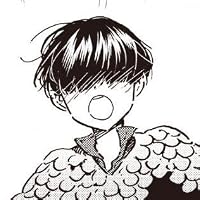
Shinya Tanaka’s
Cannibals
operates directly in that tension. The novel isn’t really about people eating flesh. The “consumption” here is spiritual—an inherited, generational devouring of autonomy and self-worth. Violence isn’t a singular blow; it’s something absorbed over time, passed down almost like a family recipe. The father wounds the mother; the child watches; the child becomes the next link in the chain. If cannibalism is the only mode of relationship you grow up witnessing, what else can you realistically imagine becoming?
The story opens by laying out this psychological inheritance clearly. The fear at the heart of the book isn’t the fear of someone eating another person—it’s the fear of becoming the person who does the devouring. Madoka Shinogaki, the father, isn’t chewing on anyone’s flesh, but he consumes the women in his life all the same. He strips Jinko, his estranged wife, of dignity through cheating and neglect. He chips away at Kotoko, his live-in girlfriend, through casual violence, belittling jokes, and the kind of everyday disrespect that eventually erodes a person’s sense of self. None of this is framed as a dramatic revelation; it’s simply how he operates. This is the environment his son, Toma, is marinating in.
And Toma knows it. One of the things Tanaka portrays so sharply is how self-aware Toma is about the danger he’s in—not physical danger from his father, but the danger of internalizing him. He watches Madoka brag about wanting a younger woman right in front of Kotoko. He watches his mother shrink under his father’s words. And he draws a mental line: I don’t want to be like him. He tries to speak politely to the women around him. He tries to move gently. Even in his relationship with Aida Chigusa, he’s constantly monitoring himself—terrified that enjoying sex at all might mean he’s already inherited his father’s mindset. His fear is obsessive: What if I’ve already become the thing I hate?
The river becomes the perfect symbol for this dread. Madoka gives it the crude nickname “River Slit,” which Toma hates—it reduces something natural into something vulgar, something meant to be conquered or mocked, and that tells you everything about the father’s attitude toward the world. Toma’s own understanding of the river is different. To him, it’s a swallowing presence. The trash caught in its bed—the broken bike that can only turn right forever, the swollen bags, the rust-eaten metal—feels like a prophecy. When Toma says, “No matter how hard we try, in the end it all gets swallowed up by the river,” he’s not just being dramatic. He’s articulating the fear that where you grow up, the air you breathe, the rules you absorb without noticing—they all shape you more deeply than any conscious decision you make. Even if he rejects his father outright, the river suggests rejection might not be enough.
The real sting of the story’s early chapters is in the irony Tanaka builds: Toma is so scared of becoming his father in the most obvious way (the violence, the sexual aggression) that he doesn’t realize how the inheritance has already seeped and bled into him in quieter ways. His interactions with Chigusa, for example, are already marked by a disconnect. He’s so consumed by the question Am I like my dad? that he can’t fully hear her when she tells him she’s hurting, or that sex feels painful for her. It’s not intentional cruelty, but it is a kind of consumption—his fear takes up so much space that it leaves no room for her experience. And that’s the cycle: not the hitting, not the shouting, but the inability to see the other person as fully separate from your own spiraling thoughts.
Eventually, Toma is pushed into confronting the reality he’s been trying so hard to outrun. Watching his father’s violence becomes routine. The day he catches Madoka and Kotoko in their room, the narration makes it clear: this isn’t the first time. The way the scene is described—almost observational, almost numb—shows how deeply this has been normalized for him. His father’s actions become a blueprint. The slapping, the choking, the way personal boundaries are treated as meaningless—it all prints itself onto Toma’s understanding of intimacy. Not because he agrees with it, but because repetition has a way of writing itself into the bones.
And the worst part is how unconsciously this gets absorbed. Jinko later tells him he has “the same eyes” as his father. Not the same habits. Not the same actions. The same look—that condescending, dismissive expression that signals someone has stopped seeing you as a person. For Toma, this is the true moment of horror. Violence doesn’t start with a punch; it starts with a way of looking. A way of valuing. A way of perceiving another human being. And if even that has already slipped into him, then what does resistance really mean?
All of this sits inside a larger environment that reinforces the same cycle. The town itself feels deadened, stuck. The river isn’t flowing; it’s stagnant. The people aren’t growing; they’re waiting—for some moment that will magically change things without requiring them to act. Jinko waits for “the time that would never come back,” some earlier version of herself. The woman in the apartment downstairs waits for a different life to arrive, like a package. The men kill time with baseball games, treating their own lives like something happening to someone else on TV. The whole town operates on this slow, rotting sense of inertia. And Toma, who sees all of this clearly, still feels pinned by it.
The snail appears as the perfect metaphor for that stagnation. It moves, technically, but it never really gets anywhere. Toma’s fixation on it—watching it inch along, losing track of whether hours or days have passed—mirrors his sense that time in this town doesn’t move forward. It only loops. The snail’s shell spirals in one direction, just like the bike stuck turning right, just like the paths generations take when nothing interferes. Even the snail’s body—soft but probably tough to bite into—echoes the mixture of vulnerability and hardness in the people around him. Everyone here survives, but no one changes.
Taken together, these early elements of the novel build a world where the cycle of “cannibalism”—of consuming another person’s will, perspective, or humanity—feels almost inevitable. Toma sees the trap, and that might be the saddest part. He has the awareness his father never did. But awareness alone doesn’t grant him the power to escape. In Cannibals, the danger isn’t that you’ll be eaten. It’s that you’ll learn to eat without noticing.
And with nowhere else to turn, all of this pushes Toma further into becoming his father. But instead of resigning himself to it calmly, it tears him apart from the inside. He’s fighting something inhuman inside him—this inherited violence wired into him—and at the same time, he absolutely hates himself for the ways he’s already started slipping. He’s trying so hard to find the “least damaging” thing to do in a situation where every option feels hopeless. The tragedy is that he can’t see a way forward that isn’t shaped by what his father has already done to him.
This is where the story shifts from fear into enactment. All the things Toma dreads about himself start showing up in the smallest, most mundane details. Kotoko notices first: the way he holds his chopsticks, the way his mouth moves when he eats—these tiny echoes of Madoka that Toma never consciously meant to imitate. Even the things he does differently, like refusing to mix soup with rice, are choices defined in response to his father. He’s forming his identity around negation, not independence.
Then comes the gaze—Jinko’s quiet but devastating observation: “You’ve got his eyes now.” This isn’t about looks; it’s about perspective. That flattening, condescending stare his father uses on women is now living inside Toma without him realizing it. When Jinko says, “You wound up being both of ours,” it hits like a confession and a curse. She’s admitting he inherited her vulnerability and Madoka’s cruelty, wrapped into one body.
His worst fears are confirmed when his behavior toward Chigusa crosses the line from anxious to abusive. The way he approaches her—trying to undress her before even touching her gently—shows that he’s reenacting the script he witnessed on the stairs. His words slide into the same crude register as his father’s. When he snaps, “What, you wanna fuck the condom?” it’s not just disrespect; it’s Madoka’s voice slipping out through Toma’s mouth. And the moment his hands go to her throat, mirroring his father choking Kotoko, the transformation is complete. He’s become the mold he’s been trying to escape.
His decision to sleep with the woman in the corner apartment is another attempt to inhabit his father’s role. It’s a confused, symbolic act—like if he takes what Madoka had, he’ll gain some distorted form of power or maybe understand the monster better. But the woman’s calm comparison—“You weren’t as wild as he is”—doesn’t comfort him. It just underlines that the resemblance is clear enough to name.
What makes this descent so painful is how aware he is of it. It’s not happening behind his back. Toma recognizes his own voice sounding like Madoka’s and recoils from himself. He keeps insisting, “I’m my dad’s son,” not with pride, but with the despair of someone who thinks genetics is destiny. He wants to hit his father—wants that cathartic moment—but all he does is sit and watch storms build over the town, praying the rain won’t fall, as if weather could somehow solve the mess he’s trapped in.
At this point in the story, he’s not just a victim or a bystander anymore. He’s crossed into being a perpetrator. He consumes Chigusa’s trust, he consumes the nameless woman as a stand-in for inheriting Madoka’s role, and he’s consumed by a hatred of himself so intense it feels like a possession. The snail keeps crawling along its pointless path, and Toma realizes he’s doing the same—moving forward in a direction he never chose, repeating a cycle he never asked for, but can’t break from.
If the snail represents Toma’s relationship with time, then the unagi—the eel—is the symbol Tanaka uses to express the corruption inside Toma’s body and desire. Where the snail is slow, existential despair, the eel is violent, immediate, and erotic. It’s the turning point where the violence Toma has watched for years becomes physically wired into him.
Catching the unagi isn’t just fishing. It’s practically a rite of passage—a moment where his father’s worldview becomes embodied in him. Even before he sleeps with Chigusa, he’s already thinking about the eel. His arousal is tangled up with the image of capturing it. What excites him isn’t the catch itself but the sight of its “split, half-collapsed head”---the moment of injury becomes sexualized. The eel’s gouged face, the nail driven through it—these brutal details fuse with the shape of his erection in his mind. Violence, sex, and power collapse into one.
The bath scene is the moment everything snaps. Toma can no longer tell the difference between the women in his life and the eel. He masturbates while imagining himself entering the wound in the eel’s head—a grotesque reversal where penetration equals destruction. The people he thinks about—Chigusa, Kotoko, even the eel—merge into one blurred image. In his imagination, they’re all caught in what he calls a “net of blood,” a system of violence that traps everyone tied to him. His climax comes only when he recalls the exact moment his father strangled Kotoko. The fact that this memory triggers release shows how deeply sexualized violence has become for him. It’s no longer symbolic. It’s literal, bodily.
When Kotoko reveals she’s pregnant, Toma’s reaction is horrifying but completely consistent with where his mind has gone. He imagines the eel’s ruined head sliding into Kotoko’s womb. The child stops being a child in his mind, and becomes the eel—this extension of violent male desire that will “scrape out” the existing baby and devour her from the inside. To him, creation becomes another act of violation. Birth becomes another form of cannibalism.
Toward the end of the novel, the giant wounded eel appears one last time. Its reappearance isn’t random—it’s a warning. Even injured, “it looked new,” which says everything about the cycle repeating itself. Violence doesn’t die; it regenerates. The eel vanishing into the swirling water is a perfect mirror of what’s coming. Toma’s desire, now completely warped, won’t end in satisfaction or power. It’s going to collapse into tragedy—consume itself the same way the eel disappears into the whirlpool. It’s the final confirmation that what’s inside him isn’t building toward anything. It’s dissolving.
Altogether, the unagi arc traces Toma’s descent from fearful awareness into full psychosexual corruption. The eel changes form throughout the story: it starts as something external that triggers him, becomes part of his fantasies, mutates into his idea of conception, and finally transforms into a symbol of the destruction waiting at the end of his path. It’s the raw, instinctual part of him—violent, slippery, hungry—that has been awakened and cannot be put back.
The scene at the shrine grounds is really the point where everything Tanaka has been building up—violence that gets passed down, the idea of “eating” someone’s spirit, and the fallout of both—finally erupts in the worst possible way.
Madoka’s assault on Chigusa is basically the physical version of the twisted worldview he’s lived by for years, the same worldview Toma grew up absorbing. His line—“When you can’t hold it back anymore, anyone will do. Any slit will do.”—is horrifying not just because of what he’s doing, but because of how casually he strips Chigusa of humanity. In that moment, he’s not just harming her; he’s treating her like an object he can consume. That’s the novel’s “cannibalism” idea made brutally literal.
Toma’s reaction is one of the most heartbreaking parts. When he says “I did this,” he’s not confused or blaming himself irrationally. He understands that, in some way, he’s part of the chain that led here. He sees himself repeating his father’s gaze, his father’s impulses, his father’s violence—especially since he himself choked Chigusa earlier. He thinks he helped create the conditions for this to happen.
His guilt also comes from the fact that he wasn’t there. Chigusa was waiting for him. He failed her, and he knows it. When he finally takes her hand—cold, stiff, but steady—it’s a small but powerful moment. She doesn’t forgive him, but she gives him something even harder: a recognition that he is not Madoka. She separates the crimes of the father from the regrets of the son. Her calm is shocking, almost surreal, especially beside Toma falling apart.
And then there’s Jinko-san.
When she learns what happened, she steps in with a kind of strength that feels ancient and terrifying. Her killing Madoka isn’t framed as revenge, but as stopping something that should’ve been stopped a long time ago. She uses her prosthetic hand—the same tool she used for work, the one connected to eel-gutting and river-life—to stab the source of all the rot. It’s such a perfect, grim image: she destroys the man who made the prosthetic for her with the prosthetic itself.
Her line afterward—“You’re all safe now.”—isn’t about triumph. It’s about protection. She cuts the head off the generational poison to save Toma, Chigusa, Kotoko, and even the unborn baby. The rain washing the blood off her is one of the novel’s most symbolic moments: a kind of cleansing that’s more about duty than redemption.
The river, which used to represent the stuck, filthy fate of the family, becomes the thing that carries Madoka’s body away. It doesn’t purify him—it just gets rid of him. The fact that his corpse is tangled in trash says everything about the story’s worldview.
In the final scene, the flood doesn’t bring cleansing. It just rearranges the rot. The shop and home fill with new mud, new trash, new reminders that the riverside never really changes. The giant unagi, with all its symbolism, is gone—but only because everything got washed out equally.
Life continues, but not in a way that suggests renewal—more like survival.
Toma and Chigusa’s relationship is changed forever. Desire is replaced by careful, almost wordless companionship. Her injuries make her cheek stiff; his hand hesitates because he knows too well how touch can harm.
The cat walking through the shop is “just walking now”—a sign that Toma isn’t projecting symbolism onto everything anymore. He sees things as they are: filthy, broken, but real.
Toma deciding to take over the fish shop is the biggest shift in his character. Before, the shop symbolized doom—becoming Madoka, inheriting the same life. But after everything Jinko did, running the shop became something else entirely. It becomes a responsibility. Penance. A way to honor his mother’s fierce practicality. He stays not because he’s trapped, but because he chooses to. He understands that escape isn’t the same as healing.
The ending doesn’t offer catharsis. Just a grim, honest sense of continuity. The “Cannibal” is gone. The Avenger is behind bars. And the Heir is left to hold everything together in the mud. It’s not a happy ending. But it’s a human one.