

What do you think?

Faithful and Virtuous Night
Winner of the 2014 National Book Award for Poetry
A luminous, seductive new collection from a "fearless" (The New York Times) Pulitzer Prize–winning poet. Louise Glück is one of the finest American poets at work today. Her Poems 1962–2012 was hailed as "a major event in this country's literature" in the pages of The New York Times. Every new collection is at once a deepening and a revelation; Faithful and Virtuous Night is no exception.
You enter the world of this spellbinding book through one of its many dreamlike portals, and each time you enter it's the same place, but it has been arranged differently. You were a woman. You were a man. This is a story of adventure, an encounter with the unknown, a knight's undaunted journey into the kingdom of death; this is a story of the world you've always known, that first primer where "on page three a dog appeared, on page five a ball" and every familiar facet has been made to shimmer like the contours of a dream, "the dog float[ing] into the sky to join the ball." Faithful and Virtuous Night tells a single story but the parts are mutable, the great sweep of its narrative mysterious and fateful, heartbreaking and charged with wonder.
A luminous, seductive new collection from a "fearless" (The New York Times) Pulitzer Prize–winning poet. Louise Glück is one of the finest American poets at work today. Her Poems 1962–2012 was hailed as "a major event in this country's literature" in the pages of The New York Times. Every new collection is at once a deepening and a revelation; Faithful and Virtuous Night is no exception.
You enter the world of this spellbinding book through one of its many dreamlike portals, and each time you enter it's the same place, but it has been arranged differently. You were a woman. You were a man. This is a story of adventure, an encounter with the unknown, a knight's undaunted journey into the kingdom of death; this is a story of the world you've always known, that first primer where "on page three a dog appeared, on page five a ball" and every familiar facet has been made to shimmer like the contours of a dream, "the dog float[ing] into the sky to join the ball." Faithful and Virtuous Night tells a single story but the parts are mutable, the great sweep of its narrative mysterious and fateful, heartbreaking and charged with wonder.
72 pages, Kindle Edition
First published September 6, 2014
About the author
Louise Glück
101 books2,259 followersAmerican poet Louise Elisabeth Glück served as poet laureate of the United States from 2003 to 2004.
Parents of Hungarian Jewish heritage reared her on Long Island. She attended Sarah Lawrence College and later Columbia University.
She was the author of twelve books of poetry, including: A Village Life (2009); Averno (2006), which was a finalist for The National Book Award; The Seven Ages (2001); Vita Nova (1999), which was awarded The New Yorker's Book Award in Poetry; Meadowlands (1996); The Wild Iris (1992), which received the Pulitzer Prize and the William Carlos Williams Award of the Poetry Society of America; Ararat (1990), which received the Rebekah Johnson Bobbitt National Prize for Poetry from the Library of Congress. She also published a collection of essays, Proofs and Theories: Essays on Poetry (1994), which won the PEN/Martha Albrand Award for First Nonfiction.
In 2001, Yale University awarded Louise Glück its Bollingen Prize in Poetry, given biennially for a poet's lifetime achievement in his or her art. Her other honors include the Lannan Literary Award for Poetry, the Sara Teasdale Memorial Prize (Wellesley, 1986), the Pulitzer Prize for Poetry in 1993 for her collection, The Wild Iris . Glück is the recipient of the National Book Critics Circle Award ( Triumph of Achilles ), the Academy of American Poet's Prize ( Firstborn ), as well as the Massachusetts Institute of Technology Anniversary Medal (2000), and fellowships from the Guggenheim, Rockefeller foundations and the National Endowment for the Arts.
In 2020, Glück was awarded the Nobel Prize in Literature, "for her unmistakable poetic voice that with austere beauty makes individual existence universal."
Glück also worked as a senior lecturer in English at Williams College in Williamstown, Massachusetts, served as a member of the faculty of the University of Iowa and taught at Goddard College in Vermont. She lived in Cambridge, Massachusetts, and teached as the Rosencranz writer in residence at Yale University and in the creative writing program of Boston University.
Parents of Hungarian Jewish heritage reared her on Long Island. She attended Sarah Lawrence College and later Columbia University.
She was the author of twelve books of poetry, including: A Village Life (2009); Averno (2006), which was a finalist for The National Book Award; The Seven Ages (2001); Vita Nova (1999), which was awarded The New Yorker's Book Award in Poetry; Meadowlands (1996); The Wild Iris (1992), which received the Pulitzer Prize and the William Carlos Williams Award of the Poetry Society of America; Ararat (1990), which received the Rebekah Johnson Bobbitt National Prize for Poetry from the Library of Congress. She also published a collection of essays, Proofs and Theories: Essays on Poetry (1994), which won the PEN/Martha Albrand Award for First Nonfiction.
In 2001, Yale University awarded Louise Glück its Bollingen Prize in Poetry, given biennially for a poet's lifetime achievement in his or her art. Her other honors include the Lannan Literary Award for Poetry, the Sara Teasdale Memorial Prize (Wellesley, 1986), the Pulitzer Prize for Poetry in 1993 for her collection, The Wild Iris . Glück is the recipient of the National Book Critics Circle Award ( Triumph of Achilles ), the Academy of American Poet's Prize ( Firstborn ), as well as the Massachusetts Institute of Technology Anniversary Medal (2000), and fellowships from the Guggenheim, Rockefeller foundations and the National Endowment for the Arts.
In 2020, Glück was awarded the Nobel Prize in Literature, "for her unmistakable poetic voice that with austere beauty makes individual existence universal."
Glück also worked as a senior lecturer in English at Williams College in Williamstown, Massachusetts, served as a member of the faculty of the University of Iowa and taught at Goddard College in Vermont. She lived in Cambridge, Massachusetts, and teached as the Rosencranz writer in residence at Yale University and in the creative writing program of Boston University.
Ratings & Reviews
Friends & Following
Create a free account to discover what your friends think of this book!
Community Reviews
Displaying 1 - 30 of 956 reviews

January 26, 2022
Star-studded but dark nevertheless
Pervaded by the sense of impending death, the awareness that time is running out and that life is coming to an end, memories of childhood spark thoughts on mortality and loss - or perhaps it is also the other way round.
Travelling backwards and forwards in time surges up reflections which coalesce in a continuum of insomnia and dreams, a consciousness mirroring the transience as well as the circularity and immutability of life (Things are, he says. They are, they do not change; response does not change).
Living is embracing the living past – the past which is living on in loss, memory and family and only becomes more significant through the lens of the seasons, meaningful places, stars, trees, literature, art and music. Memories are like the night, which nevertheless star-studded, is dark - the stars which are shabby or drifting or like the fires of hell.

It is the winter of life. Memories of threading on the tombstone of the parents seamlessly conjure up thoughts on the own headstone when disability strikes.
The poet’s voice is not only the voice of the poet herself but also the voice of an alter ego, an aging painter, unfolding scraps of the story of his life, moving with his brother to his aunt during his childhood when orphaned, losing both their parents in a car accident. The fateful event and related moments merge with the story of the artist’s growth to maturity, his relationship with his brother, a regaining of a sense of wonder and adventure as a child, culminating in his resuming of painting with a series of paintings in white after a long painter’s block – white as snow, the snow of the wintry landscape that is old age. The painter’s voice is suggestive, an interior susurration of which only a few sounds are audible, he only reticently shares his story:
While I was mesmerized by Meadowlands, the first collection I read of Louise Glück, I found it hard to connect to this collection from 2014. Interspersed with short vignettes in prose, the often lengthy and connected narrative poems, if not for the spatial arrangement – the line breaks, lineation and arrangement of white spaces - appear not as poems but as chopped micro-chapters in an only mildly captivating novella on a life that couldn’t keep my interest (unlike the almost epic evocation of a marriage falling apart merged with mythology that was Meadowlands)). Whereas this is an unfair assessment after reading the collection only once – most poems I read at least twice – I couldn’t bring myself (yet) to read the collection once again.
As I turned over the last page, after many nights, a wave of sorrow enveloped me. Where had they all gone, these people who had seemed so real? To distract myself, I walked out into the night; instinctively, I lit a cigarette. In the dark, the cigarette glowed, like a fire lit by a survivor. But who would see this light, this small dot among the infinite stars? I stood a while in the dark, the cigarette glowing and growing small, each breath patiently destroying me. How small it was, how brief. Brief, brief, but inside me now, which the stars could never be.
(A Work of Fiction)
Pervaded by the sense of impending death, the awareness that time is running out and that life is coming to an end, memories of childhood spark thoughts on mortality and loss - or perhaps it is also the other way round.
It has come to seem
there are no perfect endings.
Indeed, there are infinite endings.
Or perhaps once one begins,
there are only endings.
Travelling backwards and forwards in time surges up reflections which coalesce in a continuum of insomnia and dreams, a consciousness mirroring the transience as well as the circularity and immutability of life (Things are, he says. They are, they do not change; response does not change).
Living is embracing the living past – the past which is living on in loss, memory and family and only becomes more significant through the lens of the seasons, meaningful places, stars, trees, literature, art and music. Memories are like the night, which nevertheless star-studded, is dark - the stars which are shabby or drifting or like the fires of hell.
It is the winter of life. Memories of threading on the tombstone of the parents seamlessly conjure up thoughts on the own headstone when disability strikes.
Feeling has departed—it occurs to me
this would make a fine headstone.
But I was wrong to suggest
this has occurred before.
In fact, I have been hounded by feeling;
it is the gift of expression
that has so often failed me.
Failed me, tormented me, virtually all my life.
The poet’s voice is not only the voice of the poet herself but also the voice of an alter ego, an aging painter, unfolding scraps of the story of his life, moving with his brother to his aunt during his childhood when orphaned, losing both their parents in a car accident. The fateful event and related moments merge with the story of the artist’s growth to maturity, his relationship with his brother, a regaining of a sense of wonder and adventure as a child, culminating in his resuming of painting with a series of paintings in white after a long painter’s block – white as snow, the snow of the wintry landscape that is old age. The painter’s voice is suggestive, an interior susurration of which only a few sounds are audible, he only reticently shares his story:
I stopped precipitously, so that my story seems to have been
slightly distorted, ending, as it did, not abruptly
but in a kind of artificial mist of the sort
sprayed onto stages to allow for difficult set changes.
While I was mesmerized by Meadowlands, the first collection I read of Louise Glück, I found it hard to connect to this collection from 2014. Interspersed with short vignettes in prose, the often lengthy and connected narrative poems, if not for the spatial arrangement – the line breaks, lineation and arrangement of white spaces - appear not as poems but as chopped micro-chapters in an only mildly captivating novella on a life that couldn’t keep my interest (unlike the almost epic evocation of a marriage falling apart merged with mythology that was Meadowlands)). Whereas this is an unfair assessment after reading the collection only once – most poems I read at least twice – I couldn’t bring myself (yet) to read the collection once again.
December 5, 2022
I am planning to read more Nobel prize winners and I stumbled upon this volume of poetry, translated in Romanian. As it usually happens with the majority of the poetry I read, I can appreciate the style but I do not feel much reading it. There are exceptions, but unfortunately, they are still rare. The poems are sad, including themes such as mortality, ageing and loss.

March 9, 2017
Congratulations to Louise Glück, winner of the 2020 Nobel Prize for Literature; may she rest in peace (October 2023)
Aboriginal Landscape
Louise Glück
You’re stepping on your father, my mother said,
and indeed I was standing exactly in the center
of a bed of grass, mown so neatly it could have been
my father’s grave, although there was no stone saying so.
You’re stepping on your father, she repeated,
louder this time, which began to be strange to me,
since she was dead herself; even the doctor had admitted it.
I moved slightly to the side, to where
my father ended and my mother began.
The cemetery was silent. Wind blew through the trees;
I could hear, very faintly, sounds of weeping several rows away,
and beyond that, a dog wailing.
At length these sounds abated. It crossed my mind
I had no memory of being driven here,
to what now seemed a cemetery, though it could have been
a cemetery in my mind only; perhaps it was a park, or if not a park,
a garden or bower, perfumed, I now realized, with the scent of roses —
douceur de vivre filling the air, the sweetness of living,
as the saying goes. At some point,
it occurred to me I was alone.
Where had the others gone,
my cousins and sister, Caitlin and Abigail?
By now the light was fading. Where was the car
waiting to take us home?
I then began seeking for some alternative. I felt
an impatience growing in me, approaching, I would say, anxiety.
Finally, in the distance, I made out a small train,
stopped, it seemed, behind some foliage, the conductor
lingering against a doorframe, smoking a cigarette.
Do not forget me, I cried, running now
over many plots, many mothers and fathers —
Do not forget me, I cried, when at last I reached him.
Madam, he said, pointing to the tracks,
surely you realize this is the end, the tracks do not go further.
His words were harsh, and yet his eyes were kind;
this encouraged me to press my case harder.
But they go back, I said, and I remarked
their sturdiness, as though they had many such returns ahead of them.
You know, he said, our work is difficult: we confront
much sorrow and disappointment.
He gazed at me with increasing frankness.
I was like you once, he added, in love with turbulence.
Now I spoke as to an old friend:
What of you, I said, since he was free to leave,
have you no wish to go home,
to see the city again?
This is my home, he said.
The city — the city is where I disappear.
This is Glück’s 2014 book of poetry that was awarded The National Book Award. It’s dreamlike, looking back in magical memory and forward into the kingdom of death. Sometimes it feels gothic, with characters from her life floating in and out, her mother, her father.
My birthday (I remember) is fast approaching,
Perhaps the two great moments will collide
and I will see my selves meet, coming and going--
Of course, much of my original self
is already dead, so a ghost would be forced
to embrace a mutilation.
The fairy tale story that is at the heart of it is of two children who have lost their parents, having to live with their aunt, which leads to isolation, to loneliness, a permanent sense of loss. Some of the poems seem to shimmer, luminescent.
One poetry collection, mostly narrative, from one central motif.
The night progressed. Fog
swirled over the lit bulbs.
I suppose that is where it was visible;
elsewhere, it was simply the way things were,
blurred where they had been sharp.
Haunting, melancholy, inspiring. The power of memory and loss. Night pervades. Dream logic. Dreamscape.
An elderly male painter narrates:
It has come to seem
there are no perfect endings.
Indeed, there are infinite endings.
Or perhaps once one begins,
there are only endings.
Aboriginal Landscape
Louise Glück
You’re stepping on your father, my mother said,
and indeed I was standing exactly in the center
of a bed of grass, mown so neatly it could have been
my father’s grave, although there was no stone saying so.
You’re stepping on your father, she repeated,
louder this time, which began to be strange to me,
since she was dead herself; even the doctor had admitted it.
I moved slightly to the side, to where
my father ended and my mother began.
The cemetery was silent. Wind blew through the trees;
I could hear, very faintly, sounds of weeping several rows away,
and beyond that, a dog wailing.
At length these sounds abated. It crossed my mind
I had no memory of being driven here,
to what now seemed a cemetery, though it could have been
a cemetery in my mind only; perhaps it was a park, or if not a park,
a garden or bower, perfumed, I now realized, with the scent of roses —
douceur de vivre filling the air, the sweetness of living,
as the saying goes. At some point,
it occurred to me I was alone.
Where had the others gone,
my cousins and sister, Caitlin and Abigail?
By now the light was fading. Where was the car
waiting to take us home?
I then began seeking for some alternative. I felt
an impatience growing in me, approaching, I would say, anxiety.
Finally, in the distance, I made out a small train,
stopped, it seemed, behind some foliage, the conductor
lingering against a doorframe, smoking a cigarette.
Do not forget me, I cried, running now
over many plots, many mothers and fathers —
Do not forget me, I cried, when at last I reached him.
Madam, he said, pointing to the tracks,
surely you realize this is the end, the tracks do not go further.
His words were harsh, and yet his eyes were kind;
this encouraged me to press my case harder.
But they go back, I said, and I remarked
their sturdiness, as though they had many such returns ahead of them.
You know, he said, our work is difficult: we confront
much sorrow and disappointment.
He gazed at me with increasing frankness.
I was like you once, he added, in love with turbulence.
Now I spoke as to an old friend:
What of you, I said, since he was free to leave,
have you no wish to go home,
to see the city again?
This is my home, he said.
The city — the city is where I disappear.
This is Glück’s 2014 book of poetry that was awarded The National Book Award. It’s dreamlike, looking back in magical memory and forward into the kingdom of death. Sometimes it feels gothic, with characters from her life floating in and out, her mother, her father.
My birthday (I remember) is fast approaching,
Perhaps the two great moments will collide
and I will see my selves meet, coming and going--
Of course, much of my original self
is already dead, so a ghost would be forced
to embrace a mutilation.
The fairy tale story that is at the heart of it is of two children who have lost their parents, having to live with their aunt, which leads to isolation, to loneliness, a permanent sense of loss. Some of the poems seem to shimmer, luminescent.
One poetry collection, mostly narrative, from one central motif.
The night progressed. Fog
swirled over the lit bulbs.
I suppose that is where it was visible;
elsewhere, it was simply the way things were,
blurred where they had been sharp.
Haunting, melancholy, inspiring. The power of memory and loss. Night pervades. Dream logic. Dreamscape.
An elderly male painter narrates:
It has come to seem
there are no perfect endings.
Indeed, there are infinite endings.
Or perhaps once one begins,
there are only endings.
October 27, 2020
A man walks alone in the park and besides him a woman walks, also alone. How does one know? It is as though a line exists between them, like a line on a playing field. And yet, in a photograph they might appear a married couple, weary of each other and of the many winters they have endured together. At another time, they might be strangers about to meet by accident. She drops her book; stooping to pick it up, she touches, by accident, his hand and her heart springs open like a child's music box. And out of the box comes a little ballerina made of wood. I have created this, the man thinks; though she can only whirl in place, still she is a dancer of some kind, not simply a block of wood. This must explain the puzzling music coming from the trees.

April 25, 2017
Writing this beautiful and assured deserves 5 stars, without a doubt. To be honest, though, this is one collection I think I'm going to need to read again someday. I have a haunting feeling that I didn't quite get it.

March 24, 2022
Dreamlike and at times more prose than poetry. Ageing and childhood seems to be only separated by the film of bubble, with parents deceased in an accident, a dead sister, growing up with a brother and visiting him in Montana and drawing with crayons alternating
into those who wish to move forward
and those who wish to go back.
Or you could say, those who wish to keep moving
and those who want to be stopped in their tracks
as by the blazing sword.
…
Indeed, there are infinite endings.
Or perhaps, once one begins,
there are only endings.
- Faithful and Virtuous Night
Felt less connection to this 2014 bundle of Louise Glück than her earlier work, and the prose like manner of Winter Recipes from the Collective is apparent here as well. The atmosphere is dreamy, sometimes a bit nightmarish, and time is used in a playful, loose manner. Also, maybe because of the growing up theme of the Faithful and Virtuous Night, religion plays a role:
Referred to religion, the cemetery where
questions of faith are answered.
- Afterword
Sometimes glimmers of more emotional and personal topics are clear, but to few and far to make me rate the overal bundle higher than 2.5 stars, rounded upwards:
How alone I am, but in music
my desolation is my rejoicing.
- Summer Garden
into those who wish to move forward
and those who wish to go back.
Or you could say, those who wish to keep moving
and those who want to be stopped in their tracks
as by the blazing sword.
…
Indeed, there are infinite endings.
Or perhaps, once one begins,
there are only endings.
- Faithful and Virtuous Night
Felt less connection to this 2014 bundle of Louise Glück than her earlier work, and the prose like manner of Winter Recipes from the Collective is apparent here as well. The atmosphere is dreamy, sometimes a bit nightmarish, and time is used in a playful, loose manner. Also, maybe because of the growing up theme of the Faithful and Virtuous Night, religion plays a role:
Referred to religion, the cemetery where
questions of faith are answered.
- Afterword
Sometimes glimmers of more emotional and personal topics are clear, but to few and far to make me rate the overal bundle higher than 2.5 stars, rounded upwards:
How alone I am, but in music
my desolation is my rejoicing.
- Summer Garden

Read
January 26, 2023National Book Award Winner, the gold stamp on the cover says. And really not as much a downer as many of Glück's other books.
But still, you turn the last page feeling ambivalent about it. What is it about her? You can't read her work with prosy eyes like you can stories and novels. And sometimes her poems feel better if you reread them a few times.
She breaks rules. Some of the narrative poems (and many here are just that, though they sometimes seem like myth and sometimes like memoir) use and abuse the dreaded "to be" verb, for instance. Was and were early and often.
Still, rules again. You can throw them out the window, says the gold stamp on the cover.
The narrative poems are multiple pages with irregular stanzas. Here's the start of one:
The Story of a Day
1.
I was awakened this morning as usual
by the narrow bars of light coming through the blinds
so that my first thought was that the nature of light
was incompleteness—
I pictured the light as it existed before the blinds stopped it—
how thwarted it must be, like a mind
dulled by too many drugs.
2.
I soon found myself
at my narrow table; to my right,
the remains of a small meal.
Language was filling my head, wild exhilaration
alternate with profound despair—
But if the essence of time is change,
how can anything become nothing?
This was the question I asked myself.
Breaking up the narratives we get these compact, paragraph deals. For example:
A Work of Fiction
As I turned over the last page, after many nights, a wave of sorrow enveloped me. Where had they all gone, these people who had seemed so real? To distract myself, I walked out into the night; instinctively, I lit a cigarette. In the dark, the cigarette glowed, like a fire lit by a survivor. But who would see this light, this small dot among the infinite stars? I stood awhile in the dark, the cigarette glowing and growing small, each breath patiently destroying me. How small it was, how brief. Brief, brief, but inside me now, which the stars could never be.
First-person point of dream, and clever. And so casual looking. Especially considering darkness and death, Glück's muses, always seem to be lurking. Casually but dangerously.
But still, you turn the last page feeling ambivalent about it. What is it about her? You can't read her work with prosy eyes like you can stories and novels. And sometimes her poems feel better if you reread them a few times.
She breaks rules. Some of the narrative poems (and many here are just that, though they sometimes seem like myth and sometimes like memoir) use and abuse the dreaded "to be" verb, for instance. Was and were early and often.
Still, rules again. You can throw them out the window, says the gold stamp on the cover.
The narrative poems are multiple pages with irregular stanzas. Here's the start of one:
The Story of a Day
1.
I was awakened this morning as usual
by the narrow bars of light coming through the blinds
so that my first thought was that the nature of light
was incompleteness—
I pictured the light as it existed before the blinds stopped it—
how thwarted it must be, like a mind
dulled by too many drugs.
2.
I soon found myself
at my narrow table; to my right,
the remains of a small meal.
Language was filling my head, wild exhilaration
alternate with profound despair—
But if the essence of time is change,
how can anything become nothing?
This was the question I asked myself.
Breaking up the narratives we get these compact, paragraph deals. For example:
A Work of Fiction
As I turned over the last page, after many nights, a wave of sorrow enveloped me. Where had they all gone, these people who had seemed so real? To distract myself, I walked out into the night; instinctively, I lit a cigarette. In the dark, the cigarette glowed, like a fire lit by a survivor. But who would see this light, this small dot among the infinite stars? I stood awhile in the dark, the cigarette glowing and growing small, each breath patiently destroying me. How small it was, how brief. Brief, brief, but inside me now, which the stars could never be.
First-person point of dream, and clever. And so casual looking. Especially considering darkness and death, Glück's muses, always seem to be lurking. Casually but dangerously.

January 1, 2015
Faithful and Virtuous Night: Poems, Louise Glück's most recent volume of poetry is pure magic. The language is as luminescent as always and there is a story-a kind of fairy tale of two children who have lost their parents, people lost in a world of shadows and light-play.
Everyone who loves language should read this.
Everyone who loves language should read this.

December 20, 2024
i always feel like i'm not at the right age to fully absorb and enjoy louise glück's work, because there's a tranquil maturity to her command of language that i don't think i'm able to fully appreciate. i go into poetry expecting to enjoy compression of time, movement, and syntax in a way that puzzles me, and with her work, the slowness, the tunneling down, the magnification, the narrative structures....they aren't what i expect to encounter in a well-loved collection. but then if i pause and return to glück when i'm in a fiction/narrative mood, the work really moves me in new and strange ways.
all this to say, i need to expose myself to greater amounts of narrative poetry! and so many moments in this were really breathtakingly beautiful (i can't help but think about how much i'd love a glück short story collection). 3.4/5.
all this to say, i need to expose myself to greater amounts of narrative poetry! and so many moments in this were really breathtakingly beautiful (i can't help but think about how much i'd love a glück short story collection). 3.4/5.
The sun was shining. The dogs / were sleeping at her feet where time was also sleeping, / calm and unmoving as in all photographs.

Read
January 3, 2023It is the critics, he said,
the critics have the ideas. We artists
(he included me)—we artists
are just children at our games.
- From The Sword in the Stone
It has occurred to me that all human beings are divided
into those who wish to move forward
and those who wish to go back.
Or you could say, those who wish to keep moving
and those who want to be stopped in their tracks
as by the blazing sword.
- From Faithful and Virtuous Night
Another magnificent collection. Really giving a new definition to “collection”, or rather, going back to how the term was intended to be used. When I think of an album, I realize that not each song has to hit the same story (as in concept albums), but I would want continuity of theme, as opposed to the streaming-era fad of tossing 25-30 songs out and calling them an album. Each poem here draws on a life lived, now in its latter stages. It draws on poignant memories, and it continues referring to said memories. Delightful experience.
Poems I enjoyed:
- An Adventure
- Faithful and Virtuous Night
- Visitors From Abroad
- Aboriginal Landscape
- Utopia
- The Sword in the Stone
Here is Utopia:
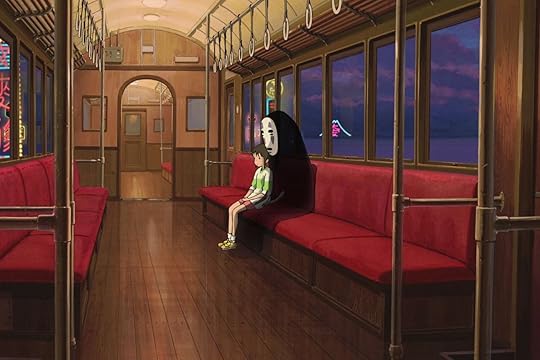
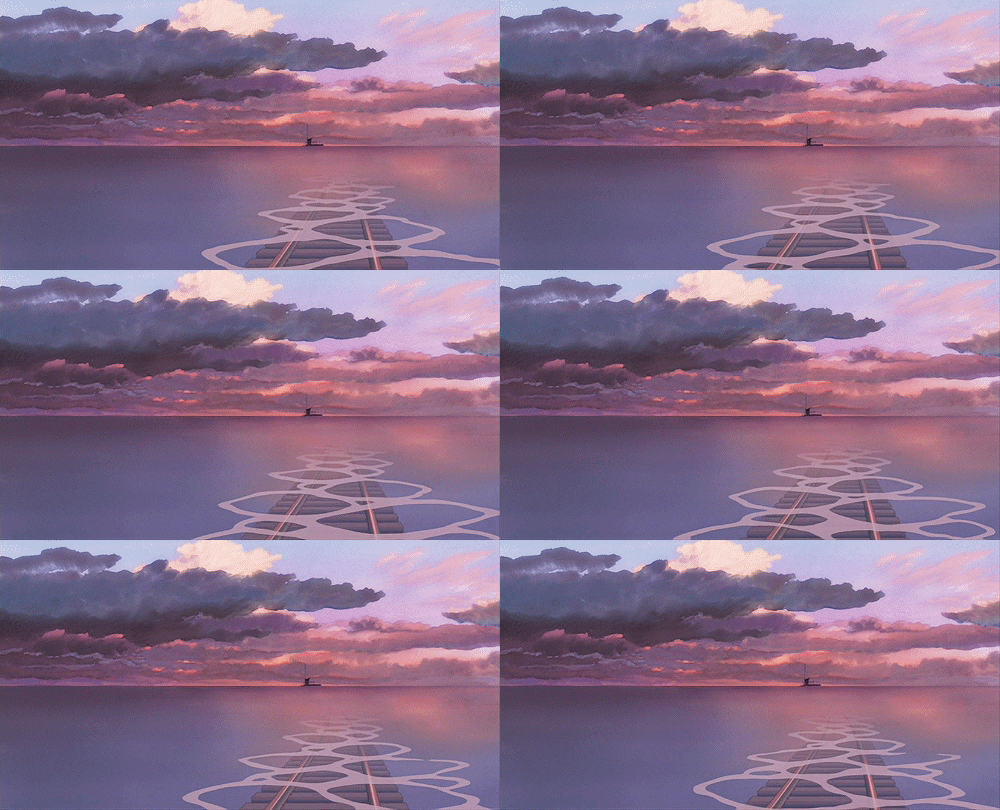
When the train stops, the woman said, you must get on it. But how will I know, the child asked, it is the right train? It will be the right train, said the woman, because it is the right time. A train approached the station; clouds of grayish smoke streamed from the chimney. How terrified I am, the child think, clutching the yellow tulips she will give to her grandmother. Her hair has been tightly braided to withstand the journey. Then, without a word, she gets on the train, from which a strange sound comes, not in a language like the one she speaks, something more like a moan or a cry.
I have drawn on this film before, but time to do so again - Spirited Away, a few shots that match with the poem:
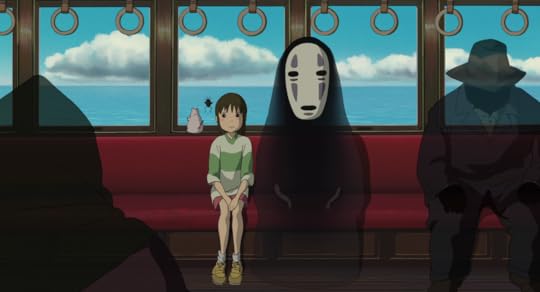
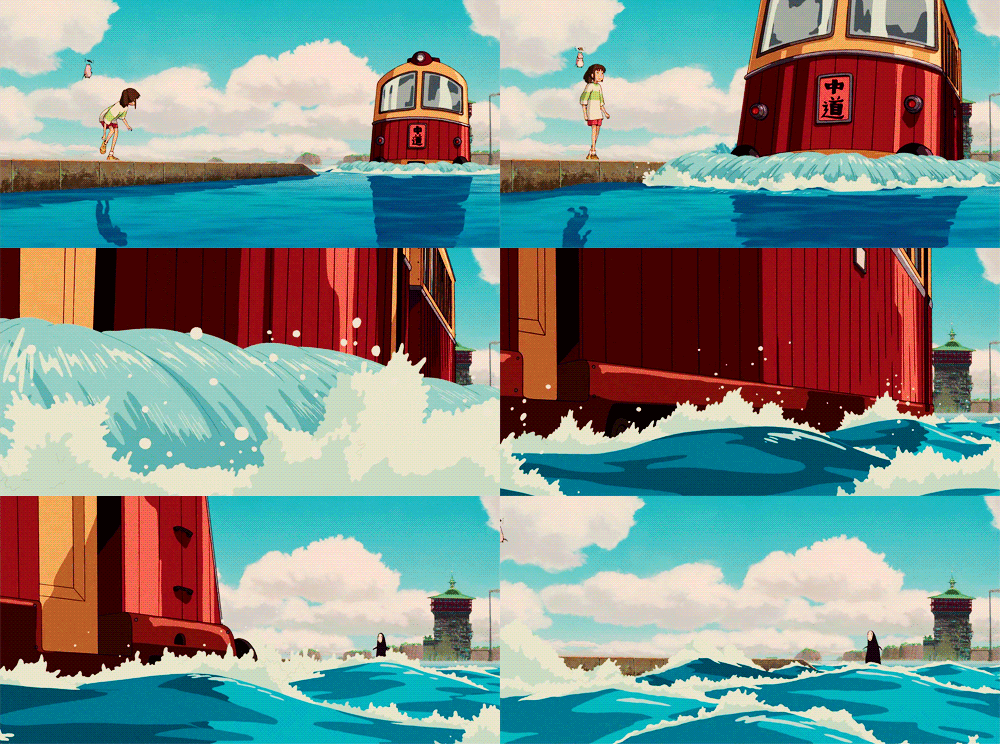
the critics have the ideas. We artists
(he included me)—we artists
are just children at our games.
- From The Sword in the Stone
It has occurred to me that all human beings are divided
into those who wish to move forward
and those who wish to go back.
Or you could say, those who wish to keep moving
and those who want to be stopped in their tracks
as by the blazing sword.
- From Faithful and Virtuous Night
Another magnificent collection. Really giving a new definition to “collection”, or rather, going back to how the term was intended to be used. When I think of an album, I realize that not each song has to hit the same story (as in concept albums), but I would want continuity of theme, as opposed to the streaming-era fad of tossing 25-30 songs out and calling them an album. Each poem here draws on a life lived, now in its latter stages. It draws on poignant memories, and it continues referring to said memories. Delightful experience.
Poems I enjoyed:
- An Adventure
- Faithful and Virtuous Night
- Visitors From Abroad
- Aboriginal Landscape
- Utopia
- The Sword in the Stone
Here is Utopia:
When the train stops, the woman said, you must get on it. But how will I know, the child asked, it is the right train? It will be the right train, said the woman, because it is the right time. A train approached the station; clouds of grayish smoke streamed from the chimney. How terrified I am, the child think, clutching the yellow tulips she will give to her grandmother. Her hair has been tightly braided to withstand the journey. Then, without a word, she gets on the train, from which a strange sound comes, not in a language like the one she speaks, something more like a moan or a cry.
I have drawn on this film before, but time to do so again - Spirited Away, a few shots that match with the poem:

October 11, 2020
4,5*
THEORY OF MEMORY
Long, long ago, before I was a tormented artist, afflicted with longing yet incapable of forming durable attachments, long before this, I was a glorious ruler uniting all of a divided country—so I was told by the fortune-teller who examined my palm. Great things, she said, are ahead of you, or perhaps behind you; it is difficult to be sure. And yet, she added, what is the difference? Right now you are a child holding hands with a fortune-teller. All the rest is hypothesis and dream.
Enquanto o meu Lobinho não ganha o Nobel e a Academia não se decide a fazer a vontade a 99% dos leitores do mundo dando o prémio ao Muri-coiso para aplacar a revolta, agrada-me que este prémio traga à ribalta autores que me são desconhecidos. E, ainda por cima, mulher. E, ainda por cima, com poesia. O que vejo em Louise Glück é uma autora que escreve essencialmente pequenas histórias, às vezes, em prosa, outras vezes em forma de poema, sem subterfúgios e sem rendilhados, onde imperam as paisagens, a melancolia e a nostalgia, com uma certa graça que advém do inesperado.
APPROACH OF THE HORIZON
One morning I awoke unable to move my right arm.
I had, periodically, suffered from considerable
pain on that side, in my painting arm,
but in this instance there was no pain.
Indeed, there was no feeling.
(...)
My birthday (I remember) is fast approaching.
Perhaps the two great moments will collide
and I will see my selves meet, coming and going—
Of course, much of my original self
is already dead, so a ghost would be forced
to embrace a mutilation.
(...)
The window is closed. Silence again, multiplied.
And in my right arm, all feeling departed.
As when the stewardess announces the conclusion
of the audio portion of one’s in-flight service.
Feeling has departed— it occurs to me
this would make a fine headstone.
But I was wrong to suggest
this has occurred before.
In fact, I have been hounded by feeling;
it is the gift of expression
that has so often failed me.
Failed me, tormented me, virtually all my life.
(...)
THEORY OF MEMORY
Long, long ago, before I was a tormented artist, afflicted with longing yet incapable of forming durable attachments, long before this, I was a glorious ruler uniting all of a divided country—so I was told by the fortune-teller who examined my palm. Great things, she said, are ahead of you, or perhaps behind you; it is difficult to be sure. And yet, she added, what is the difference? Right now you are a child holding hands with a fortune-teller. All the rest is hypothesis and dream.
Enquanto o meu Lobinho não ganha o Nobel e a Academia não se decide a fazer a vontade a 99% dos leitores do mundo dando o prémio ao Muri-coiso para aplacar a revolta, agrada-me que este prémio traga à ribalta autores que me são desconhecidos. E, ainda por cima, mulher. E, ainda por cima, com poesia. O que vejo em Louise Glück é uma autora que escreve essencialmente pequenas histórias, às vezes, em prosa, outras vezes em forma de poema, sem subterfúgios e sem rendilhados, onde imperam as paisagens, a melancolia e a nostalgia, com uma certa graça que advém do inesperado.
APPROACH OF THE HORIZON
One morning I awoke unable to move my right arm.
I had, periodically, suffered from considerable
pain on that side, in my painting arm,
but in this instance there was no pain.
Indeed, there was no feeling.
(...)
My birthday (I remember) is fast approaching.
Perhaps the two great moments will collide
and I will see my selves meet, coming and going—
Of course, much of my original self
is already dead, so a ghost would be forced
to embrace a mutilation.
(...)
The window is closed. Silence again, multiplied.
And in my right arm, all feeling departed.
As when the stewardess announces the conclusion
of the audio portion of one’s in-flight service.
Feeling has departed— it occurs to me
this would make a fine headstone.
But I was wrong to suggest
this has occurred before.
In fact, I have been hounded by feeling;
it is the gift of expression
that has so often failed me.
Failed me, tormented me, virtually all my life.
(...)

December 30, 2021
I loved the earlier work of Glück, but this seems quite a disparate collection of poems with an often very depressive tone, especially about ageing. Dreamy and surrealistic scenes give it a light 'gothic' undertone. The prose poems in the beginning certainly complicate the process of getting into the book's atmosphere. But in the second half of the collection Glück's somewhat more classic, short lines of verse were recognizable again. Nevertheless, this seems to me to be one of Glück's lesser collections. Perhaps it needs a second (and a third) reading.

December 8, 2022
Como esperei tanto tempo para ler Louise Glück?
A minha alma está cheia. Descobri alguém que traduz coisas que penso e sinto em poesia melancólica, mas luminosa. É uma espécie de magia. Estou tão grata!
A minha alma está cheia. Descobri alguém que traduz coisas que penso e sinto em poesia melancólica, mas luminosa. É uma espécie de magia. Estou tão grata!

September 9, 2014
I was waiting for this book to come out today the same way one awaits new music from a beloved band. Christian Wiman's new book of poetry came out today too, as did Interpol's new CD.
Anyway.
This collection starts off powerfully and I felt like I was sitting down with an old friend. The magic and veils were all there. The surgical precision of Gluck's language.
But as the poems went on, they felt flimsier. The abstractions started to pile up; things got too cerebral and detached.
Like the best of Gluck's work, the poems in this collection speak nicely to each other and that intertextuality is still there. But it felt like Gluck lost interest a bit in the last third of the poems here; I did as well.
Anyway.
This collection starts off powerfully and I felt like I was sitting down with an old friend. The magic and veils were all there. The surgical precision of Gluck's language.
But as the poems went on, they felt flimsier. The abstractions started to pile up; things got too cerebral and detached.
Like the best of Gluck's work, the poems in this collection speak nicely to each other and that intertextuality is still there. But it felt like Gluck lost interest a bit in the last third of the poems here; I did as well.

July 16, 2021
Small light in the sky appearing
suddenly between two pine boughs...
and above this,
high, feathery heaven -
***
Constituent
memories of a large memory.
Points of clarity in a mist,
intermittently visible,
like a lighthouse whose one task
is to emit a signal.
***
I write abou you all the time, I said aloud.
Everytime I say "I," it refers to you.
***
Fields of white and glimpses,
flashes of blue,
the blue of the western sky,
or what I called to myself
watch-face blue. It spoke to me of
another world.
I have led my people, it said,
into the wilderness
where they will be purified.
suddenly between two pine boughs...
and above this,
high, feathery heaven -
***
Constituent
memories of a large memory.
Points of clarity in a mist,
intermittently visible,
like a lighthouse whose one task
is to emit a signal.
***
I write abou you all the time, I said aloud.
Everytime I say "I," it refers to you.
***
Fields of white and glimpses,
flashes of blue,
the blue of the western sky,
or what I called to myself
watch-face blue. It spoke to me of
another world.
I have led my people, it said,
into the wilderness
where they will be purified.

February 8, 2015
This is Glück’s best volume since The Wild Iris. Glück’s first four books had an outsized influence on me when I was very young because they elevated an American idiom and adolescent angst into something that felt like real universal wisdom and beauty. In those early poems, Glück speaks with an irresistible command that very often derived from being grafted onto a Biblical or mythological archetype. But with the volume Ararat, the spell was broken. The poems were no longer archetypal but autobiographical, and it read as the though the Pythia had plopped herself down on the steps of the Oracle at Delphi and started bitching and moaning about all the slights and fights she had experienced with her mom, her dad, and her big sister. It was a let-down for me as a reader, but I am sure it was a necessary break from the almost feverish, tight lyrical expectations Glück probably felt constrained by at that point in her career. Now she at least had a looser range she could work within. The Wild Iris proved to be the pay-off for allowing herself to work in more than just a portentous lyrical mode since she could alternate from a godly voice, to a defiant but devotional human voice, to the variously fragile and preternaturally pure voices of flowers. It is her crowning achievement and I feel like it will be an enduring volume in the American poetic tradition.
Since that volume, Glück has expanded the ways in which she writes volumes to be more narratively focused. She has also tried to incorporate a dry wit into her poetry that I must admit I don’t find half as funny as she seems to think it is. But her narrative impulse has always returned to her initial poetic tendency to allegorize human experience and that hasn’t always felt so natural in the post-Wild Iris volumes. In this volume, though, Glück creates a doppelgänger for herself that is believable and fits into the stark allegorizing tendency in Glück because while he is an aging English artist who was orphaned as a young boy and then he and his brother were raised by an aunt, he is also now facing his final days, and so we get long evocative monologues from basically an Everyman that nevertheless sound believable while not being as self-indulgent were they autobiographical in nature and tone. Somehow this alter ego harkens back to Glück’s early strength to write universal poems about the human condition rather than merely confessional poems about an idiosyncratic personality. The volume also features self-conscious parable prose poems that seem to understand that the inevitable tone parables take is a hard moralizing conclusive tone perfectly suited to Glück’s sensibility. Simultaneously, there is a pervasive softening melancholy that seems resigned that Glück has settled in the rag and bone shop of her final moments as a poet. She has been such a strong presence in American poetry during my lifetime that it is heartbreaking to feel we may not hear much more from her in the coming future:
“The Past”
Small light in the sky appearing
suddenly between
two pine boughs, their fine needles
now etched onto the radiant surface
and above this
high, feathery heaven----
Smell the air. That is the smell of the white pine,
most intense when the wind blows through it
and the sound it makes equally strange,
like the sound of the wind in a movie----
Shadows moving. The ropes
making the sound they make. What you hear now
will be the sound of the nightingale, chordata,
the male bird courting the female----
The ropes shift. The hammock
sways in the wind, tied
firmly between two pine trees.
Smell the air. That is the smell of the white pine.
It is my mother’s voice you hear
or is it only the sound the trees make
when the air passes through them
because what sound would it make,
passing through nothing?
Since that volume, Glück has expanded the ways in which she writes volumes to be more narratively focused. She has also tried to incorporate a dry wit into her poetry that I must admit I don’t find half as funny as she seems to think it is. But her narrative impulse has always returned to her initial poetic tendency to allegorize human experience and that hasn’t always felt so natural in the post-Wild Iris volumes. In this volume, though, Glück creates a doppelgänger for herself that is believable and fits into the stark allegorizing tendency in Glück because while he is an aging English artist who was orphaned as a young boy and then he and his brother were raised by an aunt, he is also now facing his final days, and so we get long evocative monologues from basically an Everyman that nevertheless sound believable while not being as self-indulgent were they autobiographical in nature and tone. Somehow this alter ego harkens back to Glück’s early strength to write universal poems about the human condition rather than merely confessional poems about an idiosyncratic personality. The volume also features self-conscious parable prose poems that seem to understand that the inevitable tone parables take is a hard moralizing conclusive tone perfectly suited to Glück’s sensibility. Simultaneously, there is a pervasive softening melancholy that seems resigned that Glück has settled in the rag and bone shop of her final moments as a poet. She has been such a strong presence in American poetry during my lifetime that it is heartbreaking to feel we may not hear much more from her in the coming future:
“The Past”
Small light in the sky appearing
suddenly between
two pine boughs, their fine needles
now etched onto the radiant surface
and above this
high, feathery heaven----
Smell the air. That is the smell of the white pine,
most intense when the wind blows through it
and the sound it makes equally strange,
like the sound of the wind in a movie----
Shadows moving. The ropes
making the sound they make. What you hear now
will be the sound of the nightingale, chordata,
the male bird courting the female----
The ropes shift. The hammock
sways in the wind, tied
firmly between two pine trees.
Smell the air. That is the smell of the white pine.
It is my mother’s voice you hear
or is it only the sound the trees make
when the air passes through them
because what sound would it make,
passing through nothing?

November 18, 2017
THEORY OF MEMORY Long, long ago, before I was a tormented artist, afflicted with longing yet incapable of forming durable attachments, long before this, I was a glorious ruler uniting all of a divided country—so I was told by the fortune-teller who examined my palm. Great things, she said, are ahead of you, or perhaps behind you; it is difficult to be sure. And yet, she added, what is the difference? Right now you are a child holding hands with a fortune-teller. All the rest is hypothesis and dream.Absolutely stunning. Depending on your nature, this hypnotic selection of poems can be enjoyed in the bleakest of midwinters, huddled by the fireplace whilst nursing a glass of red; or (my preference), whist lolling in a grassy spring meadow during the healthy light of day, where the heartbeat of your own imminent mortality will be only a background murmur against the cacophony of birdsong and wind rustling the trees. It is a meditative collection on the "faithful and virtuous night" of our long-held memories, and the rich beauty, joy, and pain that they hold.

June 28, 2021
The culmination of my six month project to read all of Louise Glück’s poetry collections (in between my normal fare of literary novels).
This is the twelfth collection of poetry published by the 2020 Nobel Laureate and the last before her award.
The Nobel citation appropriately finished with discussing this collection and says “The reader is again struck by the presence of voice and Glück approaches the motif of death with remarkable grace and lightness. She writes oneiric, narrative poetry recalling memories and travels, only to hesitate and pause for new insights. The world is disenthralled, only to become magically present once again”
Having read over the last six months all of the previous eleven collections two main areas struck me about this collection compared to how I have seen her poetry evolve over the 50+ years of her writing (her first published collection – Firstborn – being the year of my own birth 1968, this collection being published in 2014).
The first was the style. This is I think the first of her collections to include very short prose poems (I think they could also be better described as micro-fiction) such as “Theory of Memory”, “Utopia”, “Forbidden Music”, “The Open Window”, “The Horse and Rider”, “The Couple in the Park” and the longer (more Flash-Fiction) “A Foreshortened Journey”.
One example the appropriately named “A Work of Fiction”
The second was that in content. Her earlier collections tend to mix (or in some cases alternate between) the traditional mythological (mainly Greek or Roman myth), the biblical, and, particularly in the case of “Wild Iris”, the natural allegorical – with the heavily autobiographical (Glück’s younger sister who died before she was born, her relationship with her surviving sister and with her parents, the birth of her son, her marriage, divorce and remarriage). This collection by contrast has a large number of poems in the voice of a non-autobiographical modern-day narrator: over the poems we gradually form a picture of a now elderly male artist (I believe a painter), who together with his older brother lost their parents (and possibly sister) in a car crash and lived instead with an Aunt. The titular poem refers to a book that he remembers his brother reading when very young – possibly misremembered as it appears to be a chivalrous tale (and so probably about a “Knight” – a theme remembered in a poem which begins years later in the office of his analyst “The Sword in the Stone”) but with the theme of night being vital to the collection.
This later theme contains an interesting “small argument … ostensibly concerning aesthetics” with a friend, which really serves as Glück partly examining (I think) her own (as well as her narrator’s) work and approach in a rather fatalistic way
One of my favourite poems was “Visitors from Abroad” – and it is the most autobiographical poem which cleverly has Glück’s now dead relations confronting her about their very absence from this work …
One of the key themes of this collection – grounded as it is in the idea of night, of death, of looking back at the end of life (“Sometime after I had entered that time of life people prefer to allude to in others but not in themselves”) is – it seemed to me - the meaning and worth of art – even of poetry.
I particularly for example enjoyed the opening to “Afterword” which captured some of the issues with the ambiguity that sometimes seems (to me) to pass as literary merit in poems ..
Overall I found this a fascinating collection. The poem that brings all of the ideas (death, looking back at life, poetry, chivalry, both the male artist and the more autobiographical family elements) together - “An Adventure” and which starts ….
This is the twelfth collection of poetry published by the 2020 Nobel Laureate and the last before her award.
The Nobel citation appropriately finished with discussing this collection and says “The reader is again struck by the presence of voice and Glück approaches the motif of death with remarkable grace and lightness. She writes oneiric, narrative poetry recalling memories and travels, only to hesitate and pause for new insights. The world is disenthralled, only to become magically present once again”
Having read over the last six months all of the previous eleven collections two main areas struck me about this collection compared to how I have seen her poetry evolve over the 50+ years of her writing (her first published collection – Firstborn – being the year of my own birth 1968, this collection being published in 2014).
The first was the style. This is I think the first of her collections to include very short prose poems (I think they could also be better described as micro-fiction) such as “Theory of Memory”, “Utopia”, “Forbidden Music”, “The Open Window”, “The Horse and Rider”, “The Couple in the Park” and the longer (more Flash-Fiction) “A Foreshortened Journey”.
One example the appropriately named “A Work of Fiction”
As I turned over the last page, after many nights, a wave of sorrow envel-
oped me. Where had they all gone, these people who had seemed so real?
To distract myself, I walked out into the night; instinctively, I lit a cigarette.
In the dark, the cigarette glowed, like a fire lit by a survivor. But who would
see this light, this small dot among the infinite stars? I stood a while in the
dark, the cigarette glowing and growing small, each breath patiently de-
stroying me. How small it was, how brief. Brief, brief, but inside me now,
which the stars could never be.
The second was that in content. Her earlier collections tend to mix (or in some cases alternate between) the traditional mythological (mainly Greek or Roman myth), the biblical, and, particularly in the case of “Wild Iris”, the natural allegorical – with the heavily autobiographical (Glück’s younger sister who died before she was born, her relationship with her surviving sister and with her parents, the birth of her son, her marriage, divorce and remarriage). This collection by contrast has a large number of poems in the voice of a non-autobiographical modern-day narrator: over the poems we gradually form a picture of a now elderly male artist (I believe a painter), who together with his older brother lost their parents (and possibly sister) in a car crash and lived instead with an Aunt. The titular poem refers to a book that he remembers his brother reading when very young – possibly misremembered as it appears to be a chivalrous tale (and so probably about a “Knight” – a theme remembered in a poem which begins years later in the office of his analyst “The Sword in the Stone”) but with the theme of night being vital to the collection.
This later theme contains an interesting “small argument … ostensibly concerning aesthetics” with a friend, which really serves as Glück partly examining (I think) her own (as well as her narrator’s) work and approach in a rather fatalistic way
He was a writer.
His many novels, at the time,
were much praised. One was much like another.
And yet his complacency disguised suffering
As perhaps my suffering disguised complacency.
We had known each other many years.
Once again, I accused him of laziness.
Once again, he flung the work back –
He raised his glass and turned it upside-down
This is your putiry, he said
This is your perfectionism-
The glass was empty, it left no mark on the tablecloth.
One of my favourite poems was “Visitors from Abroad” – and it is the most autobiographical poem which cleverly has Glück’s now dead relations confronting her about their very absence from this work …
My mother and father stood in the cold
on the front steps. My mother stared at me,
a daughter, a fellow female.
You never think of us, she said.
We read your books when they reach heaven.
Hardly a mention of us anymore, hardly a mention of your sister.
And they pointed to my dead sister, a complete stranger,
tightly wrapped in my mother’s arms.
But for us, she said, you wouldn’t exist.
And your sister—you have your sister’s soul.
After which they vanished, like Mormon missionaries.
.....
I write about you all the time, I said aloud.
Every time I say “I,” it refers to you.
One of the key themes of this collection – grounded as it is in the idea of night, of death, of looking back at the end of life (“Sometime after I had entered that time of life people prefer to allude to in others but not in themselves”) is – it seemed to me - the meaning and worth of art – even of poetry.
I particularly for example enjoyed the opening to “Afterword” which captured some of the issues with the ambiguity that sometimes seems (to me) to pass as literary merit in poems ..
Reading what I have just written, I now believe
I stopped precipitously, so that my story seems to have been
slightly distorted, ending, as it did, not abruptly
but in a kind of artificial mist of the sort
sprayed onto stages to allow for difficult set changes.
Overall I found this a fascinating collection. The poem that brings all of the ideas (death, looking back at life, poetry, chivalry, both the male artist and the more autobiographical family elements) together - “An Adventure” and which starts ….
It came to me one night as I was falling asleep
that I had finished with those amorous adventures
to which I had long been a slave. Finished with love?
my heart murmured. To which I responded that many profound discoveries
awaited us, hoping, at the same time, I would not be asked
to name them. For I could not name them. But the belief that they existed—
surely this counted for something?
2.
The next night brought the same thought,
this time concerning poetry, and in the nights that followed
various other passions and sensations were, in the same way,
set aside forever, and each night my heart
protested its future, like a small child being deprived of a favorite toy.
But these farewells, I said, are the way of things.
And once more I alluded to the vast territory
opening to us with each valediction. And with that phrase I became
a glorious knight riding into the setting sun, and my heart
became the steed underneath me.
3.
I was, you will understand, entering the kingdom of death,
though why this landscape was so conventional
I could not say. Here, too, the days were very long
while the years were very short. The sun sank over the far mountain.
The stars shone, the moon waxed and waned. Soon
faces from the past appeared to me:
my mother and father, my infant sister; they had not, it seemed,
finished what they had to say, though now
I could hear them because my heart was still.

January 27, 2023
gorgeous imagery and haunting atmosphere! her words drew me in and i really enjoyed the journey she prepared.
this collection doesn't work for everyone, but it definitely worked for me, i just loved how each piece in the collection felt like some dreamlike place i could see so clearly
this collection doesn't work for everyone, but it definitely worked for me, i just loved how each piece in the collection felt like some dreamlike place i could see so clearly

September 16, 2021
“I think here I will leave you. It has come to seem
there is no perfect ending.
Indeed, there are infinite endings.
Or perhaps, once one begins,
there are only endings.”
there is no perfect ending.
Indeed, there are infinite endings.
Or perhaps, once one begins,
there are only endings.”

July 28, 2015
As I turned over the last page, after many nights, a wave of sorrow enveloped me. Where had they all gone, these people who had seemed so real? To distract myself, I walked out into the night; instinctively, I lit a cigarette. In the dark, the cigarette glowed, like a fire lit by a survivor. But who would see this light, this small dot among the infinite stars? I stood awhile in the dark, the cigarette glowing and growing small, each breath patiently destroying me. How small it was, how brief. Brief, brief, but inside me now, which the stars could never be.

January 1, 2022
"Noapte credincioasă și virtuoasă" este un exercițiu poetic de o sensibilitate aparte. Eul liric îmbracă trăirile unei femei rămase orfane, femeie care își rostește trăirile cu respect față de propriul suflet.
Glück testează limitele poetice și merge pe varianta statică a narațiunii poetice, încropind povești lăuntrice și descrieri fidele pentru evenimente care i-au schimbat viața alter ego-ului său literar.
Nu este poezie în sens clasic și detașându-ne de această idee, ajungem să percepem altfel întregul tablou literar pe care autoarea îl creează cu măiestrie și maturitate. Da, anume maturitatea stilistice este ceea ce definește expres modus vivendi al autoarei.
Glück testează limitele poetice și merge pe varianta statică a narațiunii poetice, încropind povești lăuntrice și descrieri fidele pentru evenimente care i-au schimbat viața alter ego-ului său literar.
Nu este poezie în sens clasic și detașându-ne de această idee, ajungem să percepem altfel întregul tablou literar pe care autoarea îl creează cu măiestrie și maturitate. Da, anume maturitatea stilistice este ceea ce definește expres modus vivendi al autoarei.

September 19, 2021
Καμιά επιτήδευση, καθάρια λυτρωτική ποίηση.

October 9, 2020
A haunting poetry collection about loss drenched in all its frightful beauty and trembling honesty, Faithful and Virtuous Night weaves a subdued narrative with each poetic piece. The lasting memories of childhood deeply press against several dreamlike stanzas while it mourns for what can't ever be grasped nor held again. Adulthood revisits, questions, and affirms. And it reverberates with the ache that pierces in the spaces of its words. Glück magnificently recognises our struggle to reconcile, the attempt to interpret the seemingly unacceptable twist of fate and choice; the inevitable end of life; ageing and time. However, Faithful and Virtuous Night becomes palpably intimate enough to be alienating; expansive enough it can amble excessively on some verses. By the end, there are only marks on my skin from its grip; my mouth dry from the words it spoke for my sake.
Some excerpts that struck me — —
"Constituent
memories of a large memory.
Points of clarity in a mist, intermittently visible,
like a lighthouse whose one task
is to emit a signal.
But what really is the point of a lighthouse?
This is north, it says.
Not: I am your safe harbor."
— from Faithful and Virtuous Night
"The street was white again,
all the bushes covered with heavy snow
and the trees glittering, encased with ice.
I lay in the dark, waiting for the night to end.
It seemed the longest night I had ever known,
longer than the night I was born.
I write about you all the time, I said aloud.
Every time I say “I,” it refers to you."
— from Visitors from Abroad
"Your life is enviable, he said;
what must I think of when I cry?
And I told him of the emptiness of my days,
and of time, which was running out,
and of the meaninglessness of my achievement,
and as I spoke I had the odd sensation
of once more feeling something
for another human being—"
— from The Melancholy Assistant
"Feeling has departed—it occurs to me
this would make a fine headstone.
But I was wrong to suggest
this has occurred before.
In fact, I have been hounded by feeling;
it is the gift of expression
that has so often failed me.
Failed me, tormented me, virtually all my life."
— from Approach of the Horizon
My encounter with Glück was sparse prior, only stumbling upon her once or twice when I needed the embrace and kisses of poetry online. To finally read a collection of hers a little earlier before I heard of her Nobel Prize win is pleasing serendipity. Faithful and Virtuous Night suffices as an introduction to a remarkably graceful contemporary poet.
Not part of this collection, Vespers remains my favourite poem of hers.
Some excerpts that struck me — —
"Constituent
memories of a large memory.
Points of clarity in a mist, intermittently visible,
like a lighthouse whose one task
is to emit a signal.
But what really is the point of a lighthouse?
This is north, it says.
Not: I am your safe harbor."
— from Faithful and Virtuous Night
"The street was white again,
all the bushes covered with heavy snow
and the trees glittering, encased with ice.
I lay in the dark, waiting for the night to end.
It seemed the longest night I had ever known,
longer than the night I was born.
I write about you all the time, I said aloud.
Every time I say “I,” it refers to you."
— from Visitors from Abroad
"Your life is enviable, he said;
what must I think of when I cry?
And I told him of the emptiness of my days,
and of time, which was running out,
and of the meaninglessness of my achievement,
and as I spoke I had the odd sensation
of once more feeling something
for another human being—"
— from The Melancholy Assistant
"Feeling has departed—it occurs to me
this would make a fine headstone.
But I was wrong to suggest
this has occurred before.
In fact, I have been hounded by feeling;
it is the gift of expression
that has so often failed me.
Failed me, tormented me, virtually all my life."
— from Approach of the Horizon
My encounter with Glück was sparse prior, only stumbling upon her once or twice when I needed the embrace and kisses of poetry online. To finally read a collection of hers a little earlier before I heard of her Nobel Prize win is pleasing serendipity. Faithful and Virtuous Night suffices as an introduction to a remarkably graceful contemporary poet.
Not part of this collection, Vespers remains my favourite poem of hers.
June 25, 2026
These poems explore themes of aging and mortality and have a dream-like feel. They read as mournful and nostalgic at once.
September 10, 2014
I normally love Louise Gluck's work. It used to be spare and sharp as needles. Unfortunately, in her last two books she seems to have turned more towards an overarching narrative. There is nothing wrong with that per se but narrative demands a different sort of identification than the lyric does and her character development just doesn't warrant it. This books is short but strangely sprawling. It has beautiful moments but I never quite saw an arc, nor did I ever once find myself falling in love with its main voice. The end result was disappointing. I had spent several hours with this odd, unhappy narrator and found his ramblings beautiful but pointless.

October 12, 2020
Really very different than what I remember reading of her - I've read Averno and Ararat, which dealt with mythological themes as well as trauma and memory.
This is a shorter collection of poetry and some prose poems about personal matters: family, death, smoking in the snow. This is an imaginary British countryside for the poetic voice, and it is so different that I had to remember this is still Gluck.
From the poem Afterword, which is not at the end of the book:
Fate, destiny, whose designs and warnings
now seem to me simply
local symmetries, metonymic
baubles within immense confusion —
Chaos was what I saw.
My brush froze — I could not paint it.
This is a shorter collection of poetry and some prose poems about personal matters: family, death, smoking in the snow. This is an imaginary British countryside for the poetic voice, and it is so different that I had to remember this is still Gluck.
From the poem Afterword, which is not at the end of the book:
Fate, destiny, whose designs and warnings
now seem to me simply
local symmetries, metonymic
baubles within immense confusion —
Chaos was what I saw.
My brush froze — I could not paint it.

November 30, 2018
I'm not writing a review of this one until I can discuss it, but I did read it in November.

November 13, 2020
I feel like a jazz freak reviewing a techno album.
Not for me...
Not for me...
March 25, 2023
O poezie la care nu m-aș reîntoarce.
Displaying 1 - 30 of 956 reviews