

What do you think?
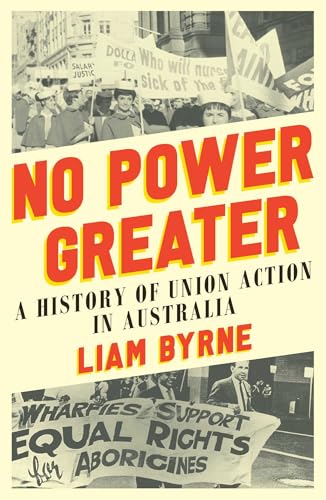
No Power Greater: A History of Union Action in Australia
Not yet published
Expected 14 May 28Unions are making a comeback. Labour disputes around the world have hit the headlines as unions take action to challenge inequality. But while media coverage has increased, understanding of unions has not. In this lively history of Australian unionism Liam Byrne seeks to illuminate what unionism means, exploring why successive generations of working people organised unions and nurtured them for future generations. Foregrounding the pioneering efforts of women workers, Aboriginal and Torres Strait Islander workers, culturally and linguistically diverse workers, and LGBTIQA+ workers as central to the union story today, Byrne uses case studies of worker action and struggle to better understand the lived reality of unionism, its challenges, and its contribution to Australian life. No Power Greater is the compelling story of the acts of rebellion and solidarity that have shaped Australia's past and shows that unions are far from history.
Kindle Edition
Expected publication May 14, 2028
Ratings & Reviews
Friends & Following
Create a free account to discover what your friends think of this book!
Community Reviews
Displaying 1 - 14 of 14 reviews

Read
December 31, 2025I picked this up based off the recommendation of a friend (though I finished it before them, haha) and because I wanted to learn more about the history of unions in Australia. I remember as a kid I feel like I would always hear about strikes on the news, maybe because I was in school and it was often the teachers striking - so I wonder now, where has that momentum gone?
I found this to be very accessible with its writing, basing the chapters around certain figures will make readers relate to and connect to the cause, as well as making it easy to follow along with. I also appreciate that the author included many examples and chapters about women, Indigenous people and migrants to Australia - and even highlighted that while many rights were won, it was often at the expense of these people, white men will always put themselves first! Even so, there were many great examples of solidarity in the movement too and overall I found the book to be quite informative and inspiring.
I found this to be very accessible with its writing, basing the chapters around certain figures will make readers relate to and connect to the cause, as well as making it easy to follow along with. I also appreciate that the author included many examples and chapters about women, Indigenous people and migrants to Australia - and even highlighted that while many rights were won, it was often at the expense of these people, white men will always put themselves first! Even so, there were many great examples of solidarity in the movement too and overall I found the book to be quite informative and inspiring.

August 23, 2025
An excellent chronology of the blues that have shaped Australian workers, and the movement's stalwart defence of them. May the emotional community of unionism continue to prosper.

June 6, 2026
Here is the answer for the people who ask “what have unions done for me?”. Now, as ever, class solidarity is the linchpin for a more humane life.

April 24, 2026
I bought this book as a birthday present to myself back in August and only getting around the reading it and what a fabulous short history of Australia's union movement it proved to be. As in Europe and especially the UK, the first unions established in Australia were craft unions - highly skilled workers such as stone masons, carpenters, etc. and were exclusively male and white. Other races and all females were excluded. This carried over as industrialization took over and factory work became mechanized. Despite women always working in the textile industry, it was mostly from home. Once it became a factory job, the unions at first ignored them. Even as the public became concerned about the long hours women and young girls were working under hazardous conditions, it took some time for the various legislatures to impose some conditions around modest safety concerns and limiting hours. Industry and their legislative friends argued the Bill will 'interfere with capital and labour to a greater extent than Prussia." Sound familiar? The bill was watered down and in frustration in Dec 1882, 300 tailoresses went on strike in an expression of anger and defiance after their piece work pay was reduced by 10% after an earlier 10% reduction a few months earlier. A few days later other women at other factories also walked out. A commission was formed by the government who would oversee conditions in the workplace. The women were now organized in a union and had a place to bring their grievances (as well as the men). It was in early days of this commission where the wages of women were set at 54% of the men's wages. After Federation and all the various colonies were brought under a Federal government, the commission continued to roll on. As it was becoming increasingly clear this commission was not being equatable, the various unions started discussing forming one big Union. This started in the early 1900's and was something the IWW (International Workers of the World) had been arguing for many years. WW1 put a stop to all Union activities and picked up steam in the 1920's but again the Great Depression stymied Union activities.During the Depression, many workers were drawn to the Communist Party, one of whom was Ted Roach. Still during this era, Women, Asians and Aboriginals were sidelined or denied Union access. Ted was one of those who wanted to rectify this and worked tirelessly to change attitudes in working class gender equality of pay. William Cooper, an Aboriginal, was a member of the Shearer's Union, one of the few union's that allowed black membership, although reluctantly at times. But Mr Cooper was a strong activist for his people.
Women started asserting more influence and power at a slow and steady pace during the Depression, especially Muriel Heagney. Post WWII, one of the most influential Union activists was Bob Hawke. For over a decade he worked tirelessly to improve the lives of working people through the Union and arguments before the Tribunal. The limitations of the 'agreements' drawn from these arguments shaped his political thinking and actions when he later became Prime Minister. Also Aboriginal leaders such Joe McGinness and Dexter Daniels accomplished much through their Unions. As did women such as Meredith Murgmann, Zelda D'Aprano, Edna Ryan, and more recently, Anna Booth, Jennie George, Nguyen Thi Nguyet and Sally McMannus. Throughout the late 1970's into the first decade of the 21st century, Union membership has been in decline. But since the early 2010's membership has been growing with the exponential growth of the 'gig' economy and people coming to realize that the political cards are stacked against them.
To quote an old folk song: there is power in the Union. "And in the struggle to claim a common humanity against those forces that would strip it away, there is no power greater."
Women started asserting more influence and power at a slow and steady pace during the Depression, especially Muriel Heagney. Post WWII, one of the most influential Union activists was Bob Hawke. For over a decade he worked tirelessly to improve the lives of working people through the Union and arguments before the Tribunal. The limitations of the 'agreements' drawn from these arguments shaped his political thinking and actions when he later became Prime Minister. Also Aboriginal leaders such Joe McGinness and Dexter Daniels accomplished much through their Unions. As did women such as Meredith Murgmann, Zelda D'Aprano, Edna Ryan, and more recently, Anna Booth, Jennie George, Nguyen Thi Nguyet and Sally McMannus. Throughout the late 1970's into the first decade of the 21st century, Union membership has been in decline. But since the early 2010's membership has been growing with the exponential growth of the 'gig' economy and people coming to realize that the political cards are stacked against them.
To quote an old folk song: there is power in the Union. "And in the struggle to claim a common humanity against those forces that would strip it away, there is no power greater."

November 9, 2025
This is a short and clearly written history of unions in Australia, with a focus on major developments. Several themes recur in a largely chronological narrative history.
Author Liam Byrne, who works for the union peak body the ACTU, sees unions as forces for the decommodification of labour. A regular claim is that poor wages and working conditions denied the humanity of workers - put in the same position as the 'cabman's horse', 'tired of being treated as slaves', lower wages for women a 'systemic denial of their humanity based on their gender', outworkers complaining that they were treated like machines or robots, dehumanising 'management by algorithm'.
While 'denial of humanity' is a melodramatic way of describing the situation of these workers, there is a real sense in which unions, backed by laws they promoted, put limits on labour transactions that protected the private time and personal safety of employees.
This however is not what modern unions do most of the time - they are agents of employees, haggling over the terms and conditions on which the commodities of employee time and skills are bought. Declining private sector unionisation has also meant that much industrial negotation is with goverments - often Labor governments backed by unions - rather than employer agents of capitalism.
There was, however, a significant period of 20th century Australian history when wages for many occupations were determined by non-market criteria (the history of this is chapter 4 of Byrne's book). The benchmark instead was the level of income needed for a male employee to support himself and his family. As Byrne notes, this 'embedded the gendered division of labour into the arbitration system'. Later chapters describe how women eventually won equal pay.
Another recurring theme is unions as 'emotional communities', groups with shared purposes, collective identities, and a willingness to make sacrifices for each others.
While union solidarity has been important to the union movement's effectiveness, it exists in tension with Byrne's third major theme, the union movement's sometimes slow progress towards conformity with late 20th/early 21st century views on race and gender.
Well into the second half of the 20th century, unions were for white, male, working class breadwinners - people with much in common. While Byrne says that unions reflected rather than created the 'racist and gendered imperial ideologies' of their founding era in the second half of the 19th century, they had a greater reason than employers to keep cheap Chinese labour out. Would women and men have been paid such different rates for the same job without a system of setting wages on political rather than market criteria? Outworker rates of pay were low, but did women and men get different rates?
While I have some reservations about this book, so far as I can recall there are no other recent histories of the union movement, so it is one for the shelves of people with a high interest in Australia political and economic history.
Author Liam Byrne, who works for the union peak body the ACTU, sees unions as forces for the decommodification of labour. A regular claim is that poor wages and working conditions denied the humanity of workers - put in the same position as the 'cabman's horse', 'tired of being treated as slaves', lower wages for women a 'systemic denial of their humanity based on their gender', outworkers complaining that they were treated like machines or robots, dehumanising 'management by algorithm'.
While 'denial of humanity' is a melodramatic way of describing the situation of these workers, there is a real sense in which unions, backed by laws they promoted, put limits on labour transactions that protected the private time and personal safety of employees.
This however is not what modern unions do most of the time - they are agents of employees, haggling over the terms and conditions on which the commodities of employee time and skills are bought. Declining private sector unionisation has also meant that much industrial negotation is with goverments - often Labor governments backed by unions - rather than employer agents of capitalism.
There was, however, a significant period of 20th century Australian history when wages for many occupations were determined by non-market criteria (the history of this is chapter 4 of Byrne's book). The benchmark instead was the level of income needed for a male employee to support himself and his family. As Byrne notes, this 'embedded the gendered division of labour into the arbitration system'. Later chapters describe how women eventually won equal pay.
Another recurring theme is unions as 'emotional communities', groups with shared purposes, collective identities, and a willingness to make sacrifices for each others.
While union solidarity has been important to the union movement's effectiveness, it exists in tension with Byrne's third major theme, the union movement's sometimes slow progress towards conformity with late 20th/early 21st century views on race and gender.
Well into the second half of the 20th century, unions were for white, male, working class breadwinners - people with much in common. While Byrne says that unions reflected rather than created the 'racist and gendered imperial ideologies' of their founding era in the second half of the 19th century, they had a greater reason than employers to keep cheap Chinese labour out. Would women and men have been paid such different rates for the same job without a system of setting wages on political rather than market criteria? Outworker rates of pay were low, but did women and men get different rates?
While I have some reservations about this book, so far as I can recall there are no other recent histories of the union movement, so it is one for the shelves of people with a high interest in Australia political and economic history.
June 10, 2025
I wanted to like this book more than, for me at least, it transpired. The framing of union action around the "emotional community of unionism" was too forced in many instances, and its repetitive use throughout was jarring. The history properly elevates some union actions that have been missing from more general histories, but this comes at the cost of leaving out other important actions. And, while Byrne sets out at the start that the book was written independently of his day job at the ACTU, he is not an impartial observer. Yes, there is much to celebrate about what the union movement in Australia has helped to achieve, but there is a good deal of ugliness in its history that is hinted at, or ignored, in this account.
Review of advance copy received from Publisher
A surprisingly interesting read through the history of employment and workers rights within Australia, highlighting the fight of the commodification of labour, through the conservative approach of setting wages through the laws of supply and demand.
Perhaps most interesting is the impact of Bob Hawke and the height of the union movement through the 70’s as the Australian middle class was it its peak, followed by the severe upending of the system by John Howard, of which I was not aware, effectively sending us deathly close to the dark ages of employee power once more.
If you enjoy the access to universal healthcare, a minimum wage and its increases, superannuation, and the expansion of leave reasoning, thank your union.
Perhaps most interesting is the impact of Bob Hawke and the height of the union movement through the 70’s as the Australian middle class was it its peak, followed by the severe upending of the system by John Howard, of which I was not aware, effectively sending us deathly close to the dark ages of employee power once more.
If you enjoy the access to universal healthcare, a minimum wage and its increases, superannuation, and the expansion of leave reasoning, thank your union.

Review of advance copy
This book really opened my eyes to a hidden, and very much overlooked dimension of Australian history. Byrne does well to capture the struggles of unionists for better pay, working conditions and lives, and the remarkable impact collective action can have to improve living standards for all workers in the nation; unionised or not. The title does well to capture the fruits of the efforts of trade unions, to provide ordinary people the power to secure social democratic bedrocks we take well for granted in the modern age, including universal healthcare, superannuation and wage increases.
September 10, 2025
this book offers vital context to any Australian, especially those of the working class, on what really is the foundation of our country. beyond that I believe there are some important learnings for international working people as well.
August 6, 2025
Fantastic. Makes me proud to be Australian.
November 10, 2025
An amazing book, shows the results unionism in Australia has achieved and how they make that change. Must read for every working class person in Australia

Review of advance copy
A very accessible look at union history, including perspectives that are often missing from the older history books. It could have been more critical towards the more complex subjects.
May 2, 2026
A very informative history of the union movement in Australia!
November 29, 2025
Recounts the trajectory of the union movement in Australia often by focusing on less typical perspectives.
The author feels the need in the early chapters to constantly reiterate the how the union movement
was dominated by colonial white men which became grating. He then goes on to say how its not the fault of the union movement for doing this as they were just reflecting the values of the society they were in. Which was a bit just yea odd choice.
The central theme of the book is how the "emotional community of unionism" continuously expanded to include all groups in Australian society. So his point I assume which, is to show how exclusionary it started as a contrast with how inclusive it became. Which is basically the trajectory of Australia generally speaking.
Overall enjoyable read.
The author feels the need in the early chapters to constantly reiterate the how the union movement
was dominated by colonial white men which became grating. He then goes on to say how its not the fault of the union movement for doing this as they were just reflecting the values of the society they were in. Which was a bit just yea odd choice.
The central theme of the book is how the "emotional community of unionism" continuously expanded to include all groups in Australian society. So his point I assume which, is to show how exclusionary it started as a contrast with how inclusive it became. Which is basically the trajectory of Australia generally speaking.
Overall enjoyable read.
Displaying 1 - 14 of 14 reviews