Jump to ratings and reviews
Rate this book

Cary Grant: A Biography

Rate this book
Rigorously researched and elegantly written, Cary A Biography is a complete, nuanced portrait of the greatest star in cinema history. Exploring Grant’s troubled childhood, ambiguous sexuality, and lifelong insecurities, as well as the magical amalgam of characteristics that allowed him to remain Hollywood’s favorite romantic lead for more than thirty-five years, Cary Grant is the definitive examination of every aspect of Grant’s professional and private life and the first biography to reveal the real man behind the movie star.

435 pages, Paperback

First published January 1, 2004

101 people are currently reading
1955 people want to read

About the author

Marc Eliot

53 books71 followers

Ratings & Reviews

What do you think?
Rate this book

Friends & Following

Create a free account to discover what your friends think of this book!

Community Reviews

5 stars
590 (24%)
4 stars
866 (36%)
3 stars
648 (27%)
2 stars
177 (7%)
1 star
89 (3%)
Displaying 1 - 30 of 166 reviews
Profile Image for Cristina.
Author 3 books21 followers
July 15, 2007
As a long-time Cary Grant fan, I am perhaps biased to enjoy anything related to the actor. This being said, I approached Marc Eliot's biography with great excitement and hope--and was left with my feelings drastically dashed to bits upon the floor.

Eliot's biography of Grant is very narrow-minded, gossipy, and tediously obsessed with the details of Grant's supposed bisexuality. Although the actor's sexual orientation is of little interest to a fan of the movie star and Hollywood legends in general, Eliot acts as if Grant's orientation is the governing motive of everything in Grant's life. Instead of receiving a well-rounded, fascinating, and complexly engaging portrait of Grant (as other books offer), we find this biography being the slightly-higher-literary-calibered version of a trashy tabloid we may find at the supermarket check-out. The glimpses we have of Grant's films and early life and career are refreshing escapes from the otherwise tediousness of this book.

Biographers owe it to readers to portray their subject according to facts, not according to a thesis. People are not to become specimens to pick apart and try to reassemble, but rather, to explain just as they are--fully assembled and in-tact. The "picking apart" should happen naturally, without having to dismember and mutilate a persona's various complexities and facets. In all fairness, Eliot's Jimmy Stewart: A Biography is much better written than the Grant one--but perhaps the author learned a lesson or two after writing on Stewart's contemporary and The Philadelphia Story co-star.

For a superior biography on Cary Grant, look to Nancy Nelson's Evenings with Cary Grant. Nelson was a personal friend and biographer of Grant and his family, and hers is the only book endorsed by them as well. Nelson, unlike Eliot, is able to paint a portrait of Grant that is not nuanced but raw and real, and yet, still manages to engage us and draw our admiration. Why? Because Grant, perfect or not, had charisma and grace even in his faults. He took responsibility and was reflective and intelligent, right up to the very end. Eliot's biography, in the end, never captures this crucial point like Nelson's work.
Profile Image for GoldGato.
1,303 reviews38 followers
January 10, 2025
For some reason, I have been on a Cary Grant bio binge. It must have been that dratted NORTH BY NORTHWEST movie, which I saw on the big screen this year, along with a sold-out crowd. Or perhaps it was BRINGING UP BABY...also seen on the big screen and with an SRO crowd. Grant appears to be the only movie star, past or present, who can actually fill a movie theatre on his name alone. Even though he's been dead for 26 years. Now that's star power.

This bio was actually better than I anticipated. It's the usual chronological approach with some notes on the movies and some notes on what was happening behind-the-scenes. What I definitely appreciated was the extensive notes and sources section, which is rare when it comes to Mr. Cary Grant. It is far easier for most of his biographers to fly off on a whimsy based on pure rumour, without providing actual backup facts. Marc Eliot put some actual research into this project, and I the reader appreciated it.

Eliot's tone throughout is one of the serious biographer who tisks-tisks the other writers who have written some fairly outrageous tomes on the G.O.A.T. (greatest of all time) movie star. Still, he'll suddenly throw some events together in one group, even though the years aren't correct, and he himself does the guessing game when he states that Grant was desperate to marry Dyan Cannon. As her own book Dear Cary: My Life with Cary Grant testifies, it was quite the reverse. And Eliot can really go all, um, wonky on descriptions.

...the camera quickly discovered...the perfection of his features...and that remarkable cleft in his chin, whose two smooth and curved bulges resembled nothing so much as a beautiful woman's naked behind while she was on her knees in sexual supplication before the godlike monument of his face.

Whoa...what...huh?

I do walk away with a greater liking for Cary, aka Archie Leach of Bristol, England. He transformed himself from nothing into something, but more importantly, he did it his way. He refused to kowtow to the film studios, which incurred their wrath forever. He was the first star to go it alone, when such a thing meant career suicide. He was also the first to see where Hollywood was headed, resulting in his hooking up with MCA and Universal in the 1950s to begin the 'package' deals that were to become the standard of business some thirty years later.

But mostly, I remember what my co-worker at Paramount Studios, a well-respected agent, told me about Cary Grant. He said that Cary was always an outsider, always reclusive, and he always did things his way. For that unforgivable sin, most of the industry resented him and thus the rumours began. This agent only had respect for Grant. When I asked him if he ever had this same respect for any other entertainment figure, he thought about it, and answered, "no".

That answer overwrote all the rumours.

"In NORTH BY NORTHWEST during the scene on Mount Rushmore, I wanted Cary Grant to hide in Lincoln's nostril and then have a fit of sneezing. The Parks Commission of the Department of Interior was rather upset at this thought. I argued until one of their number asked me how I would like it if they had Lincoln play the scene in Cary Grant's nose. I saw their point at once." (Alfred Hitchcock)

Book Season = Summer (Cary, Cary, Cary)
Profile Image for Carla Remy.
1,064 reviews116 followers
May 4, 2023
01/2019

It's a well written book, I shouldn't only give it three stars, but I just wasn't very focused on it. Archie Leach didn't change his name to Cary Grant until 1932 when he was 27 or 8. He wasn't an unlikable man, but he was very reserved.
Profile Image for Mikey B..
1,139 reviews485 followers
February 24, 2013
Marvelous Book on Marvelous Actor

An in-depth look at this great actor. Eliot examines Grant (Archie Leach) from his early years right thru to his death in Iowa while touring at the age of 82.

Grant started in vaudeville in Bristol, England and his company came to the U.S. to perform on Broadway in the early '20's. After that, Grant essentially made the rest of his career in the U.S. (Hollywood).

Eliot discusses Grant's relationship with other men, like Randolph Scott with whom he lived with for many years. While Hollywood tolerated this liaison in private, it also put great pressure on its' star actors to "heterosexualize" and marry: it would publicize any heterosexual event the actors were seen at. Hollywood publicists would "set-up" available actors with members of the opposite sex and "rev-up" the publicity. Grant was victimized by this machine several times - as his several marriages can attest to. Bearing Tom Cruise and others in mind - is it any different today?

Eliot also discusses Grant's several wives and Grant's relationship with Hitchcock. It was director Hitchcock who probably brought out the full range of Grant's performance on the screen. Cary Grant on screen makes acting look so easy, but when you examine any scene he is in - his is the dominating personality - the actors and montage revolved around him.

If you are interested in film and actors of 50's - 60's era of film (black and white), and of Cary Grant in particular, you will be interested in this book.

Profile Image for Michelle.
180 reviews42 followers
August 20, 2011
Biographers have to be many things; first and foremost is, of course, a writer, but also a journalist, a storyteller, a scientist. They must wade through all the primary and secondary sources - testing for veracity and reliability, questioning motivations, determining relevance. A great many "facts" accumulate about an individual within their lifetime - a biographer must determine which facts add up to the truth. The biographer must then take these two-dimensional accounts and photographs, dusty with time, and bring the past to life. It is impossible to be completely objective, but a biographer should attempt to prevent their biases from obscuring the truth. As a reader of biographies, one must grant the biographer a certain amount of trust. What do we read biographies for if not to learn new things about people who lived lives quite different from our own? We want to be surprised, intrigued, entertained. We should not, however, completely suspend disbelief. Biographies are not fiction, and, at some point, a biographer must earn the readers' continued belief in the narrative they have created. Marc Eliot has completely lost my trust.

Within the first chapter, I am already hesitant to follow Eliot on his journey. When describing Grant's acceptance of the 1970 Honorary Oscar for his lifetime of achievement, Eliot starts getting facts (publically verifiable, youtube-able facts) wrong. He quotes Sinatra "praising Cary Grant for the 'sheer brilliance of his acting that makes it all look easy.'" Which, to be fair, is essentially what Sinatra meant, but never what he actually said. Nor does Grant "slip on his thick-rimmed black glasses." (p 17-18) Small errors, one might say, but the book is peppered with them. He messes up basic plot points in Grant's films, ones of which he has supposedly had "repeated viewings." (p 422) (See what I did there, Eliot? That's called citing a source!) The small errors give way to larger inaccuracies. On page 242, Eliot says of Grant and Irene Selznick, "Grant and Selznick had been friends since his theatrical days in New York City, when he was an actor and she was a producer," except that, well, Selznick was just a kid when Grant was in NYC. She didn't become a producer until after her divorce - her first play was A Street Car Named Desire, which would be 1947 - three years after the meeting Eliot is describing.

It is little wonder, then, that as a reader I have trouble following Eliot when he leaves the realm of relatively well know information and journeys into the murky world of supposition, a world created entirely out of a lack of information and Eliot's own wishes. Eliot completely turns on its head the entire accepted nature of Grant's relationship with first wife Virginia Cherrill. From p 82:
Most accounts of the relationship between Cary Grant and Virgina Cherrill depict him as the victim of a young and cold beauty emboldened by fierce ambition, a calculating Hollywood wannabe who...managed to sleep her way to the forgettable middle. But personal recollections of friends who knew her for most of her life and the private diaries she left behind reveal a far different and hitherto unknown side to the woman who was to become the first Mrs. Cary Grant.

All of this after explaining his utter lack of primary source interviews with:
As a biographer I probably put less stock than others in firsthand 'eyewitness' recollections of those who knew, or claim to have known, Cary Grant...[they] I have painfully discovered in my career, shared an unfortunate (but prevalent) tendency to either rewrite history for the sake of the departed, or elevate their own position in his saga.(p 422)
So let me get this straight, he won't use interviews from Grant's daughter, friends, or three living wives because they might lie to make themselves or Grant look better. Yet he will trust the friends and the diary of the one wife with whom Grant did not remain amicable to paint an accurate picture of Grant? Right.

Unfortunately, Eliot's departures from reality do not end here. After spending three chapters enumerating all the reasons the major studios would have to discredit and dislike Grant, while simultaneously outlining exactly how the studios controlled all of the gossip magazines at the time, Eliot then goes on to create a narrative describing Grant as an indecisive, weak, easily controlled man whose every life choice was informed by his homosexuality. He supports this with little else but Cherrill's diary, the gossip rags, and the fact that Grant occasionally lived with other men while single (as many single stars at the time did). I could have even accepted this as a reader had he simply made his claims, then supported them by giving us an example of a source (a single article or diary entry would have done). But he does neither. Rather, he goes on to provide a sort of pop psychoanalysis of what he thinks each man was thinking and feeling during numerous COMPLETELY HYPOTHETICAL situations (ex. on p 135).

Throughout the book, each new person affiliated with Grant in any way is first introduced to us by whether or not Grant slept with them, or merely had a "chaste" crush on them. One such "chaste" crush is supposedly Phyllis Brooks, Grant's longest standing relationship with a woman whom he did not marry. Eliot basically spends Chapter 12 ignoring all know information about their relationship, restructuring it in such a way that Grant's life continues to follow Eliot's chosen narrative. Eliot even creates suicide attempts out of a lack of hospital records, despite the fact that no other biographer gave any credence to this idea. (p113) It is at this point that I continued to read the book merely to finish, not to be informed.

It is sad, really. Eliot could be an excellent biographer. When he is constrained by ample information, he brings the past vibrantly to the present. I thoroughly enjoyed Eliot's description of Grant's life during the making of The Awful Truth in Chapter 13. It hit just the right note of accepted historical facts, informed hindsight, and deductions about details extrapolated from what we know. I wish I could have read that biography. Instead, I got a modern day Procopius' The Secret History. You just can't rewrite someone else's life to suit your needs.

LONG NOTE, NOT REALLY A SPOILER:
Profile Image for Chris Gager.
2,062 reviews88 followers
June 28, 2021
Picked this one from the local library's for sale shelves, to which it shall likely return in a week or so. I'm not a BIG fan of Cary Grant, but how could one not like his movie work. He had an amazing career, the very essence of film stardom.

Learned something new already - about Grant's long-standing feud with Hollywood money-men/studio heads.

Now moving into the middle of the book and the meat of CG's career. So many great movies, and I've seen most of them. Included are couple that were panned when they came out("Holiday" and "Bringing up Baby") but are now considered classics.

Getting nearer the end now, of the book and CG's life. Still one more wife to go, however, after #4(Dyan Cannon), like all the others, proved top be a dicey choice. 35!!!! years difference, but at least he was able to enjoy some fatherhood. I suspect that by the end I will know precious little more about CG's character/personality than I did before I read the book. Like many actors(Hitchcock referred to them as "children"), his sense of self was a bit weak and he was attracted to acting to fill out the selfhood. Or something ... He didn't become "Cary Grant" until his 30's and seemed to spend his life becoming more and more like the Cary Grant of the silver screen. No point in spending too much time pondering the question, however. His identity is his own business, as is his sexuality, a topic that Americans seem to want to obsess about. He made a LOT of great movies, that's for sure.

Finished unexpectedly last night. There are as lot of pages of notes and sources and filmography after the "story" ends. My overall reaction was "meh" as I came away not knowing Cary Grant much better than I did before I started. I suppose it was CG's intention over time that people accept his screen persona(s) as the real deal. There's enough not-so-savory info here to give one pause, but that's about it. Not going to lose any sleep over it.

- a misprint for all time = what's a "dust-cropper"????????

- 3.25* rounds down to 3*
Profile Image for Marshall.
296 reviews3 followers
June 17, 2017
The best thing about this book is the cover. The problem is the author's approach to the book and the subject. It is confused and confusing. The areas that I had the biggest problems with are Grant's sexuality, Grant's pursuit for an Oscar, and his role as a "spy."
Grant's sexuality has been the subject of much ink and unless there are love letters or diaries out there, I am not sure the subject will ever be settled. He appears to have shared a house and a friendship with Randolph Scott and despite the career perils then and now of a leading man flaunting a gay relationship, the author appears to insist that the rumors that they were lovers at face value. This also appears to be the only gay relationship either had. At which point they both were exclusively heterosexual. I am not sure that this makes sense. If Scott and Grant were gay or bi it seems that these tendencies might manifest themselves later in life. Grant, given his Dickensian childhood and emotionally stunted personality, probably would have welcomed any sort of relationship, but probably one that made as few demands as possible (Grant just discovered that his mother was not dead, but had been placed in an insane asylum, something that seemed to have a profound effect on him). This is probably what Scott represented. If sex was part of it, who knows? Comradery was probably all Grant wanted.

The author makes much about Grant's quest for an Oscar. I just don't believe this. Grant really was obsessed by money. A good picture was one that made a great deal of money. He did not seem interested much in public acclaim, even that of the Motion Picture Academy. The author spends a great deal of time trying to portray Grant as obsessed with winning an Oscar, which I am not sure is the case.

Grant the spy? Grant was questioned by the FBI, that does not make him a spy.

The author seems to want to to believe everything ever said about Grant and with the most sensational interpretation. I do not think he has thought critically about Grant and what emerges is a mess of a book. I would rather read a more thoughtful book on Grant, one capable of producing some real insights.
Profile Image for Whitney.
735 reviews61 followers
July 30, 2017
I can't remember which was the first movie I watched that starred Cary Grant, but I feel like I have always loved him. He was one of those lucky actors who became more attractive as he aged.

But throughout his personal life, he openly struggled against his own persona of "Cary Grant." He wanted to freely make his own choices, one of which being his desire to live with a man in a partnership that resembled marriage, but it seems like halfway through his life, he switched from "man" into "star." His star persona was loved by women; he was swoon-worthy and fantastic. But according to the local legal offices, the number of his ex-wives were close to half a dozen. The relationships didn't last long and contained troubling rumors of abuse and neglect.

Having read this book, it seems like the star consumed the man. Or the man was discarded in favor of the star.

Except for here:
description
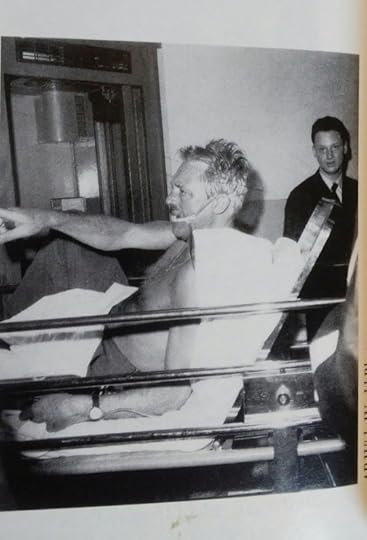
Here he is in 1968, bossing his way through a hospital. Car accident. Everyone was fine.
Profile Image for Daniel Kukwa.
4,750 reviews123 followers
October 30, 2024
I would have preferred a bit more post-death follow up, trying to see if this man might still have a place in the zeitgeist somewhere...but for what it is, it was certainly another enjoyable look at a far earlier age. The matter-of-fact presentation about his sexuality and complicated cross-gender relationships are easily the best thing about this work, something I feel others might have tried to avoid or downplay. A refreshing read.
154 reviews
October 20, 2019
An extensive account of the life and legend that is Cary Grant. Having grown up with his movies, as one of the many Saturday afternoon movies played by my father, I was charmed by Grant. This biography delves deep into the life, emotions, and psychology of one of Hollywood's most longstanding and interesting leading men.
Profile Image for CarterHambley.
6 reviews1 follower
May 18, 2021
While it did what I wanted it to at times i couldn’t believe how boring of a read it was about a man whose life was objectively so fascinating
Profile Image for Molly Adelman.
109 reviews
April 21, 2025
wow after what felt like 7 years i have finally finished this cary grant biography! it’s chill i guess
404 reviews1 follower
May 16, 2019
While I am a fan of Cary Grant it’s really the four Hitchcocks, Charade, and maybe two others that I really love. I thought this would be fascinating because of what I heard about his bisexuality and LSD use for openers. This did not disappoint. It’s always a marathon reading about an entire life but it’s rewarding when it’s this well written. While the author’s other work is excellent, this is masterful. Grant was charming offscreen but had some serious demons, which aren’t shied away from. It’s refreshing how at peace Grant himself was with his sexuality even though his industry wasn’t. Any Hollywood life that spans from the 30s to the 80s is going to be richly dense with juicy history. Even if you aren’t a big fan of Grant, the scope of his life and career is a great story all on its own.
Profile Image for Ryan.
573 reviews10 followers
October 9, 2014
This is a tabloid-style look at Cary Grant's life and career. Parts of it are interesting, but those parts cover the more gossipy details of Grant's life--much of which is conjecture rather than fact.

Otherwise, the book is more a review of his movies than a biography, and the "Grant on the Couch"-style psychological comparisons between his life and screen persona are often annoying and don't really say much about the actor.

The book moves slow and is only truly interesting during the (brief) chapters on Grant's collaboration with Hitchcock and his marriage to Dyan Cannon.

At best, it's periodically entertaining but lacks a solid theme.
Profile Image for Elliot.
35 reviews1 follower
November 25, 2019
This was probably the best biography I've read about one of my favorite actors.
It was super easy to read and not bogged down by details or anything of the sort. Marc Eliot did a wonderful job conveying his research on Grant. I love the parts about his early films and well into his career. I loved the background of Grant's life, mashed up with his film career and the background stories on set and Hollywood in general. From the lavish parties, to the quiet moments at home, Eliot did a wonderful job humanizing a Hollywood legend and icon.
Profile Image for Kate.
282 reviews4 followers
September 5, 2007
i would recommend this only to someone like me who'd be fascinated to learn all that you can about cary grant. that said, the author's style is not the best -- he interrupts himself mid-thought and seems more concerned with gossip than fact. i enjoyed it for the movie anecdotes and the insight it provided into the man that became cary grant.
Profile Image for Jonathan Vecchi.
34 reviews
December 2, 2015
The book was a good read. But like many other commenters there is a lack of fact checking and elements that defy reality. I just can't give a biography a great review if there are just too many inaccuracies. People should not be able to write fiction and call it a biography - it is a slap in the face to the subject.
Profile Image for Kaethe.
6,570 reviews534 followers
July 14, 2014
Unreadable. The author used "Episcopal" for "Anglican" twice in the same sentence. Also more Freud than I've seen since a sophomore-level English course. If I'm going to bother to read a biography, I do expect some minimum standards. It's a shame, really, because that is one of the cleverest and most appealing book covers.
242 reviews24 followers
January 20, 2009
While the story is interesting, the writing is poor and overly flowery at times, and the author makes so many mistakes in describing the plots of Grant's movies that one is left to wonder if he ever saw them!
Profile Image for Crystal.
305 reviews24 followers
April 24, 2017
Good read if you are a fan of old Hollywood. Grant was always one of my favorites, along with Katharine Hepburn. It was interesting to learn about his life and go behind the scenes of his movies.
Profile Image for Mike Calkins.
74 reviews3 followers
December 5, 2020
This is the second biography on Grant that I’ve had the pleasure of reading. This is a much deeper exploration of the man behind the myth, and draws a very complex character. Excellent book.
Profile Image for Laurie Hoppe.
312 reviews3 followers
February 5, 2020
The three stars go to Cary and his amazing story. From his beginnings in Bristol, to acrobatics, to the New York stage, to Hollywood, to the boardroom and the lecture circuit, his saga is fascinating (even, and maybe especially if you think you already know it).

Then there's the chasm between the man and the image. Sophisticated, charming, and self-assured on screen, he could be petty, jealous, dark and lonely off. I can't think of another major star whose reality was so different from his image.

This book is a compelling telling, but it has flaws. The author maintains that Cary Grant was gay and very comfortable in his same sex relationships. At one point, even George Burns, who barely knew Grant, comments on the scene Grant and his lover Orry-Kelly made at a party. Then Mr. Elliot tells us that Howard Hughes -- confidant to both Grant and Grant's housemate, Randolph Scott -- was somehow unaware of Grant's sexuality. How could that be? Howard Hughes was a Hollywood player who, at times, used Grant's beachfront home for his own assignations. It never occurred to the worldly Mr. Hughes that his buddy was homosexual? (FWIW, I think Grant was probably bi. I'm also not sure it really matters. He didn't seem to think his sexuality defined him, so I don't either.)

Similarly, there's Sinatra. The first time we see Frank and Cary together, they are both (unsuccessfully) competing for Sophia Loren's affections on the set of The Pride and The Passion. Sinatra rather cruelly taunts Grant. Then, all of a sudden, they are the dearest of friends. Grant asks Sinatra to present him with his honorary Oscar, Frank hosts Grant's wedding reception receives a special bequest in Cary's will. What the hey? Was there a reconciliation anecdote that just somehow didn't make it's way into this book?

Still, there aren't that many books on Grant, and the tales in this one are entertaining. Pick it up and bask in some old Hollywood glamor and real human drama.

Profile Image for Achtung Englander.
126 reviews1 follower
January 13, 2022
This is OK I guess. The problem Eliot has is that Grant was a very private man, so much so that the debate as to whether Grant was bi-sexual is still debated today. The research for Eliot's biography is from other sources, so as a compendium in summarising Grant's life, this book managed to do that pretty competently.

There are a lot of people alive today (2022) who knew Grant which Eliot could have interviewed and sourced, but no one is directly quoted. Everything is based on secondary sources and guesswork. For example, I got the feeling Eliot fell on the side that Grant was a homosexual. In numerous times throughout the book the story goes back to Grant publicly denying he was gay or at least being ambiguous about it. In this day and age - does that even matter anymore? There was also a passage about whether Grant worked for the FBI in some sort of spy-supergrass but without any proof either way. it just comes across as hearsay, something Eliot does not emphasise.

Grant body of work speaks for itself, with over 70 films, this book could have lost itself in cataloguing everyone, but Eliot cleverly focuses on the films that matter the most. So the biography is never dry as Eliot paced the story of Grant's life very well, although I did find that the last 2 decades of Grant's life was written in a hurry, either because Eliot got bored of the subject or because Grant was so private there was nothing to write about.

This book shines when we get an insight into Grant's mind and mood swings. Eliot could have done a lot better in sourcing some original research, but it is what it is. I got to know Archibald Leach a lot better from reading this book, warts and all, and I love him even more.
Profile Image for Delfina González.
67 reviews1 follower
March 23, 2025
Cuando llegué al tercer capítulo, y leí el siguiente párrafo, supe que algo me iba a emocionar profundamente:

”Hot Saturday no era una gran película, pero tuvo un importante efecto sobre la vida personal de Grant, pues supuso su primer encuentro con Scott y el comienzo de una de las relaciones amorosas más duraderas, profundas e insólitas de la historia de Hollywood.”

Y cuando leí el siguiente fragmento sobre Randolph Scott, en relación a su amor por Grant, mi corazón se rompió:

”Los celos de Scott se atemperaron, porque el estudio siguió presionandolo para que contrarrestara los crecientes rumores sobre su relación con Grant, quien al menos tenía novia. Lo último que Scott quería era una mujer. Varios años mayor que su compañero, se sentía satisfecho con el estilo de vida que ambos llevaban, aunque estaba menos seguro de su éxito profesional en el cine, y deseaba pasar el resto de su vida con Grant.”

Esta es una biografía completa y sensible. Relata a la detalle, desde la infancia del emblemático actor, recorriendo su camino a la fama, sus proyectos y su vida personal, ahondando en los lugares emocionalmente vulnerables de Cary Grant. La lectura fue amena y ligera, y me resultó muy fácil leer página tras página. Si tuviese que escoger tres de las cosas que más disfruté en este libro, sin dudas serían, el modo tan detallado con el cual, el autor, exploró la basta filmografía de Grant, el papel que tuvo la imagen materna en la vida adulta de Cary, y su bella pero triste historia de amor con Randolph Scott, fuertemente marcada y herida por la homofobia de la época.
Profile Image for M_P_.
201 reviews
Read
August 28, 2024
A biography that becomes less interesting the more famous its subject becomes and thus culminates in a rather sollemn note, not only to the bookending event that is Grants death. If you are looking for a biography that focuses heavily on the box office success and romantic involvements of arguably the greates star of the 20th century, this is the book for you. In terms of nuance this book lacks any real insight which it sadly more than makes up for in peripheral characters that hold no real weight nor are they necessarily intersting to read about. Consistently rather surface level in its observations though competent in the relaying of the most central cornerstones of Grants life.
Alltogehter not bad though likewise not great. A mediocre biography that can't help but to do a slight disservice to its subject matter.
Profile Image for L.
86 reviews
January 6, 2020
Interesting to read other reviews of this Cary Grant biography. It seems many of the negative comments come from the author's detailing the actor's bisexuality. It doesn't diminish the biography and it doesn't diminish Cary Grant to include this part of his life. This book did not come across as a tabloid read. Although I didn't always agree with the author's descriptions of key players in Grant's life and films (Doris Day cross eyed?), I found the biography well worth reading.

There is much more to Cary Grant than what obviously appears on the screen. Some fans are uncomfortable realizing that their idols are just plain human with all the imperfections and neuroses that come with being incredibly famous.
18 reviews
March 7, 2023
This one is quite speculative. Sadly it seems it sensationalizes a famous Hollywood figure with protracted analyses of sexuality for Archie Leech. Love Cary Grant though. This book doesn’t really change my mind about him. He wasn’t the characters he portrayed on film like most actors/actresses aren’t really who they portray. I’m glad I read it and learned some details about one of my favorites. It reads pretty smoothly. I wouldn’t be surprised to hear that the author had experience in tabloid journalism. Or Freudian theory. Lol there’s probably other better CG books out there. This happens to be the only one I’ve gotten my greasy mitts on so far.
Profile Image for Veronika.
131 reviews3 followers
February 4, 2024
Asi 30% zaujímavých faktov o Carym a jeho hereckej kariére, zvyšok nedôležité a zbytočne podrobné informácie o tom, kto všetko sa účastnil na večierkoch, na ktorých bol aj on, v akých filmoch nehral a naopak v akých filmoch hrali jeho bývalé partnerky a manželky.
A to ani nehovorým o rádoby psychologických rozboroch jeho osobnosti.
Akoby sa autor nevedel rozhodnúť, či to bude kniha o jeho fimoch, alebo o jeho živote. A tak to všetko narval do jedného životopisu, ktorý je príliš podrobný pre záujemcov len o jeho životný príbeh a príliš bulvárny pre záujemcov o jeho filmy. A ten kostrbatý český preklad tomu na kvalite tiež moc nepridal.
Profile Image for Jill.
40 reviews
April 14, 2024
I love Cary Grant as an actor, but this book just... went on for so long?? I get it. It's a biography—of course it's going to be long. But I feel like there were times where the author just mentioned things that weren't THAT important. It was well written but by the 100th page or so, I just wanted to finish this book. As a night reader, I give myself about 50 minutes to read every night. I can read a 400 page book in a week, but this book (I stopped at the actual ending, which was page 384) took 12 days to read. I'm not even keeping the book (it was free at my local library). I'm going to donate it and hopefully it'll get into the hands of someone who will actually want it.
Displaying 1 - 30 of 166 reviews

Can't find what you're looking for?

Get help and learn more about the design.