

What do you think?

The Illusion of the End
The year 2000, the end of the is this anything other than a mirage, the illusion of an end, like so many other imaginary endpoints which have littered the path of history? In this remarkable book Jean Baurdrillard―France's leading theorist of postmodernity―argues that the notion of the end is part of the fantasy of a linear history. Today we are not approaching the end of history but moving into reverse, into a process of systematic obliteration. We are wiping out the entire twentieth century, effacing all signs of the cold War one by one, perhaps even the signs of the First and Second World Wars and of the political and ideological revolutions of our time. In short, we are engaged in a gigantic process of historical revisionism, and we seem in a hurry to finish it before the end of the century, secretly hoping perhaps to be able to begin again from scratch. Baudrillard explores the "fatal strategies of time" which shape our ways of thinking about history and its imaginary end. Ranging from the revolutions in Eastern Europe to the Gulf War, from the transformation of nature to the hyper-reality of the media, this postmodern mediation on modernity and its aftermath will be widely read.
132 pages, Paperback
First published January 1, 1991
About the author
Jean Baudrillard
188 books2,169 followersJean Baudrillard was a French sociologist, philosopher and poet, with interest in cultural studies. He is best known for his analyses of media, contemporary culture, and technological communication, as well as his formulation of concepts such as hyperreality. Baudrillard wrote about diverse subjects, including consumerism, critique of economy, social history, aesthetics, Western foreign policy, and popular culture. Among his most well-known works are Seduction (1978), Simulacra and Simulation (1981), America (1986), and The Gulf War Did Not Take Place (1991). His work is frequently associated with postmodernism and specifically post-structuralism. Nevertheless, Baudrillard had also opposed post-structuralism, and had distanced himself from postmodernism.
Ratings & Reviews
Friends & Following
Create a free account to discover what your friends think of this book!
Community Reviews
Displaying 1 - 21 of 21 reviews

September 3, 2014
This was a very interesting book. It discusses the illusion of the existence of an end. Nowadays, we live in a situation in which the end as such cannot happen. The end fades away with time because we are moving in circles rather than in a linear manner, and this situation has devastating consequences on the us as human beings. We no longer expect the achievement of new things, we merely repeat what was already achieved, and the perfec example of such situation is the fact that our literary products are now the re-production of past legends. The repeating process gives us a fake sense of immortality. we can no longer live, we exist as mechanical beings whose main purpose in life is to reach perfection, or so Baudrillard believes.

February 21, 2021
"Right at the very heart of news, history threatens to disappear. At the heart of hi-fi, music threatens to disappear. At the heart of experimentation, the object of science threatens to disappear. At the heart of pornography, sexuality threatens to disappear."

November 17, 2018
information itself as scandal
What is history? Something that allows for a certain proximity to the historical event yet resists easy, endlessly reproduceable reflection thereupon. Events that resist that self-reflexive reappropriation into the signified realm of meaning and instead finds its home in that of the symbolic (qualitative, transformative). Per Baudrillard, esp. with the end of the cold war, we have (somehow, inexplicably..he offers up certain metaphors from the realm of (pata)physics to explain the phenomenon) left history and are now engaged in a seemingly endless effort, having given up historical horizons, to re-engage those narratives and ideas that have come before. We are in the midst of an 'event strike'.
So "the problem then becomes one of waste...ideologies, byone utopias, dead concepts and fossilized ideas which continue to pollute our mental space." An endless backwards looking sort of repentance (Do we not see this today in the dominant 'liberal' ideology of the 'identity politics' of our day?) From here he goes into speculations on humanity's future or, more appropriately, post-humanity's future. Having given up on those older ideas of Platonic/Christian immortal realms awaiting us beyond our deaths, humanity now instead look backwards for origins, looking to
This is all very similar to what Nietzsche talks about vis-a-vis 'falsity'/appearance serving life more than 'truth' --> too much 'truth' and we see through the illusion and lose our will to live. We are just more historical 'waste' in endless becoming regurgitation and circulation.
Baudrillard argues then that humanity is looking at this point to basically reproduce itself in perpetuity in post-humanity. That this is its answer to the loss of the illusion of traditional understandings of immortality. In doing so, of course, we will cease to be human and in some sense seek "this nostalgia for a pure contiguity of life [le vivant] and its molecular sequentiality, that Freud associated [with] the death instinct." A "negative immortality of what cannot end and thus reproduces itself indefinitely." Tellingly, this quest for immortality has now fallen to the quantitate, signified realm of science, whose goal is to render all unknown/interstitial spaces (i.e. the symbolic/life realm) "totally concrete, to wrest all its energy from it by impelling it to limit-densities, densities artificial and monstrous." In this process we lose our liberty as subjects.
One could go on like this. It's so rich in content. I loved this book to death. Not to mention that Baudrillard is laugh out loud funny throughout--> "The end of history is, alas, also the end of the dustbins of history. There are no longer any dustbins even for disposing of old ideologies, old regimes, old values. Where are we going to throw Marxism, which actually invented the dustbins of history?"
Will return to this one (haha!) again sometime in the future, undoubtedly.
What is history? Something that allows for a certain proximity to the historical event yet resists easy, endlessly reproduceable reflection thereupon. Events that resist that self-reflexive reappropriation into the signified realm of meaning and instead finds its home in that of the symbolic (qualitative, transformative). Per Baudrillard, esp. with the end of the cold war, we have (somehow, inexplicably..he offers up certain metaphors from the realm of (pata)physics to explain the phenomenon) left history and are now engaged in a seemingly endless effort, having given up historical horizons, to re-engage those narratives and ideas that have come before. We are in the midst of an 'event strike'.
For centuries, the keynote of history was glory...Whereas, in the past...glory and salvation long contended for the souls of men, like passion and compassion...what we seek now is not glory but identity...anything that can serve as evidence of a historical existence.
So "the problem then becomes one of waste...ideologies, byone utopias, dead concepts and fossilized ideas which continue to pollute our mental space." An endless backwards looking sort of repentance (Do we not see this today in the dominant 'liberal' ideology of the 'identity politics' of our day?) From here he goes into speculations on humanity's future or, more appropriately, post-humanity's future. Having given up on those older ideas of Platonic/Christian immortal realms awaiting us beyond our deaths, humanity now instead look backwards for origins, looking to
resurrect the whole of its past...all the relics...which...formed part of our symbolic capital, will be exhumed and resuscitated: they will not be spared our transparency; we shall turn them from something buried and living into something visible and dead; we shall turn their symbolic capital into a folkloric, museum capital.
This is all very similar to what Nietzsche talks about vis-a-vis 'falsity'/appearance serving life more than 'truth' --> too much 'truth' and we see through the illusion and lose our will to live. We are just more historical 'waste' in endless becoming regurgitation and circulation.
Baudrillard argues then that humanity is looking at this point to basically reproduce itself in perpetuity in post-humanity. That this is its answer to the loss of the illusion of traditional understandings of immortality. In doing so, of course, we will cease to be human and in some sense seek "this nostalgia for a pure contiguity of life [le vivant] and its molecular sequentiality, that Freud associated [with] the death instinct." A "negative immortality of what cannot end and thus reproduces itself indefinitely." Tellingly, this quest for immortality has now fallen to the quantitate, signified realm of science, whose goal is to render all unknown/interstitial spaces (i.e. the symbolic/life realm) "totally concrete, to wrest all its energy from it by impelling it to limit-densities, densities artificial and monstrous." In this process we lose our liberty as subjects.
One could go on like this. It's so rich in content. I loved this book to death. Not to mention that Baudrillard is laugh out loud funny throughout--> "The end of history is, alas, also the end of the dustbins of history. There are no longer any dustbins even for disposing of old ideologies, old regimes, old values. Where are we going to throw Marxism, which actually invented the dustbins of history?"
Will return to this one (haha!) again sometime in the future, undoubtedly.

Read
August 14, 2026Veldig interessant, men til dels uforståelig om en ikke-progressiv, hverken lineær eller sirkulær, historieforståelse.
Den e et tilsvar til Fukuyama (som æ, det må sies, like veldig godt). Æ trur det her e riktig måte å kritiser Fukuyama på, ikke bare si Trump blæblæ, eller Kina blæblæ, men heller si post-modernisme blæblæ.
Skikkelig morsom også. Godt tilfang av 90-tallsironi.
Den e et tilsvar til Fukuyama (som æ, det må sies, like veldig godt). Æ trur det her e riktig måte å kritiser Fukuyama på, ikke bare si Trump blæblæ, eller Kina blæblæ, men heller si post-modernisme blæblæ.
Skikkelig morsom også. Godt tilfang av 90-tallsironi.

February 21, 2015
Srsly trying not to be a dismissive sour puss:
it just felt kinda, sorta, somewhat, a little bit, like proverbial postmodernism. I mean deconstructive philosophy of the frustratingly formulaic species... it's hard not to feel like there's little nourishment to pull from so much ressentiment...draining the given of its value through opposition, something Nietzsche himself was often guilty of (likely why he could identify it so well). no taking of the past into oneself - just chipping at past creative projects, ceaselessly. omnipresent is an atmosphere of unyielding suspicion towards developmentalism, evolution, progress, value judgements, broader ontological questions, the importance of science, etc... you might say that these are all things that Baudrillard believes in to some extent and that I'm wrong to say they are totally disregarded. I'd have to say you're right, because that's how performative contradictions look.
having said that,
being POSTmodern, this book did offer bits & pieces of what makes this style of philosophy valuable and not at all wholly "wrong"...postmodern philosophers will offer an intellectual matrix large enough to hold alternative perspectives in tension...they offer the most important service of identifying power dynamics where they hide in ideology...they will offer a playful exploration of subtly connected contexts...and this with a literary license to go where thought wills (rather then sheepishly following the mechanics of stuffy logic). nonetheless, the writings do follow the grooves of a logic. they follow the grooves of a perspective that, while condemnatory of modernity's naiveté, while offering a "higher" perspective on these critical issues, nonetheless this mode of thought offers its own style of rigidity that we should aspire to grow beyond. a rigidity of reaction & cheap relativism?
it just felt kinda, sorta, somewhat, a little bit, like proverbial postmodernism. I mean deconstructive philosophy of the frustratingly formulaic species... it's hard not to feel like there's little nourishment to pull from so much ressentiment...draining the given of its value through opposition, something Nietzsche himself was often guilty of (likely why he could identify it so well). no taking of the past into oneself - just chipping at past creative projects, ceaselessly. omnipresent is an atmosphere of unyielding suspicion towards developmentalism, evolution, progress, value judgements, broader ontological questions, the importance of science, etc... you might say that these are all things that Baudrillard believes in to some extent and that I'm wrong to say they are totally disregarded. I'd have to say you're right, because that's how performative contradictions look.
having said that,
being POSTmodern, this book did offer bits & pieces of what makes this style of philosophy valuable and not at all wholly "wrong"...postmodern philosophers will offer an intellectual matrix large enough to hold alternative perspectives in tension...they offer the most important service of identifying power dynamics where they hide in ideology...they will offer a playful exploration of subtly connected contexts...and this with a literary license to go where thought wills (rather then sheepishly following the mechanics of stuffy logic). nonetheless, the writings do follow the grooves of a logic. they follow the grooves of a perspective that, while condemnatory of modernity's naiveté, while offering a "higher" perspective on these critical issues, nonetheless this mode of thought offers its own style of rigidity that we should aspire to grow beyond. a rigidity of reaction & cheap relativism?

March 2, 2018
Jean Baudrillard’s The Illusion of the End (1992) is a work of radical diagnosis rather than prediction. Written in the aftermath of the Cold War, it begins from a disquieting intuition: history has not “ended” in the sense of reaching a goal, but has lost its gravitational field. Events no longer accumulate toward a telos; they spin centrifugally into a void of simulation. Baudrillard’s opening metaphor sets the tone: modernity has achieved “escape velocity,” propelled by technological acceleration, media saturation, and the proliferation of signs, so that the referential orbit of reality has shattered. History, once a slow condensation of causes and effects, now implodes into real-time transmission. In this hyperspace, every fact becomes atomic, fragmented, and flung outward on infinite trajectories. The result is not the fullness of progress but the exhaustion of meaning.
From this premise, Baudrillard unfolds a series of reflections that combine physics, pataphysics, and cultural critique. He speaks of a “reversal of history,” a curvature of time that bends trajectories back upon themselves. The twentieth century, having reached its solstice, begins to run in reverse: restoration, revisionism, and commemoration replace revolution. The mania for trials, jubilees, and centenaries betrays a civilization obsessed with laundering its past rather than inventing a future. History becomes a moratorium, a work of mourning that never concludes. In one of his most striking formulations, Baudrillard claims that the end will never arrive because history will not have time to catch up with its own end; its effects accelerate while its meaning slows inexorably.
This diagnosis extends to geopolitics. The thawing of the East, hailed in 1989 as a rebirth of liberty, appears to Baudrillard as a viral disintegration rather than a triumph of democracy. The collapse of communism is not a dialectical victory but a strategy of weakness: a “bomb of depression” detonated by Chernobyl and consummated in the auto-liquidation of regimes. Far from inaugurating a new order, this implosion contaminates the West with its own inertia. What spreads is not freedom but transparency, a liquefaction of values in which good and evil circulate together. Similarly, the Gulf War becomes for Baudrillard the emblem of the non-event, an “orgy of simulation” fought as much on CNN as in the desert, overexposed to media and underexposed to memory. Here, war is not waged to achieve ends but to verify the system’s capacity for spectacle. The result is a paradoxical amnesia: saturation of images coupled with zero resonance.
Baudrillard’s critique deepens in his chapters on ecology and immortality. He sees in the cult of survival, such as biospheric experiments, genetic engineering, and the dream of technical immortality, the ultimate symptom of a species that has lost faith in destiny. By seeking to abolish death, humanity abolishes meaning, condemning itself to a “negative immortality” of indefinite prolongation. This is not transcendence but metastasis: the reduction of life to code, the conversion of the world into a glass coffin. In this sense, the ecological imperative and the rights discourse that accompany it are not signs of reconciliation with nature but of its definitive objectification. Nature becomes a subject in law only when it has been killed as an object.
Stylistically, The Illusion of the End resists linear argument. It moves by aphorism, analogy, and ironic reversal. Baudrillard borrows from chaos theory to describe a universe where sensitivity to initial conditions gives way to hypersensitivity to final ones, a world governed not by progress but by predestination without purpose. His prose oscillates between prophetic urgency and sardonic wit, invoking Canetti, Nietzsche, and Jarry to illuminate a condition in which history persists only as recycling, as “the sale of the century” in which communism, ideologies, and even the idea of revolution are auctioned off like surplus stock.
In its concluding gestures, the book insists that the true illusion is not the disappearance of history but the belief that it can be consummated. Against this backdrop, the contrast with Francis Fukuyama’s The End of History and the Last Man, published in the same year, could not be sharper. Where Fukuyama discerns a teleological horizon that regards the universalization of liberal democracy as the final form of political organization, Baudrillard sees only the vertigo of metastasis, the endless postponement of ends in a spiral of simulation. Fukuyama’s narrative is normative and consoling: history has a direction, and its destination is rational. Baudrillard’s is ironic and disquieting: history has become "hysteresis," a residue that grows like nails after death. If Fukuyama offers the enchantment of closure, Baudrillard exposes the illusion of closure itself. Thirty years on, amid the recycling of crises and the delirium of real-time media, it is Baudrillard’s vision of a world “beyond the end” that feels uncannily like our own.
From this premise, Baudrillard unfolds a series of reflections that combine physics, pataphysics, and cultural critique. He speaks of a “reversal of history,” a curvature of time that bends trajectories back upon themselves. The twentieth century, having reached its solstice, begins to run in reverse: restoration, revisionism, and commemoration replace revolution. The mania for trials, jubilees, and centenaries betrays a civilization obsessed with laundering its past rather than inventing a future. History becomes a moratorium, a work of mourning that never concludes. In one of his most striking formulations, Baudrillard claims that the end will never arrive because history will not have time to catch up with its own end; its effects accelerate while its meaning slows inexorably.
This diagnosis extends to geopolitics. The thawing of the East, hailed in 1989 as a rebirth of liberty, appears to Baudrillard as a viral disintegration rather than a triumph of democracy. The collapse of communism is not a dialectical victory but a strategy of weakness: a “bomb of depression” detonated by Chernobyl and consummated in the auto-liquidation of regimes. Far from inaugurating a new order, this implosion contaminates the West with its own inertia. What spreads is not freedom but transparency, a liquefaction of values in which good and evil circulate together. Similarly, the Gulf War becomes for Baudrillard the emblem of the non-event, an “orgy of simulation” fought as much on CNN as in the desert, overexposed to media and underexposed to memory. Here, war is not waged to achieve ends but to verify the system’s capacity for spectacle. The result is a paradoxical amnesia: saturation of images coupled with zero resonance.
Baudrillard’s critique deepens in his chapters on ecology and immortality. He sees in the cult of survival, such as biospheric experiments, genetic engineering, and the dream of technical immortality, the ultimate symptom of a species that has lost faith in destiny. By seeking to abolish death, humanity abolishes meaning, condemning itself to a “negative immortality” of indefinite prolongation. This is not transcendence but metastasis: the reduction of life to code, the conversion of the world into a glass coffin. In this sense, the ecological imperative and the rights discourse that accompany it are not signs of reconciliation with nature but of its definitive objectification. Nature becomes a subject in law only when it has been killed as an object.
Stylistically, The Illusion of the End resists linear argument. It moves by aphorism, analogy, and ironic reversal. Baudrillard borrows from chaos theory to describe a universe where sensitivity to initial conditions gives way to hypersensitivity to final ones, a world governed not by progress but by predestination without purpose. His prose oscillates between prophetic urgency and sardonic wit, invoking Canetti, Nietzsche, and Jarry to illuminate a condition in which history persists only as recycling, as “the sale of the century” in which communism, ideologies, and even the idea of revolution are auctioned off like surplus stock.
In its concluding gestures, the book insists that the true illusion is not the disappearance of history but the belief that it can be consummated. Against this backdrop, the contrast with Francis Fukuyama’s The End of History and the Last Man, published in the same year, could not be sharper. Where Fukuyama discerns a teleological horizon that regards the universalization of liberal democracy as the final form of political organization, Baudrillard sees only the vertigo of metastasis, the endless postponement of ends in a spiral of simulation. Fukuyama’s narrative is normative and consoling: history has a direction, and its destination is rational. Baudrillard’s is ironic and disquieting: history has become "hysteresis," a residue that grows like nails after death. If Fukuyama offers the enchantment of closure, Baudrillard exposes the illusion of closure itself. Thirty years on, amid the recycling of crises and the delirium of real-time media, it is Baudrillard’s vision of a world “beyond the end” that feels uncannily like our own.

Read
May 27, 2025Ach Jean, was ist denn da passiert

April 11, 2020
(4 stars)
This book reveals Baudrillard's most exhaustive and explicit revocation of any belief in The End; which, for a nihilist, is the equal yet opposite profundity of a theist's conclusive renunciation of faith in god(s). True, Baudrillard already had discussed, in the concluding section of 'Simulacra and Simulation', the increasingly impractical and, even, romanticized nature of nihilism's long-term, libidinal investment in the definitive destruction of the cosmos or at least of human civilization.
Replacing this dream of supreme negation, fascination becomes the primary strategy of survival in a millennial world where the absence of both Christian rapture and global nuclear war, being mere variations on the same kind of disappointment, subjects general assumptions about linear time and its progression to a sharp line of interrogation. In this world, the unofficial motto of the news media--"if we have a script for it, it happened!"--demonstrates Baudrillard's old principle, the precession of the model: the reality-inversion occurring when a given civilization's mathematical\scientific\technological modeling becomes so sophisticated as to supplant the importance and relevance of "original referents." And while the news media creates a vacuum in which events and non-events grow more similar the more they are rapidly reported in real-time, this age's intellectual pretensions--beyond genuine technological advancements--generally reduce to the virtual necrophilia of cultural retrospectives and the cheap ironies of an already-archaic postmodernist smirk. Regarding these weak strategies contrived for the perpetuation of human culture, he writes, "[i]t is as though history were rifling through its own dustbins and looking for redemption in the rubbish."
Even if you are too enthusiastic a devotee before the altar of Science or still too sentimentally cling to the vestiges of humanism to accept this thoroughly grim perspective on contemporary civilization, I doubt that anyone can deny the intensely dark yet lucid power of Baudrillard's
prose-styling which, at its best, achieves the sardonically enlightened tone of a twenty-first century gnostic; for this reason alone, this book should strongly appeal to the currently burgeoning crowd of antinatalists and cosmic pessimists. The following passage explicitly describes the general concept--or blueprint?--of the conspiracy theory\secret society\shadow government-driven world in which we dubiously continue to exist:
[T]he idea of an agency which would itself be invisible, anonymous and clandestine: the Stealth Agency. This could equally well be called:
ANATHEMATIC ILLIMITED
TRANSFATAL EXPRESS
VIRAL INCORPORATED
INTERNATIONAL EPIDEMICS
As an agency for gathering news of unreal events in order to disinform the public of them, it remained, itself, unreal. It thus perfectly fulfilled its role, eluding all radar screens -- a formula unique and forever virtual.
This book reveals Baudrillard's most exhaustive and explicit revocation of any belief in The End; which, for a nihilist, is the equal yet opposite profundity of a theist's conclusive renunciation of faith in god(s). True, Baudrillard already had discussed, in the concluding section of 'Simulacra and Simulation', the increasingly impractical and, even, romanticized nature of nihilism's long-term, libidinal investment in the definitive destruction of the cosmos or at least of human civilization.
Replacing this dream of supreme negation, fascination becomes the primary strategy of survival in a millennial world where the absence of both Christian rapture and global nuclear war, being mere variations on the same kind of disappointment, subjects general assumptions about linear time and its progression to a sharp line of interrogation. In this world, the unofficial motto of the news media--"if we have a script for it, it happened!"--demonstrates Baudrillard's old principle, the precession of the model: the reality-inversion occurring when a given civilization's mathematical\scientific\technological modeling becomes so sophisticated as to supplant the importance and relevance of "original referents." And while the news media creates a vacuum in which events and non-events grow more similar the more they are rapidly reported in real-time, this age's intellectual pretensions--beyond genuine technological advancements--generally reduce to the virtual necrophilia of cultural retrospectives and the cheap ironies of an already-archaic postmodernist smirk. Regarding these weak strategies contrived for the perpetuation of human culture, he writes, "[i]t is as though history were rifling through its own dustbins and looking for redemption in the rubbish."
Even if you are too enthusiastic a devotee before the altar of Science or still too sentimentally cling to the vestiges of humanism to accept this thoroughly grim perspective on contemporary civilization, I doubt that anyone can deny the intensely dark yet lucid power of Baudrillard's
prose-styling which, at its best, achieves the sardonically enlightened tone of a twenty-first century gnostic; for this reason alone, this book should strongly appeal to the currently burgeoning crowd of antinatalists and cosmic pessimists. The following passage explicitly describes the general concept--or blueprint?--of the conspiracy theory\secret society\shadow government-driven world in which we dubiously continue to exist:
[T]he idea of an agency which would itself be invisible, anonymous and clandestine: the Stealth Agency. This could equally well be called:
ANATHEMATIC ILLIMITED
TRANSFATAL EXPRESS
VIRAL INCORPORATED
INTERNATIONAL EPIDEMICS
As an agency for gathering news of unreal events in order to disinform the public of them, it remained, itself, unreal. It thus perfectly fulfilled its role, eluding all radar screens -- a formula unique and forever virtual.

April 28, 2014
I dig Baudrillard, but I'm not gonna pretend that I understand what he's writing about all of the time. That being said, it's a decent book, but not nearly as good as "consumer society".

December 19, 2024
What most caught my attention here is how Baudrillard saw the imminence of the famous 'decline of the west', but not in the Spenglerian sense, literaly extrapolating the current role reversal between West and East, specifically regarding China now. That is, the 'liberalization' process was nothing but a strategic withdrawal in order for a proper 'Asian/eastern european' capital to develop and virtualize its society too.
The War on Terror escalating and de-escalating, frozen, Cold-War-era conflicts suddenly reigniting again, colour revolutions turned into civil war and civil war, by its turn, becoming a international one, economical embargoes, floodings and resets. These are the main events at this instant and there's barely any true expectations regarding any of them let alone something more than mass hyposensitivity towards its consequences. I am convinced that this is one of Baudrillard's most pungent books even if he himself probably didn't believe on what he has written or only so much as Jarry after finishing with his pataphysician.
A quick note regarding a anachronism: The Compact Disc really didn't disappear by its use but nevertheless, instead, by its disuse up until our contemporary virtual media and internet streaming. A self-evident example of disappearance through virtualization.
The War on Terror escalating and de-escalating, frozen, Cold-War-era conflicts suddenly reigniting again, colour revolutions turned into civil war and civil war, by its turn, becoming a international one, economical embargoes, floodings and resets. These are the main events at this instant and there's barely any true expectations regarding any of them let alone something more than mass hyposensitivity towards its consequences. I am convinced that this is one of Baudrillard's most pungent books even if he himself probably didn't believe on what he has written or only so much as Jarry after finishing with his pataphysician.
A quick note regarding a anachronism: The Compact Disc really didn't disappear by its use but nevertheless, instead, by its disuse up until our contemporary virtual media and internet streaming. A self-evident example of disappearance through virtualization.

September 10, 2012
¡La historia ha pasado a la Historia! Ya los hombres no nacen, no mueren, no viven, no nada. Millones de acontecimientos en tiempo real para que el mundo perpetúe su girar sobre su eje sin cambiar ni un ápice. Hegel debe estar lanzando risotadas al aire, viendo como el mundo se convierte, poco a poco, en el rostro de Dios sobre la tierra: mortalmente aburrido y por ello inmortalmente violento.
Alta fidelidad de la Realidad por la pantalla que condena al mundo del devenir a ser un mero acto televisivo.
Baudrillard lo ha vuelto a hacer. Su prosa sigue dándome sospecha y, como buen francés, abusa del buen estilo al que le hace falta algo más de tosquedad y menos de efectismo, pero su análisis es brillante.
Escrito al calor de la caída del Telón de Acero, lo que se descubre detrás es la gran farsa del capitalismo. La desmantelación final de las ideologías (de la política) corre a la par del desmantelamiento del ejército rojo. Submarinos para pasar cocaína de Colombia a Miami, plutonio en mano de fundamentalistas religiosos, no son más que el nuevo virus que puede afectar a occidente desde adentro. No hay más límites para el devenir del capital en el rostro de Dios.
Como una paradoja del Telón de Acero, el ataúd gigantesco de la central nuclear de Chernóbil que lo que intenta es evitar que la nube tóxica del comunismo lo invada todo. La huelga tiene que ser generalizada. Las cosas han dejado de ocurrir. El mundo ya se ha acabado... Solo queda administrar la muerte y la catástrofe. Solo queda sentarse a ver el discurrir de la Historia (que será historia a condición de que el hecho del acontecimiento no cambie absolutamente nada, como por ejemplo un gol o un récord deportivo histórico), ante los tranquilos ojos de quien envejece ante el televisor.
La privatización es absoluta. Lo público está condenado a desaparecer.
Un libro altamente recomendable. La edición, en la colección Argumentos de Anagrama suele estar mucho más cuidada que en la de Compactos, y esta no es la excepción. Algunos detalles de maquetación que ya solo interesan a algunos trasnochados bibliófilos como yo. Pero aún así buena edición.
Alta fidelidad de la Realidad por la pantalla que condena al mundo del devenir a ser un mero acto televisivo.
Baudrillard lo ha vuelto a hacer. Su prosa sigue dándome sospecha y, como buen francés, abusa del buen estilo al que le hace falta algo más de tosquedad y menos de efectismo, pero su análisis es brillante.
Escrito al calor de la caída del Telón de Acero, lo que se descubre detrás es la gran farsa del capitalismo. La desmantelación final de las ideologías (de la política) corre a la par del desmantelamiento del ejército rojo. Submarinos para pasar cocaína de Colombia a Miami, plutonio en mano de fundamentalistas religiosos, no son más que el nuevo virus que puede afectar a occidente desde adentro. No hay más límites para el devenir del capital en el rostro de Dios.
Como una paradoja del Telón de Acero, el ataúd gigantesco de la central nuclear de Chernóbil que lo que intenta es evitar que la nube tóxica del comunismo lo invada todo. La huelga tiene que ser generalizada. Las cosas han dejado de ocurrir. El mundo ya se ha acabado... Solo queda administrar la muerte y la catástrofe. Solo queda sentarse a ver el discurrir de la Historia (que será historia a condición de que el hecho del acontecimiento no cambie absolutamente nada, como por ejemplo un gol o un récord deportivo histórico), ante los tranquilos ojos de quien envejece ante el televisor.
La privatización es absoluta. Lo público está condenado a desaparecer.
Un libro altamente recomendable. La edición, en la colección Argumentos de Anagrama suele estar mucho más cuidada que en la de Compactos, y esta no es la excepción. Algunos detalles de maquetación que ya solo interesan a algunos trasnochados bibliófilos como yo. Pero aún así buena edición.
October 14, 2024
THE FRENCH POSTMODERNIST PHILOSOPHER LOOKS AT “END” EVENTS
Jean Baudrillard (1929-2007) was a French philosopher, cultural theorist, political commentator, and photographer most associated with the “Postmodern” movement.
He wrote in the first chapter of this 1992 book, “one might suppose that the acceleration of modernity, of technology, events and media, of all exchanges---economic, political and sexual---has propelled us to ‘escape velocity,’ with the result that we have flow free of the referential sphere of the real and of history. We are ‘liberated’ in every sense of the term, so liberated that we have taken leave of a certain space-time, passed beyond a certain horizon in which the real is possible because gravitation is still strong enough for things to be reflected and thus in some way to endure and have some consequence.” (Pg. 1)
He continues, “We are still speaking of a point of disappearance, a vanishing point, but this time in music. I shall call this the stereophonic effect. We are all obsessed with high fidelity, with the quality of musical ‘reproduction’. At the consoles of our stereos, armed with out tuners, amplifiers and speakers, we mix, adjust settings, multiply tracks in pursuit of a flawless sound. Is this still music? Where is the high fidelity threshold beyond which music disappears as such? It does not disappear for lack of music, but because it has passed this limit point; it disappears into the perfection of its materiality, into its own special effect. Beyond this point, there is neither judgment nor aesthetic pleasure. It is the ecstasy of musicality, and its end. The disappearance of history is of the same order: here again, we have passed that limit where, by dint of the sophistication of events and information, history ceases to exist as such.” (Pg. 5)
In the chapter ‘The Event Strike,’ he says, “The prodigious event, the event which is measured neither by its causes nor its consequences but creates its own stage and its own dramatic effect, no longer exists. History has gradually narrowed down to the field of its probable causes and effects, and, even more recently, to the field of current events---its effects in ‘real time.’ Events now have no more significance than their anticipated meaning, their programming and their broadcasting. Only THIS EVENT STRIKE constitutes a true historical phenomenon---this refusal to signify anything whatever, or this capacity to signify anything at all. This is the true end of history, the end of historical Reason.” (Pg. 21-22)
He points out, “Instead of the eastern bloc countries accelerating towards modern democracy, perhaps we are going to drift in the other direction, moving back beyond democracy and falling into the hole of the past. It would be the opposite of Orwell’s prediction (strangely, he has not been mentioned of late, though the collapse of Big Brother ought to have been celebrated for the record, if only for the irony of the date Orwell set for the onset of totalitarianism which turned out to be roughly that of its collapse.” (Pg. 43)
He continues, “Something tells us that what we have here is not a historical evolution, but an EPIDEMIC of consensus, an epidemic of democratic values---in other words, this is a viral effect, a triumphant effect of fashion. If democratic values spread so easily, by a capillary or communicating-vessels effect, then they must have liquefied, they must now be worthless. Throughout the modern age they were held dear and dearly bought. Today, they are being sold off at a discount and we are watching a Dutch auction of democratic values which looks very much like uncontrolled speculation. Which makes it highly probable that, as might be the case with financial speculation, these same values may crash.” (Pg. 44)
He suggests, “perhaps man, in the process of losing track of his history, is seized by a nostalgia for societies without history, perhaps obscurely sensing that he is returning to the same point. All these relics which we call upon to bear witness to our origin would then become the involuntary signs of its loss.” (Pg. 74)
He argues in the ‘Immortality’ chapter, “But we want this immortality here and now, this real-time afterlife, without having resolved the problem of the end. For there is no real-time end, no real time of death. This is an absurdity. The end is always experienced after it has actually happened, in its symbolic elaboration. It follows from this that real-time immortality is itself an ABSURDITY… For, at bottom, nothing takes place in real time. Not even history. History in real time is CNN, instant news, which is the exact opposite of history. But this is precisely our fantasy of passing beyond the end, of emancipating ourselves from time.” (Pg. 90)
He goes on, “So long as there is a finalistic conception of life and death, the soul, the afterlife and immortality are given, like the world, and there is no cause to believe in them. Do you believe in reality? No, of course not: it exists but we do not believe in it. It is like God. Do you believe in God? No, of course not: God exists, but I don’t believe in him. To wager that God exists and to believe in him---or that he doesn’t exist and not to believe in him---is of such banality as almost to make us doubt the question, while the two propositions ‘ God exists, but I don’t believe in him’ and ‘God doesn’t exist, but I believe in him’ both, paradoxically, suggest that, if God exists, there is no need to believe in him, but that if he does not exist, there is every need to believe in him. If something does not exist, you have to believe in it. Belief is not the reflection of existence, it is there for existence, just as language is not the reflection of meaning, it is there in place of meaning… In fact, faith is the spiritual impulse which reveals the profoundest uncertainty about the existence of God (but it is the same with all the theological virtues: hope is the spiritual impulse which betrays the deepest despair at the real state of things and charity the spiritual impulse which betrays the deepest contempt for others.” (Pg. 91-92)
This is one of Baudrillard’s most interesting books, and will be of great interest to anyone studying him and his thought.
Jean Baudrillard (1929-2007) was a French philosopher, cultural theorist, political commentator, and photographer most associated with the “Postmodern” movement.
He wrote in the first chapter of this 1992 book, “one might suppose that the acceleration of modernity, of technology, events and media, of all exchanges---economic, political and sexual---has propelled us to ‘escape velocity,’ with the result that we have flow free of the referential sphere of the real and of history. We are ‘liberated’ in every sense of the term, so liberated that we have taken leave of a certain space-time, passed beyond a certain horizon in which the real is possible because gravitation is still strong enough for things to be reflected and thus in some way to endure and have some consequence.” (Pg. 1)
He continues, “We are still speaking of a point of disappearance, a vanishing point, but this time in music. I shall call this the stereophonic effect. We are all obsessed with high fidelity, with the quality of musical ‘reproduction’. At the consoles of our stereos, armed with out tuners, amplifiers and speakers, we mix, adjust settings, multiply tracks in pursuit of a flawless sound. Is this still music? Where is the high fidelity threshold beyond which music disappears as such? It does not disappear for lack of music, but because it has passed this limit point; it disappears into the perfection of its materiality, into its own special effect. Beyond this point, there is neither judgment nor aesthetic pleasure. It is the ecstasy of musicality, and its end. The disappearance of history is of the same order: here again, we have passed that limit where, by dint of the sophistication of events and information, history ceases to exist as such.” (Pg. 5)
In the chapter ‘The Event Strike,’ he says, “The prodigious event, the event which is measured neither by its causes nor its consequences but creates its own stage and its own dramatic effect, no longer exists. History has gradually narrowed down to the field of its probable causes and effects, and, even more recently, to the field of current events---its effects in ‘real time.’ Events now have no more significance than their anticipated meaning, their programming and their broadcasting. Only THIS EVENT STRIKE constitutes a true historical phenomenon---this refusal to signify anything whatever, or this capacity to signify anything at all. This is the true end of history, the end of historical Reason.” (Pg. 21-22)
He points out, “Instead of the eastern bloc countries accelerating towards modern democracy, perhaps we are going to drift in the other direction, moving back beyond democracy and falling into the hole of the past. It would be the opposite of Orwell’s prediction (strangely, he has not been mentioned of late, though the collapse of Big Brother ought to have been celebrated for the record, if only for the irony of the date Orwell set for the onset of totalitarianism which turned out to be roughly that of its collapse.” (Pg. 43)
He continues, “Something tells us that what we have here is not a historical evolution, but an EPIDEMIC of consensus, an epidemic of democratic values---in other words, this is a viral effect, a triumphant effect of fashion. If democratic values spread so easily, by a capillary or communicating-vessels effect, then they must have liquefied, they must now be worthless. Throughout the modern age they were held dear and dearly bought. Today, they are being sold off at a discount and we are watching a Dutch auction of democratic values which looks very much like uncontrolled speculation. Which makes it highly probable that, as might be the case with financial speculation, these same values may crash.” (Pg. 44)
He suggests, “perhaps man, in the process of losing track of his history, is seized by a nostalgia for societies without history, perhaps obscurely sensing that he is returning to the same point. All these relics which we call upon to bear witness to our origin would then become the involuntary signs of its loss.” (Pg. 74)
He argues in the ‘Immortality’ chapter, “But we want this immortality here and now, this real-time afterlife, without having resolved the problem of the end. For there is no real-time end, no real time of death. This is an absurdity. The end is always experienced after it has actually happened, in its symbolic elaboration. It follows from this that real-time immortality is itself an ABSURDITY… For, at bottom, nothing takes place in real time. Not even history. History in real time is CNN, instant news, which is the exact opposite of history. But this is precisely our fantasy of passing beyond the end, of emancipating ourselves from time.” (Pg. 90)
He goes on, “So long as there is a finalistic conception of life and death, the soul, the afterlife and immortality are given, like the world, and there is no cause to believe in them. Do you believe in reality? No, of course not: it exists but we do not believe in it. It is like God. Do you believe in God? No, of course not: God exists, but I don’t believe in him. To wager that God exists and to believe in him---or that he doesn’t exist and not to believe in him---is of such banality as almost to make us doubt the question, while the two propositions ‘ God exists, but I don’t believe in him’ and ‘God doesn’t exist, but I believe in him’ both, paradoxically, suggest that, if God exists, there is no need to believe in him, but that if he does not exist, there is every need to believe in him. If something does not exist, you have to believe in it. Belief is not the reflection of existence, it is there for existence, just as language is not the reflection of meaning, it is there in place of meaning… In fact, faith is the spiritual impulse which reveals the profoundest uncertainty about the existence of God (but it is the same with all the theological virtues: hope is the spiritual impulse which betrays the deepest despair at the real state of things and charity the spiritual impulse which betrays the deepest contempt for others.” (Pg. 91-92)
This is one of Baudrillard’s most interesting books, and will be of great interest to anyone studying him and his thought.

June 16, 2026
A bit more click bait politics and reactionary then his other work, sadly. More about 'the end' than 'the illusion' which is definitely sad. Yet, it is still Baudrillard, and there is still plenty to value here. Mostly in the form of literary discourse. An exploration of technically expressive dialogue. Doesn't exactly go anywhere, but it let's you think.
A good line: "If things exist, there is no use believing in them. If they do not exist, there is no use renouncing them." Quite a bit more openly spiritual then his more heralded academic works.
A good line: "If things exist, there is no use believing in them. If they do not exist, there is no use renouncing them." Quite a bit more openly spiritual then his more heralded academic works.

July 11, 2023
It's 1992 and the End of History has been declared, but not if Jean has anything to say about it. Essays and rants about geopolitics, postmodern hyperreality and media saturation, with a brief digression into the absurdities of human attempts at reconciliation with nature. Some of it has aged very well, some seems short-sighted, but all of it is delivered with the anger and eloquence you'd expect from Baudrillard.

July 19, 2019
Insightful, illuminating and a great source of enlightenment for our current condition. To see a different perspective that makes more sense now than when it was written (or at least this is how it appears to me) somehow lifts the burden of striving for betterness or otherness when it seems to me that time is no business of mine, it simply wraps around what I think about who I am.

Read
December 8, 2023read for an essay on postmodernism, got 100
April 9, 2025
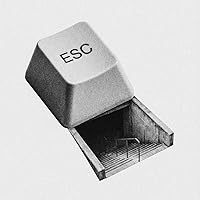
Travelling back in time to show this guy the AG Cook cover of "The End Has No End"

March 13, 2020
The departure from modernism to postmodernism is explained very well. Leapfrogging ones own shadow to the next epoch and the blast of the nuclear bomb that shoots through the radioactive image of what once was. Think of a copy of a copy of a copy and the Xerox culture we now live in! While I think the greater project is modernism, this book is philosophically and brilliantly illuminating.
March 27, 2025
Je ne sais pas quoi penser de ce texte. Au début on se croirait dans du post-situ / post-heidegger, et après on s’enfonce dans de la spéculation mystiquophile douteuse… ça reste tout de même édifiant.

June 24, 2025
Το κείμενο του Baudrillard εξερευνά την εξαφάνιση της ιστορίας και της πραγματικότητας στον σύγχρονο κόσμο, υποστηρίζοντας ότι η υπερβολική ταχύτητα και διάδοση των πληροφοριών, ιδιαίτερα μέσω των μέσων μαζικής ενημέρωσης, έχει διαλύσει την συνεκτική αφήγηση των γεγονότων. Τα γεγονότα δεν έχουν πλέον ουσιαστικό νόημα, καθώς αποσπώνται από το πλαίσιο τους και εκτοξεύονται σε έναν "υπερχώρο" προσομοίωσης, καθιστώντας τα μη αναστρέψιμα και άδεια. Αυτή η επιταχυνόμενη διάλυση οδηγεί σε μια κατάσταση «παταφυσικής», όπου η ιστορία εκτυλίσσεται προς τα πίσω, με την κοινωνία να αναζητά την «αθωότητα» των χαμένων καταβολών και να ανακυκλώνει το παρελθόν ως φάντασμα, αντί να προχωρά προς ένα μέλλον. Ο Baudrillard υποστηρίζει ότι η υπερβολική διαφάνεια και η απολύτρωση των πάντων, ακόμη και του κακού, οδηγεί σε μια καθολική αδιαφορία και την εξαφάνιση της ίδιας της ελευθερίας, καθώς η πραγματικότητα αντικαθίσταται από την προσομοίωση και την ατέρμονη ανακύκλωση του ήδη νεκρού.

May 16, 2017
Una completa basura posmoderna, ridícula.
Displaying 1 - 21 of 21 reviews