It's Sydney in the early 2000s, and Grub is spending the summer with her universally-adored older brother, Elijah, and his magnetic but troubled best friend, Zed. Their days are filled with surfing, swimming and hanging out; life couldn't be better. But years later, Elijah disappears and Grub's family unravels. At first, Grub blames he was the one who derailed Elijah from a bright future in the arts. But as Grub looks back at those dreamy summer days, the sanctuary of her certainty crumbles. Was Zed really responsible for her brother's disappearance? Was anyone? Tidelines is a tender coming-of-age novel about growing up in the face of unimaginable loss. It examines the stories we subconsciously write for ourselves, and what remains later, when we have the courage to tear them apart.
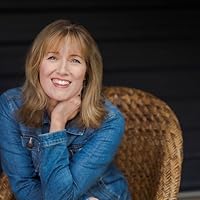
Sarah Sasson is an Australian physician-writer living on Gadigal land in Sydney. She completed a B.Arts(English)/B.Science at the University of New South Wales, followed by a B.Medicine/B.Surgery at Sydney University and has spent time living overseas in Chicago, Singapore, Montreal, Hanoi and Oxford.
Her poetry, short stories and non-fiction have been published in Australia, the United Kingdom and USA appearing in Meanjin, Kill Your Darlings, Ramona Magazine, Oncology Republic, Grieve Anthology, Medium, Grattan Street Press, Oxford Writers’ House, Unsweetened, Intersection Stories, Translating Pain and Orris Root.
Sarah’s debut literary fiction novel Tidelines was shortlisted for the Varuna House Publisher Introduction Program and longlisted for the Queensland Writers’ Centre (QWC) Publishable Program and shortlisted for QWC's Adaptable Program. Tidelines was published by Affirm Press in January 2024.
Her work explores themes including: human relationships, loss, memory, medicine and biology. Sarah recently edited Signs of Life anthology, an international literary collection themed around first and second-hand experiences of illness and caregiving which was included on the Kirkus Reviews “28 Indie Books Worth Discovering” list in 2022.
Sarah is represented by Jane Novak Literary Agency.
EXCERPT: 'Do you ever see your dad?' I asked/ The words fell out of my mouth before I had a chance to catch them. Zed was wearing canvas shoes. There was a hole where his right toe was wearing through. 'Nah.' His mouth was full of grey smoke, then he exhaled. 'He walked out on us when I was six.' 'Do you know where he is?' Zed shook his head. 'Not really. You wouldn't understand,' he said, for a moment speaking to me as if I was a child. 'Your family is so nice. One day you will.' 'Will what?' I asked. Zed flicked the butt of his cigarette onto the footpath, where it rolled up against the wall of the milkbar, a trail of smoke still piping out of it. 'Lose something you love.' He got up and walked inside to meet Elijah. There was a certainty in the way he spoke that made me feel as though he knew something about my life that I didn't.
ABOUT 'TIDELINES': It's Sydney in the early 2000s, and Grub is spending the summer with her universally-adored older brother, Elijah, and his magnetic but troubled best friend, Zed. Their days are filled with surfing, swimming and hanging out; life couldn't be better.
But years later, Elijah disappears and Grub's family unravels. At first, Grub blames Zed: he was the one who derailed Elijah from a bright future in the arts. But as Grub looks back at those dreamy summer days, the sanctuary of her certainty crumbles. Was Zed really responsible for her brother's disappearance? Was anyone?
Tidelines is a tender coming-of-age novel about growing up in the face of unimaginable loss. It examines the stories we subconsciously write for ourselves, and what remains later, when we have the courage to tear them apart.
MY THOUGHTS: Tidelines reads more like a memoir than a novel. The random memories, especially at the beginning, reinforce this. It is a novel raw with grief. Of a young woman battling to keep afloat even before her brother disappears.
This is a sad book but one written with great beauty; the writing stark and succinct at times, and at others melodic. Sasson takes us on a journey from childhood joy to the depths of despair as lives go wrong; detour down unplanned tracks full of potholes and dead ends. But there are also moments of light to be found in those depths of despair; hope to cling to.
Tidelines is not an easy read. It is raw and brutal, beautiful and sad, devastating and hopeful. If you have ever picked at a loose thread and had the garment unravel; that depicts Grub's life. It is testament to her strength of character that she is eventually able to pick up the threads and fashion them into something new. The journey from one point to the other is a tough one as she learns to forgive not only others but herself.
This is an amazing debut novel.
⭐⭐⭐⭐.2
#Tidelines #NetGalley
THE AUTHOR: Sarah Sasson is an Australian physician-writer living on Gadigal land in Sydney.
DISCLOSURE: Thank you to Affirm Press via NetGalley for providing a digital ARC of Tidelines by Sarah Sasson for review. All opinions expressed in this review are entirely my own personal opinions.
This was quite an emotional read, but such an insightful and deeply meaningful one as well. I found it quite unsettling in parts as it gave me pause to examine the lives of my own now adult children, one in particular who was like Elijah in more ways than one. Given what transpires within this novel, needless to say, it left me once again somewhat fearful, a stage I move in and out of with regularity regarding this particular child of mine. I’m being a little vague, because it’s personal and also to do with someone else, but I’m bringing it up in this vague way because sometimes that’s what a book does to you – it grabs a hold of you in ways that are deeply personal, which is what happened with here with Tidelines.
In terms of literary merit though, this is an excellent debut novel. The narrative is crisp and goodness, there are some absolutely gorgeous lines and passages. The pace is swift, but not too much so, and the character development was precise. I found it an immersive and compulsive read, but one also that I took my time over, as the writing begged rereading in some sections, it was just that pointed and meaningful.
The sense of place within each setting was strong, you really felt where each character was in the story, and not just in each location, but also within a building or even just a room. There’s this really emotional scene where Grub is walking through her childhood home after it’s been remodelled for sale and she hears some contractors talking about these divots in the floorboards that even the sanding and polishing didn’t take out. These were from the stand from her brother’s cello, made through the carpet over the years and years of him practising. And of course, that evokes so many memories for her, those little divots in the floor. As a person who is very attached to place, I could feel this so keenly, and it left me weeping.
Tidelines is a sensational debut that I recommend widely. Gold star Australian fiction.
simple and satisfying like a choral piece. at times plot developments were clipped or resolved too quickly, but the general narrative push was clear and gripping. the prose was also metaphor-drenched, particularly at the beginning, which balanced the dialogue’s stasis.
Thank you Affirm Press for sending us a copy to read and review. As an avid reader I often marvel at the high standard our Aussie authors are delivering across many genres. This debut by Sarah Sasson is a perfect example. A well written and engaging coming of age story resonates on so many levels. The memories and insights are shared by Grub, who in her mid twenties reflects on her journey through life. Her adoration for her older brother, her navigation through school and work and how she deals with emotional turmoils captured lyrically in reminiscent prose. Years later when her brother disappears her life is turned upside down. The guilt, the need to repair and her devotion to him was unrivalled. The heat of summer, the beach and even the heritage back story was iconically Australian. An authentically gripping and heartfelt narrative that was both raw and beautiful. The little details helped complete this great read. The explanation of the nickname and its continuation into adulthood is one such detail that spoke volumes. What an exciting author to watch out for.
I absolutely tore through this debut novel by clinician, researcher and author Sarah Sassoon. Some of the most evocative and beautiful descriptions of sibling friendship, adolescence, Sydney summers and swimming I have ever read. Surprised and pleased to read accurate and recognisable depictions of medical research and the joy of discovery. An assured and thoughtful novel that I have been thinking about long after finishing.
4.5 After Blood Meridian, I was looking forward to a simple, summery page turner. This wasn't really that simple and it was very emotionally charged and so beautiful. Absolutely lovely prose, fantastic characterisation and an interesting and deeply relatable protagonist. I loved the contrast of the gifted child/late bloomer dynamic. As someone who relates v much to being a late bloomer it was very profound and something I hadn't read much about in other contemporary novels. Sasson's depiction of early and absolute inadequacy are reminiscent of Charlotte Bronte. Whilst at times I felt I knew exactly where it was headed, it was a great read 🙂📚
This entire review has been hidden because of spoilers.
Sarah Sasson’s debut novel, ‘Tidelines’, focuses on the Donohue family, through the eyes of its youngest member, Grub. Told in first-person narrative, Grub takes us from the early 2000s, through to 2012 as she recounts how her family was impacted by the actions of her idolised older brother, Elijah, and asks who, if anyone, is to blame. The novel tackles the issue of mental health in a head-on manner, with writing that is crisp and emotional enough to draw the reader into the anxiety and dread that our main character feels. At other times, we feel nostalgia for the Halcyon days of childhood, even if it’s a depiction of a childhood we never experienced ourselves. It’s a supreme strength of the novel that, while I wouldn’t call it slow burning, it eases through the moments of our characters lives, and draws us into them. Sasson crafts a neat trail of breadcrumbs for the discerning reader to follow as well – this gives the impact of the audience knowing more than the narrator. We are left not to determine what will happen, rather when it will happen and what the fallout will be. The characters are clear and true. Grub and Elijah’s parents are defined almost exclusively by their passions – music for the mother, birdwatching for the father – and their differing styles of parenting both encourage and stifle their children at various intervals. As the novel progresses, it raises questions for Grub in particular who wonder if this parent had done that, or if the other had done something else, would things have been different. The reader too finds themselves asking the same thing of various moments. Grub is a compelling narrator – we are given a taste of her life from childhood to struggling (and recovering) adult, and it feels firmly authentic. All of the characters do, right down to the people Grub lists as she passes them in the street. The same can be said for Elijah whose boyish charms in his youth present someone that we want to spend time with; we understand the desire to spend time in his stratosphere. The changes in his personality are dealt with subtly and gradually – it’s not suddenly rammed into a few pages that he has changed overnight because that’s not how it happens. At times, Grub feels like Harper Lee’s Scout, recalling Jem’s heroics and actions; at others, she feels like Ky in Tracey Lien’s ‘All That’s Left Unsaid’, as she desperately tries to solve the puzzle that is Elijah. The author has brought all of her professional experience to bear on the scientific and medical aspects of the novel – though perhaps a little too scientific in explaining Grub’s research profession, even though the symbolism of it is smart. But the other questions around mental health are dealt with in a non-sensational manner – with the story and atmosphere she has carved out, it would feel like a disservice to have taken that particular route with it. The seeming catalyst for Elijah’s change is Zed, with whom the novel’s central duo strike up a friendship after a chance encounter at the beach. The friendship between the two older boys serves to stir up feelings of alienation within Grub, who is also going through teenage issues of her own. Again, these are addressed in a very real, honest way that overshadows the generic nature of them. Zed is a character that we don’t learn an awful lot about, mainly because Grub doesn’t learn an awful lot about him – what we know, we know more from his omissions than anything that he says. But perhaps that is the point that the novel wishes to convey – we all have choices and we are the ones who make them. While others may influence or advise, the decision remains in our own hands. It is something that Grub learns as well, albeit in far different circumstances. Perhaps to know more about Zed would filter our understanding of this, draw us away from that idea, help to perpetuate a stereotype even. I do think that the opening scene is left hanging for far too long; it bookends the novel and I did find myself wondering, as the finish line rapidly approached, if the author would return to it. I felt that maybe she should have returned to it more often, as a way of anchoring the different sections of the novel and as a way of ratcheting up some tension as to what may be about to unfold. I think it would have served as an interesting anchor between the present and the past of the novel, further emphasising the impact of one on the other. That said, I would highly recommend ‘Tidelines’ to anyone who wants to read a well-crafted and authentic story of a family as they deal with the best and worst that life can throw at them. Thank you to Affirm Press for providing this book for review consideration via NetGalley. All opinions are my own.
This is a coming of age book. Our narrator (who is, I think 24) is trying to work out what she wants to do with her life, who and how she wants to be. It is, as we are warned from the very first page, a sad book. It's also emotional and beautiful. In the best possible ways it reminded me of Nadine Cohen's Everyone and Everything . Not because they are derivative, but because they are both stories of young women growing up in Sydney with complicated families. Both have a focus on water - such a Sydney thing, in Melbourne we don't all swim at amazing sea-pools. I wonder how much of this book is based on the author's own childhood.. I recommend Tidelines, it is moving and honest.
Thanks to NetGalley and the Publisher for giving me an E-Arc in exchange for an honest review.
Tidelines by Sarah Sasson is an eerily poignant read as it opens after a tragedy then goes back into the past, beguiling readers with the story of siblings; knowing that all does not end well, but intrigued as to how we get there.
In some ways this is a study of characters - who we think we are, who we actually are, who we become, and how and why we get there.
But Sasson's writing is the standout here for me. Her beautiful prose do the story of Grub and Elijah justice taking readers along, traversing love, anger, fear, guilt, regret, grief, loss and disappointment.
This was heart-breakingly good. This is a gorgeous coming of age novel about growing up in Sydney in the early 2000s when freedom is hanging out at the beach and surfing with an adored older brother, Elijah and his best friend Zed, who dangerously lives of the edge. There are thems of familial love, music as language, career successes and failures, drug addiction, imperfect parents, misogyny, infidelity, a missing brother, loss, grief and ultimately an awakening of what it is to be human. You know a book is great when you beomc emotionally attached to the characters and want to immerse yourself in its pages.
This is a brilliant Australian novel. Set in Sydney, initially in the early 2000s, we follow teenage Grub as she spends a sun soaked summer with her older brother Elijah and his best mate Zed. This is a coming of age story, following Grub as she grows into a woman and deals with the good and bad of life. When Elijah disappears, her life is irrevocably changed, and she spends her days searching for him. Searching for Elijah becomes as much about searching for him as searching for herself.
I absolutely adored the writing in this novel. I was instantly transported to Sydney and felt like I was with Grub, coming of age in the early 2000s. Definitely one to read!
My interest in this book did pay off just in a different way than I'd originally thought. The synopsis itself intrigued me enough to add to my TBR yet I was surprised at the direction it took, the characters themselves, and how the story would unfold.
While there were parts that could've had more depth, I enjoyed Grub as a character and found her relationships very interesting. I'm overly curious about Elijah and Z, that was where the money was imo, though do realise the point of the book was to not get an inside POV on their shenanigans and just watch from the sidelines.
a very honest and vulnerable study on grief with some very lovely prose that really did ebb and flow like the tide. i had a few qualms with the characterisation and some narrative points, but the last 100 pages felt like a gut punch at times and i'm still reeling a little.
"Every year we became a little less of whoever we were in those moments," - Grub, the narrator of Tidelines, reflects on a childhood memory of wading in phosphorescent waters with her family. An exquisite sense of unravelling saturates Tidelines, along with a tender nostalgia and the haunting gravity of tides and moons. Characters are coloured in shades of grey; the prose is subtle and precise. As Sasson drew me through Grub's coming-of-age story and the revolutions she takes around her brother's life and subsequent disappearance, the exact emotion depicted on the book cover overwhelmed me--a feeling of sinking, of floating, of possibly resurfacing.
Tidelines tackles challenging themes around mental illness, family breakdown and complex relationships with a deft touch. Highly recommended.
A very confident and assured debut from Sarah Sasson. The language has the considered economy of a poet whilst maintaining a lightness that makes the pages turn with ease.
The first half of the novel exists in the coastal rhythms of Sydney and surrounds – matching the ebb and flow of the tides. We meet the principal characters and establish the strong sense of place that feels true and real. The trouble ahead is foreshadowed but I still thoroughly enjoyed this being immersed in this world.
The second half delivers on the promise of the first half. The principal characters all progress through their own emotional arcs, changing in believable if sometimes tragic ways. Grub searches for explanations in Elijah’s associations but finds the truth is always more complex and multifaceted. The book has a perfect overall arc and there is always a sense of hope. I rushed through the second half in a single sitting and the book left an indelible mark on me like a Claire Keegan novel. Five stars.
What an amazing debut this novel is! Written by a doctor and writer, this a coming of age story that reads like a memoir.
The protagonist is nicknamed ‘Grub’ by her adored older brother, Elijah. They’re the children of a Jewish mother and an Irish father, and spend their childhoods swimming and playing in oceans and pools around Sydney, carefree and oblivious to the problems of the world.
Elijah is good-looking and a musical prodigy. Everyone loves him and it appears that the world is his oyster. All this changes when he meets ‘Zed’, a charismatic yet elusive friend. Despite sensing danger, Grub, too, falls for Zed’s charms.
This is a gentle tale depicting the unravelling of a boy and a family. In gentle but raw prose, it shows the complexity of drug addiction and the powerlessness of loved ones to stop it. It’s also a story of grief, of acceptance, and of self-discovery.
The story is magnetic, the threads braiding together subtly and taking hold. It’s raw but gentle, realistic but loving. No blame, no judgment, just acceptance of how little control we have over others, including those we love.
I don't know Sydney that well as I grew up in Melbourne, but I was instantly thrown right into those baths and the coast line.
I felt like the story was a little slow going to start but loved how it built and how it unraveled. A interesting look at how family can seem so strong yet is so fragile.
This would make such a cool Aussie indie movie!
Spoilers: * * * * * * * * * * * * * * * I don't understand how Grub, as person who studied medicine, didn't just get Elijah into hospital that night she found him talking to himself. She was worried he would be 'just a number' and no longer him, but wouldn't that have been worth a try? To maybe get him some help? Was there something I was missing?
And also, how vile was Jonathan. If I were Grub, after he stole my research as his own, I would put power over him, threatening to tell his wife about them. I would have kept his cuff links and sent them to his wife letting her know. But I like revenge hahaha. What a wank stain that character was.
In our childhood and adolescence, much of our identity is intertwined with others. Infants will take months to distinguish themselves from their parents. As for siblings, their identities are defined by juxtaposition- comparison, competition, similarity, difference, familiarity and discomfort. This is what growing up feels like for Grub, the younger sister of Elijah, and we experience these feelings vividly through Grub’s perspective. As drugs and alcohol, dreams and desires permeate their early adulthood, will Grub be able navigate her own path in the world, amidst the powerful presence and crushing absence of her brother?
Fans of literature will be enchanted by the series of poetic vignettes that build the backdrop of Grub and Elijah’s life. Sydney and Australia at the turn of the millennium will be palpable. But amidst the nostalgia, Sarah Sasson slowly builds a sinister undercurrent as we wonder where the tides take Grub and Elijah. A must read for those who love Australian literature. 5/5 stars.
*I received this ARC via NetGalley in exchange for an honest review*
This was a fantastically written Australian novel. This book is not for those who want an explosive plot, rather here is a quiet, gentle, and reflective novel of a young person's upbringing and her formerly close and ever-fraying relationship with her brother.
I can't put my finger on precisely why I was so thoroughly invested in this novel- perhaps because it was utterly Australian, with a distinct Brisbane-core focus. Maybe because it was so character-driven, and I so rarely come across slow, well-written books about people.
The section towards the end where Grub is packing up her childhood home and the marks left upon it burnt me to my core, having recently begun the process of packing up my Nonna's home and the memories of an entire childhood spent there. The passage was really beautifully crafted.
Tidelines by Susan Sasson is an interesting coming of age debut novel that is extremely well written with some incredibly poignant phrases that give great depth to the story. Set in Sydney and the northern beaches of New South Wales, Australia in the early 2000s we find Grub in her early 20s reflecting on her childhood and her relationship with her extremely talented brother Elijah. His disappearance triggers her reflections and emotions with her seeking reasons for things going wrong.
A literary read that requires a slow and reflective approach.
Recommended read.
This review is based on a complimentary copy from Affirm Press via NetGalley in exchange for an honest review. Opinions expressed in this review are completely my own.
The early Sydney 2000s descriptions are so viscereal, i was transported right back to days of going to places like Govindas for a cheap meal and movie deal - to navigating life as a young person in a city pumped with pre and post Olympic optimism. Where there is light there is also shade. Sarah beautifully contrasts the angst that comes with shining too brightly, when one of her young protagonists spirals into a place where no one can reach him. This is a realistic and sensitively written portrayal of poor mental health infiltrating an otherwise normal and happy upbringing, and those left behind. The development of the main female protagonist, Grub, Into a strong young woman with a maturity beyond her years is especially poignant.
“I was still here, but had large parts of myself missing, shifting voids the wind could blow through.”
What a beautiful debut novel! Wow.
Tidelines is a coming of age literary fiction novel, we are given insight into the memories and perspectives of ‘Grub’ who is now in her mid-twenties. Grub reflects on her childhood and adolescence in Sydney with her brother Elijah and his best friend Zed, which is filled with swimming and surfing and good memories. Later, Elijah disappears and Grub tries to piece together where it all went wrong and who to assign blame to.
This was so poignant and beautifully written, I was drawn in by the stunning imagery. Grub’s childhood rings so true to growing up in the early 2000’s in coastal Australia, from the beaches and sherbet lollipops to the war cries at the swimming carnival. This truly is a love letter to Australian summers and beaches. The book gets extremely heavy and emotional towards the disappearance of Elijah, and I needed to stop to breathe. It centres on themes of complicated grief and the uncertainty of not knowing, unconditional love and family repair, and self-discovery.
Grub grows up somewhat in the shadow of her gifted, artistic older brother Elijah. But she doesn't mind, as she idolises him and he adores her. As they move into adulthood though, Elijah's increasingly erratic behaviour and burgeoning drug addiction slowly becomes the focus of their relationship and contributes to their once-close family slowly unraveling. A beautifully written story about growing up, families and the very real devastation of addiction and mental health issues. This is a quiet, but extremely moving read. 3.5 stars
It's hard to believe this is Sarah Sasson's debut novel. It's a captivating, bittersweet story of love, loss, disappointment and hope, told with the kind of confidence and clarity that packs a punch. Tidelines is the perfect book to become immersed in over a day or a weekend, to find yourself swept offshore, forgetting the real world, then to be returned, gently and deftly, to the beach by the end. Such a nostalgic, delightful and satisfying read.
Tidelines is a literary coming of age novel about a young woman who’s grappling with the disappearance of her charismatic older brother, the role of their childhood friend in his unravelling, and her own place in the world. Sarah’s prose is gorgeous, the Sydney setting lovingly depicted, and family relationships are conveyed with authenticity and depth. One for fans of Sofie Laguna and Jennifer Down.
Tidelines is an apt title to describe the unpredictable but inevitable ebbs and flows of the human experience. I really connected with the story told through the lens of adolescence and early adulthood by the female narrator, only referred to by her nickname Grub .. endearing but not flattering, it added another facet to the relationship dynamic. It was not a feel good read, and yet it was thought provoking, a contemporary look at life choices, expectations, and the paths each of us take.