

What do you think?
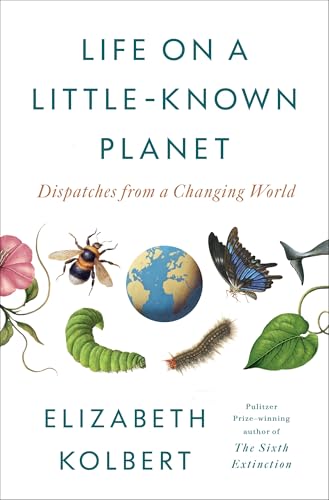
Life on a Little-Known Planet: Dispatches from a Changing World
A landmark collection of Pulitzer Prize winner Elizabeth Kolbert's most important pieces about climate change and the natural world
"To be a well-informed citizen of Planet Earth," Rolling Stone has advised, "you need to read Elizabeth Kolbert." From her National Magazine Award-winning series The Climate of Man to her Pulitzer Prize-winning book The Sixth Extinction, Kolbert’s work has shaped the way we think about the environment in the twenty-first century. Collected in Life on a Little-Known Planet are her most influential and thought-provoking essays.
An intrepid reporter and a skillful translator of scientific idees, Kolbert expertly captures the wonders of nature and paints vivid portraits of the researchers and concerned citizens working to preserve them. She takes readers all around the globe, from an island in Denmark that’s succeeded in going carbon neutral, to a community in Florida that voted to give rights to waterways, to the Greenland ice sheet, which is melting in a way that has implications for everyone. We meet a biologist who believes we can talk to whales, an entomologist racing to find rare caterpillars before they disappear, and a climatologist who’s considered the "father of global warming," amongst other scientists at the forefront of environmental protection.
The threats to our planet that Kolbert has devoted so much of her career to exposing have only grown more serious. Now is the time to deepen our understanding of the world we are in danger of losing.
"To be a well-informed citizen of Planet Earth," Rolling Stone has advised, "you need to read Elizabeth Kolbert." From her National Magazine Award-winning series The Climate of Man to her Pulitzer Prize-winning book The Sixth Extinction, Kolbert’s work has shaped the way we think about the environment in the twenty-first century. Collected in Life on a Little-Known Planet are her most influential and thought-provoking essays.
An intrepid reporter and a skillful translator of scientific idees, Kolbert expertly captures the wonders of nature and paints vivid portraits of the researchers and concerned citizens working to preserve them. She takes readers all around the globe, from an island in Denmark that’s succeeded in going carbon neutral, to a community in Florida that voted to give rights to waterways, to the Greenland ice sheet, which is melting in a way that has implications for everyone. We meet a biologist who believes we can talk to whales, an entomologist racing to find rare caterpillars before they disappear, and a climatologist who’s considered the "father of global warming," amongst other scientists at the forefront of environmental protection.
The threats to our planet that Kolbert has devoted so much of her career to exposing have only grown more serious. Now is the time to deepen our understanding of the world we are in danger of losing.
320 pages, Hardcover
First published November 4, 2025
About the author
Elizabeth Kolbert
31 books2,352 followersElizabeth Kolbert is a staff writer at The New Yorker. She is the author of Field Notes from a Catastrophe: Man, Nature, and Climate Change and The Sixth Extinction: An Unnatural History. She lives in Williamstown, Massachusetts, with her husband and children.
Ratings & Reviews
Friends & Following
Create a free account to discover what your friends think of this book!
Community Reviews
Displaying 1 - 30 of 116 reviews

May 18, 2026
This was an interesting collection of previously-written essays (mostly published in the New Yorker) that all discuss a variety of human-driven changes to our natural world. If you've read anything by Elizabeth Kolbert before, you'll know her topic of focus tends to be climate change, but some other topics (like wildlife conservation) are discussed as well.
What made some of these pieces particularly difficult to read was reaching the end of an essay in which scientists are practically begging the global community to act immediately on the climate crisis, only to discover it had been written in 2015. Or 2007. Kolbert provides small nuggets of updates to the essays, but they’re torturously brief, and they don’t really drive at the obvious reality: we've not taken this nearly seriously enough, and we may already be far too late.
As such, it's not an "upper," but it is an important one. The kinds of issues discussed here inevitably filter down into the choices all of us make every single day.
What made some of these pieces particularly difficult to read was reaching the end of an essay in which scientists are practically begging the global community to act immediately on the climate crisis, only to discover it had been written in 2015. Or 2007. Kolbert provides small nuggets of updates to the essays, but they’re torturously brief, and they don’t really drive at the obvious reality: we've not taken this nearly seriously enough, and we may already be far too late.
As such, it's not an "upper," but it is an important one. The kinds of issues discussed here inevitably filter down into the choices all of us make every single day.

November 29, 2025
Kolbert is a great writer on environmental issues. Her prose is crystal clear and her passion is contagious. Like all good journalists, she puts eyewitness boots on the ground. That's admirable for a cerebral 60+ woman.
This book, however, is outdated, or, more generously, it's historical. Its a collection of Kolbert's articles, published mostly in the New Yorker, since 2005. But since the 2015 articles, Miami has still been flooding and Greenland has still been melting. 10 years is a long period for climate policies and catastrophes (think Guadalupe River) to evolve but there is no status update here.
The articles from 2023 and later are fascinating. Will AI get us talking to the animals? Will natural entities, such as streams, get legal rights? Oh I do hope so!
This book, however, is outdated, or, more generously, it's historical. Its a collection of Kolbert's articles, published mostly in the New Yorker, since 2005. But since the 2015 articles, Miami has still been flooding and Greenland has still been melting. 10 years is a long period for climate policies and catastrophes (think Guadalupe River) to evolve but there is no status update here.
The articles from 2023 and later are fascinating. Will AI get us talking to the animals? Will natural entities, such as streams, get legal rights? Oh I do hope so!

February 7, 2026
Elizabeth Kolbert is such a fantastic writer, and when Life on a Little-Known Planet: Dispatches from a Changing World was available on NetGalley, I jumped on it. Thanks to Crown for the review copy! This book is a collection of Kolbert’s essays about the natural world and especially climate change. They showcase Kolbert’s talents but, more importantly, serve as testimony to the anthropogenic era of our planet. Oddly enough, I think this collection might be more relevant a hundred years from now than today.
The main drawback, you see, is that most of these pieces are … old. Like a decade-plus for some of them. Kolbert helpfully attaches tiny addenda at the end of the pieces, giving us a tiny update on the status of whatever slow-motion disaster she was writing about (spoiler alert: it’s not good). Yet that feels insufficient. The essays about the COP meetings and the Paris Agreement in particular have, uh, not aged well….
Don’t get me wrong: obviously there is still value in Kolbert’s writing—heck, how many of my book reviews on this site have aged well in the eighteen years I’ve been writing them?? There is value in a retrospective collection like this. But I wish Kolbert had, say, written some new pieces that she could pair with some of the old ones as sequels. Alas.
It took me a while to read this collection, for I kept being struck by a deep and abiding sadness. It’s not quite doomerism—the optimist within me, whom I have yet to snuff out despite my best efforts, actually believes we will avert the worst of catastrophic climate change consequences. Nevertheless, these essays put a very fine point on how these consequences are already occurring and, indeed, have been occurring for years. Our opportunities to avert crises are slipping through our fingers while our politicians keep building pipelines.
Nevertheless, that mounting sense of resentment and anger isn’t Kolbert’s responsibility—if anything, it’s a sign of how poignant her writing is. I think this book is best as a gift to a less climate-aware person in your life, someone whose insulation from these issues means they don’t quite understand just what’s going on. I think for many of us climate change is a buzzword, something we reference to explain away extreme weather events or check for political polarization. What Life on a Little-Known Planet does best is ground this issue in very real, human, and local concerns. From beekeepers to city planners, Kolbert’s interviewees are, for the most part, ordinary people doing ordinary jobs that are just made harder by climate change.
So while I can’t give this book a full-throated recommendation, simply for its anachronistic qualities, I will certainly provide a conditional one, alongside a resounding endorsement of Kolbert’s skill and passion as a writer.
Originally posted on Kara.Reviews.

The main drawback, you see, is that most of these pieces are … old. Like a decade-plus for some of them. Kolbert helpfully attaches tiny addenda at the end of the pieces, giving us a tiny update on the status of whatever slow-motion disaster she was writing about (spoiler alert: it’s not good). Yet that feels insufficient. The essays about the COP meetings and the Paris Agreement in particular have, uh, not aged well….
Don’t get me wrong: obviously there is still value in Kolbert’s writing—heck, how many of my book reviews on this site have aged well in the eighteen years I’ve been writing them?? There is value in a retrospective collection like this. But I wish Kolbert had, say, written some new pieces that she could pair with some of the old ones as sequels. Alas.
It took me a while to read this collection, for I kept being struck by a deep and abiding sadness. It’s not quite doomerism—the optimist within me, whom I have yet to snuff out despite my best efforts, actually believes we will avert the worst of catastrophic climate change consequences. Nevertheless, these essays put a very fine point on how these consequences are already occurring and, indeed, have been occurring for years. Our opportunities to avert crises are slipping through our fingers while our politicians keep building pipelines.
Nevertheless, that mounting sense of resentment and anger isn’t Kolbert’s responsibility—if anything, it’s a sign of how poignant her writing is. I think this book is best as a gift to a less climate-aware person in your life, someone whose insulation from these issues means they don’t quite understand just what’s going on. I think for many of us climate change is a buzzword, something we reference to explain away extreme weather events or check for political polarization. What Life on a Little-Known Planet does best is ground this issue in very real, human, and local concerns. From beekeepers to city planners, Kolbert’s interviewees are, for the most part, ordinary people doing ordinary jobs that are just made harder by climate change.
So while I can’t give this book a full-throated recommendation, simply for its anachronistic qualities, I will certainly provide a conditional one, alongside a resounding endorsement of Kolbert’s skill and passion as a writer.
Originally posted on Kara.Reviews.

April 24, 2026
This book is good but not great. It's a collection of Kolbert's articles on climate change issues, mostly from The New Yorker, and is already dated on release by 10-20 years, as it covers the early '00s and '10s. Which isn't to say the topics aren't still highly relevant - but given the pace of change, this book is almost better viewed as a historical document, of the very near past.
If you're up on climate change issues it's going to be a painful read as it's a reminder of how not-far we've come. But if you've fallen behind or are new to the topics, this is an easy-to-read catch-up/primer.
I preferred the chapters where Kolbert provided a short update at the end, which isn't all of them, unfortunately. Regardless, she has an engaging way of writing - I love the journalistic quirk she has of describing the people she's talking to, both physically and personality-wise. And her articles are insightful, in-depth takes on subjects often breezed through or understood only at a high level.
While not stunning like her other work, this is a worthwhile read. And it ends on QUITE a note, with a chapter about the loss of the Eyak language and culture. Ominous / elegiac.
If you're up on climate change issues it's going to be a painful read as it's a reminder of how not-far we've come. But if you've fallen behind or are new to the topics, this is an easy-to-read catch-up/primer.
I preferred the chapters where Kolbert provided a short update at the end, which isn't all of them, unfortunately. Regardless, she has an engaging way of writing - I love the journalistic quirk she has of describing the people she's talking to, both physically and personality-wise. And her articles are insightful, in-depth takes on subjects often breezed through or understood only at a high level.
While not stunning like her other work, this is a worthwhile read. And it ends on QUITE a note, with a chapter about the loss of the Eyak language and culture. Ominous / elegiac.
July 13, 2026
Brilliant read albeit extremely concerning.
Every chapter is a fantastic profile on the work of climate change experts and conservationists, from the last decade or so. Each is followed by an up-to-date postscript on the subsequent developments in the topic/field since then.
Given that the topic of the book is climate change it unfortunately makes for blead reading as each chapter reads like so:
Well-written interesting essay about how if we push past x amount of carbon emissions the planet will irreversibly change for the worst and all human life will be threatened
Postscript—not only did we exceed x amount, we have exceeded it by a magnitude of y…
Every chapter is a fantastic profile on the work of climate change experts and conservationists, from the last decade or so. Each is followed by an up-to-date postscript on the subsequent developments in the topic/field since then.
Given that the topic of the book is climate change it unfortunately makes for blead reading as each chapter reads like so:
Well-written interesting essay about how if we push past x amount of carbon emissions the planet will irreversibly change for the worst and all human life will be threatened
Postscript—not only did we exceed x amount, we have exceeded it by a magnitude of y…

May 31, 2026
Though the topics are interesting most are vastly outdated. I’m wondering if the Bill gates foundation (killing the world with one GMO monocrop after another) paid her to put this collection of old articles out as a book- I’d give this one a wide pass!
January 4, 2026
Realistic albeit optimistic review of our current environmental circumstances (the 6th greatest extinction) through a lens of insect and sea life (from pH shift down in the oceans) population decline, profiles of innovators (whale communication with AI, creating carbon negative communities (Samso, Norway) and carbon recapturing technologies, trying to recover healthy ecosystems (reintroducing larger herbivores into the environment, dire straights of water in the southwester US (they profile a dying Lake Powell but could easily profile our own Rio Grande) and the oceans intrusion of Florida (didn't realize that a vast majority of the coast is made up of porous underlying limestone that will ultimately degrade the property foundations of all people who live there)). Enjoyed the analysis of environmental degradation through 'poop' DNA and the fight to save a dying language through the Eyak people and their elders. Book is a good balance between alarm and ingenuity.
Life on a Little-Known Planet is a 2025 essay collection by Pulitzer Prize-winning author Elizabeth Kolbert, compiling her key New Yorker pieces on climate change, biodiversity loss, and environmental threats. The book highlights humanity's limited understanding of Earth amid rapid ecological shifts, drawing from her reporting over two decades.
Introduction Overview: Kolbert's introduction frames Earth as a "little-known planet," echoing biologist E.O. Wilson's sentiment that despite vast exploration elsewhere, we barely comprehend our own biosphere. She emphasizes living in an "extraordinary time" of unprecedented change, with CO₂ levels higher than in 3.5 million years, risking sea levels 60 feet above current highs. This sets up the collection's global dispatches on scientists, conservationists, and vanishing species.
Key Themes
1) Urgent environmental crises, from melting Greenland ice to insect declines, underscoring threats grown more severe since her early work.
2) Profiles of innovators, like whale-communication researchers and the "father of global warming," blending hope with alarm.
3) Calls for deeper planetary awareness to counter biodiversity loss and foster protection efforts.
"Creatures Great and Small" forms the first section of Elizabeth Kolbert's Life on a Little-Known Planet, contrasting massive and tiny species to illustrate biodiversity loss and human impacts. This part draws from her New Yorker reporting on giants like whales and elephants alongside microscopic life, emphasizing how both scales reveal Earth's fragility.
Section Focus:
Kolbert profiles researchers studying colossal creatures, such as those decoding whale songs or tracking elephant migrations disrupted by climate and poaching. She parallels these with small organisms, like declining insects and coral polyps, showing interconnected threats across sizes.
Core Message:
The chapter underscores E.O. Wilson's view of Earth as poorly understood, urging protection for all life forms amid accelerating extinctions, from ocean behemoths to soil microbes. It blends field dispatches with warnings of a "sixth extinction" driven by human activity
Entomologists study insects, blending fieldwork, lab analysis, and applied research to understand their biology, ecology, and impacts on humans and environments. Their daily life varies by specialization—such as agriculture, medicine, or forensics—but centers on observation, data collection, and problem-solving for pest control or conservation.
Typical Responsibilities
Daily tasks include monitoring insect populations in fields or labs, collecting samples with nets or traps, and analyzing behaviors under microscopes. They design experiments to test insecticides, track life cycles, or assess ecosystem roles, then document findings in reports or journals.
Work Environments:
Professionals split time between outdoor sites like farms and forests for sampling, and indoor labs for dissections or genetic studies. Academic entomologists add teaching, grant writing, and student mentoring, while industry roles focus on crop protection or public health strategies.
Specializations:
1) Agricultural: Develop pest management for crops, advising farmers on sustainable methods.
2) Medical: Research disease vectors like mosquitoes to prevent outbreaks.
3) Forensic: Analyze insects on remains to aid criminal investigations.
Life of an Entomologist" is a chapter in Elizabeth Kolbert's Life on a Little-Known Planet that profiles the demanding work of insect researchers amid global declines in bug populations. Kolbert shadows scientists like those tracking vanishing species, revealing how their fieldwork exposes broader biodiversity crises driven by climate change and habitat loss.
Chapter Focus:
The narrative follows entomologists netting specimens in remote forests, pinning insects in labs, and analyzing data on plummeting numbers, such as 75% drops in flying insect biomass over decades. It highlights their passion for overlooked creatures while underscoring threats like pesticides and warming temperatures that complicate their studies.
Key Insights
Kolbert uses these profiles to contrast the intricacy of insect life cycles with humanity's ignorance, echoing the book's theme of Earth as a "little-known planet." Entomologists emerge as crucial sentinels, advocating for conservation amid an insect apocalypse that ripples through food chains
an insect apocalypse that ripples through food chains.
The chapter on Lake Powell: "The Lost Canyon Under Lake Powell," exploring how prolonged drought is shrinking this massive reservoir and exposing a submerged Eden. Kolbert joins explorers like Ken Balken to navigate the receding waters, revealing drowned canyons, reemerging cottonwoods, and "bathtub rings" of mineral stains that mark the lake's dramatic decline.
Environmental Impacts:
As water levels drop—down over 100 feet in recent years—hidden ecosystems revive, with rapids reforming and wildlife returning to what was once Glen Canyon, flooded in the 1960s for the reservoir. Yet this uncovers the lake's ecological toll: it smothered diverse habitats, altered the Colorado River's flow into the Grand Canyon, and contributed to native fish extinctions like the pike minnow.
Broader Themes:
Kolbert contrasts the awe of rediscovery with warnings of water scarcity in the Southwest, driven by overuse, climate change, and megadroughts, urging reevaluation of such massive engineering projects. The piece fits the book's motif of a "little-known planet," highlighting how human alterations reveal—and threaten—Earth's hidden wonders.
"Island in the Wind" is a chapter profiling Samsø, a small Danish island that achieved carbon neutrality through wind power and community-led renewables. Kolbert examines how locals transitioned from oil dependency to generating surplus clean energy, serving as a model amid global climate threats.
Key Strategies:
Residents installed over 10 wind turbines and biomass plants, cutting emissions by 140% below 1990 levels while boosting the economy via energy exports. The chapter details grassroots efforts, including farmer investments and district heating from straw, contrasting with fossil fuel reliance elsewhere.
Broader Lessons:
Kolbert highlights scalability challenges but praises Samsø's success in fostering buy-in through education and shared benefits, urging similar local innovations worldwide. It embodies the book's call to better know and protect our changing planet.
"The Siege of Miami" is a chapter in Elizabeth Kolbert's Life on a Little-Known Planet, adapted from her 2015 New Yorker article on South Florida's vulnerability to sea-level rise. Kolbert documents "sunny day flooding" in Miami Beach, where high tides inundate streets despite clear skies, due to porous limestone bedrock allowing seawater intrusion.
Key Observations:
She tours with geologist Harold Wanless, witnessing submerged lawns, floating trash bins, and residents mistaking saltwater surges for broken mains. Officials elevate roads and install pumps, but experts warn of inevitable retreat as groundwater rises, threatening billions in real estate.
Warning for the Future:
Kolbert portrays Miami as a frontline for climate impacts, with accelerating floods signaling a "disaster scenario" for coastal cities worldwide, where adaptation like sealing limestone proves futile long-term.
"Testing the Waters" is a chapter in Elizabeth Kolbert's Life on a Little-Known Planet that delves into ocean acidification and its threats to marine life, building on her Sixth Extinction reporting. Kolbert visits sites like Castello Aragonese off Italy, where natural CO₂ vents mimic future acidified oceans, showing barren seafloors near vents where shells dissolve.
Scientific Insights:
She describes experiments on sea urchins and pteropods with dissolving shells in lab tanks, linking rising atmospheric CO₂ to pH drops that hinder calcification for corals and shellfish. Kolbert contrasts vibrant control zones with lifeless acidified areas, underscoring risks to food webs and fisheries.
Implications:
The chapter warns of cascading extinctions, from plankton to fish stocks, emphasizing urgency for emissions cuts as adaptation limits loom. It ties to the book's theme of unrecognized planetary changes.
"A New Leaf" is a chapter in Elizabeth Kolbert's Life on a Little-Known Planet focusing on efforts to combat plant extinction and restore ecosystems amid climate change. Kolbert profiles botanists racing to collect and preserve rare seeds in seed banks, highlighting the irony of "rewilding" as species vanish faster than ever.
Chapter Highlights:
She visits seed vaults and restoration projects where scientists propagate endangered plants like the American chestnut, genetically engineered against blight. The narrative explores de-extinction debates and controlled burns to revive native flora threatened by invasives and warming.
Central Theme:
Kolbert questions if these interventions can outpace the sixth extinction, portraying a "new leaf" as both literal renewal and a fragile hope for biodiversity on our understudied planet.
"Going Negative" is a chapter in Elizabeth Kolbert's Life on a Little-Known Planet examining carbon removal efforts like direct air capture (DAC) and ocean alkalinity enhancement to combat climate change. Kolbert profiles experimental projects testing negative emissions technologies, questioning their scalability amid urgent CO₂ reduction needs.
Chapter Focus:
She visits facilities like Climeworks' Icelandic plant, which pulls CO₂ from air and mineralizes it underground, achieving "negative" emissions by removing more than produced. Kolbert contrasts high costs ($600/tonne) with potential, noting mineralization mimics natural rock weathering.
Challenges Highlighted
The narrative warns of overreliance on unproven tech as emissions rise, with ocean experiments adding minerals to boost CO₂ absorption despite ecological risks. It reinforces the book's theme: humanity must grasp planetary limits before geoengineering gambles.
"Recall of the Wild" is a chapter in Elizabeth Kolbert's Life on a Little-Known Planet, adapted from her 2012 New Yorker article on rewilding experiments in the Netherlands' Oostvaardersplassen reserve. Kolbert explores efforts to recreate Paleolithic ecosystems by reintroducing large herbivores like Konik horses, Highland cattle, and red deer to mimic extinct megafauna impacts.
Rewilding Approach:
Managers Frans Vera and others advocate "hands-off" policies, allowing natural grazing to shape grasslands, preventing woody succession and fostering biodiversity akin to pre-human Europe. Kolbert observes thriving herds but notes controversies over winter starvation, prompting emergency culling.
Debates and Lessons:
The chapter questions rewilding's ethics and feasibility, balancing restoration promise against animal welfare, while highlighting humanity's role in "recalling" lost wildness on a altered planet.
"All We Can Save" is a chapter in Elizabeth Kolbert’s Life on a Little‑Known Planet that looks at people on the front lines of climate and biodiversity work who are trying to protect what is still recoverable, rather than what has already been lost. It functions as one of the book’s more hopeful pieces, emphasizing practical conservation, community action, and technological innovation as ways to preserve remaining ecosystems and species.
"The Weight of the World" serves as the concluding chapter in Elizabeth Kolbert's Life on a Little-Known Planet, synthesizing two decades of reporting on humanity's profound ecological footprint. Kolbert reflects on the cumulative "weight" of human activity—population growth, consumption, and emissions—driving the sixth extinction and climate instability, while urging deeper planetary stewardship.
Core Reflections:
She revisits E.O. Wilson's thesis that Earth remains "little-known," contrasting space exploration with ignored biodiversity losses like insect collapses and ice melt. Kolbert weighs despair against agency, profiling resilient scientists and communities adapting amid irreversible shifts.
Final Call:
The chapter advocates radical awareness and action at root levels, echoing the book's motif: understanding our home's fragility is the first step to lighter treading.
"Mr. Green: Environmentalism's Most Optimistic Guru" is a chapter in Elizabeth Kolbert's Life on a Little-Known Planet profiling David "Mr. Green" Gruber, a charismatic marine biologist using AI to decode whale communication via Project CETI. Kolbert accompanies Gruber diving off Dominica to record sperm whale codas—complex click patterns suggesting dialects and context-specific "conversations."
Chapter Highlights:
Gruber deploys drones, hydrophones, and machine learning to analyze coda rhythms, tempos, and rubato, revealing phonetic structures akin to language. His infectious optimism envisions interspecies dialogue reshaping conservation, despite skeptics questioning if codas encode true syntax.
Broader Message:
Kolbert contrasts Gruber's techno-hope with planetary crises, portraying him as environmentalism's forward-thinker betting on tech to bridge human-nonhuman gaps amid biodiversity loss.
"Guru of Doo Doo" is a chapter in Elizabeth Kolbert's Life on a Little-Known Planet profiling a scatologist or waste researcher studying animal feces to track biodiversity, health, and environmental DNA (eDNA) amid species declines. Kolbert follows the scientist through forests and labs, where dung samples reveal hidden mammal populations, diets, antibiotic resistance, and stress hormones undetectable by other means.
Chapter Focus:
The narrative details sifting steaming piles for undigested seeds, parasite eggs, and DNA barcodes, transforming "doo doo" into data for conservation—from tiger ranges to insect pollinator crashes. Kolbert highlights how non-invasive scat analysis scales globally via camera traps and AI, offering hope for monitoring our "little-known" planet's wildlife.
Key Insights:
This quirky profile underscores overlooked science saving species indirectly, blending humor with urgency as human pressures shrink habitats, making every stool sample a vital clue.
"The Race to Save Eyak" is a chapter in Elizabeth Kolbert's Life on a Little-Known Planet recounting her poignant interview with Marie Smith Jones, the last fluent speaker of the Eyak language from Alaska's Indigenous Eyak people. Kolbert documents the desperate efforts to preserve this ancient tongue—once spoken by Cordova's coastal tribes—through recordings, dictionaries, and linguistic apprenticeships before its inevitable extinction with Marie's death in 2008.
Preservation Efforts:
Marie, a fierce elder and environmental activist, taught select students daily grammar, stories, and songs, racing against her age and the language's complexity (no written form, intricate verb structures). Kolbert captures sessions where Marie conjures lost words for salmon runs and glaciers, tying linguistic loss to cultural erasure amid climate threats to native lands.
Broader Significance:
The chapter parallels biological extinctions, framing Eyak's demise as part of humanity's shrinking knowledge of Earth's diverse "voices"—human and nonhuman—urging documentation before silence engulfs unique worldviews.
Life on a Little-Known Planet is a 2025 essay collection by Pulitzer Prize-winning author Elizabeth Kolbert, compiling her key New Yorker pieces on climate change, biodiversity loss, and environmental threats. The book highlights humanity's limited understanding of Earth amid rapid ecological shifts, drawing from her reporting over two decades.
Introduction Overview: Kolbert's introduction frames Earth as a "little-known planet," echoing biologist E.O. Wilson's sentiment that despite vast exploration elsewhere, we barely comprehend our own biosphere. She emphasizes living in an "extraordinary time" of unprecedented change, with CO₂ levels higher than in 3.5 million years, risking sea levels 60 feet above current highs. This sets up the collection's global dispatches on scientists, conservationists, and vanishing species.
Key Themes
1) Urgent environmental crises, from melting Greenland ice to insect declines, underscoring threats grown more severe since her early work.
2) Profiles of innovators, like whale-communication researchers and the "father of global warming," blending hope with alarm.
3) Calls for deeper planetary awareness to counter biodiversity loss and foster protection efforts.
"Creatures Great and Small" forms the first section of Elizabeth Kolbert's Life on a Little-Known Planet, contrasting massive and tiny species to illustrate biodiversity loss and human impacts. This part draws from her New Yorker reporting on giants like whales and elephants alongside microscopic life, emphasizing how both scales reveal Earth's fragility.
Section Focus:
Kolbert profiles researchers studying colossal creatures, such as those decoding whale songs or tracking elephant migrations disrupted by climate and poaching. She parallels these with small organisms, like declining insects and coral polyps, showing interconnected threats across sizes.
Core Message:
The chapter underscores E.O. Wilson's view of Earth as poorly understood, urging protection for all life forms amid accelerating extinctions, from ocean behemoths to soil microbes. It blends field dispatches with warnings of a "sixth extinction" driven by human activity
Entomologists study insects, blending fieldwork, lab analysis, and applied research to understand their biology, ecology, and impacts on humans and environments. Their daily life varies by specialization—such as agriculture, medicine, or forensics—but centers on observation, data collection, and problem-solving for pest control or conservation.
Typical Responsibilities
Daily tasks include monitoring insect populations in fields or labs, collecting samples with nets or traps, and analyzing behaviors under microscopes. They design experiments to test insecticides, track life cycles, or assess ecosystem roles, then document findings in reports or journals.
Work Environments:
Professionals split time between outdoor sites like farms and forests for sampling, and indoor labs for dissections or genetic studies. Academic entomologists add teaching, grant writing, and student mentoring, while industry roles focus on crop protection or public health strategies.
Specializations:
1) Agricultural: Develop pest management for crops, advising farmers on sustainable methods.
2) Medical: Research disease vectors like mosquitoes to prevent outbreaks.
3) Forensic: Analyze insects on remains to aid criminal investigations.
Life of an Entomologist" is a chapter in Elizabeth Kolbert's Life on a Little-Known Planet that profiles the demanding work of insect researchers amid global declines in bug populations. Kolbert shadows scientists like those tracking vanishing species, revealing how their fieldwork exposes broader biodiversity crises driven by climate change and habitat loss.
Chapter Focus:
The narrative follows entomologists netting specimens in remote forests, pinning insects in labs, and analyzing data on plummeting numbers, such as 75% drops in flying insect biomass over decades. It highlights their passion for overlooked creatures while underscoring threats like pesticides and warming temperatures that complicate their studies.
Key Insights
Kolbert uses these profiles to contrast the intricacy of insect life cycles with humanity's ignorance, echoing the book's theme of Earth as a "little-known planet." Entomologists emerge as crucial sentinels, advocating for conservation amid an insect apocalypse that ripples through food chains
an insect apocalypse that ripples through food chains.
The chapter on Lake Powell: "The Lost Canyon Under Lake Powell," exploring how prolonged drought is shrinking this massive reservoir and exposing a submerged Eden. Kolbert joins explorers like Ken Balken to navigate the receding waters, revealing drowned canyons, reemerging cottonwoods, and "bathtub rings" of mineral stains that mark the lake's dramatic decline.
Environmental Impacts:
As water levels drop—down over 100 feet in recent years—hidden ecosystems revive, with rapids reforming and wildlife returning to what was once Glen Canyon, flooded in the 1960s for the reservoir. Yet this uncovers the lake's ecological toll: it smothered diverse habitats, altered the Colorado River's flow into the Grand Canyon, and contributed to native fish extinctions like the pike minnow.
Broader Themes:
Kolbert contrasts the awe of rediscovery with warnings of water scarcity in the Southwest, driven by overuse, climate change, and megadroughts, urging reevaluation of such massive engineering projects. The piece fits the book's motif of a "little-known planet," highlighting how human alterations reveal—and threaten—Earth's hidden wonders.
"Island in the Wind" is a chapter profiling Samsø, a small Danish island that achieved carbon neutrality through wind power and community-led renewables. Kolbert examines how locals transitioned from oil dependency to generating surplus clean energy, serving as a model amid global climate threats.
Key Strategies:
Residents installed over 10 wind turbines and biomass plants, cutting emissions by 140% below 1990 levels while boosting the economy via energy exports. The chapter details grassroots efforts, including farmer investments and district heating from straw, contrasting with fossil fuel reliance elsewhere.
Broader Lessons:
Kolbert highlights scalability challenges but praises Samsø's success in fostering buy-in through education and shared benefits, urging similar local innovations worldwide. It embodies the book's call to better know and protect our changing planet.
"The Siege of Miami" is a chapter in Elizabeth Kolbert's Life on a Little-Known Planet, adapted from her 2015 New Yorker article on South Florida's vulnerability to sea-level rise. Kolbert documents "sunny day flooding" in Miami Beach, where high tides inundate streets despite clear skies, due to porous limestone bedrock allowing seawater intrusion.
Key Observations:
She tours with geologist Harold Wanless, witnessing submerged lawns, floating trash bins, and residents mistaking saltwater surges for broken mains. Officials elevate roads and install pumps, but experts warn of inevitable retreat as groundwater rises, threatening billions in real estate.
Warning for the Future:
Kolbert portrays Miami as a frontline for climate impacts, with accelerating floods signaling a "disaster scenario" for coastal cities worldwide, where adaptation like sealing limestone proves futile long-term.
"Testing the Waters" is a chapter in Elizabeth Kolbert's Life on a Little-Known Planet that delves into ocean acidification and its threats to marine life, building on her Sixth Extinction reporting. Kolbert visits sites like Castello Aragonese off Italy, where natural CO₂ vents mimic future acidified oceans, showing barren seafloors near vents where shells dissolve.
Scientific Insights:
She describes experiments on sea urchins and pteropods with dissolving shells in lab tanks, linking rising atmospheric CO₂ to pH drops that hinder calcification for corals and shellfish. Kolbert contrasts vibrant control zones with lifeless acidified areas, underscoring risks to food webs and fisheries.
Implications:
The chapter warns of cascading extinctions, from plankton to fish stocks, emphasizing urgency for emissions cuts as adaptation limits loom. It ties to the book's theme of unrecognized planetary changes.
"A New Leaf" is a chapter in Elizabeth Kolbert's Life on a Little-Known Planet focusing on efforts to combat plant extinction and restore ecosystems amid climate change. Kolbert profiles botanists racing to collect and preserve rare seeds in seed banks, highlighting the irony of "rewilding" as species vanish faster than ever.
Chapter Highlights:
She visits seed vaults and restoration projects where scientists propagate endangered plants like the American chestnut, genetically engineered against blight. The narrative explores de-extinction debates and controlled burns to revive native flora threatened by invasives and warming.
Central Theme:
Kolbert questions if these interventions can outpace the sixth extinction, portraying a "new leaf" as both literal renewal and a fragile hope for biodiversity on our understudied planet.
"Going Negative" is a chapter in Elizabeth Kolbert's Life on a Little-Known Planet examining carbon removal efforts like direct air capture (DAC) and ocean alkalinity enhancement to combat climate change. Kolbert profiles experimental projects testing negative emissions technologies, questioning their scalability amid urgent CO₂ reduction needs.
Chapter Focus:
She visits facilities like Climeworks' Icelandic plant, which pulls CO₂ from air and mineralizes it underground, achieving "negative" emissions by removing more than produced. Kolbert contrasts high costs ($600/tonne) with potential, noting mineralization mimics natural rock weathering.
Challenges Highlighted
The narrative warns of overreliance on unproven tech as emissions rise, with ocean experiments adding minerals to boost CO₂ absorption despite ecological risks. It reinforces the book's theme: humanity must grasp planetary limits before geoengineering gambles.
"Recall of the Wild" is a chapter in Elizabeth Kolbert's Life on a Little-Known Planet, adapted from her 2012 New Yorker article on rewilding experiments in the Netherlands' Oostvaardersplassen reserve. Kolbert explores efforts to recreate Paleolithic ecosystems by reintroducing large herbivores like Konik horses, Highland cattle, and red deer to mimic extinct megafauna impacts.
Rewilding Approach:
Managers Frans Vera and others advocate "hands-off" policies, allowing natural grazing to shape grasslands, preventing woody succession and fostering biodiversity akin to pre-human Europe. Kolbert observes thriving herds but notes controversies over winter starvation, prompting emergency culling.
Debates and Lessons:
The chapter questions rewilding's ethics and feasibility, balancing restoration promise against animal welfare, while highlighting humanity's role in "recalling" lost wildness on a altered planet.
"All We Can Save" is a chapter in Elizabeth Kolbert’s Life on a Little‑Known Planet that looks at people on the front lines of climate and biodiversity work who are trying to protect what is still recoverable, rather than what has already been lost. It functions as one of the book’s more hopeful pieces, emphasizing practical conservation, community action, and technological innovation as ways to preserve remaining ecosystems and species.
"The Weight of the World" serves as the concluding chapter in Elizabeth Kolbert's Life on a Little-Known Planet, synthesizing two decades of reporting on humanity's profound ecological footprint. Kolbert reflects on the cumulative "weight" of human activity—population growth, consumption, and emissions—driving the sixth extinction and climate instability, while urging deeper planetary stewardship.
Core Reflections:
She revisits E.O. Wilson's thesis that Earth remains "little-known," contrasting space exploration with ignored biodiversity losses like insect collapses and ice melt. Kolbert weighs despair against agency, profiling resilient scientists and communities adapting amid irreversible shifts.
Final Call:
The chapter advocates radical awareness and action at root levels, echoing the book's motif: understanding our home's fragility is the first step to lighter treading.
"Mr. Green: Environmentalism's Most Optimistic Guru" is a chapter in Elizabeth Kolbert's Life on a Little-Known Planet profiling David "Mr. Green" Gruber, a charismatic marine biologist using AI to decode whale communication via Project CETI. Kolbert accompanies Gruber diving off Dominica to record sperm whale codas—complex click patterns suggesting dialects and context-specific "conversations."
Chapter Highlights:
Gruber deploys drones, hydrophones, and machine learning to analyze coda rhythms, tempos, and rubato, revealing phonetic structures akin to language. His infectious optimism envisions interspecies dialogue reshaping conservation, despite skeptics questioning if codas encode true syntax.
Broader Message:
Kolbert contrasts Gruber's techno-hope with planetary crises, portraying him as environmentalism's forward-thinker betting on tech to bridge human-nonhuman gaps amid biodiversity loss.
"Guru of Doo Doo" is a chapter in Elizabeth Kolbert's Life on a Little-Known Planet profiling a scatologist or waste researcher studying animal feces to track biodiversity, health, and environmental DNA (eDNA) amid species declines. Kolbert follows the scientist through forests and labs, where dung samples reveal hidden mammal populations, diets, antibiotic resistance, and stress hormones undetectable by other means.
Chapter Focus:
The narrative details sifting steaming piles for undigested seeds, parasite eggs, and DNA barcodes, transforming "doo doo" into data for conservation—from tiger ranges to insect pollinator crashes. Kolbert highlights how non-invasive scat analysis scales globally via camera traps and AI, offering hope for monitoring our "little-known" planet's wildlife.
Key Insights:
This quirky profile underscores overlooked science saving species indirectly, blending humor with urgency as human pressures shrink habitats, making every stool sample a vital clue.
"The Race to Save Eyak" is a chapter in Elizabeth Kolbert's Life on a Little-Known Planet recounting her poignant interview with Marie Smith Jones, the last fluent speaker of the Eyak language from Alaska's Indigenous Eyak people. Kolbert documents the desperate efforts to preserve this ancient tongue—once spoken by Cordova's coastal tribes—through recordings, dictionaries, and linguistic apprenticeships before its inevitable extinction with Marie's death in 2008.
Preservation Efforts:
Marie, a fierce elder and environmental activist, taught select students daily grammar, stories, and songs, racing against her age and the language's complexity (no written form, intricate verb structures). Kolbert captures sessions where Marie conjures lost words for salmon runs and glaciers, tying linguistic loss to cultural erasure amid climate threats to native lands.
Broader Significance:
The chapter parallels biological extinctions, framing Eyak's demise as part of humanity's shrinking knowledge of Earth's diverse "voices"—human and nonhuman—urging documentation before silence engulfs unique worldviews.
This entire review has been hidden because of spoilers.

December 12, 2025
Overall Book Rating: 3.0 stars
I struggled with this book; between the current state of the world and the doomed-feeling conclusion of the book, it was hard to enjoy this book. It wasn't easy to read; the message is important; however, I have a feeling the people who most need the message won't be reading it.
This book is a collection of articles from The New Yorker that have been collected from the past few decades, with short updates after the articles. So a lot of it is pretty outdated, with the exception of the updates, which I found frustrating. Overall, a quite meh read.
Narrator Rating: 4.0 stars
The narrator was excellent for a non-fiction book, and made it a bit less blah.
Read if you're in the mood for something: adventurous, challenging, emotional, informative, reflective, sad, & medium-paced
Content Warnings
I struggled with this book; between the current state of the world and the doomed-feeling conclusion of the book, it was hard to enjoy this book. It wasn't easy to read; the message is important; however, I have a feeling the people who most need the message won't be reading it.
This book is a collection of articles from The New Yorker that have been collected from the past few decades, with short updates after the articles. So a lot of it is pretty outdated, with the exception of the updates, which I found frustrating. Overall, a quite meh read.
Narrator Rating: 4.0 stars
The narrator was excellent for a non-fiction book, and made it a bit less blah.
Read if you're in the mood for something: adventurous, challenging, emotional, informative, reflective, sad, & medium-paced
Content Warnings
May 11, 2026
En formato artículos, cada capitulo es un artículo. Prácticamente todos de hace unos años.
Unos son más interesantes que otros.
Aprendes sobre fauna, climatología, flora, lenguas,…
Amena lectura
Unos son más interesantes que otros.
Aprendes sobre fauna, climatología, flora, lenguas,…
Amena lectura
May 1, 2026
A compilation of articles by the author for "The New Yorker" magazine. Well written, full of interesting facts and many concepts that I had not considered before.
Definitely nonfiction.
Subtitles for each part and chapter may give you a feel for the topics, mostly scientific.
1. Creatures great and small
Can artificial intelligence allow us to speak to other species?
Profile of Entomologist David Wagner, who is racing to find caterpillars before they disappear
New Zealand tries to rid itself of invasive species
Where have all the bees gone?
2. A sense of place
Greenland is melting
Drought is shrinking Lake Powell, revealing a hidden Eden
A Danish community goes carbon neutral
As temperatures rise, so, too, will sea levels
3. Big ideas
Should the natural world have rights?
Could tinkering with photosynthesis prevent global food crisis?
Can carbon dioxide removal save the world?
Can people re-create nature?
4. All we can save
Profile of James Hansen, the "Father of Global Warming"
Profile of Christiana Figueres, one of the architects of the Paris Agreement
Environmentalism's most optimistic guru
Profile of Sam Wasser, who uses DNA to fight elephant poaching
The race to save Eyak, a dying language
Definitely nonfiction.
Subtitles for each part and chapter may give you a feel for the topics, mostly scientific.
1. Creatures great and small
Can artificial intelligence allow us to speak to other species?
Profile of Entomologist David Wagner, who is racing to find caterpillars before they disappear
New Zealand tries to rid itself of invasive species
Where have all the bees gone?
2. A sense of place
Greenland is melting
Drought is shrinking Lake Powell, revealing a hidden Eden
A Danish community goes carbon neutral
As temperatures rise, so, too, will sea levels
3. Big ideas
Should the natural world have rights?
Could tinkering with photosynthesis prevent global food crisis?
Can carbon dioxide removal save the world?
Can people re-create nature?
4. All we can save
Profile of James Hansen, the "Father of Global Warming"
Profile of Christiana Figueres, one of the architects of the Paris Agreement
Environmentalism's most optimistic guru
Profile of Sam Wasser, who uses DNA to fight elephant poaching
The race to save Eyak, a dying language

January 2, 2026
While I wasn’t sure what to expect with this book I won on Goodreads, the author tells stories in a way that makes complex topics easy to understand and surprisingly engaging. I liked how each chapter used real-world examples and personal observations to make her points, rather than feeling dry or academic. She is a great storyteller!

April 7, 2026
This book is a collection of the essays of Elizabeth Kolbert, mostly written and published previously in The New Yorker magazine. The author is a well know reporter who has devoted her career to writing about topics such as climate change and wildlife extinction, and the human impact on this planet. The essays in this book are eye-opening and amazing.

February 16, 2026
A great compilation of the author's past work, spanning conservation, and climate change policies to gene editing and linguistics. I really enjoyed reading these pieces - very well-researched, through provoking and informative.

April 7, 2026
Great collection of articles on those who care about out planet.

April 13, 2026
Love Elizabeth Kolbert, everyone should read her work

December 31, 2025
This is an excellent book. The author has a way of writing that feels like you are talking to a friend. Her willingness to immerse herself into any story is a brilliant tactic and one that leads to impactful writing. Climate change is real and one person can make a difference!

March 8, 2026
Ah, what a marvelous world we are a part of! Thanks to Kolbert for showing us just how beautiful and complex it is--a perfectly spun and shapely web that we must revere and protect, the only home all beings have.
June 10, 2026
I’ve really enjoyed this book. There are so many interesting stories and facts to be read. Although climate change and environmental collapse are serious and heavy topics, this book does a good job of combining stressful facts with inspiring stories
May 5, 2026
Super bok! Varierende hvilke essays som treffer en mest, men mage veldig gode tekster. Mange er ganske gamle, interessante som tidsbilder på hvordan man skrev og tenkte om miljøproblemer for 15-20 år siden. Savnet litt mer kontekst i «updates»-sekvensene på slutten av hvert essay, de kunne vært litt mer utfyllende.

November 23, 2025
Another Great Read
Kolbert is one of the greatest reporters of climate change. Every time I read one of her books, I am left wanting to know more. Whether it's species extinction, ecosystem collapse, CO2 emissions, rising seas......you learn that everything is connected and if no one is going to do anything to change the outcome, there will be no future. I highly recommend this book to any skeptics out there, and also to the deniers of climate change. Saying that something won't happen enough times will not make it true.
Kolbert is one of the greatest reporters of climate change. Every time I read one of her books, I am left wanting to know more. Whether it's species extinction, ecosystem collapse, CO2 emissions, rising seas......you learn that everything is connected and if no one is going to do anything to change the outcome, there will be no future. I highly recommend this book to any skeptics out there, and also to the deniers of climate change. Saying that something won't happen enough times will not make it true.

November 24, 2025
A collection of her essays on the natural world-focused on climate change. Her writing is accessible and interesting. I could listen to this numerous times and still keep learning. I was struck by how one person can make such a difference like David Wagner and caterpillars and Sam Wasser and DNA in scat.
November 11, 2025
Are you interested about the plant that you’re living on? This was a deep and interesting dive into our changing planet. Where are the bee’s going? Why are lakes shrinking? Should the natural world have rights? All questions answered in this book.
I don’t recommend it as light reading or before bed as it’s more intense and something that I definitely needed to process as I read. Take your time it’s worth the read! This is a book that examines the impact that people have had on the planet and what we need to focus on.
I don’t recommend it as light reading or before bed as it’s more intense and something that I definitely needed to process as I read. Take your time it’s worth the read! This is a book that examines the impact that people have had on the planet and what we need to focus on.
March 10, 2026
I had read two other books by Elizabeth Kolbert before reading Life on a Little-Known Planet
I found Field Notes from a Catastrophe both eye-opening and alarming as it considered that human life as we know it was coming to an end. Under a White Sky presented ways to fix the damage being done by climate change, and some of the ideas like forcing the sun’s rays to reflect back on the sun itself seemed shocking and perhaps morally wrong. I couldn’t put down either book.
Life on a Little-Known Planet is very different from the other two books because it is a collection of essays (“dispatches”, as the title suggests) on the natural world and climate change written mostly for The New Yorker and published in the last twenty years. I was not as able to get caught up in Kolbert’s various topics as intensely as in the narratives of the earlier books. Part of me wanted a book that wasn’t made up of pieces on different subjects, and where the author spent more space explaining science I didn’t readily understand. Also, I wasn’t crazy about the fact that some of the pieces were dated. (Still, I can’t say they were entirely outdated.)
The book was worthwhile, educational reading, especially since I wasn’t really familiar with all the events documented in the essays on the animal, plant and climate communities twenty years ago. (Some were much more recent.) And to her credit, Kolbert did give sentence-long updates at the end of each older piece.
I always enjoy Kolbert’s descriptions of the people investigating the science and inventing the fixes and fighting for climate justice. Chistiana Figueres, anthropologist, climate activist and optimist, comes to mind, as does another optimist Amory Lovins, “Mr. Green”, a guru who could fix the planet if only we’d let him.
I liked the essay “Going Negative” about carbon removal, which hearkened back to one of the “planet fixes’ in Under a White Sky.
Another essay, “Recall of the Wild: Can People Re-create Nature?” is a compelling piece that I tore through. Flavoland is a province in the Netherlands that was reclaimed from the sea. It’s about half an hour from Amsterdam. Within Flavoland, scientists have created a Paleolithic landscape, stocked with animals similar to those that would have inhabited the region in prehistoric times. Other such landscapes, also called history parks, are planned and hoped for in other unpopulated areas of Europe. The plans are for Pleistocene parks. Kolbert is doubtful, but hopes.
My first disappointment came with the first essay, “Talk to Me: Can Artificial Intelligence Allow Us to Speak to Other Species?” There’s been an effort by scientists to translate the language of whales. Kolbert gives us snatches of dialog between two sperm whales. I spent a lot of time looking at the dialog, and came away without any insight into the clicks and the codas. Though Kolbert explained it, I couldn’t understand what the codas were. And the whales are talking on top of each other, which makes me wonder how they are listening to each other. Baby whales learn the language of the group, which is, I suppose, a good argument in favor of the clicks and codas being some kind of language. (It just doesn’t resemble a very sophisticated language.) I conclude that not only do scientists not have a great understanding of the whale communication, but there haven’t been and probably never will be any real conversations betweens humans and whales. And sadly, I became disinterested in the subject .
Then there was “Stung: Where Have All the Honey Bees Gone?” While I loved Kolbert’s story about the hives she set up in her backyard and the bear who came, I couldn’t make heads nor tales of “colony collapse disorder”, and why beekeepers suddenly found their bees gone from the hives without seeing any dead bees. The colonies had collapsed, the bees had died, but where did they go?
Of course, the piece called, “Killing Mrs. Tiggy-Winkle: New Zealand Tries to Rid Itself of Invasive Species” was very interesting. It’s kind of shocking when you realize that in New Zealand farmers might consider cats, possum and stoats among invasive species, and they use cyanide and anticoagulant to do the job of eliminating them. Still the essay is fascinating, though I am not sure if New Zealand’s practices are good or bad. For one thing, spreading poisons on your property can’t be good.
In all, Elizabeth Kolbert is a wonderful science writer, but I prefer her full-length books to her essays. I was disconcerted when a few of her dispatches ended, since I wanted more on that subject. Maybe that’s why I like her full-length books better.
I received this book for free in the mail. I think it was a prize in a Goodreads giveaway. I don’t recall being asked to review it.
I found Field Notes from a Catastrophe both eye-opening and alarming as it considered that human life as we know it was coming to an end. Under a White Sky presented ways to fix the damage being done by climate change, and some of the ideas like forcing the sun’s rays to reflect back on the sun itself seemed shocking and perhaps morally wrong. I couldn’t put down either book.
Life on a Little-Known Planet is very different from the other two books because it is a collection of essays (“dispatches”, as the title suggests) on the natural world and climate change written mostly for The New Yorker and published in the last twenty years. I was not as able to get caught up in Kolbert’s various topics as intensely as in the narratives of the earlier books. Part of me wanted a book that wasn’t made up of pieces on different subjects, and where the author spent more space explaining science I didn’t readily understand. Also, I wasn’t crazy about the fact that some of the pieces were dated. (Still, I can’t say they were entirely outdated.)
The book was worthwhile, educational reading, especially since I wasn’t really familiar with all the events documented in the essays on the animal, plant and climate communities twenty years ago. (Some were much more recent.) And to her credit, Kolbert did give sentence-long updates at the end of each older piece.
I always enjoy Kolbert’s descriptions of the people investigating the science and inventing the fixes and fighting for climate justice. Chistiana Figueres, anthropologist, climate activist and optimist, comes to mind, as does another optimist Amory Lovins, “Mr. Green”, a guru who could fix the planet if only we’d let him.
I liked the essay “Going Negative” about carbon removal, which hearkened back to one of the “planet fixes’ in Under a White Sky.
Another essay, “Recall of the Wild: Can People Re-create Nature?” is a compelling piece that I tore through. Flavoland is a province in the Netherlands that was reclaimed from the sea. It’s about half an hour from Amsterdam. Within Flavoland, scientists have created a Paleolithic landscape, stocked with animals similar to those that would have inhabited the region in prehistoric times. Other such landscapes, also called history parks, are planned and hoped for in other unpopulated areas of Europe. The plans are for Pleistocene parks. Kolbert is doubtful, but hopes.
My first disappointment came with the first essay, “Talk to Me: Can Artificial Intelligence Allow Us to Speak to Other Species?” There’s been an effort by scientists to translate the language of whales. Kolbert gives us snatches of dialog between two sperm whales. I spent a lot of time looking at the dialog, and came away without any insight into the clicks and the codas. Though Kolbert explained it, I couldn’t understand what the codas were. And the whales are talking on top of each other, which makes me wonder how they are listening to each other. Baby whales learn the language of the group, which is, I suppose, a good argument in favor of the clicks and codas being some kind of language. (It just doesn’t resemble a very sophisticated language.) I conclude that not only do scientists not have a great understanding of the whale communication, but there haven’t been and probably never will be any real conversations betweens humans and whales. And sadly, I became disinterested in the subject .
Then there was “Stung: Where Have All the Honey Bees Gone?” While I loved Kolbert’s story about the hives she set up in her backyard and the bear who came, I couldn’t make heads nor tales of “colony collapse disorder”, and why beekeepers suddenly found their bees gone from the hives without seeing any dead bees. The colonies had collapsed, the bees had died, but where did they go?
Of course, the piece called, “Killing Mrs. Tiggy-Winkle: New Zealand Tries to Rid Itself of Invasive Species” was very interesting. It’s kind of shocking when you realize that in New Zealand farmers might consider cats, possum and stoats among invasive species, and they use cyanide and anticoagulant to do the job of eliminating them. Still the essay is fascinating, though I am not sure if New Zealand’s practices are good or bad. For one thing, spreading poisons on your property can’t be good.
In all, Elizabeth Kolbert is a wonderful science writer, but I prefer her full-length books to her essays. I was disconcerted when a few of her dispatches ended, since I wanted more on that subject. Maybe that’s why I like her full-length books better.
I received this book for free in the mail. I think it was a prize in a Goodreads giveaway. I don’t recall being asked to review it.
February 13, 2026
Very interesting book about environmental issues relevant today, as when they were written. These curated articles take you into many areas: Whale songs, disappearing caterpillars, invasive species in Australia, the disappearance of bees, melting ice in Greenland. If applicable, the author provides current updates.
The chapter, A Song of Ice,' is recently relevant with the decision today, February 12, 2026, of the EPA's denial of the basics of climate change. I was particularly taken with the piece on Greenland, and not because of the president's current obsession with the country, but about the melting ice.
"During the Second Word War, Denmark was occupied by the Nazis, and the US built several air bases on Greenland. By the time the conflict was over, Greenlanders had seen too much of modern life, destructive or otherwise, to go back. What followed was what one Danish chronicler has described as 'a social quantum leap unmatched in depth, extent and pace anywhere in the world.'
Today Greenland has 56,000 residents, 12,000 internet connections, 55 farms, and by American standards, no trees.
One Greenlander I met, who'd recently left the island for the first time to attend a meeting in upstate New York, told me his favorite part of the trip had been the noise of the wind sighing through the leaves.
I love that sound,' he said. 'Shoosh, shoosh.'"
"People attracted to the Greenland ice sheet tend to be the type to sail up fjords or to fly single-engine planes, which is to say they enjoy danger. I am not that type of person, and yet I keep finding myself drawn back to the ice--to its beauty, to its otherworldliness, to its sheer , ungodly significance.
The ice sheet is a holdover to the last ice age, when mile-high glaciers extended not just across Greenland but over vast stretches of the Northern Hemisphere. In most places--Canada, New England, the upper Midwest, Scandinavia--the ice melted away about 10,000 years ago. In Greenland it has--so far, at least--persisted. At the top of the sheet there's airy snow, known as firn, that fell last year and the year before and the year before that. Buried beneath is snow the fell when Washington crossed the Delaware and, beneath that, snow from when Hannibal crossed the Alps. The deepest layers, which ere laid down long before recorded history, are under enormous pressure, and the firn is compressed into the ice. At the very bottom there's snow that fell before the beginning of the last ice age, a hundred and fifteen thousand years before.
The ice sheet is so big--at its center, it's two miles high--that it creates its own weather. Its mass is so great that it deforms the earth, pushing the bedrock several thousand feet into the earth's mantle. Its gravitational tug affects the distribution of the oceans."
"The problem with global warming--and the reason it continues to resist illustration, even as the streets flood and the forests die and the mussels rot on the shores--is that experience is an inadequate guide to what's going on. the climate operates on a time delay. When carbon dioxide is added to the atmosphere, it takes decades--in a technical sense, millennia--for the earth to equilibrate. This summer's fish kill was a product of warming that had become inevitable 20 or 30 years ago, and the warming that's being locked in today won't be fully felt until today's toddlers reach middle age. In effect, we are living in the climate of the past, but already we've determined the climate's future."
"Update: Since my visit to Greenland in 2016, the ice sheet lost an additional two and a half trillion tons of ice. Even so, mining there remains extremely challenging. At the start of 2025, there was only one active mine in the country, which--for now, at least--remains part of the Kingdom of Denmark."
Denial of what we are learning about our environment and what we are slowly losing, is dangerous to our very existence on our planet Earth. There is no Plan B planet...
The chapter, A Song of Ice,' is recently relevant with the decision today, February 12, 2026, of the EPA's denial of the basics of climate change. I was particularly taken with the piece on Greenland, and not because of the president's current obsession with the country, but about the melting ice.
"During the Second Word War, Denmark was occupied by the Nazis, and the US built several air bases on Greenland. By the time the conflict was over, Greenlanders had seen too much of modern life, destructive or otherwise, to go back. What followed was what one Danish chronicler has described as 'a social quantum leap unmatched in depth, extent and pace anywhere in the world.'
Today Greenland has 56,000 residents, 12,000 internet connections, 55 farms, and by American standards, no trees.
One Greenlander I met, who'd recently left the island for the first time to attend a meeting in upstate New York, told me his favorite part of the trip had been the noise of the wind sighing through the leaves.
I love that sound,' he said. 'Shoosh, shoosh.'"
"People attracted to the Greenland ice sheet tend to be the type to sail up fjords or to fly single-engine planes, which is to say they enjoy danger. I am not that type of person, and yet I keep finding myself drawn back to the ice--to its beauty, to its otherworldliness, to its sheer , ungodly significance.
The ice sheet is a holdover to the last ice age, when mile-high glaciers extended not just across Greenland but over vast stretches of the Northern Hemisphere. In most places--Canada, New England, the upper Midwest, Scandinavia--the ice melted away about 10,000 years ago. In Greenland it has--so far, at least--persisted. At the top of the sheet there's airy snow, known as firn, that fell last year and the year before and the year before that. Buried beneath is snow the fell when Washington crossed the Delaware and, beneath that, snow from when Hannibal crossed the Alps. The deepest layers, which ere laid down long before recorded history, are under enormous pressure, and the firn is compressed into the ice. At the very bottom there's snow that fell before the beginning of the last ice age, a hundred and fifteen thousand years before.
The ice sheet is so big--at its center, it's two miles high--that it creates its own weather. Its mass is so great that it deforms the earth, pushing the bedrock several thousand feet into the earth's mantle. Its gravitational tug affects the distribution of the oceans."
"The problem with global warming--and the reason it continues to resist illustration, even as the streets flood and the forests die and the mussels rot on the shores--is that experience is an inadequate guide to what's going on. the climate operates on a time delay. When carbon dioxide is added to the atmosphere, it takes decades--in a technical sense, millennia--for the earth to equilibrate. This summer's fish kill was a product of warming that had become inevitable 20 or 30 years ago, and the warming that's being locked in today won't be fully felt until today's toddlers reach middle age. In effect, we are living in the climate of the past, but already we've determined the climate's future."
"Update: Since my visit to Greenland in 2016, the ice sheet lost an additional two and a half trillion tons of ice. Even so, mining there remains extremely challenging. At the start of 2025, there was only one active mine in the country, which--for now, at least--remains part of the Kingdom of Denmark."
Denial of what we are learning about our environment and what we are slowly losing, is dangerous to our very existence on our planet Earth. There is no Plan B planet...

November 13, 2025
Kolbert, the Pulitzer Prize winning author, has gathered for her readers 17 celebratory articles from the last 20 years of her writing career, to highlight and inspire others working for a better climate today and tomorrow.
With devastating climate events happening daily around the world, articles on issues from ten years or over, may seem out-dated to some readers. The lesson here, however, is to acknowledge the journey towards climate action, that sometimes has happened slowly and other times has been revolutionary in nature. Many of the essays draw our focus towards solutions and how the impact of an individual’s work on conserving, communicating, rewilding and protecting our precious world and ecosystems, can motivate and inspire local communities to work together.
Kolbert reminds her readers that, ‘We live in an extraordinary time’ and that the alarming pace of climate decline we witness in the modern world, is a rare occurrence in the planet’s history and one which we are in danger of pushing past a point of no return. ‘But over the last four billion years, only very rarely has change rushed along at the pace it is moving today.’ Rising global carbon emissions and the resulting need for decarbonisation can become political footballs, which can delay helpful technologies which may play a part such as carbon dioxide removal initiatives. Kolbert is quick to note the challenges that need to be surmounted before any of these programmes could be feasible at large scale and suggests instead that these efforts may simply be a distraction from the need to turn the curve of global emissions back down to the steady and stable levels of the past.
Kolbert notes, ‘The amount of CO₂ in the air now is probably greater than it’s been at any time since the mid- Pliocene, three and a half million years ago, when there was a lot less ice at the poles and sea levels were sixty feet higher.’
‘Life on a Little- Known Planet’ is not by any means, a ‘doomist’ text. Instead, it profiles dedicatedindividuals, including more famous names like James Hansen and Christiana Figueres, one of the architects of the Paris Agreement, along with their experiences and expert views.
It also focuses on the efforts of individuals around the world, who have a strong sense of place and connection with their environments. The moral and legal question of whether the natural world should have rights, is evaluated by Kolbert and is found to exist throughout human history. ‘From a certain point of view, granting nature a say isn’t radical or new at all. For most of history, people saw themselves as dependent on their surroundings, and “rivers, trees and land” enjoyed the last word.’
Witnessing how both our local and global environments are changing, transforming and collapsing, reminds us of what we are in danger of losing. Writers like Kolbert have been sounding the climate alarm for over 20 years now and this is brought into sharp relief when we read her prescient articles dating back to 2005.
When languages die out; when ecosystems die out; when insect colonies die out; we are not just in danger of losing connections, species and interconnected worlds- which we are still touching the surface of- no, instead, we are in danger of losing ourselves and our relationship with our world. How we respond to the climate crisis as the defining challenge of our times, means that we have to move beyond words, treaties and pledges. We need a response which is rooted in gratitude.
The Earth is not a capitalist commodity.
It is our home.
With devastating climate events happening daily around the world, articles on issues from ten years or over, may seem out-dated to some readers. The lesson here, however, is to acknowledge the journey towards climate action, that sometimes has happened slowly and other times has been revolutionary in nature. Many of the essays draw our focus towards solutions and how the impact of an individual’s work on conserving, communicating, rewilding and protecting our precious world and ecosystems, can motivate and inspire local communities to work together.
Kolbert reminds her readers that, ‘We live in an extraordinary time’ and that the alarming pace of climate decline we witness in the modern world, is a rare occurrence in the planet’s history and one which we are in danger of pushing past a point of no return. ‘But over the last four billion years, only very rarely has change rushed along at the pace it is moving today.’ Rising global carbon emissions and the resulting need for decarbonisation can become political footballs, which can delay helpful technologies which may play a part such as carbon dioxide removal initiatives. Kolbert is quick to note the challenges that need to be surmounted before any of these programmes could be feasible at large scale and suggests instead that these efforts may simply be a distraction from the need to turn the curve of global emissions back down to the steady and stable levels of the past.
Kolbert notes, ‘The amount of CO₂ in the air now is probably greater than it’s been at any time since the mid- Pliocene, three and a half million years ago, when there was a lot less ice at the poles and sea levels were sixty feet higher.’
‘Life on a Little- Known Planet’ is not by any means, a ‘doomist’ text. Instead, it profiles dedicatedindividuals, including more famous names like James Hansen and Christiana Figueres, one of the architects of the Paris Agreement, along with their experiences and expert views.
It also focuses on the efforts of individuals around the world, who have a strong sense of place and connection with their environments. The moral and legal question of whether the natural world should have rights, is evaluated by Kolbert and is found to exist throughout human history. ‘From a certain point of view, granting nature a say isn’t radical or new at all. For most of history, people saw themselves as dependent on their surroundings, and “rivers, trees and land” enjoyed the last word.’
Witnessing how both our local and global environments are changing, transforming and collapsing, reminds us of what we are in danger of losing. Writers like Kolbert have been sounding the climate alarm for over 20 years now and this is brought into sharp relief when we read her prescient articles dating back to 2005.
When languages die out; when ecosystems die out; when insect colonies die out; we are not just in danger of losing connections, species and interconnected worlds- which we are still touching the surface of- no, instead, we are in danger of losing ourselves and our relationship with our world. How we respond to the climate crisis as the defining challenge of our times, means that we have to move beyond words, treaties and pledges. We need a response which is rooted in gratitude.
The Earth is not a capitalist commodity.
It is our home.
March 4, 2026
Life on a Little-Known Planet is a collection of Elizabeth Kolbert’s essays about climate change and the natural world, drawn from her writings over the past 20 years, many published in the New Yorker.
It is a fascinating, deep examination of our present dangers to nature and the environment, delivered with clear explanations of the science, whether geological, biological, or meteorological. Kolbert was the classic intrepid traveller to all parts of the globe – Greenland ice fields, New Zealand, Australia, the Andes of Peru, South Africa, and many troubled parts of the United States. Hiking, flying in small planes, on safety ropes – the essays are individual adventure stories. In every essay, we meet heroes of the nature movement – scientists, naturalists, activists, and citizens – who have invested years of their lives in understanding, investigating, educating, and protecting all living things.
The book is well structured, opening with creatures and place, delving into “big ideas,” and closing with profiles of a few who have made a difference.
1. Creatures Great and Small – whales, caterpillars, bees, and, in New Zealand, an invasive stoat.
2. A Sense of Place – Greenland melting, Lake Powell in Utah shrinking, the Danish island of Samsø becoming carbon neutral, and Miami facing rising seas.
3. Big Ideas – the proposal that the natural world should have rights (yes), can carbon dioxide be removed (still in doubt), the wilding movement in the Netherlands to return fields to a natural state.
4. All We Can Save – James Hansen, one of the first in the USA to raise the alarm of catastrophe; Christiana Figures, a prime architect of the Paris Agreement; the brilliant Amory Lovins who shows that fossil fuels can be phased out and done so at a profit; Sam Wasser, who through years of analyzing elephant scat for DNA can pinpoint where poachers are; Michael Krauss, who documented the dying Eyak language in Alaska.
Kolbert isn’t a doomster. There are sad and worrying lines – such as poaching elephants for their tusks (that’s still happening!) - but also a few shots of optimism, of success in the face of so much climate denial. (Mind, these essays predate Trump 2.0).
Among the positives is “Mr Green - Environmentalism’s most optimistic guru." Amory Lovins, an eccentric genius, whom Kolbert said had a “passing resemblance to Einstein” (p.261), preached phasing out fossil fuels in the 1970s and maintained that doing so would bring a new prosperity. He founded the consulting firm, the Rocky Mountain Institute (RMI), to foster “the efficient and restorative use of resources to make the world secure, just, prosperous, and life-sustaining.” Large companies and governments have been among RMI’s customers.
Excellent reading for everyone who loves nature and our planet.
It is a fascinating, deep examination of our present dangers to nature and the environment, delivered with clear explanations of the science, whether geological, biological, or meteorological. Kolbert was the classic intrepid traveller to all parts of the globe – Greenland ice fields, New Zealand, Australia, the Andes of Peru, South Africa, and many troubled parts of the United States. Hiking, flying in small planes, on safety ropes – the essays are individual adventure stories. In every essay, we meet heroes of the nature movement – scientists, naturalists, activists, and citizens – who have invested years of their lives in understanding, investigating, educating, and protecting all living things.
The book is well structured, opening with creatures and place, delving into “big ideas,” and closing with profiles of a few who have made a difference.
1. Creatures Great and Small – whales, caterpillars, bees, and, in New Zealand, an invasive stoat.
2. A Sense of Place – Greenland melting, Lake Powell in Utah shrinking, the Danish island of Samsø becoming carbon neutral, and Miami facing rising seas.
3. Big Ideas – the proposal that the natural world should have rights (yes), can carbon dioxide be removed (still in doubt), the wilding movement in the Netherlands to return fields to a natural state.
4. All We Can Save – James Hansen, one of the first in the USA to raise the alarm of catastrophe; Christiana Figures, a prime architect of the Paris Agreement; the brilliant Amory Lovins who shows that fossil fuels can be phased out and done so at a profit; Sam Wasser, who through years of analyzing elephant scat for DNA can pinpoint where poachers are; Michael Krauss, who documented the dying Eyak language in Alaska.
Kolbert isn’t a doomster. There are sad and worrying lines – such as poaching elephants for their tusks (that’s still happening!) - but also a few shots of optimism, of success in the face of so much climate denial. (Mind, these essays predate Trump 2.0).
Among the positives is “Mr Green - Environmentalism’s most optimistic guru." Amory Lovins, an eccentric genius, whom Kolbert said had a “passing resemblance to Einstein” (p.261), preached phasing out fossil fuels in the 1970s and maintained that doing so would bring a new prosperity. He founded the consulting firm, the Rocky Mountain Institute (RMI), to foster “the efficient and restorative use of resources to make the world secure, just, prosperous, and life-sustaining.” Large companies and governments have been among RMI’s customers.
Excellent reading for everyone who loves nature and our planet.

December 24, 2025
4++
Life on a Little-known Planet is a collection of articles on a wide variety of environmental issues written by Elizabeth Kolbert over the course of 20 years. As such, which ones a reader likes best will probably vary, but I am confident that anyone with an interest in nature and the environment will find plenty of information, entertainment, and serious food for thought.
My attention was grabbed immediately by the Introduction, which talked about quolls, ferocious creatures that look a bit like spotted ferrets and are doing serious predation in Australia. Probably my favorite piece was “TESTING THE WATERS Should the Natural World Have Rights?” Should Lake Mary Jane in Florida be able to sue to prevent development from destroying nineteen hundred acres of wetlands, pine flatlands, and cypress forests? Some others I especially liked were “THE LOST CANYON Drought is Shrinking Lake Powell, Revealing a Hidden Eden”, which was highly informative and also very entertaining. Lake Powell features the Rincon Floating Restroom, which Kolbert says “had to be one of the world’s most scenic toilets.” I confess I was captivated simply by the title of one of my other favorites, “KILLING MRS TIGGLY-WINKLE New Zealand Town Tries to Rid Itself of Invasive Species”. It was a wonderful article that made me feel empathy for both sides! It seems that no one can write a book these days without including Artificial Intelligence, but “TALK TO ME Can Artificial Intelligence Allow Us to Speak to Other Species?”, about the Cetacean Translation Initiative (CETI) to “talk” to whales, was certainly a creative initiative! MR. GREEN, Environmentalism’s Most Optimistic Guru and THE GURU OF DOO-DOO Profile of Sam Wasser, Who Uses DNA to Fight Elephant Poaching were fitting last articles. The first was highly enjoyable as well as informative. The second, about using feces to do detective works against poachers, among other things, made me optimistic about the use of science at the same time I was saddened by the actions of those who are ravaging wildlife. Although those were my favorites, all of the pieces had interesting topics and worthwhile information!
The only thing that could have made the book better would be some illustrations to help me envision the regions discussed.
WARNING: This is one of those books that made me keep wanting to stop frequently to share the latest tidbit or idea with my long-suffering husband, so if you share my tendencies you might want to read in a separate room. I DO plan to recommend he read it himself, though.
I received an advance review copy of this book from NetGalley and Crown Books.
Life on a Little-known Planet is a collection of articles on a wide variety of environmental issues written by Elizabeth Kolbert over the course of 20 years. As such, which ones a reader likes best will probably vary, but I am confident that anyone with an interest in nature and the environment will find plenty of information, entertainment, and serious food for thought.
My attention was grabbed immediately by the Introduction, which talked about quolls, ferocious creatures that look a bit like spotted ferrets and are doing serious predation in Australia. Probably my favorite piece was “TESTING THE WATERS Should the Natural World Have Rights?” Should Lake Mary Jane in Florida be able to sue to prevent development from destroying nineteen hundred acres of wetlands, pine flatlands, and cypress forests? Some others I especially liked were “THE LOST CANYON Drought is Shrinking Lake Powell, Revealing a Hidden Eden”, which was highly informative and also very entertaining. Lake Powell features the Rincon Floating Restroom, which Kolbert says “had to be one of the world’s most scenic toilets.” I confess I was captivated simply by the title of one of my other favorites, “KILLING MRS TIGGLY-WINKLE New Zealand Town Tries to Rid Itself of Invasive Species”. It was a wonderful article that made me feel empathy for both sides! It seems that no one can write a book these days without including Artificial Intelligence, but “TALK TO ME Can Artificial Intelligence Allow Us to Speak to Other Species?”, about the Cetacean Translation Initiative (CETI) to “talk” to whales, was certainly a creative initiative! MR. GREEN, Environmentalism’s Most Optimistic Guru and THE GURU OF DOO-DOO Profile of Sam Wasser, Who Uses DNA to Fight Elephant Poaching were fitting last articles. The first was highly enjoyable as well as informative. The second, about using feces to do detective works against poachers, among other things, made me optimistic about the use of science at the same time I was saddened by the actions of those who are ravaging wildlife. Although those were my favorites, all of the pieces had interesting topics and worthwhile information!
The only thing that could have made the book better would be some illustrations to help me envision the regions discussed.
WARNING: This is one of those books that made me keep wanting to stop frequently to share the latest tidbit or idea with my long-suffering husband, so if you share my tendencies you might want to read in a separate room. I DO plan to recommend he read it himself, though.
I received an advance review copy of this book from NetGalley and Crown Books.

April 28, 2026
Loved hearing the author spread recently and enjoyed more details on each of the subjects she discussed more in her conversation.
Less money forcing and solar now - do you think they can withstand the lack of federal support? Offshore wind will take longer to come back
I’m t will be very hard to fight against these headwinds
Will they actually strangle it- probably not but they will slow things down
Should we be more open to carbon sequestration? If we make every effort to put in wind and solar there will be hard to get around concrete and steel and if we want to get to zero we probably need to sequester Cardin in a world where we continue to increased use of fossil fuels
Data centers- the whole ethanol industry should be eliminated first but data centers are a huge issue and you won’t want to live near one and effect your utilities and using a lot of water- we should have a legal framework in place first and rushing too fast
How do we get back to a form of agriculture that doesn’t take a toll on earth? High input agriculture like we practice here is depleting under ground aquifers
And ag is a huge source of problem
Writing about the EPA right now and they last 15% of staff and lot research arm
We should be teaching young doctors of the environmental risk factors but they should be taught public health too
How do we teach younger generations not reading print media
What should we be doing? Elect better people! Then transition EV and put solar panels and buy clean energy and should be biking and we need better policy and people fighting for better policy and a group of people can get better policy through
Less money forcing and solar now - do you think they can withstand the lack of federal support? Offshore wind will take longer to come back
I’m t will be very hard to fight against these headwinds
Will they actually strangle it- probably not but they will slow things down
Should we be more open to carbon sequestration? If we make every effort to put in wind and solar there will be hard to get around concrete and steel and if we want to get to zero we probably need to sequester Cardin in a world where we continue to increased use of fossil fuels
Data centers- the whole ethanol industry should be eliminated first but data centers are a huge issue and you won’t want to live near one and effect your utilities and using a lot of water- we should have a legal framework in place first and rushing too fast
How do we get back to a form of agriculture that doesn’t take a toll on earth? High input agriculture like we practice here is depleting under ground aquifers
And ag is a huge source of problem
Writing about the EPA right now and they last 15% of staff and lot research arm
We should be teaching young doctors of the environmental risk factors but they should be taught public health too
How do we teach younger generations not reading print media
What should we be doing? Elect better people! Then transition EV and put solar panels and buy clean energy and should be biking and we need better policy and people fighting for better policy and a group of people can get better policy through

January 17, 2026
I first enjoyed Elizabeth Kohlbert's 2006 nonfiction book Field Notes of a Catastrophe. Since then she's written a Pulitzer Prize winner The Sixth Extinction, an earlier book about octopuses, and the new one I picked up at my public library, Life on a Little-Known Planet. If you like essays taken from her New York Times reporting, then you'll enjoy the book.
I started the book so inspired by its introduction and first chapter/essay about the possibility of communicating with sperm whales that I wrote a poem. I was fascinated with the chapter exploring the continuing problem of honeybee colony collapse around North America, another about an ethnologist trying to save rare caterpillars, and one about how we're trying to address the problem of quickly creating excess carbon dioxide in our atmosphere, and then I started skimming.
I noticed that most of the essays are taken from a decade or more ago and often her updates at the end of the essay are short and not that satisfying. I'm not a fan of collected essays over stretches of time, but each essay took us to interesting parts of our planet.
Maybe this type of book that documents the environmental changes we're experiencing is too depressing of a read now in our current political climate. You could argue for this being the best time too. I was just impatient with it after getting halfway through and that's something I suffer during the dreary winter months.
Mildly recommended.
March 25, 2026
I’m a big fan of Elizabeth Kolbert and a massive fan of The Sixth Extinction - I think that should be mandatory reading. Life On A Little Known Planet falls short of that mark, but it’s still very, very good. My biggest issue comes with the disjointedness. The book is composed of several articles Kolbert wrote as part of her long career as a journalist, and while this allows her to cover a breadth of incredibly interesting, unique, topics, the timeline gets tricky in places. It can be hard to keep track of where the world is at, both in terms of the continued affects of climate change, and our actual knowledge of how the earth is changing and how we can/have impact/ed those changes.
But that’s basically it for flaws. Kolbert presents a world in dire need of help, and presents the characters she meets as heroes fighting to provide that support. Everyone in the book has devoted a huge part of their life towards making the world a better place - whether by looking out for little caterpillars or innovating economically favourable building practices. The book, like so much of Kolbert’s work, is equal parts demoralizing and inspiring. Demoralizing in the descriptions of just what we’ve done to the earth, but inspiring in the countless people who are doing something to undo what we’ve done.
But that’s basically it for flaws. Kolbert presents a world in dire need of help, and presents the characters she meets as heroes fighting to provide that support. Everyone in the book has devoted a huge part of their life towards making the world a better place - whether by looking out for little caterpillars or innovating economically favourable building practices. The book, like so much of Kolbert’s work, is equal parts demoralizing and inspiring. Demoralizing in the descriptions of just what we’ve done to the earth, but inspiring in the countless people who are doing something to undo what we’ve done.
Displaying 1 - 30 of 116 reviews