Thank you NetGalley and Holiday House for the ARC in exchange for an honest review!
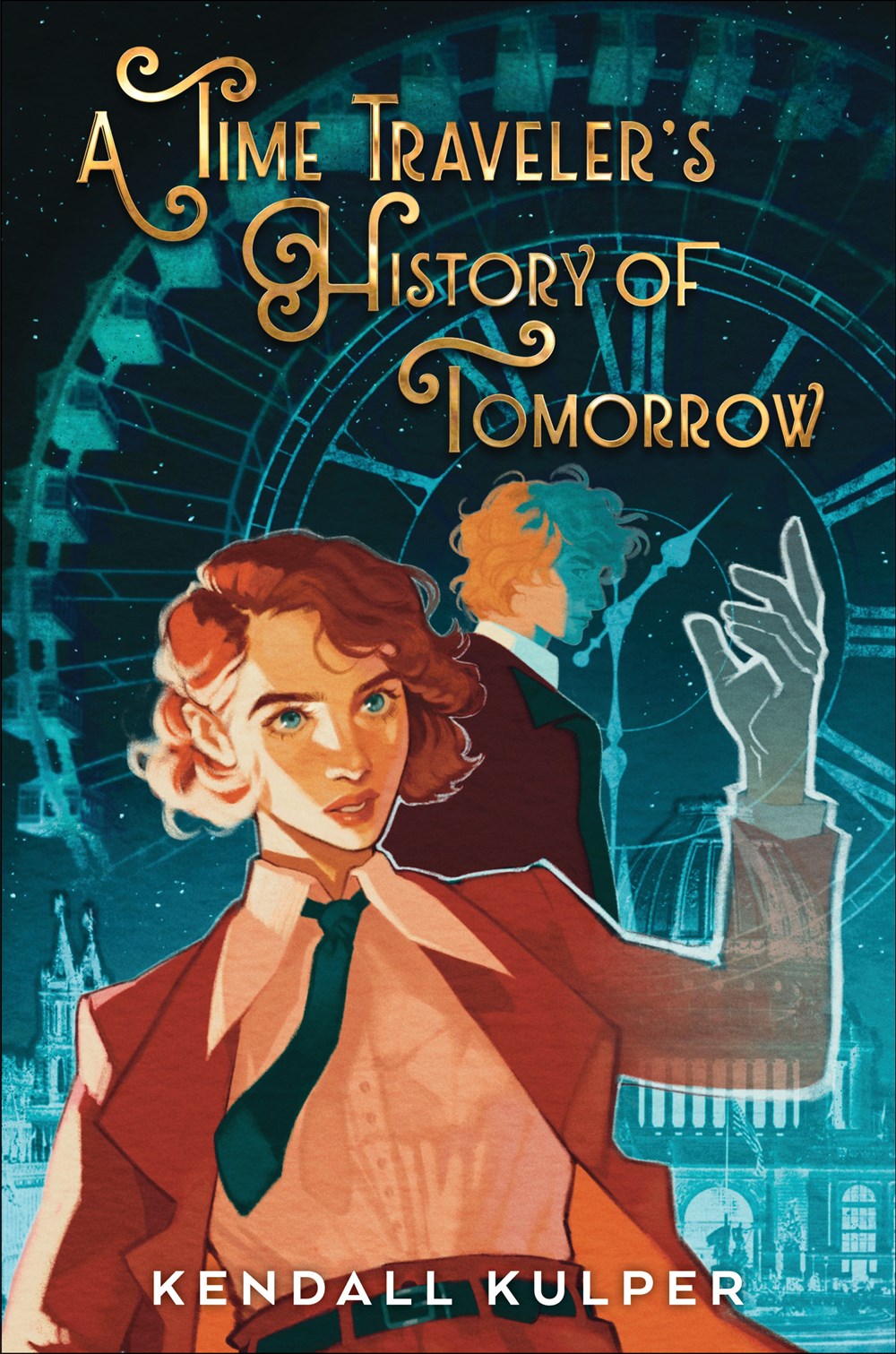
“A Time Traveler’s History of Tomorrow” by Kendall Kulper is a smart, energetic YA time-travel adventure that combines historical fiction, science fantasy, and romance into a story about consequence, courage, and learning to be seen. Set primarily in 1934 Chicago, the story follows two very different teenagers whose collision across time may determine the fate of the world.
Genevieve Newhouse is a fiercely intelligent, modern-thinking young woman desperate to share her scientific discoveries in a world determined to dismiss her because of her gender. Ash Hargreaves, on the other hand, is a carefree, charming time traveler who knows only that something at the Chicago World’s Fair is going to trigger the apocalypse. When events spiral out of control, Ash’s time-jumping ability sends the pair hurtling back to 1893, forcing them into an uneasy partnership to repair the timeline and possibly undo a catastrophe they themselves may have caused.
The dynamic between Genevieve and Ash is one of the story’s greatest strengths. Gen’s meticulous, no-nonsense approach to science contrasts beautifully with Ash’s impulsive, emotionally driven nature. Their banter is lively, their conflicts feel earned, and the slow evolution of their partnership into something deeper is both tender and satisfying. While Genevieve can come across as harsh at times, her guarded personality is clearly shaped by a lifetime of being underestimated, and the novel thoughtfully ties her invisibility powers to those emotional scars. Ash, meanwhile, is endlessly endearing; his character has humor and heart, which helps balance the story’s heavier themes.
Kulper handles time travel with admirable confidence. Though the book includes discussions of paradoxes, cause and effect, and apocalyptic stakes, it never becomes bogged down in technicalities. Much of the time manipulation focuses on small rewinds like conversations undone and moments reconsidered, which keeps the story grounded and character-focused. The science elements did feel a bit dense at times with some info-dumping, but they do serve the story well, especially in highlighting Genevieve’s brilliance and determination.
The historical settings are richly rendered, from the bustle of the 1934 World’s Fair to the earlier Chicago of 1893. Cultish communes, secret labs, libraries, and dire predictions add layers of intrigue, while the plot steadily builds toward a twist that feels both surprising and perfectly earned. Though the pacing occasionally slows, the emotional payoffs and bursts of action more than compensate, especially in the latter half of the book.
Overall, “A Time Traveler’s History of Tomorrow” is a story about responsibility. How even small choices can ripple outward and about learning to trust others when the world has taught you not to. It’s a celebration of brilliant girls in science, imperfect heroes, and the messy, beautiful ways people change one another.