In the tradition of Marion Zimmer Bradley's Mists of Avalon, Ellen Evert Hopman weaves Druid history and spirituality into an engaging love story. This Bardic teaching tale is set in a fictional third-century Ireland when Christianity is sweeping across the Celtic Isles. During this time of crisis, love blooms between Ethne, a Druid healer, and her patient, a Fennid warrior. Their passionate affair suffers a tragic blow when Ethne is called upon to become the high queen.
Told from the Druid perspective, Hopman recreates the daily life, magical practices, politics, and spiritual lives of the ancient Celts during this historic turning point. Druid holy days, rites, rituals, herbal lore, and more are brought to life in this Celtic fantasy--illuminating Druidic teachings and cultural wisdom.
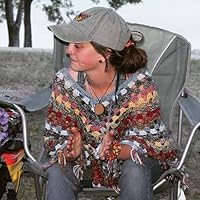
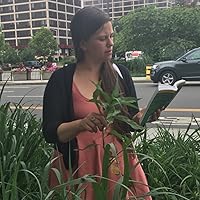
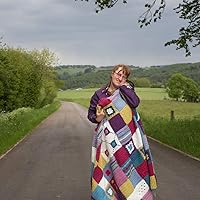
Ellen Evert Hopman is a Master Herbalist and lay Homeopath who holds an M.Ed. in Mental Health Counseling. She is a certified writing instructor through Amherst Writers and Artists. She is Archdruid of Tribe of the Oak www.tribeoftheoak.com, a Druidic teaching Order, and was a former Co-chief of the Whiteoak Druid Order (Ord na Darach Gile) and Vice President of The Henge Of Keltria, an international Druid Fellowship, for nine years. She is the founder of the Whiteoak internet mailing list, an on-line Druid ethics study group, and a co-founder of The Order of the Whiteoak (Ord Na Darach Gile) www.whiteoakdruids.org. She is also a co-founder of the North East Druid Coalition
She is the author of a trilogy of Iron Age Druid novels; Priestess of the Forest: A Druid Journey, The Druid Isle and Priestess of the Fire Temple - a Druid's Tale.
Her books on trees include a revised and expanded new edition of Tree Medicine Tree Magic (Pendraig Publishing) and A Druids Herbal of Sacred Tree Medicine (Destiny books/Inner Traditions Bear and Company)
Her other books include; Secret Medicines from your Garden (Healing Arts Press), Secret Medicines of your Kitchen (mPower Publishing), The Sacred Herbs of Samhain (Destiny Books) The Sacred Herbs of Beltaine (Destiny Books), Scottish Herbs and Fairy Lore (Pendraig Publishing), A Legacy of Druids (Moon Books), A Druid's Herbal For the Sacred Earth Year ( Inner Traditions/Destiny Books ), Being a Pagan (with Lawrence Bond)(Inner Traditions/Destiny Books), Walking The World In Wonder - A Children's Herbal (Healing Arts Press), she is a co-author of Grimoire For The Apprentice Wizard (Newpage Books).
She has released the video/DVDs Gifts From the Healing Earth and Pagans -the Wheel of the Year ( From Sawmill River Productions, http://www.sawmillriver.com/ )
She has released three audio tapes The Druid Path: Herbs And Festivals, Celtic Gods and Goddesses, and The Herbal And Magical Powers Of Trees (from Creative Seminars, POB 203, West Hurley, New York 12491).
She has been a teacher of Herbalism since 1983 and of Druidism since 1990 . Find her books, workshops and blog at www.elleneverthopman.com
An excellent book, detailing the story of a healer thrust into the political games played between the Druids and the Christian priests with the throne of the kingdom as its playing surface. Hopman writes an excellent tale that weaves around the intricacies and beauty of what the life of a Druid may have been like during the initial "invasion" of the Christian beliefs into the islands of Britain. The detail placed into the various ritualized aspects of the cycles of Life is a superb basis upon which the entire tale is painted. Character development is extremely strong, and the pacing of the story is quite good through most of the book. The final two chapters of the book are absolutely staggering in the depth of insight through the characters' eyes. The three chapters previous to those two, however, spoil some of the pacing towards the end - as the story becomes slightly jumbled after the birth of Eithne's son. Otherwise, a fantastic story that I am proud to have in my bookshelves.
One of the best books I have ever read. A powerful main woman character, and the essence of historical details all throughout, Hopman creates a world that is easy to step in and believe. I feel as if I knew they people, and they represented a world view that showed how men and women could live equally respected. I recommend this book for a good read on many levels - herbal lore, romance, history, local color... and it is a great way for men and women to Intention a better world in alignment with nature and each other.
I don't know why I put off reading this book for so long. If you're into Goddess worship at all, or just want to learn of the life of the Druids, grab this jewel of a book. I know i'll return to it again and again.
A book about the a native religion being exterminated by a new religion through force and political manipulation was never going to be relaxing. Not to mention readers interested in this book are rooting for the druidic ways and will be crushed to see Christianity inevitably take over. So it's no surprise that the best parts of the story happened when Ethne was a solitary hedge witch in the woods, while the bits in the fortified villages were painful to read (and the majority of the book).
I believe that the author tried her best to recreate what life might have looked like at the time but also made romanticized embellishments. For example, I couldn't stand how formally every character spoke, like they were all reciting scripted prayers at all times even when conversing with each other.
Honestly, by the end of the book I wasn't rooting for the organized order of druids either. In some ways they seemed just as pushy about what people can and can't do as the Christians. Forcing the druidic priestess to sleep with a man just because it's Beltane? Telling her she's free but then also instructing where she lives and for how long, and who she has to marry? Slaughtering animals as offerings to the gods? All the glamorous jewelry and decorations in the fortress of the elite that are not equal to what the farming folk (who have a much closer relationship with the land) have? Maybe this book is a warning that humans living in large groups will separate themselves into a class system no matter what the religion. I think this book left me deflated not because Christianity took over a native religion, but because I had expected more from the Druids and was disappointed in them. We romanticize the Celts (who actually made human sacrifices) and clans (who never had tartans - those are a modern invention) and see them as a time in history that we wish to return to, but those groups also had their flaws too.
Book Review: Priestess of the Forest: A Druid Journey by Ellen Evert Hopman, 2020. I was asked to review Priestess of the Forest by the author, Ellen Evert Hopman, after having reviewed several of her other books. With my long term love for the time-free stories of the ancients, especially stories of the Celts, I appreciated the opportunity to review this beautiful, exciting, and highly relevant novel. The book’s relevance for today is in our transition into the New Age, the Age that reconnects us to the ancients. As we discover that we can leave behind the age of greed and its destruction of the Earth, we find that we are journeying into a new Earth Centered world, a world of restoration of the health of our planet for future generations. The lives of our Celtic ancestors were time-free in that their experiences of the lives of their ancestors, their deities, and the spirits of the Earth were very much part of their lives. As we go into the New Age we’re again learning this ability to communicate with these spirits. Though this ability was much a part of the lives of the Celts, we need to open ourselves to it with practice, using the altered-states of consciousness of dreaming, hypnosis and ecstatic trance. This transition will bring us back to the way the ancient Celts lived before their suppression due to the invaders of Roman Christianity, thus this return brings us full circle in the cycle of life. The controlling nature of the Roman Church as seen in the story of the Priestess of the Forest was an early force of greed that has led to the destruction of the Earth. This religious institution is now beginning to be held accountable as seen in the revelations of its controlling nature in the stories of child sex-abuse as described in the news as the clergy are being prosecuted in the courts for this abuse. In this story the Druid Priestess, Ethne, with her great love for the Land and all that is of the Land, finds herself placed in a position of having to confront this invading and demanding Roman Clergy. Changes in her life take her away from her loved home deep in the forest where she has lived for a number of years. After her Druid training she was sent to this forest home where she becomes a loved Druid healer to those who come to her in need. After leaving her forest home her new life broadens in the Celtic community of Druids, placing her in the middle of this struggle to protect the people from the church’s demanding suppression of the Druid beliefs, a struggle that becomes a losing battle with the clergy’s success in their conversion of the Celts to Roman Christianity. Ethne eventually comes to realize that the hopelessness of this struggle has wasted her creative energy, and she searches for a new resolution beyond this confrontation with the Roman Church. This painful but beautiful theme is a turning point for Ethne who seeks hope for finding ways to protect and save the Druid beliefs with the realization that in the cyclic nature of life there will be a time when the people will again rediscover the importance of living lives that protect and value the Earth. This hope was brought to her in a vision of Brighid that she saw in the burning embers of the sacred fire. The Roman belief that women are subservient to men and that men have the right to control women even to the point of beating them is another important theme in the story of this Druid Priestess. From the Celtic and Druid perspective Celtic women are highly respected by the men in their sexual relationships and otherwise. This respect is seen in a woman’s ability to become a queen, even a queen who is given the role of leading the country. This fact horrifies the Roman clergy who seek all ways they can to destroy this tradition of sexual equality. To preserve the excitement of this story for future readers I will limit my description of the story, but one character is an Egyptian Coptic missionary whose philosophy is to not demand the end of the pagan beliefs of the people as demanded by the Roman clergy. By being a good listener to their stories of life he can tell the stories of Jesus that they enjoy when given the opportunity. This contrast between the Roman Clergy and this Coptic priest makes clear the evil controlling nature of the Roman Church. Change in the lives of those who are converted to Christianity is seen by some as marginal, depressed and angry, lives that lack enjoyment. This change though is ignored by many because of the stories of riches and gold that came from Rome as told by the Roman clergy, riches that promoted the greed that we experience today that is destroying the Earth. This change is seen in our current situation of the hate filled supporters of Trump, of those who are hanging on to the greed of the old ways in fear as we transition into a hopeful New World of love, peace and mutual support in the diversity of the New Age. This transition is the reverse of what was experienced in the time of the Druid Priestess Ethne when the transition was into the world of suppression and violence. This is now not a time for despair, but a time for civilization to begin to heal. Much of the beauty of this book is Hopman’s description of the Druid rituals and liturgies as the wheel of light turns from Samhain, through Brighid’s day of Imbolc, to Bealtaine and then to Lughnasadh before again celebrating the return of Samhain. Also the frequented Celtic sacred sites such as the hill of stone and the places of the sacred fires bring alive the ways of the Celts and their Druids of the time. Her use of the ancient Irish words and their correct pronunciation added to the life of the book, pronunciation that I practiced while reading them. Such description and the personal life and practices of Ellen Evert Hopman show that the Druid ways can survive after about 1700 years, the hope and prediction of the priestess Ethne. This rekindling of the ways of the ancient people of the Earth provides us with continued and deep hope for the future. The transition into this new age is seen in many other ancient cultures who lived lives of love, peace and creativity, living in oneness with the Earth and the Cosmos, books that are showing our rekindling of the ancient ways. My own love and involvement in the ways of the ancient Nordic peoples that I write about in my books is also slowly transitioning away from a love of strength and violence as seen in the stories of Thor and the other gods of the Aesir to the earlier world of the magical and Earth loving goddesses and gods of the Vanir. In my love for the ancient stories and as a psychologist I see many of the stories as healing stories, e.g. the Nordic stories of Baldr, Loki and his children, and Beowulf of which I have written books. The Celtic story of the Death of Fergus Mac Leide is also a story of healing. Hopman brings alive the healing stories of a number of the ancient Celtic deities, especially Brighid who becomes her savior in the trying times of when the ancient ways were being destroyed by the Roman Church. While reading these ancient stories in the altered states of consciousness of dreams, hypnosis and ecstatic trance, trance that I write about, practice, and teach, the stories take us to a much deeper level of meaning and become our salvation in showing us the way as we move into the New Age. The hope of rekindling the ways of the ancient Celts, ways that were hidden for their salvation and have survived are also seen in other cultures such as the Native Americans who are currently turned to by many with the recognition that they can show us the ways to survive. Though the pain caused by in invasion of the Roman Church that was effective in suppressing the world of the Celts is deeply felt in Hopman’s beautiful writing, the hope for the future is also there and is part of Hopman’s personal life in her teaching of the use of medicinal herbs, in her writing, and her teaching of her Pagan beliefs as a born-again Pagan. Priestess of the Forest is a story of excitement, intrigue, and beauty, along with its profound meaning in our present lives of turmoil as the world changes.
This is probably between a 3 star and 4 star. For those with no interest in pre-Christian Celtic history it probably would not be enough story to hold interest. I found it interesting to read about a time with little recorded history and much of it passed down in Celtic lore. I hesitate to tag a book romance and didn't, but it is a love story between a Druid forest woman who is a healer and the warrior she saves. But more than that, it is the story of a woman willing to give up her love and her solitary life when her world is threatened. In this story the Christian influence is the negative, and I am sure from what I have read about those times many religions were not necessarily being preached by the best of representatives.
As a Druid Priestess, Ethne, is a solid and strong female character, and her lover Ruadh is a strong and noble warrior. In order to attempt to save their world from the outsiders who are tearing it apart, Ethne marries Crimthann who is king and not a bad man. But he is torn between his advisors and what is best for his kingdom. That is a spoiler I suppose but there is much more to the story that I will not reveal here. If this era interests you and the Druid lore is something you find interesting this is a good read..
Ellen Evert Hopman is a practicing Druid, a Reconstructed Druid, as she calls herself. She wrote Priestess of the Forest: A Druid Journey in the manner of a bardic teaching tale, so every so often she can sound a bit pedantic, but . . . oh well! Her exploration of first contact of Celtic pagans with Roman Christians is first rate. (Lucre, bribery, trickery are used by the monks, so fanatical in their efforts to overpower the Druidic worship of the stars, the moon, and the natural world.) She explores Celtic social structure and the power women had before the Roman way forced the Druidic understanding of the world deep into the forests, and stripped women of equality (especially women from the elite class). The spells, incantations, herbal treatments . . . all of that was quite lovely. The love story worked, but it sort of felt like a Harlequin Romance on a few occasions. Still, that did not spoil my overall enjoyment, but did lower my rating by one star!
I loved this book. I wanted to have a life like the main female character. She knew herbal medicine, the cycles of the seasons, the life of the forest. I plan to use this as a reference book for creating my own rituals. There was one part of the story that I feel was not resolved but that did not stop me from loving the story.
It took me ages to find this book again, but now I've finally located it with the help of the 'What's the Name of That Book?' group. I read this a number of years ago after checking it out at the library, at around the same time I was reading the wonderful The Legend of Lady Ilena and was interested in books set in Dark Ages Britain.
I distinctly remembered the terrible-looking cover with the fake leaves and the weird poorly done Photoshop of a woman wearing a hood floating on a stock photo backdrop. I also remembered the condescending interview at the end where the author reveals she wrote this book to proselytize Druidism/Celtic neo-paganism.
The story is essentially just a watered-down The Mists of Avalon (which already ate ass, so anything derivative of it straight up gobbles ass) with a sappy romance, terrible handling of the subject matter with no balance whatsoever ("What possible good could have come from Christianity eradicating the native religion?!" An end to human sacrifice, forced ritualistic sex, and religious incest, that's what. But let's play the "one side is completely good, the other is completely bad" game, as usual. You'd be better off making the argument that the priests and monks just filled the roles the druids once held, but let's ignore that too in favor of a gauche scene depicting the villagers lost and uncertain because they were goaded into driving the druids out.) and a laughable, contrived ending. My son was abducted by monks and will be raised in a monastery! Whatever shall I do? Nothing, apparently. So much for being a strong female character. Your husband or whatever is a warrior, but he can't do shit about it either. I vaguely remember some political excuse for their lack of action, but I also remember it being a dumb excuse that didn't make a whole lot of sense.
So this book was written by a pagan for pagans. Preaching to the choir, fine. But this is still one of the worst books I've ever read. It just sucks.
For anyone wondering about or contemplating becoming a Druid, this work of fiction blends the real with the re-imagined in a teaching work. For me, reading it felt like re-emerging in my own reincarnated past, a feeling of coming home in a way. Am I a Druid? Not in this lifetime. Do I feel Druidic? Yes I do. I recommend this book for fellow Pagans with a feeling of oneness with nature, and for those that feel drawn to pre-Christian Ireland, to the Celtic lands...
This was a bit too sappy romance for my taste, but it still held historical and spiritual interest. It was somewhat reminiscent of Clan of the Cave Bear, in that the rather cliche "powerful woman + sexy man" story is buried in a much richer setting and context...
Fantastic historical fiction if you want to know more about the life of Druids or ancient Ireland. Very rewarding for fans of Mists of Avalon and obviously well-researched.
I love this book. The central characters are fantastic. The story draws you in and the whole tale is enriched with knowledge of herbal healing and druidic traditions and beliefs that can be taken on board for personal and spiritual growth. Anyone with even a remote interest in Celtic Druidic history must read this book.
OH my gods and goddesses! I really loved the world Ellen Evert Hopman created. I felt like I was there first hand. While the relationship between Ethne and Ruadh created a vehicle to move the story along, the details within and surrounding the story motivated me to keep reading.
This was very interesting, but the parts that didn't involve Ethne and Ruadh, I skimmed. I can't put this on my "books I've read" list because I really didn't.
It was a pleasant read. I seemingly learned something about druids, and am even now aware that there are groups still practicing it, which is, of course, why someone gifted me this book.