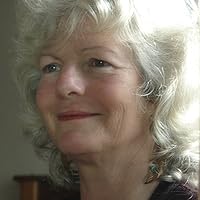
Derek Parker (27 May 1932 – 2 January 2025) was a British writer and broadcaster. He was the author of numerous works on literature, ballet, and opera, and with his wife Julia of several books about astrology.
A well rounded account of the life of popular comic stage actress and mistress of Charles II, Nell Gwyn, a beautiful witty and lovable person. Nel was one of the only mistresses of a British monarch to be popular with the masses. Referred to by John Dryden (in whose plays she acted). In many ways she embodied the character of Restoration England under Charles II. Of all Charles' 13 mistresses she is the best known. This book traces the life of Nell from a possible child prostitute from a poor family who got a job selling oranges at the theatre, to a popular stage actress who captured the fascination of a king. Though her past was one of promiscuity and possibly prostitution (in order to survive as a child) she remained faithful to only King Charles when she was his mistress). On his deathbed Charles uttered to his brother and heir James, "Let not poor Nelly starve" It says something of Nell's character that though she received a stipend from James II to live on, she refused his request to convert from Protestantism to Catholicism. Nell died of a stroke aged 37, but had a achieved a peerage for one of her sons. There are estimated today to be over 300 descendants of Nell Gwyn. A woman of beauty, wit and a heart of gold. The book also tells us something of the society of Restoration England, the theatre of the time as well as of Charles II's other mistresses such as Lady Barbara Castlemaine and Louise de Keroualle.
There is no truer Cinderella-story than Nell Gwynne (several spellings of her last name are used). Her life was a pure rags-to-riches story with a dose of romanticism rising from the slums to the bed of King Charles II. England’s favorite mistress (and mine too!) is portrayed in Derek Parker’s, “Nell Gwyn”.
Sadly, “Nell Gwyn” is immediately spoiled with Parker’s firm conviction that Nell was basically a prostitute (with Parker even briefly mentioning the state of prostitution in England during her time). This is a negative foothold to both Nell the woman and “Nell Gwyn” the book. Parker doesn’t ever truly shake this boxed-in stereotype throughout the text which leaves those unfamiliar with Nell with a very one-dimensional viewpoint.
Also odd (and creepy) is Parker’s tone when concerning Nell (and her female contemporaries) which is almost lecherous and makes the reader suspect that Parker was ‘turned-on’ when writing about these females. To say the least, this is a turn off to the reader.
Despite these immediate complaints, “Nell Gwyn” is well-written in terms of language, pace, and accessibility. The book is easy-to-follow and understandable. However, the big – and I mean BIG – problem is that “Nell Gwyn” is barely about Nell. The text is more of a summary view of the social life of King Charles II: his queen, his mistresses, friends, etc. Parker strays on many tangents which is probably due to the lack of enough information regarding Nell. These topics are interesting; but don’t title a book “Nell Gwyn” if it is hardly about her.
In line with this, “Nell Gwyn” is full of speculative statements and assumptions. Parker apparently knows what and how Nell felt/thought. This compounds the fact that “Nell Gwyn” is hardly a strong look into her life. The reader simply does not come away with any real insight into her psyche or character.
Much of “Nell Gwyn” focuses on Nell’s theater career with snippets/quotes from her plays and a look at her colleagues. This will satisfy those readers seeking a look at Nell’s professional career which was somewhat sidelined during her role as the King’s mistress.
It isn’t until the final quarter of “Nell Gwyn” that Parker begins to open the window a bit more on Nell. Even then, she is still background and not predominately displayed. The amount of her essence which comes through is almost mimicry.
Parker strengthens “Nell Gwyn” in the concluding chapter with a more in-depth look surrounding Nell’s spending and death which flow into a sum-up of the other mistresses. This is not the most unique feature of the book, however. This is instead attributed to the appendices containing such features as Nell’s birth chart, a bill for her bedstead, and poems. These are unique to “Nell Gwyn” as I have not seen these included in other Nell books. “Nell Gwyn” also contains notes (mildly annotated) and a bibliography for those who seek to read further on the subject.
Parker’s “Nell Gwyn” is a fast read and not terribly written; thus not being a poor choice if one seeks a thin volume on the subject. The problem is that Nell is barely highlighted within the text which instead is more of a recital of some well-known facts. Nell’s true self is not revealed and nothing new is learned. “Nell Gwyn” is only suggested for those brand-spanking new to Nell. If you know anything about her or of the mistresses of King Charles II- anything at all- then “Nell Gwyn” will waste your time.
An example of journalistic historical biography, i.e., nothing new but very well written. The life of “pretty, witty Nell” (Samuel Pepys): orange seller, prostitute, actress, and mistress of King Charles II. A lady who would have been well at home in the Queen Vic and parading through the streets of Walford, but a lady who seemed to remain conscious of her origins. Having mothered two of the King's children and accessing some wealth, she could possibly have exercised a little influence at court – while the King lived. But her popularity as a comic actress and a loving relationship that did not threaten the Queen seem to have been enough for Nell's happiness. She died in 1687, only thirty-seven years old, having kept the Merry Monarch's bed warm for twenty years, and giving birth to Lord James Beauclerk – he died at the age of nine – and Charles Beauclerk, Duke of St Albans and Earl of Burford. Not bad going for a working girl from Covent Garden.
Derek Parker's rendition of the life of Nell Gwyn was engaging and obviously well-researched. He was obliged to rely on the work of earlier writers to quite an extent, yet the book had a lively bounce to it.
For me, Nell Gwyn became a real person, full of the colour and splash that were available at her time in history. I learned quite a bit about early theatre, since Nell was an actress, and much about the attitudes of the day, and about Charles II, England's king and Nell's lover. The king kept a number of lovers, of whom Nell was the most popular with his subjects because of her concern with him as a man, rather than as a king through whom she might enjoy political influence.
This book on Nell Gwyn suffers an extreme surfeit of Nell Gwyn. Not surprising, given how little is known of Gwyn even today-- a word of advice, don't be born poor in the 1700s-- but disappointing all the same.
Derek Parker’s account of the life of Nell Gwyn is, like the subject of the book herself, a whole lot of fun. It explores Nell’s career – her rise from humble beginnings, to success and popular acclaim upon the stage, to being mistress to England’s Charles 11 – with a liveliness and wit that Nell herself would surely have appreciated (had she been able to read). Along the way the reader is treated to portraits of the rakes and rogues, the roistering aristocrats, the wits and playwrights who make Restoration England such an entertaining and vivid subject of study.
Nell’s warmth, her genuineness, her native wit honed by a career on stage, make themselves felt throughout the book and contribute to making this bio a fully three dimensional portrait. Through some artful chemistry, Nell has managed to retain her freshness and appeal down through the centuries. It is perhaps this which explains her accessibility to contemporary readers, more so than other historical figures of more substance and weight who seem prisoners of their own era. There is nothing ‘dated’ about Nell.
The supporting cast is no less intriguing, nor scarce less entertaining. The parade of mistresses and lovers who passed through Charless11’s Court and life encompassed a range of character and sensibility that spans the spectrum, suitable material for contemporary playwrights such as Dryden and Aphra Behn. One can readily find fault, or disapprove, of any or all of them but one is hard-pressed to dislike them.
In sum, the book is a fun romp, an entertaining and enjoyable excursion into the ‘Merry Monarch’s’ Court and his tangled, yet always exuberant, love life. Nell remains, now as then, a figure who captures our sympathies, engages our affections, and lends sparkle to the world around her.
Nell Gwyn, the most popular of Charles II's many mistresses, went from orange-seller to mother of dukes in just a few years. This biography is written with clarity and focus, but it is disappointingly short. There's not a lot of detail that can be crammed in under two hundred pages, and I came away from this book without knowing much more about Nell or her time than I did before.
I am very disappointed. I couldn't finish this one. I lost interest after 100 pages. Lots of quotes of plays she was in. I was hoping for a more straight forward biography.