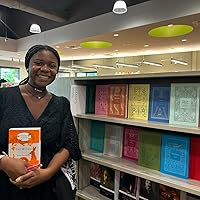
Decolonizing Palestine challenges the weaponization of biblical texts to support the current settler-colonial state of Israel. Raheb argues that some of the most important theological concepts—Israel, the land, election, and chosen people—must be decolonized in a paradigm shift in Christian theological thinking about Palestine. Decolonizing Palestine is a timely book that builds on the latest research in settler-colonialism and human rights to place traditional theological themes within the wider socio-political context of settler colonialism as it is practiced by the modern nation-state of Israel. Written by a native Palestinian Christian theologian who continues to live in the region, Decolonizing Palestine provides an insider's perspective that disrupts hegemonic and imperialist narratives about the region.
I have never read about the situation in Palestine from the perspective of a theologian, a Palestinian christian Pastor no less, and it was extremely insightful. The deconstruction of the many arguments and religious texts weaponized to justify the genocide was masterfully done and interesting to read.
Having recently read a book that clearly explained the roots of the current Middle East crisis (The Balfour Declaration: The Origins of the Arab-Israeli Conflict), I felt it would be helpful, in the interest of self-education beyond news media, to read further on the subject from both the Palestinian and the Israeli perspectives. Decolonizing Palestine: The Land, The People, The Bible by Mitri Raheb is an extraordinarily articulate account of the former. Raheb packs a lot of weighty arguments into a short book, and being born and still living in Bethlehem enables him to provide a valuable insider Palestinian perspective.
Raheb quickly defines “settler colonialism” as follows: “The settler colonialists establish and enforce state sovereignty and juridical control over the indigenous land, ultimately aiming to eliminate the native people. The natives become extraneous while the settlers are cast as natives through different political mechanisms, ideological constructs, and social narratives.” And rather than a completed event in the past, settler colonialism is an ongoing process, more like a constantly turning dial than the flick of a switch.
Raheb also maintains that the Israeli settler colonialism of Palestine is the last example of colonialism in a post-colonial world. But historical examples are not wanting: Australia and the Aborigines, America and native Americans, and South Africa and indigenous Africans. Current Israeli settler colonialism in Palestine is also a profound mismatch with the description of what the Balfour Declaration, crafted by the British, intended it to be, namely, “…the establishment in Palestine of a national home for the Jewish people…it being clearly understood that nothing shall be done which may prejudice the civil and religious rights of existing non-Jewish communities in Palestine…”
There is plenty of theology in Decolonizing Palestine, but it occurs primarily as Raheb seeks to decouple biblical theology as the justification argument for Israeli presence in Palestine. In this context, I encountered a new word, hermeneutics, which means “the theory and methodology of interpretation, especially scriptural text.” Now, while many interpretations can coalesce around a core truth, they can also differ in nuance, emphasis, and repetition, which can be used to persuade large numbers of people to believe one thing or another.
One philosophical argument Raheb makes is that Palestine has withstood occupation by many countries and empires before now. The occupying countries and empires have always left; Palestinians have remained. “Due to its geopolitical position between powers,” says Raheb, “Palestine has often been an occupied land: occupied by the Egyptians, Assyrians, Babylonians, Persians, Greeks, Romans, Byzantines, Arabs, Crusaders, Ottomans, British, and now by the Israelis.”
Raheb emphasizes this point one final time in the Epilogue as a counter to settler colonialism. “If the name of the game for Israelis is settler colonialism, the name of the game for Palestinians is resilience: sumud. For more than seventy years, Palestinians have faithfully shown a tremendous strength to resist, incredible forms of resilience, and creative ways to survive. The Palestinians are not moving, and they will persist in the face of the Israeli settler colonial project.”
[Note: If anyone has book recommendations on the Palestine-Israeli conflict from a contemporary Israeli perspective, please share.]
5/5 stars for this excellent book that’s on, well, what it says in the title, decolonizing Palestine. Raheb, a Palestinian Christian theologian, focuses on how we think about who the people of Palestine are, the history of settler colonialism present in Palestine today, and, in particular, interrogating the relationship between Palestine and our understandings of the theological concept of “election”. Highly recommend!
Growing up as a Christian Zionist it is amazing how many in those churches cannot see the ideas Raheb presents here. I want to tell myself that they don't know the truth of the violence against Palestinians (and other colonized peoples) but currently many do and they still cling to the chosen interpretations of chosen peoples and land. Chosen and colonial are two terms we could stand to eliminate, not those victims involved in these crimes.
Actually can’t believe I’m the first to review this, but what an important read. There are a few aspects I would disagree with but that’s with every book.
Highly recommend to all readers. As a Muslim, it was especially helpful, because it provided an insight on the Bible and how colonial powers have used it to settle in Palestine.
Really concise and clear explanation of how the apartheid state (also known as Israel) has been able to become what it is with its chummy pals in the west.
Really great in the parts where the theology comes out, love the fight between theology and propaganda. I appreciate as a raised American Christian a Palestinian Christian’s perspective
Decolonizing Palestine is one of about a dozen books I'm reading in 2025 on the historical, religious, and geopolitical realities of the region.
This was the first audiobook I came across on this subject written by Palestinian Christian. This author, born in Bethlehem, is a Lutheran pastor with a doctorate in theology.
Compared to everything else I've read so far, this book gave a closer look at the impacts of Christian Zionism and European Colonialism on the region today.
While I don't think this book is useful in isolation, as part of a larger context, it provides a vantage point that I haven't come across in my reading journey thus far.
I read this book for my Bible and Liberation class and I truly liked it. Very easy to understand and informative. I recommend to anyone who wants a better grasp on the genocide happening in Palestine currently.
I finished this book confused as to whether or not Raheb believed the scriptures he referenced throughout, which in turn undermined his central argument. The premise of the book is good and much much needed but at times the book lacked a coherent argument, was repetitive and used overcomplicated language to explain simple concepts. Whose Promised Land by Colin Chapman remains faithful to scripture and does a better job on this topic.
A vital addition to any de-colonial theological exploration. Honored to read and know and learn from Mitri. I’ve learned *so* much from him, but these days I’m paying special attention to his teaching that Christian Zionism is not a fringe belief in extremist Christian communities, but is in fact seeped into the everyday church lives of mainline Christians like myself.
Released shortly before the October 7, 2023 attack by Hamas on Jewish citizens, this book provides a critical Palestinian perspective on the current state of affairs in Israel-Palestine. Mitri Raheb, a Palestinian Christian pastor, compares the current state of affairs between the state of Israel and the Palestinian people to the settler colonialism of Europeans toward the indigenous peoples who were living in North America (Turtle Island) when the Europeans arrived and how they used a theological lens of election and chosen-ness to perpetrate genocide and cultural harms to the people they encountered. Raheb convincingly argues Israel is doing the same thing in its systematic carving up, displacement and now violence against the Palestinian people and do so from a combination of Jewish Zionism and Christian Zionism. For anyone who wants to untangle the competing narratives of what is going on and has gone on in that part of the world for decades, this is a critical book to read. A key point of distinction is between the Israel of the Bible and the state of Israel today; Zionists see them as the same; Raheb shows how they are not. He also shows out the concepts of election and chosen-ness are not to be used to justify the political and human atrocities Israel's army is currently engaging in. As Raheb states, "Violations of human rights in the name of "divine rights" should not be tolerated."
I like the premise of this book and its objective. And I imagine Christian readers might learn a great deal from this book. For me, much of the historical portion was a bit too basic and there wasn't enough of the analysis of the Old and New Testaments in relation to the way Israel has operationalized concepts like chosen people. The parts where Raheb engages in that work is the most interesting and useful for me as a reader.
This is the first full book I've read written by a Palestinian Christian leader.
I'm an American evangelical myself, who grew up in Zionist churches that supported and continue to support the State of Israel. The Church in Palestine first gripped my attention when the Church of St. Porphyrius was bombed. Since then, I've been trying to learn all that I can about the history of Palestine and about my fellow Christians there.
Raheb doesn't mention this in the book, but Palestinian Christians are a very small minority in the Holy Land. They make up around 1-2% of the population, both in the Palestinian and Israeli territories. Their population is decreasing, and aside from being a numerical minority, they face many disadvantages as Palestinians, such as not being able to travel through Israeli territories (like from Gaza to the West Bank), not being able to participate in the Israeli political process, having lands taken from them through military court trials, being discriminated against as terrorists, and having their histories erased through the renaming of Palestinian towns.
One of the biggest insights from this book is that evangelical, mainline, and liberal Zionist theologies are not apolitical. They make VERY political claims. By calling Palestine "Israel," and by calling Israelis "God's chosen people," the land of Palestine becomes a "land without a people" and renders Palestinians as either invisible or as threats/inconveniences to be snuffed out to make room for Israeli settlers. Zionist theology is a political theology. It erases Palestinian indigeneity, belonging, identity, and experience.
Decolonizing Christian theology would be to reconsider exactly how we are reading Scripture with regard to the Palestinian context. Will we allow our theology to justify the State of Israel and its apartheid system in which Palestinians are being ethnically cleansed and forced off of their generational lands? Or will we read the Bible in ways that affirm the humanity and dignity of both Palestinians and Israelis? Will we read the Bible with a passion for truth?
Raheb authored an incredible book, and it is timely, too, being published after Hamas's absolutely deadly attack on Israel on October 7th, 2023, and during Israel's near-genocidal bombardment of Palestinians ever since then.
I like to research both sides. I heavily criticized the last book I read on this called Against Erasure as nothing but crybaby trash. THIS guy actually has something intelligent to say. I am enjoying reading this. With everything I have to do, I hope I can finish this in the next 18 days before I have to return it to the library and then wait to renew it. Wish me luck. It took me 3 weeks but here it is. TLDR: The Palestinians were genuinely wronged, but injustice does not have to dictate the future of subsequent generations. Choosing perpetual conflict over reconciliation has exacted an extraordinary price, while rebuilding, pragmatism, and peace offer a better path forward AND that Palestinians the people choose Hamas, and continue to. I had a difficult time reading these books as I kept thinking, okay, I get it and I agree with you, but what is the path forward? Their path forward? We want all the land back and the Jews gone. That’s never going to happen. So now what? I like to research both sides of an issue. I haven't figured out which books I'm going to read to get the Israeli side of the story (LMK if you know of any decent ones), but I've read several books from the Palestinian perspective, and, frankly, they all make basically the same argument. So rather than write a separate review for each one, I'll review them collectively. Also, I decided not to put facts as some estimates say x others say y and instead just came up with a number. End of TLDR The books: Decolonizing Palestine: The Land, The People, The Bible is my favorite. At least the author has some intelligent things to say and makes arguments worth considering. Maybe he should have shared his editor with the other authors. Against Erasure: A Photographic Memory of Palestine Before the Nakba is, in my opinion, plain old crybaby trash. I'll explain. Loot: How Israel Stole Palestinian Property makes a legitimate point about the loss of Palestinian property. Technically, some of that property was purchased, but that doesn't necessarily make the transaction legitimate. It's a little like when white settlers "purchased" Native American land from people who didn't necessarily have the authority to sell it. Having a receipt doesn't automatically make something right. My beef is appropriation because of a war is legitimate, yet no acknowledgment of it? Colonizing Palestine: The Zionist Left and the Making of the Palestinian Nakba is more of the same. I don't disagree with the historical grievances presented in these books. In fact, I agree with much of what they say. Now, let me be clear. The Palestinians were wronged. They lost their homes, their property, their communities, and, for hundreds of thousands of people, their homeland. They were victims of deception, manipulation, and outright wrongdoing. I have no argument with that. They got a raw deal, and I don't dispute any of that. The Nakba was a genuine historical catastrophe. More than 700,000 Palestinians fled during the 1947–1949 conflict. (BUT they didn’t have to, many choose to stay and have prospered) My objection is not to acknowledging that injustice. It is to the apparent inability of the authors to move beyond it. If you want a decent book, I recommend I Shall Not Hate: A Gaza Doctor's Journey on the Road to Peace and Human Dignity. But then what? I can't help thinking of the playground argument: "The Israelis are terrorists!" "No, YOU are!" "No, YOU are!" Back and forth it goes. That's what much of this reading has felt like to me. An endless accounting of who did what to whom, how unfair it was, and how badly the Palestinians were treated. Well, yes! It was unfair. It was terrible. Now what? Palestinians are entitled to remain aggrieved indefinitely? Well, yes, the injustice was real. But what is the proposed solution? Another generation of fighting? Another generation of children inheriting this crap? History is full of peoples who have suffered extraordinary injustices. The important question is not whether they were wronged. It is what they and their descendants do afterward. The Germans lost WWI and thought the terms imposed on them were unfair. They were right. The blame and punishment imposed on Germany helped create the conditions that led to WWII. Germany did not choose peace. How did that work out for Germany? How did it work out for the rest of the world? The Native Americans lost their land. Was it fair? Absolutely not. Their treatment was disgraceful. Their lands were taken through broken treaties, fraud, coercion, intimidation, and military force. Their suffering was profound, and yet the Native communities rebuilt their lives, preserved their cultures, and pursued a future rather than making perpetual warfare the sole organizing principle of their existence. Their history is not a simple story of accepting an offered peace, but it does demonstrate the possibility of rebuilding after catastrophic loss. They didn't spend the next 200 years trying to win it all back through perpetual warfare. It’s more complicated than that, but the point is that people can survive extraordinary injustice and still move forward. The Jews faced the same thing (almost) exactly like the Palestinians. When Israel was established, roughly a million Jews left or were expelled from countries throughout the Middle East and North Africa. (1 million Jews to 750k Palestinians) They lost homes, businesses, property, and centuries old communities. Many arrived in Israel with little or nothing. They accepted the difficult circumstances, rebuilt their lives, and moved forward. Today, their descendants prosper in a thriving society. And here's a big thing that bothers me about these books. The Palestinians understandably lament the Nakba, but where is the recognition of what happened to the Jews who were driven from their homes throughout the Arab world? Very very similar wouldn’t you say? Why is there ZERO acknowledgment of their suffering? Neither event should diminish the other & each deserves recognition. I am expressly pointing out that the same thing (pretty much) happened to two groups, at the same time, in (about) the same numbers. One group chooses peace and prospers, the other is Palestine. <> The Palestinians have spent roughly 80 years fighting, and where has it gotten them? Israel isn't going anywhere. It wasn't going anywhere 80 years ago, and it isn't going anywhere today. There have been repeated opportunities for a negotiated settlement, and Palestinian leadership has rejected or failed to reach agreement on all of them. Now, Israel certainly bears responsibility for its own actions and policies, specifically settlement expansion, I’m not saying they are some type of innocent. They haven’t exactly been passive. I am saying, that instead of spending the last 80 years building a country, developing an economy, and creating opportunities, Palestinian life has been consumed by resistance and conflict. And the ordinary Palestinian people are the ones paying the price. And what about me? I'm a fourth-generation American of Japanese ancestry. Just a few years before Israel was established, my family and more than 120,000 other people of Japanese ancestry were rounded up and incarcerated in camps during WWII 70,000 of whom were American citizens. People had 48 (some say 72 IDK) hours to dispose of their belongings and report for removal. We had to leave our homes, businesses, and property behind, taking only what we could carry. We lost everything. Homes, businesses, savings, possessions, and dignity. We were American citizens, but that didn't matter. Our ancestry was enough. When the war ended, we were released to start over. We had little or nothing. It was difficult, but possible. We could have spent generations holding a grudge, demanding restitution, and fighting the country that had treated us so unjustly. Instead, we rebuilt our lives. Today, we are healthy, wealthy, and prosperous. It could have been the Palestinians. I don't mean to suggest that our experience was identical to theirs. It wasn't. But I do know something about losing your home, your property, and your sense of security through no fault of your own. I also know that an injustice, no matter how terrible, doesn't have to define every generation that follows. MY BIG BEEF IS; It could have been different for the Palestinians. Can’t it still? They had opportunities. Consider the size of the territory contemplated under the 2020 Trump peace proposal. Depending on how the proposed land swaps are calculated, Gaza together with the proposed Palestinian portion of the West Bank would have amounted to approximately 1,650 to 1,750 square miles. Singapore, by comparison, is approximately 287 square miles. That means the combined territory would have been roughly 5.7 to 6.1 times the size of Singapore. Luxembourg, a country of approximately 998 square miles, is also considerably smaller. In the early 1960s-(NOT 1947): Singapore was a busy port, but many people lived in overcrowded shophouses, slums, or kampongs, villages often consisting of basic wooden houses. Poor sanitation, inadequate housing, and high unemployment were serious problems. It became fully independent on August 9, 1965, 61 years ago vs. 79 (2026-1947). Get my point? Both Singapore and Luxembourg have demonstrated that a relatively tiny country can achieve extraordinary economic success. In 2025, World Bank figures Singapore's #1 and Luxembourg #2 in nominal GDP per capita. TBF the rankings vary depending on whether one uses nominal GDP or purchasing-power-adjusted figures, or whatever but the point is that both countries demonstrate what effective institutions, economic policy, education, trade, and political stability can accomplish. Imagine what the Palestinians could have accomplished with a stable government, peace, investment, education, and a functioning economy. Could Gaza have become another Singapore? Could the West Bank have developed into a prosperous country like Luxembourg? Obviously, nobody can guarantee that. But the potential was there. Gaza could have been a showcase of what a small, well-managed territory could accomplish. Instead, look at what it has become. At some point, the Palestinian People (unlike these books) have to acknowledge the Palestinian leadership they choose and take responsibility for its own choices. Has the strategy of pouring aid into tunnels and continued fighting accomplished anything worthwhile? I say no, it has cost lives, destroyed communities, consumed resources, and condemned generation after generation to a future dominated by conflict. Muslims, including the Palestinian leadership and neighboring Arab states, have lost one war after another. That's what happens when you lose wars. There are consequences. Territory, resources, and population are lost. The Palestinians have continued fighting, and with each successive conflict, their circumstances get worse. How much more must be lost before someone decides this isn't working? In the immortal words of Dr. Phil, "How's that working out for ya?" I'd love to see peace. I'd love to see the Palestinian people have their own thriving country, a decent standard of living, and a future in which their children don't grow up expecting another war. But that future cannot be built on the premise that Israel must somehow disappear. Israel is not going anywhere, and neither are the Palestinians. Both peoples have legitimate connections to the land, and both deserve to live there in security. They deserve that the same as anyone. But Israel is not going anywhere. The Jews accepted a piece of largely barren land and turned much of it into a prosperous country. Jewish refugees who lost their homes and property in Arab countries rebuilt and prospered. So did so many peoples throughout history. Simply put, many other displaced and persecuted peoples have learned: there is a difference between refusing to forget the past and refusing to have a future. The Palestinians have had decades in which they could have been building a future rather than fighting over the past. They have every right to remember the Nakba, but remembering it shouldn't mean sacrificing another 80 years. At some point, you have to stop asking what the world owes you for what happened to your grandparents and start asking what kind of world you want to leave your grandchildren. Focus on peace, state-building, economic development, and the future rather than another generation inheriting bitterness and perpetual conflict. I hope the Palestinians choose peace before another generation pays the price.
I was hoping this one would be something that I could share for people who are in the Christian tradition but have a knee-jerk republican reaction to the mention of Israel. Unfortunately, it was so academic and the vocabulary used so coded to people that already agreed with the premise, that I don’t think it will be helpful for communicating across political lines.
This was a timely and enlightening read for me and has further confirmed and given words to my support for the Palestinian people. I would strongly encourage the reading of this book to my fellow US citizens, particularly Christians, whose gut-reaction is perhaps to support the State of Israel because they are our ‘democratic allies in the middle east’ and failing to support them would be ‘anti-Semitic’. That is a lie that has been sold to us, and this books provides textual evidence as to why.
The book is separated into 4 sections: (1) defining settler colonialism and explaining how the State of Israel is engaging in it, (2) presenting how different facets of Christian Zionism through the past few centuries have culminated to support and provide conditions that led to the colonization of Palestine, (3) providing information about the land and geography of Palestine from Biblical times to the present-day and presenting several theologians’ work at providing a decolonial theology/reading of the Bible, and (4) challenging the current interpretation of ‘election’ and ‘chosen people’ and how we can have a decolonial understanding of those concepts.
As a US citizen and Christian, I am deeply ashamed at the ways in which many of my country’s politicians and those within my faith umbrella have supported the settler colonization, apartheid, and now genocide in Palestine; Raheb describes this as support via ‘hardware’ (weapons, money, military) and ‘software’ (Zionist and colonial theology as justification for political claim and action), and he spends a great deal of time explaining that we must reject any theology that uses the idea of election/chosenness/God’s favor to justify the mass violation of human rights. He also argues that criticism of the State of Israel (a political power) can NOT be equated to criticism of the entire Jewish faith/anti-semitism - this has been a strategy of those in power to (very effectively) silence those who would otherwise speak out against the human rights violations being committed by those in the State of Israel and aided by US support. My support of the Palestinian people is not anti-Semitic, it is anti-empire.
My key personal takeaway from this book is that Christians must remove the metaphorical theological veil from their eyes to see what is plainly before us: a great injustice to an innocent people that is being done in the name of a Zionist/colonial interpretation of the Bible texts. If we can unlearn what we’ve taught enough to recognize that this interpretation of the Old Testament in no way aligns with the connection, compassion, mercy, and radical love that Christians are called to embody through Jesus’s teachings, then perhaps we can be emboldened to speak up for our Palestinian brothers and sisters and shift our views to a mindset of respect and advocacy for the dignity of others.
First of all, let me make two things perfectly clear for anybody reading this review. I am giving the writer 3 stars because some of the laugage is above my head...in theology verbiage. While I think I understand most of what he is saying, and believe that I agree almost totally, I do wish it had been a little easier.
Second, I am hiding the review for those that prefer no spoilers, because this is serving as an opinion piece for me. I won't "force" you to agree, which I know I really can't anyway, but I refuse not to give myself the voice to say what I think.
A lot of the points however were easy enough for me to understand. I have for a long time rejected the image presented of Isreal as a "poor lone tiny nation" that we must at all times and in way defend against "those horrible Palestinians" for two reasons. For one I don't see myself not reacting the same way to the. discrimination the Palestinian have to accept from the colonizing superior in terms of power Isrealis. Isreal doesn't fit any definition that I have for "democracy" with 1/5 of the citizenry of the nation being treated as second or third class citzens...kind of the way we in America treated American Indians and. African Americans. The White race in the United States were colonizers in the area that is now the United States.
In addition to that, Palestinian is the only group of people in the Middle East that has no accept to nukes. We have set ourselves, despite our own interior racism that is actually. getting worse if anything--especially considering this current administration which I consider anti-American in just about every point. Iran. has no access, the only two that do, in the Middle East is Isreal and I thin Eqypt might. Who gave us the right to dictate to everybody else in the Worth who can and can not have nukes.
That is especially alarming considering that we are the only nation that has ever actually used nukes. So not only is Israel practicing colonizing aggression, the United States is using its power in the world to help the Isreali's to engage in that aggression.
So No, I agree with the author of this book. I am not anti-Semitic, opposing a right wing, discriminatary government in its assault on the poor, and obviously discriminated people of Palestinian. is NOT anti-Semitic. It is. anti-discriminatory and pro-human rights, because despite what many people in Isreal. and this country try to tell us, Palestinians are. not only human, but they, and not the European Jews that created the nation of Isreal are. the People of the land.
This entire review has been hidden because of spoilers.
"This book is an urgent call to decolonize Christian theology regarding the Palestinian land and its people, to understand Israel through a new paradigm of settler colonialism, and to contribute to the struggle for liberation, human dignity, and justice."
This book is not a textbook on how to decolonize Christian theology. It is also not a crash course on Palestine. It's what the quote on the front of my edition says: "Thought-provoking."
Rev. Dr. Mitri Raheb introduces/refreshes/reminds you of how settler colonialism came from Christian theology by way of European thinkers and how Zionism is a part of this tradition. This same theology exists today and is used to justify the actions of many states, importantly here the modern State of Israel. He calls for the decolonization of Christian theology so that the liberation of Palestinians and marginalized peoples does not happen regardless of the teachings of the Bible, but is heedful of them.
Raheb is not creating liberation theology, but adding to it. What's novel about this work is its call for Christians--particularly in the West, who are increasingly Christian Zionists, even if they don't recognize it--to grapple not only with the inescapable influence of Christianity on settler colonialism. You can, consequently, apply the learnings here to more than just Palestine. If you are interested in Palestine, though, you're in luck because, as you might've guessed, that's the focus of this work. He addresses the history of settler colonialism in Palestine and Christian influence on it, looks at Christian Zionism as a political project that is founded on a dangerous reading of the Bible, examines the colonial and decolonial interpretation of "The Land", and gives a decolonial interpretation of what divine election looks like today.
None of the chapters go deep into any particular topic, but each is enough to make the point coherently. Think of it as a Wikipedia page, or a Sunday homily.
If you are unfamiliar with the history of Palestine, settler colonialism, the Christian Bible, or theological terms, you might need to (or want to) reference other works while reading, but the explanations he gives should be sufficient enough to follow.
incredibly informative and illuminating. very necessary to view the occupation of palestine by israel through this theological lens, and attempt to construct a decolonial understanding of bibical scripture as it pertains to palestine.
this definitely provided me with more language to describe and contend with the bastardisation of biblical scripture to manufacture consent and rationale for the colonisation of palestine. i also appreciated the connection raheb made with the settler colonisation of other indigenous peoples/lands and the (mis)use of religion as ratio ale there.
will admit, some of the more theological knowledge did go over my head a bit ! but for the most part, i found this quite engaging and clear to grasp. was expecting it to read a little dry, but it didn't come across that way. i suspect that is due to it's length, but also the audiobook format likely helped.
my only minor (!) critique is that sometimes, it felt a little circular and repetitive. it was already a fairly brief read (although quite focused, which i appreciate as a non-theologian) but perhaps it would have benefited from being slimmed down a bit.
An interesting discussion of Christian theology, and the use and abuse of the bible, in the context of Zionist conquest of Palestine. Personally, I found the chapter on the concept of the “chosen people“ longer than was necessary, but I appreciate that it’s relevant in a book like this. To me, it’s the epitome of arguing over how many angels can dance on the head of a pin: it’s an absurd question to begin with.
The one thing that will really stay with me is the author’s description of when he gave lecture to a group of German theology students in Jerusalem in the late 1980s, attended by a well-known German leftist professor of theology. The good professor told the author, “you stand in God‘s way. If I were you, I would pack my bag and emigrate, leaving this country to its rightful owners, the Jews.“ it would be hard to find a pithier statement of the arrogance, the racism, the ignorance, the fanaticism, and the blindness of Christian Zionists. You have to be a special kind of monster to say such a thing to a man who forms part of a group that has been brutalized for decades, at the hands of those out of whose way you’re telling him to get.
I wanted to read this book specifically because I wanted to expose myself to a different understanding of the books of the Bible like Joshua, etc. It did that, but it was also a good read regardless.
In this book, Raheb specifically points out Abraham's relationship to the Canaanites as compared to Joshua's destructive conquest where Abraham knows he is a guest in Canaanite land.
He also quotes Amos 9:7, "Did I not bring Israel up from the land of Egypt, and the Philistines from Caphtor and the Arameans from Kir?" and Isaiah 19:25 where God will say, "Blessed be Egypt my people, and Assyria the work of my hands, and Israel my heritage." These verses show that this misguided idea that God set aside some people for complete destruction is cherrypicking verses for genocide.
More broadly, Raheb points out that European and North American Christian guilt at the treatment of Jews during the holocaust doesn't mean settler colonialism becomes any less despicable.
3.75 stars. Written in English (not his first language)by a Palestinian Christian theologian to explain the Palestinian Christian perspective and to reexamine Jewish biblical claims on the land of Palestine. Much criticism here of how Christianity supports settler colonialism, but it lacks understanding of Jewish theology or even the Jewish Bible. That is to say, there are misinterpretations. Nevertheless, the basic points, that using the Bible as history to deny rights and ghetto-ize Palestinians into an apartheid state is against everything the prophets and Jesus preached. This was a tough read, partly because the prose was awkward and the organization was circular; the author kept reminding the reader of points made over and over. This slim volume needs a good editor to bring the text to under 100 pages and rework the unwieldy parts.
For those looking to educate themselves on settler colonialism in Palestine and the theological arguments regarding the ongoing systemic oppression, this book is a good starting point. The writing is digestible and thought-provoking, providing sufficient details on the history and current events in Palestine. Something I would have liked more of though were the theological arguments that supported Palestine using Scripture in response to the typical use of the Bible in support of settler colonialism that has been imposed by the Israeli state. Especially for a theological book that seeks to decolonize how we understand the circumstances between Palestine and Israel, Scriptural evidence and analysis is particularly crucial.
Mitri Raheb is a Palestinian Christian who critiques the way religious texts have been manipulated to support colonial agendas specifically in the context of Palestine. He the calls for a re-reading of the Bible that emphasizes justice and reconciliation as well as providing a counter theological narrative. "Blessed are the meek, for they shall inherit the earth” is a Bible verse from Matthew 5:5. Zionism is fundamentally not meek, but rather settler colonialism that weaponizes faith and the trauma/guilt of the Holocaust in the effort to de-humanize and ethnically cleanse the native Palestinians. Empires of oppression, brutality, and injustice will come and go.
Decolonizing Palestine: The Land, the People, the Bible by Mitri Raheb This book is excellent. A must read for Christians in the west. Reverend Mitri Raheb is a gifted theological scholar of our time.
My favorite quotes are “What we discover says more about us, and what we are searching for as readers, than the bible itself.”
“Today, Empire is bigger than one state, nation, or military power.”
“It remains very costly to side with the weak and oppressed. And the price can be one's career, reputation, and even life.”
Written with Raheb’s usual clarity, this book is accessible and relevant for today’s American church. The lasting strength for me in is his treatment liberal Christianity’s subtle settler colonialism, including the assumptions embedded in Walter Brueggemann’s work on “land” in the biblical narrative.
Raheb’s suggestions toward decolonial theology of land and decolonial reading of the Bible are multifaceted and offer many entry points for rigorous and liberatory interpretations of scripture.