

What do you think?

Detective Sean Duffy #1
The Cold Cold Ground
Spring 1981. Northern Ireland. Belfast on the verge of outright civil war. The Thatcher government has flooded the area with soldiers, but nightly there are riots, bombings, and sectarian attacks.
In the midst of the chaos, Sean Duffy, a young, witty, Catholic detective in the almost entirely Protestant Royal Ulster Constabulary, is trying to track down a serial killer who is targeting gay men. As a Catholic policeman, Duffy is suspected by both sides and there are layers of complications. For one thing, homosexuality is illegal in Northern Ireland in 1981. Then he discovers that one of the victims was involved in the IRA, but was last seen discussing business with someone from the Protestant UVF (Ulster Volunteer Force).
Fast-paced, evocative, and brutal, this book is a brilliant depiction of Belfast at the height of the Troubles and a cop caught in the cross fire. "From the Trade Paperback edition."
In the midst of the chaos, Sean Duffy, a young, witty, Catholic detective in the almost entirely Protestant Royal Ulster Constabulary, is trying to track down a serial killer who is targeting gay men. As a Catholic policeman, Duffy is suspected by both sides and there are layers of complications. For one thing, homosexuality is illegal in Northern Ireland in 1981. Then he discovers that one of the victims was involved in the IRA, but was last seen discussing business with someone from the Protestant UVF (Ulster Volunteer Force).
Fast-paced, evocative, and brutal, this book is a brilliant depiction of Belfast at the height of the Troubles and a cop caught in the cross fire. "From the Trade Paperback edition."
ebook
First published January 1, 2012
About the author
Adrian McKinty
52 books4,599 followersAdrian McKinty is an Irish novelist. He was born in Belfast, Northern Ireland, and grew up in Victoria Council Estate, Carrickfergus, County Antrim. He read law at the University of Warwick and politics and philosophy at the University of Oxford. He moved to the United States in the early 1990s, living first in Harlem, New York and from 2001 on, in Denver, Colorado, where he taught high school English and began writing fiction. He lives in Melbourne, Australia with his wife and two children.
Ratings & Reviews
Friends & Following
Create a free account to discover what your friends think of this book!
Community Reviews
Displaying 1 - 30 of 1,800 reviews
April 9, 2020
This is a tricky one! The book held my interest throughout. It was fast paced and had lots of action. It was a little over the top from time to time, but that adds to the impact of the story. The background of Ireland during the troubles provided great atmosphere.
But the use of yet another damaged but supposedly brilliant main character did not work for me. Detective Sean Duffy is certainly a smart and charming young man but he had one too many flaws to make me feel enthusiastic about him.
I will try the next book though - maybe Duffy will grow on me.
But the use of yet another damaged but supposedly brilliant main character did not work for me. Detective Sean Duffy is certainly a smart and charming young man but he had one too many flaws to make me feel enthusiastic about him.
I will try the next book though - maybe Duffy will grow on me.

April 29, 2017
The Cold Cold Ground introduces Sean Duffy, a Catholic police sergeant in the Royal Ulster Constabulary. As a Catholic who joined the mostly Protestant police force, Duffy is essentially under suspicion--and threat--from both sides in the long-running "Troubles" pitting Catholics and Protestants against each other in Northern Ireland.
The story is set at the height of the Troubles, in 1981. IRA prisoners are engaged in a hunger strike in protest to recent actions of the hated British government, and each time a "martyr" dies, the riots, bombings and other protests accelerate. The British have flooded Northern Ireland with troops, but that only increases the tension and the violence.
Against that backdrop, Sean Duffy is assigned to investigate the murders of two gay men, each of whom had one of his hands chopped off. It initially appears that a serial killer is targeting gay men. (Gay sex was still illegal in Ireland at the time.) But as Duffy pushes his investigation it becomes clear that something larger and more sinister may be at work, and the young detective will have to buck his superiors and risk his own health and well-being if he's going to find a solution.
Sean Duffy is a very attractive protagonist--smart, witty, and a bit subversive, and this is a first-rate novel. The plot is complex and intelligent, and it moves along at a very brisk pace. Even the minor characters are well-drawn and interesting, but what really sets the book apart is the way in which McKinty sets the scene. His description of Northern Ireland in these turbulent times is outstanding, and the way in which these otherwise ordinary people conduct their lives in the face of the violence and unrest is compelling. I'm late getting to this series, but I'll be catching up very quickly. 4.5 stars for this one.
The story is set at the height of the Troubles, in 1981. IRA prisoners are engaged in a hunger strike in protest to recent actions of the hated British government, and each time a "martyr" dies, the riots, bombings and other protests accelerate. The British have flooded Northern Ireland with troops, but that only increases the tension and the violence.
Against that backdrop, Sean Duffy is assigned to investigate the murders of two gay men, each of whom had one of his hands chopped off. It initially appears that a serial killer is targeting gay men. (Gay sex was still illegal in Ireland at the time.) But as Duffy pushes his investigation it becomes clear that something larger and more sinister may be at work, and the young detective will have to buck his superiors and risk his own health and well-being if he's going to find a solution.
Sean Duffy is a very attractive protagonist--smart, witty, and a bit subversive, and this is a first-rate novel. The plot is complex and intelligent, and it moves along at a very brisk pace. Even the minor characters are well-drawn and interesting, but what really sets the book apart is the way in which McKinty sets the scene. His description of Northern Ireland in these turbulent times is outstanding, and the way in which these otherwise ordinary people conduct their lives in the face of the violence and unrest is compelling. I'm late getting to this series, but I'll be catching up very quickly. 4.5 stars for this one.

July 25, 2015
Adrian McKinty won the 2014 Spinetingler Award for Cold, Cold Ground for best crime novel, and is book one in a series. It’s a gritty heartfelt story set during the uprising and turmoil of Northern Island in the eighties. Sean Duffy, a Catholic detective living among the Protestants, is investigating a bizarre murder while striving to survive during a horrifying time in his country. Duffy’s dry wit lightens the mood of the plot and keeps the story flowing along smoothly. It is noteworthy that the author spent his youth in the neighbourhoods portrayed, and as a result, describes Ireland’s dreadful way of life with meticulous attention to detail regarding the bombings, riots, IRA hunger strikers, and driving through the countless number of check points guarded by British soldiers. It is a great start to a series.

December 28, 2019
EXCERPT: I shone my flashlight and then I saw her.
She was fully clothed, hanging under the limb of an oak tree. She had set up the noose, put her head in it, stepped off a tree stump and then regretted it.
Almost every person who hanged themselves did it wrong.
The noose is supposed to break your neck, not choke you to death.
Lucy had tried desperately to claw through the rope, had even managed to get a finger between the rope and her throat. It hadn't done any good.
She was blue. Her left eye was bulging out of its socket, her right eyeball had popped onto her cheek.
Apart from that and the lifeless way the breeze played with her brown hair she did not look dead. The birds hadn't found her yet.
ABOUT THIS BOOK: Two dead.
One left in a car at the side of a road. He was meant to be found quickly. His killer is making a statement.
The other is discovered hanged, deep in a forest. She is surely a suicide.
Detective Sergeant Duffy is the man tasked with trying to get to the bottom of it all. It's no easy job - especially when it turns out that one of the victims was involved in the IRA, but last seen discussing business with someone from the UVF. Add to that the fact that as a Catholic policemen, it doesn't matter which side he's on, because nobody trusts him - and Sergeant Duffy really is in a no-win situation.
MY THOUGHTS: I discovered Sean Duffy late in this series, but loved him so much that I have gone back to read this series from the beginning.
McKinty's writing is, though often brutal, like liquid honey. It flows easily, even as Duffy makes huge leaps of deduction, often unfounded and misguided. But he is no bumbling fool, merely a man who feels too much, who longs to make a difference, who wants to help stop the madness of the Irish troubles.
Set in the reign of Margaret Thatcher, with the marriage of Prince Charles to Diana Spencer looming, resources are stretched thin. Riots are an every day occurrence, political prisoners are on hunger strikes, and innocent civilians are being killed in the random bombings.
And yet amongst all this carnage and hatred, McKinty manages to convey that there are still good people, people not interested in either side winning, people invested in finding an equitable peace. He even manages to insert a little Irish folk lore - 'My grandmother told me that the forest was an opening to someplace else. Where things lurked, things we could only half see. Older beings. Shees. Shades of creatures that once walked the natural world, redundant now, awaiting tasks, awaiting their work in dreams.'
McKinty is one of the most talented writers I have ever read for setting atmosphere. As I read, I can hear every inflection, every nuance in the voices, I can smell the odour of death, of putrefaction, I can taste the food, even the whisky - 'It was the good stuff and it tasted of salt, sea, rain, wind and the Old Testament.' He brings his work alive.
😍😲😍😲.5
My favourite quote from The Cold, Cold Ground: 'William Burroughs said that a paranoid is somebody who knows what is actually going on.'
THE AUTHOR: Adrian McKinty is an Irish novelist. He was born in Belfast, Northern Ireland, and grew up in Victoria Council Estate, Carrickfergus, County Antrim. He read law at the University of Warwick and politics and philosophy at the University of Oxford. He moved to the United States in the early 1990s, living first in Harlem, New York and from 2001 on, in Denver, Colorado, where he taught high school English and began writing fiction. He lives in Melbourne, Australia with his wife and two children.
DISCLOSURE: I borrowed my copy of The Cold, Cold Ground by Adrian McKinty, published by Serpent's Tail, from Waitomo District Library. All opinions expressed in this review are entirely my own personal opinions.
For an explanation of my rating system please refer to my Goodreads.com profile page or the about page on sandysbookaday.wordpress.com
This review and others are also published on my webpage https://sandysbookaday.wordpress.com/...
She was fully clothed, hanging under the limb of an oak tree. She had set up the noose, put her head in it, stepped off a tree stump and then regretted it.
Almost every person who hanged themselves did it wrong.
The noose is supposed to break your neck, not choke you to death.
Lucy had tried desperately to claw through the rope, had even managed to get a finger between the rope and her throat. It hadn't done any good.
She was blue. Her left eye was bulging out of its socket, her right eyeball had popped onto her cheek.
Apart from that and the lifeless way the breeze played with her brown hair she did not look dead. The birds hadn't found her yet.
ABOUT THIS BOOK: Two dead.
One left in a car at the side of a road. He was meant to be found quickly. His killer is making a statement.
The other is discovered hanged, deep in a forest. She is surely a suicide.
Detective Sergeant Duffy is the man tasked with trying to get to the bottom of it all. It's no easy job - especially when it turns out that one of the victims was involved in the IRA, but last seen discussing business with someone from the UVF. Add to that the fact that as a Catholic policemen, it doesn't matter which side he's on, because nobody trusts him - and Sergeant Duffy really is in a no-win situation.
MY THOUGHTS: I discovered Sean Duffy late in this series, but loved him so much that I have gone back to read this series from the beginning.
McKinty's writing is, though often brutal, like liquid honey. It flows easily, even as Duffy makes huge leaps of deduction, often unfounded and misguided. But he is no bumbling fool, merely a man who feels too much, who longs to make a difference, who wants to help stop the madness of the Irish troubles.
Set in the reign of Margaret Thatcher, with the marriage of Prince Charles to Diana Spencer looming, resources are stretched thin. Riots are an every day occurrence, political prisoners are on hunger strikes, and innocent civilians are being killed in the random bombings.
And yet amongst all this carnage and hatred, McKinty manages to convey that there are still good people, people not interested in either side winning, people invested in finding an equitable peace. He even manages to insert a little Irish folk lore - 'My grandmother told me that the forest was an opening to someplace else. Where things lurked, things we could only half see. Older beings. Shees. Shades of creatures that once walked the natural world, redundant now, awaiting tasks, awaiting their work in dreams.'
McKinty is one of the most talented writers I have ever read for setting atmosphere. As I read, I can hear every inflection, every nuance in the voices, I can smell the odour of death, of putrefaction, I can taste the food, even the whisky - 'It was the good stuff and it tasted of salt, sea, rain, wind and the Old Testament.' He brings his work alive.
😍😲😍😲.5
My favourite quote from The Cold, Cold Ground: 'William Burroughs said that a paranoid is somebody who knows what is actually going on.'
THE AUTHOR: Adrian McKinty is an Irish novelist. He was born in Belfast, Northern Ireland, and grew up in Victoria Council Estate, Carrickfergus, County Antrim. He read law at the University of Warwick and politics and philosophy at the University of Oxford. He moved to the United States in the early 1990s, living first in Harlem, New York and from 2001 on, in Denver, Colorado, where he taught high school English and began writing fiction. He lives in Melbourne, Australia with his wife and two children.
DISCLOSURE: I borrowed my copy of The Cold, Cold Ground by Adrian McKinty, published by Serpent's Tail, from Waitomo District Library. All opinions expressed in this review are entirely my own personal opinions.
For an explanation of my rating system please refer to my Goodreads.com profile page or the about page on sandysbookaday.wordpress.com
This review and others are also published on my webpage https://sandysbookaday.wordpress.com/...

October 2, 2019
There’s nothing better than a mystery that not only has a good tale to tell, but immerses you in a different time and/or place. Here, McKinty takes us to Northern Ireland during 1981, the height of the Troubles. While most of the Constabulary are trying to keep the peace, Sean Duffy is investigating a series of murders. It quickly becomes apparent that these are not the typical retribution murders, but the work of a homophobic serial killer with a penchant for opera.
Sean Duffy is a great main character. One of the few RC in the mostly Protestant police force, he is trying to find his way through the issues of the day. He’s also trying to figure out a murder case with little in the way of hard evidence. He goes off half cocked a lot and you just feel his frustration.
There’s a subtle sense of humor that keeps things from getting too dark.
McKinty truly shines when it comes to setting time and place, not just the Troubles with the hunger strikes and bombings, but the music, the clothing, the upcoming Wedding of Diana and Charles. It just all felt so real.
Kudos to Gerard Doyle. He has the perfect Irish accent to deliver the right atmosphere while being understandable to the American ear.
I’m thrilled that this is book one of a series and I have many more books to look forward to by this author.

February 9, 2023
Set in Carrickfergus, a small suburb of Belfast, in 1981—in the midst of The Troubles. Sean is one of very few Catholics in a very Protestant region of the city.
Dr. Cathcart is super cool. You gotta love your pathologist.
The first person past tense POV does work; it just takes a bit of getting used to Sean.
The trying times as a backdrop is an excellent and compelling narrative decision. Good action and tension; constant danger everywhere in Belfast.
I learned early on that I really need to incorporate the word “eejit” into my daily lexicon.
Matty’s comic relief is another strong feature.
“You were shot down, mate! Shot down like the Red Baron.”
“The Red Baron shot other people down.”
“Not in the end, Sean. Not in the end.”
Tommy’s true occupation, the demise of Lucy, Shane and Billy White, involvement from MI5, taunts from the killer—clues or misdirections?
The author does well in bringing Sean to life. His fixation on music is actually quite interesting. Sean’s encounter with the prostitute, and the ensuing reveal of his heteroflexibility is a surprising and introspective highlight.
The pacing and flow could be tightened. But the likable Sean and the intricate plot are enough to mostly overcome this.
The conclusion is fantastic; the last 10% is action gold. Great reveals and additional mysteries. The loose ends are clearly left to be explained in further installments, as is the intriguing career development at the finish line.
“I just wanted to be part of that thin blue line holding back the chaos.”
Dr. Cathcart is super cool. You gotta love your pathologist.
The first person past tense POV does work; it just takes a bit of getting used to Sean.
The trying times as a backdrop is an excellent and compelling narrative decision. Good action and tension; constant danger everywhere in Belfast.
I learned early on that I really need to incorporate the word “eejit” into my daily lexicon.
Matty’s comic relief is another strong feature.
“You were shot down, mate! Shot down like the Red Baron.”
“The Red Baron shot other people down.”
“Not in the end, Sean. Not in the end.”
Tommy’s true occupation, the demise of Lucy, Shane and Billy White, involvement from MI5, taunts from the killer—clues or misdirections?
The author does well in bringing Sean to life. His fixation on music is actually quite interesting. Sean’s encounter with the prostitute, and the ensuing reveal of his heteroflexibility is a surprising and introspective highlight.
The pacing and flow could be tightened. But the likable Sean and the intricate plot are enough to mostly overcome this.
The conclusion is fantastic; the last 10% is action gold. Great reveals and additional mysteries. The loose ends are clearly left to be explained in further installments, as is the intriguing career development at the finish line.
“I just wanted to be part of that thin blue line holding back the chaos.”

September 5, 2014
I enjoyed reading this book and give it a solid 4 stars. Sean Duffy is a Catholic police detective in the Northern Ireland RUC(Royal Ulster Constabulary). The RUC is a mostly Protestant force and the IRA has been known to target Catholic RUC officers. Some of his fellow officers are wary of him because he is a Catholic.
It is against this background that Sean is called to the scene of a grisly murder. The victim has been shot dead and 1 hand has been cut off. The investigation reveals that the victim worked for the IRA and was a homosexual. Homosexual acts are illegal in 1981 Northern Ireland. In addition, the hand does not belong to the victim. Sean believes that he is looking for a serial killer.
The plot moves along very well. The characters are well written and the author gives the reader an authentic look at life in the troubles.
One line that I liked,p.193: "Crabbe got the Ulster fry...pancakes, potato bread, soda bread, sausages, bacon, egg, black pudding, white pudding--all of it fried in lard. A heart attack special."
Sean makes some enemies, but doesn't give up, linking the case to another death. A very neat ending. I read this in 4 days.
It is against this background that Sean is called to the scene of a grisly murder. The victim has been shot dead and 1 hand has been cut off. The investigation reveals that the victim worked for the IRA and was a homosexual. Homosexual acts are illegal in 1981 Northern Ireland. In addition, the hand does not belong to the victim. Sean believes that he is looking for a serial killer.
The plot moves along very well. The characters are well written and the author gives the reader an authentic look at life in the troubles.
One line that I liked,p.193: "Crabbe got the Ulster fry...pancakes, potato bread, soda bread, sausages, bacon, egg, black pudding, white pudding--all of it fried in lard. A heart attack special."
Sean makes some enemies, but doesn't give up, linking the case to another death. A very neat ending. I read this in 4 days.

July 30, 2023
La novela es fantástica.
El autor nos traslada al Ulster de 1981 en medio del conflicto de las huelgas de hambre de los prisioneros del IRA del bloque H.
La ambientación es fantástica y los personajes son reales. Puedes sentir la violencia de esos días.
El autor conduce la trama a través de los acontecimientos históricos que ocurrieron y a quien le interese el conflicto irlandés le va a resultar una gran lectura. Salen personajes muy famosos del Sinn Féin y del Partido Unionista del Ulster. El IRA, los paramilitares unionistas, las facciones, ... todo está aquí.
La novela iba para 5 estrellas seguras hasta la mitad que es cuando la trama está forzada y no lleva a nada. La parte final y la resolución de la novela te dejan un poco frío ya que todo el trasfondo histórico es buenísimo y, claro, esperas que el clímax sea igual de bueno.
El sargento Sean Duffy es un personaje fantástico. Un policía católico, universitario y brillante, amante de la buena música y que lee a Joyce, a Heller, que sabe latín y griego antiguo y que vive en un barrio protestante en Belfast, en 1981. Encima, tiene que investigar una serie de asesinatos de homosexuales cuando la homosexualidad era delito en Irlanda del Norte, en una sociedad extremadamente conservadora. La premisa es encantadora.
-----------------------------
The novel is fantastic.
The author takes us to Ulster in 1981 in the midst of the hunger strike conflict of the H-Block IRA prisoners.
The setting is fantastic and the characters are real. You can feel the violence of those days.
The author drives the plot through the historical events that took place and anyone interested in the Irish conflict will find it a great read. It features some very famous Sinn Féin and Ulster Unionist Party figures. The IRA, the Unionist paramilitaries, the factions, ... it's all here.
The novel was going for a safe 5 stars until halfway through when the plot is forced and leads to nothing. The final part and the resolution of the novel leaves you a bit cold as all the historical background is very good and, of course, you expect the climax to be just as good.
Sergeant Sean Duffy is a fantastic character. A brilliant, Catholic, university-educated, music-loving, Joyce-reading, Heller-reading, Latin and ancient Greek-knowing cop living in a Protestant neighbourhood in Belfast in 1981. On top of that, he has to investigate a series of gay murders when homosexuality was a crime in Northern Ireland, in an extremely conservative society. The premise is charming.
El autor nos traslada al Ulster de 1981 en medio del conflicto de las huelgas de hambre de los prisioneros del IRA del bloque H.
La ambientación es fantástica y los personajes son reales. Puedes sentir la violencia de esos días.
El autor conduce la trama a través de los acontecimientos históricos que ocurrieron y a quien le interese el conflicto irlandés le va a resultar una gran lectura. Salen personajes muy famosos del Sinn Féin y del Partido Unionista del Ulster. El IRA, los paramilitares unionistas, las facciones, ... todo está aquí.
La novela iba para 5 estrellas seguras hasta la mitad que es cuando la trama está forzada y no lleva a nada. La parte final y la resolución de la novela te dejan un poco frío ya que todo el trasfondo histórico es buenísimo y, claro, esperas que el clímax sea igual de bueno.
El sargento Sean Duffy es un personaje fantástico. Un policía católico, universitario y brillante, amante de la buena música y que lee a Joyce, a Heller, que sabe latín y griego antiguo y que vive en un barrio protestante en Belfast, en 1981. Encima, tiene que investigar una serie de asesinatos de homosexuales cuando la homosexualidad era delito en Irlanda del Norte, en una sociedad extremadamente conservadora. La premisa es encantadora.
-----------------------------
The novel is fantastic.
The author takes us to Ulster in 1981 in the midst of the hunger strike conflict of the H-Block IRA prisoners.
The setting is fantastic and the characters are real. You can feel the violence of those days.
The author drives the plot through the historical events that took place and anyone interested in the Irish conflict will find it a great read. It features some very famous Sinn Féin and Ulster Unionist Party figures. The IRA, the Unionist paramilitaries, the factions, ... it's all here.
The novel was going for a safe 5 stars until halfway through when the plot is forced and leads to nothing. The final part and the resolution of the novel leaves you a bit cold as all the historical background is very good and, of course, you expect the climax to be just as good.
Sergeant Sean Duffy is a fantastic character. A brilliant, Catholic, university-educated, music-loving, Joyce-reading, Heller-reading, Latin and ancient Greek-knowing cop living in a Protestant neighbourhood in Belfast in 1981. On top of that, he has to investigate a series of gay murders when homosexuality was a crime in Northern Ireland, in an extremely conservative society. The premise is charming.
August 27, 2018
Έτσι γράφονται αστυνομικά με πολιτικό μπακραουντ χωρίς να πουλάς βιβλία για την κρίση καμουφλαρισμένα σε ντεμέκ αστυνομικά (Έτσι κύριε Μάρκαρη ; Έτσι κυρία Γιαννάκη ;)
Έτσι εντάσσεις ροκ τραγούδια στην πλοκή χωρίς να γίνεσαι φτηνό τζουκμποξ (Έτσι κυρία Τριανταφύλλου ; Έτσι κυρία Παπαδημητρίου ;)
Μικροενστάσεις μόνο στην κορύφωση του μυθιστορήματος (που έγινε σχεδόν ....spy novel) και στο γεγονός ότι ο κεντρικός χαρακτήρας μάλλον παραείναι ιντελεκτουέλ για Ιρλανδός μπάτσος στη Β. Ιρλανδία το 1981 (αν και εξηγείται επαρκώς γιατί μπήκε στην Αστυνομία και ότι εκεί στο σχολείο μάθαιναν και Αρχαία Ελληνικά και Λατινικά, όχι σαν τα βλαμμένα τα δικά μας)
Εικόνες όμως δυνατές μέσα από τις λάσπες της Β. Ιρλανδίας, σκηνικό ενός ακήρυχτου πολέμου, τρισδιάστατοι χαρακτήρες, και ένας κεντρικός χαρακτήρας που τσαλαβουτάει λίγο στο γκρίζο.
Δεν το είχα τελειώσει και ήθελα να διαβάσω τα υπόλοιπα βιβλία της σειράς... (Προς εκδόσεις ΟΞΥ : βγάλτε και τα επόμενα βιβλία)
Και όπως είπε και ένας άλλος user , πολύ θα ήθελα να πήγαινα για μια Guiness με τον Αστυνόμο Ντάφι.
Έτσι εντάσσεις ροκ τραγούδια στην πλοκή χωρίς να γίνεσαι φτηνό τζουκμποξ (Έτσι κυρία Τριανταφύλλου ; Έτσι κυρία Παπαδημητρίου ;)
Μικροενστάσεις μόνο στην κορύφωση του μυθιστορήματος (που έγινε σχεδόν ....spy novel) και στο γεγονός ότι ο κεντρικός χαρακτήρας μάλλον παραείναι ιντελεκτουέλ για Ιρλανδός μπάτσος στη Β. Ιρλανδία το 1981 (αν και εξηγείται επαρκώς γιατί μπήκε στην Αστυνομία και ότι εκεί στο σχολείο μάθαιναν και Αρχαία Ελληνικά και Λατινικά, όχι σαν τα βλαμμένα τα δικά μας)
Εικόνες όμως δυνατές μέσα από τις λάσπες της Β. Ιρλανδίας, σκηνικό ενός ακήρυχτου πολέμου, τρισδιάστατοι χαρακτήρες, και ένας κεντρικός χαρακτήρας που τσαλαβουτάει λίγο στο γκρίζο.
Δεν το είχα τελειώσει και ήθελα να διαβάσω τα υπόλοιπα βιβλία της σειράς... (Προς εκδόσεις ΟΞΥ : βγάλτε και τα επόμενα βιβλία)
Και όπως είπε και ένας άλλος user , πολύ θα ήθελα να πήγαινα για μια Guiness με τον Αστυνόμο Ντάφι.

July 20, 2020
I absolutely loved this great crime thriller. Duffy possesses all the traits that I require in a detective: he's whip-smart and intuitive, with great taste in music. McKinty's terrific snarky dialogue frequently made me laugh aloud. The last thing I needed at this time in my life was to start a new series, but you'd better believe I'm gonna read this one to the finish.

August 30, 2024
4★
“Little kids walking past the police station showing each other the best technique for lobbing Molotov cocktails over the fence. Jesus, what a nightmare. This was a city crucified under its own blitz. This was a city poisoning its own wells, salting its own fields, digging its own grave.”
Belfast, 1981, The Troubles. Detective Sean Duffy is a rare bird, a Catholic police officer in Protestant Northern Ireland. A body has been found in a field with his hand cut off. It’s soon obvious the severed hand isn’t his, so whose is it? A second body is found, shot dead just inside his front door. A local music teacher, and with him is the hand from the first body.
The first man was Tommy Little, known to be a driver for IRA notables Gerry Adams and Sinn Fein. He hasn’t had much of a police record and has no family, so when the second man is identified as gay, it begins to look like a hate crime against gays. As if there isn’t enough going on in Belfast already.
There are scribbled notes and odd clues that seem to be musical and literary references, as if someone is showing off. I imagine this might not have been noticed by the average peeler, the name for Irish cops which comes from Sir Robert Peel, who founded the service.
But Duffy is hardly average, and not just because he’s a Catholic amongst the Proddies, but because of how he came to join the police. He was a graduate student, two years into his PhD, when he was walking past his local pub. When a bomb went off, he’d have been blown to smithereens like everyone inside.
“ It was a no-warning bomb. The UVF (the Ulster Volunteer Force, an illegal Protestant paramilitary group) claimed responsibility. Later the UDA (the Ulster Defence Association, another Protestant paramilitary group) said they did it. Still later the UVF said it had been an IRA bomb that had exploded prematurely.
I didn’t care about any of that.
The alphabet soup didn’t interest me.
I wasn’t badly hurt. A burst eardrum, abrasions, cuts from fragmenting glass.
Nah, I was ok, but inside the bar was carnage.
A slaughterhouse.
I was the first person through the wreck of the front door.
And that was the moment —
That was the moment when I knew that I wanted to be some small part of ending this madness. It was either get out or do something. I chose the latter.
The police were keen to have me. A university graduate, a psychologist, and that most precious thing of all ... a Catholic.”
The killer has sent Duffy a postcard and included some philosophical thoughts about how he and Duffy may be alike and adds some Greek, a classical reference. Show-off, thinks Duffy.
He gets in his BMW and takes off for the station, and as he drives past where kids are building a big bonfire, he suddenly remembers he forgot to check under his car. He hits the brakes.
“ The kids all turned to look at me. Sleekit wee shites with skinheads, hardman T-shirts and DM boots. ‘Hey, check out yon Beemer!’ one of them called out and they all began walking over to the car. One wee lad was carrying a tin of red paint for painting the curbstones around the bonfire red, white and blue, his dripping brush making a trail on the cement behind him.
There was no way I was getting out and doing a full inspection on the vehicle in front of them.
I put my foot on the accelerator and drove on.
It was stupid, very stupid.
. . .
I’d seen pics of IRA car bombs that had thrown the vehicle two hundred feet and transformed the occupants inside into offal.
I kept on going.
Dolly Parton came on the radio, singing an old bluegrass song.
My knuckles were white. The downslope was coming up.
The reason the IRA used mercury tilt switches is that they only work when the mercury establishes contact on an incline or decline. While the mercury remains level the bomb is safe, thus it could sit under a car for days or even weeks. As soon as it was driven, however, eventually you’d encounter a hill . . .”
Told in the first person, we get a close look at how Duffy feels. None of the peelers want to go into Belfast – it is a war zone. Rival groups on the same side vie for position so that nobody really knows who is responsible for which bomb.
When they aren’t fighting the enemy (the other side), they’re fighting amongst themselves or negotiating drug and contraband cigarette and liquor deals. Even sworn enemies may negotiate these deals with each other. Madness.
As various theories are put forward and discounted, it becomes even harder to tell the good guys from the bad guys. I don’t mean for the reader – I mean for the police. You would never know if you could trust anyone.
The author’s afterword explains that this was his childhood. He was born in 1968 in the town where this is set.
“I remember 1981 extremely well. I remember the bomb attacks in Belfast and trouble in the Estate. I remember getting a lift to school from a neighbor who was a captain in the British Army: he had to check under his car every morning for mercury tilt switch bombs and sometimes when it was raining or cold he would skip the check and my little brother and I would be in the back seat waiting for the first hill when the bomb might go off. “
He's lived in various places, including ten years in Australia (so we claim him as Aussie, of course), and now lives in New York, last I saw.
https://adrianmckinty.blogspot.com/
There’s a good article about his many awards but going broke in The Guardian, 6 July, 2019.
Adrian McKinty interview - crime novelist
Great background on The Troubles at The Irish Story website:
Northern Ireland conflict 1968-1998
“Little kids walking past the police station showing each other the best technique for lobbing Molotov cocktails over the fence. Jesus, what a nightmare. This was a city crucified under its own blitz. This was a city poisoning its own wells, salting its own fields, digging its own grave.”
Belfast, 1981, The Troubles. Detective Sean Duffy is a rare bird, a Catholic police officer in Protestant Northern Ireland. A body has been found in a field with his hand cut off. It’s soon obvious the severed hand isn’t his, so whose is it? A second body is found, shot dead just inside his front door. A local music teacher, and with him is the hand from the first body.
The first man was Tommy Little, known to be a driver for IRA notables Gerry Adams and Sinn Fein. He hasn’t had much of a police record and has no family, so when the second man is identified as gay, it begins to look like a hate crime against gays. As if there isn’t enough going on in Belfast already.
There are scribbled notes and odd clues that seem to be musical and literary references, as if someone is showing off. I imagine this might not have been noticed by the average peeler, the name for Irish cops which comes from Sir Robert Peel, who founded the service.
But Duffy is hardly average, and not just because he’s a Catholic amongst the Proddies, but because of how he came to join the police. He was a graduate student, two years into his PhD, when he was walking past his local pub. When a bomb went off, he’d have been blown to smithereens like everyone inside.
“ It was a no-warning bomb. The UVF (the Ulster Volunteer Force, an illegal Protestant paramilitary group) claimed responsibility. Later the UDA (the Ulster Defence Association, another Protestant paramilitary group) said they did it. Still later the UVF said it had been an IRA bomb that had exploded prematurely.
I didn’t care about any of that.
The alphabet soup didn’t interest me.
I wasn’t badly hurt. A burst eardrum, abrasions, cuts from fragmenting glass.
Nah, I was ok, but inside the bar was carnage.
A slaughterhouse.
I was the first person through the wreck of the front door.
And that was the moment —
That was the moment when I knew that I wanted to be some small part of ending this madness. It was either get out or do something. I chose the latter.
The police were keen to have me. A university graduate, a psychologist, and that most precious thing of all ... a Catholic.”
The killer has sent Duffy a postcard and included some philosophical thoughts about how he and Duffy may be alike and adds some Greek, a classical reference. Show-off, thinks Duffy.
He gets in his BMW and takes off for the station, and as he drives past where kids are building a big bonfire, he suddenly remembers he forgot to check under his car. He hits the brakes.
“ The kids all turned to look at me. Sleekit wee shites with skinheads, hardman T-shirts and DM boots. ‘Hey, check out yon Beemer!’ one of them called out and they all began walking over to the car. One wee lad was carrying a tin of red paint for painting the curbstones around the bonfire red, white and blue, his dripping brush making a trail on the cement behind him.
There was no way I was getting out and doing a full inspection on the vehicle in front of them.
I put my foot on the accelerator and drove on.
It was stupid, very stupid.
. . .
I’d seen pics of IRA car bombs that had thrown the vehicle two hundred feet and transformed the occupants inside into offal.
I kept on going.
Dolly Parton came on the radio, singing an old bluegrass song.
My knuckles were white. The downslope was coming up.
The reason the IRA used mercury tilt switches is that they only work when the mercury establishes contact on an incline or decline. While the mercury remains level the bomb is safe, thus it could sit under a car for days or even weeks. As soon as it was driven, however, eventually you’d encounter a hill . . .”
Told in the first person, we get a close look at how Duffy feels. None of the peelers want to go into Belfast – it is a war zone. Rival groups on the same side vie for position so that nobody really knows who is responsible for which bomb.
When they aren’t fighting the enemy (the other side), they’re fighting amongst themselves or negotiating drug and contraband cigarette and liquor deals. Even sworn enemies may negotiate these deals with each other. Madness.
As various theories are put forward and discounted, it becomes even harder to tell the good guys from the bad guys. I don’t mean for the reader – I mean for the police. You would never know if you could trust anyone.
The author’s afterword explains that this was his childhood. He was born in 1968 in the town where this is set.
“I remember 1981 extremely well. I remember the bomb attacks in Belfast and trouble in the Estate. I remember getting a lift to school from a neighbor who was a captain in the British Army: he had to check under his car every morning for mercury tilt switch bombs and sometimes when it was raining or cold he would skip the check and my little brother and I would be in the back seat waiting for the first hill when the bomb might go off. “
He's lived in various places, including ten years in Australia (so we claim him as Aussie, of course), and now lives in New York, last I saw.
https://adrianmckinty.blogspot.com/
There’s a good article about his many awards but going broke in The Guardian, 6 July, 2019.
Adrian McKinty interview - crime novelist
Great background on The Troubles at The Irish Story website:
Northern Ireland conflict 1968-1998

October 28, 2018
This is the first in what seems like a promising series set in Northern Ireland during the late 80s. The story grabbed my attention from the start, but it is not the mystery which makes this book stand out. I am a very character-driven reader, and Sean Duffy is a good one. He is flawed, but capable, interesting without seeming contrived and I will be curious to see how his story continues. Recommended!
Find more reviews and bookish fun at http://www.princessandpen.com
Find more reviews and bookish fun at http://www.princessandpen.com

November 28, 2012
We had the very good fortune a couple of years ago to meet and visit with a Goodreads friend in Ireland (http://www.goodreads.com/author/show/...). My wife's grandmother immigrated from northern Ireland in the late 19th century and since things had calmed down in Ireland we flew over to find her ancestral home. Tony and Linda were extraordinarily helpful in finding the area and Tony provided a walking tour of Belfast and Bellaghy (a town he said he was still a little reluctant to visit given it was in the heart of the "troubles" not so very long ago. (Tony has written on the cultural aspects of the violence: http://www.goodreads.com/book/show/42..., but he, at one point, waited until some other people left a building to discuss some of the finer points of the "Orange" given that people are apparently still very sensitive about their religious perspectives.) This kind of circumspection is totally foreign to us in the States where we all too frequently voice our opinions rather belligerently. Which provides a little background for this book.
It's an excellent police procedural that takes place in the heat of the "troubles." Sergeant Duffy is an outlier, a Catholic on the predominantly Protestant police force, a member of CID who has just moved into a house in a Protestant neighborhood. He's being groomed for better things: " The police were keen to have me. A university graduate, a psychologist, and that most precious thing of all . . . a Catholic. And now seven years later, after a border posting, the CID course, a child kidnapping, a high-profile heroin bust, and several murder investigations, I was a newly promoted Detective Sergeant at the relatively safe RUC station in Carrickfergus. I knew why they’d sent me here. I was here to stay out of harm’s way ..."
He's called to the scene of what appears to be the murder of an informer, shot in the head with his hand cut off. Until they discover the hand belongs to someone else and there is a piece of musical score with no words shoved up the man's anus. Someone is killing homosexuals and wants to brag about it. No more about the plot.
The constant sense of fear from random violence must have been debilitating, restaurants being torched with IRA napalm (gasoline and sugar), shootings, one's favorite pub being bombed. I can't imagine what it must have been like to always wonder whether the windows in the store one is walking by might at any moment disintegrate in an hail of flying glass. A country where police did not wear their seat belts. " Four police officers had died in car accidents this year, nine police officers had been shot while trapped in their vehicles by their seat belts. The statistical department of the RUC felt that, on balance, it was better not to wear a seat belt." and " dozens of police officers had been killed in booby traps over the years. It was a classic IRA tactic. You call in a tip about a murder, the police go to investigate and they trip a booby trap or the provos remotely detonate a landmine or pipe bomb. Sometimes they place a time-delayed device in a car in the street so they can get the rescue workers too."
Here's a picture of the police station in Bellaghy which gives a sense of the fortresses police were required to hide in.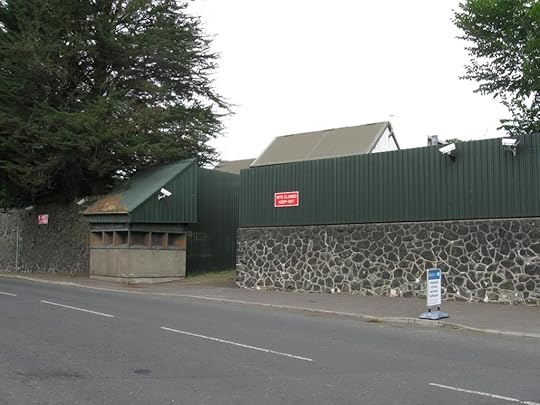
"We came down into Belfast from the hills through the Protestant district of Ballysillan, which was decorated with murals of masked paramilitaries holding assault rifles and zombie armies holding Union Jacks."
I really like books that evoke both a sense of place and time, as bleak as it might be in Ulster, 1981.. This one does. A real page turner. I eagerly await the second volume in the series.
P.S. If you ever travel to Belfast, a MUST visit is the Ulster Folk and Transport Museum in Cultra, Co Down in Northern Ireland where Tony worked for many years as a curator.
P.P.S. I just ran across this comment by Garbhan Downey in the Summer 2008 issue of MRJ which has a section on Irish mysteries:
Working in Derry as a reporter during the latter part of the Irish troubles was like living in the pages of a long, twisted crime novel, whose author had forgotten to script an ending.
But while literary fiction tends to possess a certain logic and credibility, what was happening in our ‘real’ world was often bizarre beyond words. I once covered the murder of a child, in which, no lie, the killer managed to steal the body back from the police and hide it in a forest for twelve hours. On another occasion, the night before Halloween, I interviewed the survivor of a gun-massacre, whose Dracula cloak had just been clattered with real blood.
It's an excellent police procedural that takes place in the heat of the "troubles." Sergeant Duffy is an outlier, a Catholic on the predominantly Protestant police force, a member of CID who has just moved into a house in a Protestant neighborhood. He's being groomed for better things: " The police were keen to have me. A university graduate, a psychologist, and that most precious thing of all . . . a Catholic. And now seven years later, after a border posting, the CID course, a child kidnapping, a high-profile heroin bust, and several murder investigations, I was a newly promoted Detective Sergeant at the relatively safe RUC station in Carrickfergus. I knew why they’d sent me here. I was here to stay out of harm’s way ..."
He's called to the scene of what appears to be the murder of an informer, shot in the head with his hand cut off. Until they discover the hand belongs to someone else and there is a piece of musical score with no words shoved up the man's anus. Someone is killing homosexuals and wants to brag about it. No more about the plot.
The constant sense of fear from random violence must have been debilitating, restaurants being torched with IRA napalm (gasoline and sugar), shootings, one's favorite pub being bombed. I can't imagine what it must have been like to always wonder whether the windows in the store one is walking by might at any moment disintegrate in an hail of flying glass. A country where police did not wear their seat belts. " Four police officers had died in car accidents this year, nine police officers had been shot while trapped in their vehicles by their seat belts. The statistical department of the RUC felt that, on balance, it was better not to wear a seat belt." and " dozens of police officers had been killed in booby traps over the years. It was a classic IRA tactic. You call in a tip about a murder, the police go to investigate and they trip a booby trap or the provos remotely detonate a landmine or pipe bomb. Sometimes they place a time-delayed device in a car in the street so they can get the rescue workers too."
Here's a picture of the police station in Bellaghy which gives a sense of the fortresses police were required to hide in.
"We came down into Belfast from the hills through the Protestant district of Ballysillan, which was decorated with murals of masked paramilitaries holding assault rifles and zombie armies holding Union Jacks."
I really like books that evoke both a sense of place and time, as bleak as it might be in Ulster, 1981.. This one does. A real page turner. I eagerly await the second volume in the series.
P.S. If you ever travel to Belfast, a MUST visit is the Ulster Folk and Transport Museum in Cultra, Co Down in Northern Ireland where Tony worked for many years as a curator.
P.P.S. I just ran across this comment by Garbhan Downey in the Summer 2008 issue of MRJ which has a section on Irish mysteries:
Working in Derry as a reporter during the latter part of the Irish troubles was like living in the pages of a long, twisted crime novel, whose author had forgotten to script an ending.
But while literary fiction tends to possess a certain logic and credibility, what was happening in our ‘real’ world was often bizarre beyond words. I once covered the murder of a child, in which, no lie, the killer managed to steal the body back from the police and hide it in a forest for twelve hours. On another occasion, the night before Halloween, I interviewed the survivor of a gun-massacre, whose Dracula cloak had just been clattered with real blood.

June 10, 2020
A feeling of been there, done that permeates the book. Smart Alec cop, gritty setting, action packed mystery; McKinty knows his cliches but does not rise above them. I was recently reading another contemporary UK author - Abir Mukherjee. Both write gritty crime tales in a historical setting. Their worlds bubble with an authenticity that deserves all the accolades they get. But their protagonists seem like discarded drafts from better crime writers.
Sean Duffy, a Catholic cop in Northern Ireland in early 80s gets the strangest case in the history of the country - A serial killer targeting gays and leaving classical music pieces along with his victims. Good to see serial killers being treated as a novelty, pop culture makes it seem cops see them with the same frequency as most people see the sky or the furniture. Duffy is hated by the Catholic IRA who see him as a traitor to their cause. And also viewed suspiciously by Protestants who make up the majority of North Ireland population. Incidentally McKinty does not give me enough background about this, I had to Google certain things. Maybe he thought everyone in UK will know about it but I think even someone from Australia or USA would have preferred more contextual clues.
There is a lot happening besides the main mystery. IRA is on a hunger strike, actual history again with real people making cameos and yet Google telling me that instead of McKinty. There is also a dead girl, a couple of love interests for Duffy - true love and true lust, subplots about life in a war torn country and Duffy's sexual identity crisis. Yup the last one came out of nowhere. It was like McKinty said, 'Hey let's add some character depth.' Then a few chapters later 'Ohh fuck it, who am I kidding. Let's add a big gun battle, that's what people want anyway.' The ending specially tested my patience. The actual solution is inspired but McKinty tries to tie everything into a bow, making it too ridiculous and turning Duffy into a Bond clone.
The Irish setting is the best part of the story. Not Tana French good but this has an undeniable sense of place. The prose too shines in places, not yet quotable but getting there. The main problem here is Duffy acts cynical because the cliches expect him to. It is not the mature cynicism of a world weary man, it is the quip friendly schoolyard banter posing as cynicism. Think crime fiction's most gritty protagonists from Marlowe and Spade from the classics to Dave Robicheaux and Matthew Scudder among modern greats. Their worldview feels part of their personality while Duffy's seem a bit forced. Duffy's posturing seems distinctly teenage. It is the same problem as how McKinty spoils a good ending by snuffing out every last hint of ambiguity. He simply is not as cynical as he wants us to believe. Not bad but frankly there are way better authors writing different versions of the same narrative. Seek them out instead. Rating - 3/5
PS. Any idea why most UK writers name their series as Inspector X or Detective Y, while most US authors don't use their designation and just the name of the lead. I prefer the US way, writing a designation before the lead's name sounds as if the writer is wallowing in self-importance.
Sean Duffy, a Catholic cop in Northern Ireland in early 80s gets the strangest case in the history of the country - A serial killer targeting gays and leaving classical music pieces along with his victims. Good to see serial killers being treated as a novelty, pop culture makes it seem cops see them with the same frequency as most people see the sky or the furniture. Duffy is hated by the Catholic IRA who see him as a traitor to their cause. And also viewed suspiciously by Protestants who make up the majority of North Ireland population. Incidentally McKinty does not give me enough background about this, I had to Google certain things. Maybe he thought everyone in UK will know about it but I think even someone from Australia or USA would have preferred more contextual clues.
There is a lot happening besides the main mystery. IRA is on a hunger strike, actual history again with real people making cameos and yet Google telling me that instead of McKinty. There is also a dead girl, a couple of love interests for Duffy - true love and true lust, subplots about life in a war torn country and Duffy's sexual identity crisis. Yup the last one came out of nowhere. It was like McKinty said, 'Hey let's add some character depth.' Then a few chapters later 'Ohh fuck it, who am I kidding. Let's add a big gun battle, that's what people want anyway.' The ending specially tested my patience. The actual solution is inspired but McKinty tries to tie everything into a bow, making it too ridiculous and turning Duffy into a Bond clone.
The Irish setting is the best part of the story. Not Tana French good but this has an undeniable sense of place. The prose too shines in places, not yet quotable but getting there. The main problem here is Duffy acts cynical because the cliches expect him to. It is not the mature cynicism of a world weary man, it is the quip friendly schoolyard banter posing as cynicism. Think crime fiction's most gritty protagonists from Marlowe and Spade from the classics to Dave Robicheaux and Matthew Scudder among modern greats. Their worldview feels part of their personality while Duffy's seem a bit forced. Duffy's posturing seems distinctly teenage. It is the same problem as how McKinty spoils a good ending by snuffing out every last hint of ambiguity. He simply is not as cynical as he wants us to believe. Not bad but frankly there are way better authors writing different versions of the same narrative. Seek them out instead. Rating - 3/5
PS. Any idea why most UK writers name their series as Inspector X or Detective Y, while most US authors don't use their designation and just the name of the lead. I prefer the US way, writing a designation before the lead's name sounds as if the writer is wallowing in self-importance.

October 6, 2025
The Cold Cold Ground is a murder mystery and police procedural set in Ireland during the political tensions of the early 80s. Being gay in Ireland is against the law and when a couple of gay guys turn up dead, the temperamental detective Sean Duffy who is interested in philosophy, classical and rock music, literature and history is assigned the case. The suicide of a young woman who was married to a member of the IRA might also be connected to the case. One of the murdered gay men could be a higher up in the IRA.
This is my first Sean Duffy novel. It was complicated. Not just the plot. The mythological and classical music clues left by the murderer were beyond me. The Irish political landscape with its bombings and riots form the novel's panorama, more than that frankly, the whole Catholics vs Protestant civil war is present in every single breathing moment of the main character Sean Duffy's inner life. The novel is peppered with literary, historical and pop culture references. Each chapter is named as a tribute to a classic American or British movie. I will be reading more novels in this series.
McKinty is clearly a well read and knowledgeable man. I did get the impression that he was showing off his knowledge at times. I had to do some reading about Daedalus to understand what the killer who sends Duffy a letter with clues was going on about. The final revelation about the killer's intentions ..... well that was probably a diss on the serial killers with esoteric tastes and big ambitions in novels like Silence of the Lambs and films like Seven. Some quotes:
Bobby Sands was the maitreya, the world teacher, the martyr who would redeem mankind through his suffering.
It was Jim Jones’s The Thin Red Line which I’d read on my World War Two jag along with Catch 22, The Naked and the Dead, Gravity’s Rainbow and so on. Every cop usually had a book going on for the waiting between trouble. I didn’t have one at the moment and that was making me nervous.
In India the Jains starve themselves to death to obtain purity in the next life. The philosopher Atticus starved himself in Rome because he had become sick and wanted to hasten the end. In Ireland there has never been honour in such a course. I don’t know how this so-called tradition got imported into our country!
This is my first Sean Duffy novel. It was complicated. Not just the plot. The mythological and classical music clues left by the murderer were beyond me. The Irish political landscape with its bombings and riots form the novel's panorama, more than that frankly, the whole Catholics vs Protestant civil war is present in every single breathing moment of the main character Sean Duffy's inner life. The novel is peppered with literary, historical and pop culture references. Each chapter is named as a tribute to a classic American or British movie. I will be reading more novels in this series.
McKinty is clearly a well read and knowledgeable man. I did get the impression that he was showing off his knowledge at times. I had to do some reading about Daedalus to understand what the killer who sends Duffy a letter with clues was going on about. The final revelation about the killer's intentions ..... well that was probably a diss on the serial killers with esoteric tastes and big ambitions in novels like Silence of the Lambs and films like Seven. Some quotes:
Bobby Sands was the maitreya, the world teacher, the martyr who would redeem mankind through his suffering.
It was Jim Jones’s The Thin Red Line which I’d read on my World War Two jag along with Catch 22, The Naked and the Dead, Gravity’s Rainbow and so on. Every cop usually had a book going on for the waiting between trouble. I didn’t have one at the moment and that was making me nervous.
In India the Jains starve themselves to death to obtain purity in the next life. The philosopher Atticus starved himself in Rome because he had become sick and wanted to hasten the end. In Ireland there has never been honour in such a course. I don’t know how this so-called tradition got imported into our country!

January 21, 2017
This book is the first in the
Detective Sean Duffy Series And
Book One of The Troubles Trilogy.
First, a bit of history. This is just for those of you who did not do well in high school history class like myself (to say the least). However, I believe that you're never to old to learn, and for that alone I enjoyed this book very much. I definitely got a crash course about the times of Northern Ireland's "Troubles" during 1968-1998. I researched this on Google and found one site that explains it succinctly. I posted the link at the bottom of this review because it really, really, helped me to, not only understand the underlying elements of the plot, but also to appreciate and enjoy the intricate details that make this book so unique. The Irish setting combined with the real life history put an original twist on the 'standard' crime, mystery, thriller, suspense novel and I can't wait to read the rest of the series!
I loved the characters immediately! Especially Detective Sean Duffy. We are introduced to him right off the top and made me laugh out loud. Duffy's sense of humor is priceless, while at the same time, his strict sense of duty and proper crime scene procedure remains intact. It was really fun to read while I tried to imagine the text being spoken with an Irish accent. It's not easy but I found it different and fun. Duffy and his homicide team that make up the CID (Criminal Investigation Department) within the British, and many other Commonwealth police forces, are well developed and are genuinely full of life and individual personality. Also, the crimes that they are trying to solve are unusual and have an interesting spin as a result of the Irish setting and language as described below.
This is the first novel I've read by Adrian McKinty and I found that it took a little more concentration on my part to read.
Firstly, because I don't have a firm grasp of the "Troubles" history aspect. And secondly, due to the fact that the story is set in Carrickfergus, Northern Ireland, and I'm not at all familiar with the Irish language. The writing reflects quite a lot of Irish wording and terms, that are.. perhaps native to and/or likely to be the natural language for this part of the world. There is a glossary of words that translates 23 of the common Irish words, such as bairn = baby, kit = cloths, peeler = police, and so on. But It's not difficult to understand. While it slowed my reading down a little, mostly as a result of my own curiosity, it was worth it. I felt like I was there, a world away, in Ireland. And that is why I especially love to read books written by authors from other places and countries worldwide.
Note:
Adrian McKinty was born and raised in Carrickfergus, Northern Ireland. He has lived in New York City, Washington, and Denver, Colorado. In 2008 he moved to Melbourne, Australia where he currently resides.
http://www.theirishstory.com/2015/02/...
Detective Sean Duffy Series And
Book One of The Troubles Trilogy.
First, a bit of history. This is just for those of you who did not do well in high school history class like myself (to say the least). However, I believe that you're never to old to learn, and for that alone I enjoyed this book very much. I definitely got a crash course about the times of Northern Ireland's "Troubles" during 1968-1998. I researched this on Google and found one site that explains it succinctly. I posted the link at the bottom of this review because it really, really, helped me to, not only understand the underlying elements of the plot, but also to appreciate and enjoy the intricate details that make this book so unique. The Irish setting combined with the real life history put an original twist on the 'standard' crime, mystery, thriller, suspense novel and I can't wait to read the rest of the series!
I loved the characters immediately! Especially Detective Sean Duffy. We are introduced to him right off the top and made me laugh out loud. Duffy's sense of humor is priceless, while at the same time, his strict sense of duty and proper crime scene procedure remains intact. It was really fun to read while I tried to imagine the text being spoken with an Irish accent. It's not easy but I found it different and fun. Duffy and his homicide team that make up the CID (Criminal Investigation Department) within the British, and many other Commonwealth police forces, are well developed and are genuinely full of life and individual personality. Also, the crimes that they are trying to solve are unusual and have an interesting spin as a result of the Irish setting and language as described below.
This is the first novel I've read by Adrian McKinty and I found that it took a little more concentration on my part to read.
Firstly, because I don't have a firm grasp of the "Troubles" history aspect. And secondly, due to the fact that the story is set in Carrickfergus, Northern Ireland, and I'm not at all familiar with the Irish language. The writing reflects quite a lot of Irish wording and terms, that are.. perhaps native to and/or likely to be the natural language for this part of the world. There is a glossary of words that translates 23 of the common Irish words, such as bairn = baby, kit = cloths, peeler = police, and so on. But It's not difficult to understand. While it slowed my reading down a little, mostly as a result of my own curiosity, it was worth it. I felt like I was there, a world away, in Ireland. And that is why I especially love to read books written by authors from other places and countries worldwide.
Note:
Adrian McKinty was born and raised in Carrickfergus, Northern Ireland. He has lived in New York City, Washington, and Denver, Colorado. In 2008 he moved to Melbourne, Australia where he currently resides.
http://www.theirishstory.com/2015/02/...

February 19, 2017
Why haven't I discovered Adrian McKinty before 2017!!!!
He nails it in this book
The setting and the whole nine yards.
The reader is transported to the Irish Troubles. To Belfast of 1981. The Librarian told me when I checked this book out that a few of the guys who took this book said that what they lived through in Ireland back the is almost the same atmosphere in the book.
An killer who enjoys listening opera, the classic languages and is killing homosexuals. Homosexuality was a crime in Northern Ireland back then.
Sergeant Sean Duffy is the DS from Royal Ulster Constabulary - a catholic in a Protestant ( British) force- the black sheep. I didn't care about it, maybe some readers would care about religious differences....
It's useful to get familiar with all those Irish and British factions and armies that were in Ireland back then as the novel doesn't give much background info. So a quick google search or Wikipedia should help a first time reader to understand the IRA, the hunger strikes and various other aspects.
The writing is so similar to classic noir like Chandler and Hammett... one of them could totally have written this novel if he lived in Ireland in the 80s.
Looking forward to the second book in the series.
He nails it in this book
The setting and the whole nine yards.
The reader is transported to the Irish Troubles. To Belfast of 1981. The Librarian told me when I checked this book out that a few of the guys who took this book said that what they lived through in Ireland back the is almost the same atmosphere in the book.
An killer who enjoys listening opera, the classic languages and is killing homosexuals. Homosexuality was a crime in Northern Ireland back then.
Sergeant Sean Duffy is the DS from Royal Ulster Constabulary - a catholic in a Protestant ( British) force- the black sheep. I didn't care about it, maybe some readers would care about religious differences....
It's useful to get familiar with all those Irish and British factions and armies that were in Ireland back then as the novel doesn't give much background info. So a quick google search or Wikipedia should help a first time reader to understand the IRA, the hunger strikes and various other aspects.
The writing is so similar to classic noir like Chandler and Hammett... one of them could totally have written this novel if he lived in Ireland in the 80s.
Looking forward to the second book in the series.

June 13, 2015
Sean Duffy is a young catholic police detective living in the midst of protestants in Carrickfergus, near Belfast in 1981 during the civil disturbance known as The Troubles. Tolerated by his neighbours, he does his best to uphold law and order in the midst of a war zone. When two homosexuals are found murdered he believes he has a case for once not related to the IRA and the current problems but it was never going to be that easy in the current climate of unrest and violence.
Adrian McKinty was himself born and raised in Belfast and is able to draw a good picture of what life was like in the Belfast of the 80s during the time of Margaret Thatcher, Bobby Sands, the hunger strikers and the Falkland Wars. He colours the world further with references to contemporary music and films and description of the clothes of the other plain clothes officers. This was a good start to a series and I look forward to reading the next book.
Adrian McKinty was himself born and raised in Belfast and is able to draw a good picture of what life was like in the Belfast of the 80s during the time of Margaret Thatcher, Bobby Sands, the hunger strikers and the Falkland Wars. He colours the world further with references to contemporary music and films and description of the clothes of the other plain clothes officers. This was a good start to a series and I look forward to reading the next book.

July 29, 2018
Ο Σον Ντάφυ , είναι καθολικός , μόνος σχεδόν μέσα στην μικρή προτεσταντική κοινότητα, πίνει jura, ακούει lou reed, διαβάζει Μπάροουζ, ακούει Στράους, διαβάζει τους Γυμνούς και τους Νεκρούς, πίνει βότκα με λάιμ, ερωτεύεται , θέλει να πηδήξει την γειτόνισσα του σαν 16χρονος, πίνει τα άντερα του, κυνηγάει εκτελεστικά μέλη του ΙΡΑ, περνάει από στέκια ομοφυλόφιλων, απολαμβανει την Guiness του, περιμενει τον γάμο της Λειντι Ντι, βλεπει την διάσπαση της εργατικής τάξης, ζει σε μια πόλη που δηλητηριάζει τα νερά της, που ρίχνει αλάτι στο χώμα της,κάθε φορά ελέγχει την μπέμπα του για βόμβες από κάτω, ξεχνάει το όπλο του μονίμως, κυνηγαει σίριαλ κιλερ,διαβάζει Πίντσον, ακούει Ντάστι Σπρίνγκφιλντ, πίνει την Σμιρνοφ γκιμλετ του.... κ ελπίζω να τον ξανασυναντησω σύντομα

May 23, 2020
4.5 stars
This was my first time reading this author and I really enjoyed the book. I was 15 in 1981 (when this book was set) and remember the hunger strikes and the Troubles very well during this period. In fact, at that stage of my life I had never travelled to Northern Ireland. I eventually made it to Belfast and other parts of Northern Ireland in 2013, 32 years later.

Sean Duffy, is a Catholic police officer in the RUC (Royal Ulster Constabulary), not something you would see everyday in 1980s Northern Ireland. His colleagues are wary of him and he of them. Every morning, he checks his car to make sure it is not "booby trapped" i.e. a bomb in it which would activate when he turned the car on or opened the door. He is obviously a bit of a black sheep, his job alone is testament to this. Plus the fact that he lives in Coronation Road, a predominately Protestant area ... yes, back during the Troubles you were "either/or" - there was no in-between.
BELFAST LOUGH ...

Two murders and Duffy is in charge of solving them. He is looking for clues within clues. The descriptions of the times seem to be spot on, as I would expect - the author did grow up in Carrickfergus during this period. He is actually a few years younger than me but if he grew up with all this brewing around him, his narrative must be realistic - my "realism" of the situation was what I saw on the Television news, every day. Although I did spend the month of August in Sligo a county in the Republic but quite near to the border. I remember that summer seeing "black flags" hanging on electricity poles - obviously put there by IRA sympathisers. It was quite a sobering sight actually.
There were some cameo appearances by some "real-life" characters, Gerry Adams and George Seawright.

There are plenty of music references throughout the book.
A body found in the woods puts Duffy on the road to thinking that the murders are all linked... but is he overthinking! He is witty, a little sarcastic. I guess he has to be to survive in the job, the "fenian bastard"!
A good start to the series and I will be interested in reading more. I believe the audio is also excellent.
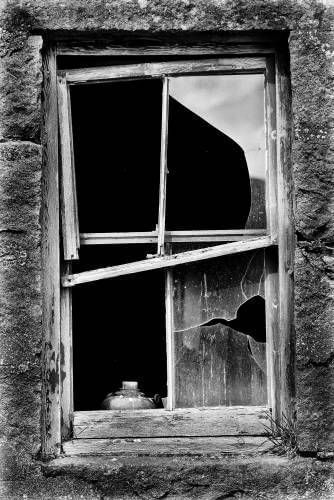

One quibble I would have is that the Irish words don't have the correct accents on them... not sure if that is down to the author or the editor! Even the name "Sean" should really have the síne fada (accent on the 'a') i.e. "Seán". Yes, I have bemoaned this problem (for me) in many an Irish book I have read, a lot of the books written by non-natives but I would have expected better from an Irish author.

by Seamus Heaney
This was my first time reading this author and I really enjoyed the book. I was 15 in 1981 (when this book was set) and remember the hunger strikes and the Troubles very well during this period. In fact, at that stage of my life I had never travelled to Northern Ireland. I eventually made it to Belfast and other parts of Northern Ireland in 2013, 32 years later.
Sean Duffy, is a Catholic police officer in the RUC (Royal Ulster Constabulary), not something you would see everyday in 1980s Northern Ireland. His colleagues are wary of him and he of them. Every morning, he checks his car to make sure it is not "booby trapped" i.e. a bomb in it which would activate when he turned the car on or opened the door. He is obviously a bit of a black sheep, his job alone is testament to this. Plus the fact that he lives in Coronation Road, a predominately Protestant area ... yes, back during the Troubles you were "either/or" - there was no in-between.
North of Coronation Road you were in the countryside, south and east you were in the city. I liked that.
BELFAST LOUGH ...
Two murders and Duffy is in charge of solving them. He is looking for clues within clues. The descriptions of the times seem to be spot on, as I would expect - the author did grow up in Carrickfergus during this period. He is actually a few years younger than me but if he grew up with all this brewing around him, his narrative must be realistic - my "realism" of the situation was what I saw on the Television news, every day. Although I did spend the month of August in Sligo a county in the Republic but quite near to the border. I remember that summer seeing "black flags" hanging on electricity poles - obviously put there by IRA sympathisers. It was quite a sobering sight actually.
The war was long but one day peace was going to come to Northern Ireland ...
There were some cameo appearances by some "real-life" characters, Gerry Adams and George Seawright.
There are plenty of music references throughout the book.
Silence is also a form of conversation ...
A body found in the woods puts Duffy on the road to thinking that the murders are all linked... but is he overthinking! He is witty, a little sarcastic. I guess he has to be to survive in the job, the "fenian bastard"!
"Everybody in Belfast knows something they're not saying"
A good start to the series and I will be interested in reading more. I believe the audio is also excellent.
A fallen world. A lost place.
Ruined factories. Burnt out pubs. Abandoned social clubs. Shops with bomb proof grilles. Check points. Search gates, Armoured police stations.
Smashed cars ...
Stray dogs ...
Bricked-up houses ...
Broken windows. Broken mirrors.
One quibble I would have is that the Irish words don't have the correct accents on them... not sure if that is down to the author or the editor! Even the name "Sean" should really have the síne fada (accent on the 'a') i.e. "Seán". Yes, I have bemoaned this problem (for me) in many an Irish book I have read, a lot of the books written by non-natives but I would have expected better from an Irish author.
by Seamus Heaney

January 28, 2013
I enjoyed this, but I stopped short of thoroughly enjoying it. The depiction of Northern Ireland on the brink of all-out civil war was incredibly well done, as was the 1981 setting. You really got a sense of despair, danger and dissolution. However, while the deeply conservative nature of all sides in the conflict was realistically portrayed, it left me feeling somewhat uncomfortable in the references to the victims of the killings.
The writing itself was somewhat variable. McKinty clearly has real talent, but while the dialogue was largely excellent, and many of the descriptions impressive, there were overly purple prose moments, too. Characterisation varied in quality as well. The lead character was well done, but some of the supporting cast were a bit indistinguishable. Kudos on the libel risk re Gerry Adams, though! I wonder why he didn't sue?!
I'm already on to the second book, and the writing has noticably improved, so give it a go.
The writing itself was somewhat variable. McKinty clearly has real talent, but while the dialogue was largely excellent, and many of the descriptions impressive, there were overly purple prose moments, too. Characterisation varied in quality as well. The lead character was well done, but some of the supporting cast were a bit indistinguishable. Kudos on the libel risk re Gerry Adams, though! I wonder why he didn't sue?!
I'm already on to the second book, and the writing has noticably improved, so give it a go.

June 11, 2018
Άλλο ένα δυνατό και ενδιαφέρον αστυνομικό θρίλερ της Βρετανικής Σχολής που συναντούσα συνεχώς μπροστά μου σε διάφορες λίστες με τα καλύτερα σύγχρονα αστυνομικά μυθιστορήματα, κυκλοφορεί επιτέλους και στα ελληνικά, από τις εκδόσεις Οξύ. Φυσικά δεν άργησα ούτε στιγμή να το αγοράσω, αλλά και να το διαβάσω. Εκτός όλων των άλλων, ήθελα να διαβάσω και μια ιστορία που διαδραματίζεται στην Βόρεια Ιρλανδία της δεκαετίας του '80.
Στο πρώτο αυτό βιβλίο της αστυνομικής σειράς του ΜακΚίντι, γνωρίζουμε τον νεαρό και αντισυμβατικό Καθολικό αστυνομικό Σον Ντάφι, ο οποίος καλείται να εξιχνιάσει τους φόνους δυο ομοφυλόφιλων αντρών, οι οποίοι κατά τα φαινόμενα έγιναν από κάποιον σίριαλ κίλερ, ταυτόχρονα όμως πρέπει να ανακαλύψει αν ο απαγχονισμός μιας κοπέλας βαθιά μέσα στο δάσος, είναι αποτέλεσμα αυτοκτονίας ή εγκληματικής ενέργειας. Επίσης, υπάρχουν στοιχεία που συνδέουν τις δυο υποθέσεις. Όλα αυτά, εν μέσω φοβερών ταραχών στο Μπέλφαστ, αρκετών τρομοκρατικών επιθέσεων, αλλά και της συνεχιζόμενης απεργίας πείνας φυλακισμένων μελών του IRA...
Ο συγγραφέας καταφέρνει με δυναμικό στιλ να μεταφέρει το κλίμα της εποχής, το όλο χάος που επικρατούσε εκείνα τα δύσκολα χρόνια στο Μπέλφαστ. Το μυστήριο, η δράση και οι αποκαλύψεις στην πλοκή είναι σε ικανοποιητικές ποσότητες, ο βασικός πρωταγωνιστής είναι αρκετά ικανοποιητικά σκιαγραφημένος και σίγουρα ενδιαφέρων και ιδιαίτερος, ενώ η ατμόσφαιρα είναι πραγματικά εξαιρετική, κάπως μουντή και γκρίζα. Όσον αφορά τη γραφή, κατά τη γνώμη μου είναι φοβερή, με μπόλικο κυνισμό, αιχμηρούς διαλόγους και γλαφυρές περιγραφές των διαφόρων σκηνικών και καταστάσεων. Σίγουρα ο ΜακΚίντι έχει το δικό του ξεχωριστό στιλ γραφής.
Γενικά πρόκειται για ένα πολύ καλό, ψυχαγωγικό και άκρως ευκολοδιάβαστο αστυνομικό θρίλερ. Η πλοκή, βέβαια, μπορεί να κινείται με κάπως αργούς ρυθμούς και πιθανότατα η κατάληξη της υπόθεσης να μην ξαφνιάσει ορισμένους αναγνώστες, όμως βασικό προσόν του βιβλίου είναι σαφώς η ικανότητα του συγγραφέα να αποτυπώσει στο χαρτί την τεταμένη ιστορική περίοδο της σύγχρονης Βόρειας Ιρλανδίας, η φοβερή ατμόσφαιρα, ο πολύ ωραίος πρωταγωνιστής, αλλά και η πολύ δυνατή γραφή. Το μόνο σίγουρο είναι ότι από κάθε άποψη έμεινα ευχαριστημένος και θα ήθελα να διαβάσω και άλλα βιβλία του συγγραφέα.
Στο πρώτο αυτό βιβλίο της αστυνομικής σειράς του ΜακΚίντι, γνωρίζουμε τον νεαρό και αντισυμβατικό Καθολικό αστυνομικό Σον Ντάφι, ο οποίος καλείται να εξιχνιάσει τους φόνους δυο ομοφυλόφιλων αντρών, οι οποίοι κατά τα φαινόμενα έγιναν από κάποιον σίριαλ κίλερ, ταυτόχρονα όμως πρέπει να ανακαλύψει αν ο απαγχονισμός μιας κοπέλας βαθιά μέσα στο δάσος, είναι αποτέλεσμα αυτοκτονίας ή εγκληματικής ενέργειας. Επίσης, υπάρχουν στοιχεία που συνδέουν τις δυο υποθέσεις. Όλα αυτά, εν μέσω φοβερών ταραχών στο Μπέλφαστ, αρκετών τρομοκρατικών επιθέσεων, αλλά και της συνεχιζόμενης απεργίας πείνας φυλακισμένων μελών του IRA...
Ο συγγραφέας καταφέρνει με δυναμικό στιλ να μεταφέρει το κλίμα της εποχής, το όλο χάος που επικρατούσε εκείνα τα δύσκολα χρόνια στο Μπέλφαστ. Το μυστήριο, η δράση και οι αποκαλύψεις στην πλοκή είναι σε ικανοποιητικές ποσότητες, ο βασικός πρωταγωνιστής είναι αρκετά ικανοποιητικά σκιαγραφημένος και σίγουρα ενδιαφέρων και ιδιαίτερος, ενώ η ατμόσφαιρα είναι πραγματικά εξαιρετική, κάπως μουντή και γκρίζα. Όσον αφορά τη γραφή, κατά τη γνώμη μου είναι φοβερή, με μπόλικο κυνισμό, αιχμηρούς διαλόγους και γλαφυρές περιγραφές των διαφόρων σκηνικών και καταστάσεων. Σίγουρα ο ΜακΚίντι έχει το δικό του ξεχωριστό στιλ γραφής.
Γενικά πρόκειται για ένα πολύ καλό, ψυχαγωγικό και άκρως ευκολοδιάβαστο αστυνομικό θρίλερ. Η πλοκή, βέβαια, μπορεί να κινείται με κάπως αργούς ρυθμούς και πιθανότατα η κατάληξη της υπόθεσης να μην ξαφνιάσει ορισμένους αναγνώστες, όμως βασικό προσόν του βιβλίου είναι σαφώς η ικανότητα του συγγραφέα να αποτυπώσει στο χαρτί την τεταμένη ιστορική περίοδο της σύγχρονης Βόρειας Ιρλανδίας, η φοβερή ατμόσφαιρα, ο πολύ ωραίος πρωταγωνιστής, αλλά και η πολύ δυνατή γραφή. Το μόνο σίγουρο είναι ότι από κάθε άποψη έμεινα ευχαριστημένος και θα ήθελα να διαβάσω και άλλα βιβλία του συγγραφέα.

March 30, 2018
Detective Sean Duffy had only been in Carrickfergus near Belfast for around two weeks, and already the hostilities and murders were in his face. It was 1981 and the Troubles were in full swing. Amidst the hunger strikes where already one person had died, the murder of two homosexuals seemed to branch off in a different direction for Duffy and his small team. But their investigation hit a brick wall at every turn.
When a missing girl turned up dead, Duffy wondered if there was any link. The violence and unrest across the country was rife; the danger was everywhere. From checking underneath his car each morning for a bomb, to wearing riot gear when going into unsavoury areas to interview suspects – Duffy was in the thick of it. So, would they discover the killer of the homosexuals before more bodies appeared? Could this be Northern Ireland’s first serial killer?
The Cold Cold Ground by Aussie/Irish author Adrian McKinty is the first in the Sean Duffy series, and what an enthralling start! With full-on action, dry humour, music and vodka gimlets (Duffy’s favourite tipple) I thoroughly enjoyed the story, and am looking forward to the next in the series. Recommended.
When a missing girl turned up dead, Duffy wondered if there was any link. The violence and unrest across the country was rife; the danger was everywhere. From checking underneath his car each morning for a bomb, to wearing riot gear when going into unsavoury areas to interview suspects – Duffy was in the thick of it. So, would they discover the killer of the homosexuals before more bodies appeared? Could this be Northern Ireland’s first serial killer?
The Cold Cold Ground by Aussie/Irish author Adrian McKinty is the first in the Sean Duffy series, and what an enthralling start! With full-on action, dry humour, music and vodka gimlets (Duffy’s favourite tipple) I thoroughly enjoyed the story, and am looking forward to the next in the series. Recommended.

December 13, 2019
This was a good starter for a new to me series; well done, and well developed. The characters are mostly likable and real. The times are during "the troubles" in Ireland in 1981, a time I really know very little about, so it's an interesting setting.
The story was good, and stayed interesting throughout. There was a little humour mixed in, but not overdone or silly. I plan to read the second one right away to see how it holds up.
If you like music, he talks about what music they listen to a lot, plus there are references to old songs now and then. Kind of fun remembering some of the oldies. Some of them even listen to our country music.
The audiobook was well-done, with Gerard Doyle as the narrator. He was the narrator for the Slough House series by Mick Herron that I just finished, so I was already used to his voice, and liked it.
The story was good, and stayed interesting throughout. There was a little humour mixed in, but not overdone or silly. I plan to read the second one right away to see how it holds up.
If you like music, he talks about what music they listen to a lot, plus there are references to old songs now and then. Kind of fun remembering some of the oldies. Some of them even listen to our country music.
The audiobook was well-done, with Gerard Doyle as the narrator. He was the narrator for the Slough House series by Mick Herron that I just finished, so I was already used to his voice, and liked it.

January 2, 2020
Really it's more like 4.5 stars.
The Cold Cold Ground is the first book of what has now become a series revolving around Detective Sean Duffy a Catholic cop in the middle of the protestant end of Ireland in the 1980s. Not a good place to stay alive so it's a good thing they have Duffy, a sharp, educated "peeler" who is as tenacious as a bulldog. Duffy is a combination of Harry Bosch (in his younger days) and Harry Hole with his own brand of justice. I stayed up all night reading this one and I think you will enjoy it too. Now, I'm off to see if I can find the second in this series.
The Cold Cold Ground is the first book of what has now become a series revolving around Detective Sean Duffy a Catholic cop in the middle of the protestant end of Ireland in the 1980s. Not a good place to stay alive so it's a good thing they have Duffy, a sharp, educated "peeler" who is as tenacious as a bulldog. Duffy is a combination of Harry Bosch (in his younger days) and Harry Hole with his own brand of justice. I stayed up all night reading this one and I think you will enjoy it too. Now, I'm off to see if I can find the second in this series.

November 25, 2018
3.5 stars
The time and place of this story was almost more interesting to me than the actual story. This is Ireland in the turbulent early 1980’s, with the IRA, riots, hunger strikes, Margaret Thatcher and young children learning how to make Molotov cocktails before school.
It’s a scary time to be a peeler (cop) in Ireland, you better check the underside of your car every morning to make sure the IRA has not left you a surprise in the form of a car bomb.
And the main character Sean Duffy is not the typical cop you normally find in these types of books. He is not a rogue brilliant savant, or a stickler for rules, or a lovable drunk who rises from adversity.
He is the complete antithesis of what you would expect. He won’t say no to a little bribe or two. Yes, he sometimes drinks too much (and on the job) with no guilt but everyone seems to drink in this book. And at times has completely wild off-track theories that leaves him with egg on his face. But his intentions and heart is in the right place.
Sergeant Duffy investigates a couple of deaths which at first glance has no connection. One appears to be a sadistic murder of a homosexual man with IRA connections and the other is a hanging suicide of a young woman, divorced from one of the hunger strikers.
The story felt a little all over the place at times (just like Sean) but the last 20% was great and made me up my rating. I also really enjoyed the humor that sometimes sneaks up on you at unexpected intervals.
A friend of mine has the series on audio and I can’t wait to try the next book in this format.
The time and place of this story was almost more interesting to me than the actual story. This is Ireland in the turbulent early 1980’s, with the IRA, riots, hunger strikes, Margaret Thatcher and young children learning how to make Molotov cocktails before school.
It’s a scary time to be a peeler (cop) in Ireland, you better check the underside of your car every morning to make sure the IRA has not left you a surprise in the form of a car bomb.
And the main character Sean Duffy is not the typical cop you normally find in these types of books. He is not a rogue brilliant savant, or a stickler for rules, or a lovable drunk who rises from adversity.
He is the complete antithesis of what you would expect. He won’t say no to a little bribe or two. Yes, he sometimes drinks too much (and on the job) with no guilt but everyone seems to drink in this book. And at times has completely wild off-track theories that leaves him with egg on his face. But his intentions and heart is in the right place.
Sergeant Duffy investigates a couple of deaths which at first glance has no connection. One appears to be a sadistic murder of a homosexual man with IRA connections and the other is a hanging suicide of a young woman, divorced from one of the hunger strikers.
The story felt a little all over the place at times (just like Sean) but the last 20% was great and made me up my rating. I also really enjoyed the humor that sometimes sneaks up on you at unexpected intervals.
A friend of mine has the series on audio and I can’t wait to try the next book in this format.
August 7, 2022
So many great reviews of this book, and I can understand why. Intriguing plot (are they dealing with a hate crime targeted at homosexuals or a more conventional (at least in 1981 Belfast) IRA/Unionist killing?) and a distinctive protagonist, Sean Duffy. Duffy is a detective in the Belfast police force, a Catholic in the largely Protestant organization. He is also young, relatively inexperienced, and well educated. So, not the jaded, alcoholic, divorced, bitter detective type we see so often in police procedurals. That’s not a universal trope, of course, but Duffy’s educational background includes an exposure to Latin and Greek that was common then, and is certainly not common now.
But it is the setting that is the star of this book. Northern Ireland at the height of The Troubles. The book includes real individuals such as Gerry Adams, the head of Sinn Fein, and Bobby Sands, a hunger-strike martyr. Although I felt relatively well versed in these personalities and events having read the outstanding Say Nothing: A True Story of Murder and Memory in Northern Ireland not that long ago, McKinty brings new texture to my understanding of the day-to-day existence that was Belfast in 1981.
I look forward to reading more books in this series. Duffy is a bit too testosterone-impaired for my tastes, but even given that I am curious to see where McKinty takes his character.
P.S. Some years ago I purchased the 6th book in this series in a bookstore in Dublin (I’m impulsive about purchasing books…) For some reason I never read it, although it has accompanied me through multiple relocations. I’m now looking forward to reading the intervening volumes so that I can enjoy that one!
But it is the setting that is the star of this book. Northern Ireland at the height of The Troubles. The book includes real individuals such as Gerry Adams, the head of Sinn Fein, and Bobby Sands, a hunger-strike martyr. Although I felt relatively well versed in these personalities and events having read the outstanding Say Nothing: A True Story of Murder and Memory in Northern Ireland not that long ago, McKinty brings new texture to my understanding of the day-to-day existence that was Belfast in 1981.
I look forward to reading more books in this series. Duffy is a bit too testosterone-impaired for my tastes, but even given that I am curious to see where McKinty takes his character.
P.S. Some years ago I purchased the 6th book in this series in a bookstore in Dublin (I’m impulsive about purchasing books…) For some reason I never read it, although it has accompanied me through multiple relocations. I’m now looking forward to reading the intervening volumes so that I can enjoy that one!

April 23, 2022
I remember 1981 extremely well. I remember the bomb attacks in Belfast and trouble in the Estate. I remember getting a lift to school from a neighbour who was a captain in the British Army: he had to check under his car every morning for mercury tilt switch bombs and sometimes when it was raining or cold he would skip the check and my little brother and I would be in the back seat waiting for the first hill when the bomb might go off ...
The quote is not from the novel, but from the afterword, where the author talks about his own experiences in Carrickfergus, a suburb of Belfast that is his birthplace and that he made the residence of his RUC investigator Sean Duffy. I have chosen to start my review with it because I consider the quote more relevant than the personality [such as it is] of lead character Sean Duffy or the details of the police procedural into the gruesome double murder of a couple of homosexuals in Belfast in 1981.
The crime story is just a pretext, a device the author is using for writing a personal account of living in a Belfast city under martial law, a city ripped apart by sectarian violence and by the brutality of the occupation army. Adrian McKinty speaks from direct experience, and this is what gives the novel its street credibility, the only thing that kept me interested in the proceeds after I failed to be won over by the young detective Sean Duffy or by the investigative methods he used.
I was babbling and I f_cking knew it. And she was right: this wasn’t police work, this was intuition, guesswork. It was feeble.
>>><<<>>><<<
This was my first novel by McKinty, and it might not be the last because he definitely has talent and vision, but when your competition is Tana French, Peter May, William McIlvanney, Chris Brookmyre, Colin Bateman – he has a lot of catching up to do before I make him a priority on a very crowded Brit Crime shelf.
You could say I had some serious issues with the story outside of the historical, documentary angle. Most of them are because I felt no sympathy for Sean Duffy, who feels more like a composite of several personality traits that bear no relationship to a real person. It could be said that he is the product of the crazy times he is living in, and that a sane person would not willingly submit to the daily dose of horror Sean Duffy must go through. At a rational level, I can understand where he is coming from, but at an emotional level I considered him a fake / a construct right from the start.
That was the moment when I knew that I wanted to be some small part of ending this madness. It was either get out or do something. I chose the latter.
The police were keen to have me. A university graduate, a psychologist, and that most precious thing of all ... a Catholic.
All fine and dandy in theory, but in practice Mr. Duffy is neither truly depressed nor a practising Catholic. On the contrary, he seems to try very hard to check all the boxes for sins committed before the last page of the novel [drunkenness, fornication, gambling, drugs, bribery, anger]. These produce some entertaining scenes and several instances of gallows humour that relieved somewhat the darker shades of Belfast lifestyle in 1981.
As a detective, mr. Duffy is paying a lot of lip service to the American hard-boiled tradition – with a lot of heavy drinking on the job, propositioning every alluring female he encounters, pistol whipping suspects, lock-picking doors without a warrant and witty repartees with the tough gangsters. As a police procedural role model he fails rather spectacularly in his investigation where he prefers the Hammett / Chandler approach of trying to provoke the bad guys into making mistakes.
I will not comment on the actual investigation and about how two unrelated cases are finally brought together by intuition instead of hard evidence – suffice to say the solution is credible if not surprising, including some very late real action scenes that make for a livelier finale that returns the reader to the main subject of the novel : The Troubles in Northern Ireland with the civilian population caught in the crossfire between IRA, Protestant paramilitary squads and British Army.
I’m not sure what Adrian McKinty has planned for an encore, but I know he returned eventually to Belfast with another Sean Duffy novel. I might prefer to read one of his American novels instead.

May 6, 2017
We drank our whiskeys. It was the good stuff and it tasted of salt, sea, rain, wind and the Old Testament.
3.5 stars. I've been looking for something to fill in for my Tana French addiction until her next novel, and this book was recommended. I can see why, although there are also a lot of differences. The 80's Ireland setting in TCCG is fascinating, and I loved how this context formed such a big part of the story. I know very little about The Troubles and this was a great introduction. The plot is action packed and fast-paced, and I have to admit that I had no clue as to the outcome for 90% of the book. I will definitely be reading more of this well written series, not only for a further glimpse into this recent part of history, but also for the wonderful sense of humor - I was constantly giggling at the irreverent one liners. If you are a fan of the Dresden series, I think you will like this.
The story is set in 1981 in Northern Ireland during The Troubles with the newspapers full of the Republican hunger strikes in the Maze prison, the forthcoming royal wedding between Charles and Diana, the recent shooting of the Pope and the ongoing trial of the Yorkshire Ripper in England. Detective Sergeant Sean Duffy is a Catholic RUC policeman living on a Protestant sink estate on the fringes of the town. When two homosexual men are killed, Duffy fears that a homophobic serial killer is on the loose despite his superior’s efforts to link the killings to sectarian violence.

March 10, 2021
This is the first book I have finished for my first ever commited readathon The Irish Readathon
It was a pretty standard gritty crime novel with your moody, slightly sexist, slightly homophobic detective who drinks too much and goes way beyond the line of duty to solve his crime. However the background of Northern Ireland in the 80s did make this stand out. In a community where violence and death is commonplace and the worlds of politics and crime are so interwoven a suspected serial killer case is much harder to solve!
This unique setting drew my attention and I was quite invested in the mystery but I did find the ending disappointing
There was also an interesting moment of personal development for Detective Duffy half way through the novel which I hope is explored more in future installments of this series. This and the mystery of how he fits into the wider political landscape is enough to intrigue me to pick up the next book in this series.
It was a pretty standard gritty crime novel with your moody, slightly sexist, slightly homophobic detective who drinks too much and goes way beyond the line of duty to solve his crime. However the background of Northern Ireland in the 80s did make this stand out. In a community where violence and death is commonplace and the worlds of politics and crime are so interwoven a suspected serial killer case is much harder to solve!
This unique setting drew my attention and I was quite invested in the mystery but I did find the ending disappointing
There was also an interesting moment of personal development for Detective Duffy half way through the novel which I hope is explored more in future installments of this series. This and the mystery of how he fits into the wider political landscape is enough to intrigue me to pick up the next book in this series.
Displaying 1 - 30 of 1,800 reviews