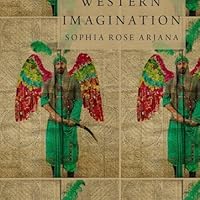
في كتابه "بشرة سمراء أقنعة بيضاء" سعى دبشي لفضح الايدولوجيا السائدة لمشروع أميركا الإمبريالي والامتداد الأوروبي كظل لها من خلال تحليل طبيعة ودور المثقفين العرب والمسلمين الذين يخدمون المشروع الإمبريالي بالوكالة
حميد دبشي مفكر ومؤرخ وناقد أدبي أمريكي من أصل إيراني. وهو أستاذ كرسي هاكوب كفوركيان في قسم الدراسات الإيرانية والأدب المقارن في جامعة كولومبيا في مدينة نيويورك
Born on 15 June 1951 into a working class family in the south-western city of Ahvaz in the Khuzestan province of Iran, Hamid Dabashi received his early education in his hometown and his college education in Tehran, before he moved to the United States, where he received a dual Ph.D. in Sociology of Culture and Islamic Studies from the University of Pennsylvania in 1984, followed by a postdoctoral fellowship at Harvard University.
He wrote his doctoral dissertation on Max Weber’s theory of charismatic authority with Philip Rieff (1922-2006), the most distinguished Freudian cultural critic of his time.
Hamid Dabashi is the Hagop Kevorkian Professor of Iranian Studies and Comparative Literature at Columbia University in New York, the oldest and most prestigious Chair in his field. He has taught and delivered lectures in many North and Latin American, European, Arab, and Iranian universities. He is a founding member of the Institute for Comparative Literature and Society, as well as a founding member of the Center for Palestine Studies at Columbia University.
He has written 20 books, edited 4, and contributed chapters to many more. He is also the author of over 100 essays, articles and book reviews in major scholarly and peer reviewed journals on subjects ranging from Iranian Studies, medieval and modern Islam, comparative literature, world cinema, and the philosophy of art (trans-aesthetics). A selected sample of his writing is co-edited by Andrew Davison and Himadeep Muppidi, The World is my Home: A Hamid Dabashi Reader (Transaction 2010). Hamid Dabashi is the Series Editor of Literatures and Cultures of the Islamic World for Palgrave Macmillan. This series is putting forward a critical body of first rate scholarship on the literary and cultural production of the Islamic world from the vantage point of contemporary theoretical and hermeneutic perspectives, effectively bringing the study of Islamic literatures and cultures to the wider attention of scholars and students of world literatures and cultures without the prejudices and drawbacks of outmoded perspectives. An internationally renowned cultural critic and award-winning author, his books and articles have been translated into numerous languages, including Japanese, German, French, Spanish, Italian, Russian, Hebrew, Danish, Arabic, Korean, Persian, Portuguese, Polish, Turkish, Urdu and Catalan.
In the context of his commitment to advancing trans-national art and independent world cinema, Hamid Dabashi is the founder of Dreams of a Nation, a Palestinian Film Project, dedicated to preserving and safeguarding Palestinian Cinema. He is also chiefly responsible for opening up the study of Persian literature and Iranian culture at Columbia University to students of comparative literature and society, breaking away from the confinements of European Orientalism and American Area Studies.
A committed teacher in the past three decades, Hamid Dabashi is also a public speaker around the globe, a current affairs essayist, and a staunch anti-war activist. He has two grown-up children, Kaveh and Pardis, who are both Columbia University graduates, and he lives in New York with his wife and colleague, the Iranian-Swedish feminist, Golbarg Bashi, their daughter Chelgis and their son Golchin.
I made the mistake of reading this before checking reviews otherwise i would have changed my mind. This book is blah, a kind of remake of Eduard Said' ideas with an angrier voice. I am sick of hearing the same old retoric.Judging from the title i thought it would be about body image, beauty standards, how brown is represented in the media? how brown consciousness was affected by colonialism? nah, it's about muslims. really? was it so hard to choose another title!!! Muslims are not all brown skinned and vice versa. Why is ethnicity used as a cover for a particular religion and culture! This doesn't make any sense...
Brilliant, biting and necessary, Dabashi explores the origin and machinations of native informants- including Azar Nafisi, Salman Rushdie, Irshad Manji, Ayan Hirsi Ali and Fouad Ajami- who help sustain imperialism. Most notably for me, Dabashi dramatically reinterprets Saïd's "intellectual in exile" and theories of migrant hybridity put forth by Gayatri Spivak. Unexpectedly, I feel more identification and less shame with my being American after reading this.
A breathtaking, furious indictment of empire and its agents.
"Reason and composure, of course, are white," so Dabashi trades in niceties for fury. And by God, it is a spectacle to behold. Engaging with some of the best known anti-imperialists of the twentieth century, Dabashi introduces the "native informers" - the tirade of Arab, South Asian, Persian origin pundits that dominated the Bush-era discourse on Islam and military adventurism in the region. Discourse that made the case for the theft of hundreds of thousands of lives, and the destruction of millions more.
This book demonstrates Dabashi's courage and conscience. He takes no prisoners in his admonishment of the disingenuous, racist experts and their destruction-hungry imperial clientele through Malcom X's caricature of the 'house negro', Fanon's psychoanalysis of the self-loathing colonial subject behind the white facade, and of course the late, great Said's intellectual in exile.
In particular, he presents and discredits the alternative to Said's dissident exiled intellectual - who protested the excesses of empire and whose commentary on "The Orient" demonstrated the truest compassion for its destiny - in the shape of the native informer. And in doing so, he presents a beautifully articulate ode to the oppressed. From Palestine to Peshawar. Algeria to Afghanistan.
I do, however, take issue with Dabashi's conclusion. That diaspora and exile are outdated notions to now be cast aside, nostalgia to be shed, in favour of wholehearted acceptance of one's belonging in the United States or country of migration. In some context, the prescription is justified. What better way to counter the racism-fueled rhetoric of 'assimilation', 'integration', and 'creeping shari'a' than to accept Americaness as one's sole mode of being?
However, that also risks caving into the highly propagandized notion that one must prove their belonging. Demonstrate that they are American/European without taint or useless nostalgic sentiment. Stepping on to the turf of the native informer, making a display that one can be fully Western, and in doing so, will combat the empire from within in hopes of reformation. Wasn't it Twain who stated that the stupid - or in this case the disingenuous and conscienceless - will beat you with experience should you step into their muck? I don't envision the native informers or their masters viewing Brown and Black dissidents as indigenous and in service of the nation.
And, therefore, exile and diaspora remain relevant, important sanctuaries for those who wish to remember. For those for whom, their history is power. The ground in which their ancestors lie is sacred, worthy of remembrance and fight.
A little chaos here and there does not take anything away. This is a precious addition to a legacy of postcolonial literary resistance. Filled with the rage, emotion, and sentiment, we have long been forced to conceal in the face of the white civilising mission.
This book discuss the extension of the idea, mainly from Edward Said's Exiled Intellectual, whom serve the empirr they now reside. The authors, based first on Malcolm X writings of the House Master (black) slaves, then continues on Franz Fannon's Black Skins, White Masks (though that were arguably in colonial Algerian time). He argues that now, in these neo-colonialism era, there are 'intellectuals' who are self-hating, ungrounded to their origins serve as stamps to legitimise the encroachment of other countries like Iran (authors origin), Iraq & Palestine. He criticised these crop, amongst them like Fouad Ajami, Salman Rushdie, Ahmed Nafisi, Hirsi Ali, the anonymous Ibn Warraq which potray the shrewd view as like back in those days reveal by Said. Highly critical to Nafisi's Reading Lolita in Tehran & Ibn Warraq idiotic claims and critique of Islam, Muslim & Quran (and to some extent, collecting public replies on bad experiences with Muslims to put in his/her book; in this case statistical bias Mediocristan as Taleb would say in his Black Swan book). Also touched Ignatieff's The Lesser Evil as legitimising the torture usage in a morr subtle way compared to Alan Dershowitz.
Definitely need to read more of his work, as well as some of cited in this, to gather a more collective thoughts of his.
While he makes some very interesting and ultimately successful critiques, I think he falls into the exact same trap he set out for the orientalist. This is not to say the book is bad or that Dabashi does not prove an incredibly important point, but rather that Dabashi lacks a level of self awareness. I think everything in the book besides the things I am going to mention are spot on and brilliant, Dabashi proves to be an insightful author I will read more of. He analyzes several authors and, in my opinion, follows the below formula: Step one: find an article or book or comment written by an Exmuslim/critique of Islam Step two: Well poison the authors by naming them as "native informants" Step three: completely flatten their works to a borderline caricature (Specifically with authors like Ajami, Nafisi or Rushdie) Step four: Find an established conceptual dogma (usually from postcolonial studies) and apply it to the authors Step Five: Critique the authors by using whataboutism (in the case of Rushdie, Hrsi Ali and Warraq) moralization (in the case of Mark Lilla) and by using the concept from step four as a filter to omit all thought that contradicts the original well poisoned naming (in the case of Nafisi and Ajami) and at worst uses a form of "guilty by association" reasoning in which being even slightly aligned with the villains of Dabashis worldview (Bernard Lewis, Fukuyama, Huntington, or Wolfowitz) is proof of the authors collaboration and self-hatred. Step six: repeat and mix the critiques, but never go deeper than a surface level evaluation of the author in questions works (exceptions include Warraq and various conservative opinion writers)
The worst part about this is the errors of the Neocon Hawks he rightfully attacks follow a similar pattern, which Dabashi himself points out. Another error Dabashi makes is via ideological determinism, if a Muslim does something, it is not because of Islam even if the concepts and justification are distinctly Islamic. If a Zionist on the other hand commits a crime, it is a direct result of his Zionism and is falsified on that basis. Dabashi is willing to extend the condemnation of bad actions being attributed to Islam to all other religions, but not an Ideology or national movement. Another aspect of the book that is worth criticizing is his continuous strawmans of arguments made by the authors he critiques and his tendency to not take a lot of what they say seriously, by attributing their critique to synthetic American empire fuel, he overlooks the very real critiques of people like Hrsi Ali and Rushdie. Dabashi commits the same sin as the orientalists, he paints an oversimplified flattening picture of intellectuals and ideologies he considers "other".
Every time I came across a person of non-European origin but of European demeanour and tastes, something would irk me about how unnatural it seemed. This person of brown skin would masquerade as white while pretending he was white.
This book is an incisive and provocative masterpiece that exposes the internal informant's role in an empire and how it threatens the genuine socio-political aspiration of actual natives that the internal informants claim to represent.