A collection of short fiction, twelve works in all, including two never-before-published novellas. Here are disconnected marriages and uneasy reunions, nostalgic reminiscences and sudden epiphanies--a remarkable and moving collage of contemporary lives.
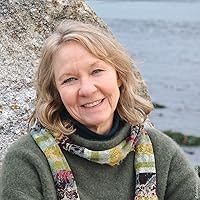
Ann Beattie (born September 8, 1947) is an American short story writer and novelist. She has received an award for excellence from the American Academy and Institute of Arts and Letters and a PEN/Bernard Malamud Award for excellence in the short story form. Her work has been compared to that of Alice Adams, J.D. Salinger, John Cheever, and John Updike. She holds an undergraduate degree from American University and a masters degree from the University of Connecticut.
One of the problems with a book of short stories is that each story is it's own universe making it difficult to write a review of the entire book. Let's just say a I liked some stories better than others. Ann Beatty's writing is descriptive and textural. This book was read to it was a struggle to capture the details. Like a Hooper painting I found some of her stories absent of emotion. A stage is set, action took place but nothing was felt. Like Salinger, the characters are middle class in every way and only exposed to the average of everything.
I had mixed feelings about this book. I loved the geographical setting. It's been my home territory for the past thirty-five years. I live in a town just next to Jenkintown and travel to and through Elkins Park all the time. The Dutch house is like no house I know, although there are many three story homes in the area. Today these areas are a mixture of high, middle and low income families. It's ethnically diverse as well. Cheltenham, the township that my town and Elkins Park are part of prides itself on being politically and environmentally active, filled with artists, small business owners, educators and musicians. I love living here.
The characters felt flat to me for a long while. As the book progressed, I found myself becoming more and more involved in their lives--their relationships, experiences and emotions. The mother was the most confusing to me. I actually have a close one-time friend who abandoned her child. She left her nine year old daughter with my husband and I actually, and went off to live with a cult in Oakland, CA. But I can't say I understand it. The passage of time is erratic. We meet the narrator when he is a child, and get a sense of his closeness to his mother, his relationship with his fairly aloof, but influential father, and with his only sibling, his sister Maeve. Their step mother, is a true evil stepmother. Her cruelty is hard to believe. While The Dutch House isn't as much of a fairy tale as Where the Crawdad Sings, I had some of the same problems with reading either of these books as "realistic fiction." Once I conceded that I couldn't read this book that way, I became intrigued by the return of characters much later in time. The sentences were often beautiful, and the heartbreak these children experience is emotionally wrenching. The two adults who essentially come to their rescue when they are young are the heroes...as are these two, as lost as Hansel and Gretel when they are cast away by their evil step mother.
Not all stories are equally good, some are hard to follow because of share amount of information that gets dropped on you.Whether by intention or not, it feels like inside a head of somebody quite maniacal. Overall I quite enjoyed it when I was reading it, but now, a couple of days later, I find it difficult to remember most of the stories.
According to Isabel Allende, "a good short story begins with the overpowering need to communicate a single idea or feeling. You have to let it go all at once without hesitating, trusting to your intuition and your luck. It's like shooting an arrow. There is no second chance; it's a make-or-break proposition. The very first sentence sets the tone for the entire story, the rhythm, the tension, the point of it all." I love this; it resonates with me; it strikes me as a good way, if not a great way, to judge a short story on its merits. I have felt this way about short stories by Joyce Carol Oates and TC Boyle and Alice Elliot Dark. These are rather dark stories about the relationships between men and women and families; there are no solutions here, no easy endings.
I had trouble with the stories in this book, especially regarding "the point of it all." --"Imagine a Day at the End..."- A man w/ five children and a wife filled w/ life/purpose seems to lack a personality all his own. For several sentences, after pages of mulling over his children and wife, he thinks about his mortality, about a day filled with peace and the wonders of nature at the end of his life. What? Why put this story first about a man w/ very little personality? --"In Amalfi" - about a couple with an on-again-off-again relationship vacationing in Italy. Something bizarre happens, a rare moment of utter/complete trust in a stranger, and Andrew expresses very little interest. They seem comfortable as a couple, to have real love for each other, but that the ease of being together outweighs everything else. --Honey - a story about restless people drinking; the main character Elizabeth, mid-forties, thinks about time spent w a much younger man of her acquaintance; the story ends w/ a precipitous encounter w/ a bee. a female mid-life crisis? --The Longest Day... - about a visit from the welcoming committee to a woman on her way to her third divorce --The Working Girl - a story about a writer writing a story, as if we are in her mind as she is trying to decide what will happen to her characters --Home to Marie - the narrator describes his rocky marriage to Marie; she has left him and come back multiple times. Most of the arguments are about money and about how he is always late for dinner. She plans a cocktail party and indicates to him that a bunch of people are invited; it is catered, expensive based on the vast amounts of food. She then tells him that no one was invited, it was all an effort to teach him how it feels to prepare food and just wait and wait for someone to arrive. --Installation #6 - about a guy who does lighting for art installations --Television --Horatio's Trick - about a divorced mom and her college-age son over the Christmas holidays. She drinks too much, and no one says anything about it, other than to the priest. --You Know What - You know what? (Of course not; we cannot read another's mind - what do I know?) When someone cannot sleep and gets out of bed late at night, restless, something bad is about to happen. A man with a rising, ambitious wife, takes care of their (to him, much beloved) daughter and thinks thankfully of the times that they have sex. --What Was Mine - a boy's father dies after returning from Guam; his mother has a long-term boyfriend she refers to as his uncle. what is legacy? what is it to always hold on to the love one felt for someone who has passed? --Windy Day - about a couple who house-sits some old friends' house, only to realize how little they know their old friends
My favorite stories were all in the last half. “Horacio’s Trick,” “You Know What,” “What Was Mine” and “Windy Day at the Reservoir.” The stories are more character focused than plot driven but I enjoyed the characters a lot. Just the right amount of eccentric while still being plausible. Most of the characters experience a major change in their lives/relationships which causes them to reflect. I think the stories in the first half were shorter and too open ended for me to enjoy. The characters were unique and a lot of the story settings that typically have happy associations (night before Christmas, summer house in Vermont) were eerie or melancholy.
My favorite story is called "You Know What", about a stay at home father and his 6 year old daughter having a conversation in the grocery store. She begins each new topic with the question "You Know What?" The father Stefan explains to his daughter Julie that "the person you're speaking to couldn't possibly know what, if you haven't asked the question yet." She continues the "You know what " and he "has decided on a rule for himself: attempt to educate the child no more than twice on one subject in one day's time." Spoken like a true mother.
I tried. I really did. I quit reading after attempting the fifth story in the book. I couldn't get into what little plots there were, nor did I like any of the characters. I ended each story thinking "What was the point of that?!" They seemed to be nothing more than slice of life vignettes. Maybe you'll get more out of it. It just wasn't for me.
Very pretty short story collection The lives of middle class suburban families mostly dealing with marital relationships and the random events they bring about meanwhile the couples reactions to them.
Sparkles of scandalous cocktail parties and their catering services ,stealing tourist rings, going for walks through verdant ginkgo trees, seafood salads, peach colored gown and mossy linen pants, sending holiday cards, and coffee tabletops with architectural books on them .
I don't remember most of this being especially great, except "The Working Girl," which is one of my favorite short stories. It's not a big deal, and I don't know that it'd do much for most people, but I have a large amount of affection for it. If you're in the bookstore, maybe check it out: that is Jessica's idea of a wonderful short story. Some other ones are Donald Barthelme's "The School" and Stuart Dybeck's "Pet Milk." I think it was called Pet Milk.... that's a great story. I love that one. But maybe it's called something else?
A lot of Ann Beattie I can't really get into, even though I think she's a good writer. I just can't get past the distain I imagine having for the characters if I actually met them, which doubtless has more to do with me than it does with her.
this is a collection of short stories (some less than 8 pages long) and like all collections some are better than others. my favorites are the story about Amalfi and the last one in the book, Windy Day at the Reservoir. I liked them because although I didn't see the resolution/the twist to the story coming, when the story resolved itself, the ending made perfect sense.
I love Ann Beattie's writing. Open ended stories, no pat endings, and life goes on. This was a good book of short stories. I enjoyed all of the stories however none stood out above the rest. This is my first time reading anything of her, I will read her again.
Several short stories involving loss and change. Interesting, but not a book I couldn't put down a lot. Made it seem like life was all about loss and what we give up to move on.