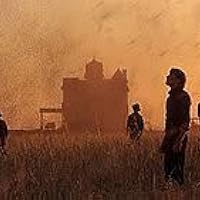
In James Baldwin’s classic short story, “The Outing,” from Going to Meet the Man, a Harlem church group escapes the city for a summer day-trip of prayer and, more importantly, romance.
Every summer, the Harlem Mount of Olives Pentecostal Assembly gives an outing, around the Fourth of July. There is boating, testifying, and illicit steps towards young love. Delving deeply into the church community he would depict in Go Tell It On The Mountain, this is Baldwin at his most compassionate, investigating the sexual ambivalence and towering religion of a group of young children on their way up the Hudson. “The Outing” is the perfect introduction to an American master.
James Arthur Baldwin authored plays and poems in society.
He came as the eldest of nine children; his stepfather served as a minister. At 14 years of age in 1938, Baldwin preached at the small fireside Pentecostal church in Harlem. From religion in the early 1940s, he transferred his faith to literature with the still evident impassioned cadences of black churches. From 1948, Baldwin made his home primarily in the south of France but often returned to the United States of America to lecture or to teach.
In his Giovanni's Room, a white American expatriate must come to terms with his homosexuality. In 1957, he began spending half of each year in city of New York.
James Baldwin offered a vital literary voice during the era of civil rights activism in the 1950s and 1960s. He first partially autobiographically accounted his youth. His influential Nobody Knows My Name and The Fire Next Time informed a large white audience. Another Country talks about gay sexual tensions among intellectuals of New York. Segments of the black nationalist community savaged his gay themes. Eldridge Cleaver of the Black Panthers stated the Baldwin displayed an "agonizing, total hatred of blacks." People produced Blues for Mister Charlie, play of Baldwin, in 1964. Huey Newton, co-founder of the Black Panther Party, defended Baldwin.
“Yet, in the copper sunlight Johnnie felt suddenly, not the presence of the Lord, but the presence of David; which seemed to reach out to him, hand reaching out to hand in the fury of flood-time, to drag him to the bottom of the water or to carry him safe to shore. From the corner of his eye he watched his friend, who held him with such power; and felt, for that moment, such a depth of love, such nameless and terrible joy and pain, that he might have fallen, in the face of that company, weeping at David’s feet.”
As a queer child of a Christian religious leader this story was very personal!
A powerful, vibrant portrait of a summer day on the Hudson river. Baldwin's imagery and sense of location is strong and, and he sketches out relationships between his characters ranging from father-sons, clergy-churchgoers, and boy-boy. The fire of sexuality and religion burns as bright as Baldwins sun in this classic short.
3.5 stars Absolutely loved Baldwin's writing style - however, couldn't quite connect to the story itself because of its heavy focus on religion. I want to read one of his other works now, tho. He's supposed to be really good and I could already sense that in the few pages that "The Outing" has.
“Who do you love?” he whispered, “Who’s your boy?” “You,” he muttered fiercely, “I love you.”
Poignant short story exploring love and sexuality in the face of religion and societal expectations.
Over the span of a few pages, we watch Johnnie go from the most important person in David’s life to the makings of a forgotten memory.
Although confusing at first, the Church scene, particularly the Revival scene is written so beautifully and authentically. I felt like I was young again, sitting in the pews, watching the adults around me.
Johnnie’s growth and realization of how much he loves David is stunning to watch, especially at the pivotal moment where he gets overwhelmed by the experience. Although he’s not as religious as everyone, he’s still experiencing a life-changing moment. For the reader, we are right there with Johnnie in this sensory overload, which makes it even more heartbreaking when we see him being treated as an afterthought.
“The Outing” begs the question: What do you do when your anchor latches onto another, leaving you behind?
This entire review has been hidden because of spoilers.
I know, I know, this will make me sound like a true Philistine but I absolutely hated this book. I have a profound amount of respect for Mr. Baldwin and am very hesitant to give a poor review but I have a problem with listening to the constant "praise god - glory to god" platitudes from what I consider to be brainwashed zombies and I'm certain that this is exactly what James was going for. There's only so much religious nonsense that I can tolerate. Nothing but respect for this author none-the-less!!!
This is one of James Baldwin's many short stories. It, like Giovanni's Room features some boys who are teens trying to survive their hormones suddenly active while living in a very devout congregation. This particular summer, around 1951, the entire church community, which includes "the Gentiles, the Greeks, the Jews and the sinners and their friends" are going on a boat ride to a park a longer distance away from Harlem than they have ever been. The church is called Harlem Mount of Olives Pentecostal Assembly and has all the drama that any Pentecostal church could ever hope for.
There is a deacon who has two sons and a friend. The two sons are are Roy and Johnnie. Roy is supposedly saved, but there is some doubt that perhaps he is still sinful. It is open to conjecture What is clear is that David is outside the faith for the most. He is only there for Johnnie. But at the same time seems interested in Shiela.
We see the beginnings of at least one same sex attraction which is later extended with Baldwin's Giovanni's Room, where it is grown up totally and filled out, but still with a certain contradiction that affects the heart and soul.
I recommend this to those who have little of Baldwin's work or seem his homosexual writings on the subject. Even if you haven't read the later work, it gives you a glance into the work of this man who was at the corner of so many crossroads in terms of race and sexual orientation with life in the 1950's.
A vivid and interesting short story looking at relationships, class and fervent faith. There’s not much to say, considering how short this story actually is; however, I found it interesting to look at the fundamental difference between people’s expectations of how religion should be practiced, and the reality for some members of a congregation.
this is what makes him one of the greatest of all time. sweeping and very specific. very oriented towards craft––well paced, balanced, contained. the POV is surprising and perfect. achieves such monumental feeling without ever getting sentimental, and i think it's because he is always critical of the world he's in and always compassionate towards it too
A precursor to Go Tell it on the Mountain, this short story shows the intricacies of Black Pentecostalism and the pressures on young people. It captures the tension of expectations and inner feelings that buck against convention.
But now where there had been peace there was only panic and where there had been safety, danger, like a flower, opened.
I wished that this story focused more on these young boys friendships than all that crazy religious stuff. I understand that it is the point of the story, but yeah.
There were some achingly beautiful lines throughout the book, it almost felt like lyrical poetry at certain points. Wish it had been longer and I could've known the characters a little more. *sigh*
A short story intersecting youth, fervent religion, sexuality and the coming of age. James Baldwin writes in such a way that you are drawn into the story.
Both of it's time and ahead of it, but there are many aspects of the examination of religion and sexuality that I cannot help but hope are not timeless.