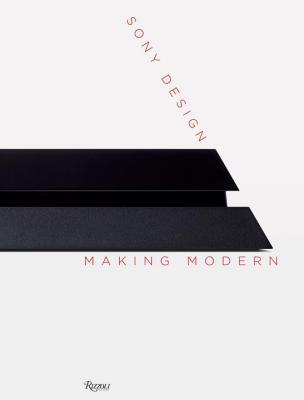
An impressive book dedicated to the innovative designs of Sony, a trailblazer in personal electronics and pioneer of the legendary and highly successful WALKMAN®, Handycam®, and other portable electronics. Emerging from the ashes of the Second World War, Sony Corporation pioneered the miniaturization of electronics and created some of the most innovative technologies of the postwar period. Following the model of one of its founders, Masaru Ibuka established Sony with the goal of doing what had never been done before. Beginning with the TR-63 from 1957, the world’s first truly pocket-sized transistor radio, Sony launched the consumer microelectronics industry and gave rise to some of the most memorable products that transformed the way billions of people consume media. Notable for their ease of use, Sony’s products embody the utility of good design and have themselves become objects of desire. This book beautifully catalogs their vast achievements in design and impact on global culture for almost seventy years. In-depth case studies from Sony’s archives on the development of the WALKMAN, the Handycam, the flat-screen TV, and the PlayStation make this the definitive history of Sony design. Through Sony’s relentless pursuit of innovation, this book is a tribute to the passion that continues to live on in their products today. With a stunning cover and interior design inspired by some of the most memorable Sony products, this book is a must-have for design and technology enthusiasts.
Deyan Sudjic is Director of the Design Museum. He was born in London, and studied architecture in Edinburgh. He has worked as a critic for The Observer and The Sunday Times, as the editor of Domus in Milan, as the director of the Venice Architecture Biennale, and as a curator in Glasgow, Istanbul and Copenhagen. He is the author of B is for Bauhaus, The Language of Things and The Edifice Complex.
Nowadays most people think of Apple when talk turns to consumer focused design. This book is a lesson that that design focus began many many years earlier with Sony.
It may be testament to the design ethos of the company - laid out here in a few words and in many pictures - that you never thought of it while using the products. But to look back at the first portable CD player is to be shocked at just how elegant the design really was.
There are also a number of surprising and sad stories of how the company was too far ahead of consumers. For instance their first eBook reader was in 2004.
The book has a short introduction about the company's founding and how quickly a unified design approach was woven into everything.
And outside of all the product design eye candy there is also a lesson in this book. Sometimes you can have great products and great design and still fall behind.