

What do you think?

DuMont True Tales
Deep: Freediving, Renegade Science, and What the Ocean Tells Us About Ourselves
“An engaging exploration of the depths of the world's oceans and the human connection to the rapidly changing world below. This is popular science writing at its best." — Christian Science Monitor
“The reader could not wish for a better guide … Deep is a fascinating, informative, exhilarating book.” — Wall Street Journal
“The deeper [Nestor] ventures into the ocean, the more dramatic and unusual the organisms therein and the people who observe them ... It’s
a journey well worth taking.” — David Epstein, New York Times Book Review
Fascinated by the sport of freediving—in which competitors descend great depths on a single breath—journalist James Nestor embeds with a gang of oceangoing extreme athletes and renegade researchers. He finds whales that communicate with other whales hundreds of miles away, sharks that swim in unerringly straight lines through pitch-black waters, and other strange phenomena. Most illuminating of all, he learns that these abilities are reflected in humans’ remarkable, and often hidden, potential—including echolocation, directional sense, and the profound physiological changes we undergo when underwater. Along the way, Nestor unlocks his own freediving skills as he communes with the pioneers who are expanding our definition of what is possible in the natural world, and in ourselves.
“The reader could not wish for a better guide … Deep is a fascinating, informative, exhilarating book.” — Wall Street Journal
“The deeper [Nestor] ventures into the ocean, the more dramatic and unusual the organisms therein and the people who observe them ... It’s
a journey well worth taking.” — David Epstein, New York Times Book Review
Fascinated by the sport of freediving—in which competitors descend great depths on a single breath—journalist James Nestor embeds with a gang of oceangoing extreme athletes and renegade researchers. He finds whales that communicate with other whales hundreds of miles away, sharks that swim in unerringly straight lines through pitch-black waters, and other strange phenomena. Most illuminating of all, he learns that these abilities are reflected in humans’ remarkable, and often hidden, potential—including echolocation, directional sense, and the profound physiological changes we undergo when underwater. Along the way, Nestor unlocks his own freediving skills as he communes with the pioneers who are expanding our definition of what is possible in the natural world, and in ourselves.
288 pages, Paperback
First published October 6, 2014
About the author
James Nestor
22 books994 followersJames Nestor is a journalist who has written for Outside magazine, Men's Journal, Scientific American, Dwell, National Public Radio, The New York Times, The Atlantic, the San Francisco Chronicle, and others.
Ratings & Reviews
Friends & Following
Create a free account to discover what your friends think of this book!
Community Reviews
Displaying 1 - 30 of 881 reviews

May 11, 2015
Enjoyed this book. Under the auspices of learning freediving, the author teaches you about the ocean and a little origin of life theory as well. It is written in a very conversational style. It has the superficiality of a magazine article, but this book is meant to be an introduction not a thesis. It contains plenty of facts, theories and discoveries revolving around the ocean, it's largest mammals and the human ability to adapt as well as our limitations. For me this book was spot on. This was a book about science without delving too deeply into the subject matter as to to turn off non-scientists. Yet the author doesn't dumb things down either. He manages to communicate some very complex ideas in a way that doesn't insult or intimidate the reader. A very good primer to the ocean that also happens to be fascinating. Very quick read. Highly recommended.
4.5 Stars
4.5 Stars

July 27, 2017
Edit 7-31-24 - looking for my notes on this, so re-saving this review as the Kindle edition
Original review below
>
This was billed as the next Cosmos, and though it doesn't have the expansive themes of this work, or my other non-fiction book of the year, Sapiens: A Brief History of Humankind - it's great.
I consider James Nestor more of a Sebastian Junger than a Carl Sagan, Ann Druyan or Yuval Noah Harari.
Like Junger, Nestor takes a specific, danger-filled theme - and then explores human and biological questions through that.
Among my favorite insights:
* Human biology has a specific response to diving - one found in most all mammals. The deeper we go, the slower our hearts beat - and many other things.
* Deep diving is incredibly dangerous, and not for everyone
* The ocean is beyond unexplored - he likens our knowledge of this earth to be like seeing a single finger of a human instead of the whole thing
* Dolphins, Whales and all cetaceans have their own language - it's indecipherable to us, but may be based on sonar 3d projections - they may send eachother 3d images when they talk
* The deep ocean is an incredible place
Great book - and well written. I highly recommend it!
Original review below
>
This was billed as the next Cosmos, and though it doesn't have the expansive themes of this work, or my other non-fiction book of the year, Sapiens: A Brief History of Humankind - it's great.
I consider James Nestor more of a Sebastian Junger than a Carl Sagan, Ann Druyan or Yuval Noah Harari.
Like Junger, Nestor takes a specific, danger-filled theme - and then explores human and biological questions through that.
Among my favorite insights:
* Human biology has a specific response to diving - one found in most all mammals. The deeper we go, the slower our hearts beat - and many other things.
* Deep diving is incredibly dangerous, and not for everyone
* The ocean is beyond unexplored - he likens our knowledge of this earth to be like seeing a single finger of a human instead of the whole thing
* Dolphins, Whales and all cetaceans have their own language - it's indecipherable to us, but may be based on sonar 3d projections - they may send eachother 3d images when they talk
* The deep ocean is an incredible place
Great book - and well written. I highly recommend it!

January 17, 2018
Uh, na das war ja schon mal ein guter Anfang für die zweite Staffel der True Tales Reihe. Echt spannend und für mich als Geschichts- UND UK-Junkie auch genau richtig für die Heimfahrt 👍

Read
February 10, 2021Pretty amazing book by the author of Breath, which I read recently but might have to reconsider in the light of this. It's in large part about freediving, which is profoundly disturbing as a competitive activity, but sounds incredible done sensibly, and about human bodies' adaptive responses, and also about the extraordinary environments under the sea. Totally fascinating and vividly conveyed account, covering several sorts of unfamiliar world. Terrific.

December 28, 2025
The Bulgarian review is first, the English translation follows it bellow
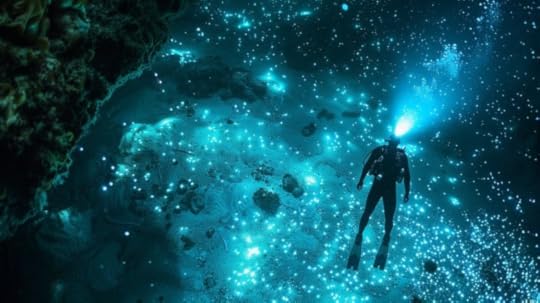
В дълбините на океана ни очаква една напълно непозната планета.
Там китове и делфини говорят на свой, изключително сложен и богат, език, и водят сложен социален живот. Живот кипи край подводни гейзери на много хиляди метри дълбочина при 400 градуса по Целзий. А на дълбочини, далеч надхвърлящи височината на Еверест, създания искрят с биолуминесценция, използват биологично електричество, като ехолокацията и магниторецепцията са силно развити прецизни сетива, а фотосинтезата е заменена от хемосинтеза. А дали животът не е възникнал тъкмо в тези врящи дълбини при смесването на желязо със сяра?
Свободното гмуркане е начинът за Нестор да се докосне до част от тези тайни. Когато то се използва за общуване с океана и обитателите му, за преоткриване на древни атрофирали човешки сетива, то е забравено и благородно умение и превръща човек просто в един от многото морски обитатели. Когато обаче се използва за сляпо гонене на рекорди, то е най-смъртоносният спорт на света.
Книгата е необичайно и на моменти рисковано пътешествие до омагьосващи и опасни кътчета на океана и до пределите на човешките възможности.
3,5⭐️

В дълбините на океана ни очаква една напълно непозната планета.
Там китове и делфини говорят на свой, изключително сложен и богат, език, и водят сложен социален живот. Живот кипи край подводни гейзери на много хиляди метри дълбочина при 400 градуса по Целзий. А на дълбочини, далеч надхвърлящи височината на Еверест, създания искрят с биолуминесценция, използват биологично електричество, като ехолокацията и магниторецепцията са силно развити прецизни сетива, а фотосинтезата е заменена от хемосинтеза. А дали животът не е възникнал тъкмо в тези врящи дълбини при смесването на желязо със сяра?
Свободното гмуркане е начинът за Нестор да се докосне до част от тези тайни. Когато то се използва за общуване с океана и обитателите му, за преоткриване на древни атрофирали човешки сетива, то е забравено и благородно умение и превръща човек просто в един от многото морски обитатели. Когато обаче се използва за сляпо гонене на рекорди, то е най-смъртоносният спорт на света.
Книгата е необичайно и на моменти рисковано пътешествие до омагьосващи и опасни кътчета на океана и до пределите на човешките възможности.
3,5⭐️
A completely unknown planet awaits us in the depths of the ocean.
Down there, whales and dolphins speak their own exceptionally complex and rich language, leading intricate social lives. Life thrives around underwater geysers thousands of meters deep at 400 degrees Celsius. And at depths far exceeding the height of Mount Everest, creatures sparkle with bioluminescence and utilize bioelectricity, possessing highly developed and precise senses like echolocation and magnetoreception, while photosynthesis is replaced by chemosynthesis. Could it be that life itself originated precisely in these boiling depths, through the mixing of iron and sulfur?
For Nestor, freediving is the way to touch a part of these secrets. When used to connect with the ocean and its inhabitants, to rediscover ancient, atrophied human senses, it is a forgotten and noble skill that turns a human being into simply one of many marine creatures. However, when used for the blind pursuit of records, it becomes the deadliest sport in the world.
The book is an unusual and at times precarious journey to the enchanting and perilous corners of the ocean, and to the absolute limits of human endurance.
3.5⭐️
July 10, 2014
A road-trip ... but with flippers, and to the bottom of the ocean. Perhaps like all trips, what began as a distraction ends in discovery. It is full of characters, of course, those crazy scientists that we read about in the blurb, some free-divers, a supporting caste of pasty engineers and an octogenarian but really, what we find, what we are gazing at, what we are falling in love with, is the ocean. A vast, incredible, staggeringly beautiful place of which we know virtually nothing and which we, nevertheless, are ignorantly destroying. The glimpses we get of the animals is astounding. The cursory studies of sperm whales alone should cause us to drop any affectations of superiority - if we should be unlucky enough to be afflicted with them. This book, as with Philip Hoare's The Sea Inside or Leviathan: Or, The Whale, leaves me with the feeling that we are impaired by an appalling hubris, that we suffer from a terrible case of savant syndrome, having a singular talent to create sophisticated tools with which we, ineptly, break everything.

December 4, 2018
I first started scuba diving a couple of years ago and quickly became hooked. How is that I managed to live for 31 years totally oblivious to the magnificent world that exists under the sea? The ocean has always fascinated me, but to actually explore the life that exists down there has deepened my love of the earth's oceans.
James Nestor seems to have experienced a similar transformation, but on a much grander scale — freediving.
Freedivers are some of the most compelling people I've met. Despite the serious risks involved, their love of exploration — in a world that is still largely unexplored — trumps their own personal safety.
As Nestor documents, sometimes the risks freedivers take aren't out of love for the oceans or exploration at all, but merely the desire to break records. Competitive freediving is a thriving sport and one that might eventually be featured in future Olympic Games. But it also routinely leads to serious injury and even death.
Freediving is listed by outsideonline.com as being the second most dangerous adventure sport with an estimated 100 annual fatalities from a pool of just 5,000 active freedivers. The author of the piece goes on to say that only base jumping is more fatal than freediving.
As much as I love diving, I'm not keen to engage in an activity that has a 1 in 50 fatality rate. At least not while I still love living. But reading about it — and learning a boatload about the oceans in the process — sure is cool!
James Nestor seems to have experienced a similar transformation, but on a much grander scale — freediving.
Freedivers are some of the most compelling people I've met. Despite the serious risks involved, their love of exploration — in a world that is still largely unexplored — trumps their own personal safety.
As Nestor documents, sometimes the risks freedivers take aren't out of love for the oceans or exploration at all, but merely the desire to break records. Competitive freediving is a thriving sport and one that might eventually be featured in future Olympic Games. But it also routinely leads to serious injury and even death.
Freediving is listed by outsideonline.com as being the second most dangerous adventure sport with an estimated 100 annual fatalities from a pool of just 5,000 active freedivers. The author of the piece goes on to say that only base jumping is more fatal than freediving.
As much as I love diving, I'm not keen to engage in an activity that has a 1 in 50 fatality rate. At least not while I still love living. But reading about it — and learning a boatload about the oceans in the process — sure is cool!

July 24, 2018
I was HOOKED on this book! It is about freediving, but it is about much more. It's about experiences with dolphins, sperm whales, and sharks. It's about different cultures and life under the sea's surface! It opened my eyes to a part of life that I knew nothing about... Freediving is CRAZY, Y'all! A wonderful read (or listen)!

June 16, 2018
When I was a child, I wanted to be a marine biologist. However, as I got older, I realized oceans were not really my thing. Or rather, swimming in oceans (or really, any deep water) is not my thing. I've never been skydiving, but I can imagine myself jumping out of an airplane before I can imagine putting on scuba gear and diving into water full of sharks and stingrays and jellyfish and, well, water.
Freediving is about half very interesting book and half rather dull journalistic travelogue. The interesting parts are when the author introduces us to freediving — the sport of diving as deep as possible without gear, just the air in your lungs. It's one of those "extreme" sports you see idiot hipsters indulging in, except that freediving attracts everyone of all body types. While the book's blurb, implying that we're a naturally aquatic species if we just remembered, is a little misleading, it turns out that our bodies are better adapted to swimming and diving than we may think. I always thought you needed scuba gear to go more than a couple dozen feet down, but it turns out that you can actually adapt your body to dive very deep indeed, and come up again, on just one lungful of air. (The current world record is 831 feet!)
But make no mistake, it's a dangerous sport. Freedivers regularly come up gushing blood from their nose and ears, and there is an ever-present threat of blacking out, or suffering from the bends. Part of the book is padded with a history of mankind's attempts at deep sea exploration, diving experimentation, and all the interesting ways people have died underwater.
There is also some stuff about the oceans and marine biology. Sharks are rarely a hazard for freedivers, but they have been hazards for divers, surfers, kayakers, and anyone else who goes into the water from time to time, and Nestor writes about them a little bit. He repeats the usual factoids about how sharks rarely attack humans, and when they do it's often around places like underwater garbage piles where people have been dumping their trash, but I am still not forgetting that sharks will eat people. I ain't swimming with them!
Nestor also does some freediving with whales. It turns out this is rarely done, and for good reason as it can be dangerous, even though there are no recorded instances of whales eating people. Whales are really, really big and when they "play" they can kill you. I also learned that an adult sperm whale's sonar clicks can stun a grown man. Nestor does some theorizing about whale communication and talks briefly about the history of whaling, but this read like more padding.
If you are interested in the sport of freediving but have no intention of leaving dry land to do it, this was an interesting book, but it really could have been just a long magazine article.
Freediving is about half very interesting book and half rather dull journalistic travelogue. The interesting parts are when the author introduces us to freediving — the sport of diving as deep as possible without gear, just the air in your lungs. It's one of those "extreme" sports you see idiot hipsters indulging in, except that freediving attracts everyone of all body types. While the book's blurb, implying that we're a naturally aquatic species if we just remembered, is a little misleading, it turns out that our bodies are better adapted to swimming and diving than we may think. I always thought you needed scuba gear to go more than a couple dozen feet down, but it turns out that you can actually adapt your body to dive very deep indeed, and come up again, on just one lungful of air. (The current world record is 831 feet!)
But make no mistake, it's a dangerous sport. Freedivers regularly come up gushing blood from their nose and ears, and there is an ever-present threat of blacking out, or suffering from the bends. Part of the book is padded with a history of mankind's attempts at deep sea exploration, diving experimentation, and all the interesting ways people have died underwater.
There is also some stuff about the oceans and marine biology. Sharks are rarely a hazard for freedivers, but they have been hazards for divers, surfers, kayakers, and anyone else who goes into the water from time to time, and Nestor writes about them a little bit. He repeats the usual factoids about how sharks rarely attack humans, and when they do it's often around places like underwater garbage piles where people have been dumping their trash, but I am still not forgetting that sharks will eat people. I ain't swimming with them!
Nestor also does some freediving with whales. It turns out this is rarely done, and for good reason as it can be dangerous, even though there are no recorded instances of whales eating people. Whales are really, really big and when they "play" they can kill you. I also learned that an adult sperm whale's sonar clicks can stun a grown man. Nestor does some theorizing about whale communication and talks briefly about the history of whaling, but this read like more padding.
If you are interested in the sport of freediving but have no intention of leaving dry land to do it, this was an interesting book, but it really could have been just a long magazine article.

March 30, 2018
Bardzo ciekawa i napisana z pasją książka popularno-naukowa. Przeczytałem z przyjemnością. I to chyba tyle...

May 23, 2014
The fascinating sport of free diving
In this book, the author describes his experiences with the sport of free diving and the great dangers sportsmen and sportswomen face in this highly risky sport. He travels around the world meeting free diving enthusiasts and competitors who involve themselves in this fascinating adventure.
The human body can withstand the pressures of three hundred feet underwater ascent only in its natural state. An experienced free diver can’t go below 150 feet comfortably. But it is exhilarating to know that this sport is attracting more dare devils and media attention
The author briefly touches upon the behavior of many deep sea animals and wonders how their biological design helps them live and feed at various depths. There is very little biology or evolutionary ecology discussed in this book, but it is purely from the point of a journalist. I recommend this to anyone interested in free diving.
In this book, the author describes his experiences with the sport of free diving and the great dangers sportsmen and sportswomen face in this highly risky sport. He travels around the world meeting free diving enthusiasts and competitors who involve themselves in this fascinating adventure.
The human body can withstand the pressures of three hundred feet underwater ascent only in its natural state. An experienced free diver can’t go below 150 feet comfortably. But it is exhilarating to know that this sport is attracting more dare devils and media attention
The author briefly touches upon the behavior of many deep sea animals and wonders how their biological design helps them live and feed at various depths. There is very little biology or evolutionary ecology discussed in this book, but it is purely from the point of a journalist. I recommend this to anyone interested in free diving.

July 27, 2014
This book has challenged so much I thought I knew. James iNestor nvites the reader the follow him as he enters onto a personal journey of discovery that begins with free diving but takes us to the very edges of how life on earth began and who we really are.

March 27, 2022
James Nestor, I previously read his book, Breathe. He amazed me with the various breathing techniques and importance of breathing in our life. Deep, before reading this book, I was thinking about the genre, and I’m not mistaken, Deep is also one way or another related to Breathe.
One third of the world is covered with water. We humans think we own this world, and we are on the verge of conquering the outer space planets and we are very much eager to find out what is out there in space. But we totally ignore what's beneath us. The whereabouts of the water world are still unknown for us. There are more different kinds of life in the Ocean than anywhere else in the known universe. Humans and all the living things we perceive originated from this mighty ocean. The closer we get to understanding our origins, our amphibious reflexes, our forgotten senses. We lose it all as part of evolution. When we deep dive and try to be part of that ocean, our subconscious mind will try to ‘remember’ the past which we humans had, under the Depth of the Ocean.
“The sea is where all life began billions of years ago, and where all living things will eventually return”.
One third of the world is covered with water. We humans think we own this world, and we are on the verge of conquering the outer space planets and we are very much eager to find out what is out there in space. But we totally ignore what's beneath us. The whereabouts of the water world are still unknown for us. There are more different kinds of life in the Ocean than anywhere else in the known universe. Humans and all the living things we perceive originated from this mighty ocean. The closer we get to understanding our origins, our amphibious reflexes, our forgotten senses. We lose it all as part of evolution. When we deep dive and try to be part of that ocean, our subconscious mind will try to ‘remember’ the past which we humans had, under the Depth of the Ocean.
“The sea is where all life began billions of years ago, and where all living things will eventually return”.

August 5, 2021
This book was so freaking good. I'm literally pissed that it ended. Whether you have a passing interest in freediving or not, read this. Do as I say. Read it. I LOVED it on audio—the author narrates and it adds SO MUCH. I don't even know where to begin with this one because it was brilliant, fascinating, and as someone who is into freediving, informative. It covers the author's own journey as a freediver, his experience in a homemade submarine exploring the depths of the Cayman Trench, swimming with Sperm Whales (and how their echolocation can literally stun a human into paralysis), his reporting and observations during competitive freediving competitions like Vertical Blue at Dean's Blue Hole in the Bahamas, learning how to "vomit / jackhammer air into his sinuses" while holding his breath in order to equalize his ears... I'm telling you. READ THIS!!

September 23, 2019
I learned a lot reading this book. It was a very uncomfortable read. Claustrophobia, gasping for breath, the stuff of nightmares, it's all here. In the end, I was quite glad I finished the book. It was an adventure.

July 13, 2015
Good and informative, but too many scientific descriptions that I find hard to digest and kind of distracted me from the freediving parts (which I enjoyed the most).

January 4, 2022
Książka jest świetna. Czytając, regularnie trafiałem na niesamowite ciekawostki, które musiałem sprawdzać w Internecie, bo nie wierzyłem, że są prawdziwe. W efekcie, doczytywałem masę dodatkowych informacji. Podczas czytania, sprawdzałem też regularnie jak długo potrafię wstrzymać oddech. Piękna podróż przez świat wodny.
Dlaczego 4 zamiast 5 gwiazdek? W ostatnim rozdziale książki autor napisał, że cyfrowy zapis książki umieścił w pudełku po kremie, specjalnie zabezpieczył i wyrzucił do morza, aby dotarło na dno Rowu Mariańskiego. Prawie 300 stron książki o tym, jak ważna jest ochrona wód, po to, żeby na koniec wyrzucić plastikowy pojemnik do wody, tylko po to, żeby zostawić po sobie "pamiątkę". Bardzo mi się to nie spodobało.
Dlaczego 4 zamiast 5 gwiazdek? W ostatnim rozdziale książki autor napisał, że cyfrowy zapis książki umieścił w pudełku po kremie, specjalnie zabezpieczył i wyrzucił do morza, aby dotarło na dno Rowu Mariańskiego. Prawie 300 stron książki o tym, jak ważna jest ochrona wód, po to, żeby na koniec wyrzucić plastikowy pojemnik do wody, tylko po to, żeby zostawić po sobie "pamiątkę". Bardzo mi się to nie spodobało.

August 23, 2022
This is the second book I've read from James Nestor. His BREATH book drew me to read his other work, and hell, I was not disappointed.
Freediving, people diving deeper on one breath than science can credit, shark tagging, whale communications, blind people learning a form of echolocation (for real), diving to the deepest depths of the ocean in a homemade submersible, I mean, it reads like science fiction but it is not. Once again, people, and what they can do amazed me! And inspired me to engage in some self-experimentation of my own. I'm running an Ultramarathon later in the year and these breathing techniques have been wildly helpful. Give it a read. You'll dig it.
Freediving, people diving deeper on one breath than science can credit, shark tagging, whale communications, blind people learning a form of echolocation (for real), diving to the deepest depths of the ocean in a homemade submersible, I mean, it reads like science fiction but it is not. Once again, people, and what they can do amazed me! And inspired me to engage in some self-experimentation of my own. I'm running an Ultramarathon later in the year and these breathing techniques have been wildly helpful. Give it a read. You'll dig it.

May 12, 2021
Tibetan Monks can raise the temperature of their fingers, toes, and other extremities through meditation alone. The Bajau sea nomads can hold their breath for 13 minutes. The world of professional freediving is competitive and dangerous but those with the right attitude get closer to nature and meditative states.
I loved Nestor's take on the subject of freediving. The book contains fascinating science presented in an accessible way and shows we're FAR from understanding the limits of human physiology.
I loved Nestor's take on the subject of freediving. The book contains fascinating science presented in an accessible way and shows we're FAR from understanding the limits of human physiology.

July 1, 2023
super interesting!!

November 16, 2024
這本書的起源於作者以記者的身分去參與了自由潛水的競賽,當他看到選手七孔流血(?)、甚至昏迷、送醫的比賽過程,他對於這項極限運動感到恐懼,卻也同時產生好奇與興趣,想要了解自由潛水的魅力何在,越是探索,越是展開更多與海洋的緊密連結,所以故事以自由潛水為核心,介紹自己報導自由潛水比賽的經歷、學習自由潛水的過程,也介紹自由潛水本身對人類生理機能的影響,以及從自由潛水可以做到的海洋生態保育(鯊魚、鯨豚)。這本書以海洋深度為篇章推進的安排,頗具巧思,也讓人想要與作者一起探索更多海洋與人體的奧秘。
文字淺白、內容豐富,讀起來津津有味。
偶然在書店翻到這本書,沒想到非常好看。
文字淺白、內容豐富,讀起來津津有味。
偶然在書店翻到這本書,沒想到非常好看。
January 30, 2020
Deeper and Deeper; Way, Way Down...
AT A GLANCE:
A brave journalist encounters the deep and covers too much ground.
CONTENT:
The book has a novel structure: there is no "Chapter 1" but rather "Chapter -30FT, Chapter -600ft", etc., with the content roughly correlating with the depth of the ocean. If he had stuck with this format it might have been useful, but there is frequent digression into seemingly unrelated topics; every chapter then returns briefly to freediving and pulls us from the depths.
Much of the content is well-presented and highly informative. The rest is included for sensationalism; innuendos, shock humor and artificial suspense are not in short supply. This is more VICE than National Geographic. I did appreciate the full immersion of the James Nestor into his research.
NARRATOR:
The author reads his own book. While it doesn't compare to dedicated narrators, he has enough inflection and intonation that it's not distracting (aside from when he's doing accents).
OVERALL:
I'm not sure who the target audience is here. There's too much detail to be pure entertainment and too much purple prose and sensationalism to be pop-sci. I suppose it could work as an introduction to the dangers of freediving.
AT A GLANCE:
A brave journalist encounters the deep and covers too much ground.
CONTENT:
The book has a novel structure: there is no "Chapter 1" but rather "Chapter -30FT, Chapter -600ft", etc., with the content roughly correlating with the depth of the ocean. If he had stuck with this format it might have been useful, but there is frequent digression into seemingly unrelated topics; every chapter then returns briefly to freediving and pulls us from the depths.
Much of the content is well-presented and highly informative. The rest is included for sensationalism; innuendos, shock humor and artificial suspense are not in short supply. This is more VICE than National Geographic. I did appreciate the full immersion of the James Nestor into his research.
NARRATOR:
The author reads his own book. While it doesn't compare to dedicated narrators, he has enough inflection and intonation that it's not distracting (aside from when he's doing accents).
OVERALL:
I'm not sure who the target audience is here. There's too much detail to be pure entertainment and too much purple prose and sensationalism to be pop-sci. I suppose it could work as an introduction to the dangers of freediving.


August 7, 2014
From BBC radio 4 - Book of the Week
American journalist James Nestor investigates the world of free diving.
American journalist James Nestor investigates the world of free diving.
August 23, 2015
There was lots of interesting and cool science in this. But the tiny bits of pseudoscience made it hard to filter through things.

April 18, 2022
Ohhhh boy oh boy. What A Ride. The ocean is a terrifying but magical place, I am equal parts afraid and drawn to this bottomless pit of things we don't know about!! What a tale, what a dive we took with Mr Nestor. Renegade Science INDEED. This has only left me with way more questions than I had going into it, need to do so much more reading, need to have all my bones shaken by a whales voice, need to FLIP MY MASTER SWITCH and FLOAT AWAY INTO THE DEEP and also need to take deep breaths and stare at a horizon. holy cow.

January 15, 2023
J’ai toujours eu une grande fascination (et une peur moyennement fondée) des profondeurs de l’océan. Ce récit, qui se lit comme un roman, flirt habilement avec l’ambivalence de ces sentiments. Entre des compétitions extrêmes d’apnée, des plongées scientifiques pour mieux comprendre la faune des profondeurs et l’accompagnement de pêcheuses traditionnelles qui tentent de faire survivre leur art, l’auteur explore notre lien avec l’océan et le montre dans toute son immensité, mais aussi sa fragilité. Un bijou!
February 10, 2023
I learned that we humans actually have superpowers, many more than the gullible dreamer in me ever even hoped for. And all this because of the ocean deep and the mesmerizing, mystical beauty this other world contains. This book so thoroughly explores the depths of the ocean and the life it contains, and keeps us wondering on all that we don’t yet know, about the ocean and ourselves, the two more connected than I ever imagined…

March 16, 2024
深海很危險,但也很讓人著迷
March 21, 2015
This is hands-down the best science book I've run into in a while. Nestor starts off by exploring the techniques and sport of freediving, which is amazing enough in itself. I love SCUBA diving, but I am amazed by the mobility freediving offers, and Nestor makes a strong case that technology like SCUBA can be a crutch that inhibits our ability to use our senses and survival skills.
Nestor goes deeper, though -- sorry, couldn't resist -- and the book grows into a tour of current oceanography and the amazing range of creatures living in supposedly inhospitable depths. If you want a sense of the sheer variety of life and its ability to thrive all over our little planet, then this is a great read. And it's even better to read to younger relatives, who will reward you big eyes and oos of "that's cool!"
Nestor goes deeper, though -- sorry, couldn't resist -- and the book grows into a tour of current oceanography and the amazing range of creatures living in supposedly inhospitable depths. If you want a sense of the sheer variety of life and its ability to thrive all over our little planet, then this is a great read. And it's even better to read to younger relatives, who will reward you big eyes and oos of "that's cool!"
Displaying 1 - 30 of 881 reviews